

















Car rental in Corsica in 2026: how to choose a car and not overpay
Renting a car in Corsica is best done in advance. The island is small, and the rental car fleet is limited. In high season, available cars are scarce, and prices rise every week. This guide will take you from rights and deposits to returning the car at the airport. Along the way, you will see where to save money and how to avoid paying for someone else's scratches.
Traffic rules here are French. In built-up areas the limit is 50 km/h, on motorways 130 km/h, and in rain the limits are lower (as of 09/2026, speed limits in France). In Corsica you will mostly drive on mountain roads with one lane in each direction.
Ad: this article contains affiliate links, we earn a commission if you book through them, at no extra cost to you.
Renting a car in Corsica: the essentials
💡 In short:
- Book your car as early as possible: class availability and prices change quickly.
- Choose a mid-size model, but not one with the weakest engine.
- Photograph the body, roof, and bottom of the bumper at pickup and return.
- Check whether you are getting a gasoline car or an electric one.
- Check the driver's documents before the trip (as of 09/2026, driver requirements on service-public.fr).
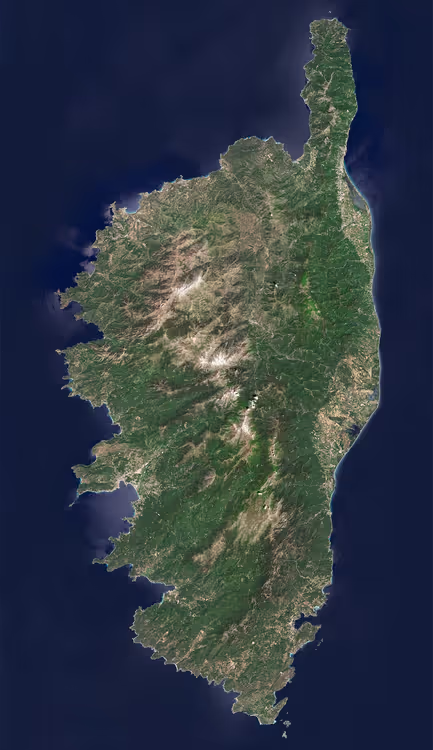 © European Space Agency / CNES · CC BYPhoto: European Space Agency / CNES, CC BY, Wikimedia Commons
Further down, everything is laid out step by step: whether you need a car, what documents to prepare, when to book, and which class to choose.
Do you need a car in Corsica
A car is not for everyone. If you are coming for a week and want to lie on the beach next to your hotel, an airport transfer will be enough.
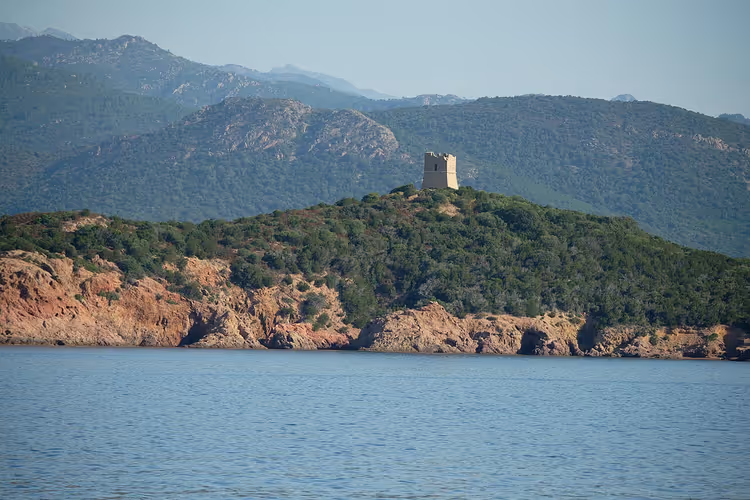 © Olivier Dugornay · CC BYPhoto: Olivier Dugornay, CC BY (https://creativecommons.org/licenses/by/4.0), Wikimedia Commons
A car pays off when you want to see the island. With it, you can get to Plage de Palombaggia before the tour buses, stop in villages like Vescovato, and adjust your plans to the weather. The island is bigger than it seems: from Ajaccio to Bonifacio it takes about 3 hours by car (on the map).
The most important tips
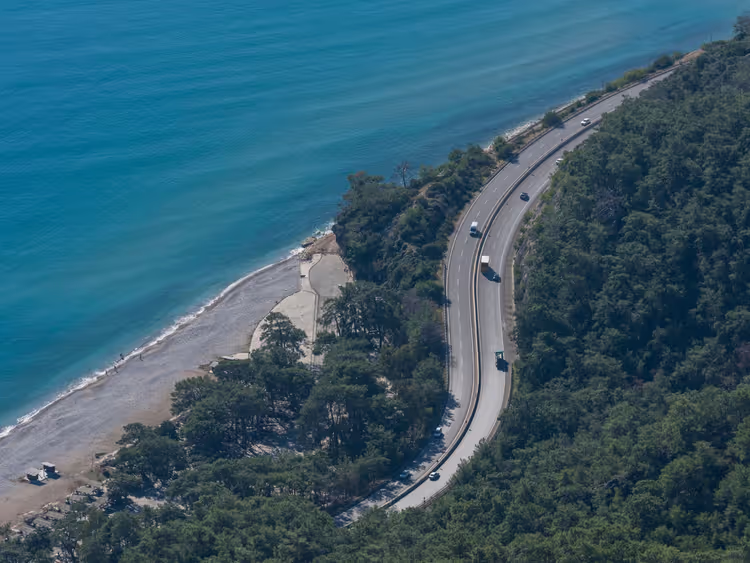
If you don't want to read the whole guide, start with these five points.
- Don't take a car that is too wide. In old villages the streets are narrow, and on winding roads it is easier to pass a bus.
- Don't take a car with the weakest engine. It will get you everywhere, but with power in reserve, climbs feel more relaxed.
- Book in advance. Supply on the island is limited, and in summer there are almost no available cars.
- Inspect the car at pickup and photograph everything you see. Don't forget the roof and the bottom of the bumper.
- Check whether you are getting an electric car. Some rental companies have already switched their fleet to EVs, and you cannot choose the type when booking.
The platform our editorial team uses
We compare rental prices on DiscoverCars. It is one of the highest-rated comparison platforms on the market, and the filters are clear.
The platform also offers coverage for exterior damage at a low price. You can choose a class and see prices on the car selection page.
Is driving in Corsica difficult
Corsica is mountains, cliffs, and old villages. The driving here is not the easiest, but it is not as scary as it is described online.
The main roads are usually in good condition, with one lane in each direction. On steep descents there are guardrails. Some roads are narrower, and there it is enough to drive slower and not rush.
The horror stories are written by a few people. Hundreds of thousands of people whose trips went smoothly simply don't talk about it.
Best rental companies of 2026
In early 2026, after a manual review of reviews, three companies show positive signals: Budget, Europcar, and Alamo.
How to rent a car: requirements
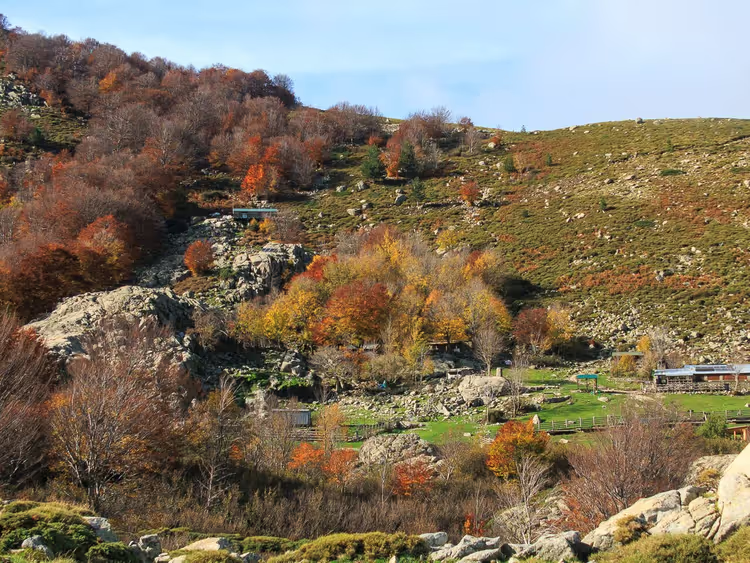
Driver's license: what you need
An international driving permit is worth having with you when you travel abroad. That way you won't face extra questions at the counter or on the road.
With an EU driver's license, you can drive on it. For licenses issued outside the EU, separate rules apply in France, and sometimes a translation or an international permit is required. Check your situation on service-public.fr.
An international permit is a booklet with a number, photo, validity period, and a record in Latin letters. It does not replace your license; it supplements it.
Age and driving experience
Officially in France you can drive from age 18 (as of 09/2026, service-public.fr). But that does not mean you will immediately get a car.
Most rental companies on Corsica require a minimum age of 21 and at least one year of holding a license. Drivers under 25 often pay an additional fee, as do drivers over a certain age (as of 09/2026, ADAC).
On the comparison site you enter your age and immediately see the restrictions and surcharges for each offer. That way you do not find out about the fee only at the rental desk.
Credit card and deposit
When you pick up the car, you will be asked for a credit card and a deposit will be blocked on it. The amount is returned when you drop off the car without damage, but until then it is frozen on your account.
Because of the deposit, you may hit your card limit. It adds up with daily and weekly spending, and there may be no room left for the deposit.
- Take a second credit card specifically for the deposit.
- Call your bank before the trip and raise the limit.
- Or choose a rate with zero deductible.
On the comparison site, open the rental terms and check the deposit amount. If the amount is too high for you, set an upper limit in the filters.
Which license works
It is worth having an international driving permit with you, even if nobody asks for it. It translates your license and removes questions at the desk.
With an EU license you drive on your own document. For licenses from the US, Canada, and the UK, additional conditions apply in France, and the rental company may ask for a translation or an international driving permit.
Check that your license has not expired and that the details match your passport. Differences in name spelling often slow down the car handover.
Keep your license and passport separate from your luggage: you will be asked for them both at the desk and during roadside checks.
When to book and where to pick up the car
Best time
Corsica is a popular destination, especially in summer. If you want to choose your car class and get a good price, book the car as early as possible.
In summer there are almost no last-minute offers. As soon as you have your dates set, make the booking.
Airports and ports
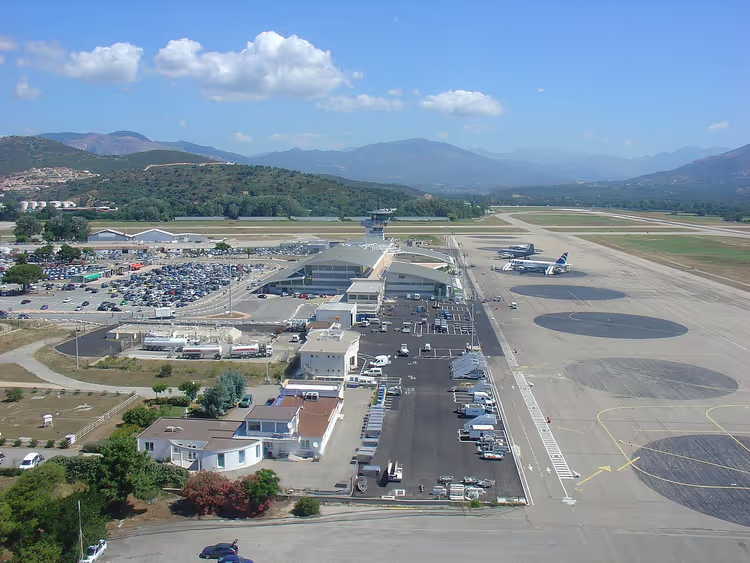
You can pick up a car at Corsica's airports, in major cities, and at ferry ports. For walking around Ajaccio or Bastia you do not need a car, so you can end the rental before entering the city.
Largest pickup locations:
- Ajaccio Airport
- Bastia Airport
- Figari Airport
- Ajaccio city
- Bastia city
All ports and airports are listed on the comparison site, where you can see which desks operate on your dates.
 © Bribri2B · CC BY-SAPhoto: Bribri2B, CC BY-SA (https://creativecommons.org/licenses/by-sa/3.0), Wikimedia Commons
How to get to Corsica
Ferry
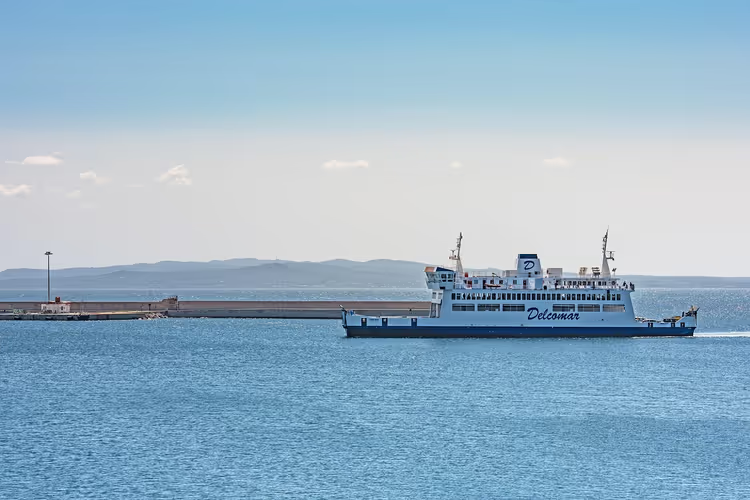
Ferries run to Corsica from France and Italy, and you can bring your own car with you. This is convenient if you are driving your own vehicle and do not want to rent one locally.
Compare schedules, prices, and availability in advance. In summer, ferry spots sell out long before the date.
Plane
Corsica's airports: Bastia for the north, Figari for the south, and Ajaccio, convenient for almost the entire island. You can compare and choose flights on the flight deals page.
Which car to choose
Size and power
Size depends on the number of travelers and the amount of luggage. But Corsica has two specific features worth considering in advance.
- There are many mountain roads here, so it is better to have some power in reserve. Do not take the weakest engine.
- Streets in villages, and sometimes in the mountains, are narrow. So the car should not be too large, which means less stress in tight spots.
Transmission: manual or automatic
Most rental cars in Corsica come with a manual transmission. Automatic cars are available, but they are more expensive and there are fewer of them, so book in advance.
On the comparison site, set the "automatic transmission" filter in the left panel if this is a must for you. That way you will immediately weed out the options you do not need.
Do you need an SUV
No. There is plenty to see on paved roads, and all-wheel drive is not needed for them.
An SUV can be useful for certain beaches far from tourist trails and for the remote Agriates area. But remember: rental insurance usually does not cover driving off paved roads. Read the fine print in the contract.
Camper van and sleeping in the car
Another idea: rent a car you can sleep in. Overall, this saves money on a second place to stay.
- Wild camping on the coast, in nature reserves, and near historic sites is prohibited.
- Local rules vary by commune.
- Campsites are available all over the island.
- It is better not to take a large camper van: on some roads it will be difficult to handle.
What else to consider by class
Car class affects the price more than almost any other option. So choose not the largest car, but one that is sufficient for your luggage and the number of people.
If you are traveling as a group of four with suitcases, a compact may turn out to be tight. Check the trunk capacity in advance, not at the counter.
An automatic is more convenient on winding roads and in traffic, but there are fewer such cars. Book an automatic in advance, otherwise you will have no choice left.
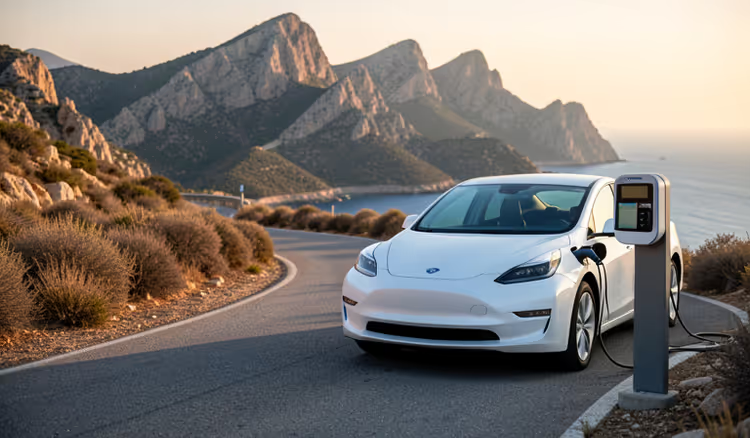
Electric car in Corsica
Why you may be given an electric car
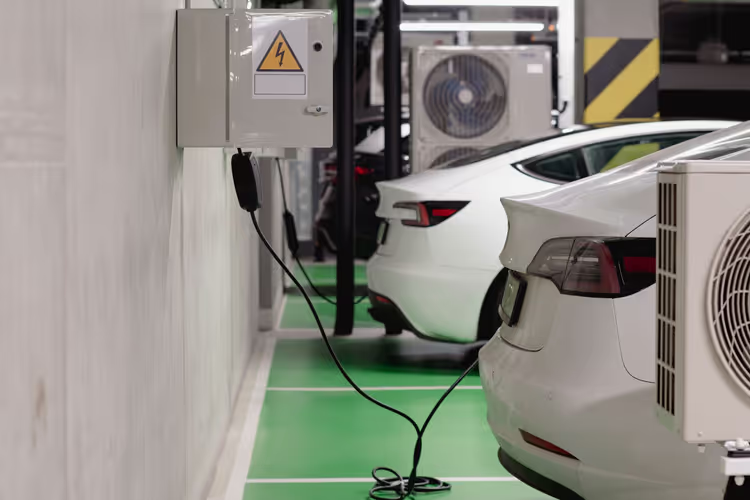
Do not be surprised if at pickup you are told that the car may be either gasoline or electric, and you cannot choose the type.
The reason is that some rental companies (primarily Hertz and Sixt, but not only them) have class A and B fleets that are almost entirely electric. The probability of getting an electric car in Corsica is quite high.
There is no need to panic. Cars were switched to electric before the charging network grew, but since then the number of stations has increased noticeably. You just need to plan your trips a little.
How to plan charging
- Choose hotels with charging in the parking lot, so you leave every morning with peace of mind.
- Check that the car has a fast-charging cable.
- If there is no cable, install an app with a map of chargers and their availability. It will show stations and connector types, and along the way you can check whether they are free. ChargeMap and ABRP (A Better Route Planner) are the most popular planners in Europe.
You also need to manage your range.
- These cars have a range of about 380 km, and Corsica is not huge. Do not try to cover 800 km a day, otherwise you will see very little.
- For example, the distance between Ajaccio and Bonifacio is 130 km, and between Bastia and Calvi 112 km (on the map).
- Do not be alarmed by climbs into the mountains. On an uphill stretch, range drops quickly, and it seems like you will arrive at zero. Soon the descent begins: the car uses almost no energy and even charges a little. The range stays roughly the same. To avoid stress, plan for less than 250 km per day.
- Prepaid rental company cards do not work at all terminals. We do not recommend taking them: pay at each charger and stay more flexible.
- Limit the air conditioning, it drains the range quickly.
What to do on the road
Plan stops in advance, not based on the remaining battery. On the app map, mark two charging points per leg: a primary one and a backup.
Charging an electric car takes longer than filling up a gasoline car. Factor this into your daily plan: fast charging takes time that you would otherwise spend exploring a place.
If the hotel has no charging, look for one near your overnight stay, not in a rush in the morning. That way you start the day with a full battery.
Check the connector type and station power before setting off. Not every charger in a village fits your car and delivers the speed you need.
In winter and in the mountains, range is lower than in warm weather. Plan shorter routes with climbs and keep a small reserve.
 AIIllustrative image: AI-generated
Best rental companies and prices
How much a rental costs
Prices fluctuate a lot by season. In high season the daily rate is noticeably higher than in the shoulder season, and the lowest prices usually fall in January and February.
Comparing offers online is easy. But if you compare different sites, check all hidden fees: they can eat up all the savings.
What to look for when choosing
- The company should have the car you need on the dates you need.
- Free cancellation on the platform.
- Mileage allowance: check whether it is unlimited or has a daily limit. This depends on your plans.
- Pickup location: some companies take you to the rental location by shuttle, and that costs time.
Ratings and filters for these conditions are collected on the car selection page.
Rental company ratings
On the comparison platform, each company has a rating on a 10-point scale. Keep in mind that on Tripadvisor or Google anyone can leave a rating, even someone who never used the service. In search you can keep only the best-rated companies.
How to save money
- Return the car to the same place where you picked it up.
- Choose a smaller car class.
- Watch the pickup and return times: rental is charged for every 24 hours.
- Choose a rate with no cancellation or limited cancellation.
- If you are renting for 6 days, check the price for 7 days: sometimes there is a weekly discount.
- Take a car with limited mileage.
Opening hours
At the airport, companies are usually open as long as flights are arriving. In town, especially a small one, hours are shorter, and on weekends too.
Because of this, you sometimes have to keep the car for an extra day if you cannot return it in time. Check the desk schedule in advance.
Fraud and pitfalls
There is no scheme specific to Corsica. Like everywhere else: if the price is very low, there are special conditions and tricks behind it.
Some companies try to charge inflated bills for damage. The editorial advice is simple: always take time to inspect the car and take photos at pickup and at return.
Most companies warn that they will charge a cleaning fee if you return a dirty car. Read the official terms: they usually state that a "normal" wash is included. A little sand is not a problem, but no more than that.
In summer, tired service staff can be less courteous. Check all contract details and agree on them before signing: fuel level and cleanliness condition. If you disagree, show the rental terms.
How to read the price in search
Compare the total amount for the entire rental period, not the daily price. The final figure includes fees that are not shown in the display price.
Look at three lines: mileage allowance, deposit amount, and whether free cancellation is available. They change the real cost more than the car class does.
Hidden fees are most often buried in the extra charge for a second driver, in returning to a different location, and in fuel rules. Read the contract before paying.
If you have a club or co-branded card, check the terms: sometimes a second driver is free.
Prices change every day. If you found a suitable option by price and terms, book it without putting it off for a week.
The rate depends on season, class, and duration, so compare offers on the same day. Otherwise the numbers will not be comparable.
Decide in advance how many days you will actually drive the car. An extra rental day costs more than one bus ride to the old town.
On the comparison platform it is convenient to filter cars by these conditions instead of scrolling through hundreds of offers. That way you get to a suitable option faster.
Check where the booking ends and on-site payment begins. Sometimes part of the amount is charged at the desk, and that changes the calculation.
If the price at two companies is close, choose the one with the higher rating. The difference in service at the desk is more noticeable than a difference of a couple of euros.
Ferry with a rental car
Do not take a rental car to mainland France, Italy, or Sardinia. Rental companies usually prohibit this. If they do allow it, the cost will be enormous.
Insurance: what it covers and what it does not cover
Levels of protection
There are many levels, and the wording is often unclear. Below is an overview of what is usually called insurance, although technically it is a limitation of your liability.
- CDW (Collision Damage Waiver) without excess limits your liability for the rental period and sets the maximum amount you pay in case of damage.
- Theft protection (TP) limits your liability to the excess amount if the car is stolen. You need a police report and the keys. TP is often already included in the price.
- Third party liability covers damage to other people and their property, including medical expenses. Limits vary by company.
Mandatory insurance in Corsica and France is third party liability. It is already included in the rental price.
Four ways to get additional protection
- No extras: apart from mandatory insurance, nothing else is needed. But remember that in an incident the entire deposit may be withheld from you.
- Option 1: your credit card insurance or your own comprehensive car insurance. Many cards provide rental coverage, but terms vary. Read the fine print and understand exactly what is covered.
- Option 2: take it at booking. When booking, you usually select the options you need, and offers are often better than at the desk. On direct sites you get the rental company's insurance, and on platforms a separate policy from the platform itself. The comparison platform has a "Full Coverage Waiver" option.
- Option 3: at the desk at pickup. The most expensive option, but if you have never done it before, you can buy it on the spot.
- Option 4: travel insurance with rental coverage, taken out with a regular insurance company.
It is better to compare options in advance, not at the desk. You can see what different insurers offer in the compare insurance terms selection.
Roadside assistance
Technically this is not insurance, but it is offered together with the rental if it is not included in the contract. Terms vary, but they usually cover:
- lost or damaged keys,
- keys locked in the car,
- a flat tire,
- the car will not start,
- out of fuel.
If you are in an unfamiliar country, traveling alone, and do not know how to change a wheel, this is a good option. You can usually take it at the desk when picking up the car.
Excess and deposit in practice
Most often drivers are confused by the excess. The excess is the amount you pay yourself in case of damage, even when basic coverage is in place. Full coverage without excess removes this amount, but costs more.
Check the deposit separately. If under the contract you are liable for the entire deposit amount, any scratch can cost you the whole blocked amount. That is why inspecting the car and taking photos at pickup is your protection, not a formality.
Before the trip, write down three figures from the contract: the excess amount, the theft limit, and glass and tire coverage. These lines determine how much you will pay in a minor incident.
How to choose coverage without overpaying
On direct sites they sell you the rental company's insurance, and on platforms a separate policy from the platform itself. Their terms differ, as does the list of exclusions.
Compare not the rental price, but the total amount together with coverage. Sometimes a more expensive rental with included protection works out cheaper than a cheap rate plus a policy at the desk.
Important: credit card insurance often does not cover minivans, SUVs, and off-road driving. Read your card's exclusions before the trip.
Additional options
Do you need GPS
You can rent a GPS device for navigation. There are three options.
- Option 1: bring your own navigator. The advantage is that you know exactly how it works and can enter all your points in advance.
- Option 2: use your phone. Remember that roaming abroad can be expensive. Download the map over Wi-Fi in advance, and you will navigate without extra costs. Do not forget a charger and a phone holder. To avoid paying for mobile service, an eSIM for navigation works well.
- Option 3: get a GPS from the rental company as an add-on. We do not recommend it: it is expensive and worth taking only as a last resort.
Second driver
Decide in advance whether you need a second driver. If yes, keep that in mind when comparing offers: some companies include a second driver for free.
On the comparison site, you can filter for such offers.
Child seats
Children under 10 must ride in a special seat in the back seat (as of 09/2026, service-public.fr). The seat must fit the child's height and weight.
Book the seat together with the car. In our rental experience, during high season there may be no available seats at the counter.
Picking up and returning the car
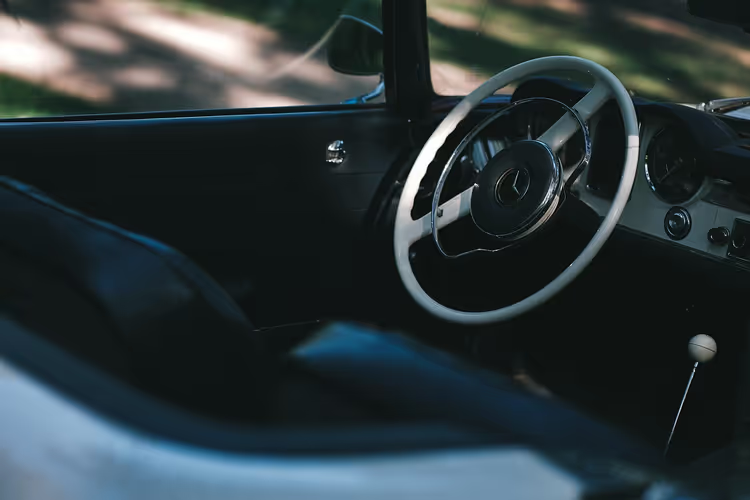
How to inspect the car at pickup
For a calm conversation with the rental company, inspect the car before leaving the parking lot.
Sometimes this is done together with an agent. Sometimes you are simply handed a sheet with the car's condition. And sometimes nobody says anything.
Make sure all dents and scratches are noted. If not, ask to add them. Before driving off, take photos, as you would in any other country, to feel more at ease.
What to check:
- the entire body for dents and scratches;
- the roof, which is often forgotten, but checked after return;
- the bottom of the bumper;
- the back of the mirrors;
- the interior for damage;
- tire condition;
- the condition of the wheel arch liners and mud flaps;
- the spare tire: whether it is in place and in good condition;
- the fuel level and mileage: whether they match the contract.
Mandatory equipment
In France and Corsica, the car must have a warning triangle and a reflective vest for at least one person. A spare wheel is recommended but not mandatory. Check the kit when you pick up the car.
Toll roads
There are no toll roads in Corsica. That is a noticeable saving, especially if you drive a lot around the island.
Fines
You are responsible for all fines and tickets received during the rental period. If you were notified immediately, pay at the police station or online, as indicated.
Keep in mind: the rental company may learn about a fine only after 3 months. Then they will send you confirmation, issue an invoice, and possibly add an administrative fee for processing. When you receive the letter, respond quickly.
Breakdown on the road
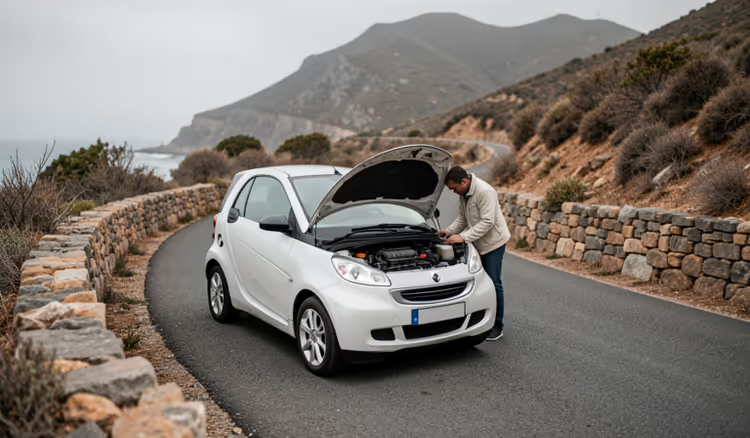
Do not lose the rental agreement. It contains the number for the roadside assistance service used by most companies.
First call that number, then contact the rental company to discuss a replacement car. Keep all receipts: they are needed for expense reimbursement.
 AIIllustrative image: AI-generated
Fuel
More and more companies require you to return the car with the same fuel level, rather than "full tank to full tank." This is inconvenient for you, but simpler for them.
So calculate how much fuel the car uses and how many kilometers you still have to drive if you do not want to overpay for extra fuel.
What to check in the contract at pickup
The contract has several lines worth reading right at the counter: fuel level, allowed mileage, deductible amount, and return hours. If anything does not match the booking, ask before signing.
Check that both drivers are listed in the contract if you will be switching behind the wheel. A driver who is not in the contract is not covered by insurance, and in an incident the costs will fall on you.
Clarify the rules for returning at a different place and time. Sometimes returning outside counter hours means an extra rental day or a fee.
What to do in a minor incident
If you scratch the car in a parking lot, do not drive away silently. Photograph the damage and the location, then notify the rental company. That way you will have proof of the time and circumstances.
Keep the assistance number from the contract handy. In a breakdown, that is the first number to call, and only then do you sort out a replacement car.
Keep receipts for fuel, paid parking, and any repairs. Without them, expenses are not always reimbursed, even if the case is covered.
Returning the car
To be on the safe side, try to return the car during counter hours, so all checks are completed and confirmed.
If that is not possible, photograph the car before leaving it in the parking lot.
You can read plenty of horror stories about renting in Corsica online. But remember: thousands of people whose experience went well do not write about it. If you chose a company with a good reputation and followed the rules, everything will go smoothly.
If you damaged the car
In case of damage, contact the rental company first.
- If you only have basic coverage, you pay for repairs up to the deductible.
- If you bought full coverage at booking, ask the rental company: the damage should be covered.
- If you bought coverage on the comparison site, contact them with all the details within the period specified in the contract after returning the car. Expenses will be reimbursed if they are deemed justified.
- If you use your own insurance, contact them and provide all the details. Expenses will be reimbursed if they are deemed justified.
For rental terms and deadlines for contacting the comparison site, see the terms overview.
Preparing to drive in Corsica
Below is the key information about roads and rules, so you arrive prepared.
Traffic rules
 © Pierre Bona · CC BY-SAPhoto: Pierre Bona, CC BY-SA (https://creativecommons.org/licenses/by-sa/3.0), Wikimedia Commons
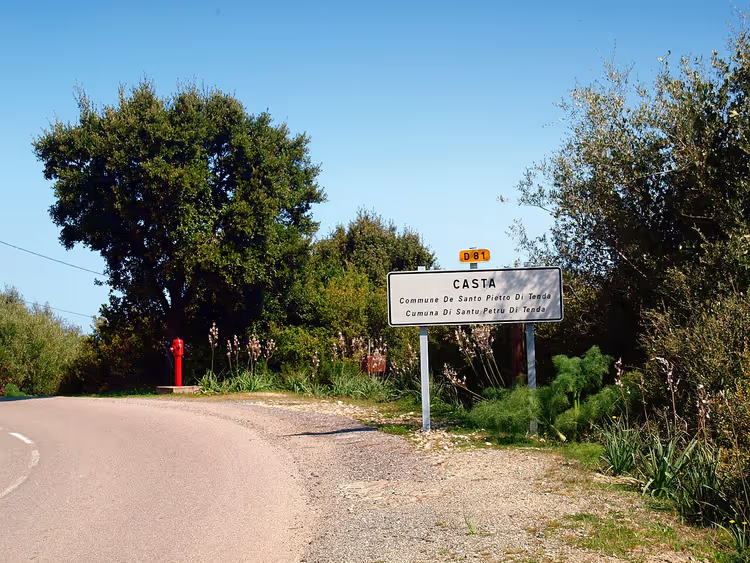
- Driving is on the right, and French rules apply.
- Speed: 50 km/h in built-up areas, 80 km/h on country roads, 110 km/h on expressways, and 130 km/h on motorways. In rain, limits are lower (as of 09/2026, Sécurité routière data).
- Seat belts are mandatory for all passengers.
- The legal blood alcohol limit is 0.5 g/l, which is 0.25 mg per liter of exhaled air (as of 09/2026, alcohol limit in France).
- In most villages, the limit is 30 km/h and there are many speed bumps.
- At an intersection without a sign, the vehicle coming from the right has priority. Roundabouts have priority.
- You may use the horn only in immediate danger.
Watch road videos in advance
To get used to narrow sections, watch recordings by travelers driving through Corsica on a road trip. That way you will see the hairpin turns and road width before the trip, not on your first day behind the wheel.
Potential hazards
 © MAXSIMU · CC BY-SAPhoto: MAXSIMU, CC BY-SA (https://creativecommons.org/licenses/by-sa/4.0), Wikimedia Commons
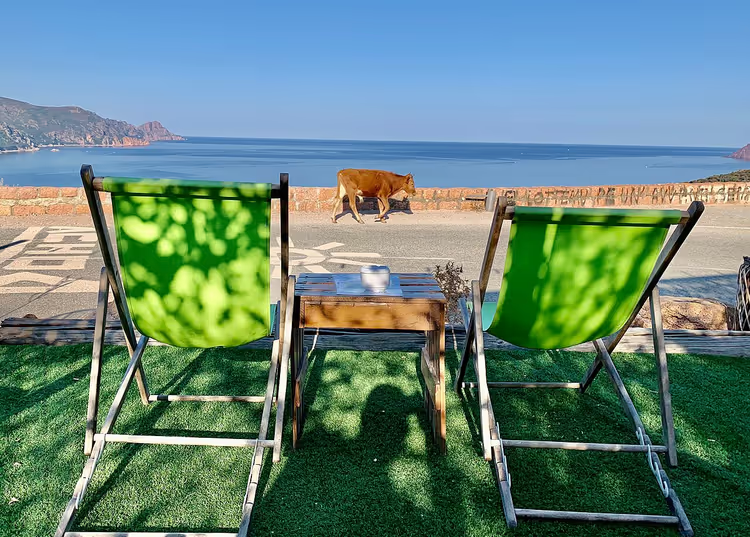
The main hazard on Corsican roads is animals. You may turn a corner and see a cow, pig, goat, or donkey in the middle of the road.
They appear everywhere, even on main roads where you do not expect them. So do not speed and keep your distance.
Route planning
Adventure is great. But if you want to see several places, plan ahead: that way you can distribute your days and book accommodation in time.
In summer, accommodation in popular places gets booked up early, so it is more convenient to tie your route and overnight stays into one plan.
What to do in an accident
If there are injuries or a dispute with the other party, first call the European emergency number 112.
- call for help if anyone is injured;
- call the police and document the circumstances;
- notify the rental company and follow their instructions.
Destination ideas
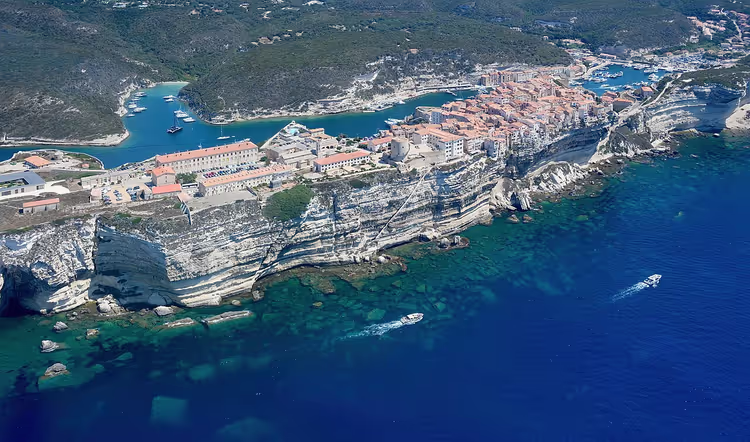
Build your route around what suits you best: the beaches of the south, the mountain villages of the center, or the port towns. That way you will not spend days on long drives for a single point.
 © Carsten Steger · CC BY-SAPhoto: Carsten Steger, CC BY-SA (https://creativecommons.org/licenses/by-sa/4.0), Wikimedia Commons
Where to stay
It is easier to choose accommodation near the points on your route rather than one hotel for the whole trip. That way you won't have to drive back across half the island every day.
 © Pierre Bona · CC BY-SAPhoto: Pierre Bona, CC BY-SA (https://creativecommons.org/licenses/by-sa/3.0), Wikimedia Commons
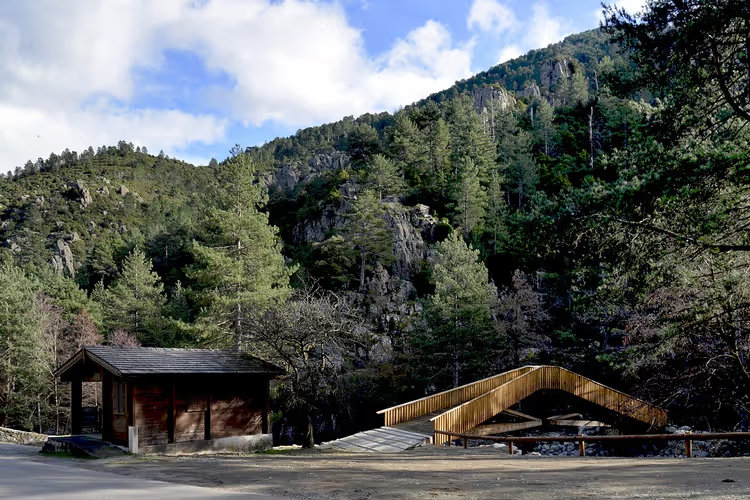
Check whether the hotel has parking: in the centers of old towns, free spaces are almost impossible to find.
Trip practicalities
Keep the rental agreement, your driver's license, and the rental company's phone number handy throughout the trip. This saves time if the car breaks down, you get a fine, or you return the car.
⁉️🤔 Frequently asked questions
Do you need a car in Corsica?
You need a car if you want to see the island, not just the beach by your hotel. With one, you can get to Plage de Palombaggia before the crowds, reach villages like Vescovato, and adjust your plans to the weather. If you are going for a week just for one beach, a transfer will be enough.
How much does car rental cost in Corsica?
The price depends heavily on the season and the car class. In summer, the daily rate is noticeably higher than in the off-season, and the lowest prices are usually in January and February. Compare offers in advance and check for hidden fees, otherwise all the savings disappear.
What age do you need to be to rent a car?
Officially, you can drive in France from age 18. But rental companies in Corsica usually require a minimum age of 21 and at least one year of driving experience. Drivers under 25 often pay an additional fee. Enter your age in the search, and you will see all surcharges right away.
Do you need extra insurance?
Mandatory third-party liability is already included in the price. Additional options limit the amount you pay in case of damage. You can rely on credit card insurance or buy full coverage when booking. Compare the terms, because more expensive does not always mean better.
Is it necessary to book a car in advance?
Yes, and the earlier, the better. The rental fleet on the island is limited, and demand peaks in summer. Booking in advance gives you both a choice of class and a reasonable price. At the last minute, there are almost no good options left.
What should you do in case of an accident in Corsica?
First call emergency services if anyone is injured, then the police and the rental company. Keep the contract and all receipts: without them, expenses will not be reimbursed. Take photos of the car and the scene before leaving.
Find hotels
Compare prices across booking sites and filter for rooms with free cancellation.
Compare prices on Discover CarsThe widget loads once you give your consent.
In short: what is worth booking
Renting a car in Corsica pays off when you want to see the island rather than spend your vacation at one beach. Book in advance, choose a mid-size class, and confirm the engine type when picking up the car.
- If you are traveling as a couple and planning beach time, a compact car with an automatic transmission will be enough.
- If your route includes mountain roads, add some power reserve and do not take the weakest engine.
- If the trip is long, sort out insurance and the deposit in advance.
You can compare offers by class, price, and rental terms on find a car on DiscoverCars.

A small editorial team writing guides for independent travel. We travel ourselves, but we haven’t been everywhere, so we check prices, opening hours and how to get there against official sources.