









How to save money in Stockholm: housing, food and transport without extra costs
Stockholm is an expensive city, and you notice it on your very first day. A single 75-minute metro ticket costs 43 SEK (as of 09/2026, SL), and lunch in a tourist area costs as much as dinner in Berlin. Almost every expense here can be trimmed if you know where to look.
We've put together tips that work in 2026 and are verified against official sources: carrier websites, the city tourism office, and museums. Below is a week-long budget itinerary you can follow step by step.
Ad: this article contains affiliate links. We earn a commission if you book through them, at no extra cost to you.
Stockholm Pass: who it pays off for
💡 In short:
- First, figure out what you need in the city: accommodation, transport, and museum tickets eat up almost the entire budget.
- Get a multi-day SL travel card; single tickets cost more.
- Plan your day so paid attractions are close together, with parks and the metro as a free bonus.
- Prices and tickets: 09/2026, verified on the pass's official website.
The Stockholm Pass from Go City gives you entry to more than 60 museums, palaces, and attractions, and includes a hop-on-hop-off bus (according to Go City, 09/2026). The list includes the Vasa Museum, Skansen, the Royal Palace, and Drottningholm.
The pass pays off if you visit two or three paid attractions a day, so do the math in advance: the museums on Djurgården are close together, and you can walk between them without any transit rides.
If your trip is about strolling and parks, you don't need the pass, because most free sights aren't included.
Getting there cheap: bus from Germany
The cheapest way to reach Stockholm from Germany is by bus: Flixbus and other carriers run from major German cities directly to the Cityterminalen bus station in the city center.
- Cost: lower than train or plane.
- The catch: you spend a whole night on the road, sometimes more.
- Who it's for: students, couples traveling together, and anyone who cares more about price than time.
An overnight trip also saves you a night in a hotel, because you sleep on the bus and arrive in the city in the morning. Take a window seat and earplugs; it's a long ride.
Train: direct route and overnight option
Starting May 4, 2026, a direct daytime train runs between Hamburg, Copenhagen, Malmö, and Stockholm (Snälltåget timetable, 09/2026).
The night train SJ EuroNight has connected Hamburg and Stockholm since September 2022 (according to Seat61, 09/2026). Hamburg's station remains the main hub, and the route north goes via Copenhagen and Malmö.
Sparpreis fares and Interrail bring the price down, so check tickets several months ahead: on popular dates, the cheap fares sell out first.
- The catch: on trains with mandatory seat reservations, you won't be allowed on board without a seat.
- Who it's for: those who don't want to spend a night on a bus.
If the train is canceled, you still have passenger rights, even if the ticket is tied to a specific train. Bring them up when talking to the carrier.
Plane: fast, but not always cheap
The fastest way to Stockholm is by air: Ryanair and EasyJet keep prices low if you book in advance, with departures from Düsseldorf, Hamburg, and Berlin. You can get to the airport by bus or train.
- The catch: in high season, a last-minute ticket costs several times more, and baggage is charged separately.
Shift your trip to spring or fall: tickets are cheaper and the city isn't overcrowded.
Ferry: with or without a car
Traveling with a car is the most convenient option. TT-Line runs ferries from Rostock and Travemünde to Trelleborg, and the trip from Rostock takes about 6-7 hours (TT-Line, 09/2026). From Trelleborg you continue by train or in your own car.
Passengers without a car are also welcome on board, and during the trip you sit on deck with a view of the Baltic Sea, so time passes faster.
- The catch: the crossing takes almost a full day.
- Who it's for: families and travelers with an RV.
Excursions: how to pay less
Paid excursions eat through your budget faster than museums, and the most popular one is a boat tour through the archipelago: from the water the city looks completely different than from the waterfront.

Saving starts with a plan for the day. The docks for sightseeing boats are right next to the National Museum and Östermalms Saluhall market, so it's easy to combine an excursion with sightseeing and avoid wasting time on extra trips.
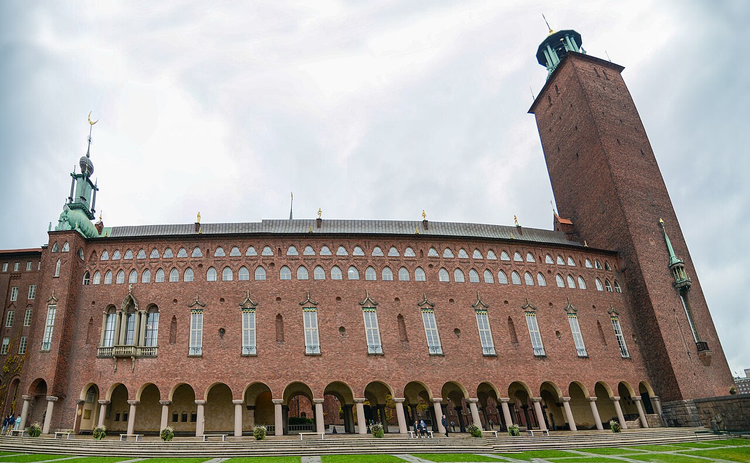 © Jorge Láscar from Melbourne, Australia · CC BYPhoto: Jorge Láscar from Melbourne, Australia, CC BY (https://creativecommons.org/licenses/by/2.0), Wikimedia Commons
Buy tickets in advance: on site they cost more, and in July and August spots on evening tours sell out. Compare options before your trip: excursion tickets in Stockholm.
If you like parks and water, combine the boat tour with free Djurgården: the island is nearby, and admission costs nothing.
Tours and tickets in Stockholm
Guided tours, skip-the-line tickets and activities — most offers can be cancelled free of charge.
See offers on TiqetsThe widget loads once you give your consent.
Free attractions
A lot in Stockholm doesn't cost a single krona: the island of Djurgården and the Södermalm district are open around the clock, and you don't pay anything for walking around.
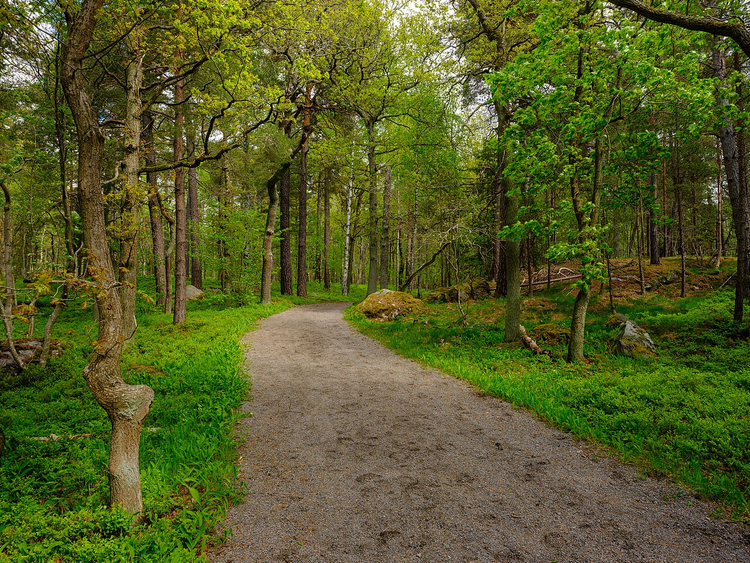 © ArildV · CC BY-SAPhoto: ArildV, CC BY-SA (https://creativecommons.org/licenses/by-sa/4.0), Wikimedia Commons
Stockholm's metro is worth adding to your itinerary because more than 90 stations feature artistic design, and the city's tourist office calls the subway the world's longest art gallery (according to Visit Stockholm, 09/2026).
You need an SL ticket to enter a station, so check out the design on your way between points on your route. The blue grottos and the rainbow vault are worth a dedicated look, and you don't need a museum ticket for that.
Nature: parks, trails, and a picnic
Stockholm's green spaces are free, so you buy a basket at the supermarket, grab a blanket, and sit on the grass in any park.

There are many walking and cycling routes around the city. Sörmlandsleden is considered one of the main hiking trails in Sweden: you can walk one section or head out on a multi-day trek.
The former city bike-share program Stockholm City Bikes no longer operates, so rent a bike from a private rental shop and reach parks on the outskirts without a bus.
A picnic, a trail, and a view of the water: a day like that costs almost nothing.
Accommodation: where the savings hide
The weather in Sweden changes quickly, and you need a dry home base no matter what. A hotel, hostel, or apartment sets the rhythm of each day, since that's where you head out from in the morning.
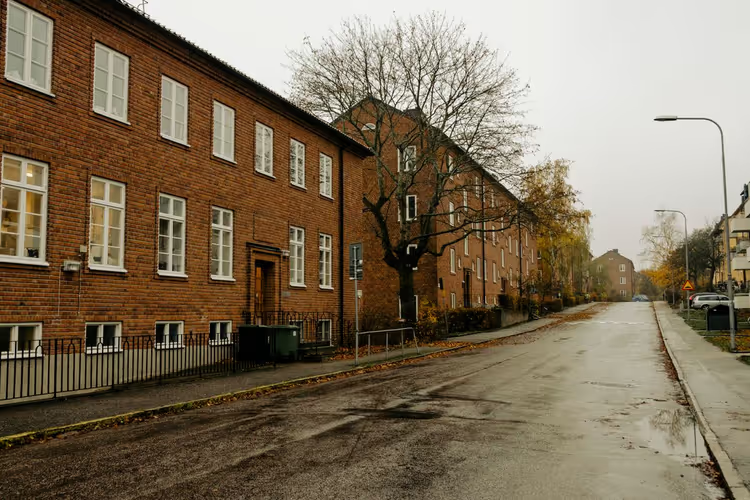
Chain hotels in the center cost the most, while the cheapest options are small hotels and guesthouses on the outskirts: with a bike, a rental car, or your own car, you can reach the main sights without extra expense.
- Tip: prices depend on the season. In summer and during the Christmas weeks they're higher, while in spring and fall the weather is still good and lodging is noticeably cheaper.
Good to know: the center is convenient for a short trip, while the outskirts work well for a week. Compare neighborhoods and dates in advance: check hotel prices in Stockholm.
Hostels, Airbnb, and Couchsurfing
In Stockholm you spend more time outdoors than in your room, so there's little point paying for luxury. Hostels offer cheap beds: both in private twin rooms and dorms, prices are lower than at a regular hotel.
The second option: Airbnb and Couchsurfing. Private hosts rent out a room or an entire apartment during their vacation, and you get to meet a local right away, plus you get free city tips from someone who actually lives here.
- The catch: on Couchsurfing the stay is free, but you need to look for it in advance and arrange things with the host.
Pick options with a kitchen, because a supermarket breakfast saves you money every morning.
Food: cheaper than it seems
Eating at Stockholm restaurants is expensive, and the more touristy the area, the higher the menu prices. It's cheaper where locals eat and at food trucks, since street food in the city is growing every year.
With an apartment or a hostel that has a kitchen, you buy groceries at the supermarket. Coop and ICA are pricier than Germany's Aldi and Lidl, but home-cooked food is still cheaper than a restaurant. The Östermalms Saluhall indoor market is expensive, so it's not a good fit for saving money.
Order Dagens Rätt: in this daily special format, the menu has just a couple of dishes, often with soup or salad, and lunch costs less than a big dinner. Get it at lunchtime, and in the evening cook for yourself or head to a food truck.
Tap water is free
In Germany, a pitcher of water in a restaurant costs money, while in Sweden they bring a free carafe of tap water with your order. Asking for it is normal, nothing to be embarrassed about.
The city has water refill stations, and in restaurants they will bring water right to your table. Skipping beer and lemonade cuts the bill more than you might expect.
Take your own bottle when you go out: an empty bottle in your backpack saves money all day, and tap water in Stockholm is safe.
Nightlife without club tabs
A club drains your wallet fast, so it is cheaper to spend the evening at a free open-air event: during the summer months, Stockholm regularly hosts concerts and street events with free admission.
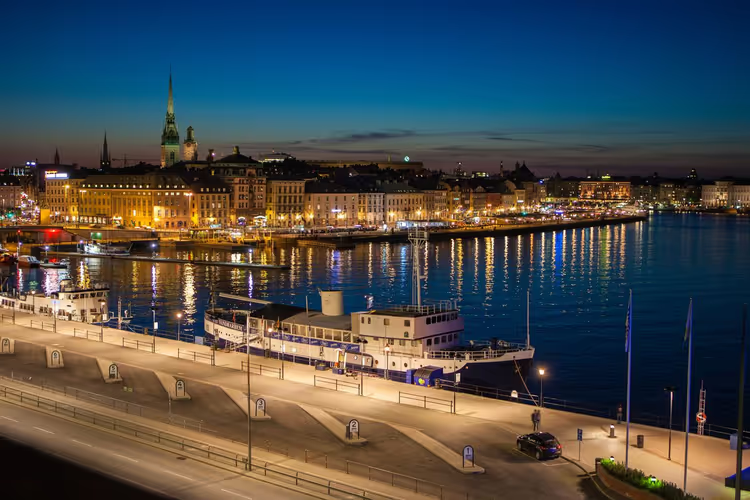
People sit together on blankets, bring food and drinks, and sing along with the musicians, and for many guests such an evening turns out more memorable than a club night.
This is where you really feel Swedish culture. At a club party in Stockholm, the atmosphere is similar to Berlin, but at a park concert you see the country from the inside. Bring water and arrive early, because spots on the lawn get taken in advance.
Getting around the city: SL and travel passes
Hop-on-hop-off buses are convenient for sightseeing, and with a pass you ride them for free. If your goal is simply to get from point A to point B, take the metro, bus, or tram: the network is well developed.
A single 75-minute ticket costs 43 SEK (as of 09/2026, SL).
The old SL Access card is no longer used, but combined tickets for the metro, commuter rail, bus, and tram remain available (according to SL, 09/2026). Buy a multi-day ticket in advance: that way you pay less per trip.
Shopping: flea markets and second-hand stores
Souvenir shops in the center are aimed at tourists, and prices there are higher, so skip them: the same items cost less in regular shops.
On weekends, Stockholm has flea markets and second-hand stores. Swedes love buying and selling antiques and items with history, so the selection is large.
Another gift option: local products. Visitors from Germany often bring home Marabou chocolate, because it is well known and cheaper than souvenir trinkets.
⁉️🤔 Frequently asked questions
How much money do you need per day in Stockholm?
There is no exact figure, it all depends on accommodation and food. Transport costs 43 SEK for a 75-minute ticket (as of 09/2026, official SL website). Parks, Djurgården, and Södermalm are free. Savings come from staying on the outskirts, having lunch in the Dagens Rätt format, and drinking tap water instead of beverages.
Is the Stockholm Pass worth buying?
The Go City pass gives access to more than 60 attractions and includes the hop-on-hop-off bus (as of 09/2026, Stockholm pass page). It pays off if you visit two or three paid museums per day. If your trip is planned around walks and parks, the pass is unnecessary: most free sights are not included in it.
What is the cheapest way to get there from Germany?
The cheapest option is the bus: Flixbus runs from major German cities directly to Cityterminalen, but the journey takes a night. The train is faster and more comfortable: starting May 4, 2026, a direct daytime service runs between Hamburg, Copenhagen, Malmö, and Stockholm (direct Snälltåget train, 09/2026). The plane is fastest of all, but more expensive in high season.
Can you drink tap water?
Yes, tap water in Stockholm is safe and free. In restaurants, a carafe of water is brought with your order without being added to the bill. The city has water refill stations. Bring your own bottle: then your drinks for the day cost almost nothing.
Where can you eat cheaper?
Look for Dagens Rätt: a lunch special of a couple of dishes, often with soup or salad, and it is cheaper than an evening dinner. Food trucks are also cheaper, as are neighborhoods away from the tourist center. With a kitchen in your apartment, you buy groceries at Coop and ICA, and that is the most economical option.
In short: what to book
Stockholm remains an expensive city, but a vacation here is realistic if you cut two or three things. The main rule: book accommodation and tickets in advance, and shift your main meal to lunch.
- If you are traveling as a couple for a week: stay on the outskirts and get a multi-day SL travel pass.
- If museums matter: get the Stockholm Pass and plan for two attractions per day.
- If you are traveling with a car: the TT-Line ferry from Rostock pays off for a group.
Compare accommodation options in advance: check hotel prices in Stockholm on Trip.com. Plan your trip calmly, and your budget will hold up.

A small editorial team writing guides for independent travel. We travel ourselves, but we haven’t been everywhere, so we check prices, opening hours and how to get there against official sources.