












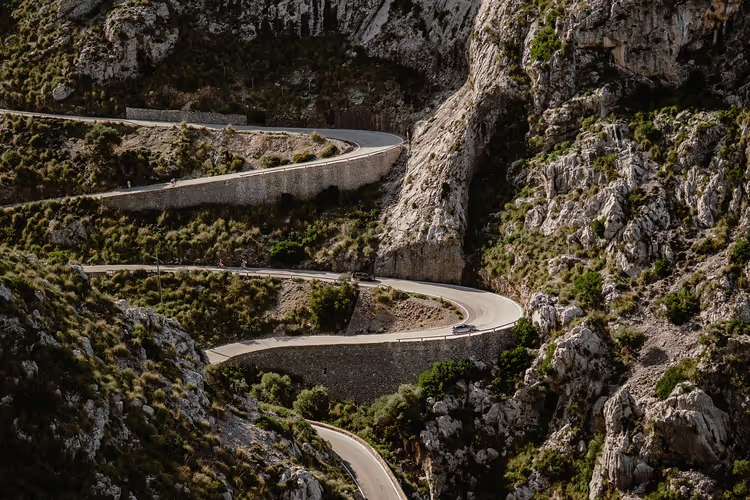
Car rental in Crete: how not to overpay and what to check upon pickup
Crete looks compact on the map. In reality, it is the largest island in Greece by area, and a continuous mountain range runs through its center. Many beaches, mountain villages, and viewpoints are simply impossible to reach without a car.
Public transport mostly runs along the northern coast. For those who want to see more than one resort, renting a car becomes almost unavoidable. But car rental is exactly where travelers most often lose money: unfavorable fuel policies, weak insurance, and extra charges that only appear at the rental desk.
Here we have gathered the essentials about renting a car on Crete: prices, insurance, roads, and a pickup checklist. This way you will avoid hidden charges and won't waste time on the first day of your vacation.
Ad: this article contains affiliate links, we earn a commission if you book through them, at no extra cost to you.
Do you need a car on Crete
The short answer: almost always yes. Crete stretches more than 250 kilometers from west to east, and mountains cut across it. There are few direct roads from north to south, and almost all of them go through mountain passes.
💡 In short:
- Book a car online before your trip and pick it up right at the airport in Heraklion or Chania.
- Choose a rate with full insurance, no deductible, and coverage for glass, tires, and the underbody.
- Plan trips with extra time: in the mountains, average speed drops to 20-30 km/h.
- The deposit is blocked on a credit card, and the card must be in the main driver's name.
- Road rules and rental requirements: 09/2026, according to ADAC Autovermietung and Südwest Presse.
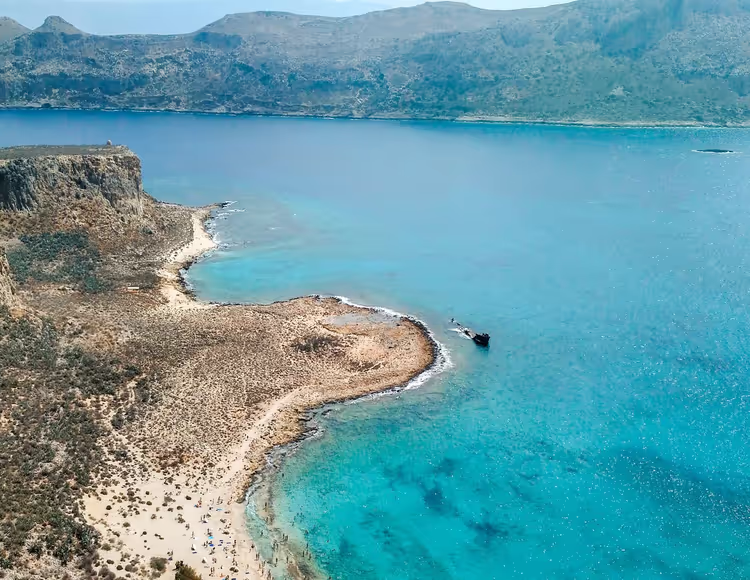
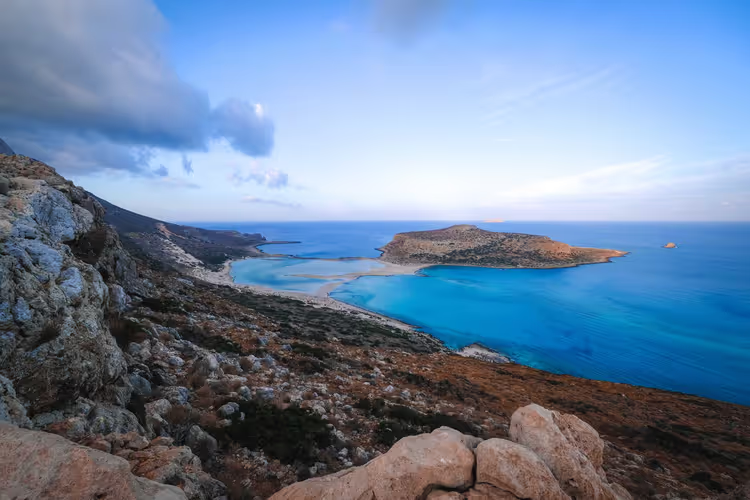
With a car, you don't depend on bus schedules and can reach places where public transport doesn't go at all. Balos Lagoon in the northwest, the pink beach of Elafonisi in the southwest, Preveli Beach with its palm grove, and the caves of Matala: all of these spots lie away from bus routes. With a car, you simply turn off toward them along the way instead of shaping your day around a single scheduled route.
Driving on Crete is itself part of the experience. Olive groves, coastal curves, and mountain passes replace each other every half hour. Many of these views you won't see without a car, because the bus travels along the main highway and doesn't stop at viewpoints.
Who doesn't need a car? If you're going to a single resort for a beach vacation and don't plan any trips out, the bus will be enough. The northern coast is reasonably well connected by bus, especially between Heraklion, Rethymno, and Chania. But as soon as you want flexibility, a rental pays off quickly. The catch: in high season, good cars get booked up early, so make your rental decision before you fly.
Book your car in advance
The main lesson is simple: you get a car before the trip, not on the spot. Spontaneous rental on the first day of your vacation turns into extra costs and wasted time.
The scenario that repeats for many people looks like this. You arrive without a car, spend two days getting oriented, and realize you can't manage without one. Then you need a taxi from the hotel to Heraklion, a search for a local rental company, and explanations without knowing Greek. The car you get often has scratches and dents that you still have to make them record in the handover report.
This whole operation takes several hours. When returning the car, you repeat the same route through Heraklion's dense city traffic and again spend money on a taxi to the hotel. The result: a double trip, stress, and a lost day that you could have spent on the beach.
Early booking solves all of this at once. You get more choice, calmly compare prices and insurance, and guarantee the car you need for high season. Last-minute booking on the spot is almost always more expensive and far more limited in options, especially in July and August.
Comparing offers is convenient through an aggregator. On DiscoverCars you filter by price, class, and insurance and see the final amount right away, with no hidden charges. This way you understand in five minutes how much a car will actually cost for your dates.
The booking process is simple. First, set the dates and pickup location, ideally the airport. Then filter by car class and mandatory insurance items. Compare three or four options by final price, not by the base rate. Check the fuel policy, deposit, and card requirements. And only then book, saving the voucher with the terms on your phone.
 AIIllustrative image: AI-generated
Where to pick up the car
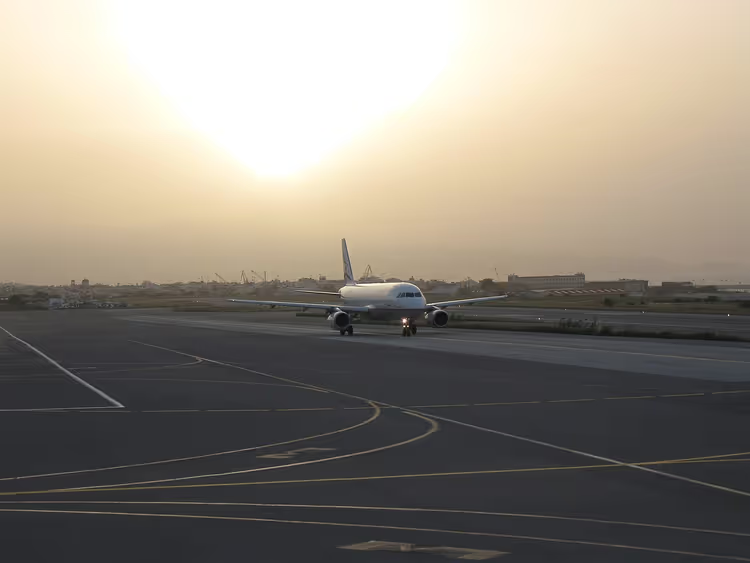
The most convenient option is to pick up the car right at the airport: in Chania (code CHQ) or in Heraklion (code HER). You land, get the keys, and drive straight to your hotel, no taxi and no second trip a few days later. This is especially worthwhile when you need the car for the entire vacation.
 © Florian Waßmann · CC BYPhoto: Florian Waßmann, CC BY (https://creativecommons.org/licenses/by/3.0), Wikimedia Commons
Heraklion Airport is the island's main air gateway, and rental counters there operate right next to the terminal. Chania is more convenient if your hotel is in western Crete or your route starts with Balos and Elafonisi. Some rental companies hand over the car not at the terminal itself but at a nearby parking lot: check the meeting point in your voucher in advance.
If you only need a car for a few days, you can also rent one in the larger cities: Chania, Heraklion, or Rethymno. For those arriving by ferry, pickup at the port of Heraklion or the port of Souda near Chania works well. Besides the major chains, Crete has many local rental companies with offices in small towns, but their pickup times are often tied to specific hours.
The rule is simple: wherever you book, pick up the car where it's easiest to inspect it in daylight. Underground parking garages and nighttime handovers make it hard to spot damage, and that's exactly what gets deducted from your deposit later.
A useful option for long routes is one-way rental. You pick up the car in one city and drop it off in another, for example in Heraklion and Chania, and you don't have to drive back just to return it. This option is almost always more expensive because of the one-way drop-off fee, but it saves you a full day of driving back and the fuel. It works best on west-to-east routes, when your vacation starts near Balos and Elafonisi and ends in Heraklion before your flight. Factor the drop-off fee into your price comparison from the start and make sure the rental company confirms drop-off in your chosen city, not just at the pickup airport.
Which car to choose for Crete
For most trips around Crete, a regular compact or midsize car is enough. The main highways along the northern coast are well paved, and most beaches and villages in the island's interior are easy to reach in a standard car.
In the mountains and on the southern coast, roads are narrow and winding. There, a small car is actually more convenient than a large SUV: easier to pass on switchbacks and easier to park in an old town. All-wheel drive is not needed for the classic routes, and it costs more both to rent and in fuel.
Car class | What it's good for | What to watch out for |
|---|---|---|
Compact | city, switchbacks, tight parking | limited luggage space |
Midsize | family, New Road highway | more expensive than compact |
SUV | only rough dirt roads | higher fuel consumption and price, often unnecessary |
If you're planning a road trip with frequent hotel changes, check the trunk capacity. Four people's suitcases don't always fit in a compact car. Also decide on the transmission separately: Crete has many manual cars, and automatics cost more to rent and get booked up faster. If you're used to an automatic, reserve it in advance.
More important than the car class is one clause in the contract: whether dirt roads are allowed. Many contracts completely exclude driving on unpaved sections, regardless of the vehicle type. Sharp rocks quickly damage the underbody and tires, and that kind of damage is often not covered even by full insurance. More on this below, in the section about roads.
Where to drive on Crete
The island is conveniently divided into four zones, and in each one a car opens up its own routes.
The west, with Chania: the base for the island's two most famous beaches. Balos in the northwest and Elafonisi in the southwest are almost inaccessible without a car, and the road to Elafonisi runs through a mountain switchback. Allow a full day for it with an early start: in season, the parking lot by the lagoon fills up by noon.
The center, with Rethymno and Heraklion: the historical part of the island. The Palace of Knossos near Heraklion and the old towns of the two capitals are easy to cover in a couple of days. The roads here are simpler, and the New Road connects the cities quickly.
The south coast, with Matala and Preveli: wild beaches and caves that take the longest to reach. The road from the north climbs over a mountain pass, so plan no more than one beach per day.
The east, with Agios Nikolaos and the Lasithi Plateau: a calmer pace, fewer cars, and mountain villages that tourists rarely reach.
For a first trip, start with the western route: two or three days for Chania, Balos, and Elafonisi. Then move along the New Road to Rethymno and Heraklion and see Knossos. Save the south coast for separate days with an overnight stay, so you don't have to drive back over the pass in the dark.
Check detailed routes with distances and times in your navigation app in advance, and allow extra driving time, as described in the section on roads.
How much car rental costs on Crete
The price depends on the season, rental length, car class, add-ons, and when you book. Seasonality has the strongest effect: in high season from June to August, rates rise noticeably, and in the shoulder season they drop. ADAC also notes this seasonal difference on its page about car rental on Crete.
Season | Price level | Demand |
|---|---|---|
May, October | lower range | moderate |
June, September | mid-range | high |
July, August | maximum | peak |
Always check the exact amount for your dates, because the rate changes daily. As a guide: in May and October, compact cars cost in the lower double-digit range per day, while in July and August the same car will cost noticeably more. Compare prices in advance: on DiscoverCars the final cost is shown upfront along with the deposit and insurance.
On top of the rental, you usually pay extra for a child seat, a second driver, and extended insurance. Budget for these from the start, not after booking. That way the final figure won't come as a surprise.
Insurance: what your rate should include
Insurance deserves as much attention as the price. On Crete, damage comes less often from accidents than from small things: parking scratches, stone chips, punctured tires. The right coverage saves you a lot of stress.
When booking, check four things. First: full insurance with no deductible. It should be included in the price or at least offered with deductible reimbursement, otherwise even minor damage will cost you hundreds of euros.
Second: sufficient third-party liability. A good benchmark is the highest possible coverage for damage to third parties. Low limits quickly become a problem in a serious case. Third: additional protection for glass, tires, underbody, and roof. These are exactly the kinds of damage that happen most often on Crete and are not included in basic full insurance.
Coverage | What it protects | What to check |
|---|---|---|
Full insurance with no deductible | bodywork in an accident | should be included in the rate |
Third-party liability | damage to third parties | the higher the coverage, the better |
Glass, tire, underbody, roof protection | stones, punctures, gravel | often costs extra |
Fourth: the terms. Check whether unlimited mileage is included, how additional drivers are handled, and whether there are fees for late return. More on the second driver in the section on licenses and documents.
Also look specifically at what basic insurance does not cover. Most often excluded are the underbody, tires, glass, and roof, damage on unpaved roads, the interior, lost keys, and filling up with the wrong fuel. If these items are not in your rate, take extended protection. Otherwise even a small repair after your vacation will come out of your own pocket, and on Crete stones and punctures happen more often than anywhere else.
A car is considered well protected when the rate includes full insurance with no deductible, high third-party liability, and protection for glass, tires, underbody, and roof. Finding such offers is easier through aggregator filters: on DiscoverCars you can add extended protection at the booking stage and see it immediately in the final price.
Local and international rental companies
Both large international chains and family-run local agencies operate on Crete. Both options can work well, so what matters is not the size of the company but the terms, service, and condition of the cars.
International chains win on transparency: a clear booking process, standard terms, and insurance that is visible upfront. This suits people who value predictability or are renting a car on Crete for the first time and don't want to figure out local nuances.
Local rental companies often offer personal contact and resolve issues faster: if something happens, it's easier to deal directly with the owner. But service quality, car condition, and communication vary more from one agency to another. So a low price alone is not a reason to book.
In any case, check recent reviews, transparency of the deposit and deductible, and how to reach the rental company if damage occurs. You can compare local and international options in one place on DiscoverCars: there are filters by reviews, price, and class, and you see both types of rental companies side by side.
Fuel, deposit, and credit card
Fuel policy is where hidden costs most often lurk. The fairest models: a full tank at pickup and a full tank at return. You pay only for the fuel you actually used.
Avoid schemes like "full on pickup, empty on return." The first tank is often priced higher than at a gas station, and returning the car truly empty is almost impossible. You have already paid for the remaining fuel but not used it, and that money is not refunded.
The deposit is also worth checking in advance. At pickup, the rental company blocks an amount on your credit card and releases it after return. If your rate has a deductible, several hundred euros or more than a thousand may be frozen on the card. The money is not charged, but you can't use it during your vacation, so your card limit needs to handle it.
Almost always a credit card is required, not a debit card. The card must be in the name of the main driver, otherwise it won't be accepted. If you want to avoid a deposit, look for such options with a filter: on DiscoverCars there is a separate filter for offers with no deposit and for debit cards.
License, age, and documents
For trips from EU countries, no special license is needed: a valid European driving license is enough. An international driving permit is not required for EU citizens on Crete, although rules may differ for travelers from non-EU countries.
Some rental companies require the driver to have held their license for at least 12 months, sometimes 24. Check this before booking, especially for young drivers who got their license recently.
The minimum age for renting is usually 21. Drivers under 25 pay a young driver surcharge at many agencies, and the age requirement may be higher for certain vehicle classes such as SUVs. These requirements are standard for Greece and are also confirmed by rental portals.
When picking up the car, you'll be asked for the main driver's license, passport or ID, and a credit card in the name of the person signing the contract. If you plan to take turns driving, add the second driver at pickup; otherwise they won't be insured, even if they're your spouse.
Keep your license, passport, and card in one place and don't put them in checked luggage: the rental company will ask for originals, not copies. If there are two drivers, decide in advance who will be the main one, because the contract and deposit are set up in that person's name. Take a photo of your license and passport on your phone as a backup in case they get lost.
Plan trips with children separately. Under Greek rules, a child must ride in a car seat or booster appropriate for their height and weight, not just buckled in with the regular seat belt. Rental companies offer seats for an extra fee, but availability is limited and condition varies, so book the seat in advance and don't count on one being available at the counter in high season. At pickup, check the attachment and correct installation, not just that the seat is there. For small children on long drives, your own seat or booster is more reliable, but check the airline's rules for carrying them before you fly.
Roads on Crete: what to expect
Road conditions on Crete vary greatly by region. The north coast is connected by a well-built highway called the New Road. In the island's interior and in the south, roads are narrower, more winding, and slower, and there is no continuous highway there.
In the mountains, actual speed often drops to 20-30 km/h, even if the map shows a short stretch. Navigation apps don't account for hairpin turns, climbs, and villages, so actual travel time is almost always longer than estimated.
The rule is simple: allow at least one and a half times more time than Google Maps shows. In the mountains and on remote stretches, allow twice as much. Crete is a long island with a mountain range down the middle, and there are few roads crossing from north to south. Even points that look close on the map may be connected by a long mountain pass.
Route | Road | What to expect |
|---|---|---|
Chania - Rethymno | New Road | fast stretch, speed enforcement |
Rethymno - Heraklion | New Road | traffic near cities |
Chania - Elafonisi | mountains, hairpin turns | slow, allow double time |
Heraklion - south coast | mountain pass | slow, allow double time |
There is no continuous coastal road on the south coast. Many routes first climb into the mountains and then descend back to the sea. You can drive there calmly, but you won't go fast, so plan long drives for the morning.
New Road on the north coast
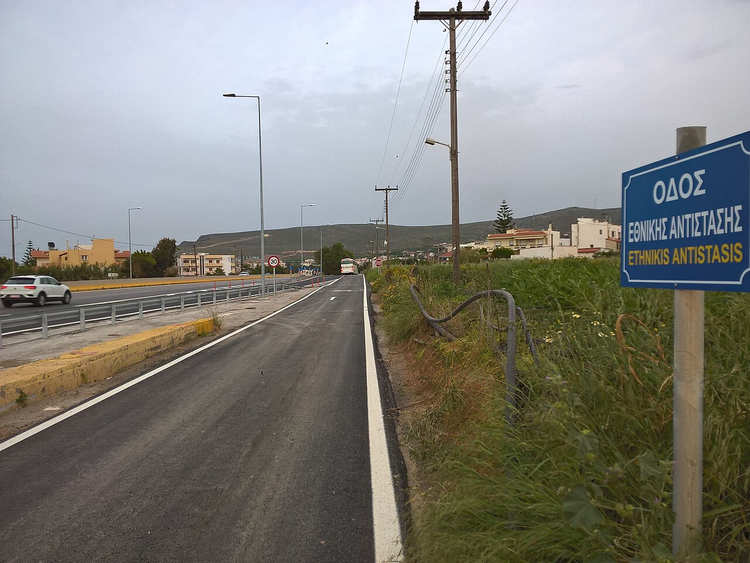
The New Road connects the main cities of the north coast: Chania, Rethymno, Heraklion, and Agios Nikolaos. It's the island's main transport axis, but it shouldn't be compared to a German autobahn.
 © Chatev · CC BY-SAPhoto: Chatev, CC BY-SA (https://creativecommons.org/licenses/by-sa/4.0), Wikimedia Commons
Lanes are narrow in places, the right lane is often used as a shoulder, and exits are short and not always clearly separated. Speed limits change frequently, especially before built-up areas and intersections. On wide stretches, it's easy to miss that the permitted speed has already dropped.
There are regular checkpoints on the New Road, most often at transitions where the limit decreases and before entering villages. The road looks like a highway, so people underestimate the limit here. Even on good pavement, there are jams due to accidents and roadworks, so allow extra time here too.
Speed, radar, and driving style
From 2026, updated limits apply in Greece: in residential zones and narrow streets within built-up areas the limit is now 30 km/h, while main urban roads remain at 50 km/h. According to SWP, these are exactly the stretches where tourists are most often caught speeding.
On the New Road within built-up areas, the limit is usually 50 or 70 km/h, and limits change as you drive. Actual average speed is always lower than the permitted speed: on the north coast around 60-80 km/h, on rural roads 50-70. In the mountains it's even lower, as covered in the roads section.
Speed enforcement on Crete is targeted but regular. Checkpoints are set up at 90-70-50 transitions, before villages, and on wide stretches of the north coast. Speeding fines later arrive through the rental company, so keep your pace to the signs.
Greece issues significant fines for speeding, and they don't disappear across borders: the rental company passes on your details, and the notice arrives by mail once you're home. Some rental companies also charge a service fee for processing the fine. So it's cheaper to slow down before a sign than to deal with a ticket after your vacation.
The local driving style is more dynamic than in Germany, but more coordinated than aggressive. Cretans drive briskly, overtake actively, and use high beams to ask you to yield rather than to express annoyance. A characteristic detail: locals pull to the right to let faster drivers pass. Do the same, and traffic will flow more smoothly.
Night driving and unpaved roads
At night, it's best not to drive outside towns. Many rural roads are unlit, markings are hard to see, and guardrails are often absent in the mountains. Add goats and sheep on the road, which are almost invisible in the dark.
On unfamiliar hairpin roads, night driving quickly becomes exhausting. If possible, plan long drives for daylight hours, and schedule your return from a remote beach before sunset.
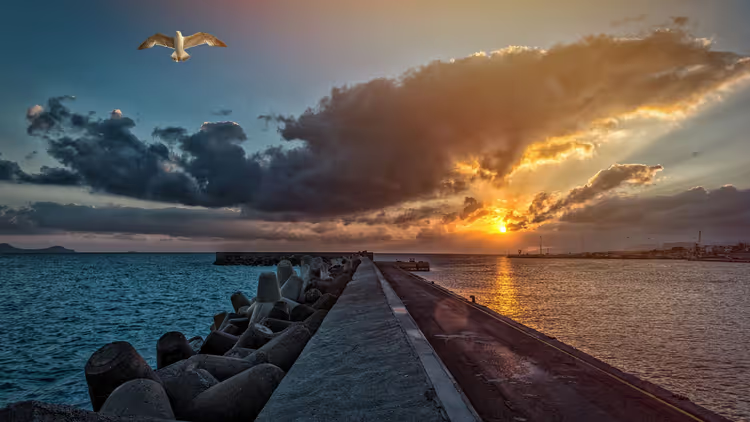
A separate topic is unpaved access roads. On Crete, many beaches and viewpoints are reached by short gravel stretches that look harmless. What matters is not how the road looks, but what your contract allows.
Many contracts exclude damage on unpaved sections or cover it only partially. The underbody and tires are most at risk. When picking up the car, ask directly whether short gravel access roads to beaches and parking areas are allowed, and ask them to note the answer in the inspection report. The catch: even with such a note, some rental companies dispute damage, so don't drive onto coarse gravel unless necessary.
Navigation and offline maps
Reliable navigation on Crete matters more than it seems. The island is large and partly rural, some signs are only in Greek, and there are few of them inland.
A smartphone works well if you prepare in advance. In cities and along the north coast, mobile internet is stable, but in the mountains and gorges the signal disappears. So don't rely on a constant connection: download offline maps ahead of time.
MAPS.ME is convenient for offline use: Crete maps download in full and work without internet, with markers for parking near trails, viewpoints, and beaches. Google Maps is good for planning, restaurants, and reviews, but its offline maps are partial. It has weak spots on minor roads and during spontaneous detours, so use both apps together.
Add Google Translate with the Greek language pack downloaded in advance: it helps in small tavernas and workshops, and camera translation works surprisingly well. For weather, use Windy: accurate wind and cloud forecasts are useful on the beach, in the mountains, and before a boat trip.
Download all of this at home over Wi-Fi, not on arrival day. Offline maps for all of Crete take up little space but save you in the mountains, where the mobile network disappears along with navigation. Open several key points in the app in advance and save them to favorites: your hotel, the airport, beaches you plan to visit, and backup gas stations in the south. That way you won't be entering addresses on the spot without a connection.
If you need constant internet for messengers and real-time maps, a local SIM or eSIM with Greek data will cost less than roaming. Activate it before departure and check that the plan includes enough gigabytes for navigation for the whole trip.
Refueling on Crete
Gas stations on the north coast and in cities are common. In the south and in the mountains there are noticeably fewer of them, and winding roads stretch the distance between them. Don't let the tank drop below a quarter, especially before a mountain crossing.
Many stations close earlier than in Germany, take a lunch break, and run reduced hours on Sundays. In rural areas, the next gas station can be dozens of kilometers away, so refuel in advance rather than on fumes.
Payment is almost everywhere in cash; cards are increasingly accepted, but not universally. Keep some cash on you. At many stations an attendant fills the tank: tell them the fuel type and amount, this is normal local service.
Check the fuel type as soon as you pick up the car: gasoline or diesel. There is usually a hint on the fuel filler flap or in the rental agreement. At Greek stations, gasoline is Unleaded 95, less often 98 or 100, and diesel is often labeled Gasoil.
Fuel prices on Crete are higher than on the mainland, and stations near highways and the airport are more expensive than those in cities and near large supermarkets. Fill up with a full tank in a larger town rather than topping up little by little on the highway. Find stations through offline maps: MAPS.ME marks them and they are visible without internet, which is especially important in the south of the island.
Parking and roadside assistance
Parking on Crete is easier than in large German cities, but it still requires attention. In cities there are many free spots along the road; tourist centers have paid zones. Yellow markings mean a complete stopping ban, and the narrow alleys of old towns are not suitable for a rental car.
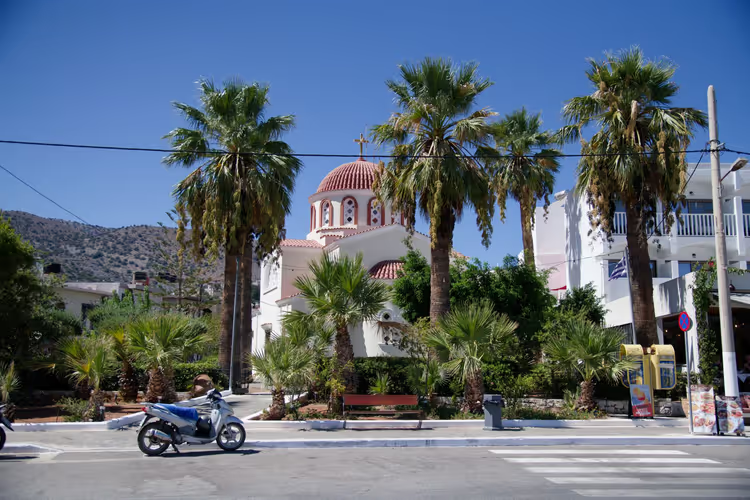
Park a bit farther away and walk the last few meters: this saves both your nerves and the paintwork. In the old towns of Chania and Rethymno, it's better to leave the car in an outlying parking lot than to try to squeeze into an alley.
Save emergency numbers in advance in case of a breakdown. The single European emergency number: 112. Police in Greece: 100, ambulance: 166, and tourist police: 171. General travel safety recommendations for Greece are published by the German Federal Foreign Office. When picking up the car, ask the rental company for the breakdown service number and whether it operates around the clock.
If an accident happens, the procedure is simple. Stop, turn on your hazard lights, put out a warning triangle, and don't leave the scene until it's documented. Call 112 if there are injuries, and call the police: without a European accident report or a police report, insurance often won't pay. Photograph the scene, the damage to both cars, and the other party's documents from different angles. Don't sign papers in a language you don't understand and don't admit fault on the spot: that's for the insurance company and the police to decide. Contact the rental company using the number in the agreement, follow their instructions, and keep all receipts and copies of the report for the insurance.
Pickup and return checklist
A proper handover saves more money than any other item. Keep this list handy on pickup day.
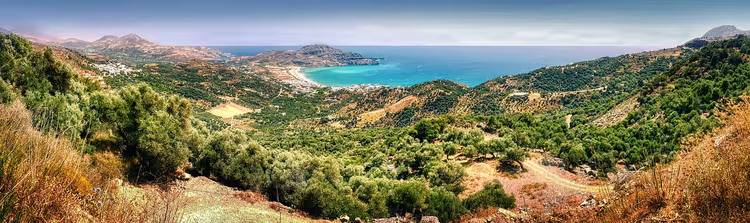
When picking up the car, inspect it in daylight and walk around it. Check every scratch and dent against the report, and photograph the body, windows, wheels, and interior. Check the fuel level and note what the tank takes: gasoline or diesel. Make sure all drivers are listed in the agreement, and get the breakdown service number.
Also check the small things that are hard to prove later: whether the air conditioning works, whether the headlights and brake lights come on, and whether there are any warning lights on the dashboard. Look in the trunk: the spare wheel or repair kit and the jack should be there. If you're taking a child seat, check its mounting right away, not on the first drive. Record all issues in the report before signing.
Don't sign the report until all damage is noted in it. An empty field about the car's condition will later be read as "no damage," and you'll lose any dispute about an old scratch. Photos with timestamps: your insurance in a dispute.
When returning the car, bring it back with the same fuel level as at pickup and note the odometer reading. Photograph the car again to document its condition at the time of return. Return it on time: late returns often incur an extra charge, and the deposit is only released after inspection.
Return the car in daylight and in person if possible. Ask the staff member to walk around the car with you and sign a confirmation that there is no new damage. Keep the fuel receipt until the end: it proves the tank was filled according to the rules. If you're returning the car at the airport on an early flight, find out in advance where to leave the keys and how the return time is recorded, so you don't get charged for an extra day.
Find hotels
Compare prices across booking sites and filter for rooms with free cancellation.
Compare prices on Discover CarsThe widget loads once you give your consent.
If you're unsure which car to choose for your route, compare options by price and insurance using the form below.
How to save on car rental
You can save on rental without losing quality if you know what to look for. Start with the dates: in May and October the same cars cost noticeably less than in July and August. If your vacation allows you to shift by a couple of weeks, it immediately shows in the price.
Book in advance, not on the spot. Why this is cheaper is covered in the section on early booking. Compare the final total, not the base rate, because charges for insurance, a second driver, and a child seat appear at exactly this stage.
Choose the full-to-full fuel policy. Why this is cheaper is covered in the section on fuel and deposits.
Don't take what you don't need: an SUV, a built-in navigator, and extra options you won't use. A phone with offline maps replaces a rented GPS, and a compact car is cheaper both to rent and to fuel. If you can drive a manual, it's usually cheaper than an automatic on Crete, but book the automatic in advance if you need one.
One main driver instead of two saves the additional driver fee if you don't plan to switch behind the wheel. And check for unlimited kilometers: on an island road trip, a mileage limit quickly gets expensive.
Another way to save: check whether your credit card covers rental car insurance. Some banks include a collision damage waiver in the card's benefits, in which case you can skip the rental company's insurance surcharge. Read the terms carefully: card coverage often applies only if you pay for the entire rental with that card and may not include glass, tires, and the underbody. Keep a printout of the terms with you, because the rental company may ask for proof, and in a dispute, without the paperwork, declining their insurance won't hold up.
Common mistakes when renting on Crete
The first mistake, and the most expensive one: signing the inspection form without recording damage. Any scratch not noted at pickup becomes yours at return. Walk around the car, check every defect against the paperwork, and photograph everything in daylight.
The second mistake is an unfavorable fuel policy. Choose full-to-full, details in the section on fuel and deposits.
The third mistake: not checking the deposit amount and your card limit. If the rate includes a deductible, a large amount is blocked on your card, and that money is unavailable during your vacation. Check your limit before booking and look for no-deposit rates if that matters to you.
The fourth mistake: forgetting to add a second driver. Why this is risky is covered in the section on licenses and documents.
The fifth mistake: relying only on online maps. In the mountains the signal drops, and without offline maps you'll be left without navigation at the worst possible moment. Download Crete maps in advance.
The sixth mistake: underestimating travel time. A leg that the navigator shows as one hour actually takes one and a half to two in the mountains. Build in a buffer using the rule from the section on roads and don't plan too packed a day.
⁉️🤔 Frequently asked questions
How much does car rental cost on Crete?
The price depends on the season, rental length, and car class. In May and October compact cars cost in the lower double digits per day, and in July and August rates are noticeably higher. Check the final total for your dates in the aggregator, where the deposit and insurance are also visible.
Do I need an international driving permit to rent on Crete?
EU citizens only need a valid European driving license; an international driving permit is not required. Some rental companies require the driver to have held the license for at least 12 months. The minimum age is usually 21, and drivers under 25 often pay a young driver fee.
Can I drive on dirt roads in a rental car?
Check your contract. Many agreements exclude damage on unpaved sections or cover it only partially, with the underbody and tires usually at risk. Ask about short gravel approaches to beaches at pickup and request that the answer be noted in the inspection form.
Where is the best place to pick up a car on Crete?
The most convenient is Heraklion Airport (HER) or Chania Airport (CHQ), especially if you need the car for the whole vacation. For a short rental, the cities of Chania, Heraklion, or Rethymno work well, and for those arriving by ferry, pickup at the port of Heraklion or Souda port.
Is a credit card required?
Almost always yes, and it must be in the main driver's name. Debit cards are not accepted everywhere. A deposit is blocked on the card and released after return, so check your limit in advance. No-deposit offers can be found with a separate filter in the aggregator.
Do I need a car if I'm only going for a beach vacation?
If your entire vacation is in one resort and you don't plan any trips, a bus is enough. But as soon as you want to go to Elafonisi, Balos, or mountain villages, a rental pays for itself. Decide before you fly, because in season the good cars get booked up in advance.
What fuel should I put in a rental car?
Check the fuel type on the fuel filler flap or in the contract, and tell the same to the gas station attendant. Gasoline on Crete: Unleaded 95, less often 98 or 100, and diesel is labeled Gasoil. Mixing up the fuel is expensive, because filling with the wrong type is not covered by insurance.
In short: what's worth booking
Put your trip together like this: if you're going to one resort without excursions, you don't need a car. If you plan to explore the island, take a compact car and pick it up at the airport. If your route goes into the mountains and the south coast, choose a rate with glass, tire, and underbody protection.
The main guarantee of a smooth trip is early booking with transparent insurance and no hidden charges. Compare prices and terms for your dates and pick up the car with the checklist from this article.

A small editorial team writing guides for independent travel. We travel ourselves, but we haven’t been everywhere, so we check prices, opening hours and how to get there against official sources.