
















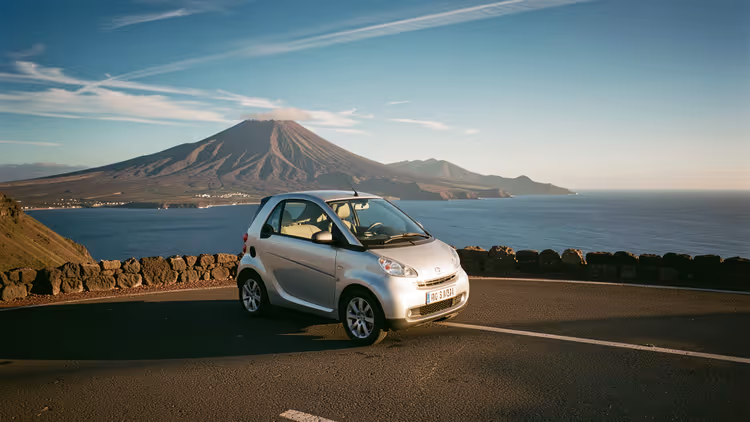
 AIIllustrative image: AI-generated
Car rental in Tenerife: 10 tips to avoid overpaying
Renting a car in Tenerife gives you a freedom that the bus does not. The island is small, but interesting places are scattered along all the coasts and in the mountains. Without your own car, you will be tied to the schedule and lose half a day on transfers.
The good news is the price. In the low season, a small car can be rented from about €9 per day (as of 09/2026, CHECK24). Fuel is also cheaper than in Germany: the island applies the local IGIC tax instead of the mainland IVA, so a liter of fuel costs noticeably less.
There is a catch, too. In Tenerife, standard insurance often excludes tires, rims, and glass, and on narrow mountain roads the risk of damaging a wheel is higher than usual. Below we compared four major providers, put together 10 tips, and answered frequently asked questions. We verified the rates and rental terms in September 2026 on the official Tenerife tourism portal and on the rental companies' websites.
Ad: this article contains affiliate links. We earn a commission if you book through them, at no extra cost to you.
Renting a car in Tenerife: comparing four providers
💡 In short:
- Compare rates on at least two portals and book online: at hotels and tourist centers a car costs two to three times more.
- Take full insurance with no deductible: in Tenerife, tires, rims, and glass are often excluded from it.
- Check the minimum age, license holding period, and fuel return policy before you pay.
- Rates, insurance, and rental rules: 09/2026, verified on the Tenerife tourism portal.
Four services cover almost the entire demand for cars among tourists. Two of them operate as comparison portals, and two more maintain their own fleet. We put them side by side so you can choose the option that fits your trip.
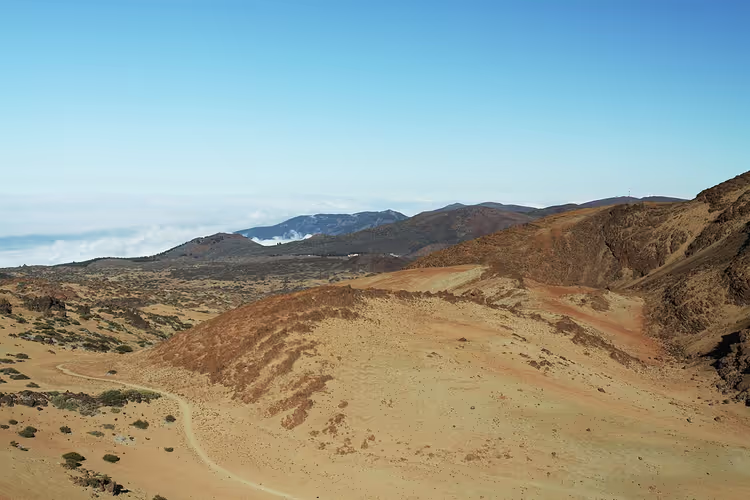 © Chmee2 · CC BY-SAPhoto: Chmee2, CC BY-SA (https://creativecommons.org/licenses/by-sa/3.0), Wikimedia Commons
The list is not exhaustive: besides these four, several dozen more rental companies operate on the island. But these are the services most often used by visitors from Germany and Austria. We verified the conditions in the table against the services' public data in September 2026.
Provider | Type | Minimum driver age | Insurance in the base rate | Pickup and return |
|---|---|---|---|---|
Billiger Mietwagen | comparison portal | 18 years, higher rate for drivers under 26 | usually only mandatory insurance, comprehensive and tire protection at extra cost | Tenerife South Airport (TFS), North Airport (TFN), Puerto de la Cruz, Santa Cruz, Los Cristianos, Playa de las Americas, Costa Adeje, Los Gigantes |
ADAC Mietwagen | comparison portal | 19 years, surcharge for drivers under 25 | comprehensive with no deductible, glass and tires depend on the specific offer | Tenerife South Airport (TFS) only |
Autoreisen | rental company with its own fleet | 23 years and a license held for at least 2 years | full comprehensive with no deductible already included in the price | TFS, TFN, Playa de las Americas, Costa Adeje |
Sunny Cars | rental company with its own fleet | 21 years for small classes and a license held for at least 1 year | comprehensive with deductible refund, including glass and tires | TFS, TFN, Puerto de la Cruz, Santa Cruz, El Medano, Golf del Sur, Los Cristianos, Playa de las Americas |
Price. In the low season, renting a small car starts from about €9 per day, and in the high season the average price for this class rises to €30 (as of 09/2026, current CHECK24 price comparison, ADAC Autovermietung). The longer the rental period, the lower the daily rate. That is why a week is almost always cheaper than seven separate days.
Deposit and prepayment. Billiger Mietwagen, ADAC Mietwagen, and Autoreisen book without prepayment: you pay when you pick up the car. At that point, the rental company blocks a deposit on your card, which serves only as risk protection and is released after you return the car. At Sunny Cars, the deposit is taken in cash or by card. Keep enough available credit on your card for this amount, otherwise the car will not be handed over.
Booking cancellation. At most services, cancellation is free up to the start of the rental or up to one day before it. That is why early booking carries almost no risk. At some rental companies, a late cancellation incurs a fixed charge that grows closer to the pickup date. Check this point in the rate in advance so you do not lose money if your plans change.
Mileage and a second driver. All four services offer unlimited mileage; per-kilometer surcharges are almost nonexistent in Tenerife. A second driver is added free of charge almost everywhere, with the exception of some rental companies that charge a small daily surcharge. If you plan to switch drivers, clarify this condition before paying.
Child seats and extras. In Spain, a child seat or booster is required by law. At some rental companies a basic model is included in the price, at others it is charged separately. Isofix mounts often cost extra. A navigation system in the car is also not always free, so we recommend navigating on your phone via Bluetooth.
Fuel policy. The most common rule is "same as at pickup": you return the car with the same fuel level. Some rental companies hand over the car with a full tank and expect it back full. You will not save anything by returning an empty tank: they charge the cost of fuel plus a service fee for the shortfall.
Payment methods. The main method everywhere is a credit card in the driver's name. Some services accept payment on site by debit card, and a few allow PayPal or bank transfer a couple of weeks before the trip. Not everyone accepts a debit card, so put a credit card in your wallet.
Own fleet or aggregator. Behind the Billiger Mietwagen portal are cars from AVIS, Budget, Cicar, Enterprise, Europcar, Goldcar, Hertz, Interrent, Orlando, Rhodium, Sixt, Thrifty, and Top Car. ADAC Mietwagen works with Hertz, Sixt, AVIS, and Europcar and promises exclusive discounts. Autoreisen and Sunny Cars hand out only their own cars, so their service is more predictable and consistent for everyone.
Reliability and recognition. Billiger Mietwagen holds a TÜV certificate for online purchase security and has won a Stiftung Warentest test among car booking portals. The others have no major awards, but that does not mean they are worse. Local rental companies focus on service and their own fleet rather than marketing stories.
Where to pick up and return. Pickup and return are available at Tenerife South Airport (TFS), partly at North Airport (TFN), and in the tourist centers of the south: Playa de las Americas, Costa Adeje, Los Cristianos. If you fly into the South and fly out from there as well, take the car right at the terminal. That way you do not pay for the trip into town and do not waste time on the transfer.
The Billiger Mietwagen portal usually wins on price for longer rentals. Keep one nuance in mind: the cheap rate there often comes without full comprehensive coverage. Protection with no deductible is sold separately, and the final total goes up. Autoreisen looks more expensive on the daily rate, but full comprehensive with no deductible is already included in the price.
Age and license holding period. For drivers under 25, almost all rental companies charge a young driver surcharge. Comparison portals let you filter offers by your age, so a young driver should start the search there (as of 09/2026, ADAC).
Which provider is better. If you want a hassle-free option without insurance disputes, take Autoreisen: full comprehensive with no deductible and free child seats are included right away. If you are going for two weeks and want to save, look at aggregators like Billiger Mietwagen, but calculate the total together with insurance. For families with children and trips into the mountains, choose a smaller car class: on narrow roads a compact car is easier to handle.
10 Tips for renting a car in Tenerife
We put together ten rules that help you save money and reduce risk. We tested most of these points on our own trips around the island, so we are writing about what you actually encounter on the road (as of 09/2026, according to rental companies and the island's tourism portal).
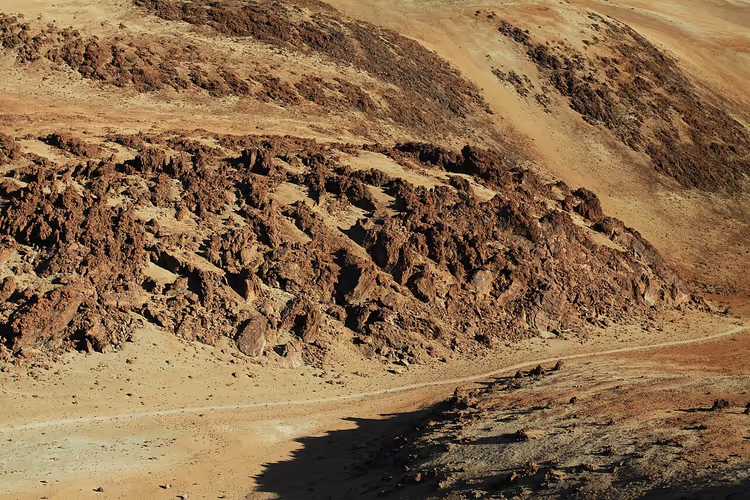 © Chmee2 · CC BY-SAPhoto: Chmee2, CC BY-SA (https://creativecommons.org/licenses/by-sa/3.0), Wikimedia Commons
The roads in Tenerife are mostly good and paved, so you will not have any serious problems. The main risks are in the details: narrow mountain sections, short on-ramps to highways, and fuel return policies. These are where inexperienced drivers most often lose money.
Before your trip, decide how many days you need a car. If you plan to visit distant beaches and the mountains, book the car for the entire stay: the daily rate is lower that way, and the car is always available. For one short outing, a daily rate is also fine.
Compare the total cost, not just the base rate. A cheap rate without full comprehensive coverage can end up costing more after a single incident. Calculate the price together with insurance, additional fees, and the fuel return policy.
Check the terms for children and extras if you are traveling as a family. A child seat, a second driver, and a navigation system can noticeably change the final amount. Some rental companies include them in the price, others charge separately.
Consider the season. In high season there are fewer cars and rates are higher, so booking early saves especially much. In low season prices are lower and the choice of car classes is wider. Plan your trip in advance so you do not end up taking whatever is left at the counter.
Keep distances in mind. The island seems small, but driving through the mountains takes much longer than a straight line would suggest. Switchbacks and towns slow you down, so allow extra time for every leg of the journey.
Fill up in advance in the mountains, where gas stations are scarce, especially in Teide National Park. An empty tank on a switchback ruins your day more than any traffic jam on the highway.
Tip 1: Book your car online
In our travel experience, online is almost always cheaper. You see the rates of all providers in advance and can compare them calmly. In tourist centers like Puerto de la Cruz or Playa de las Americas, counters charge noticeably more: the markup per day can reach a double-digit amount.
If you decide to handle it on the spot, go to the airport. All major rental companies operate there, and the staff at the counters speak English, often German as well. The most expensive place to book is the hotel: convenient, but the daily price increases several times over.
Before your trip, compare at least two portals and look at the total amount including insurance. Compare car rates most conveniently a few weeks before departure.
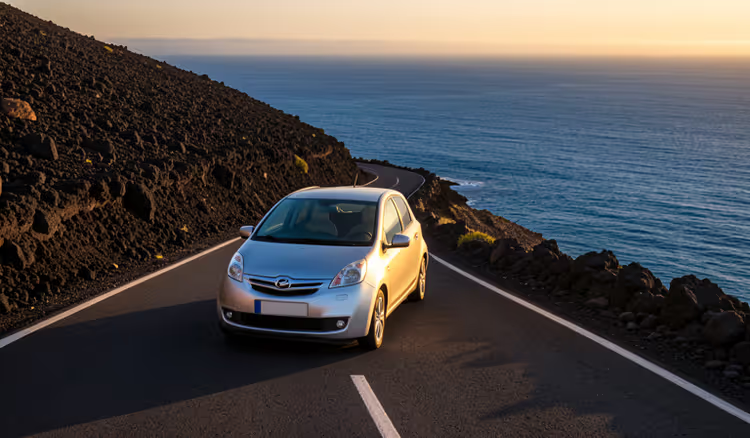 AIIllustrative image: AI-generated
Tip 2: The earlier, the cheaper
Booking early almost always lowers the price. The difference between booking a month ahead and a week ahead can be quite noticeable. At the same time, there is almost no risk: most rental companies offer free cancellation up to the start of the rental or up to one day before it.
This way you lock in a low rate and do not lose money if the trip falls through due to illness. First find a rate that works for you, then calmly prepare for departure.
Compare prices again a couple of weeks before the start: sometimes the rate drops even lower, and you will have time to rebook without any loss.
Tip 3: More days, lower price per day
The daily rate drops as the rental period gets longer. A week in Tenerife is almost always cheaper than seven separate one-day bookings. If you need a car for a couple of days for short outings, paying the daily rate is fine.
Otherwise, take the car for the entire period when you plan several trips. Picking up and returning the car at the airport is the most convenient: at the start of your vacation you drive straight out of the lot, and at the end you return it before your flight.
Before paying, check whether the rate includes pickup at Tenerife South Airport (TFS) or North Airport (TFN). Sometimes a separate fee is charged for this.
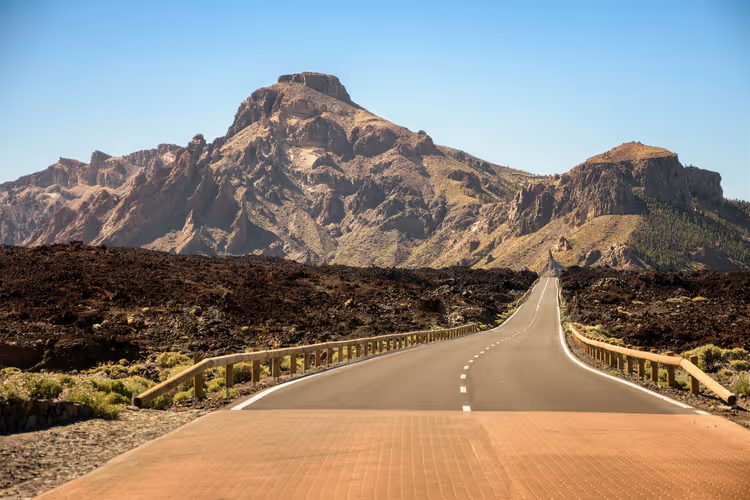
Tip 4: Take full comprehensive coverage
In Tenerife, many people rent cars with insurance, so some drivers do not take much care of someone else's vehicle. A dent from someone else's door in a parking lot or a scratch from a stone is then on you. Without full comprehensive coverage, such minor damage is often charged to your card.
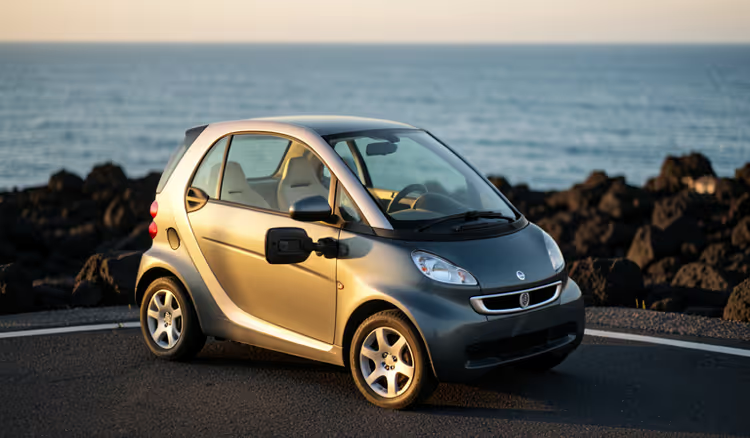
There is a separate reason related to the roads. The island has plenty of narrow sections where you pass close to a rock face, a guardrail, or a barrier. A misjudgment of your car's dimensions ends with contact against stone.
If you decline full insurance, inspect the car when you pick it up. Photograph the body from all sides and ask them to note every chip and dent directly in the contract. That way the rental company cannot later pin old damage on you.
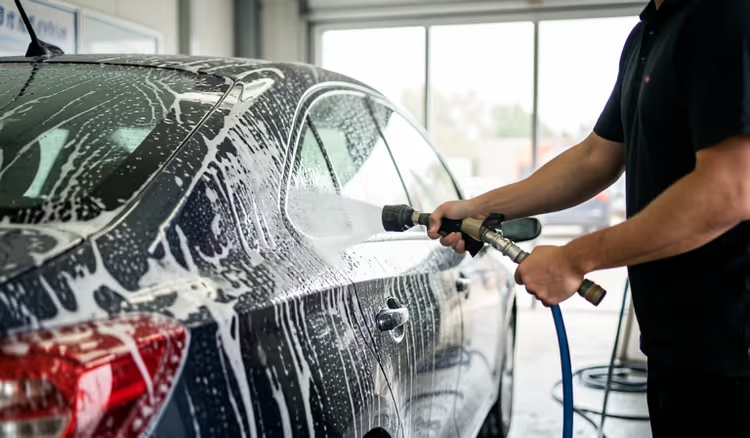
Tip 5: Clarify the policy on returning the car washed
Some rental companies charge extra for a dirty car. Sometimes the contract includes a small fixed amount for an unwashed car right away, in which case the matter is settled. Without such an agreement, the cleaning bill can be several times higher.
The easiest option is to wash the car yourself at a gas station: a wash costs a few euros. At some services, such as Autoreisen, you can return the car unwashed at no extra charge, but you need to check this in advance.
Read the terms before paying and clarify what exactly the rental company considers heavy soiling. This way you avoid a dispute when returning the car.
 AIIllustrative image: AI-generated
Tip 6: Take tire and glass protection
If you want to visit remote places, add tire and glass protection. Tenerife has unpaved roads: they are covered with gravel and have potholes. The risk of damaging a wheel on such surfaces is higher than usual.
Unpaved sections are more common in remote villages and on secondary roads in Teide National Park. For example, the parking area at Arenas Negras before the trail around Chinyero is reached by a fairly bumpy road. You can leave the car on the pavement and walk that stretch.
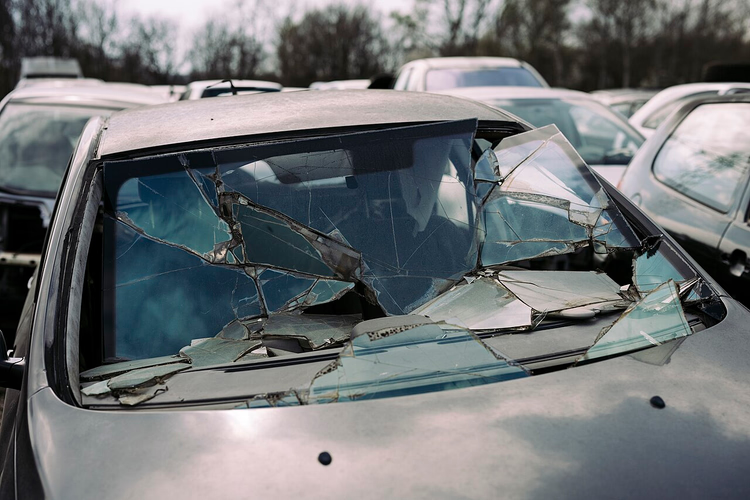
There is also the risk of theft from the car. At remote parking areas near trails, you sometimes see glass fragments on the ground. If the whole car is stolen, that is usually covered by insurance. But a broken window is excluded from coverage without glass protection.
 © Shixart1985 · CC BYPhoto: Shixart1985, CC BY (https://creativecommons.org/licenses/by/2.0), Wikimedia Commons
Tip 7: Stay away from narrow secondary roads
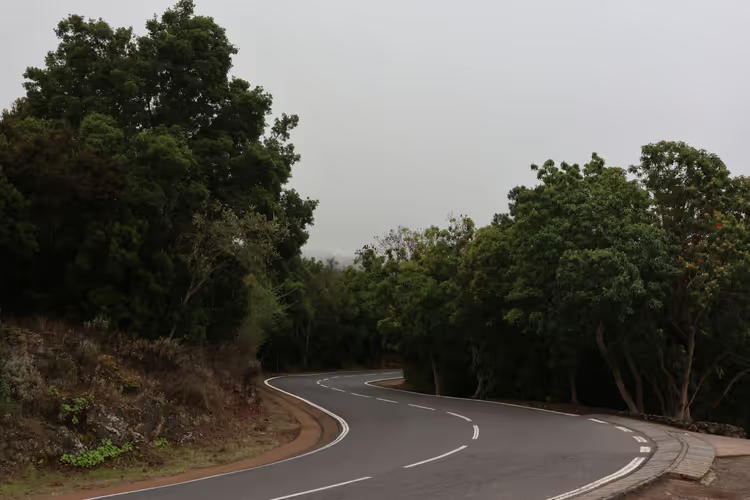
For safety, avoid small side roads. In the north of the island, for example around Icod de los Vinos, there are very steep and single-lane sections. The road there is so narrow that only one car fits, but driving is allowed from both directions.
Add a steep climb and poor visibility. On an incline you do not always see who is coming the other way. Such roads are more dangerous than ordinary two-lane roads, so it is better to stay on the main routes.
The navigation system sometimes leads you into such a lane on its own, so check the route in advance. Particularly narrow single-lane roads lead to the Masca Gorge, Punta de Teno, Charco del Viento, and the waterfront in El Sauzal. If in doubt, turn around, and give a short honk in blind corners.
Tip 8: Start uphill with the handbrake
In the mountains you often have to start on an incline. Usually drivers keep a large distance, so a slight rollback is not a big deal. But there is no guarantee, and on a steep slope a mistake costs a lot.
Learn to start with the handbrake and practice in a suitable spot beforehand. Keep an increased distance from the car ahead: that way the driver behind you has time to react if you roll back a little.
The steepest climbs are concentrated on the north coast. The south is noticeably flatter, but there are also individual climbs to viewpoints.
Tip 9: Calculate the cost of extras
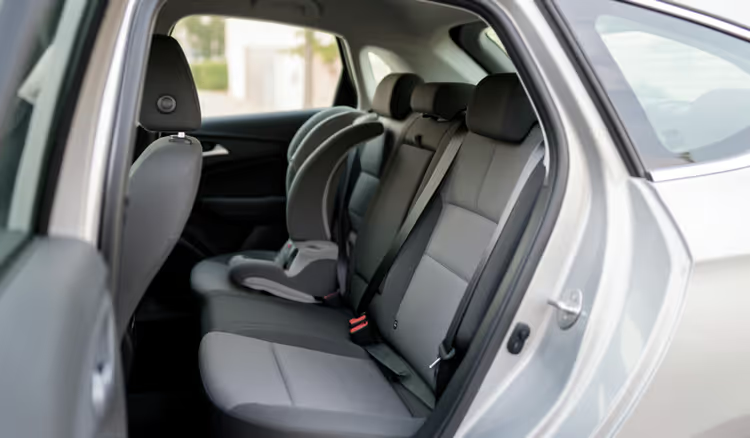
When traveling with children, you need a suitable child seat or booster. In Spain, as in Germany, their use is mandatory for safety reasons. Some rental companies include the seat in the price, others charge separately.
Clarify before booking how much the extras cost. A basic seat model is free at some services, while Isofix mounting costs extra. An in-car navigation system is also often expensive.
We recommend not paying for it and using Google Maps on your phone instead. Many cars connect a smartphone via Bluetooth, so directions play through the car speakers. The mobile plan on the island is the same as in Germany, and coverage gives you LTE most of the time.
 AIIllustrative image: AI-generated
Tip 10: Don't leave valuables in the car
Theft from cars happens in Tenerife. Besides the broken windows we wrote about above, other thefts occur too. Doors are sometimes opened with a key, electronically or mechanically, so nobody notices anything suspicious.
It's precisely because of this quiet access that thefts happen even in tourist areas. Victims often step away from the car for just a couple of minutes to take a photo. They notice their phones and cameras are gone later, when they return to the vehicle.
Leave valuables at your accommodation or take them with you. Put less important items in the trunk: they're not visible through the glass, and that already reduces the risk. Don't tempt a thief with a bag on the seat.
 AIIllustrative image: AI-generated
What to check in the contract before signing
Before signing the contract, go through a short checklist. It takes a couple of minutes, but this is where money is most often lost.
Car class and damage. Make sure the contract lists the class you booked and that all scratches, chips, and dents at pickup are included in the description. Photograph the body from all sides, the windows, and the fuel level right in the parking lot. Photos with date and time resolve almost any dispute at return.
Insurance coverage. Ask the staff member exactly what's included in the rate and what's excluded. Tires, wheels, and glass in Tenerife often fall outside standard comprehensive coverage. If you plan to drive on gravel roads, add protection for this item.
Deposit. Confirm the amount blocked on your card and how the block works. This amount remains yours, but until you return the car it reduces your available limit. Check that the card is in the driver's name and that the limit covers the deposit plus the rental.
Car return. Write down the exact drop-off location and time. Confirm what the fuel level should be and whether you need to wash the car. If you're returning the car lightly dirty, agree on a fixed cleaning fee in advance to avoid a surprise bill at the end of your vacation.
Second driver. If someone else will be driving, add them to the contract at the time of booking. Without this, the insurance doesn't apply when someone not listed in the documents is behind the wheel. The service is usually free, but the signature is required.
Trips to other islands. Ask directly whether taking the car on a ferry is allowed. Almost all rental companies prohibit it, and on another island the car has no coverage. It's better to get the answer in writing rather than verbally.
What to do in case of breakdown or accident. Save the emergency service phone number from the contract and confirm who pays for towing. In a minor accident, first document the incident with photos and file a report, then call the rental company. Don't repair the car yourself before getting approval.
What to keep on hand. It's useful to keep your driver's license, the contract with the assistance number, and your accommodation address on paper in the car. If you lose connectivity, a paper copy will help when talking to traffic police.
Alternatives to renting a car in Tenerife
You can also get around the island without a car. Almost all points are connected by buses, and a tram runs between the two largest cities. Let's go through the options in order so you can compare them with the cost of renting.
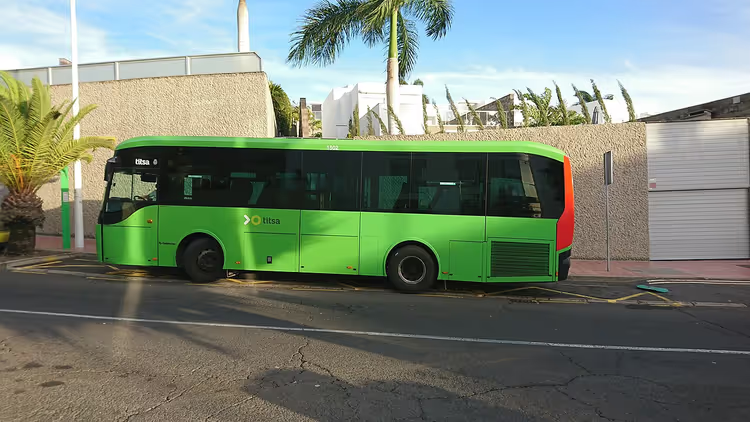
TITSA buses
All public transport on the island is operated by TITSA. During the day, buses run frequently, and schedules are well coordinated between lines. For current routes and fares, check the carrier's official TITSA website or Google Maps, where schedules are integrated.
For a single passenger, the bus is convenient and cheap. For two people or a group, a car is often cheaper, especially on long routes to distant beaches. The bus is convenient along the south coast, where resorts are strung in a chain and stops are frequent.
To the north of the island, buses run less often and more slowly, and transfers eat up time. If your route includes mountain villages and viewpoints, the bus will seriously limit your time. In that case, renting a car is justified even on a short trip.
In high season, popular buses can get crowded, and remote villages have only a few trips per day. Check the return schedule in advance so you don't end up stuck at a stop in the evening. With a car, you plan your day freely and don't depend on the last bus.
 © Cs-wolves · CC BY-SAPhoto: Cs-wolves, CC BY-SA (https://creativecommons.org/licenses/by-sa/4.0), Wikimedia Commons
Tram and taxi
A tram runs between La Laguna and Santa Cruz, and it's a fast way to get from one city to the other. Taxis are also available, but fares are roughly at German levels. On long routes, a taxi works out noticeably more expensive than renting.
If you're traveling as a couple or a group, the difference becomes even bigger. A ride from Tenerife South Airport to hotels in Costa Adeje costs noticeably more than a day of rental. For a solo traveler without long trips, taxis and buses remain a reasonable alternative.
Scooter and motorcycle
People sometimes suggest getting a scooter or motorcycle to save money. In practice, there's no benefit: a car in Tenerife often costs the same or less. Plus a car gives you more safety on mountain roads.
Another advantage of a car is the trunk: suitcases and backpacks fit easily, while riding hairpin turns with a load on your back is uncomfortable. If you're planning long trips to Teide National Park or the Anaga mountains, get a car.
Organized excursions
If you don't want to drive yourself, take an organized tour. Through GetYourGuide you can book group bus trips, small groups, and private tours with a driver. Excursions and tours in Tenerife are collected in one place, for example a jeep tour that goes into the Masca Gorge and Teide National Park. You get picked up right at your accommodation on the island.
Ferry to a neighboring island
Most rental companies prohibit taking the car on a ferry to another island. Nobody checks this at the dock, so many people do it anyway. But if something happens on the neighboring island, the insurance doesn't apply and you pay for all the damage yourself.
It's safer to go to La Gomera or Gran Canaria as a passenger and rent a car once you're there. The ferry is expensive, so an organized bus trip often works out cheaper than the crossing plus a rental.
How to drive on Tenerife: speed, interchanges, parking
The roads on the island are mostly good and paved, so driving here is relaxed. There are some specifics though: narrow mountain sections, short on-ramps, and strict parking rules. Below we cover what most often surprises visiting drivers.
Documents and driver age
A national driver's license from Germany, Austria, or Switzerland is enough for driving. An international driving permit is not required.
The minimum age depends on the company and ranges from 18 to 26. For drivers under 25, a young driver surcharge almost always applies (as of 09/2026, ADAC data).
Driving experience is also taken into account. Some rental companies require the license to have been issued at least one or two years ago. If you got your license recently, check this condition before booking, otherwise the car simply won't be handed over. Sometimes age and experience are considered together, so read both clauses in the rate.
Bring your license, passport, and a credit card in the driver's name. The deposit is blocked with the card when you pick up the car, and a debit card is not accepted everywhere. If the card is in someone else's name, that person also needs to be added to the contract.
Speed limits and cameras
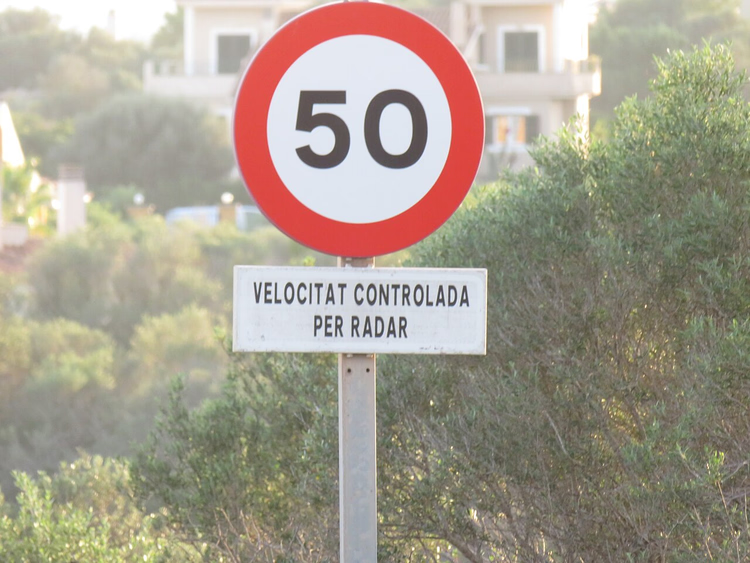
On the TF-1 and TF-5 motorways, the limit is up to 120 km/h. On regular roads the limit is lower, in built-up areas it stays around 50 km/h, and on narrow single-lane streets it is often 30 km/h (as of 09/2026, DGT). In Teide National Park, most of the route allows up to 70 km/h.
Speed is monitored by radar, and the greater the excess, the larger the fine. Go by the signs, not by the flow of traffic: locals sometimes drive faster than allowed.
 © Sukkoria · CC BY-SAPhoto: Sukkoria, CC BY-SA (https://creativecommons.org/licenses/by-sa/4.0), Wikimedia Commons
On mountain sections, use engine braking and don't speed up on descents. This keeps your brakes from overheating, which matters on the long switchbacks down to the coast.
Road safety and fines
Speed enforcement on the island is constant: fixed cameras and patrols are active. In towns and on approaches to resorts, it's better not to exceed the limit even by a few kilometers. The fine for a minor speeding violation starts at around 100 € (as of 09/2026, DGT summary of limits), and a serious violation costs noticeably more.
Seat belts are mandatory for everyone in the car, including rear passengers. Children must be transported only in an appropriate child seat or booster. Holding a phone while driving is prohibited, so mount your smartphone in a holder before setting off.
If the police stop you, keep your license and vehicle documents close at hand. The rental company provides a contract and a green card, which you need to show together with your license. A calm conversation and ready paperwork resolve the situation faster than any explanations.
At night on switchbacks, reduce your speed and stay closer to the center of your lane. On narrow sections, use high beams only when there are no oncoming cars. If you're unsure about passing, it's better to let the oncoming car through at a pullout.
Before driving in the rain, check the wipers and tires. On wet mountain roads, grip decreases and braking distance increases. In fog at altitude, turn on low beams and keep twice the usual following distance.
In a minor accident, first ensure safety and set up a warning triangle. Photograph the position of the cars, license plates, and damage, then call the emergency number from the contract. Only after coordinating with the rental company should you call a tow truck.
Interchanges and motorway on-ramps
The island has two-lane roundabouts, which is unusual for Germany. Stay in the right lane: that way you can reach any exit without a sudden lane change. If you choose the inner lane, you'll have to change lanes at the very last moment.
Motorways here are named TF. The acceleration lane is often long, but there are also very short on-ramps. Sometimes you almost have to stop and wait for a gap, so watch the signs in advance and yield to those already on the highway.
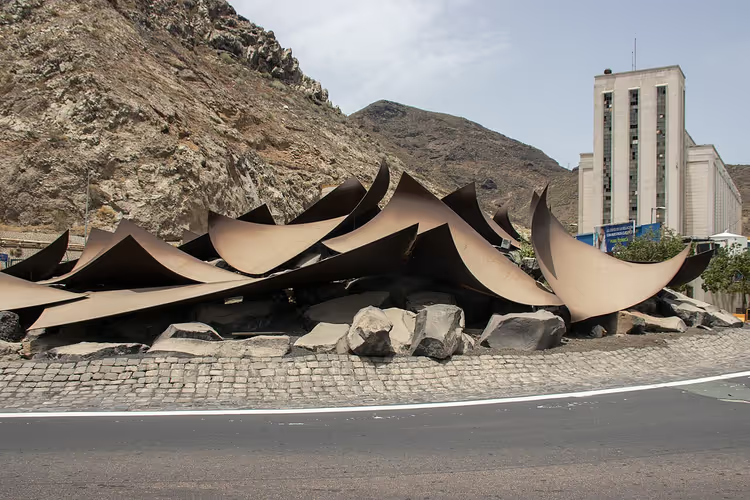 © Photograph by Mike Peel ( www.mikepeel.net ). · CC BY-SAPhoto: Photograph by Mike Peel ( www.mikepeel.net )., CC BY-SA (https://creativecommons.org/licenses/by-sa/4.0), Wikimedia Commons
Switchbacks and dangerous sections
The north of the island is noticeably steeper than the south, with plenty of sharp climbs. Around Garachico there are sections so steep that a weak car struggles to make it up. Plan your route with extra time and don't rush.
The most famous difficult stretch leads into the Masca Gorge. The road there is narrow and effectively single-lane, but traffic is allowed from both directions, and you can even meet buses coming the other way. Since December 2025, when booking a gorge hike through the official website, taking the TITSA bus line 355 from Santiago del Teide is mandatory (as of 09/2026, Tenerife tourism portal).
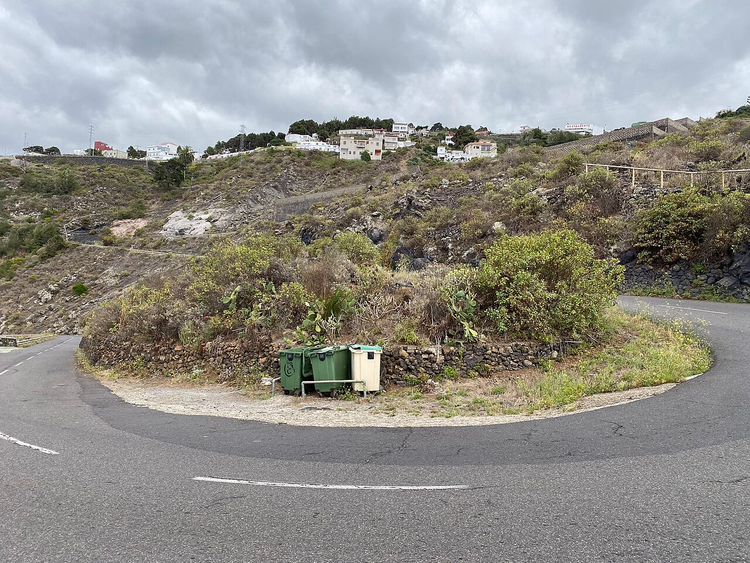 © -wuppertaler · CC BYPhoto: -wuppertaler, CC BY (https://creativecommons.org/licenses/by/4.0), Wikimedia Commons
On many secondary roads, the asphalt ends and gravel begins. You should only go there with tire and glass protection, otherwise the risk of damaging a wheel increases.
Parking on the island
At attractions and beaches, parking is usually available and most often free. White markings mean a free spot; paid areas are rare. For small and medium cars, the spaces are wide enough, but turning around in a large car is harder.
Don't leave your car on the shoulder in gorges or on switchbacks: it blocks traffic and is easy to hit.
Gas and refueling
Gas on Tenerife is cheaper than in Germany: a liter of Super 95 costs about 1.34 € (as of 09/2026, current fuel prices on the island). The island applies a local IGIC tax of 7% instead of the mainland IVA, so fuel here is among the cheapest in Spain.
Prices at gas stations along highways are often lower than in cities, so fill up on the way. Before setting off, check current prices and pick a gas station along your route so you don't have to search for one in a hurry.
Diesel and higher-octane gasoline cost more than regular Super 95. If the car is designed for 95, don't overpay for higher octane. On mountain sections, consumption increases, so a full tank before a switchback saves you stops along the way.
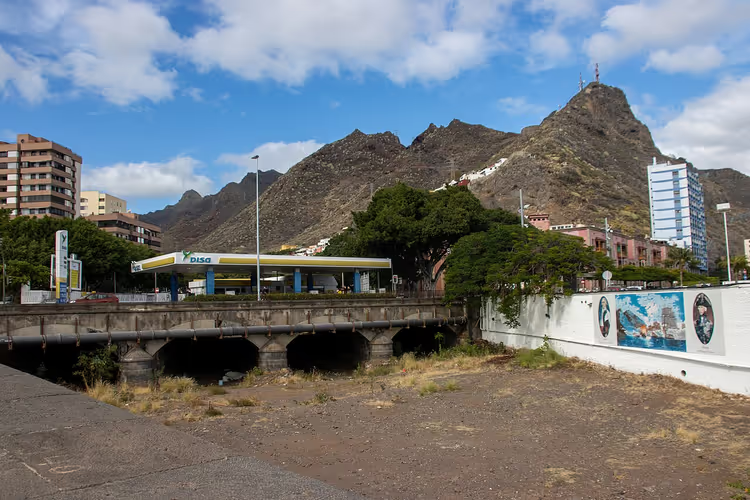 © Photograph by Mike Peel ( www.mikepeel.net ). · CC BY-SAPhoto: Photograph by Mike Peel ( www.mikepeel.net )., CC BY-SA (https://creativecommons.org/licenses/by-sa/4.0), Wikimedia Commons
Insurance and contract at pickup
Check the fuel policy type. Most often the "same as at pickup" rule applies: however much gas was in the tank, that's how much you return. If you return the car with less fuel, the rental company will add the cost of gas and a service fee to your bill.
Inspect the car together with an employee and record all damage in the contract. Separately clarify what the insurance covers: tires, wheels, and glass are often not included. There are almost no old cars in the fleets, so the condition of the vehicles is usually good.
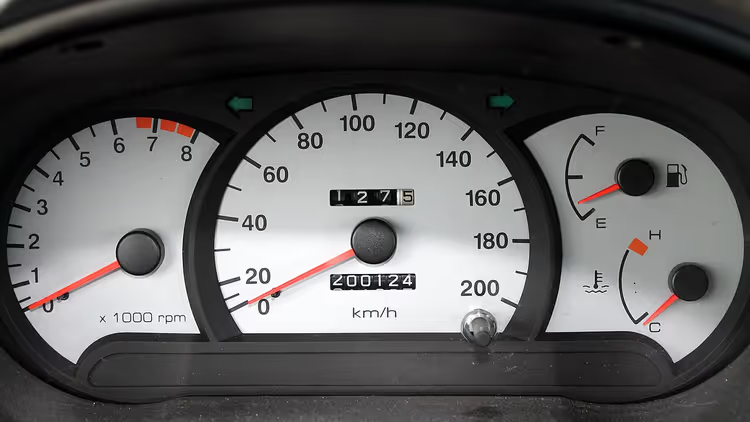 © © 2012 by Tomasz Sienicki [user: tsca , mail: tomasz.sienicki at gmail.com] · CC BYPhoto: © 2012 by Tomasz Sienicki [user: tsca , mail: tomasz.sienicki at gmail.com], CC BY (https://creativecommons.org/licenses/by/3.0), Wikimedia Commons
If the terms are unclear and the employee cannot explain exactly what is included, it is better to decline the booking before paying. That way you will not end up with an unexpected bill at the end of your vacation.
Is it worth renting a car in Tenerife
With a car, you will see the island flexibly and without being tied to a schedule. The roads are mostly good, driving on them is relaxed, and the views of Teide National Park and the Anaga Mountains from the winding roads stay with you for a long time.
Tenerife has plenty to see in different parts of the island, so renting a car almost always pays off. Car prices in Spain are comparatively low, and if you are traveling as a couple or a group, a car is often cheaper than the bus. With early booking, rentals start at around 9 € per day (as of 09/2026, current rental rates).
A car is especially helpful on routes where attractions are far apart. Between Teide National Park, the northern towns, and the southern beaches, the bus requires transfers and time. With a car, you plan your day yourself and do not adjust to a schedule.
If you are coming for just a few days and do not want to drive, book individual excursions. For a week or more, a car is both more convenient and cheaper.
⁉️🤔 Frequently asked questions
What license do you need to drive a car in Tenerife?
A national driver's license from Germany, Austria, or Switzerland is sufficient. An international driver's license is not required. Some rental companies ask for one to two years of driving experience, so read the booking terms in advance and bring a bank card in the driver's name.
At what age can you rent a car in Tenerife?
The minimum age varies by rental company and ranges from 18 to 26. Drivers under 25 almost always pay a young driver surcharge. On comparison portals you can set your age in the filter and immediately see suitable offers.
How much does car rental cost in Tenerife?
In the low season, a small car starts at around 9 € per day; in the high season, the average price for this class rises to 30 € (as of 09/2026, CHECK24 price benchmarks). The longer the rental period, the lower the daily rate, so a week is cheaper than several separate days.
Can you return the car in a different location?
Yes, but there is usually a fee for returning it at a different location. The easiest option is to pick up and drop off the car in the same place, for example at Tenerife South Airport (TFS). If you want to leave the car in the city, check the surcharge when booking, because it may be higher on the spot.
Which insurance package should you choose?
Take full comprehensive coverage with no deductible. In Tenerife, standard insurance often excludes tires, wheels, and glass, so add coverage for these items if you plan to drive on gravel roads. Read the contract carefully and clarify exactly what is covered.
What kind of car should you get for mountain roads?
A small car is better suited for narrow roads: it is easier to pass oncoming traffic on single-lane sections and to park. A powerful SUV is not necessary, but extra power helps on steep northern climbs. An automatic transmission makes hill starts easier for inexperienced drivers.
Can you take a rental car to another island?
Most rental companies prohibit this. Nobody checks on the ferry whether you are traveling with your own car or not, but insurance does not apply on another island. If something happens, you pay for all the damage yourself, so it is better to travel as a passenger and rent a car there.
What should you check when picking up the car?
Photograph the body from all sides and ask to have all damage noted in the contract. Clarify the fuel return policy and the cancellation procedure. Check exactly what the insurance covers and whether a child seat is included if you are traveling with a child.
Where is the cheapest place to book a car?
Compare at least two portals and book online in advance. Desks in tourist centers and hotels charge noticeably more, and the airport has a wider selection. Read the final total including insurance, because a cheap rate often comes without full comprehensive coverage.
Do you need a car if you are only going to the beaches?
For short trips to the beach in a tourist center, a car is not necessary: bus and taxi will cost less. Renting makes sense when you want to see different parts of the island in one trip. In that case, calculate the cost for the entire period, not for a single day.
What should you do if the car breaks down on the road?
Call the emergency number in the contract, not a regular service. The rental company will arrange towing and either a replacement car or a repair. Do not try to fix the car yourself before getting approval, otherwise the costs may not be reimbursed.
Can you drive a rental car into Teide National Park and the Anaga Mountains?
Yes, regular paved roads lead there, and they are in good condition. The restriction applies only to unpaved secondary sections: you should only go there with tire and glass protection. Do not leave belongings in the car at trailhead parking lots.
Find hotels
Compare prices across booking sites and filter for rooms with free cancellation.
Compare prices on Discover CarsThe widget loads once you give your consent.
In short: what to book
From here, the choice depends on your scenario. Below is a short matrix that helps you decide in a minute.
If you are going for a week and want to save money: compare aggregators and calculate the final price including insurance.
If you do not want to deal with insurance on the spot: choose Autoreisen with full comprehensive coverage and no deductible.
If you are traveling with children: check whether a child seat is included in the price and whether Isofix mounts are available.
If you do not like driving: take an organized tour and leave the car for the day.
Compare rates in advance while they are still low: find a car in Tenerife and browse island tours conveniently in one place.

A small editorial team writing guides for independent travel. We travel ourselves, but we haven’t been everywhere, so we check prices, opening hours and how to get there against official sources.