










Stockholm by month: when to go for light and low prices
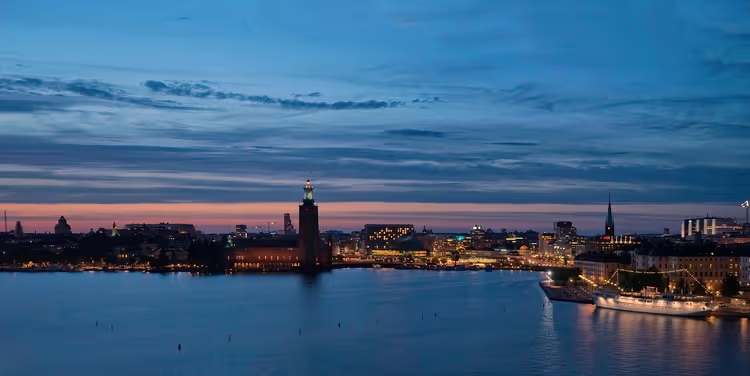
In July, Stockholm stays light almost all night, and in December it gets dark long before the workday ends. The gap between summer and winter here is one of the sharpest among European capitals.
The short answer: the best time to visit Stockholm starts in late May and ends in early September. During these months, terraces are open, ferries to the archipelago run on the summer schedule, and daylight lasts from 13 hours in early September to 18.5 hours in June (as of 09/2026, Swedish meteorological service SMHI).
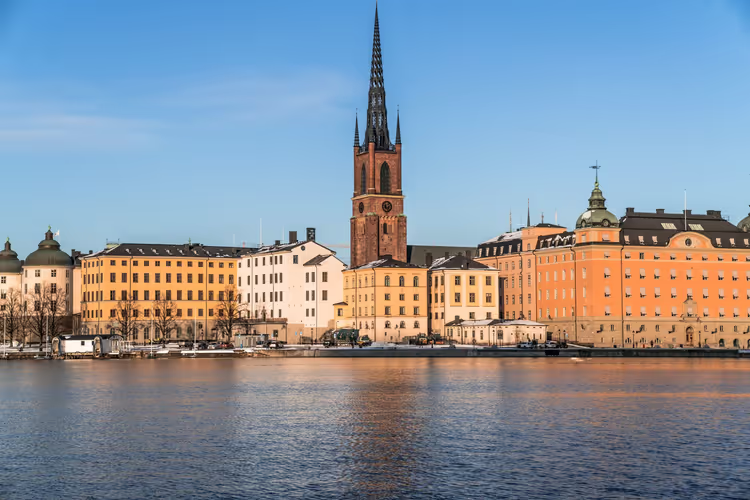
Below, we break down month-by-month weather, the 2026 event calendar, and seasonal prices. Climate data comes from SMHI, opening hours for museums come from their official websites, and holiday dates come from the city tourist office.
Ad: this article contains affiliate links, we earn a commission if you book through them, at no extra cost to you.
Stockholm in short: the three-season rule
💡 In short:
- Peak summer (mid-June to mid-August): the longest days, warm water, all services running at full capacity.
- Shoulder season (May, early June, September, early October): mild weather, major attractions open, hotels noticeably cheaper than the summer peak.
- Winter (mid-November to mid-March): dark and cold, but cheap, with Lucia, Christmas markets, and snow in the old town.
- Weather, daylight, and number of rainy days: as of 09/2026, according to the Swedish meteorological service.
The short version looks like this. Choose June or September if your dates are flexible. For Lucia and the Christmas markets, December is worth the trip. But the damp weeks of late October and early November are better skipped: you get no snow, no holiday lights, and no short lines.
Stockholm weather by month
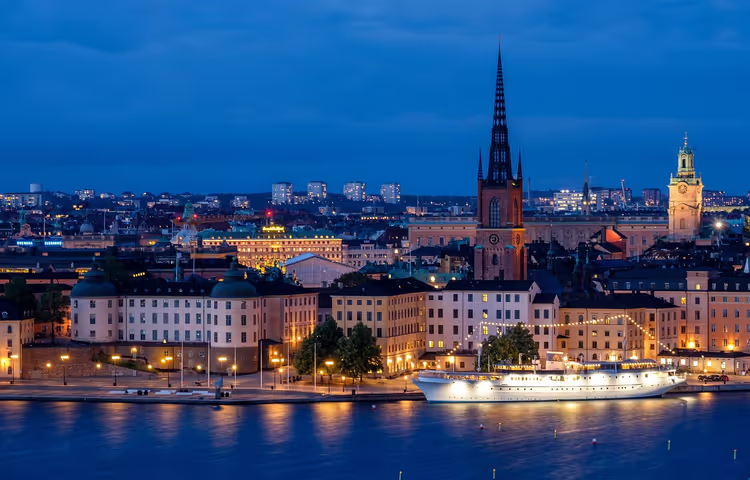
Stockholm sits at 59.3° north latitude, roughly the same latitude as Anchorage, Alaska. That explains the sharp seasonal shifts: in winter you arrive in a city with short daylight, in summer you find yourself where it gets dark after 10:00 PM (as of 09/2026, SMHI meteorological service normals).
 © Jorge Láscar from Melbourne, Australia · CC BYPhoto: Jorge Láscar from Melbourne, Australia, CC BY (https://creativecommons.org/licenses/by/2.0), Wikimedia Commons
Below are monthly averages: daytime and nighttime temperatures, number of rainy days, daylight hours, and tourist traffic level. Treat them as a guide, not a guarantee, and check the forecast closer to your trip.
Month | Day / Night | Rainy days | Daylight | Tourists |
|---|---|---|---|---|
January | -1 / -5 °C | 9 | 6 h 30 min | few |
February | -1 / -5 °C | 8 | 9 h 00 min | few |
March | 3 / -3 °C | 7 | 11 h 30 min | few |
April | 9 / 1 °C | 7 | 14 h 00 min | below average |
May | 16 / 6 °C | 8 | 16 h 30 min | average |
June | 20 / 11 °C | 9 | 18 h 30 min | many |
July | 22 / 13 °C | 10 | 17 h 30 min | peak |
August | 20 / 13 °C | 11 | 15 h 30 min | peak until mid-month |
September | 15 / 9 °C | 10 | 12 h 45 min | average |
October | 9 / 5 °C | 10 | 10 h 00 min | below average |
November | 4 / 1 °C | 11 | 7 h 30 min | few |
December | 1 / -2 °C | 10 | 6 h 15 min | average during holidays |
Source: climate normals from the Swedish meteorological institute SMHI, as of 09/2026. Tourist traffic level is based on seasonal occupancy data from the city tourist office.
A single year can easily break the statistics. July can deliver two cold weeks of rain, while September can bring nearly a month of warmth. So we recommend keeping a plan B: in any month, Stockholm has plenty to do indoors, and more on that below.
Month-by-month guide: January through December
January: quiet, snowy, and cheap
Weather: -1 to -5 °C, frequent snow · Daylight: 6 h 30 min · Tourists: few (as of 09/2026, SMHI)
January in Stockholm is quieter and prettier than people expect from winter: snow settles on the cobblestones of Gamla Stan, the lights above Drottninggatan stay on until mid-January, and there are no lines at museums. In the evening you take shelter in candlelit restaurants, which Swedes call "mys." This is a month worth choosing for museum lovers, photographers, and travelers on a tight budget. Ferries to the archipelago barely run in winter, so plan around the city and museums rather than the islands.
The Vasa Museum and Fotografiska are easier to visit on weekdays in winter; book tickets to Stockholm museums in advance on Tiqets. Fotografiska is open daily from 10:00 to 23:00, with last entry 30 minutes before closing (as of 09/2026, official museum website).
February: the light returns
Weather: -1 to -5 °C, frequent snow · Daylight: 9 h 00 min · Tourists: few (as of 09/2026, SMHI)
In February, daylight increases by more than two hours compared with January, and locals talk about it seriously: "ljuset kommer tillbaka." From February until Easter, bakeries sell semla, cardamom buns with cream, and they are worth trying at least once. People skate on the frozen lakes around the city while the ice holds. You get cheap tickets, available hotels, and empty museum halls. The catch of February is obvious: long walks outside end quickly, and you take refuge in cafes.
March: one of the driest months
Weather: 3 to -3 °C, least rain · Daylight: 11 h 30 min · Tourists: few (as of 09/2026, SMHI)
March and April are the driest months in Stockholm, and in March it is noticeable: rain hardly gets in the way of walking around the city. Snow is still on the ground, but by the end of the month the sun feels like spring, while hotel and ticket prices stay low. If Easter falls late, Easter decorations appear in windows, and children go door to door for candy on Maundy Thursday. For a first trip on a limited budget, March works well: the city is already waking up, but the crowds have not arrived yet.
April: blossoms, Culture Night, and the first terraces
Weather: 9 to 1 °C · Daylight: 14 h 00 min · Tourists: below average (as of 09/2026, SMHI)
 © Jorge Láscar from Melbourne, Australia · CC BYPhoto: Jorge Láscar from Melbourne, Australia, CC BY (https://creativecommons.org/licenses/by/2.0), Wikimedia Commons
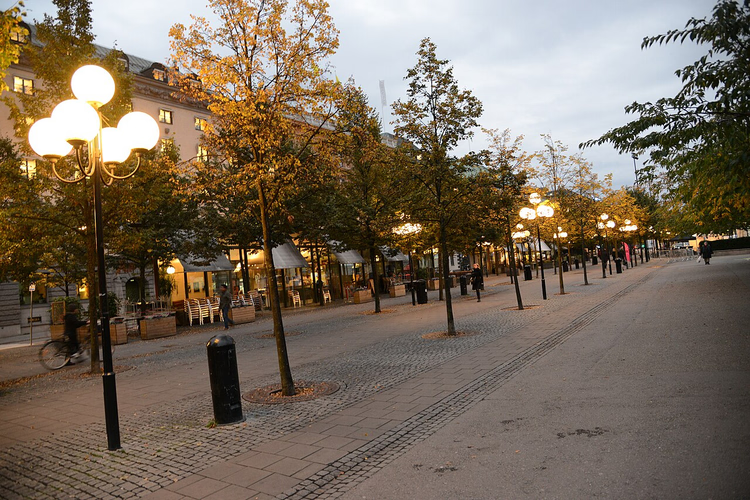
In April the city wakes up: the cherry trees in Kungsträdgården bloom in the second half of the month, cafes open their terraces, and ferries to Fjäderholmarna and Vaxholm run on the summer schedule again. The main event of the month is Culture Night, Kulturnatt: museums, galleries, and theaters are free until midnight. In 2026 it took place on Saturday, April 18, and the next one is set for April 24, 2027 (as of 09/2026, Visit Stockholm). If you are traveling later, aim for the second half of April and book evening tickets in advance.
May: the best balance
Weather: 16 to 6 °C · Daylight: 16 h 30 min · Tourists: average (as of 09/2026, SMHI)
If you are choosing one month, pick May. The days are already long, the leaves are out, the terraces are full, and all the main sights run on summer schedules without the July crowds and prices. The Baltic water is still cold, around 9 °C, so you are unlikely to want to swim. Hotels in May are cheaper than the summer peak, but book them early: the long May weekends are popular with locals too. A good idea for this month is a boat trip through the archipelago without heat, without lines, and without crowded docks.
June: white nights and Midsummer
Weather: 20 to 11 °C · Daylight: 18 h 30 min · Tourists: many (as of 09/2026, SMHI)
 © Bene Riobó · CC BY-SAPhoto: Bene Riobó, CC BY-SA (https://creativecommons.org/licenses/by-sa/4.0), Wikimedia Commons
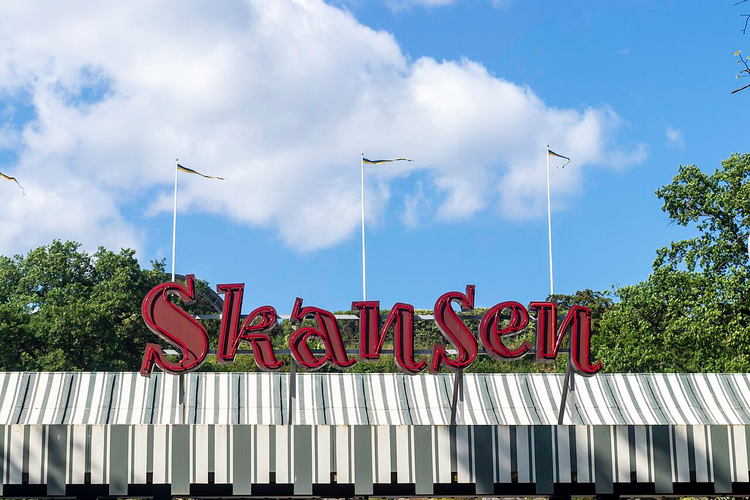
June is the month of white nights: the sun sets late in the evening, and twilight lasts almost until dawn. The water warms to 15-17 °C, the archipelago looks its best, and the city runs at full capacity. Two major events fall on June 6: National Day and the Stockholm Marathon. The main trap of the month is Midsummer, the biggest holiday in Sweden, celebrated on the Friday between June 19 and 25. In 2026 that is June 19. On those days the center empties out, some restaurants close, and transit runs on a holiday schedule. The best place in the city for the celebration is Skansen, where people dance around the maypole.
July: peak season and Swedish vacations
Weather: 22 to 13 °C · Daylight: 17 h 30 min · Tourists: maximum (as of 09/2026, SMHI)
July is the warmest and busiest month of the year, and it comes with a paradox. Swedes start their four-week vacation, so on weekdays many neighborhood restaurants are closed, while weekends and the Vasa and ABBA museums are packed. You can swim at city beaches like Långholmen and Smedsuddsbadet, where the water stays around 20 °C (as of 09/2026, SMHI). Summer ferries run at maximum frequency, and at the end of July Stockholm Pride begins, one of the largest in Europe. Book hotels and ferries two to three months ahead: in July you will not find a free room in the center a couple of days out.
August: festivals and warm evenings
Weather: 20 to 13 °C · Daylight: 15 h 30 min · Tourists: maximum, fewer after mid-month (as of 09/2026, SMHI)
August often turns out to be the best summer month: slightly cooler than July, slightly calmer, with the longest run of festivals and warm water. After mid-month, Swedes return to work and school, and the crowds thin out noticeably. The main event is the Stockholm Culture Festival, the country's largest free festival, held in mid-August on the central squares. That is also when crayfish season starts: kräftskiva parties run through September. If you want both a festival and a free seat on a terrace, come in the first half of the month.
September: golden shoulder season
Weather: 15 to 9 °C · Daylight: 12 h 45 min · Tourists: average (as of 09/2026, SMHI)
September is a favorite month for many Stockholm residents. The crowds disappear, hotels get cheaper, the leaves turn golden, and there is still enough warmth for long lunches on a terrace. Ferries to the archipelago run all month, but some restaurants on the islands close around September 15, so plan an island trip for the first half of the month. Late September is the time for kräftskiva and mushroom outings outside the city. If you want to see the city without lines and with comfortable weather, this is your option.
October: the last warm days
Weather: 9 to 5 °C · Daylight: 10 h 00 min · Tourists: below average (as of 09/2026, SMHI)
In early October you can still catch golden autumn and warm daytime hours. The second half of the month quickly turns gray, damp, and noticeably darker, especially after the switch to winter time on October 25, 2026. Most archipelago ferries stop running by mid-month. This is a calm and cheap time for museums, cafes, and walks through Gamla Stan without tourists. Bring a waterproof jacket: without one, you will get soaked on the first day.
November: dark and the cheapest
Weather: 4 to 1 °C, frequent rain · Daylight: 7 h 30 min · Tourists: few (as of 09/2026, SMHI)
Even locals dislike November: it is dark, damp, and cold, and there is no snow or Christmas lights yet, as those are switched on only with the start of Advent on November 29. On the other hand, this is the cheapest time to visit Stockholm and a good choice for anyone planning to spend their vacation in museums, cafes, and restaurants. The cultural anchor of the month is the Stockholm International Film Festival, which in 2026 runs from November 4 to 15. Daylight is short, so build your route around the light: first streets and waterfronts, then museum halls.
December: Christmas markets and Lucia
Weather: 1 to -2 °C · Daylight: 6 h 15 min · Tourists: average during the holidays (as of 09/2026, SMHI)
 © Jorge Franganillo · CC BYPhoto: Jorge Franganillo, CC BY (https://creativecommons.org/licenses/by/2.0), Wikimedia Commons
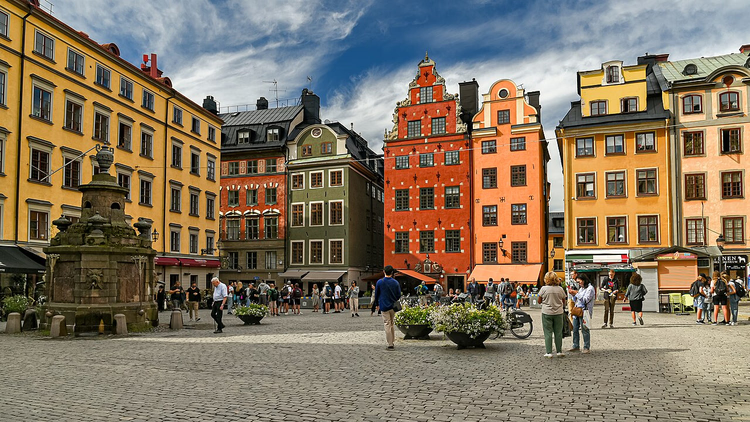
In December the city transforms: the first Advent candle on November 29 opens roughly four weeks of Christmas markets, glögg, and festive shop windows. The essential minimum looks like this: the market at Skansen on weekends, the oldest in Sweden; the daily market on Stortorget in Gamla Stan; and Lucia Day on December 13, when candlelit processions move through churches before dawn. The traditional place for Lucia is Storkyrkan. Keep in mind: Swedes celebrate Christmas on December 24, and on that day almost everything is closed, including restaurants and museums. Check Skansen's opening hours and prices on the official website.
When to go for specific experiences
 © Jorge Láscar from Melbourne, Australia · CC BYPhoto: Jorge Láscar from Melbourne, Australia, CC BY (https://creativecommons.org/licenses/by/2.0), Wikimedia Commons
Northern lights
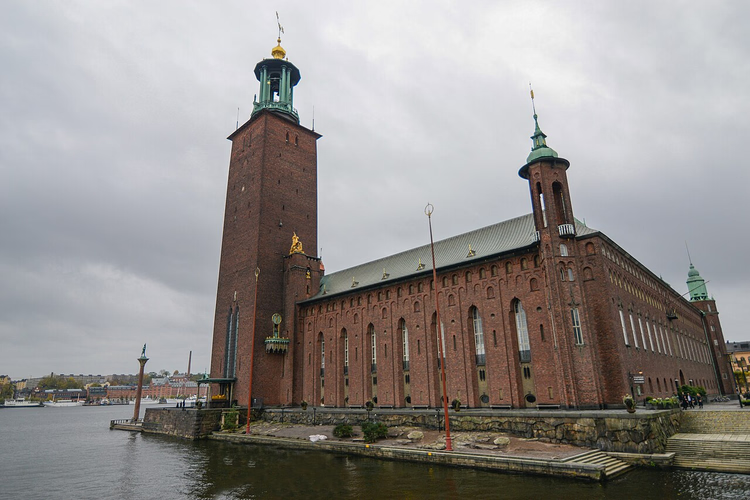
Look at the facts: Stockholm sits at the 59th parallel and is brightly lit, so the aurora is rare here. During a strong geomagnetic storm, you might catch a faint green glow on the northern horizon outside the city. For the real thing, people go to Abisko in Swedish Lapland, about 1,200 km north, from late September to early April. Stockholm in that kind of trip becomes a two-day urban stop, not the reason you came for the sky.
 © US Embassy Sweden · CC BYPhoto: US Embassy Sweden, CC BY (https://creativecommons.org/licenses/by/2.0), Wikimedia Commons
Archipelago
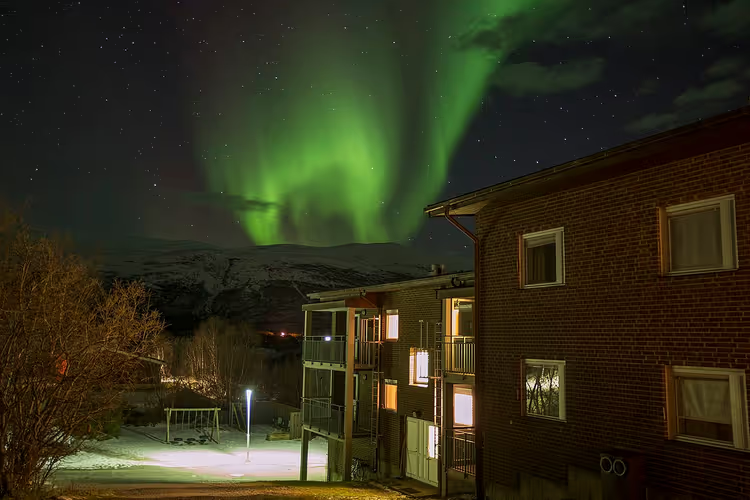
The best time for the archipelago is from mid-June to mid-August, when ferries run frequently, restaurants are open, and the water is warm enough for swimming. The second half of May, early June, and September are also good, but quieter: bring a warm jacket and don't count on an evening swim. Island walks and day trips are easy to book in advance, archipelago tours on GetYourGuide depart from city piers. If you're staying overnight on an island, book your accommodation several months ahead.
 © Esquilo · CC BY-SAPhoto: Esquilo, CC BY-SA (https://creativecommons.org/licenses/by-sa/3.0), Wikimedia Commons
Midsummer
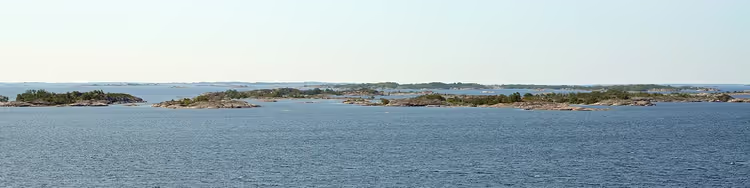
The Friday between June 19 and 25. Accommodation and trains for these dates sell out about two months in advance, and prices in central Stockholm spike. A simple workaround: base yourself not in the center, but in Sigtuna, Vaxholm, or Drottningholm. Traditional celebrations there take place on meadows by the water, and a night costs noticeably less than in the capital.
Christmas markets
The first three weeks of December. The Skansen market runs on weekends, the Gamla Stan market daily. Both close in the week before Christmas, so don't put off your trip until the last days before the holiday.
Lowest prices
January, early March outside the holiday week, and all of November. Hotels in these months cost significantly less than the summer peak, and restaurants that require reservations in summer will seat you without one. The catch is the short daylight hours and the cold: plan around museums, cafes, and saunas.
White nights
From June 10 to July 5, the sun sets after 10:00 PM, and twilight lingers past midnight. For photographers, this light covers a full shooting schedule: soft illumination lasts almost around the clock. You easily lose track of time and end up having dinner at eleven at night.
Swedish food
June means strawberries, asparagus, and new potatoes. August means crayfish. December means julbord, the Christmas buffet with herring, salmon, and homemade sausages. Every summer week brings a new seasonal product, and in winter traditional dishes take center stage.
Tours and tickets in Stockholm
Guided tours, skip-the-line tickets and activities — most offers can be cancelled free of charge.
See offers on GetYourGuideThe widget loads once you give your consent.
Holidays and events in 2026
These dates are traditional or confirmed for 2026; check festival websites before your trip.
Date | Event | What to know |
|---|---|---|
April 18 | Culture Night, Kulturnatt | Museums and galleries free until midnight |
June 6 | National Day and Stockholm Marathon | The center is closed to traffic, arrive early |
June 19 | Midsummer | The city empties out from Thursday to Monday |
late July | Stockholm Pride | Parade and stage in the center, dates announced in spring |
August 12-16 | Stockholm Culture Festival | The country's largest free festival |
November 4-15 | Stockholm International Film Festival | Premiere tickets sell out fast |
November 29 | First Advent | Christmas markets open |
December 10 | Nobel Day | Ceremony at Konserthuset, the city lit up |
December 13 | Lucia Day | Candlelit processions, best at Storkyrkan |
December 24 | Christmas Eve | Almost everything closed, including museums |
We check city event dates against the city tourist office, as of 09/2026.
Practical tips before you book
- Book summer early. Hotels for June and July sell out two to three months ahead, and archipelago accommodation for July weekends is gone by March. Check available dates and current prices on Trip.com.
- Pack layers. Even on a July evening on the water it gets cold, so a warm layer and a windbreaker are essential in any month.
- Plan around July vacations. Many small restaurants and shops close for four weeks, although major museums and ferries keep running.
- Check Swedish public holidays. Midsummer, All Saints' Day, Christmas Eve, and New Year change transport schedules, and shops close by midday.
- Book the expensive things first. Accommodation and ferries get pricier from June 20 to August 15. Book those first, then build the rest of your days around them.
Who should go in which month
- First trip: the first half of June or the first three weeks of September. Warm, long evenings, everything open, crowds still manageable. Take three full days and don't try to squeeze the archipelago into the same visit.
- With kids: from late June through August. The water is warm, ferries run frequently, and Skansen and Gröna Lund are in full swing. Book park and museum tickets in advance: in July the entrance lines are long.
- Couples looking for atmosphere: May with its blossoms and light, or December with snowy Gamla Stan and Lucia. In May a light jacket is enough; in December you need warm boots and a hat.
- On a tight budget: January, early March, and November. Hotels are cheaper, restaurants seat you without a reservation, but you need real winter clothing. Lunch in a food hall will cost you less than a restaurant in the center.
- Photographers: late June for white nights, or snowy January for soft low sun over the old town. In winter the light stays low all day, so you can shoot even at noon.
- Food lovers: August for crayfish and the harvest, or December for julbord. In summer, a new seasonal product appears on menus every week.
If you're unsure, go with the universal option: the first two weeks of June or the first three weeks of September. These dates rarely disappoint. Plan around the weather, not the other way around, and keep museums, saunas, and markets in reserve: they run all year round.
In short: pick your trade-off
Everyone will tell you the best time for Stockholm is summer, but June and September beat July and August on most counts: long days, open services, manageable crowds, and lower prices. If your dates are flexible, aim for the first two weeks of June or the first three weeks of September.
If your trip is tied to winter, choose December for Lucia and the markets, or March for snow and the first warm days. Late autumn is only worth it on a strict budget, and in that case plan your trip around museums and cafes.
⁉️🤔 Frequently asked questions
Which month is best for a trip to Stockholm?
June or September gives you the best balance of weather and price. In June you get the maximum daylight, about 18.5 hours, temperatures around 20 °C, and everything is already open, but the July crowds have not arrived yet. In September the warmth holds, hotels get cheaper, and the archipelago empties out.
When is the cheapest time to go?
November, January, and early March, outside the Christmas week. In exchange, you get short daylight hours and cold. Bring winter clothes and plan around museums.
Is Stockholm expensive to visit?
Yes, the city consistently ranks among the ten most expensive in Europe. Lunch at an ordinary cafe downtown costs more than in Berlin, and a mid-range hotel in summer costs as much as a good room in Prague. Food halls and tap water help you save: the water is excellent quality and free at restaurants.
How many days do you need in Stockholm?
Three days is enough for the essentials on a first trip: Gamla Stan, the Vasa Museum, Skansen, and a boat tour. Five days lets you add a day trip and a night in the archipelago. A week gives you the chance to move at a local pace, without rushing and without a checklist of must-see spots.
Is it dark in Stockholm in winter?
It is dark, but not around the clock like in Lapland. In December daylight lasts about six hours, the sun rises around 09:00 and sets after 14:00. By February there is noticeably more light, and each day is longer than the one before. Build your winter itinerary in short stretches between museums.
Can you see the northern lights in Stockholm?
Rarely. A faint glow appears only during a strong magnetic storm and far outside the city. For reliable aurora viewing, people go to Abisko in Swedish Lapland.
When is Midsummer in Stockholm?
The holiday always falls on a Friday between June 19 and 25; in 2026 it is June 19. For a public celebration in the center, head to Skansen.
When should you go for the Christmas markets?
The first three weeks of December, right after the first Advent. The Skansen market runs on weekends, while the market at Stortorget is open daily.
Is Stockholm worth visiting in winter?
Yes, if you like cold cities. December is carried by Lucia, the markets, and festive shop windows; January and February bring snow, empty museums, and low prices. But you will need serious winter clothing. November, though, we would skip: it brings darkness and damp without the festive payoff.
Does it rain a lot in Stockholm?
Less than in most European capitals: about 540 mm per year, and precipitation is fairly evenly distributed across months (as of 09/2026, SMHI). The rainiest month is August; the driest are March and April. Downpours are usually short, so a light rain jacket solves the problem for your entire vacation.
In short: what to book
The choice comes down to a simple matrix. If this is your first trip, aim for the first two weeks of June or September. If budget matters, go in November or late January. If you are going for the atmosphere, plan for December with Lucia and the Christmas markets.
Hotels in Stockholm get cheaper in the off-season and sell out two months ahead in summer, so start with dates and accommodation: choose dates and a hotel in Stockholm on Trip.com.

A small editorial team writing guides for independent travel. We travel ourselves, but we haven’t been everywhere, so we check prices, opening hours and how to get there against official sources.