

















Carnival, sun or budget: when to go to Rio de Janeiro
Rio de Janeiro lies south of the equator, so the seasons here are mirrored. While Europe is in January, the city is hot and short downpours roll through.
Almost everything depends on the month you travel: the weather, the size of the crowds on the beaches, and the price per night at a hotel. In summer you catch Carnival and New Year's, but you pay the most. In the shoulder season the city gets cheaper, and it's easier to find an available room.
Below is a breakdown of all four seasons: what actually happens in Rio, what to expect from the weather, and when to book accommodation. At the end there's a short table if you need to decide today.
Ad: this article contains affiliate links. We earn a commission if you book through them, at no extra cost to you.
When to go to Rio: seasons in a table
💡 In short:
- Best time for Carnival and New Year's: December-February.
- Best time for a calm city: March-May.
- Driest season: June-August.
- Best time for a budget: September-November.
- City seasons and holidays: 09/2026, according to the Riotur city tourism office.
 © Rafael Rabello de Barros · CC BY-SAPhoto: Rafael Rabello de Barros, CC BY-SA (https://creativecommons.org/licenses/by-sa/3.0), Wikimedia Commons
The four seasons in Rio follow the southern calendar, and each one serves its own purpose. The difference between peak and shoulder season is noticeable both in prices and in the number of people on Copacabana. Keep the table handy when you're choosing dates.
Season | Months | Weather | Crowds and prices | Who it's for |
|---|---|---|---|---|
Summer | December-February | hot, humid, frequent downpours | maximum, accommodation at its most expensive | holidays and Carnival |
Autumn | March-May | milder and drier | lower, except Easter | calm city life |
Winter | June-August | driest season, cool evenings | moderate | walks and Festas Juninas |
Spring | September-November | sunny, humid again by November | low | budget and trips around the state |
Average daytime temperatures stay around 31 °C at the height of summer and drop to 24 °C in July, while winter nights rarely fall below 15 °C (as of 09/2026, Weather Spark). For comparison: in July and August there's almost no rain, while in January downpours arrive almost every day.
The city sits between mountains and ocean, so the weather differs by neighborhood. The beaches are windier, the Tijuca mountains are cooler, and downtown is muggy during the day. You can easily move from heat to freshness in half an hour of travel. Plan your walks for morning or evening.
Summer in Rio: Carnival and New Year's
Southern summer runs from December through February and coincides with the most expensive season of the year. Days are hot and humid, downpours come often but quickly give way to sun. These are the months when the city hosts New Year's and Carnival.
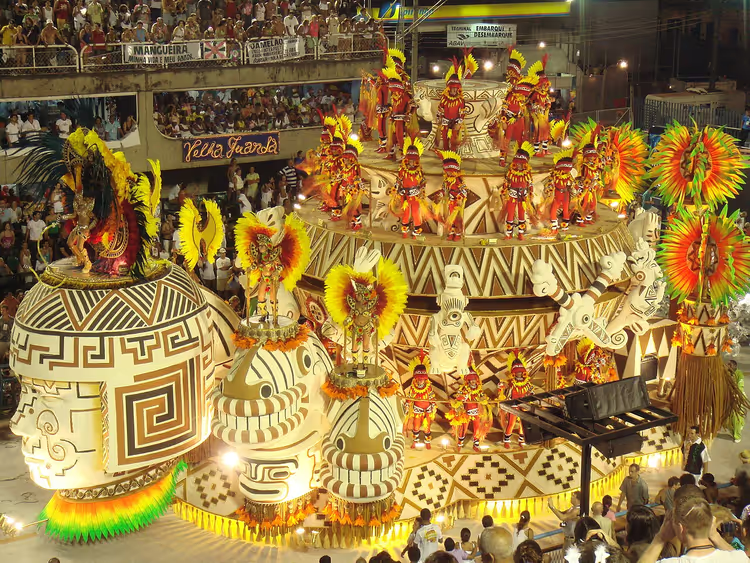
New Year's on Copacabana draws the biggest party of the year, and hotels on the waterfront are booked months in advance. Carnival usually takes place in February, but the dates differ every year and sometimes the holiday shifts to March. In 2027, the Sambadrome parades are scheduled for February 5-13 (as of 09/2026, Rio Carnaval).
The holiday lasts only a few days, but preparation goes on for months. Street parties start almost every weekend from early January. If you're not ready for peak prices, come a couple of weeks before the parades or right after them: the atmosphere remains, and the accommodation bill is lower.
 © Sergio Luiz · CC BYPhoto: Sergio Luiz, CC BY (https://creativecommons.org/licenses/by/2.0), Wikimedia Commons
- Who it's for: those who want to see Carnival and the New Year's fireworks.
- Not for: those looking for quiet streets and low prices.
- The catch: accommodation during this period costs several times more and gets booked up months ahead.
In summer, look for accommodation in advance on Trip.com. Neighborhoods away from the beach cost noticeably less and are connected to the shore by metro.
Autumn in Rio: how locals live
Autumn arrives in March and takes the summer mugginess with it. Temperatures become mild, there's less rain, and the city returns to its working rhythm. After Carnival, Brazilians say the year is only just beginning.
From March through May there are noticeably fewer tourists, except for Easter week. This is the best time to see Rio without the stage set for visitors. Cariocas go back to work, cafes fill with locals, and the beaches empty out by evening.

- Who it's for: those who want to understand the city's everyday life.
- Not for: those who come only for beach heat.
- The catch: Easter week pushes prices up to summer levels and brings the crowds back.
The weather in these months is steady, so you can comfortably walk around downtown during the day. Bring a light jacket for the evening: after sunset the air cools faster than you expect. That way you won't get cold by the water.
Winter in Rio: dry season and Festas Juninas
In winter, Rio is cool only by local standards. Days are still warm, and evenings turn fresh. This is the driest season of the year, although cold fronts sometimes bring gray skies and a short rain.
Locals react to the cool as if it were freezing and put on hats, so don't be surprised. Light layers and a windbreaker for the evening are enough for you. There's almost no rain, so you can plan long walks around the city and the mountains without watching the sky.
Winter is when Festas Juninas begin: June and July celebrations in honor of saints with folk dances, costumes, and drinks. They range from school matinees to parties with caipirinha until dawn. You can find such a party in almost any neighborhood of the city.
 © Leandro Neumann Ciuffo · CC BYPhoto: Leandro Neumann Ciuffo, CC BY (https://creativecommons.org/licenses/by/2.0), Wikimedia Commons
- Who it's for: those who love dry weather and local festivals.
- Not for: those who expect tropical heat by the sea.
- The catch: cold fronts bring cloudy and cool days.
Spring in Rio: the best season for a budget
Spring in Rio mirrors autumn in terms of weather: warm, but without the summer mugginess. In November it gets humid again, and short downpours return. School holidays are over, so the city lives more calmly than in January.
Days are sunny, and the cultural calendar is packed. From September through November there are concerts, sports, and music festivals. Outside national holidays, you can easily find a free table and a spot on the beach, and prices stay low.
It's also the best time for trips around the state of Rio. From the city it's easy to reach historic Paraty, the calm beaches of Ilha Grande, and the mountain town of Petrópolis. A rental car gives you freedom on the coast and in the mountains: book it in advance on DiscoverCars.
- Who it's for: those who want to save money and see more.
- Not for: those who come specifically for Carnival.
- The catch: by late November, humidity and downpours return.
Practical tips: what to pack and when to book
The main rule: book accommodation for New Year's and Carnival several months in advance. On peak dates there are almost no available rooms left, and prices rise every week. Easter week is also better to lock in early, otherwise you pay summer rates.
What to put in your suitcase. In summer you need light clothing, a hat, and a raincoat: downpours are short but sudden. In winter, add a sweater and a windbreaker for the evening, and keep your swimsuit, because it's still warm by the sea during the day.
Don't forget the small things. Bring high-SPF sunscreen and insect repellent for walks near the mountains and water. A towel and an umbrella can be bought locally in any neighborhood.
⁉️🤔 Frequently asked questions
When is the driest season in Rio?
The driest months in Rio are June, July, and August. Cold fronts sometimes bring cloudy days, so a light windbreaker in your suitcase won't hurt. The beaches are emptier at this time, and you can walk around the city without the summer mugginess.
Is it worth going to Rio for Carnival?
Yes, if the Sambadrome parades and street parties matter to you. Check the parade dates in advance, because they change every year. Book accommodation for these days several months ahead.
When is Rio cheapest?
The cheapest time to come is September-November. After school holidays there are fewer tourists, and accommodation prices stay low. The shoulder season in March-May also works for a budget trip, as long as you avoid Easter week.
What should I bring to Rio in winter?
Light layers and a windbreaker for the evening. Nights here are cool, and during the day you can comfortably walk around in a T-shirt. A raincoat is almost unnecessary in winter, but in summer it comes in handy because of the frequent downpours. You can skip a warm jacket.
Can you get out of Rio to the sea and the mountains?
Yes, spring is the best time for such trips. Trips take a day or more, so plan them in advance and don't overlap them with peak holidays.
In short: what's worth booking
The bottom line is simple: the season sets the mood of the trip. Any month is good if you lock in accommodation in advance and don't fight the weather.
If holidays are your priority, book accommodation near the waterfront early. If budget is, look at the shoulder season and neighborhoods away from the beach. For trips around the state, leave a few free days and book excursions on GetYourGuide.

A small editorial team writing guides for independent travel. We travel ourselves, but we haven’t been everywhere, so we check prices, opening hours and how to get there against official sources.