
















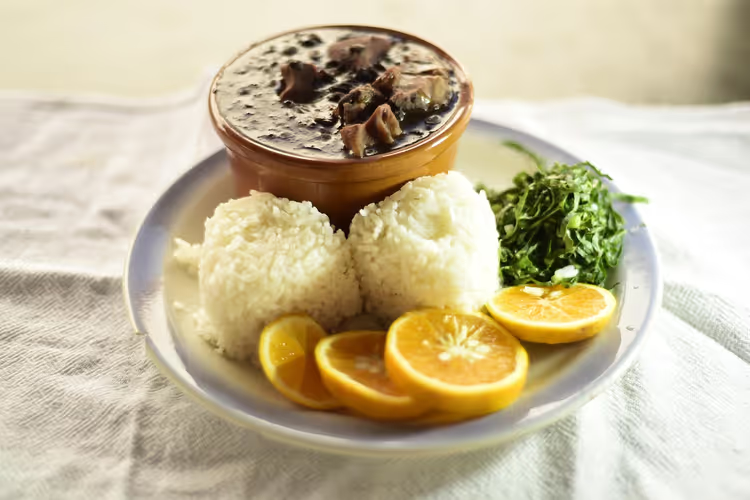
National cuisine of Brazil: five dishes from cheese bread to seafood
Brazilian cuisine rests on two clichés: meat on a spit and fruit all year round. In reality, it is much broader. Many people go home without ever trying feijoada or cheese bread, simply because they do not know the names.
This kind of food is an everyday thing, not just a restaurant thing. Feijoada is served in ordinary lunch spots, and cheese bread is sold in every bakery (padaria). In December 2024, UNESCO added the production method of Minas cheese to its intangible heritage list (according to the UN), and this cheese is the foundation of Brazil's signature snack.
We have put together five dishes to start your introduction to the country. Below you will find what they are, where to look for them, and what to order alongside.
What to try in Brazil: a quick cheat sheet
💡 In short:
- Cheese bread (pão de queijo): a warm snack made from cassava starch and Minas cheese.
- Feijoada: black beans with meat, rice, collard greens, and farofa.
- Caipirinha: a cocktail made with cachaça, lime, and cane sugar.
- Churrasco: meat over coals, the main cut is called picanha.
- Seafood: moqueca in coconut milk and acarajé from street carts.
- Dish composition and regions: 09/2026, according to the official tourism portal of Brazil.
Below we break down each dish in order: taste, typical place, and honest catches.
Dish | Taste | Where to get it |
|---|---|---|
Cheese bread | cheese, warm dough | bakeries, breakfast |
Feijoada | smoky, hearty | lunch spots, Wednesday and Saturday |
Caipirinha | lime, sugar, alcohol | bars and street cafés |
Churrasco | meat over coals, salt | churrascaria |
Seafood | coconut, dendê, sea salt | coastal markets |
1. Cheese bread (pão de queijo)
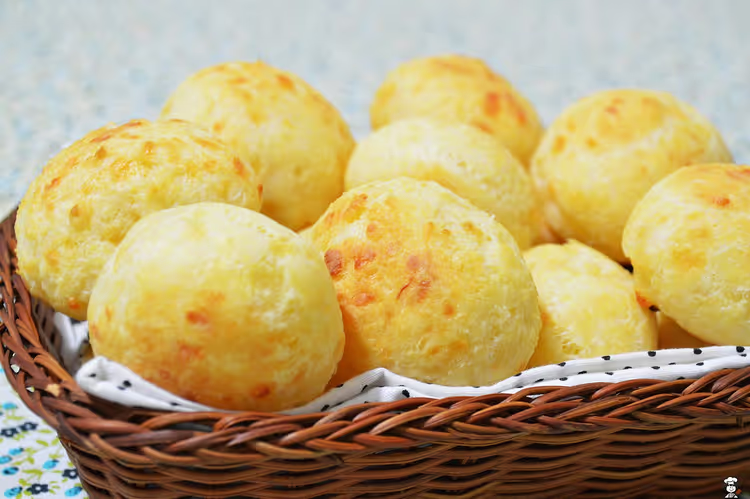
Cheese bread comes from the state of Minas Gerais. The dough is made with cassava starch (polvilho) and grated Minas cheese, so the classic recipe contains no wheat flour. The outside is crispy, and the inside is stretchy with cheese.
 © Murilo manzini · CC BY-SAPhoto: Murilo manzini, CC BY-SA (https://creativecommons.org/licenses/by-sa/4.0), Wikimedia Commons
Look for it in bakeries (padaria), at hotel breakfasts, and at bus station kiosks. Supermarkets sell frozen versions, but you will probably not like them. Get a small portion and eat it right away while the bread is hot.
- Where to look: bakeries, hotel breakfasts, bus stations, and airports.
- The catch: once cooled, the bread becomes dense and chewy; the flavor only comes through when it is hot.
2. Feijoada
Feijoada is made from black beans and pork. The classic pot includes smoked lingüiça sausage, ribs, ears, and trotters, which gives it a smoky and very rich flavor. The result is a thick stew, not a soup.
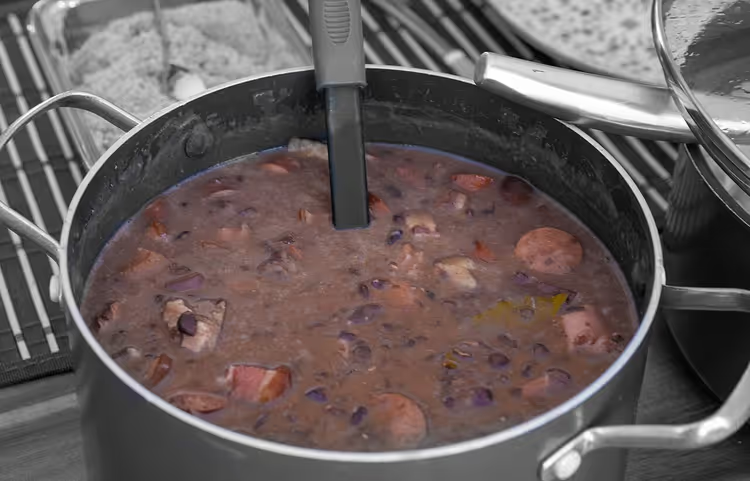
It is served with white rice, stewed collard greens (couve), farofa (toasted cassava flour), and orange slices. The orange is not just decoration: the acidity cuts through the richness. Portions are huge, so if you split a plate between two people, nobody will leave hungry.
- Where to look: lunch spots and national cuisine restaurants, most often on Wednesdays and Saturdays.
- The catch: the dish is heavy and fatty, so do not plan a long sightseeing tour right after.
3. Caipirinha
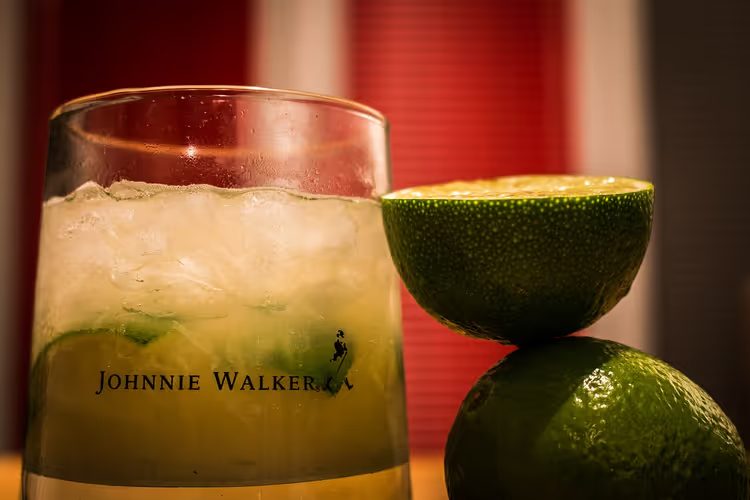
Caipirinha is made with cachaça, a strong spirit distilled from sugarcane. The glass gets lime, cane sugar, and ice. The lime is muddled with sugar carefully: if you mash it into a pulp, the drink turns bitter.
 © Digital-Designs · CC BYPhoto: Digital-Designs, CC BY (https://creativecommons.org/licenses/by/2.0), Wikimedia Commons
The drink is strong. Under Brazilian decree, caipirinha contains between 15 and 36% alcohol (as of 09/2026, per the decree text). Sugar and lime mask the alcohol, so in hot weather it is easy to drink too much. Take it slowly, in small sips.
Do not like cachaça? Order a caipiroska with vodka or a caipiríssima with rum: same formula.
- Where to look: bars, street cafés, waterfronts, and beaches.
- The catch: because of the sugar, the strength feels weaker than it actually is.
4. Churrasco
Churrasco is based on meat roasted over coals on a spit. The tradition comes from the south, from Rio Grande do Sul, where gauchos roasted large cuts of beef over an open fire. Today it is cooked this way across the country.
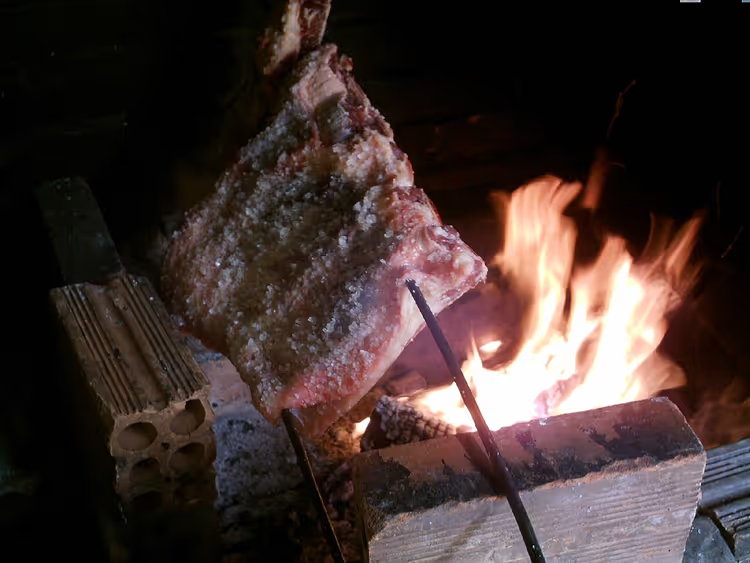 © Julio Cesar Martins · CC BY-SAPhoto: Julio Cesar Martins, CC BY-SA (http://creativecommons.org/licenses/by-sa/3.0/), Wikimedia Commons
The main cut is called picanha. It is the top part of the beef rump with a fat cap that keeps the meat from drying out. At a churrascaria restaurant, the rodízio system works like this: a server walks around with a spit and slices a piece onto your plate until you say stop. Ask for a juicier piece and do not hesitate to turn down an overcooked one.
- Where to look: churrascarias with rodízio, especially common in São Paulo and in the south.
- The catch: a rodízio dinner drags on for a long time, and the buffet sides fill you up before the meat does.
5. Seafood: moqueca and acarajé
The coast of Brazil has its own gastronomy. The main dish here is moqueca: fish or shrimp stewed in coconut milk and dendê palm oil. Versions vary by state, and in Espírito Santo moqueca is made without palm oil at all.
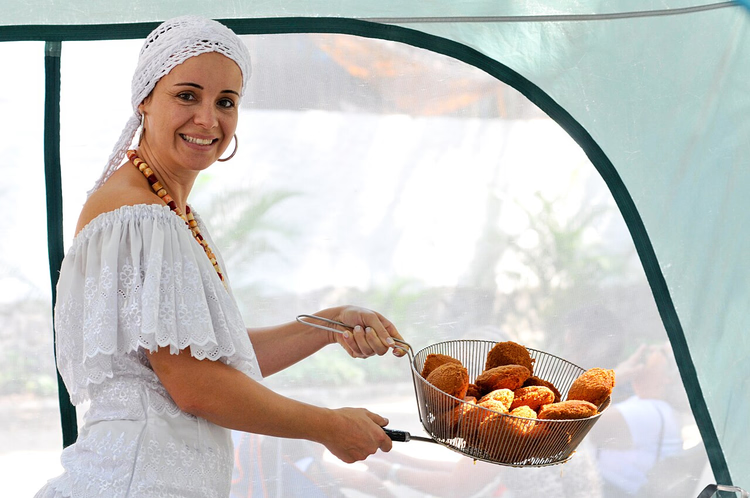
Acarajé is just as beloved: balls of peeled black-eyed peas are fried in dendê and stuffed with vatapá and salad. A survey of Brazilian travelers ranked acarajé first among gastronomic experiences, with moqueca in second place (as of 09/2026, per the survey).
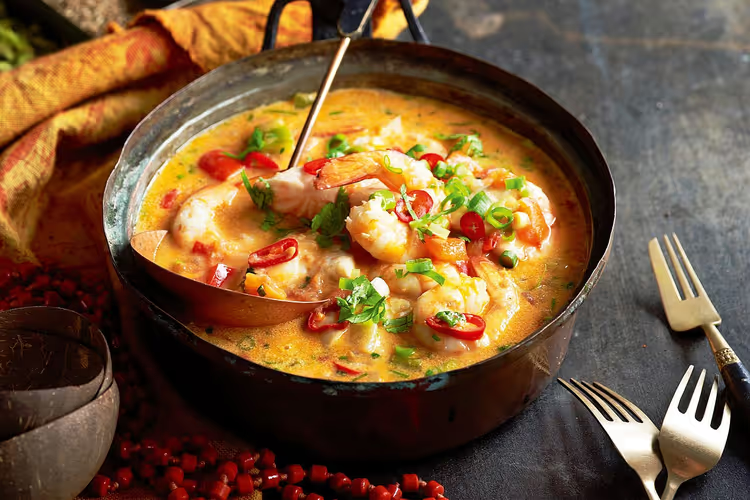 © BR · CC BY-SAPhoto: BR, CC BY-SA (https://creativecommons.org/licenses/by-sa/4.0), Wikimedia Commons
For fresh fish and oysters, head to morning markets and simple eateries near the port. Oysters are shucked in front of you, and the menu changes almost daily.
- Where to look: coastal markets, portside eateries, street carts in Bahia.
- The catch: acarajé is fried in dendê and contains thick vatapá; a sensitive stomach is better off starting with moqueca.
⁉️🤔 Frequently asked questions
Which dish should I try first in Brazil?
Start with cheese bread: it is easy to find, cheap, and requires no ordering. If you want a hearty lunch, go for feijoada on Wednesday or Saturday. Save churrasco for the evening and seafood for a day by the ocean.
Is cheese bread suitable for gluten intolerance?
Yes, the classic recipe contains no wheat. But check the label at the supermarket: some producers add wheat. At a bakery, just ask whether the dough contains wheat flour.
How strong is caipirinha?
The strength ranges from 15 to 36% under Brazilian decree (per the decree text), meaning it is at the level of fortified wine and above. In hot weather, limit yourself to one serving and drink water between sips.
How is churrasco different from regular barbecue?
In the size of the cut and the serving style. Churrasco roasts large cuts whole and slices them right on the spit, rather than cooking individual steaks.
Where is the best place to try seafood?
On the coast, near morning fish markets. In Bahia, get moqueca and acarajé; in Santa Catarina, oysters; in Rio, grilled fish. Ask what was caught today.
In short: what is worth booking
If you have only one evening, get a caipirinha and churrasco at a churrascaria with rodízio. If you want to understand the cuisine more deeply, start with cheese bread for breakfast and feijoada on Wednesday. If you are heading to the ocean, plan moqueca for lunch and acarajé as a street snack.
For more on the country, weather, and logistics, read our Brazil guide.

A small editorial team writing guides for independent travel. We travel ourselves, but we haven’t been everywhere, so we check prices, opening hours and how to get there against official sources.