
















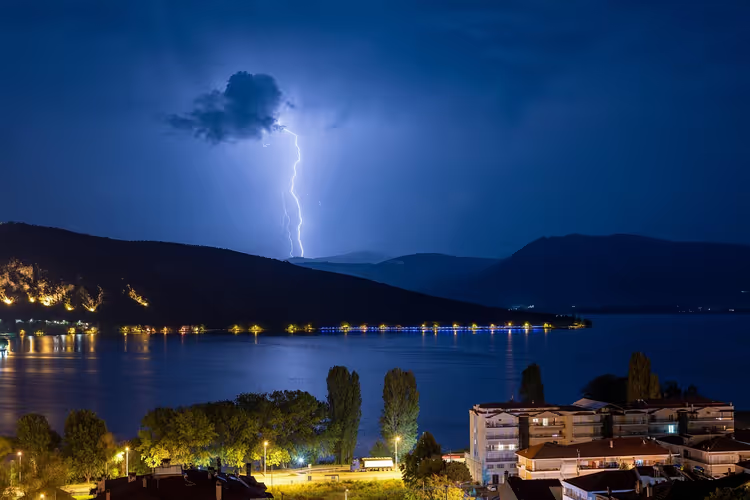
Catatumbo lightning over Lake Maracaibo: when to go and how to see the eternal storm
Lightning flashes here hundreds of times a night, yet thunder is barely audible. Over the southwestern part of Lake Maracaibo in Venezuela, a storm rages almost every night, one that sailors for centuries called a lighthouse. The flashes are visible from 400 km away, and NASA satellites count about 250 discharges per square kilometer per year (As of 09/2026, Wikipedia). This is Catatumbo lightning, the most thunderstorm-prone place on the planet.
The phenomenon occurs 140 to 160 nights a year (As of 09/2026, Wikipedia). Getting there is not easy. The southern part of the lake lies in the border zone of Zulia state, and the German Foreign Office warns against travel to these very states (As of 09/15/2026, Auswärtiges Amt).
Below, we will look at what this phenomenon is, why the lightning is silent, and how to organize a trip to the lake.
Ad: this article contains affiliate links, we earn a commission if you book through them, at no extra cost to you.
What Catatumbo lightning is
💡 In short:
- Catatumbo lightning flashes over the southwestern part of Lake Maracaibo, in Zulia state.
- Peak activity occurs during the rainy season, especially in September and October.
Catatumbo lightning (Spanish: Relámpago del Catatumbo) strikes over the marshes at the mouth of the Catatumbo River. The river flows into Lake Maracaibo in the southwestern part of the body of water, so the center of the phenomenon lies in Zulia state. The storm clouds hang above one kilometer, but the discharges rarely extend beyond the clouds.
You see the light but do not hear the thunder. Thunder is produced with every discharge, including inside the cloud. But observers are usually far from the center, and the sound fades along the way. That is why the phenomenon has been nicknamed the "Everlasting Storm."
Where the Catatumbo River is
The Catatumbo River begins in northeastern Colombia and ends in Lake Maracaibo. Its basin lies in two countries at once, Colombia and Venezuela. In length and volume, the river is inferior to the Amazon and the Orinoco, but the storm center at its mouth has no equal.
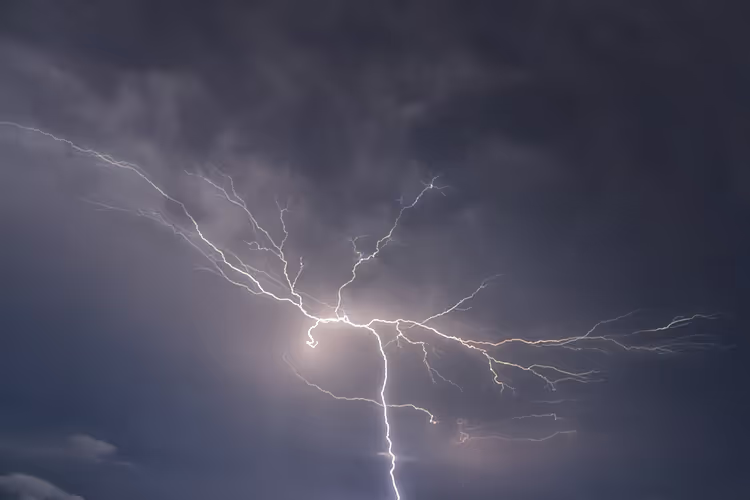 © Fernando Flores from Caracas, Venezuela · CC BY-SAPhoto: Fernando Flores from Caracas, Venezuela, CC BY-SA (https://creativecommons.org/licenses/by-sa/2.0), Wikimedia Commons
Lake Maracaibo covers an area of about 13,000 km² and is squeezed between two mountain ranges, the Cordillera de Mérida and the Sierra de Perijá (As of 09/2026, Wikipedia). If you look at a map of Venezuela, you will find the lake in the northwest of the country. The river's name in the language of the Barí people means "house of thunder."
Amazing facts
In a single night, the storm produces up to 280 discharges per hour, and over a year they add up to more than a million (As of 09/2026, Wikipedia). You can see the flashes even from an airplane, tens of kilometers from the lake.
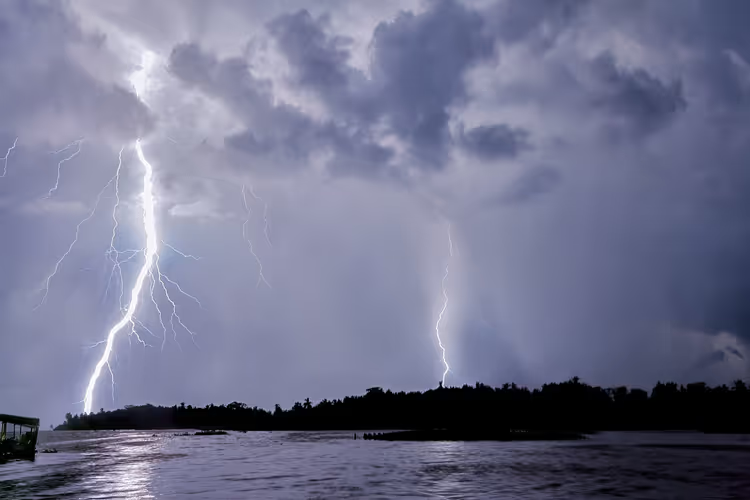 © Fernando Flores from Caracas, Venezuela · CC BY-SAPhoto: Fernando Flores from Caracas, Venezuela, CC BY-SA (https://creativecommons.org/licenses/by-sa/2.0), Wikimedia Commons
Sailors steered toward the flashes as if they were a lighthouse and called the phenomenon the "Lighthouse of Maracaibo." The Catatumbo lightning even made it onto the flag and coat of arms of Zulia state (as of 09/2026, Wikipedia). The history of the phenomenon was known long before science: Alexander von Humboldt described it in 1826.
The Barí, Wayuu, and Yukpa peoples wove the storm into their beliefs for centuries. In 2010, the flashes went dark for three months for the first time in a long while due to a drought, and scientists began talking about the possibility that the phenomenon could disappear (as of 09/2026, Wikipedia).
Why Catatumbo lightning flashes without thunder
The reason is the collision of air masses. Warm, humid winds come from the Caribbean Sea, while cold ones descend from the Andes. Over the lake, the currents meet and swirl counterclockwise, forming a thunderstorm.
The Sierra de Perijá and Cordillera de Mérida mountain ranges squeeze the plain from three sides. The humid air has nowhere to go and accumulates over the marshes. The lake sits on oil deposits, and the marshes release methane. Research from 1997 to 2000 linked the flashes to methane, but that model was later challenged (as of 09/2026, Wikipedia).
Most discharges close within the clouds, but they still produce thunder. The sound fades over distance, so from far away you see only the light. Because of the continuous flashes, the phenomenon is considered one of the largest sources of tropospheric ozone (as of 09/2026, Wikipedia).
How to see Catatumbo lightning
To see the storm up close, you travel to the southern part of Lake Maracaibo. From the Puerto Concha dock, boats go through the mangroves to the stilt villages of Congo Mirador and Ologá. The small houses stand right over the water, and tourists stay overnight in them.
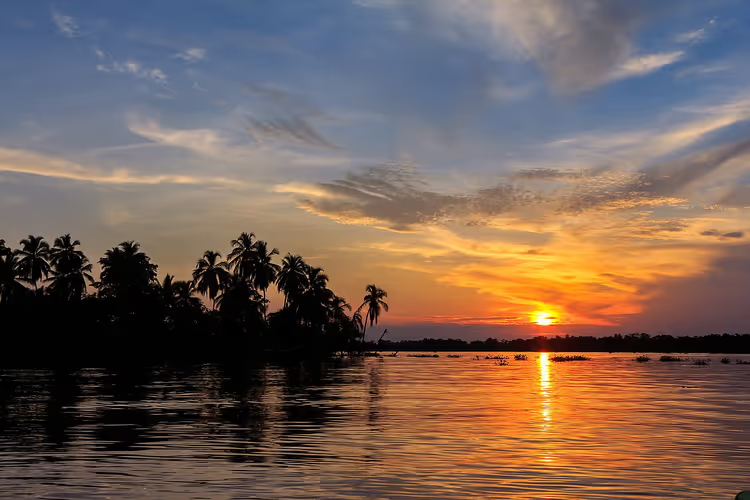 © Fernando Flores from Caracas, Venezuela · CC BY-SAPhoto: Fernando Flores from Caracas, Venezuela, CC BY-SA (https://creativecommons.org/licenses/by-sa/2.0), Wikimedia Commons
The best way to watch the flashes is from the water. Take a nighttime boat trip and a flashlight: in the light you can spot caimans and birds. The rainy season runs roughly from April to November, with the peak in September and October (as of 09/2026, Wikipedia).
The natural phenomenon has no fixed schedule. Tours to the region are sold by local agencies in Maracaibo, usually as multi-night programs with transfers and overnight stays in stilt houses.
Tours and tickets in Maracaibo
Guided tours, skip-the-line tickets and activities — most offers can be cancelled free of charge.
See offers on GetYourGuideThe widget loads once you give your consent.
How to get to Lake Maracaibo
The closest base for the trip is in Maracaibo, where La Chinita Airport (MAR) operates. Direct flights connect the city with Caracas: the flight takes about 1 hour 15 minutes, covering a distance of about 520 km (as of 09/2026, flightsfrom.com).
Buses and taxis run from the airport into the city. A night bus travels from Caracas to Maracaibo, and the journey takes about 10 to 12 hours.
Before you travel, check the current Reisehinweis. The German Federal Foreign Office warns against travel to the border states, including Zulia. The ministry advises against travel to the rest of the country. The city of Maracaibo itself is excluded from the warning for the border states (as of 15.09.2026, Reisehinweis of the German Federal Foreign Office). We cover another natural landmark of the country separately: Canaima National Park in Venezuela.
Catatumbo River on the map
The map below shows the river's location on the southwestern side of the lake. You can also open the point in OpenStreetMap.
⁉️🤔 Frequently asked questions
Can you see the Catatumbo lightning every day?
There is no guarantee of flashes on a specific date. In the dry season, the flashes weaken or disappear for weeks. Plan your trip with a buffer of several nights.
Is it true that Catatumbo lightning is silent?
These lightning strikes do produce thunder, like any others. The rumbles are barely audible if you are far from the source. Close to the storm zone itself, ordinary thunder is still possible.
How much does a trip to Lake Maracaibo cost?
There are no public tickets for this natural phenomenon; viewing it is free. You pay for the transfer, an overnight stay in a stilt house, the boat, and the work of a local guide. Multi-night programs are sold by agencies in Maracaibo; ask them directly for the price.
Is it safe to travel to this region?
The storm zone lies in Zulia state, about which the German Federal Foreign Office warns against travel. Check the current Reisehinweis before buying tickets. In Maracaibo itself, the crime situation remains tense, so avoid walking around after dark.
How do you get to the storm zone?
The base for the trip is in Maracaibo, which has La Chinita Airport. From there, you head south along the lake to the Puerto Concha dock, where a boat takes you through the mangroves to the stilt villages. Organized tours include the transfer and overnight stay.
In short: what to book
Catatumbo produces the densest lightning hotspot on the planet, but it is not a typical tourist attraction. There are no ticket offices or schedules: the phenomenon itself is free, and you pay for the road, the boat, and the overnight stay.
- If you have a couple of free nights: take a local program to the south of the lake and do not count on flashes on a specific evening.
- If you are planning the trip from far away: first check the Reisehinweis, then book the transfer and accommodation.
- Base for overnight stays in the city: hotels in Maracaibo on Trip.com.
Plan your trip in advance and leave a buffer of several nights.

A small editorial team writing guides for independent travel. We travel ourselves, but we haven’t been everywhere, so we check prices, opening hours and how to get there against official sources.