
















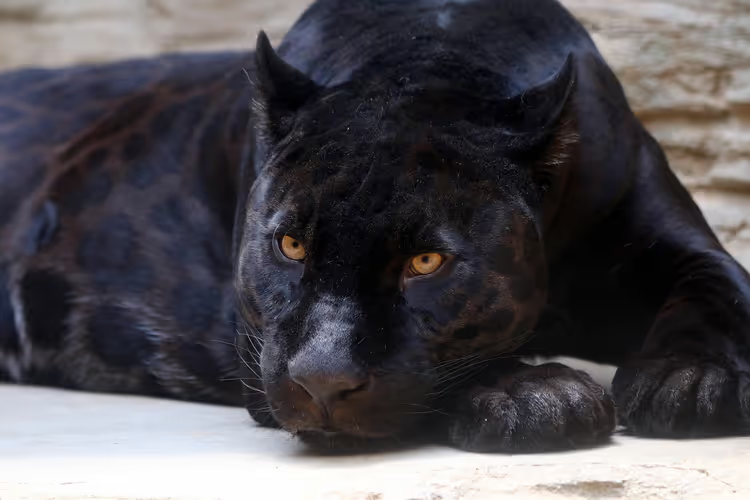
Pantanal in Brazil: where to see jaguars and when to go
In the Pantanal, you can see a jaguar right at the water's edge. It is the largest tropical wetland on the planet, and wild animals here are observed not in enclosures but in their natural habitat. But not everyone manages to spot the predator from a boat: the season, the base, and the operator decide almost everything.
We explain how a trip to the Pantanal works, where to start from, and when to go for jaguars, caimans, and hyacinth macaws. Below you will find specific starting points, lodging options, and a breakdown of the seasons.
The season and the base matter more than the route: animals stay in different areas during the dry and rainy periods, so the itinerary is chosen to match the goal of the trip, not the other way around.
Ad: this article contains affiliate links, we earn a commission if you book through them, at no extra cost to you.
Why the Pantanal is worth the trip
💡 In short:
- Best season for wildlife: the dry season, from May through September.
- It is more convenient to start from the north, from Cuiabá, or from the south, from Campo Grande.
- You should stay at a fazenda with a guide, a boat, and a transfer.
The Pantanal lies at the junction of Brazil, Bolivia, and Paraguay, with most of it falling within the Brazilian states of Mato Grosso and Mato Grosso do Sul. It is an open flooded plain, not a rainforest: animals are visible from the water and from dirt roads. In the Amazon that does not work, there the animals hide in the treetops.
The Pantanal conservation area is a UNESCO World Heritage Site, a cluster of four protected areas totaling about 188,000 hectares (as of 09/2026, World Heritage list). Verified on 09/12/2026 on the organization's official website.
Species diversity is also high: about 650 bird species and more than 300 fish species, plus giant otters, marsh deer, tapirs, and jaguars (as of 09/2026, Discover Wildlife). Capybaras and caimans appear here on every kilometer of the route.
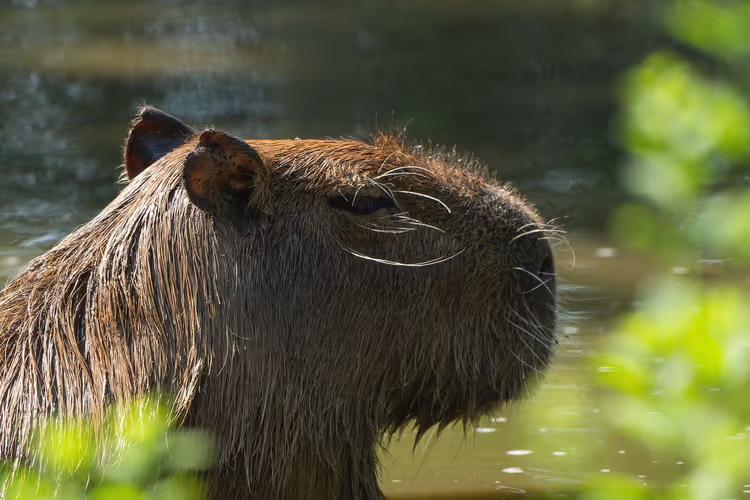
A capybara is not exotic here, it is the backdrop of the trip. The world's largest rodent calmly stands by the roadside while you photograph a caiman two meters from the bank.
Important: in 2024, the Pantanal experienced record-breaking fires, with about 2 million hectares burned (as of 09/2026, EJF). Before the trip, check the current situation with your operator so you do not arrive in the middle of seasonal fires.
How trips to the Pantanal work
Tourism here is well organized, and taking an organized trip often works out cheaper than going independently. Prices vary widely between operators, so compare offers and read what is included in the price.
A package usually includes lodging at a fazenda, meals, a guide, walking excursions, and boat outings. Many fazendas officially host guests and arrange transfers from Cuiabá or Campo Grande themselves. If you are short on time, start with a package.
It is convenient to browse tour ideas in advance: below are ready-made cards for the region.
Tours and tickets in Pantanal
Guided tours, skip-the-line tickets and activities — most offers can be cancelled free of charge.
See offers on GetYourGuideThe widget loads once you give your consent.
Where to start: Cuiabá or Campo Grande
Two convenient entry points lead into the Pantanal, and the choice between them shapes the character of the trip. The northern start is Cuiabá, from there you reach the Transpantaneira. The southern start is Campo Grande, which leads to the Estrada Parque.
Agencies in Cuiabá are more expensive, but they work more individually and go deeper into untouched areas, so the chances of seeing wildlife are higher there. Fazendas near Campo Grande are geared toward budget travelers: larger groups, less comfort.
If quiet and wildlife watching matter to you, choose the north. If price matters and you are fine with large groups, the south will work.
Criterion | Cuiabá (north) | Campo Grande (south) |
|---|---|---|
Road | Transpantaneira | Estrada Parque |
Style | Private tours | Budget groups |
Price | Higher | Lower |
Comfort | Higher | Simpler |
Chance of seeing a jaguar | Higher | Lower |
It is convenient to look at hotels in Cuiabá in advance: hotel selection on Trip.com.
Transpantaneira: the road through the Pantanal
The Transpantaneira is not a highway but a dirt road from Poconé to Porto Jofre, about 140 km with dozens of wooden bridges (as of 09/2026, Wikipedia). The road cuts through the heart of the Pantanal south of Poconé and continues on through the wetlands.
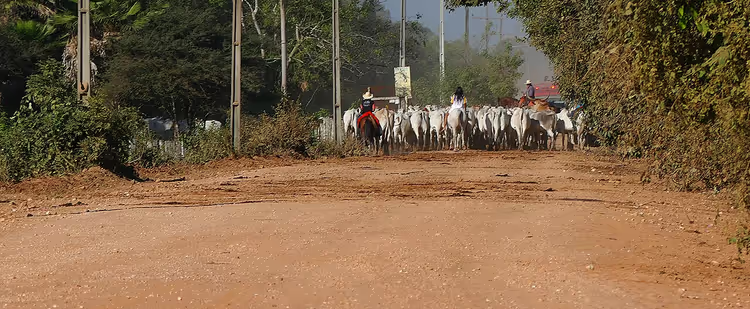 © Bernard DUPONT from FRANCE · CC BY-SAPhoto: Bernard DUPONT from FRANCE, CC BY-SA (https://creativecommons.org/licenses/by-sa/2.0), Wikimedia Commons
In the rainy season it is often flooded, and you can only get through in a properly equipped vehicle. In summer, herons stand along the roadsides and capybaras run across the road, so you drive slowly and keep braking.
Giant otters, marsh deer, and tapirs live here. Jaguars are best looked for near Porto Jofre, which is reached by the same road. In the rains this section is closed, so plan for the dry season.
Where to stay on the Transpantaneira
Several fazendas along the road take guests. They are simple, with no frills, but they sit right in the environment. A more comfortable option with a tour is Pousada Araras Eco Lodge, where hyacinth macaws nest in the garden.
Pousada Araras prices on Trip.com
Jaguars in the wild
Jaguars are seen here in the wild, and the best base for that is Porto Jofre. The company Pantanal Nature from Cuiabá takes groups with experienced guides deep into the Pantanal and runs Jaguar Camp near Porto Jofre.
 © Giles Laurent · CC BY-SAPhoto: Giles Laurent, CC BY-SA (https://creativecommons.org/licenses/by-sa/4.0), Wikimedia Commons
Jaguar tours are not cheap, but this is one of the few places in the world where the predator is seen regularly.
If you specifically want a jaguar, allow several days: the animal has "empty" outings, and extra time makes the difference. Book guided safaris in advance: tours on GetYourGuide.
Estrada Parque: the southern Pantanal
Estrada Parque runs through the southern Pantanal near Corumbá. It is red earth and a dusty washboard road, often compared to the northern Transpantaneira. The road is narrow, with potholes and cross ruts, so stay alert behind the wheel.
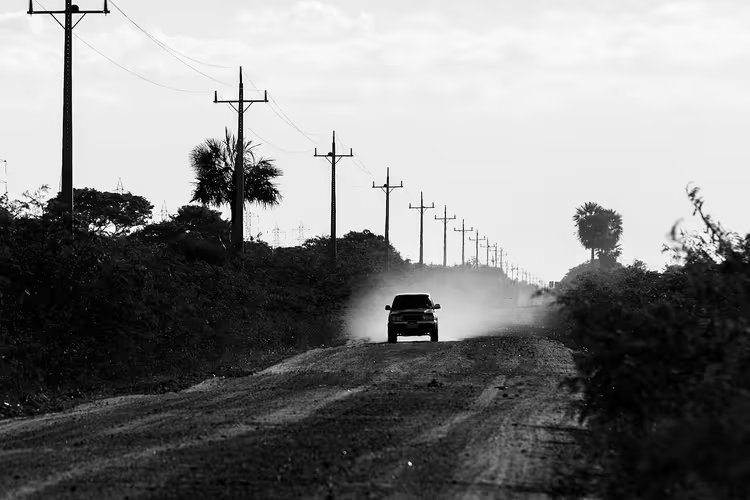 © ArthurVillares13 · CC BY-SAPhoto: ArthurVillares13, CC BY-SA (https://creativecommons.org/licenses/by-sa/4.0), Wikimedia Commons
Jabiru storks stand in the marshes, toco toucans feed in the palms, and caimans watch you from the reeds. Capybaras and anteaters appear constantly, and from May to September the water recedes and the flooded areas turn into fields of flowers.
If you are driving yourself, choose the dry season and four-wheel drive. It is convenient to book a car in advance: compare prices on DiscoverCars.
Where to stay on Estrada Parque
In the south, people stay at lodges like Passo do Lontra Parque Hotel: they offer direct contact with the nature of the southern Pantanal. Although Estrada Parque is closer to Corumbá, most tours start from Campo Grande.
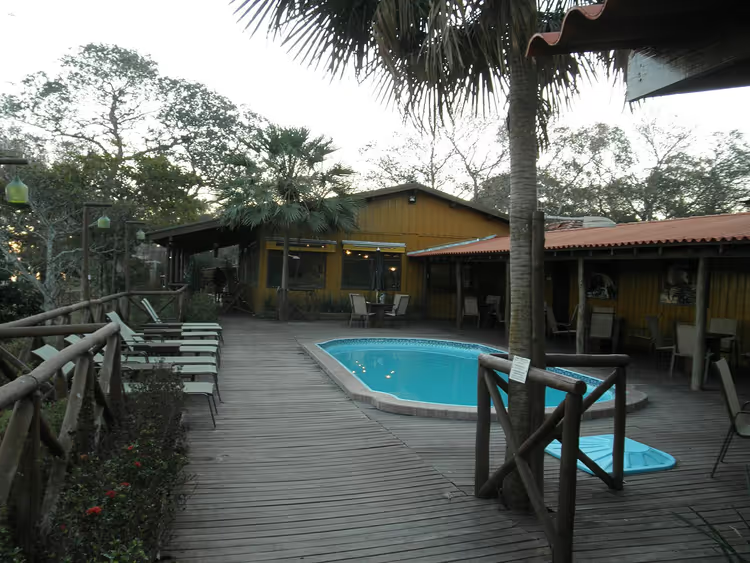 © Stoni111121 · CC BY-SAPhoto: Stoni111121, CC BY-SA (https://creativecommons.org/licenses/by-sa/4.0), Wikimedia Commons
Around Campo Grande there are many companies promising the "best price," so it pays to be careful here. The return transfer sometimes happens in the back of a cattle truck, and large groups scare the animals away.
When to go to the Pantanal
The dry season runs roughly from May to September. Nights are cool, there are fewer mosquitoes, and animals stay near water and are easy to see. For jaguars the window is wider, roughly from June to November.
The rainy season, November to April: some roads and areas get flooded, insects bite harder, and some regions are inaccessible.
The low season from December to March offers the lowest prices. But it is hot, humid, and rainy, and quality operators in Cuiabá on the Transpantaneira often close until the dry season. Agencies in Campo Grande operate year-round. If you cannot stand heat and humidity, it is better to skip this period.
Season | Months | Pros | Cons |
|---|---|---|---|
Dry | May-September | animals near water, comfort | higher prices |
Jaguar season | June-November | best chances for the predator | expensive |
Rains | November-April | few people | flooded roads, insects |
Low | December-March | lowest prices | heat, rain, some bases closed |
Tips for Pantanal tours
Follow three rules and the trip will go more smoothly.
- Season. Go for jaguars in the dry season: the water recedes and animals come out onto open banks.
- Operator. Do not take the first tour you find. Read what is included and compare prices: the range is wide.
- Budget. If you want a serious trip, allow more money. A cheap base rarely puts animals close by.
Quality fazendas and operators should be booked in advance: in high season, places near Porto Jofre sell out months ahead.
⁉️🤔 Frequently asked questions
When is the best season to visit the Pantanal?
The dry season from May to September offers comfortable weather and the best wildlife visibility. For jaguars the window is wider, from June to November, when the water recedes and the predator comes out onto the riverbanks. During the rains from November to April, some roads are flooded and there are more insects.
Where can you actually see a jaguar?
The most reliable chances are near Porto Jofre in the northern Pantanal, reached via the Transpantaneira. Jaguars stay near rivers and are searched for by boat with a guide. Starting from Cuiabá in the north is more convenient: tours depart from there with overnight stays and camps right next to the viewing areas.
Can you visit the Pantanal on your own?
Yes, but with caveats. Along the Transpantaneira and Estrada Parque there are fazendas that host guests and help with transfers. Without a guide and a boat you will see fewer animals, and during the rains the roads flood. For a first visit it makes more sense to take a package with lodging and excursions.
How much time should you allow for the Pantanal?
A few days with morning and evening excursions are enough to get acquainted. For jaguars, people book a longer package so they have several attempts. The drive to the base takes half a day, so short trips lose time on transfers.
Which animals are you guaranteed to see?
Capybaras and caimans are everywhere, especially near water. Giant otters, marsh deer, tapirs, jabirus and toco toucans are often spotted. Hyacinth macaws gravitate toward fazendas, where they nest. The jaguar is a separate goal, but near Porto Jofre it is seen regularly.
How much does a trip to the Pantanal cost?
Prices depend on the season, the base and the number of nights, and the spread between operators is wide. High season is more expensive than low season, and jaguar tours are the most expensive. Calculate the cost for your own itinerary, compare what is included, and confirm the price directly with the operator.
In short: what to book
The Pantanal splits into two worlds: the dry north with the Transpantaneira and jaguars near Porto Jofre, and the simpler south with the Estrada Parque, and different starting points suit different goals.
- If you want a jaguar: take a tour with a base near Porto Jofre and a start from Cuiabá.
- If price matters: look at the southern fazendas near Campo Grande.
- If you want freedom: rent a car and drive along the Estrada Parque in the dry season.
What to book in advance: tours and safaris on GetYourGuide and hotels in Cuiabá.
If you are planning a self-drive route, compare car rental on DiscoverCars.

A small editorial team writing guides for independent travel. We travel ourselves, but we haven’t been everywhere, so we check prices, opening hours and how to get there against official sources.