
















When to go to Iguazu Falls: months, water levels and prices 2026
Choosing your dates decides whether you see waterfalls or a wall of spray. Iguazu works year-round, but the difference between January and June is huge. In high season you get heat near 40°C, humidity, and lines. In April the same trails are almost empty.
We checked 2026 entrance prices. The Argentine side for foreign tourists costs AR$ 60,000 (as of 09/2026, official concession website). The Brazilian side will run you R$ 134 (as of 09/2026, official park website in Brazil). Below are the months, water levels, and ticket practicalities so you can pick your dates without stress.
Ad: this article contains affiliate links, we earn a commission if you book through them, at no extra cost to you.
Where Iguazu Falls are located
💡 In short:
- The falls sit on the border between Argentina and Brazil.
- The closest cities to the parks: Foz do Iguaçu and Puerto Iguazú.
- The Argentine and Brazilian sides have separate entrances and separate tickets.
- Comfortable weather: March to June. High water: December to March.
- Prices and opening hours: 09/2026, verified on the official park website
The cascade lies on the Iguazu River, which flows into the Paraná below the falls. The Brazilian part belongs to the state of Paraná, the Argentine part to the province of Misiones. Both parts are on the UNESCO World Heritage list (as of 09/2026, Argentina National Parks Administration).
There are only two bases for overnight stays: Foz do Iguaçu on the Brazilian side and Puerto Iguazú on the Argentine side. They are about half an hour apart by car, and you cross the border over a bridge. Keep your passport handy.
Climate by month
The summary below shows what to expect from each month (as of 09/2026, Climate-Data.org). The average annual temperature in Puerto Iguazú is around 22°C, and rain falls year-round.
Month | Daytime, °C | Nighttime, °C | Precipitation, mm | Rainy days | Sun, h/day |
|---|---|---|---|---|---|
January | 33 | 22 | 180 | 9 | 6 |
February | 32 | 21 | 160 | 8 | 6 |
March | 31 | 20 | 170 | 8 | 6 |
April | 29 | 18 | 150 | 7 | 6 |
May | 26 | 15 | 130 | 6 | 6 |
June | 25 | 13 | 100 | 6 | 6 |
July | 25 | 12 | 90 | 5 | 6 |
August | 27 | 14 | 110 | 6 | 7 |
September | 29 | 16 | 140 | 7 | 7 |
October | 31 | 19 | 260 | 11 | 6 |
November | 32 | 21 | 200 | 9 | 6 |
December | 33 | 22 | 190 | 9 | 6 |
The takeaway from the table is simple: it is driest in July and August, and rainiest in October. You read it against your dates and immediately see what to expect.
What makes Iguazu Falls unique
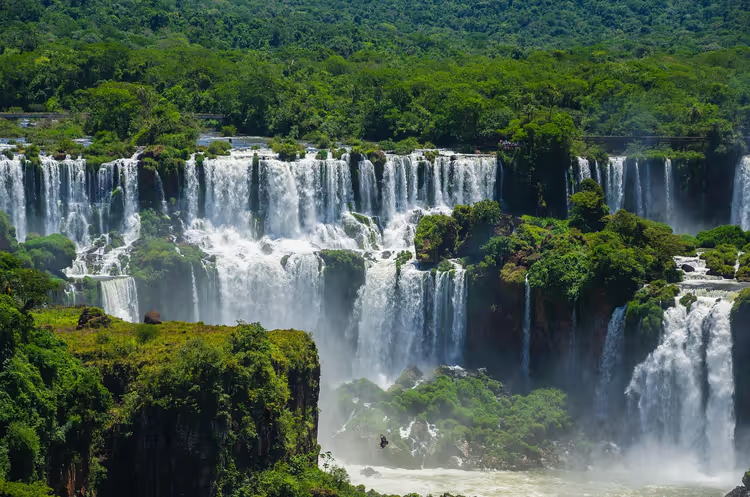
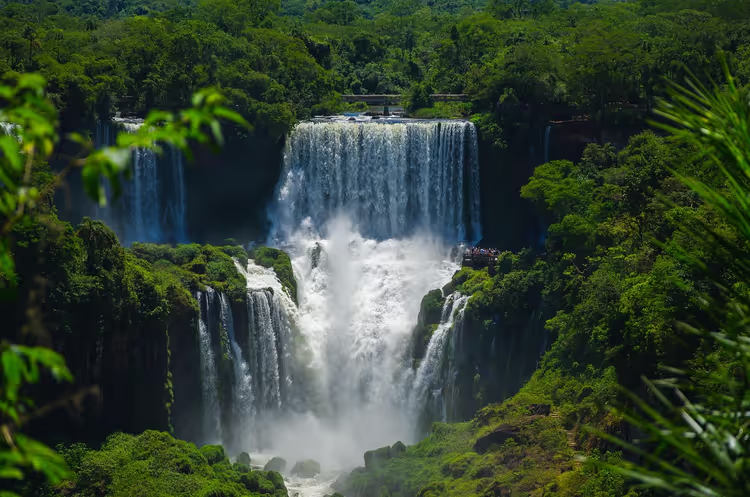
The cascade stretches for almost three kilometers and has about 250 individual waterfalls. Roughly three quarters of them are on the Argentine side. The drop reaches 80 meters, which is higher than Niagara Falls (as of 09/2026, official park data).
 © Mariordo (Mario Roberto Durán Ortiz) · CC BY-SAPhoto: Mariordo (Mario Roberto Durán Ortiz), CC BY-SA (https://creativecommons.org/licenses/by-sa/4.0), Wikimedia Commons
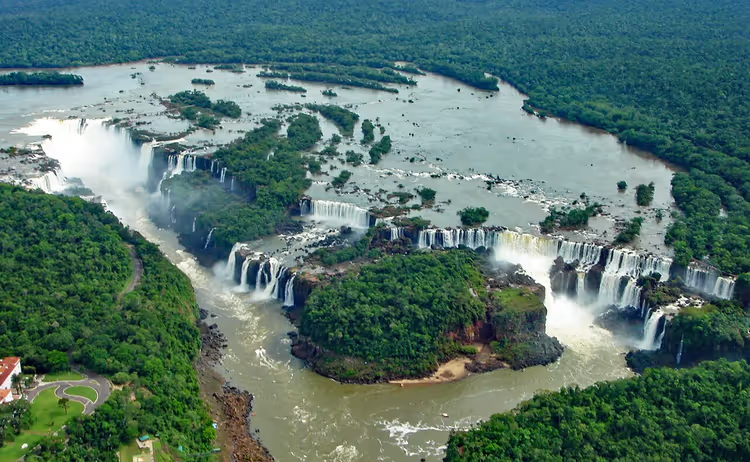
The main viewpoint on the Argentine side is called the Devil's Throat (Garganta del Diablo). It is a U-shaped chasm with water on three sides and a length of about 700 meters. Metal walkways lead to the viewing platform directly above the current. The spray soaks you completely, so be sure to bring a rain jacket.
Local people once held funeral rites here and gave the dead to the water, and today boats run through the canyon and take you almost under the falls themselves.
Iguazu was named one of the New Seven Wonders of Nature in an international vote. The Atlantic Forest (Mata Atlântica) with its rare plants and birds has survived around the falls. National parks on both sides protect this area.
The catch: in December and January there is a line for the train to the Devil's Throat, and the walkways are crowded.
Best time to visit
The seasons here are reversed compared to Europe. Summer runs from December to February, winter from June to August. The seasonal summary is based on climate database data (as of 09/2026, Puerto Iguazú Climate).
Season | Months | Temperature | Rainfall | Tourists |
|---|---|---|---|---|
Summer | December-February | above 30 °C, up to 40 °C | 160-190 mm per month | high season |
Fall | March-May | 26-31 °C | 130-170 mm | fewer people |
Winter | June-August | 10-25 °C | 90-110 mm | quiet |
Spring | September-November | 20-30 °C | 140-260 mm | rain |
The ideal compromise: April and May. The heat eases, humidity is lower, and rains are shorter. Lines for the train to the Devil's Throat almost disappear. July and August also work, but there is less water in the cascade.
Choose December and January if you want maximum water and don't mind the mugginess. In high season, hotels in Foz do Iguaçu and Puerto Iguazú get more expensive, so book ahead.
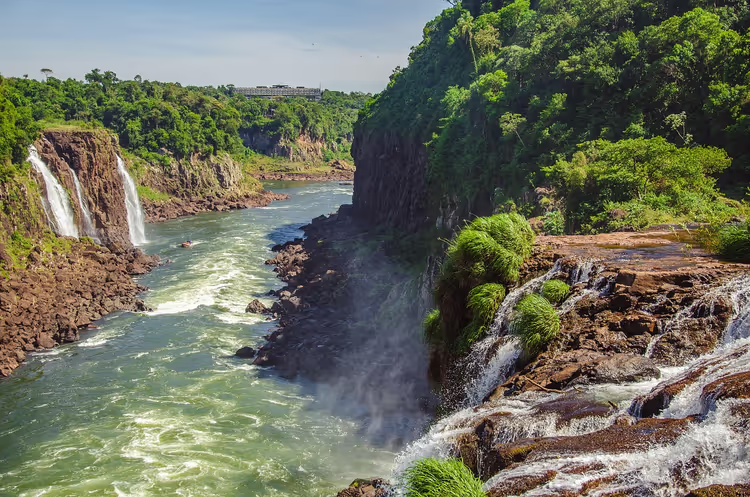
Spring is the rainiest season: the trails are slippery, but the greenery is at its most lush. Days are either hot or cool, so bring both a rain jacket and sunscreen.
When the falls are at full flow
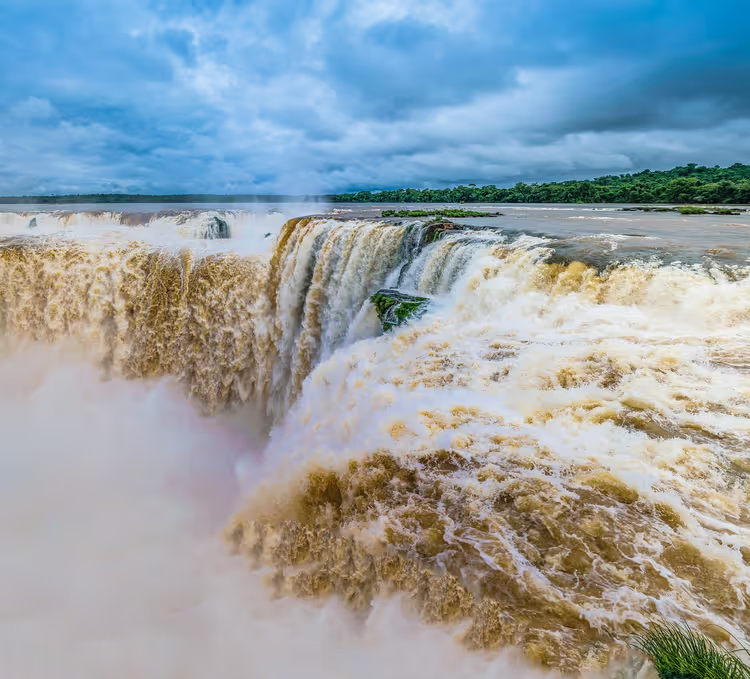
Maximum water volume comes from December to March. The flow sometimes breaks records: according to the park, the falls reached 8 million liters per second (as of 09/2026, official park website in Brazil). After heavy rains the flow increases several times over, and some walkways are closed due to water levels.
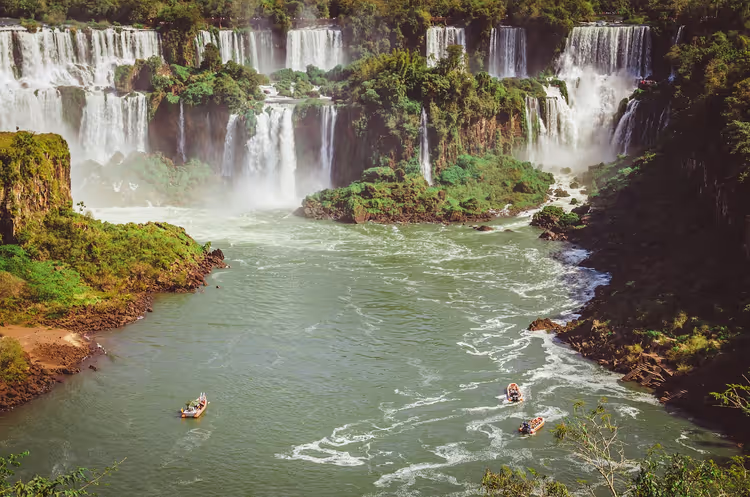
In the dry season there is less water, but you can see more individual cascades and there is less spray on your lens. Check the status of trails on the official park website on the day of your visit.
Climate in detail
In summer, humidity is high and the air feels sticky. There are usually 8-9 rainy days per month (as of 09/2026, rainfall data).
Rainfall is unevenly distributed throughout the year. Annual precipitation exceeds 1,700 mm, noticeably more than in Berlin or Vienna.
Fall (March-May) is similar to summer, but average temperatures are lower. Nights are already cool, while days remain hot. Winter (June-August) is the driest and mildest season. Fog is possible over the water in the morning.
Spring (September-November) brings rain and humidity. In October and November, daytime temperatures can reach 31-32 °C. The walkways are wet, so you need shoes with good grip.
Tickets, opening hours, and how to get there
Tickets for both sides are sold online, and they are not cheaper at the entrance. Argentine side: for foreign tourists AR$ 60,000, including the Tren Ecológico train (as of 09/2026, park fares). Argentine residents pay AR$ 25,000, and residents of Misiones Province pay AR$ 8,000. Car parking costs AR$ 12,500.
The evening Paseo de Luna Llena walk costs AR$ 95,000 per person (as of 09/2026, current park rates). Brazilian side: full ticket R$ 134, for citizens of Brazil and Mercosur countries R$ 121 (as of 09/2026, Brazilian side tickets).
On the Brazilian side, tickets are sold online only, with a choice of day and entry time (as of 09/2026, ticket information). Opening hours vary by season, and the last entry is always earlier than closing time. Check the exact time on the park's website on the day of your visit.
We verified these rates on 10.09.2026 on the parks' official websites. Plan at least half a day for one side. How to get there: each side has its own airport, Foz do Iguaçu in Brazil and Puerto Iguazú in Argentina. Buses run regularly from the cities to the park entrance. Staying overnight is more convenient in these same cities, hotels in Foz do Iguaçu and Puerto Iguazú on Trip.com.
Tours and tickets in Iguazu
Guided tours, skip-the-line tickets and activities — most offers can be cancelled free of charge.
See offers on GetYourGuideThe widget loads once you give your consent.
Where to go next: routes through South America
Waterfalls are rarely the only goal of a trip. It is easy to build a two to three week route around Iguazu and add a second country. Below are combinations that work based on flight logistics.
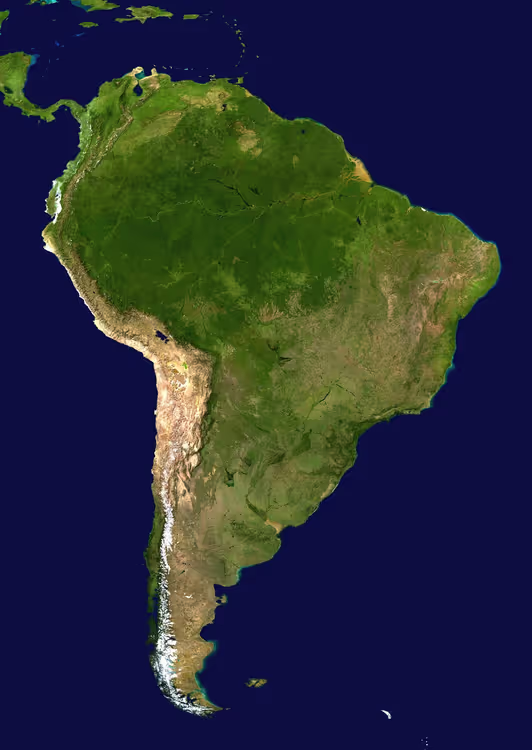
Brazil and Peru, eighteen days. Rio de Janeiro, Cusco and Machu Picchu in one trip. The flight between the countries takes half a day, so put it in the middle of the route.
Argentina and Brazil, ten days. Buenos Aires, Iguazu and Rio, a compact version for a regular vacation.
Argentina, Brazil and Chile, almost a month. The longest option with Patagonia and the Atacama Desert. This route requires a time buffer.
Brazil, ten days. The coast and the waterfalls without crossing into other countries.
Brazil, nine days. Enough for the waterfalls and one city. Do not plan more than two flights for a trip like this.
Brazil, two weeks. A middle option: the waterfalls, the coast and one big city.
Ready-made tours for these destinations are collected on GetYourGuide. Choose options with hotel pickup so you do not waste time on buses.
⁉️🤔 Frequently asked questions
When is the best time to visit Iguazu Falls?
March to June. During these months the heat subsides, humidity is lower and rains are shorter. Choose December and January only for maximum water volume, because this is the main vacation season in Argentina and Brazil: lines for the train and high hotel prices.
Which side is better for viewing the falls?
The Argentine side offers long walkways and the Devil's Throat, you get almost right up to the water. The Brazilian side shows the whole cascade from above, it is the best overall view. Allow two days for both sides. There is one border, but you have to cross it twice, and you need separate tickets.
How many days should I allow for Iguazu?
Half a day is enough for one side, two days are needed for both. If you want the Paseo de Luna Llena evening walk, add an evening. A full day on the Argentine side is easier to start in the morning, then you can cover all the trails without rushing.
When are the falls at their fullest?
From December to March. During these months the water flow is at its maximum, after heavy rains the volume increases several times over. Sometimes part of the walkways are closed due to water levels, so check the trail status on the park website before heading out.
What should I bring to the falls?
A raincoat, waterproof shoes and a spare T-shirt, the spray soaks you completely. Sunscreen is also needed, the sun here is harsh even on a cloudy day. Keep your camera in a dry bag, the humidity is very high.
In short: what to book
The matrix for your dates looks like this. If you have three days: take both sides of the park and the Paseo de Luna Llena evening walk. If you have a week: both sides plus a hotel in Foz do Iguaçu. If you are traveling with kids: choose April or May, enter early in the morning and use the Tren Ecológico train.
See waterfall tours with transfers on GetYourGuide, where options for both sides are also collected.

A small editorial team writing guides for independent travel. We travel ourselves, but we haven’t been everywhere, so we check prices, opening hours and how to get there against official sources.