
















20 Best parks in Brussels: from the city center to the Sonian Forest
Brussels, a city with a surprisingly large amount of greenery. Right in the center, between the EU palaces and the old quarters, you'll come out to a pond with a fountain or a straight beech alley. Most parks are open year-round and free; you only have to pay for Mini-Europe, the Atomium, and the garden in Meise.
We've put together 20 green spots in Brussels worth seeing: from the royal park in the city center to the Sonian Forest on the outskirts. Below you'll find what to see in each one, where it is, and what to pay attention to.
Parks in Brussels: our picks
💡 In short:
- Want the center and no car: Brussels Park, Mont des Arts, and the Petit Sablon garden are close together, you can walk them all in half a day.
- Traveling with kids: Bruparck is home to Mini-Europe and the Atomium, and the ponds of Woluwe Park are easy to walk with a stroller.
- Looking for forest and quiet: the Sonian Forest and Rouge-Cloître Abbey offer real beech groves on the edge of the city.
- Mini-Europe prices and hours: 09/2026, verified on the official website
Park | Area | Who it's for |
|---|---|---|
Brussels Park | center | first visit, car-free walk |
Mini-Europe and Bruparck | Laeken | families with kids |
Cinquantenaire Park | east of center | museums and architecture |
Mont des Arts | center | views and museums |
Sonian Forest | south of the city | nature and cycling |
Woluwe Park | east | long walks by the water |
Laeken Park | Laeken | royal pavilions |
Elisabeth Park | Koekelberg | quiet and panoramic views |
1. Brussels Park
 © Michaelkmd at Dutch Wikipedia ( Original text: Michaelkmd ) · CC BY-SAPhoto: Michaelkmd at Dutch Wikipedia ( Original text: Michaelkmd ), CC BY-SA (http://creativecommons.org/licenses/by-sa/3.0/), Wikimedia Commons
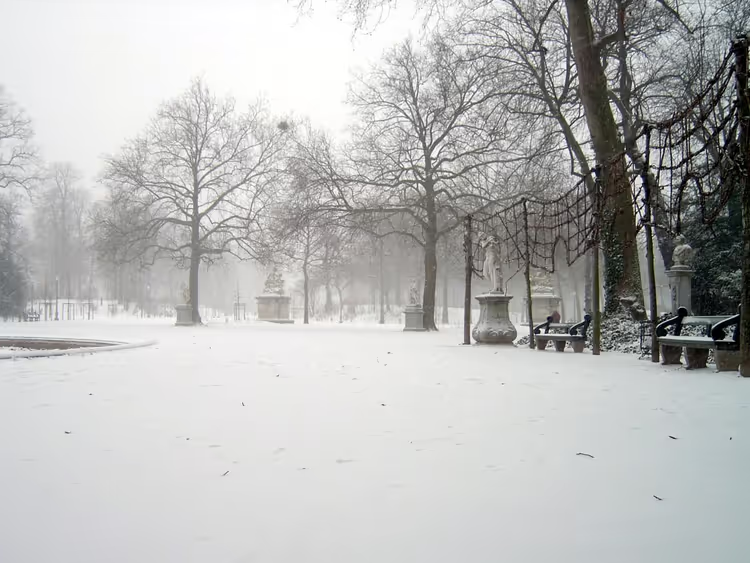
Brussels Park (Parc de Bruxelles) lies right between the Royal Palace and the parliament building. Once this spot was covered by the dense Sonian Forest, which shielded the ducal residence of the Dukes of Brabant. After a fire, the forest was not restored, and in the late 18th century the area was cleared and laid out as a French-style park.
The layout was designed by French masters: a wide central avenue leads to a pond with a fountain, and from there shady paths branch out toward three main landmarks of the center. Here you'll find statues, bandstands, and neat lawns. On weekends the park hosts festivals and themed parties.
- Where it is: in the center of Brussels, between the Royal Palace and the parliament.
- Cost: free entry, the park is open year-round.
- The catch: on weekends the park gets noisy because of festivals and parties.
2. Mini-Europe: a park of miniatures
 © Michael Kramer · CC BY-SAPhoto: Michael Kramer, CC BY-SA (https://creativecommons.org/licenses/by-sa/3.0), Wikimedia Commons
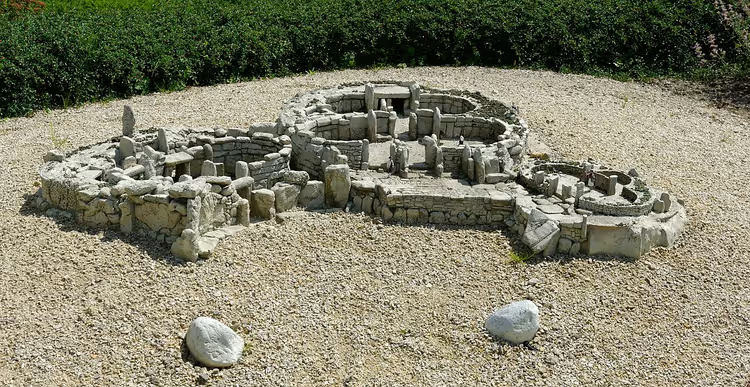
Mini-Europe opened in Bruparck as an open-air museum. Here you'll see miniature replicas of Europe's main landmarks, and the entire route runs around the Atomium. The replicas are made with rare precision: each one reproduces facades, stained glass, and even tiny human figures.
The model of the Seville arena is filled with thousands of hand-painted little figures, and along the path you'll find old forms of transport on display. An adult ticket online starts at €21.70, on site it's €25, children under 115 cm enter free (as of: 09/2026, Mini-Europe rates).
- How to get there: Bruparck in Laeken, the nearest metro station is Heysel.
- Hours: the 2026 season runs from mid-March to early January, in summer the park is open until 7:00 PM (as of: 09/2026, Mini-Europe website).
- The catch: at the ticket office the price is higher than online, a difference of €3.3 (as of: 09/2026, Mini-Europe rates).
3. Bruparck: entertainment zone
 © Fred Romero from Paris, France · CC BYPhoto: Fred Romero from Paris, France, CC BY (https://creativecommons.org/licenses/by/2.0), Wikimedia Commons
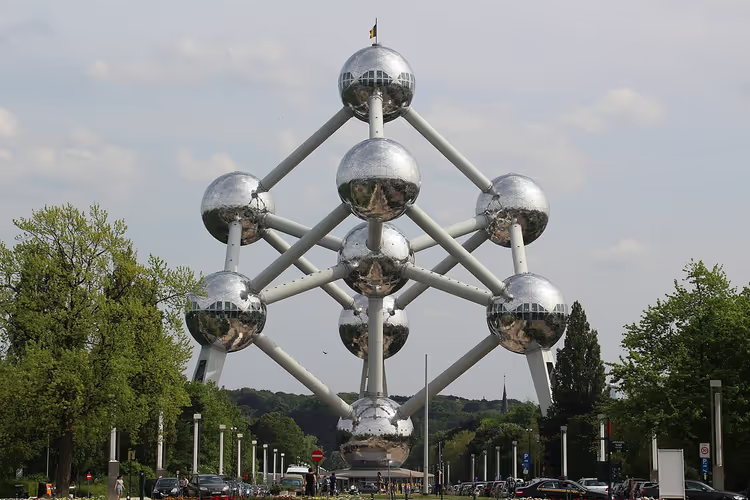
Bruparck, an entertainment zone at the foot of the Atomium in Laeken. Formally it's not a park in the usual sense, but a site with major attractions: Mini-Europe, the Atomium itself, and a large cinema. From the top of the Atomium you get a panoramic view of the city, and escalators and an elevator take you up.
The Océade water park used to operate here as well, but it closed for good in 2018, and the site is being prepared for a new urban project (according to Wikipedia). Today you come to Bruparck primarily for Mini-Europe and the Atomium.
- Where it is: Laeken, next to Heysel metro station.
- Who it's for: families with children and anyone visiting the Atomium.
- The catch: the Océade water park is no longer here, although some guidebooks still recommend it.
4. Laeken Park and the royal pavilions
 © Nenea hartia · CC BY-SAPhoto: Nenea hartia, CC BY-SA (https://creativecommons.org/licenses/by-sa/4.0), Wikimedia Commons
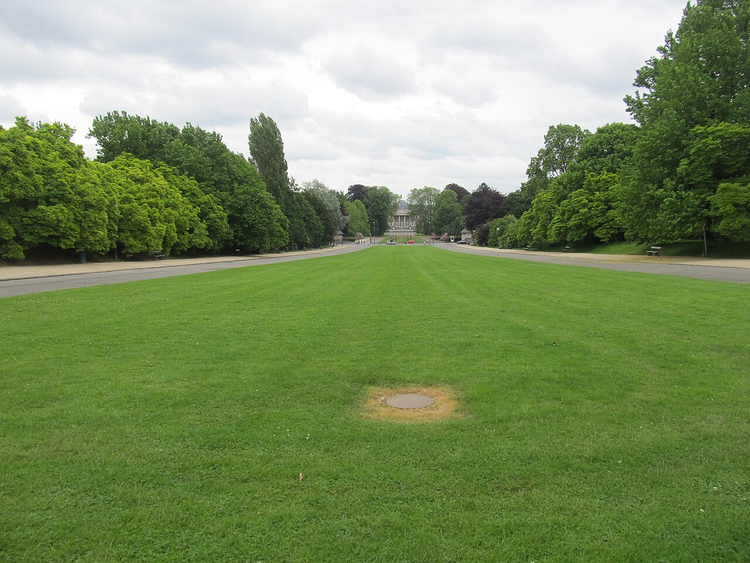
Laeken Park was laid out around the Royal Palace of Laeken in the early 20th century. The idea came to King Leopold II after the World's Fair in Paris: he brought back the exotic Japanese Tower, which marked the beginning of the park. Today it offers spacious lawns, greenhouses, and even paths among centuries-old trees.
The park's main attractions are the Japanese Tower, built from wood without a single nail, and the Chinese Pavilion, made of red brick with carved ornaments. The pavilion houses a collection of antique Chinese porcelain. The pavilions belong to the Museums of the Far East and are periodically closed for restoration, so check the hours in advance (as of 09/2026, Brussels tourist office).
- Where it is: Laeken, around the Royal Palace.
- What to see: the Japanese Tower and the Chinese Pavilion.
- The catch: some pavilions are closed for restoration, and access is not always available.
5. La Cambre Abbey
 © GdML · CC BY-SAPhoto: GdML, CC BY-SA (https://creativecommons.org/licenses/by-sa/4.0), Wikimedia Commons
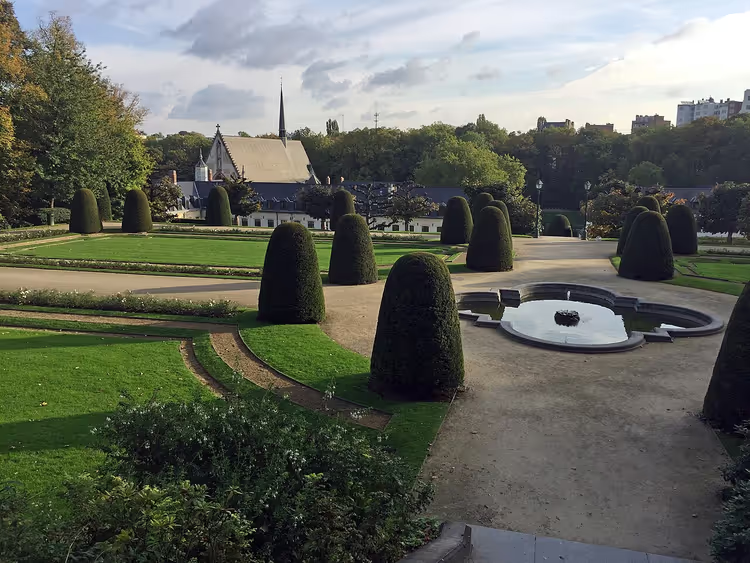
La Cambre Abbey stands in a valley near the Bois de la Cambre, in the southern part of the city. From the 13th century, a Cistercian convent operated here until it was dissolved during the French Revolution. Later, its walls housed a military hospital, a cotton factory, and a military academy in succession.
After restoration in the 20th century, the abbey gained well-kept lawns, paths, and flower beds. The buildings, which blend Gothic and Renaissance styles, now house a parish church, a geographical society, and an art school. It's a pleasant place to sit on a bench in the shade of the trees and have a coffee.
- Where it is: south of Brussels, near the Bois de la Cambre.
- Cost: entry to the abbey grounds is free.
- The catch: some buildings are in active use, so you can't go inside everywhere.
6. Cinquantenaire Park
 © User:Ben2 · CC BY-SAPhoto: User:Ben2, CC BY-SA (http://creativecommons.org/licenses/by-sa/3.0/), Wikimedia Commons
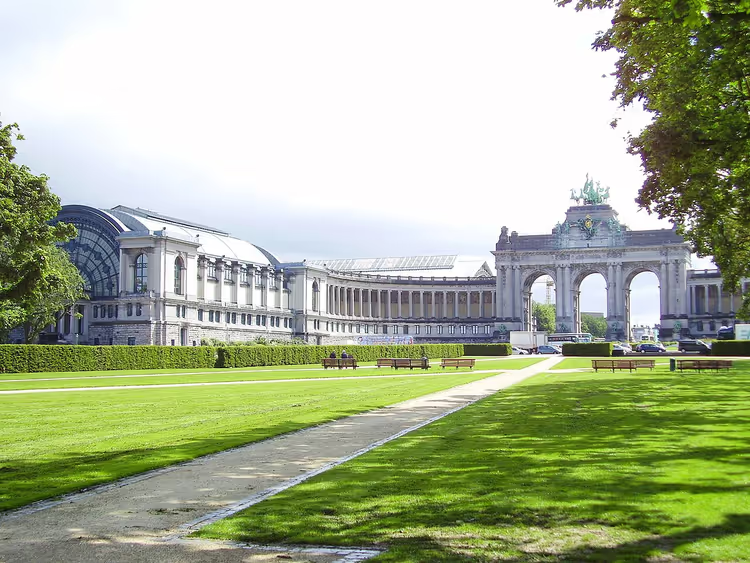
Cinquantenaire Park (Parc du Cinquantenaire) was laid out on the site of a former military training ground for the anniversary of Belgian independence. The central axis is marked by the Triumphal Arch, and the sculptures and bas-reliefs adorning it tell the story of the Belgian state.
The large grounds feature artificial lakes, groves, and a small waterfall. In the park you'll find the Temple of Human Passions in Art Nouveau style, the AutoWorld car museum, the Royal Military Museum, and the Great Mosque of Brussels. On weekends, parades and city festivals often take place here.
- Where it is: eastern part of the center, between the Jubelpark and Etterbeek neighborhoods.
- Cost: park entry is free, museums on the grounds charge admission.
- The catch: on parade days the central avenue is closed off, so you can't walk straight through.
7. Botanical Garden in the city center
 © Ben2 · CC BY-SAPhoto: Ben2, CC BY-SA (http://creativecommons.org/licenses/by-sa/3.0/), Wikimedia Commons
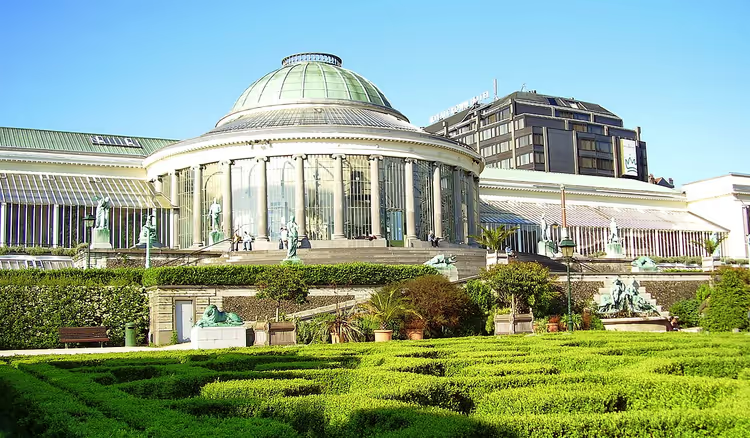
The Botanical Garden in central Brussels is what remains of a large 18th-century scientific garden. The plants and collections were moved to Meise before World War II, and a small plot with a greenhouse was preserved on Rue Royale. Today it houses Le Botanique, a cultural center with a concert venue.
The garden features dozens of sculptures by local artists, and a winter garden is laid out under the glass rotunda. In spring, camellias and azaleas bloom here, and you can simply lie on the lawn between performances.
- Where it is: Rue Royale, near Congress Square.
- Cost: garden entry is free, concerts require a ticket.
- The catch: the garden is small, so it won't fill a whole day.
8. Petit Sablon Garden
 © William Murphy from Dublin, Ireland · CC BY-SAPhoto: William Murphy from Dublin, Ireland, CC BY-SA (https://creativecommons.org/licenses/by-sa/2.0), Wikimedia Commons
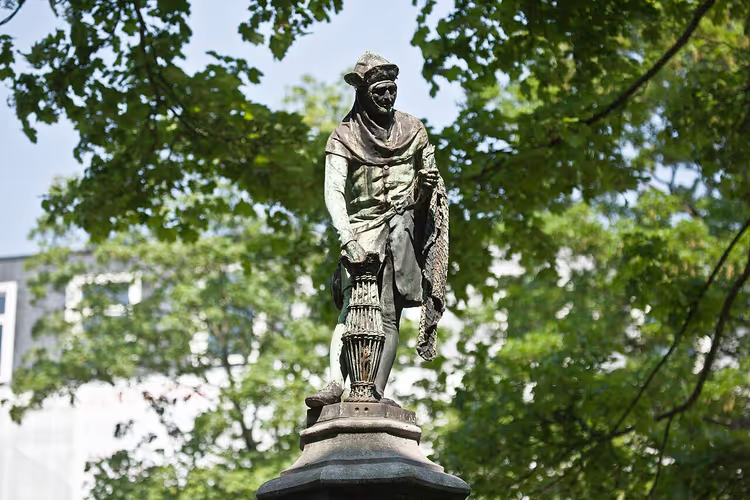
Petit Sablon Garden (Jardin du Petit Sablon) occupies a small rectangular plot in the Sablon quarter, next to the cathedral. It was laid out on the site of an old cemetery in the late 19th century, and today it is one of the most well-kept corners of the center.
The garden is enclosed by a wrought-iron fence on stone pillars. Each pillar is topped with a bronze statuette of a medieval guild craftsman: a watchmaker, a roofer, a plumber, a lamplighter. Inside, fountains murmur, and flowerbeds are framed by shrubs trimmed into shapes.
- Where it is: the Sablon quarter, next to the Notre-Dame du Sablon church.
- Cost: admission to the garden is free.
- The catch: the garden is small and popular, and during the day it is full of people with cameras.
9. Sonian Forest
 © Donarreiskoffer · CC BYPhoto: Donarreiskoffer, CC BY (https://creativecommons.org/licenses/by/3.0), Wikimedia Commons
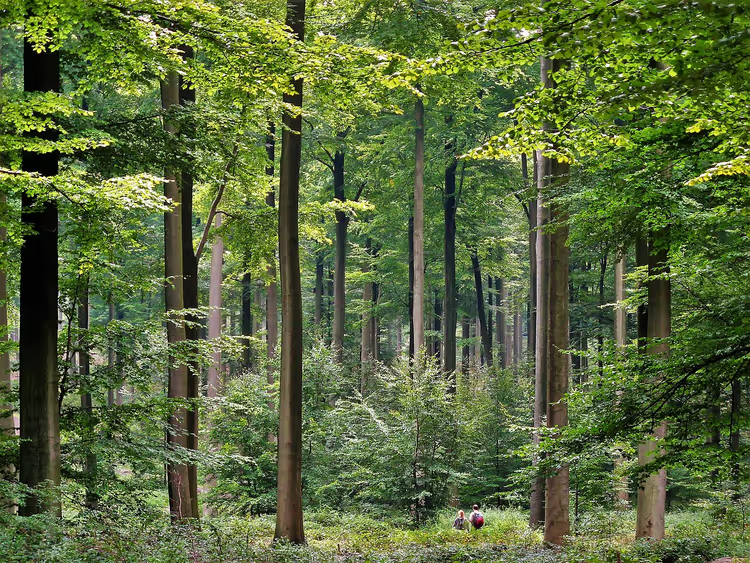
Sonian Forest (Forêt de Soignes), a large woodland that was once an impassable defense of the Belgian provinces against invaders. Today it extends into Brussels, Flanders, and Wallonia, remaining a real forest right next to the capital. Flemish masters painted the landscapes of its oak groves.
The forest is home to rare shrubs and trees, and squirrels, wild boar, and deer live here. On the maintained paths you can ride a bike, go horseback riding, or simply run in the shade. There is also a sports school field where footballers, handball players, and frisbee players train.
- Where it is: the southern edge of Brussels, next to the Bois de la Cambre.
- Cost: admission is free year-round.
- The catch: the forest is large, and without a map or navigator it is easy to go the wrong way.
10. National botanic garden in Meise
 © Rudi Devuyst · CC BY-SAPhoto: Rudi Devuyst, CC BY-SA (https://creativecommons.org/licenses/by-sa/4.0), Wikimedia Commons
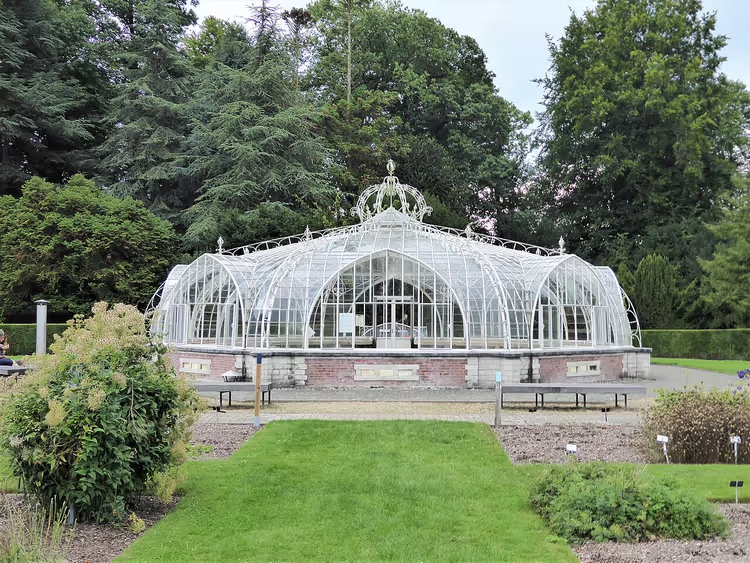
The National Botanic Garden is not in Brussels but in neighboring Meise, and the trip is worth it. It is one of the largest garden areas in Belgium: ponds, an old castle, and dozens of themed greenhouses with plants from around the world.
Under glass are collections of orchids, carnivorous plants, and tropical species, and there are greenhouses for monsoon and montane rainforests. A particular pride of the garden is a giant South American water lily whose leaf can hold the weight of a child. There is a souvenir shop and a restaurant on the grounds, and you can find the exact hours and ticket price on the garden's official website.
- How to get there: from Brussels by train or bus to Meise, then walk to the entrance.
- How much time: allow at least two hours for the greenhouses and the garden.
- The catch: the collections are partly outdoors, so in the cold season it is more comfortable to focus on the greenhouses.
11. Palace of the Academies Park
 © charles lecompte · CC BY-SAPhoto: charles lecompte, CC BY-SA (https://creativecommons.org/licenses/by-sa/3.0), Wikimedia Commons
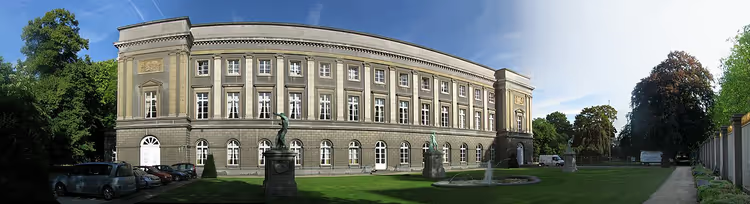
Palace of the Academies Park lies around an old three-story palace on Rue Ducale. The palace was built in the first half of the 19th century for Prince William of Orange and his wife, Grand Duchess Anna Pavlovna. Today several Belgian academies operate there, and the surrounding grounds have been turned into a quiet park.
Between neat lawns and mazes of trimmed shrubs stand statues and a small colonnade, and there is also a sculptural copy of Peter Pan. In a cozy cafe you can have a coffee or sit on one of the many benches in the shade.
- Where it is: Rue Ducale, next to the Royal Park.
- Cost: admission to the park is free.
- The catch: the grounds are small, and people usually stop by on their way from the center.
12. Rouge-Cloître Abbey
 © Horst J. Meuter · CC BY-SAPhoto: Horst J. Meuter, CC BY-SA (https://creativecommons.org/licenses/by-sa/4.0), Wikimedia Commons
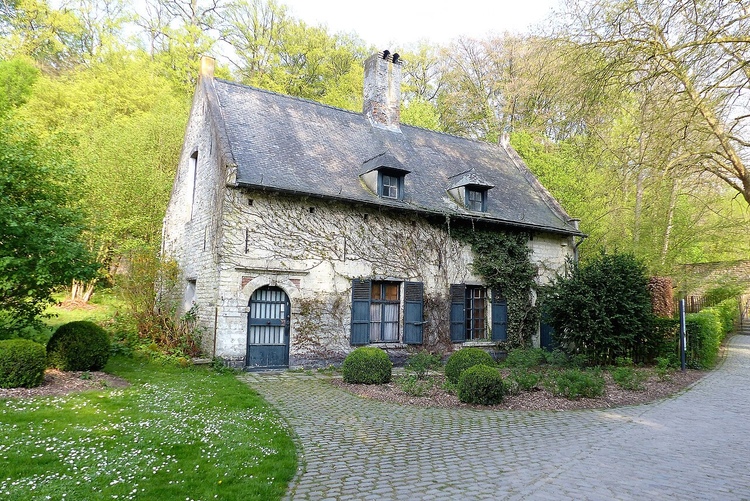
Rouge-Cloître Abbey grew out of a small chapel in the Sonian Forest. By the 15th century the monastery was famous for its library and workshops, and a century later it was the most influential in the area. Then it faced ruin and oblivion, and only part of the buildings have survived to this day.
After reconstruction, a restaurant with 17th-century interiors opened in the former refectory, and the farm, the miller's house, and the brewery in ruins have been preserved. An arboretum with forest plants has been laid out around it. Here you can feel the medieval atmosphere without the distance of a museum.
- Where it is: the outskirts of Brussels, on the edge of the Sonian Forest.
- Cost: admission to the grounds is free.
- The catch: there are many ruins, and some buildings are closed to visitors.
13. Mont des Arts Garden
 © Michael Kramer · CC BY-SAPhoto: Michael Kramer, CC BY-SA (https://creativecommons.org/licenses/by-sa/3.0), Wikimedia Commons
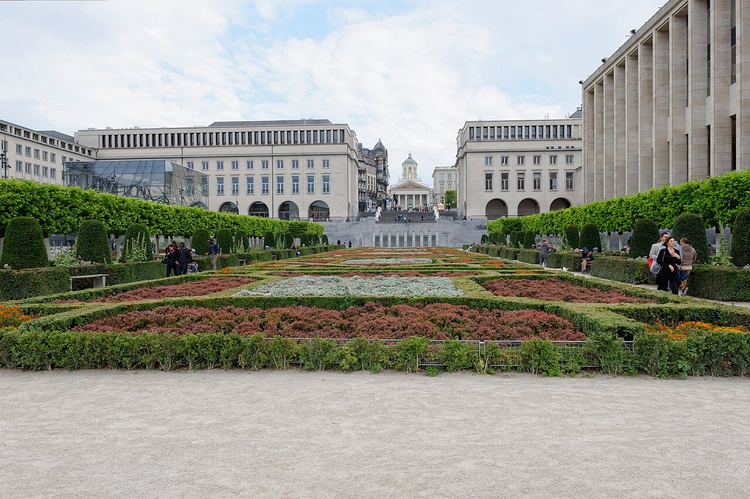
Mont des Arts Garden connects the Royal Palace with Grand-Place. This used to be a densely built-up quarter, but the buildings were demolished ahead of the early 20th-century World's Fair. King Leopold II decided to create a "Hill of the Arts" on the cleared site, and the layout was entrusted to a landscape architect.
The green space was intended to be temporary, but the monumental staircase with cascading fountains became so beloved by residents that it stayed forever. Around it stand the museums of fine arts, musical instruments, and Magritte, and from above there is a view of the old town. You can get some of the best sunset shots of Brussels here.
- Where it is: between the Royal Palace and Grand-Place.
- Cost: admission is free, museums require a ticket.
- The catch: during the day the staircase is crowded with people and tour groups.
14. Leopold Park
 © Flocci Nivis · CC BYPhoto: Flocci Nivis, CC BY (https://creativecommons.org/licenses/by/4.0), Wikimedia Commons
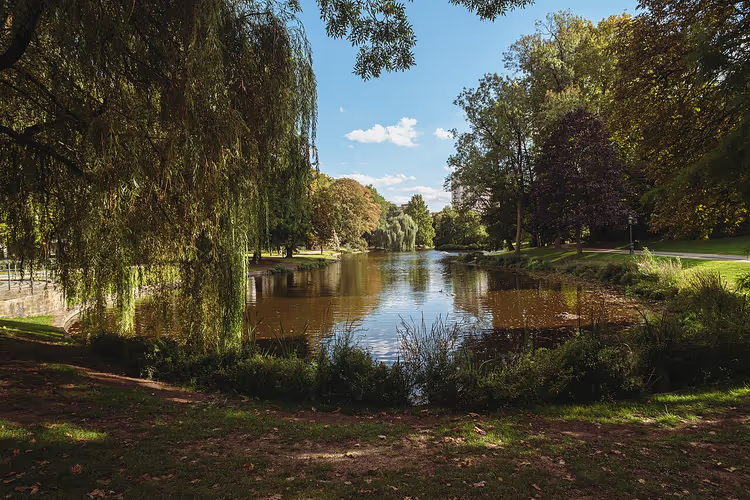
Leopold Park lies right next to the European Parliament building. It was laid out in the late 19th century on the site of the royal zoo, and some of the historic pavilions survive to this day. Today it is a quiet green island in the district of European institutions.
Ducks, swans, and Egyptian geese swim in ponds covered with duckweed, and nearby there are aviaries with parrots and a small birdhouse. The paths are well maintained, there are restrooms, and on warm days employees from nearby offices relax on the lawns. It's a convenient place to stop after a walk through the center.
- Where it is: the European Parliament quarter, between Rue Belliard and Leopold Street.
- Cost: park entry is free.
- The catch: the park is compact, with no large alleys or open areas.
15. Woluwe Park
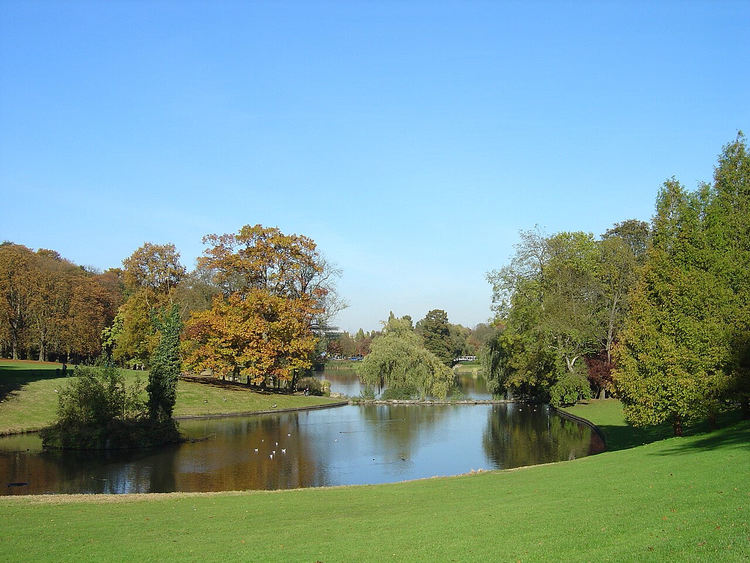
Woluwe Park (Parc de Woluwe), the largest park in the Belgian capital, stretches along the valley of the Woluwe River. It was established more than a century ago, and the favorable valley terrain shaped its character: several large ponds, canals, and waterside groves.
 © Val choko · CC BY-SAPhoto: Val choko, CC BY-SA (https://creativecommons.org/licenses/by-sa/3.0), Wikimedia Commons
The ponds are home to waterfowl: ducks, swans, and Canada geese. Squirrels leap through the treetops, and rabbits hide in the thick grass. Families with children stroll along the water, people walk dogs, ride bikes, and run. You'll easily find a spot for a picnic or a long walk.
- Where it is: east of the city, at the intersection of Avenue de Tervueren and Boulevard du Souverain.
- Cost: entry is free.
- The catch: on weekends it draws the biggest crowds; it's quietest in the morning.
16. Josaphat Park
 © Trougnouf (Benoit Brummer) · CC BYPhoto: Trougnouf (Benoit Brummer), CC BY (https://creativecommons.org/licenses/by/4.0), Wikimedia Commons
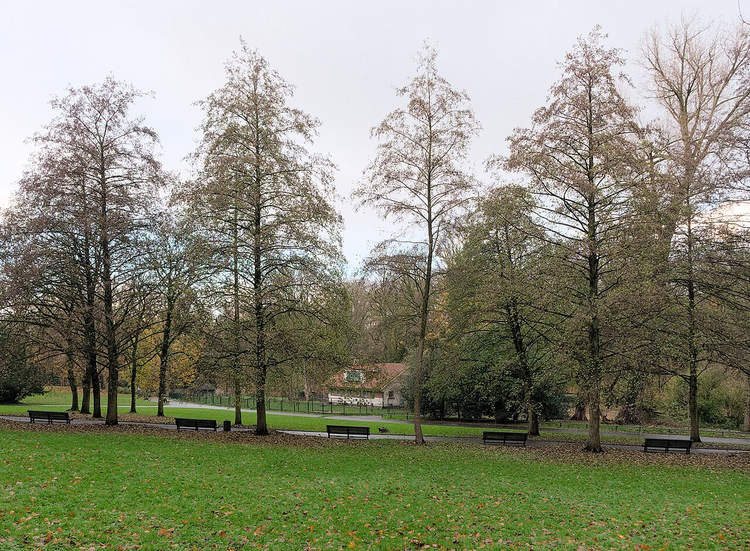
Josaphat Park (Parc Josaphat) was laid out in Schaerbeek on the site of the old Linthout forest. In the early 20th century, King Leopold II decided to turn the wooded area into a public park, and under the direction of engineer Edmond Galoppin dead wood was cleared, while landscape architects planned lawns and flower beds.
The grounds are decorated with statues by recognized sculptors of the period, and humpbacked bridges span the ponds. For more than a century the park has remained a favorite spot for residents of the northern neighborhoods: people come here to listen to the birds and stroll along the paths in the shade of spreading canopies.
- Where it is: the municipality of Schaerbeek.
- Cost: entry is free.
- The catch: the ponds and bridges are popular with photographers, so on clear days it gets crowded.
17. Océade: the water park that no longer exists
 © Jérémy-Günther-Heinz Jähnick · CC BY-SAPhoto: Jérémy-Günther-Heinz Jähnick, CC BY-SA (https://creativecommons.org/licenses/by-sa/3.0), Wikimedia Commons
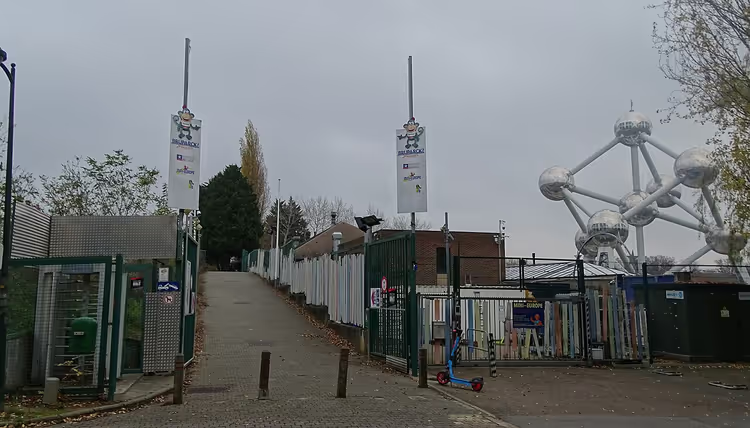
Océade was Brussels' main water park, located in the Bruparck area. It opened in the late 20th century, operated year-round, and the pool water was heated enough that you could swim even in winter. It had slides for thrill-seekers, family rides, and a separate children's area.
The water park closed for good on September 30, 2018: the site was handed over to a new urban project (according to the encyclopedia). Today nothing operates at the former Océade site, so there's no longer any reason to go to Bruparck for the pools.
- Where it was: Bruparck in Laeken, next to the Atomium.
- Status: permanently closed since September 30, 2018.
- The catch: the site no longer exists, but old guidebooks still list it as operating.
18. Parc Elisabeth
 © Giles Laurent · CC BY-SAPhoto: Giles Laurent, CC BY-SA (https://creativecommons.org/licenses/by-sa/4.0), Wikimedia Commons
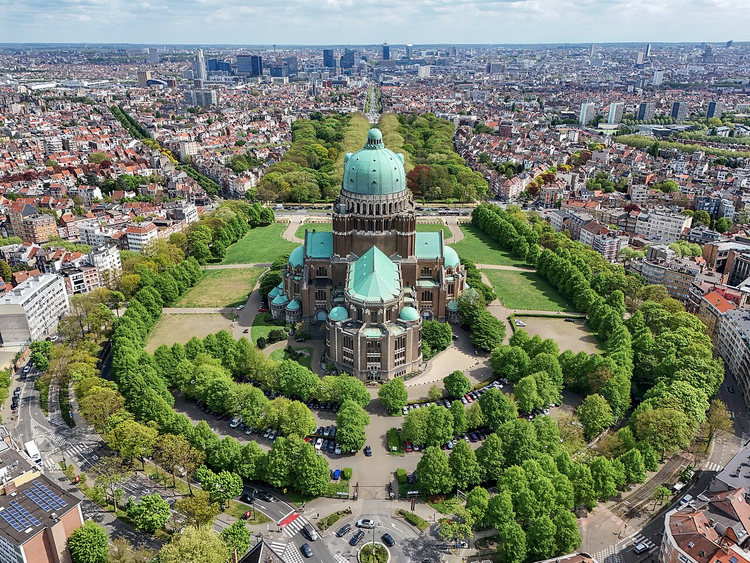
Parc Elisabeth is named after Queen Elisabeth and lies next to the Basilica of the Sacred Heart on Koekelberg Hill. The imposing basilica crowns the summit, while a broad green lawn stretches out in front of it, framed by tree-lined paths and hedges. The hill offers a wide panorama of the city.
Century-old trees, ornamental shrubs, lawns, benches, and old-fashioned lampposts create a calm atmosphere. People come here to walk their dogs and take a break from sightseeing. If you have made it up to the basilica, this quiet park is a pleasant way to round off the day.
- Where it is: Koekelberg Hill, next to the Basilica of the Sacred Heart.
- Cost: free entry.
- The catch: the hillside is steep, and the climb on foot is not for everyone.
19. Parc Duden
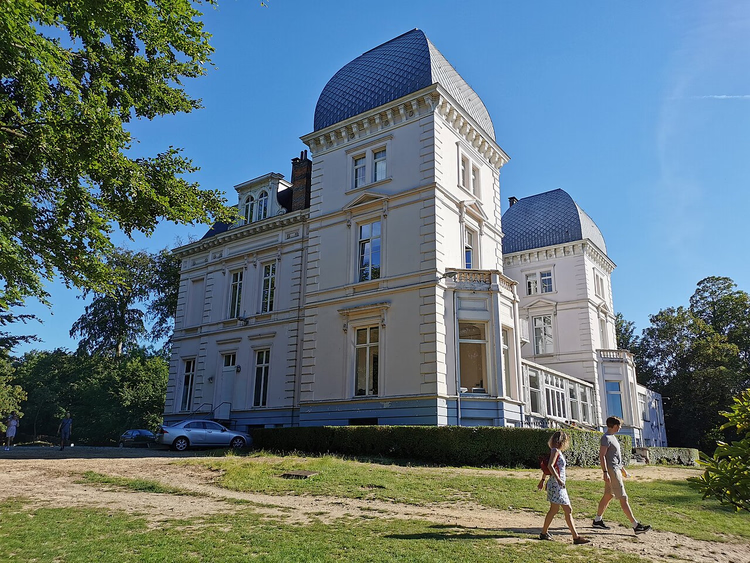
Parc Duden in the commune of Forest has preserved untouched beech groves from the Sonian Forest. These grounds once belonged to Forest Abbey, then passed to the Duden family, and under Leopold II they became state property. The park opened to the public in the early 20th century.
Today it is a large green expanse with grassy meadows and old beech trees. People use the meadows for running and soccer, and for walks with children and dogs. It is a rare example of a natural forest being carefully maintained right inside the city.
- Where it is: commune of Forest, south of Brussels.
- Cost: free entry.
- The catch: there is little infrastructure; it is more of a forest than a park with cafes.
20. Square du Petit Sablon
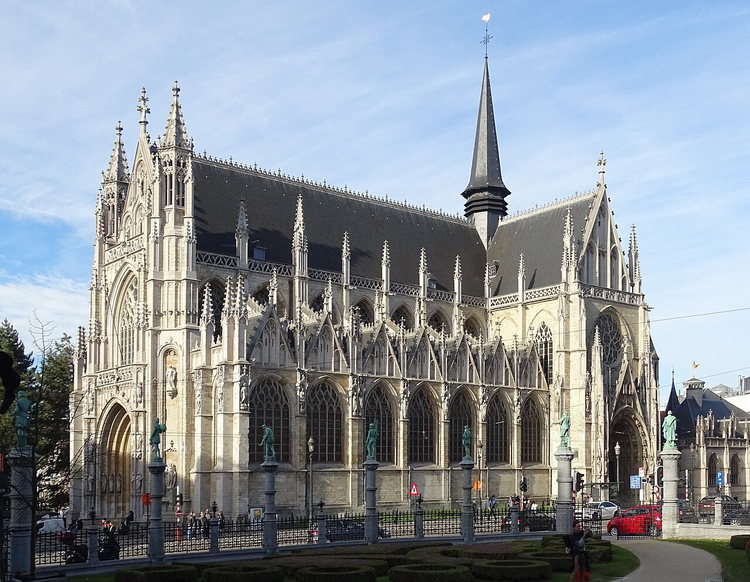 © Ad Meskens · CC BY-SAPhoto: Ad Meskens, CC BY-SA (https://creativecommons.org/licenses/by-sa/4.0), Wikimedia Commons
Square du Petit Sablon is a small, cozy garden in the center, enclosed by a wrought-iron fence. It opened to the public in the late 19th century, and its name comes from the clay soil of the area: "sablon" in French.
At the center of the square stand statues of the Counts of Egmont and Horn, folk heroes of Belgium, surrounded by sculptures of other historical figures from the country. Miniature fountains and flower beds make this corner picturesque. People stop by on their way to the Church of Our Blessed Lady of the Sablon to take a couple of photos in the quiet.
- Where it is: Sablon district, next to the Church of Our Blessed Lady of the Sablon.
- Cost: free entry.
- The catch: the square is quite small; a visit takes only a couple of minutes.
Brussels parks on the map
This map shows all the parks from the list. It is easier to plan your route by area: the center, Laeken to the northwest, and the southern communes. Copy the points into your navigation app so you do not wander around the city and waste time on transfers.
Parks of Brussels
Places on the map
- 1Brussels Park Between the Royal Palace and parliament, a park in the French style
- 2Mini-Europe Miniature copies of Europe's landmarks near the Atomium
- 3Bruparck Entertainment area by the Atomium, Mini-Europe and a cinema
- 4Laeken Park Royal pavilions, the Japanese Tower and the Chinese Pavilion
- 5La Cambre Abbey Former 13th-century Cistercian abbey by the Sonian Forest
- 6Cinquantenaire Park Triumphal arch, museums and a mosque on the grounds
- 7City-centre Botanical Garden Remnant of an 18th-century scientific garden, the Le Botanique cultural centre
- 8Petit Sablon Garden Wrought-iron fence with statuettes of craftsmen, late 19th century
- 9Sonian Forest A large forest area, squirrels, wild boar and deer
- 10Meise Botanic Garden Dozens of themed greenhouses, a giant water lily
- 11Academy Palace Park A quiet park around a 19th-century palace on Rue Ducale
- 12Mont des Arts Garden Staircase with fountains between the palace and Grand Place, the best sunset shots
- 13Rouge-Cloître Abbey 15th-century monastery on the edge of the Sonian Forest, an arboretum
- 14Leopold Park On the site of the royal zoo, ponds with ducks and swans
- 15Woluwe Park The capital's largest park, ponds along the Woluwe river
- 16Josaphat Park Statues and humpbacked bridges between ponds in Schaerbeek
- 17Elisabeth Park By the Sacré-Cœur basilica on Koekelberg hill, a city panorama
- 18Duden Park Untouched beech groves of the Sonian Forest in Forest commune
- 19Small Sablon Square Wrought-iron fence, statues of the counts of Egmont and Hornes
⁉️🤔 Frequently asked questions
Is there an entrance fee for Brussels parks?
Most parks in Brussels are free and open year-round: this applies to Brussels Park, the Sonian Forest, Mont des Arts, and the gardens in the city center. You only pay for Mini-Europe, the Atomium, entry to the National Botanic Garden in Meise, and the museums in Cinquantenaire Park.
How much time do you need for Mini-Europe?
Check the park's website before your trip: Mini-Europe operates seasonally, with longer hours in summer and a closure of several weeks in winter. A leisurely walk through all the miniatures takes about two hours; allow more time with children. A dated online ticket is also cheaper than at the ticket office.
Is the Océade water park in Bruparck still open?
No, the water park closed permanently on September 30, 2018, and a new urban project is planned for the site (according to the Océade page in the encyclopedia). Many old guidebooks still list it as operating, but that information is outdated.
How do you get to the parks without a car?
You can walk to the parks in the center from Grand-Place or take the metro and tram. Bruparck and the Atomium are served by the metro to Heysel station, while the Sonian Forest and Meise are easier to reach from the train station by local train or bus.
When is the best time to visit Brussels parks?
The best months for walks are April through September, when flower beds are in bloom, the greenhouses are open, and all seasonal attractions are running. In winter the parks are also open, but some pavilions and botanical collections are closed, so check the hours in advance.
In short: what to book
Brussels is best explored by area rather than trying to cover all the parks at once. If you have one day in the center, choose Brussels Park, Mont des Arts, and Square du Petit Sablon: they are all close together. With children, plan a trip to Bruparck, where Mini-Europe and the Atomium are located. And remember: online tickets for Mini-Europe are cheaper than at the ticket office, so buy your entry in advance on the official Mini-Europe website.

A small editorial team writing guides for independent travel. We travel ourselves, but we haven’t been everywhere, so we check prices, opening hours and how to get there against official sources.