
















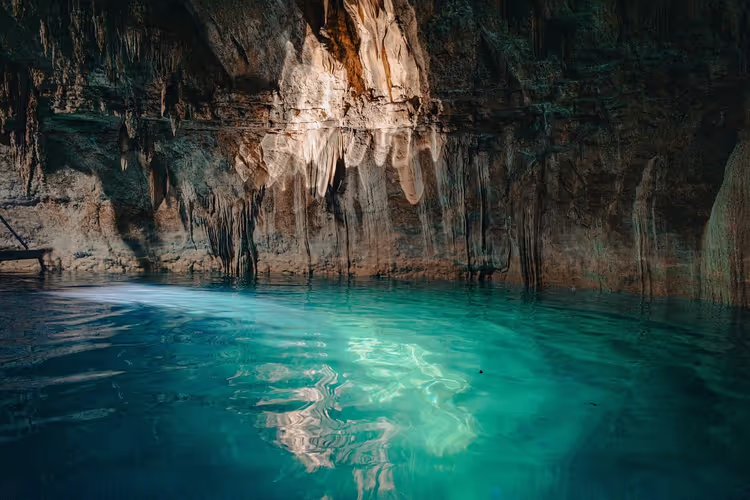
Cenote Ik Kil: prices 2026, swimming and how to get there
Yucatan has almost no rivers or lakes on the surface. Fresh water is hidden underground, in karst sinkholes that the Maya called cenotes. The most photographed cenote on the peninsula is named Ik Kil (Cenote Ik Kil). It lies 3 km from Chichen Itza (on the map), which is why it is included in almost every bus tour from Cancun and Tulum.
A cenote is a natural collapse in limestone with vertical walls. From the edge of the sinkhole to the water here is about 26 m (as of 09/2026, Wikipedia), and a staircase carved into the rock leads down. Below you will find the history of the place, official prices for 2026, and a practical visit plan.
Ad: this article contains affiliate links, we earn a commission if you book through them, at no extra cost to you.
What is Cenote Ik Kil
💡 In short:
- Ik Kil is a karst lake in northern Yucatan, 3 km from Chichen Itza.
- Admission in 2026 costs 240 MXN for adults and 150 MXN for children (park prices and rules).
- Swimming is allowed, a life jacket and locker are already included in the ticket.
- Prices and opening hours: 09/2026, verified on the cenote's official website.
The name "Ik Kil" translates from the Maya language as "place of winds." For the Maya, cenotes were sacred. It was believed that the rain god Chaac dwelled in them, and the well itself opened the entrance to the underworld. Ik Kil is no exception: according to the cenote page, this rain god was worshiped here.
The water in the sinkhole stays cool all year round. After the heat, a plunge is instantly refreshing. You descend the stone staircase, holding the handrails, and find yourself at the turquoise surface beneath walls as high as a nine-story building. This is the view that most often ends up in photos.
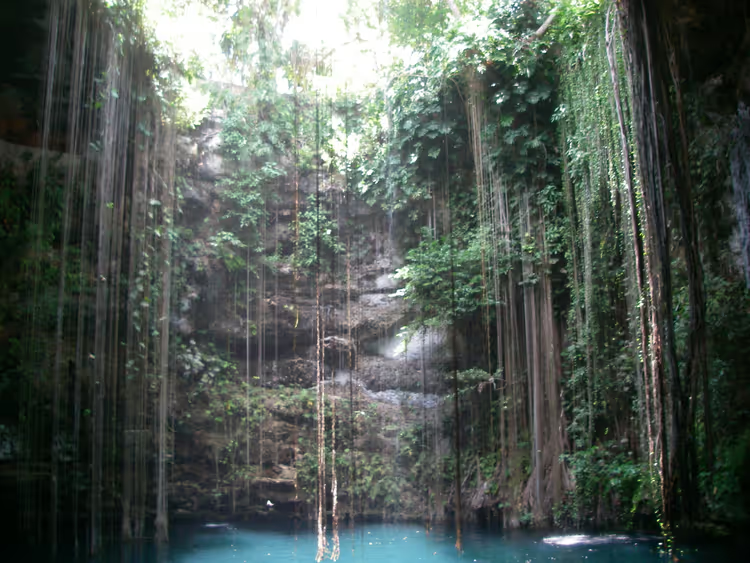 © Dmadeo · CC BY-SAPhoto: Dmadeo, CC BY-SA (https://creativecommons.org/licenses/by-sa/3.0), Wikimedia Commons
In terms of depth, Ik Kil is not the largest cenote in Yucatan, but it is one of the most recognizable. Its almost circular sinkhole and curtain of vines have made the place a signature landmark of the region.
History of Yucatan and the Maya civilization
Yucatan is a large peninsula in southeastern Mexico. It is home to three states: Quintana Roo, Campeche, and Yucatan.
Until the 16th century, the civilization of Yucatan developed in isolation. The peace was disrupted by the Spanish conquest, but many managed to preserve their ancestral language. Today, local residents carefully preserve the Maya heritage.
Yucatan was the homeland of the Maya, and one of their largest cities lies next to a cenote. Chichen Itza served as an important trade and religious center. From the Maya language, the name translates as "city on the edge of the well of the Itza" (according to INAH, 09/2026).
The city was founded in the first half of the first millennium AD. The Maya culture was also influenced by other peoples of Mesoamerica.
 © Codas · CC BY-SAPhoto: Codas, CC BY-SA (https://creativecommons.org/licenses/by-sa/4.0), Wikimedia Commons
Cenote Ik Kil sits right next to the ruins of Chichen Itza. The ancient Maya considered such wells a source of fresh water. So the proximity of the city and the cenote is no accident: the settlement grew where there was water.
How Cenote Ik Kil formed
The cenote emerged from an underground cave. Its walls consisted of limestone, which is easily eroded by water. For thousands of years, underground rivers wore away the rock, the ceilings collapsed, and the cave grew wider and deeper. When the last dome fell in, the round sinkhole you see today opened up.
The dimensions confirm the scale of the process. Ik Kil is about 60 m in diameter, and the total depth of the sinkhole is almost 48 m (as of 09/2026, Wikipedia). The water level lies about 26 m below the rim. That is why swimming here always involves a descent.
The walls were reinforced even before mass tourism arrived. A stone staircase leads down, with viewing balconies built along the sides. From them you can take in the whole sinkhole without going down to the water. Artificial waterfalls along the walls add moisture and sound.
Yucatan has several thousand cenotes. They formed because of the local soil and heavy tropical rains, which together with underground rivers erode the limestone. Not all of them are this open: many remain caves with a narrow entrance where almost no light gets in.
For ancient people, cenotes were vital. They provided clean fresh water where there were no rivers or wells.
Large sinkholes like Ik Kil are called underground lakes. The water here is clear, with a turquoise tint. Small fish swim near bathers.
Visiting rules and swimming
The cenote welcomes tourists, and swimming is allowed here. Before entering the water, you are required to take a shower: this rule applies to everyone. A life jacket is required on the water, and it is provided with your ticket.
The water temperature barely changes throughout the year. After the heat under the open sky, the plunge is instantly refreshing. Local belief says that bathing in the waters of Ik Kil gives you the feeling of being "born again." The only way to check is to try it yourself.
Tourist infrastructure has been built around the cenote. There are changing rooms, lockers, and showers, plus cafes and a restaurant serving local cuisine. Guest bungalows are set up nearby, where you can spend the night surrounded by jungle.
Chichen Itza and the pyramid of Kukulkan
Chichen Itza is what brings tourists to Ik Kil. It is one of the largest Maya cities, and the cenote sits just 3 km from its ruins (on the map). Many people come here for a day trip from Cancun, Playa del Carmen, or Tulum.
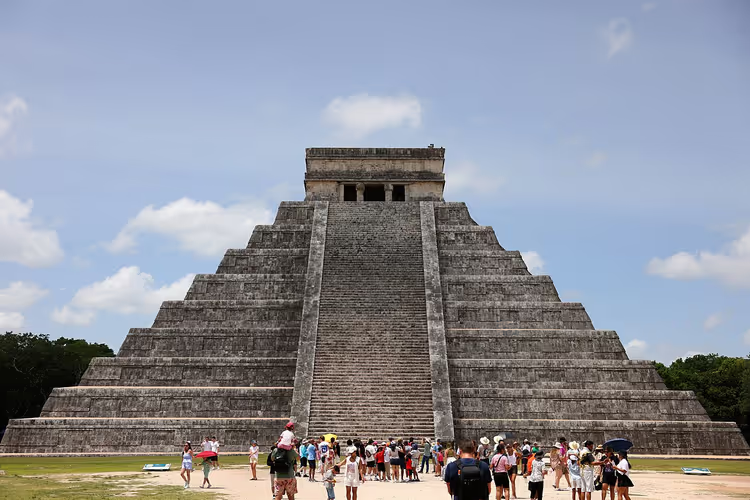 © Gage Skidmore · CC BY-SAPhoto: Gage Skidmore, CC BY-SA (https://creativecommons.org/licenses/by-sa/4.0), Wikimedia Commons
At the center of the complex stands the Pyramid of Kukulkan, or El Castillo. Its steps and faces form a stone Maya calendar. On the equinoxes, a shadow on the face creates the figure of a serpent that slithers down to the base. The architecture with its optical and acoustic effects still sparks debate among researchers.
The city was a major trade and religious center. The cenote supplied it with water and served as a site for rituals. That is why touring the ruins and swimming in the well make sense to combine in one day.
Its status as one of the new seven wonders of the world cemented Chichen Itza's popularity. That is why lines at the entrance grow by midday, and the heat becomes intense by then. Mornings here are calmer and cooler.
Touring the ruins and swimming in the cenote are easy to combine in one tour. Chichen Itza and cenote excursions on GetYourGuide usually include transfer and admission.
Tickets, opening hours, and how to get there
The cenote's official website publishes current data for 2026. The ticket price already includes a life jacket, locker, and parking.
Opening hours are simple: the cenote is open every day from 9:00 to 17:00 (schedule on the park website, 09/2026). An online ticket lets you go straight to the changing rooms using your booking code.
What | Details |
|---|---|
Admission, adult | 240 MXN |
Admission, child over 1.20 m | 150 MXN |
Ticket with buffet | 530 MXN |
Opening hours | 9:00-17:00, daily |
All prices and hours: Ik Kil park data, 09/2026.
The route depends on your starting point. From Cancun and Playa del Carmen, the drive takes about 2 hours; from Tulum and Merida, the trip takes about 1.5 hours (cenote data, 09/2026). You can get there by bus, taxi, or rental car.
For the Tren Maya train, you will need the Chichén Itzá station. From there to the cenote is about 5 minutes by taxi (same source). This is a convenient option if you are traveling without a car.
Tours and tickets in Chichen Itza
Guided tours, skip-the-line tickets and activities — most offers can be cancelled free of charge.
See offers on TiqetsThe widget loads once you give your consent.
Cenote Ik Kil on the map
The cenote sits along the highway between Merida and Puerto Juarez, near the town of Pisté. You can easily check the coordinates on the map below. If you are driving, follow the signs to the Chichen Itza archaeological zone.
⁉️🤔 Frequently asked questions
Can you swim in Cenote Ik Kil?
Yes, swimming is allowed and included in the ticket price. A shower is required before entering the water, and a life jacket is required in the water; it is provided on site. The water is quite deep, so children swim only with a life jacket and under adult supervision. There is no separate fee for swimming.
How much does cenote admission cost in 2026?
In 2026, general admission costs 240 MXN for adults and 150 MXN for children over 1.20 m (as of 09/2026, prices on the park website). The ticket includes a life jacket, locker, and parking. A ticket with the buffet costs 530 MXN; children's buffet tickets are sold only at the ticket office. Prices are in Mexican pesos.
How to get to the cenote from Cancun or Merida?
You can go by car, taxi, or as part of a tour. On the Tren Maya train, you get off at Chichén Itzá station and take a taxi; it is about 5 minutes.
When is the best time to arrive to avoid crowds?
The cenote opens at 9:00 and closes at 17:00. Early morning and the last hours before closing are usually quieter. By midday, bus groups from Cancun arrive and the water area gets crowded. If you want a calm swim, arrive at opening or after 15:00.
How is Ik Kil different from other cenotes in Yucatan?
Yucatan has several thousand cenotes, and most are hidden underground. Ik Kil is open to the sky: its sinkhole is almost perfectly round, and the walls are covered with hanging vines and roots. That is what makes the recognizable photos. For swimming, it is a convenient and safe option because there is a staircase and viewing balconies.
In short: what to book
Ik Kil is easy to combine with Chichen Itza in one day: the cenote is 3 km from the ruins. If you are coming from Cancun or Playa del Carmen without a car, the easiest option is to take a ready-made tour with transfer and admission.
If you have one free day: take a combined Chichen Itza and cenote tour.
If you have your own car: buy your cenote ticket online and arrive at opening.
If you plan to swim: bring a towel and sandals; a life jacket is already included in the ticket.

A small editorial team writing guides for independent travel. We travel ourselves, but we haven’t been everywhere, so we check prices, opening hours and how to get there against official sources.