
















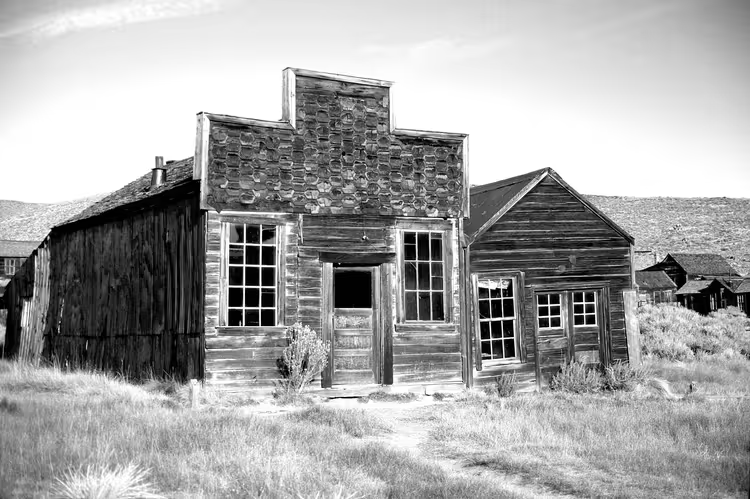
8 Ghost towns: where tourists are allowed and what is there now
Pripyat has been empty for forty years. The exclusion zone around the Chernobyl nuclear power plant has been closed to tourist groups since February 19, 2022 (exclusion zone operator). Access to ghost towns changes constantly: some sites are guarded by the military, others have been turned into national parks, and still others are open for paid tours.
Below are eight abandoned towns and the current rules for visiting each. In short: Kolmanskop in Namibia, Berlin in Nevada, Humberstone and Sewell in Chile, and Oradour-sur-Glane in France all welcome visitors, if you are willing to get there on your own.
Eight ghost towns and how to visit them
💡 In short:
- It makes more sense to plan a route by region: Ukraine and the Arctic, the US, Chile, Namibia, France, Taiwan.
- Pripyat is currently off limits, the UFO houses in Sanzhi have been demolished, and the remaining sites are open to tourists.
- Access and visiting rules: 09/2026, verified on the exclusion zone operator's website
1. Pripyat, Ukraine: a town abandoned for good
Pripyat was built as a model town for Chernobyl nuclear power plant employees. It had schools, a movie theater, a palace of culture, and a park with a Ferris wheel. After the accident on April 26, 1986, residents were evacuated by bus within a few hours, and they never returned home (Chornobyl Tour).
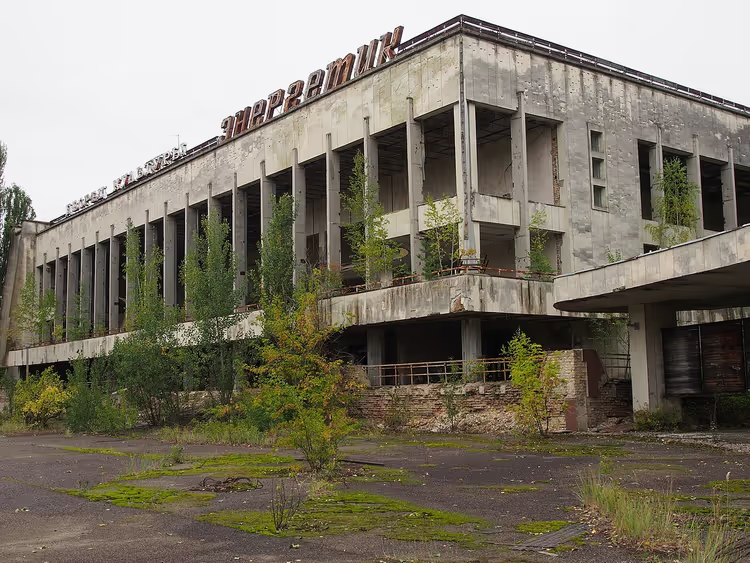 © Clay Gilliland · CC BY-SAPhoto: Clay Gilliland, CC BY-SA (https://creativecommons.org/licenses/by-sa/2.0), Wikimedia Commons
You cannot get to Pripyat in 2026: after the war began, the zone became a border area, and access is allowed only for the military, scientists, and enterprise employees (operator data). The timeline for resuming tours depends on the military situation, not on radiation levels. If you are planning a trip to Ukraine, choose open routes and do not count on visiting the zone.
2. Pyramiden, Svalbard: the northernmost mine
Pyramiden sits on the island of West Spitsbergen, in the Norwegian part of the Arctic. The local coal mine was long considered the northernmost in the world. Mining was expensive and coal reserves were running out, so the mine was closed and the settlement was abandoned around the turn of the century.
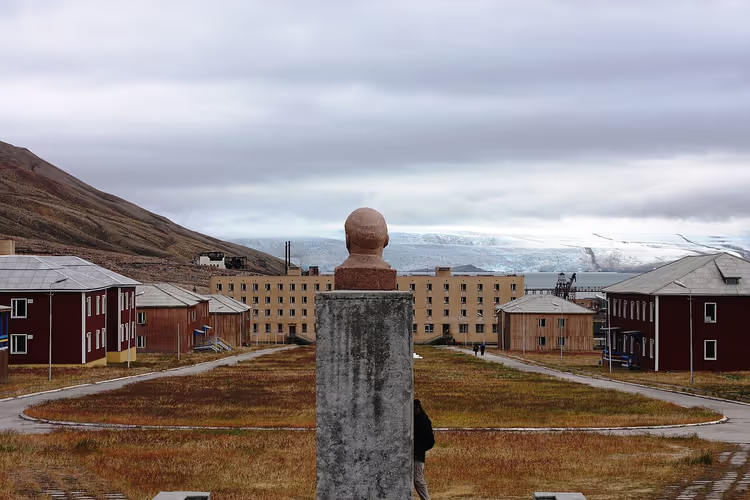 © Bjoertvedt · CC BY-SAPhoto: Bjoertvedt, CC BY-SA (https://creativecommons.org/licenses/by-sa/3.0), Wikimedia Commons
Pyramiden welcomes visitors. A hotel with 38 double rooms and 11 suites operates here seasonally (Hotel Pyramiden). The only way to get there is by sea from Longyearbyen, and the trip takes several hours, so you should plan a full day.
The settlement's research base has been preserved and is used by scientists. Glaciers and ice domes surround the area, and the air is so clear that distant mountains seem very close.
3. Centralia, USA: the prototype for Silent Hill
Centralia in Pennsylvania resembles Silent Hill from the games and movies. A coal seam burns beneath the town: the fire started in 1962 and has not gone out to this day (Wikipedia). Because of carbon monoxide and ground subsidence, residents were gradually relocated.
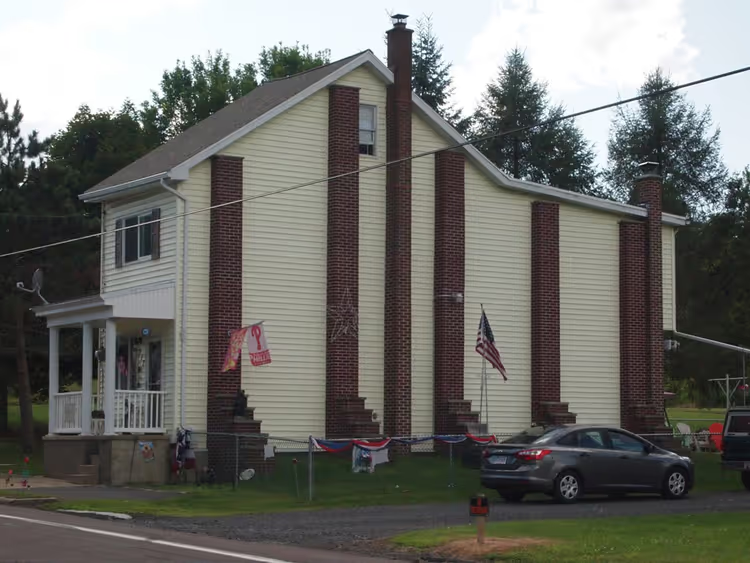 © Z22 · CC BY-SAPhoto: Z22, CC BY-SA (https://creativecommons.org/licenses/by-sa/4.0), Wikimedia Commons
According to the 2020 census, five people remain in Centralia (Wikipedia). The abandoned highway was torn up, and cracks are visible in the asphalt, with steam rising from them. You can drive through the town, but access to the dangerous areas is closed.
4. Berlin, USA: a town on ichthyosaur bones
Berlin is located in Nevada, although the name evokes European associations. At the entrance you will see an emblem featuring a large ichthyosaur. Millions of years ago this site was an ancient sea, and skeletons of marine reptiles are indeed found in the local rock.
 © Famartin · CC BY-SAPhoto: Famartin, CC BY-SA (https://creativecommons.org/licenses/by-sa/4.0), Wikimedia Commons
Silver was discovered here back during the American Civil War, and the settlement grew quickly on metal mining. When silver prices fell, the last prospector left, and the houses stood empty. Later, most of the town was incorporated into a state park, where the ruins and an open-air museum have been preserved.
Today it is one of the most accessible ghost towns in North America: the buildings stand right next to the road, and a visit takes a couple of hours. If you go in summer, bring water and arrive in the morning, before the sun heats up the valley.
5. Humberstone and Sewell, Chile: UNESCO towns
In the Atacama Desert in northern Chile stand two abandoned saltpeter mining towns. Humberstone and Sewell are listed as UNESCO World Heritage Sites, so they are not dismantled and efforts are made to preserve them.
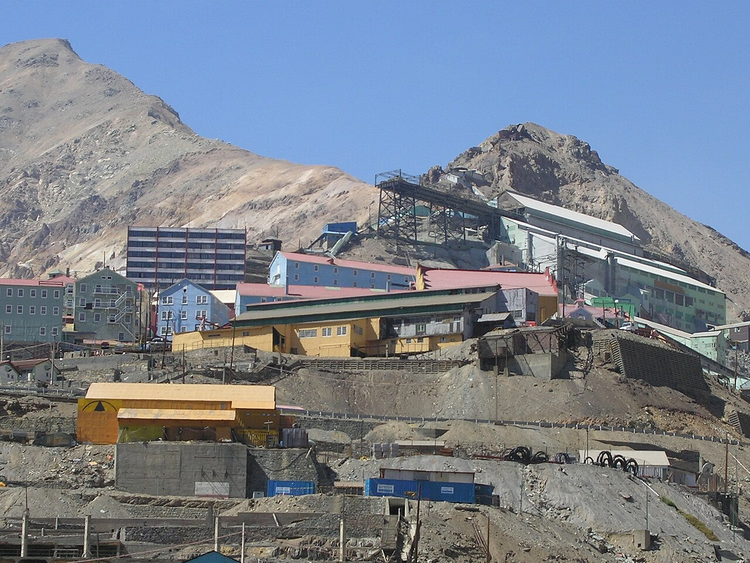 © Francesco Bandarin · CC BY-SAPhoto: Francesco Bandarin, CC BY-SA (https://creativecommons.org/licenses/by-sa/3.0/igo/deed.en), Wikimedia Commons
Humberstone grew up around a plant where saltpeter was extracted. When demand for it fell, the operation shut down, and the workers and their families moved away. To protect the buildings from looters, the town was placed under protection, and today you can walk the streets and see what everyday life was like for the workers.
Sewell is located high in the Andes and was built around a copper mine. All the buildings here are wooden, and even today traces of bright paint are visible on the walls. The town was named after the first manager of the company that owned the mine. When the copper reserves ran out, the settlement was abandoned, and now mostly tourists come here. Humberstone and Sewell are about 1,500 km apart, and there is no shared route between them. Plan the logistics in advance.
6. Kolmanskop, Namibia: a town in the Namib sands
Kolmanskop lies in the Namib Desert not far from Lüderitz. At the beginning of the last century, diamonds were found here, and the settlement was built in a matter of months. Solid stone houses, a school, and a hospital appeared, and life bustled here for several decades.
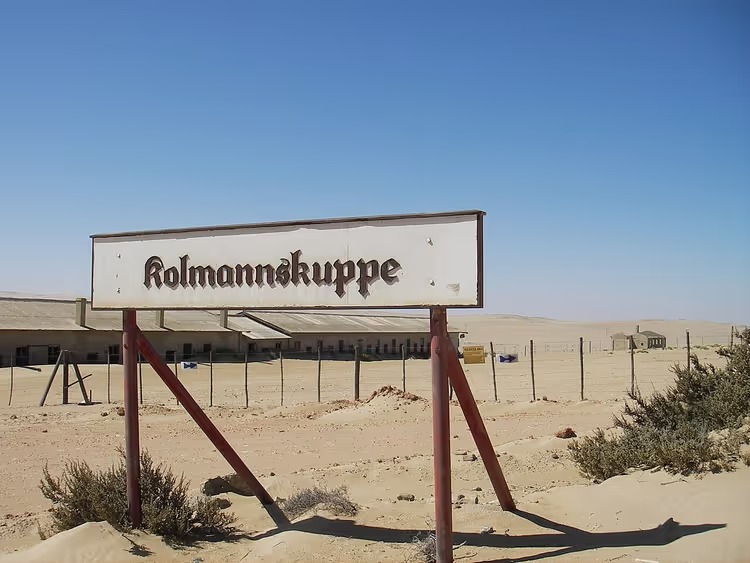 © Uploaded on April 24, 2006 by SqueakyMarmot · CC BYPhoto: Uploaded on April 24, 2006 by SqueakyMarmot, CC BY (https://creativecommons.org/licenses/by/2.0), Wikimedia Commons
When the diamond deposits were exhausted, the residents left, and the desert began to encroach on the streets. Today the condition of the houses is monitored, but sand has already filled some of the rooms.
Tours are run only by Ghost Town Tours, night photography and drone flights are prohibited, and it is best to check the schedule in advance (Kolmanskuppe). You will have to spend the night in Lüderitz: look for hotels and campsites there, as staying in Kolmanskop itself is not allowed.
7. Oradour-sur-Glane, France: memory of a burned village
Oradour-sur-Glane in the Haute-Vienne department was preserved as a memorial after the tragedy of World War II. On June 10, 1944, soldiers of an SS division destroyed the village and killed 642 civilians, including women and children (description of the tragedy). Only a few people survived.
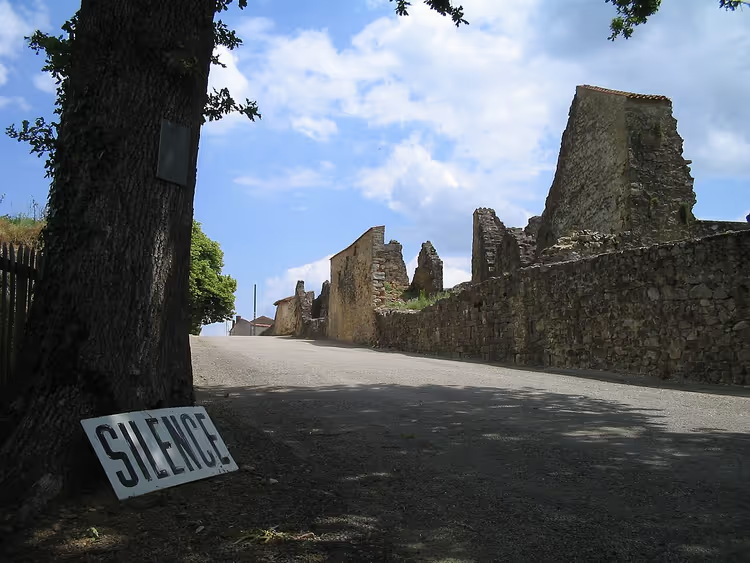
New houses were built nearby, while the old center was left exactly as it was found that morning. Cars, household items, and plaques with the names of the dead remain in place as a testament to the tragedy.
Check the memorial center's opening hours in advance, as they change by season. This is not a place for entertainment: you walk through streets where people died, so be quiet and do not stage photo shoots.
8. Sanzhi, Taiwan: the unfinished UFO city
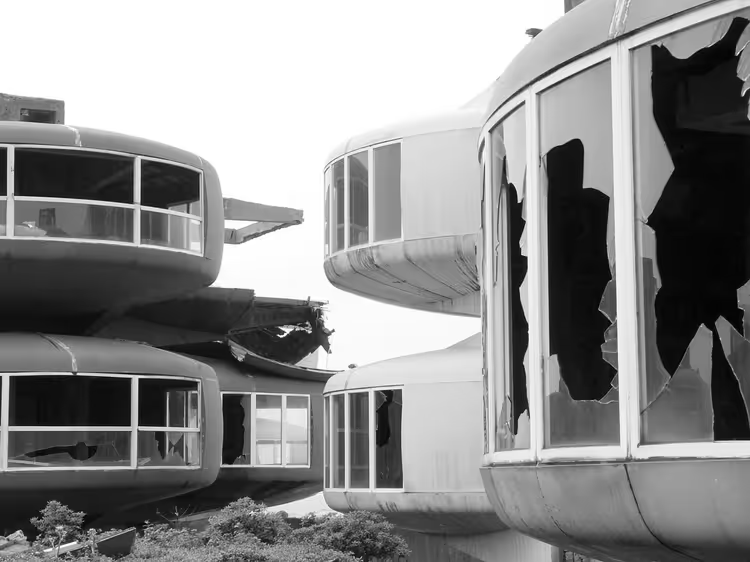 © Kok Leng Yeo from Singapore, Singapore · CC BYPhoto: Kok Leng Yeo from Singapore, Singapore, CC BY (https://creativecommons.org/licenses/by/2.0), Wikimedia Commons
The list ends with Sanzhi, known as the UFO houses. This is an unfinished futuristic resort of capsule buildings shaped like flying saucers. Construction began in 1978 and stopped a couple of years later, so the area was never inhabited (project history).
Locals linked the delays to a bad omen, and investors lost interest in the project. In 2010, the unfinished structures were demolished (Wikipedia). There is nothing to see there today, so Sanzhi is not worth adding to your itinerary.
⁉️🤔 Frequently asked questions
Can you visit Pripyat now?
No. The exclusion zone around the Chernobyl nuclear power plant has been closed to tourist groups since February 19, 2022 (operator's official website). While the restrictions remain in place, Pripyat can only be seen in documentary footage and old operator reports.
Which site on the list is the most accessible?
Kolmanskop in Namibia and Berlin in Nevada. In Kolmanskop, tours are led by licensed guides, and nearby in Lüderitz there are hotels and campsites. The ruins of Berlin sit right next to the road and are open for walking around. Both sites welcome visitors year-round, but if you go in summer, visit the desert in the morning.
How much time do you need for each site?
Kolmanskop and Berlin can be seen in a couple of hours. Pyramiden requires a full day because of the boat crossing from Longyearbyen. Oradour-sur-Glane is convenient to visit as part of a driving route through the region. Humberstone and Sewell are about 1,500 km apart, so they cannot be combined into one itinerary. Plan your trip by region so you don't waste time on long transfers.
Is it dangerous to visit ghost towns?
The risk depends on the site. In Pripyat it comes from radiation and the restricted access regime, in Centralia from the underground fire and ground subsidence. In Kolmanskop, only the sun and sand are dangerous. At all sites, stay on marked paths and do not enter unstable buildings.
In short: which ghost towns to see first
The sites vary greatly in terms of access and logistics. If you are short on time, start with open locations: Kolmanskop, Berlin in Nevada, or Oradour-sur-Glane. If you want Arctic exoticism, plan a trip to Pyramiden with an overnight hotel stay. For a longer route, combine Humberstone and Sewell with a journey through Chile. Before you set off, check entry rules and tour schedules on the sites' official websites.

A small editorial team writing guides for independent travel. We travel ourselves, but we haven’t been everywhere, so we check prices, opening hours and how to get there against official sources.