






Christmas market in Wroclaw: 2026 dates and what to see nearby
Wrocław in winter smells like mulled wine, cinnamon, and fried cheese. Every year people come here for one of Poland's longest Christmas markets and for a city that's easy to cover on foot over a weekend.
The 2026/2027 market opens on November 20 and runs through January 7 (according to the organizers' website), and this is already the 16th market on the city's main square (according to PIK Wrocław). You can walk from the train station to the Market Square. Book your hotel in advance.
Ad: this article contains affiliate links. We earn a commission if you book through them, at no extra cost to you.
Christmas market 2026
💡 In short:
- The market runs from November 20, 2026 to January 7, 2027.
- Hours: daily 10:00-21:00, closed on December 24, 25, and January 1.
- Main locations: Market Square, Plac Solny, Świdnicka and Oławska streets.
- Prices and hours: 09/2026, verified on the market's official website.
The 2025/2026 market drew over a million visitors, a record in its entire history (according to the market's official website). On weekend evenings it gets very crowded, so hotels in the center sell out early, and it's easier to browse the stalls calmly on a weekday.
 © Icodense · CC BY-SAPhoto: Icodense, CC BY-SA (https://creativecommons.org/licenses/by-sa/4.0), Wikimedia Commons
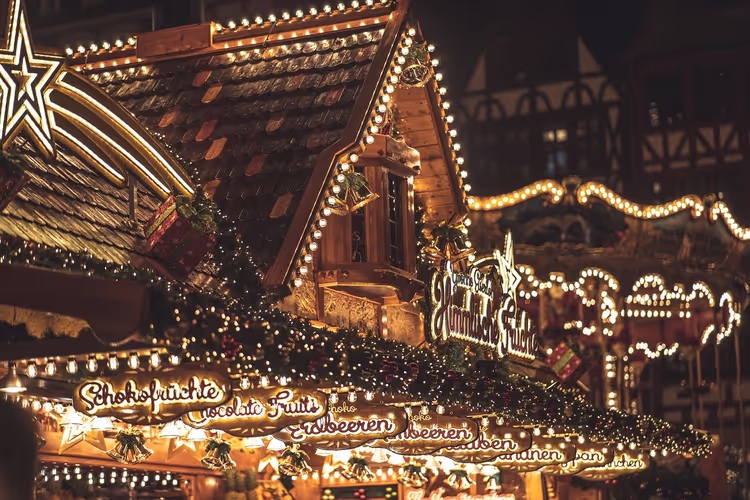
The market spreads from the Market Square deep into the old town, with its wooden stalls running along Plac Solny, Świdnicka and Oławska streets. You'll find hundreds of wooden booths with food, crafts, and hot drinks, and after lunch the tour groups start arriving.
On Friday and Saturday evenings there are concerts by the stage, and families with children gather around the carousels. For kids there's a fairytale forest, a gift factory, and workshops, so if you don't like crowds, come at opening time.
What to eat at the market
Polish food at the market is hearty and affordable, and you should start with Oscypek, smoked sheep's cheese with lingonberry sauce. Then try Bigos, stewed cabbage with meat, and Pierogi with various fillings, while those with a sweet tooth will enjoy Churros, waffles, and gingerbread. For those who don't like to experiment, there's Langos and Belgian fries.
Portions here are large, so two people can fill up on one set, and meat dishes warm you up better than salads, which matters in freezing weather. Many stalls offer takeaway, so it's easy to grab food to go.
Mulled wine and boot mugs
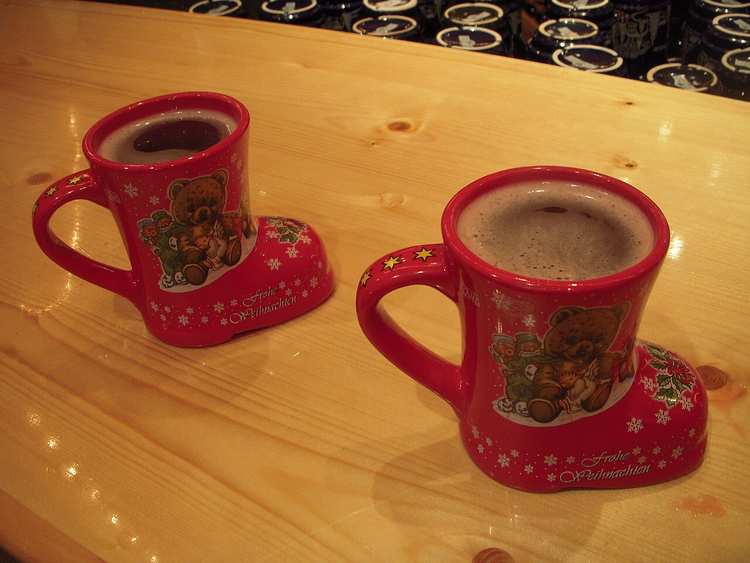
Mulled wine here is called grzane wino and is served in ceramic boot-shaped mugs with the year printed on them. Each season the mug comes in a new color, and many people take it home as a souvenir. A refundable deposit is charged for the mug, so keep cash handy at the stall.
 © BKP · CC BY-SAPhoto: BKP, CC BY-SA (https://creativecommons.org/licenses/by-sa/3.0), Wikimedia Commons
At bars around the Market Square, grzane wino is often tastier and cheaper than at the market, but there it's served in paper cups. On the plus side, bars accept cards, and many add spices and orange to the drink using their own recipe. Try both options and pick your favorite.
The Christmas tree and Prezentuś the gnome
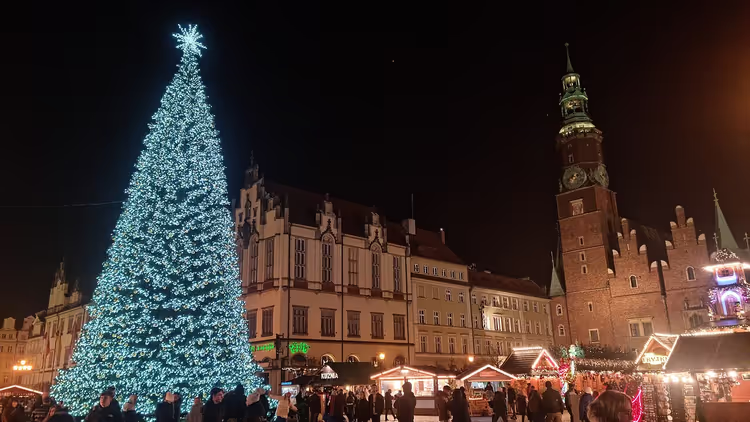
The Christmas tree on the Market Square is lit only in early December, so in the first days of the market it may not be glowing yet. The tree lighting turns into a separate celebration with music and a large crowd of spectators.
 © Bernard Ladenthin · CC BYPhoto: Bernard Ladenthin, CC BY (https://creativecommons.org/licenses/by/4.0), Wikimedia Commons
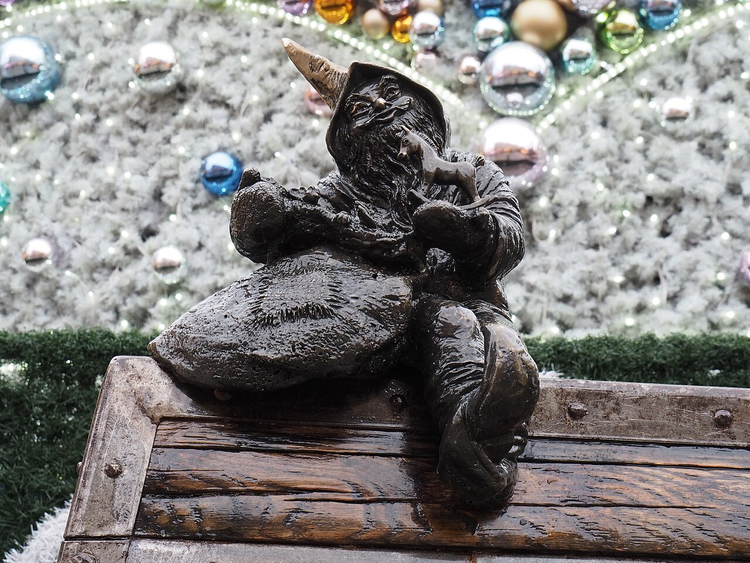
The market also has its own mascot: Prezentuś the gnome appears only during the market. According to legend, you need to rub his hat several times and your wish will come true, and after the market ends the gnome disappears.
Where to stay during the market
It's best to book accommodation a few weeks before your trip, because during holiday dates there are almost no available rooms left in the center. For a quiet evening near the Market Square, The Cyrus Hotel on Trip.com is a good fit. It's a small boutique hotel with a design of wood, leather, and stone.
 © Fallaner · CC BY-SAPhoto: Fallaner, CC BY-SA (https://creativecommons.org/licenses/by-sa/4.0), Wikimedia Commons
Couples appreciate the quiet rooms and good breakfast here. Window tables go fast, so come when the dining room opens. If you're heading to the market in the evening, the hotel is in the most convenient location.
City sightseeing tour
Wroclaw's center is compact, and you'll cover a lot on foot, but on a rainy day it's nicer to see the city from an electric vehicle. The local operator Ekotur offers this kind of tour, and its route covers the old town and Cathedral Island.
 © Fred Romero from Paris, France · CC BYPhoto: Fred Romero from Paris, France, CC BY (https://creativecommons.org/licenses/by/2.0), Wikimedia Commons
Alternative: a guided walking tour through the old town's streets. If that format suits you better, check out tour options on GetYourGuide, because on foot you'll peek into courtyards that vehicles can't reach.
Market Square and the town hall
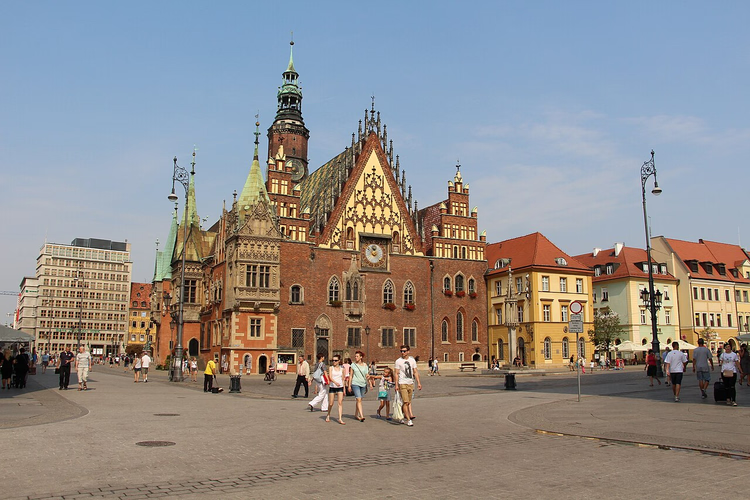
Market Square has long been the heart of the city, and at its center stands a Gothic town hall with an astronomical clock. The square is surrounded by colorful houses with ornate facades, but during the market the stalls block the full view, so come in the morning.
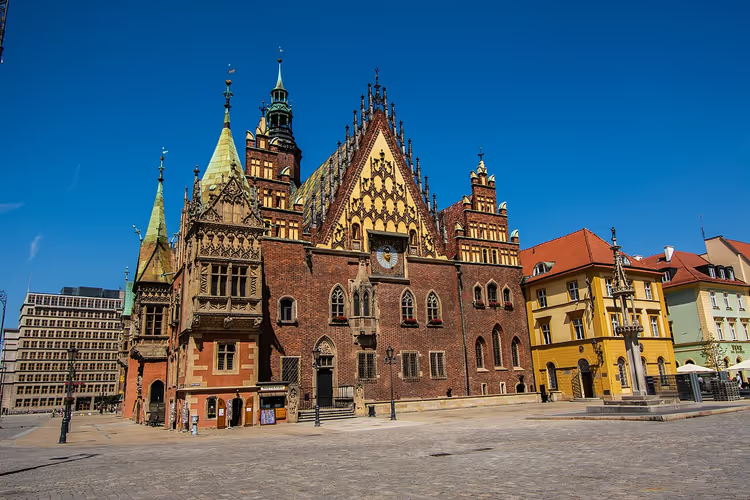 © Jg44.89 · CC BY-SAPhoto: Jg44.89, CC BY-SA (https://creativecommons.org/licenses/by-sa/4.0), Wikimedia Commons
In the southern part of the square, the city's oldest restaurant operates, which once hosted famous guests. Today a modern cellar with its own brewery has opened here, and the old-world atmosphere is almost gone, but the menu is rich.
Wroclaw observation decks
The best view of the city opens from the tower of St. Elizabeth's Church, which is considered the highest observation deck in the center. The climb goes up a narrow spiral staircase and isn't for everyone, but from the top you'll see the entire market and the roofs of the old town.
There's also a lower deck, hidden on the Mostek Pokutnic between the towers of St. Mary Magdalene Church. This little bridge connects two towers and hangs above the street. Admission there is cheaper, and the panorama is just as good.
Stare Jatki Street
The former meat stalls of Stare Jatki are now occupied by galleries and shops selling glass, ceramics, and amber. Bronze animal figures recall the meat trade, and it's worth stopping by for the small workshops and handmade souvenirs.
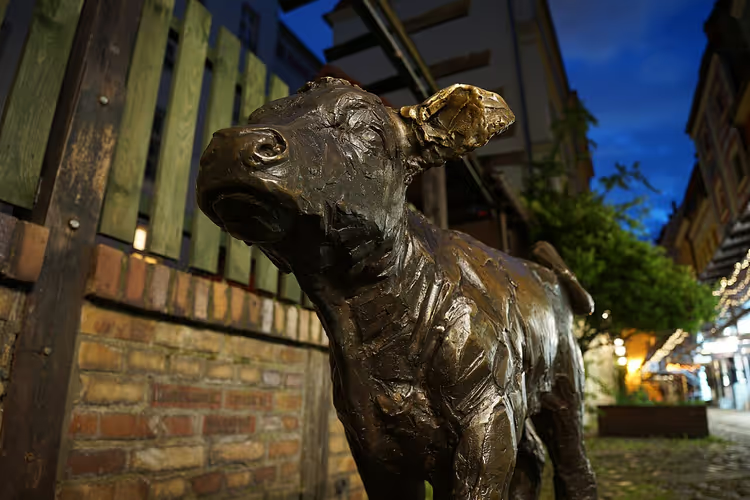 © Strumyczek · CC BY-SAPhoto: Strumyczek, CC BY-SA (https://creativecommons.org/licenses/by-sa/4.0), Wikimedia Commons
Artists work right in the shop windows, and you'll see the process with your own eyes. Prices here are higher than market rates, but the selection is more interesting, and half an hour is enough to explore the short street.
University of Wroclaw and Aula Leopoldina
The main building of the University of Wroclaw is considered one of the city's most beautiful Baroque palaces, and inside is Aula Leopoldina, a ceremonial hall with frescoes and stucco work. It ranks among the best Baroque halls in Europe, and the terrace of the Mathematical Tower offers a view of the city.

Aula Leopoldina hosts university ceremonies, so it's sometimes closed to tourists. Check hours and prices on the official university museum website, and it's best to come in the morning before tour groups arrive.
Hala Targowa market
Hala Targowa still operates as a city market under a concrete dome. The early 20th-century building is built in Art Nouveau style, and here you'll find fresh produce, regional cheeses, and Polish sweets. Inside there's a milk bar that has survived from a bygone era.
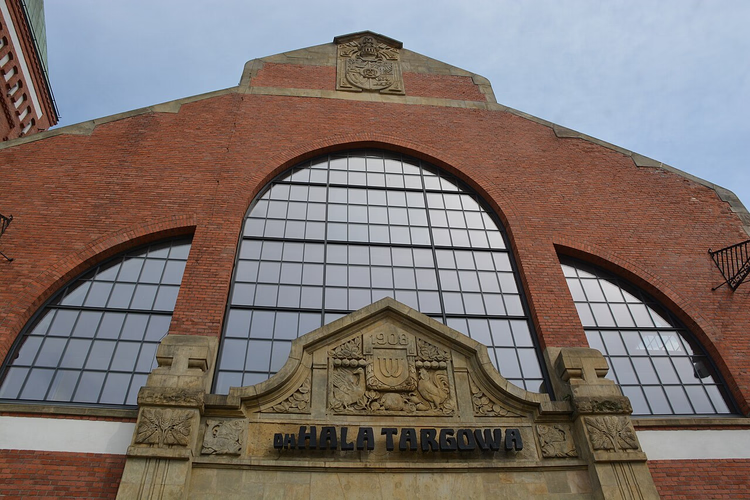 © Jonashtand · CC BY-SAPhoto: Jonashtand, CC BY-SA (https://creativecommons.org/licenses/by-sa/4.0), Wikimedia Commons
The milk bar is set up like a cafeteria with cheap home-style food, and students and locals eat here every day. This is the place to get an inexpensive meal in the center, and at the same time you will see what an ordinary Wrocław market looks like.
Wzgórze Liebicha Hill
Wzgórze Liebicha Hill combines nature and history, and its viewing platform offers a panorama of the city and the surrounding area. The belvedere at the top makes a great photo spot, and it is a pleasant climb after the bustle of the fair.
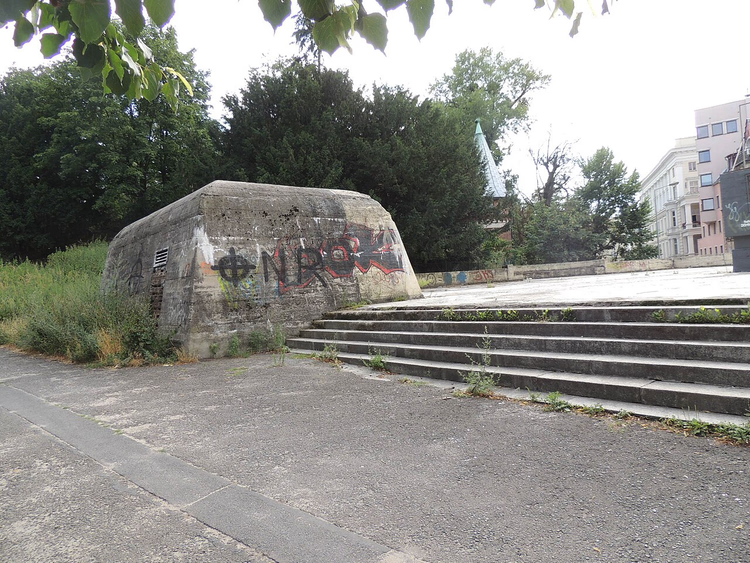 © Joee · CC BY-SAPhoto: Joee, CC BY-SA (https://creativecommons.org/licenses/by-sa/4.0), Wikimedia Commons
The walking path starts from Cathedral Island, and the climb is short, but in winter the trails are slippery. Bring a thermos with you, because there is little shelter at the top.
Wrocław Główny Station
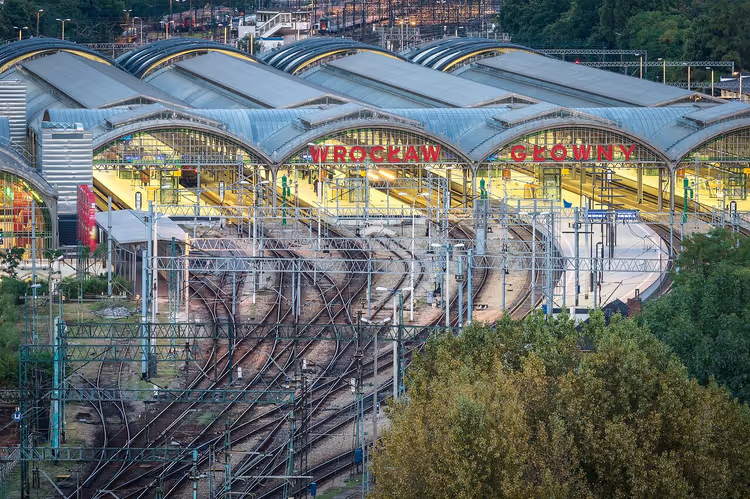
Wrocław Główny Station surprises visitors with its palace-like facade, and its historic halls sit side by side with a modern terminal. From here you can reach the Market Square in a few minutes, so the station is a convenient starting point if you are coming for a day trip.
 © Jar.ciurus · CC BY-SAPhoto: Jar.ciurus, CC BY-SA (https://creativecommons.org/licenses/by-sa/3.0/pl/deed.en), Wikimedia Commons
Next to the station begins a bar district where people arriving by train tend to stay. Accommodation prices here are lower than near the Market Square.
The quarter under the railway embankment
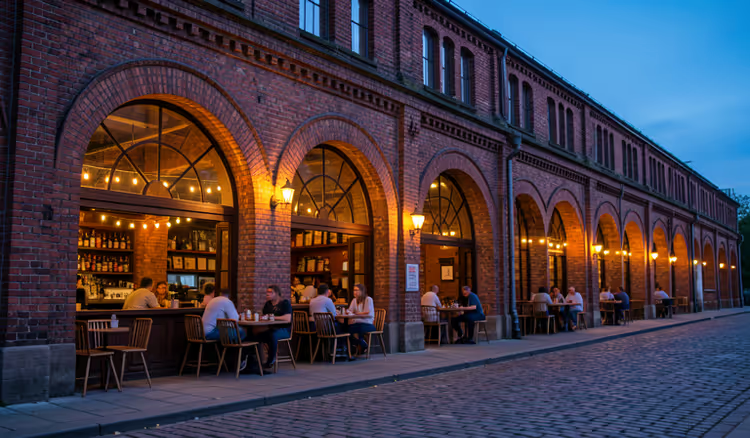
Under the railway arches hides a trendy quarter where bars, cafes and clubs have opened in former warehouse spaces. In the evening people come here for craft beer and street food, and the arches themselves are reminiscent of Berlin's S-Bahn-Bögen.
 AIIllustrative image: AI-generated
The quarter is a couple of minutes from the station and stays open late, so it is always busy. If you want to have dinner after the fair, this is a good option.
Monument to anonymous passersby
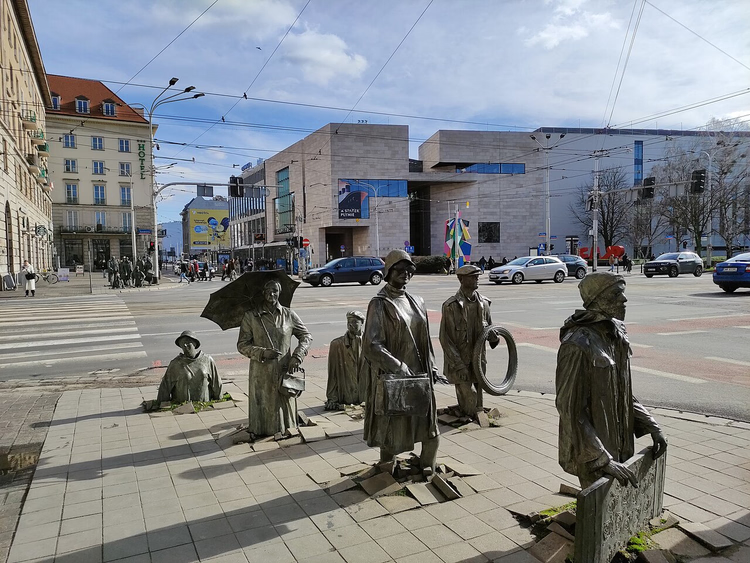
The Monument to anonymous passersby stands right at a crosswalk, and the bronze figures of people sink into the ground only to emerge on the other side of the street. The artists created it as a reminder of the martial law period in Poland, and at night the sculptures are illuminated.
 © Palickap · CC BYPhoto: Palickap, CC BY (https://creativecommons.org/licenses/by/4.0), Wikimedia Commons
The figures are easy to find: they are on Świdnicka Street. Almost every tourist manages to snap a photo with them, and a couple of minutes is enough for a look. Viewing the sculptures is free.
Narodowe Forum Muzyki and the Jewish quarter
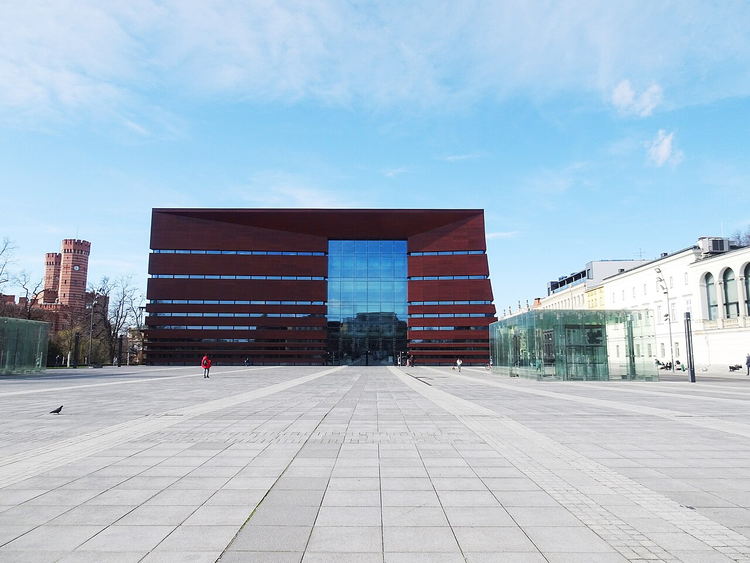
Narodowe Forum Muzyki was built as a modern concert complex whose acoustics are considered excellent. In winter it hosts many holiday concerts, and nearby is the Jewish quarter with its restored synagogue.
 © Palickap · CC BYPhoto: Palickap, CC BY (https://creativecommons.org/licenses/by/4.0), Wikimedia Commons
Around the synagogue you will find small cafes, antique shops, and galleries, making this one of the coziest parts of the city. Walking through the quarter requires no tickets.
Cathedral Island
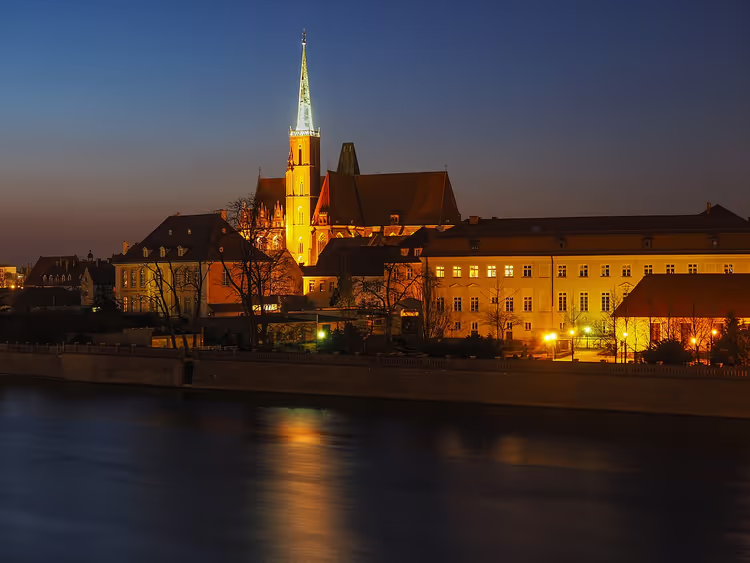
Cathedral Island (Ostrów Tumski) is called the spiritual and historical heart of Wrocław, and it is home to the enormous Cathedral of St. John the Baptist. Around it are small churches and quiet streets, and in winter, especially with snow, the island looks like a fairy-tale set.
 © SuperGlob · CC BYPhoto: SuperGlob, CC BY (https://creativecommons.org/licenses/by/4.0), Wikimedia Commons
Technically it is no longer an island, but the name has stuck. The island is small, so you can cover it in a leisurely stroll.
Love bridge and the lamplighter
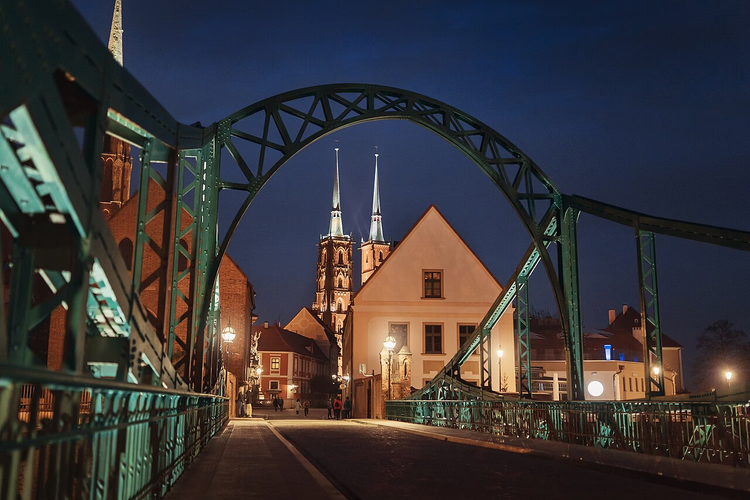
The beautiful Tumski Bridge leads to Cathedral Island, and its railings used to be decorated with love locks. They were removed, and now signs warn visitors not to hang new ones, while gnomes at the entrance to the bridge symbolically break a lock.
 © Aneta Pawska · CC BY-SAPhoto: Aneta Pawska, CC BY-SA (https://creativecommons.org/licenses/by-sa/4.0), Wikimedia Commons
In the evening you can witness a rare sight on the island. Wrocław remains one of the few EU cities where a lamplighter lights the gas lamps by hand. He walks the streets at dusk, always followed by a crowd.
If you are near the cathedral at that time, you will hardly miss the lamplighter. He comes out every evening, but the time changes with the season, so ask the hotel front desk for the exact time.
Centennial hall and szczytnicki park
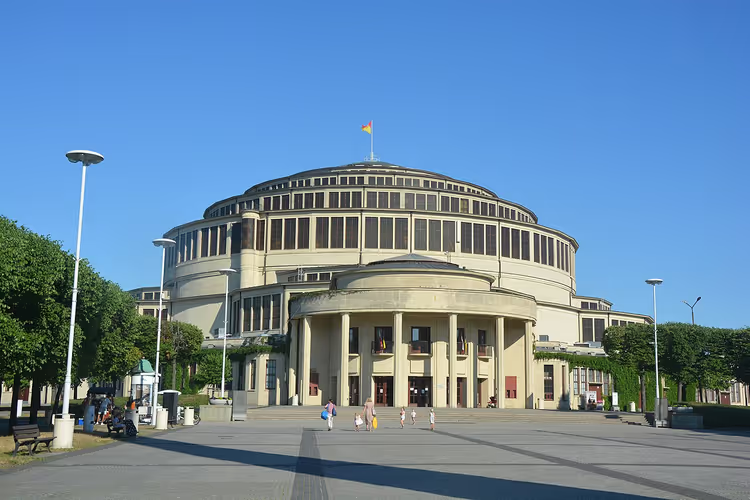
Centennial Hall (Hala Stulecia) is a UNESCO World Heritage Site, and this early 20th-century building amazes with its concrete dome. At the time, such a dome was a technical sensation, and today the hall hosts concerts, exhibitions, and fairs.
 © Jonashtand · CC BY-SAPhoto: Jonashtand, CC BY-SA (https://creativecommons.org/licenses/by-sa/4.0), Wikimedia Commons
Nearby lies Szczytnicki Park, home to the wooden Church of St. John of Nepomuk. From the fairgrounds it is easy to get here by tram.
Nadodrze and the colorful courtyards
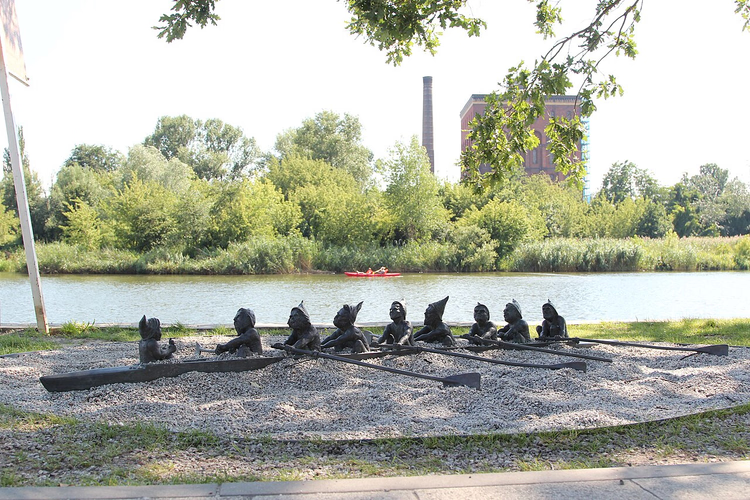
The Nadodrze district starts just beyond the center and is known as a creative neighborhood with colorful courtyards. The walls of the inner yards are covered with murals and mosaics that tell the stories of the district and its residents.
 © Fallaner · CC BY-SAPhoto: Fallaner, CC BY-SA (https://creativecommons.org/licenses/by-sa/4.0), Wikimedia Commons
The courtyards are open to everyone and free to enter, and you should look for them in the alleys between old buildings. Along the way you will see the real, non-touristy Wrocław.
Wrocław gnomes
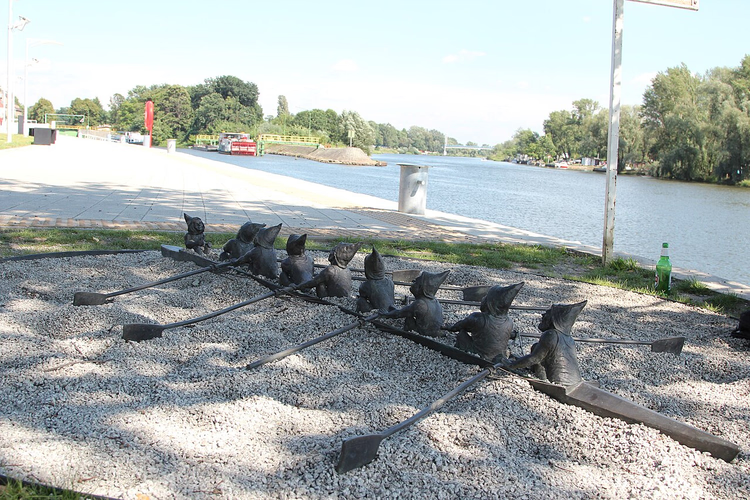
The gnomes in Wrocław are impossible to miss. Small bronze figures stand on streets, squares, and even windowsills, but they are not just cute toys: they are part of a serious history.
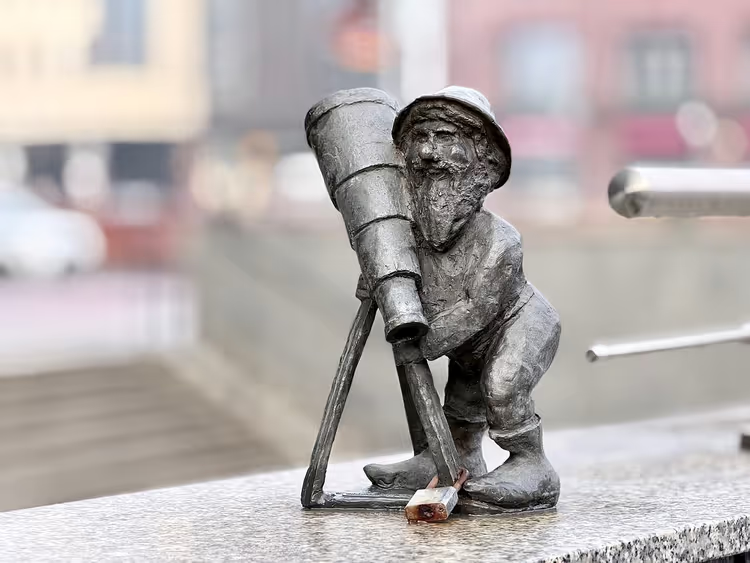
In the late communist era, the artistic group Orange Alternative (Pomarańczowa Alternatywa) was active here. It staged peaceful actions and painted gnomes wherever the authorities covered up protest graffiti, and so the gnome became a symbol of resistance.
The first gnome appeared on Świdnicka Street in the early 2000s, and since then their number has grown to several hundred. Each figure has its own character and its own story.
Today entire gnome-themed routes are led through the city, and maps showing their locations are sold at kiosks. Gnome hunting has become a separate activity for children and adults alike, and the best place to start is Świdnicka Street, where they are most numerous.
Museums for a cold day
When it is freezing or raining, museums come to the rescue. Hydropolis is dedicated to water and is designed as a large interactive space where you can learn how water reaches the city and why it is conserved. It is especially interesting for children.
 © Gorofil · CC BY-SAPhoto: Gorofil, CC BY-SA (https://creativecommons.org/licenses/by-sa/4.0), Wikimedia Commons
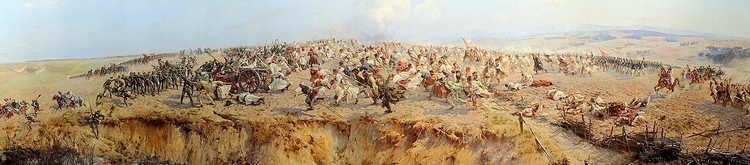
The Racławice Panorama occupies a round pavilion with a huge canvas about the Battle of Racławice, presented with lighting and moving highlights. Showings run on a schedule, and tickets and opening hours are available on the National Museum website, so arrive early to get a convenient time slot.
Tours and tickets in Wroclaw
Guided tours, skip-the-line tickets and activities — most offers can be cancelled free of charge.
See offers on GetYourGuideThe widget loads once you give your consent.
⁉️🤔 Frequently asked questions
When is the best time to visit the Wrocław Christmas market?
The market runs from November 20, 2026 to January 7, 2027. Weekday mornings are the quietest, because Friday and Saturday evenings get very crowded. If you want to take photos without the crowds, come at the 10:00 opening.
How much does it cost to enter the market?
Entry to the market is free, you only pay for food, drinks, and souvenirs. Prices for mulled wine and food are higher than in the city's regular bars. There is a refundable deposit for the boot-shaped mug, so keep cash on hand, as cards are not accepted everywhere.
What should you definitely try at the market?
Get Oscypek, a smoked sheep's cheese with lingonberry sauce. Try Bigos and Pierogi, which are great for warming up in the cold. For something sweet, go for gingerbread, waffles, and Churros, and grzane wino is worth having at least for the ceramic boot-shaped mug.
What to do in Wrocław on a rainy day?
Head down to Hydropolis or see the Racławice Panorama. Both museums are open year-round and are located near the center. Another option: a sightseeing tour by electric vehicle through the old streets, where you can see the city without getting wet.
How much time should you set aside for Wrocław?
One day is enough for the market and the old town. If you want to see Cathedral Island, the Centennial Hall, and the museums, plan for two days, because you won't be able to fit everything in comfortably in one day. Book train tickets in advance, as they get more expensive in December.
In short: what to book
If you only have one day: book a hotel in the center and plan your evening at the market.
If you're traveling with kids: choose accommodation near the Market Square and follow the gnome route during the day.
If you want to see the city without the crowds: book weekdays and morning tours.
If you're arriving by train: check train tickets to Wrocław in advance.
Book a hotel in the center on Trip.com and a Wrocław tour in advance, and the market will be a memorable experience without queues and rushing.

A small editorial team writing guides for independent travel. We travel ourselves, but we haven’t been everywhere, so we check prices, opening hours and how to get there against official sources.