










Mulled wine at German Christmas markets: why a cup costs from €3 to €7.50
Glühwein at Christmas markets in Germany has gone up in price again. The average cup of red Glühwein in the 2025/26 season cost €4.54 without deposit (as of 11/2025, Coupons.de report). A year earlier the average price held at €4.24, and in 2023 at €3.96 (as of 11/2025, Coupons.de price trend).
The spread between markets is huge. An evening with two cups will cost you anywhere from €6 to €15.
Below you will see how much Glühwein costs in major cities and regions, why the price rises every year, and how to pay less at your local market.
Ad: this article contains affiliate links. We earn a commission if you book through them, at no extra cost to you.
How much Glühwein costs in Germany
💡 In short:
- The average price in the 2025/26 season rose by 7% compared to last year (as of 11/2025, Coupons.de).
- Glühwein is cheapest in small towns, where you can get a cup from €3. It is most expensive in Berlin: up to €7.50 (as of 11/2025, price report).
- Prices and data for the 2025/26 season: checked on 09/12/2026 on the research page.
The study covered 59 cities and markets across the country (as of 11/2025, price overview). Most often the price tag shows exactly €4, but major cities pull the average price up, and Germany's regions differ noticeably from one another.
Region | Average price per cup |
|---|---|
Southern Germany | €4.73 |
Western Germany | €4.51 |
Northern Germany | €4.41 |
Eastern Germany | €4.27 |
All regional figures are taken from the regional comparison, data as of 11/2025.
Glühwein is most expensive in the south of the country. In Bavaria and Baden-Württemberg, an average cup costs €4.73 (as of 11/2025, prices by region), and two cups will set you back almost €10. The east remains the cheapest region, with prices almost half a euro lower than in the south.
Prices in major cities
Berlin leads on price. The city has almost a hundred markets, and the spread there is the widest: €5 on average per cup, and up to €7.50 near Gedächtniskirche (as of 11/2025, prices in Berlin).
City | Price per cup | What to keep in mind |
|---|---|---|
Berlin | up to €7.50 | almost a hundred markets, some with entry fee |
Munich | €5-6 | special varieties up to €7, plus deposit |
Cologne | €4.50-5 | more expensive near the cathedral and in the Altstadt |
Hamburg | around €5 | for example the Santa Pauli market |
Nuremberg | €4.50-5 | Christkindlesmarkt |
Dortmund, Braunschweig, Kiel, Mannheim | from €3.50 | the cheapest cities in the country |
City prices are compiled in the table by city, data from 11/2025.
In Munich, a cup costs €5-6, and rare varieties go up to €7 (as of 11/2025, prices in Munich). Hamburg holds at around €5 at most markets, while Nuremberg's Christkindlesmarkt sells Glühwein for €4.50-5 and remains in the mid price range.
Magdeburg, Cottbus, Koblenz, Lübeck, and Bamberg stay below average at around €4 per cup (as of 11/2025, cheap cities).
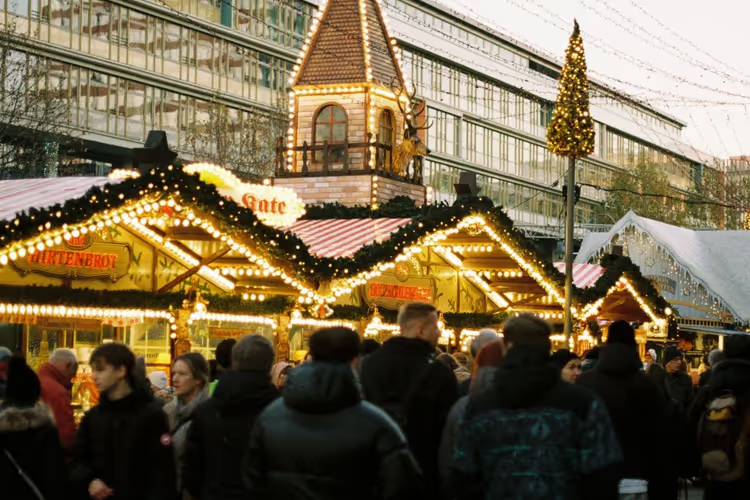
The best deal is often right near home. In small towns like Zwönitz in Saxony, you can get Glühwein from €3 (as of 11/2025, prices in small towns).
Why Glühwein gets more expensive every year
Electricity at a market stall costs more than in a permanent shop. In Frankfurt am Main, vendors pay 43 cents per kilowatt-hour, and that is one reason for the high price (as of 11/2025, electricity costs).
Raw ingredients have risen by more than 45% over five years (as of 2025, expert interview). Fruit, spices, and baked goods have all become more expensive, and the second major cost item is the fee for a market stall.
At tourist venues, a stall costs several thousand euros, and that amount is immediately built into the price of the drink (as of: 2025, watson.de).
Staff also costs more. Working at a market means long shifts in the cold and a high volume of visitors, so pay has to be above the minimum rate. After the terrorist attacks of recent years, security costs have also risen.
The overall scale helps explain where these prices come from. According to Deutscher Schaustellerbund, there are about 3,250 Christmas markets in Germany, and in 2024 they were visited by roughly 170 million people. Average spending per guest reaches 24.50 € per day, and market turnover is estimated at 4.17 billion euros (as of: 2025, market report).
Christmas markets and city economies
Many German city centers are losing shoppers because of vacant storefronts and online retail. A Christmas market brings people back downtown and creates foot traffic around cafes, shops, and hotels.
Frank Hakelberg from Deutscher Schaustellerbund says that city centers are now full of the same chains, and individuality has largely been lost (as of: 2025, expert quote). The pandemic intensified the structural problems of city centers and accelerated this process.
The tourism business around the markets is growing too. Groups arrive in cities by bus, and the revenue goes to restaurants and retailers across entire regions.
Not every season repeats the record. In the 2025/26 season, fewer people visited the markets than the year before, especially in early December (according to tagesschau.de).
How to pay less: practical tips
Compare markets within the same city: in Berlin, the difference between locations is noticeable, so walk a couple of extra stops and find the same cup for less.
Go to a market in a small town, where mulled wine is cheaper than in the regional capital (as of: 11/2025, city comparison). A 20-30 minute trip will pay for itself by the second cup.
Factor in the deposit and return your cup if you are not building a collection.
Order the regular red mulled wine: special varieties and organic mulled wine cost noticeably more, and the difference in taste is not that big.
Come on a weekday evening, when lines are shorter and the festive atmosphere is the same.
Check the entrance fee, because several Berlin markets charge admission, and it can eat up all your savings.

⁉️🤔 Frequently asked questions
How much does a cup of mulled wine cost at a Christmas market in Germany?
In the 2025/26 season, the average price was 4.54 € without the deposit (as of: 11/2025, average price). In large cities, a cup costs 5-6 €.
Where is mulled wine cheapest?
The lowest price is in small towns, for example in Zwönitz. Among large cities, the cheapest are Dortmund, Braunschweig, Kiel, and Mannheim, where they charge from 3.50 € (as of: 11/2025, cheap cities from the report).
Why does mulled wine get more expensive every year?
Operators pay more for electricity, ingredients, stall space, and staff (as of: 2025, watson.de). After the terrorist attacks, security costs have also risen.
What is Pfand at a Christmas market?
Pfand is the deposit for the mug. It ranges from 1 to 5 € on top of the drink price (as of 11/2025, deposit and mugs). You get the money back when you return the mug. Many people keep it as a souvenir, and then the deposit becomes extra revenue for the stall.
When do Christmas markets open?
Most markets open in late November and run until the second half of December, with some locations closing earlier or later. Exact dates and hours depend on the city, so check them on the organizer's website in advance. On weekdays the market usually closes earlier than on weekends.
In short: what to book
If you are planning a trip to a Christmas market, book your accommodation and train in advance. In December, hotels in major cities get more expensive, and train tickets are cheaper to buy several weeks ahead.
- If you are going to Berlin: hotels in Berlin on Trip.com.
- If you want to save on travel: train tickets on Trip.com.
Choose a market in a smaller town, compare locations within the city, and factor in the deposit, and your evening at the market will cost you noticeably less.

A small editorial team writing guides for independent travel. We travel ourselves, but we haven’t been everywhere, so we check prices, opening hours and how to get there against official sources.