


How much does a holiday in Croatia cost in 2026: prices for accommodation, food, transport and beaches
Croatia is no longer Europe's cheapest seaside destination. But it is not becoming more expensive than Germany everywhere: the region, month, and type of accommodation make all the difference.
The most detailed fresh price snapshot comes from a 2025 study by the German blog World on a Budget (as of 2025, World on a Budget study). We combined its findings with official 2026 prices for national park tickets, toll roads, trains, and the tourist tax. Below you will find a daily budget by region and specific ways to save.
Ad: this article contains affiliate links, we earn a commission if you book through them, at no extra cost to you.
The main takeaway is simple. The difference between regions is bigger than the difference between years, and that is your main lever for saving money. Regional and seasonal benchmarks are published by the Croatian National Tourist Board.
How much a vacation in Croatia costs in 2026
💡 In short:
- Accommodation for two in the 2025 high season cost about 105 € per night on average, cheapest near Plitvice Lakes, most expensive on Krk and in Dubrovnik.
- Restaurants saw the steepest price increases; groceries at Konzum and Lidl chains cost roughly the same as in Germany.
- A ticket to Plitvice Lakes and Krka National Park in summer 2026 costs 40 € per adult.
- Daily budget per person in a mid-range format: 70-100 €, a budget option with a kitchen and supermarket shopping is noticeably lower.
- Prices for tickets, roads, and trains: 09/2026, verified on the official Plitvice Lakes National Park website and carrier websites.
In short, Croatia is no longer a cheap destination, but it is still more affordable than many Mediterranean countries. Prices have risen most sharply in restaurants in tourist centers. Groceries at budget supermarkets are almost no different from German ones, and accommodation depends heavily on location.
Accommodation. According to the study, an average night near Plitvice Lakes cost just 48 € (as of 06/2025, World on a Budget price study). Compare regions in advance: the price difference can be up to threefold.
Food. A restaurant bill is comparable to Germany. According to Numbeo, lunch at an inexpensive cafe costs about 12 €, and a three-course dinner for two at a mid-range restaurant costs about 56 € (as of 09/2026, Numbeo). Walk a couple of blocks away from the old town, and you will pay for the food, not the view.
Roads and parks. The toll road from Zagreb to Split costs 26.40 € for a passenger car (as of 09/2026, Hrvatske autoceste). National park tickets are most expensive in July and August; in spring and autumn they are almost half the price.
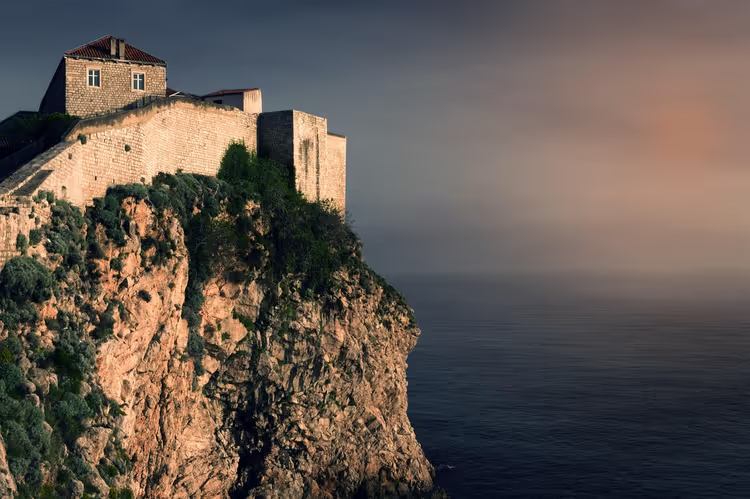
Dubrovnik. This is the most expensive city in the country. Accommodation, restaurants, and ice cream here cost more than anywhere else in the sample. Current information about the city is published by the Dubrovnik tourist board.
Accommodation: around €100 per night for two in season
Accommodation is the largest expense category. The World on a Budget study compared prices in 16 tourist cities across the country: from Umag and Rovinj in Istria to Split, Makarska, and Dubrovnik in the south.
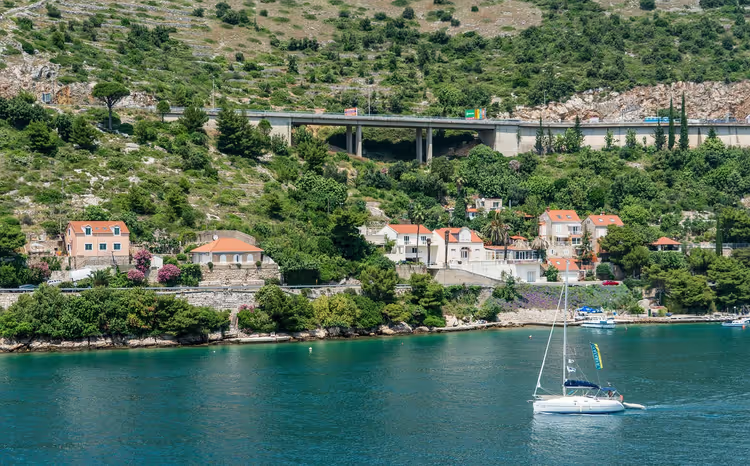
The search was run on June 25, 2025 for the week of August 9 to 16, 2025, right at the peak of the season. The average week for two came to €739.17, or €105.60 per night (as of 06/2025, 2025 price study). If you are traveling in August, use this amount as your baseline.
Where accommodation is cheaper and where it costs more
- Inland areas. Near Plitvice Lakes, the average night for two cost €48. That is half the average coastal price (as of 06/2025, World on a Budget report).
- Islands and the south. The most expensive were the island of Krk at €142.05 per night and Dubrovnik at €135 (as of 06/2025, World on a Budget accommodation data). The islands and southern Dalmatia hold the top end of the range.
- Type of accommodation. Budget options are almost always apartments, not hotels.
Money-saving tip. Within a 10 km radius of tourist cities, accommodation costs about the same, but the quality is higher: more space, sometimes a pool, better furniture. If you are driving, you get more comfort for the same money. A convenient way to compare hotels and apartments by region is Trip.com.
Apartments are also a good deal because you make your own breakfast and some dinners. That way you pay for lodging, not for the restaurant attached to it. Book August two to three months ahead: during peak season, the cheap options go first.
Tourist tax and other fees
A tourist tax is almost always added to the nightly rate. Each county and municipality sets its own amount, so the total depends on the city and the month. Online platforms often show the price without it, and you pay at check-in.
Example: in Makarska in 2026, the fee for hotel guests in season from April 1 to September 30 is €2 per person per night, children under 12 pay nothing, and teens from 12 to 18 pay half (as of 09/2026, Makarska tourist board). For a family of four over a week, that is a noticeable amount, so confirm it with the host in advance.
Another small item: bottle deposits at stores. You get that money back when you return the containers.
Restaurants: what lunch and dinner cost
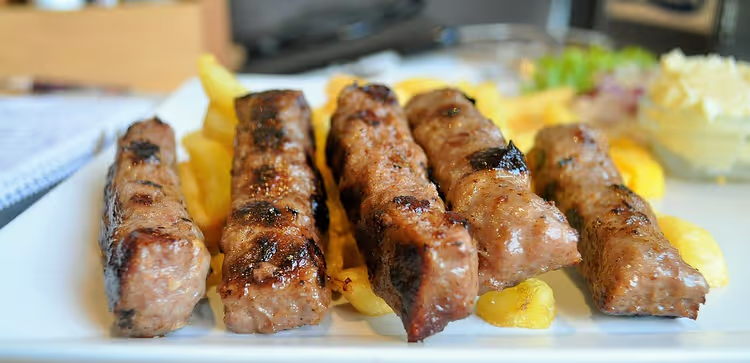
The study collected restaurant prices at 47 establishments across the country. For a fair comparison, they used the same items everywhere: ćevapčići, fish per kilogram, a 0.25 L cola, 0.5 L draft beer, and a large cappuccino.
 © young shanahan · CC BYPhoto: young shanahan, CC BY (https://creativecommons.org/licenses/by/2.0), Wikimedia Commons
Average prices from the spring 2025 sample look like this (as of 03-06/2025, World on a Budget price summary):
Item | Average | Minimum | Maximum |
|---|---|---|---|
Ćevapi | €13.23 | €6.80 | €20 |
Fish (per kg) | €72.81 | €39.50 | €95 |
Cola (0.25 l) | €3.76 | €1.30 | €6.80 |
Beer (0.5 l, draft) | €4.93 | €3.00 | €9.40 |
Cappuccino (large) | €2.79 | €1.30 | €5.80 |
Ćevapi is usually one of the cheapest dishes on the menu, but on average a portion cost more than €13. Fish is almost always expensive: the range per kilogram ran from €39.50 to €95 (as of 03-06/2025, research tables). Cola in a restaurant is overpriced, while a large cappuccino is inexpensive.
For comparison with 2026, the Numbeo database is useful, where prices are collected by users themselves. A 0.5 l draft beer there costs €3.20 on average, a cappuccino €2.23 (as of 09/2026, Numbeo price database). These are national averages: in the old town of Split or Dubrovnik you will pay more.
What affects the bill at a restaurant
- How touristy the location is. The closer to the main square, the higher the prices. In second-tier cities, such as Šibenik or Trogir, you will pay noticeably less.
- Your choice of dishes. Cola is expensive almost everywhere, cappuccino is often cheap. Fish costs unreasonably much, and ćevapi is more expensive than expected.
- The city. Dubrovnik is ahead again: it had the highest prices for ćevapi, cola, beer, and cappuccino, and fish per kilogram was not found on menus at all.
 © Kris Sliver · CC BY-SAPhoto: Kris Sliver, CC BY-SA (https://creativecommons.org/licenses/by-sa/3.0), Wikimedia Commons
The average bill for two with a bottle of water was €40-60 (as of 03-06/2025, restaurant price research). That is on par with Germany, and sometimes higher. At the same time, the quality of food in Croatian konobas is usually no worse.
Three ways to save on food
- Step outside the old town. Lunch a few streets away from the tourist center often costs half as much.
- Eat near the market. Small places with a fresh daily menu usually operate nearby.
- Rent accommodation with a kitchen. Then you won't be dining out every evening.
 © Jorge Láscar from Australia · CC BYPhoto: Jorge Láscar from Australia, CC BY (https://creativecommons.org/licenses/by/2.0), Wikimedia Commons
The market in the center remains the most reliable way to eat inexpensively. The daily menu at small restaurants near it usually costs noticeably less than an evening bill in the tourist quarter, and the ingredients there are fresh.
Ice cream: the price is deceptively modest
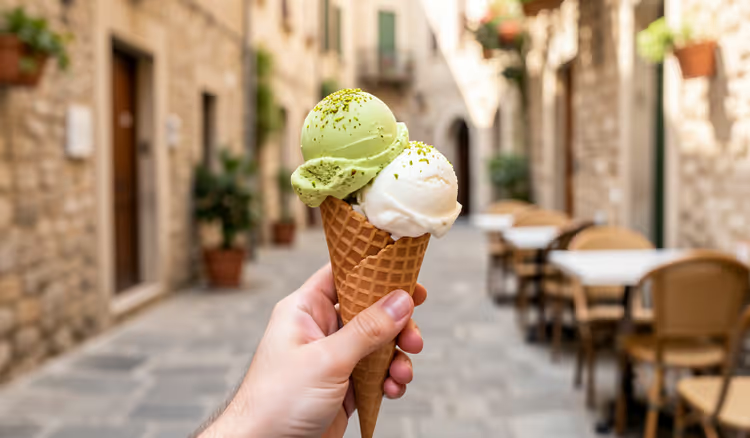
The study recorded the price of a scoop of ice cream 29 times. On average, a scoop cost €2.44, which is not much: in Spain, Greece, or Italy, prices are often higher (as of 03-06/2025, 2025 price overview).
 AIIllustrative image: AI-generated
The most common prices were €2 (9 times) and €2.50 (11 times). Only a few places charged €3 or more. The cheapest ice cream was found in Šibenik at €1.90, while in Dubrovnik a scoop cost up to €4 (as of 03-06/2025, World on a Budget sample).
Tip. Look at the price tag carefully. Some cafes have premium flavors that cost more than the basic ones, and they charge extra for a waffle cone. Ask about this before ordering, and you won't overpay for the same scoop.
Supermarkets: where to buy groceries cheaper
The study compared grocery prices in 55 supermarkets. The basket was the same everywhere: 1 kg of tomatoes, 1 liter of milk, 10 eggs, 250 g of butter, 0.5 l of Karlovačko beer, and 200 ml of sunscreen.
Average prices from the 2025 sample (as of 03-06/2025, supermarket price study):
Product | Average price | Minimum | Maximum |
|---|---|---|---|
Tomatoes (kg) | €2.26 | €1.29 | €3.89 |
Milk (1 l) | €1.33 | €0.95 | €2.62 |
Eggs (10 pcs.) | €2.36 | €1.79 | €3.49 |
Butter (250 g) | €2.72 | €1.99 | €4.09 |
Beer (0.5 l, glass) | €1.24 | €1.19 | €1.79 |
Sunscreen (200 ml) | €10.04 | €4.79 | €19.49 |
Numbeo data for 2026 is close to these figures: a liter of milk costs €1.07 on average, a kilogram of tomatoes €2.21 (as of 09/2026, Numbeo prices for Croatia). So the grocery basket has barely changed over the year.
Which chains are better
- Konzum and Lidl offered the best prices on the whole basket. Spar is also a good option.
- Kaufland in Croatia is surprisingly expensive. The small chains Optima, Ribola, and Studenac keep prices high while offering a narrow selection.
- Karlovačko beer 0.5 l in glass cost €1.19 almost everywhere (as of 03-06/2025, supermarket price checks). Glass is often cheaper than plastic, and both containers carry a deposit.
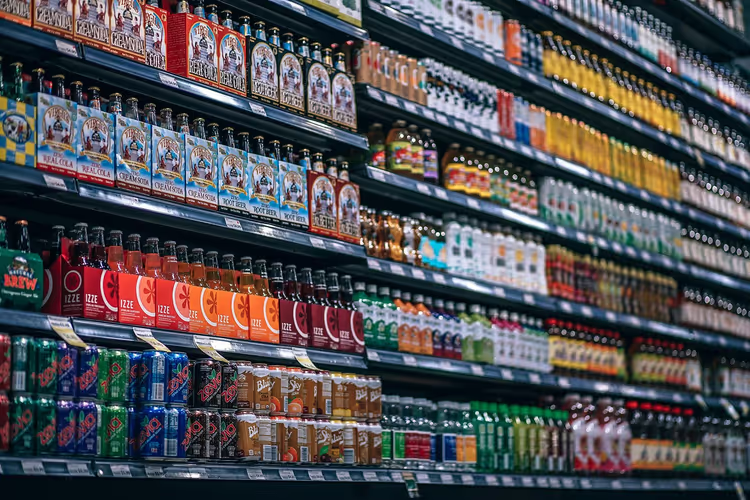
The container deposit is refunded at the bottle return machine. Return them at the same store where you bought them, and your trip will cost a little less.
Milk, eggs, and butter were stable in price. Tomatoes and sunscreen, however, varied greatly from store to store: at some locations, sunscreen cost four times more than on sale. Bring it from home or buy it at DM and Lidl.
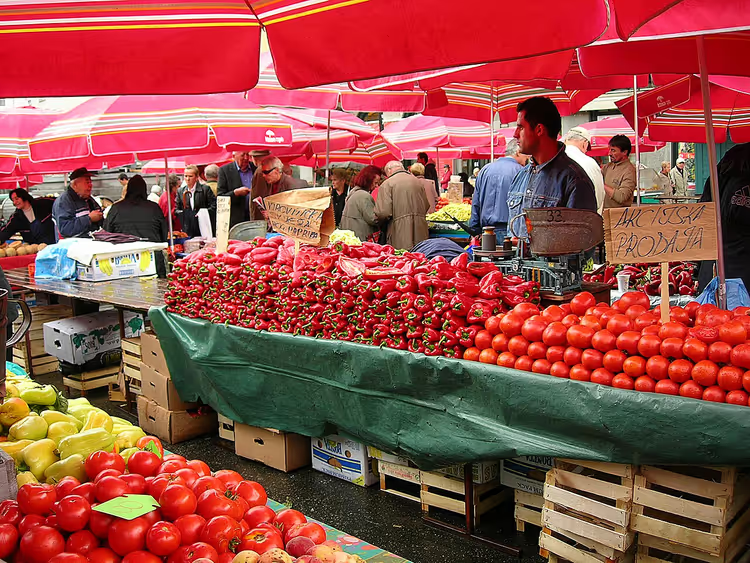 © Enric · CC BY-SAPhoto: Enric, CC BY-SA (https://creativecommons.org/licenses/by-sa/4.0), Wikimedia Commons
Before a big weekly grocery run, compare prices at two nearby stores. The difference is immediately noticeable for tomatoes and sunscreen; for other products it is small.
Transport: toll roads, ferries, and trains
Most travelers drive to Croatia by car. There is no vignette in the country: you pay at toll points for each section of the highway, by cash, card, or via an ENC transponder.
Section (passenger car) | Price |
|---|---|
Zagreb - Split | 26.40 € |
Zagreb - Zadar | 17.60 € |
Prices are based on the A1 highway operator's tariff (as of 09/2026, HAC tariff on the A1 highway). Add fuel: a liter of gasoline costs on average about 1.58 € (as of 09/2026, Numbeo fuel data). If you fly and rent a car locally, you can compare rental options on DiscoverCars.
Ferries. Ferries and catamarans operated by the state carrier Jadrolinija run to the islands. A passenger ticket on short routes, such as Split - Supetar on Brač, is inexpensive, while transporting a car costs several times more. Summer rates apply in July and August. If you stay on an island for a week, it is often more cost-effective to leave your car on the mainland.
Trains. The daytime train from Zagreb to Split takes about eight hours. You need to reserve a seat, the reservation costs 1.06 €, and a ticket bought online is 10% cheaper than at the ticket office (as of 09/2026, HŽ Putnički prijevoz). City transport is inexpensive: a single ride costs on average 1.40 € (as of 09/2026, Numbeo, transport).
Beaches: where you pay and where you don't
The beaches themselves in Croatia are part of the maritime public domain, so access to them is usually free. You pay for services: loungers, umbrellas, parking near the beach, and showers.
Lounger prices vary greatly by location. On the city beaches of Split, Makarska, and Dubrovnik, a pair of loungers with an umbrella in August costs noticeably more than in the quiet coves of the islands and in Istria outside resort centers. Bring your own umbrella and mat, and you will save more than the cost of a dinner. A beach overview by region is published by the national tourist board website.
National parks: tickets to Plitvice and Krka
Tickets to the country's two most popular parks vary significantly by month. In June-September you pay the maximum, in April, May, and October almost half as much, and very little in winter.
Park, adult ticket | Jan.-Mar., Nov.-Dec. | Apr.-May, Oct. | June-Sept. |
|---|---|---|---|
Plitvice Lakes | 10 € | 23 € | 40 € |
Krka (all areas) | 7 € | 20 € | 40 € |
Prices for Plitvice Lakes National Park are based on the official price list, and for Krka National Park on 2026 prices (as of 09/2026). Children under 7 enter free of charge, and for children aged 7 to 18 a summer ticket to both parks costs 15 €.
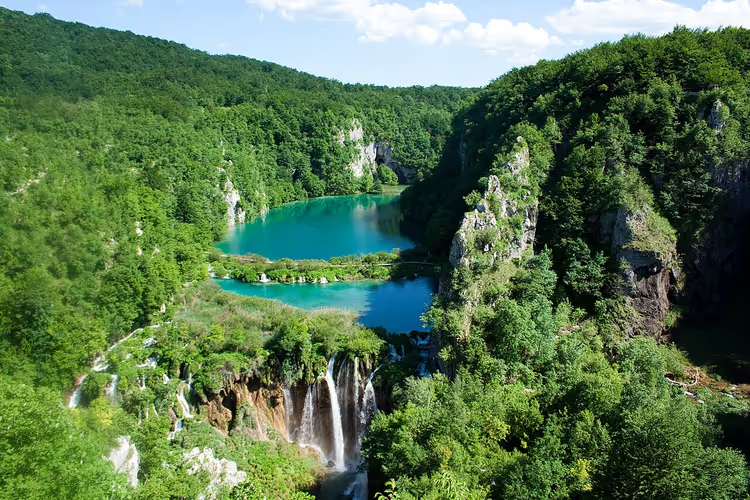 © Pablo BM from London, England · CC BYPhoto: Pablo BM from London, England, CC BY (https://creativecommons.org/licenses/by/2.0), Wikimedia Commons
For a family of four, a summer visit to one park already costs more than 100 € just for entry. That is why it is better to plan parks for May or late September. Day trips with transfers from Split and Zadar can be found on GetYourGuide.
Tours and tickets in Plitvice
Guided tours, skip-the-line tickets and activities — most offers can be cancelled free of charge.
See offers on GetYourGuideThe widget loads once you give your consent.
Daily budget by region
Actual spending by study participants came to 67.14 € per person per day, while the authors put the recommended budget at 70-100 € (as of 2025, budget calculation). That amount covered an apartment near the center, one or two meals out, excursions, and entry tickets.
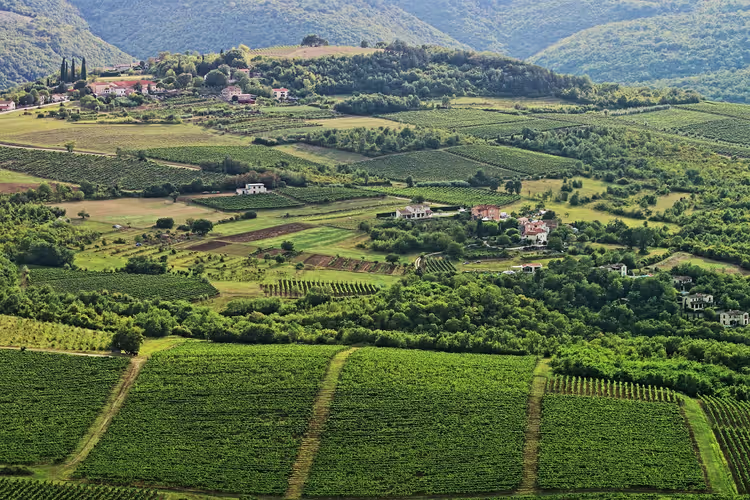
Below are the editorial team's benchmarks by region. The nightly rate comes from the same study (as of 06/2025, accommodation prices by city). The budget format means an apartment with a kitchen and groceries from the supermarket, while the mid-range format includes cafes and paid activities.
Region | Night for two in August | Budget day per person | Mid-range day per person |
|---|---|---|---|
Istria (Poreč, Rovinj, Pula) | around the national average | under 70 € | 70-100 € |
Split and the Makarska Riviera | around the national average | under 70 € | 70-100 € |
Dubrovnik | 135 € | around 70 € | over 100 € |
Islands (Krk, Brač, Hvar) | up to 142.05 € on Krk | around 70 € plus ferry | over 100 € |
Mainland and Plitvice | 48 € | well under 70 € | around 70 € |
The study does not publish exact figures for individual Istrian cities or Split, so for those we give a level relative to the average price. Dubrovnik and the islands cost the most, while the mainland is noticeably cheaper.
How the study collected prices
The methodology is open and easy to replicate for your own trip. Accommodation was searched on June 25, 2025 on a major booking platform with these parameters:
- period from August 9 to 16, 2025, private lodging for two without a shared bathroom;
- average rating of at least 9.0 with a minimum of 15 reviews, within city limits only;
- individual discounts were not taken into account.
For each of the 16 cities, the three cheapest options were taken and averaged. The sample included Umag, Poreč, Rovinj, Medulin, Pula, Rabac, Opatija, Baška, Malinska, Split, Plitvice Lakes, Zadar, Šibenik, Dubrovnik, Makarska, and Trogir (as of 2025, study methodology).
Food and grocery prices were recorded on site from March 13, 2025 to June 16, 2025. If a single establishment had multiple prices, the lowest one was used. Number of records for restaurants: cola 41, cappuccino 41, beer 39, ćevapi 16, fish 14, ice cream 29; for supermarkets: tomatoes 46, milk 46, eggs 43, butter 49, beer 44, sunscreen 35.
Sunscreen was sometimes sold only in a 250 ml bottle. That price was recorded as is, without converting to 200 ml: the buyer still has to take the whole bottle. Keep in mind that spring food prices are usually lower than summer ones.
Conclusion: how much more expensive Croatia has become
Croatia stopped being a cheap destination a long time ago, but in return you get a high quality vacation. The country still has tourist spots where even in August a night for two cost less than 50 € (as of 06/2025, accommodation price comparison).
Restaurants have gone up in price the most. Groceries at Lidl, Konzum and Spar cost about the same as in Germany, while Optima, Ribola and Studenac are noticeably more expensive.
Practical tips: how to save money in Croatia
The prices we collected point to a few simple rules. They work in any region if you are planning the trip yourself.
- Accommodation. Book an apartment with a kitchen instead of a hotel and look for one within 10 km of the resort. Confirm the tourist tax and payment method in advance.
- Food. Have lunch near the market or outside the old town, and eat dinner at home a couple of times a week.
- Groceries. Shop at Konzum or Lidl, buy sunscreen at DM or bring it from home.
- Parks and islands. Plan Plitvice and Krka for May or late September, and do not take a car to a small island unless you really need to.
- Ice cream. Choose cafes where the price per scoop is clearly displayed.
These five rules together save you more than hunting for a single cheap hotel.
⁉️🤔 Frequently asked questions
How much does a week in Croatia cost for two?
In August 2025, accommodation for two for a week cost 739.17 € on average, about 105.60 € per night (as of 06/2025, research summary). With food, excursions and tickets, one person spent 70-100 € per day, so a week for two in a mid-range format comes to roughly 1,000-1,400 €.
Is it expensive to eat at restaurants in Croatia?
The bill is comparable to Germany or higher. Dinner for two with water cost 40-60 € (as of 03-06/2025, 2025 prices based on blog data). At an inexpensive cafe, lunch costs about 12 € per person. Savings start outside the old town and near markets.
Which city in Croatia is the most expensive?
Dubrovnik. According to 2025 research, it was the most expensive for accommodation, restaurants and ice cream: a night for two cost 135 € on average, and a scoop of ice cream up to 4 € (as of 2025, 2025 city comparison). By comparison, a night near Plitvice Lakes cost 48 €.
How much do toll roads cost in Croatia?
There is no vignette; you pay per section of highway. A car from Zagreb to Split pays 26.40 €, and to Zadar 17.60 € (as of 09/2026, HAC toll table). You can pay with cash, card or an ENC transponder, so keep your card handy.
Do I need cash in Croatia?
Croatia switched to the euro in 2023, so you do not need a separate currency (as of official European Union portal). Cards are accepted almost everywhere, but small markets and kiosks sometimes only take cash. Keep some small change for the market and bottle deposits.
When should I go to save money?
The shoulder season is noticeably cheaper. A ticket to Plitvice Lakes in April, May and October costs 23 € versus 40 € in summer (as of 09/2026, verified on the official park website). Accommodation in May and October is also cheaper. If you are going in August, book early.
In short: what to book
Croatia is no longer a cheap country, but a vacation there is still worth the money. The main decision is the region: the mainland and second-line towns are noticeably cheaper than Dubrovnik and the islands.
If you have | Then |
|---|---|
A small budget | An apartment with a kitchen within 10 km of the resort |
A road trip | Accommodation outside the city and groceries from Konzum or Lidl |
A hassle-free vacation | A hotel in the center, lunches outside the tourist zone |
A trip in August | Book accommodation early, plan parks for the morning |
Start with accommodation: hotels and apartments across Croatia are easy to compare on Trip.com.

A small editorial team writing guides for independent travel. We travel ourselves, but we haven’t been everywhere, so we check prices, opening hours and how to get there against official sources.