

















Airport transfer: how to catch your second flight and what to do if it is delayed
Connecting flight scares many people for no good reason. When you see a flight with a layover, you picture yourself running through an unfamiliar airport and missing the second plane. In reality, that rarely happens. A single ticket with a connection on long-haul routes is almost always cheaper than a direct flight, and the rules protect you better than you might think. If the carrier disrupts your connection, they are required to offer you the next available flight free of charge. Below we break down how a connection differs from a self-transfer, how transit works, and how much time to leave between flights.
Ad: this article contains affiliate links, we earn a commission if you book through them, at no extra cost to you.
What a connection and a self-transfer are
💡 In short:
- A connection means one ticket for two flights, and the airline is responsible for the transfer.
- A self-transfer means two separate tickets, where everything depends on you.
- At a major hub, leave a time buffer between flights.
- Rules and compensation: 09/2026, verified on the official EU website.
Flights can be domestic or international. By ticketing, they are divided into two types, and this determines who is responsible for the transfer.
A connection is a journey booked as a single ticket. You fly with the first airline, then board another carrier's plane at the connecting airport, and both parties are linked by an alliance or interline agreement. If the first segment is delayed, the carrier will sort out the second flight for you.
A self-transfer means two independent tickets. You bought them in different places from different carriers, so each is responsible only for its own leg. If you miss the second flight, you buy a new ticket yourself. If plans change, the ticket can sometimes be refunded, but that depends on the fare.
Why connecting flights are cheaper
The main reason to choose a connection remains the same: price. Airlines compete for transit passengers and keep fares lower than on direct flights.
The difference is noticeable on long-haul routes. The carrier sells the seat on the first segment cheaper because you continue on a partner airline's flight within the alliance. For a budget-conscious traveler, that is a real saving.
The second advantage: a short stop in a new city. If you have a transit visa, you can leave the airport and see the city center. Check entry rules in advance on the consulate website of the transit country.
Many hubs promote transit tourism. At the information desk you can book a sightseeing tour and get a return time. Some airlines run such tours for their passengers free of charge.
A convenient way to search for options is Kiwi.com: it shows connections and time between flights at a glance.
Check-in and baggage drop
Airport check-in opens a few hours before departure and closes about an hour before. The exact time is stated on the ticket and on the airline's website, so go by your own flight.
First find your flight on the departures board. Next to it will be the counter number where you are expected. At the counter, show your passport and ticket, even if it is electronic. The agent will verify your details and accept your baggage.
Place your bag on the belt with the scales. After weighing, the agent attaches a tag and sends the suitcase on its way. Do not be late for the end of check-in, otherwise you will not be allowed to board.
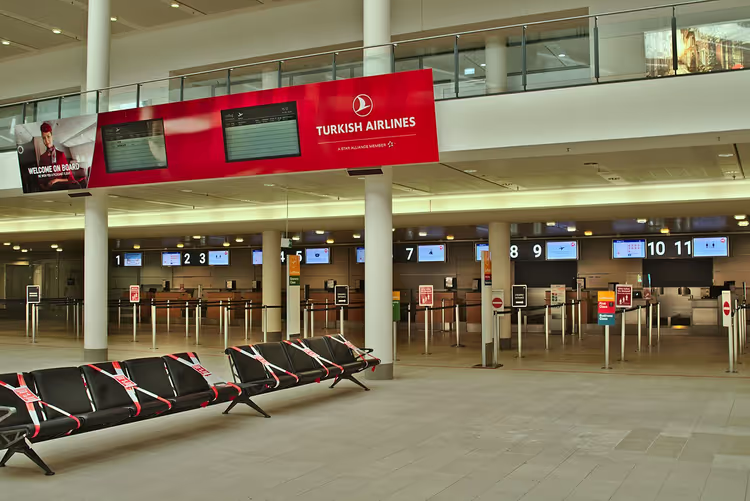 © Jacek Rużyczka · CC BY-SAPhoto: Jacek Rużyczka, CC BY-SA (https://creativecommons.org/licenses/by-sa/4.0), Wikimedia Commons
With a single ticket, you usually cannot choose where to collect your baggage. The suitcase is checked through to the final airport. This works if all connections are on one ticket.
If the tickets were bought separately, there are no guarantees. Two carriers may not have an agreement, and you will have to collect and re-check your baggage during the connection. That takes time, so factor it into your layover.
Then you receive a boarding pass with the gate number and your seat. After that, passport control and customs await.
Put a few things in your carry-on. A suitcase can get lost, and spare items will save you. What you are allowed to take into the cabin is covered in our article about carry-on luggage.
Transit area: how the transfer works
When you arrive at the connecting airport, do not panic. Just get off the plane and follow the signs for Transit or Connection flights.
Check the departures board for your gate. If you need a new boarding pass, go to the transit registration desk. If you need to collect and re-check your baggage, that is done at the same desk. If your connection is tight, tell the agent, and you will be taken through without the long queue.
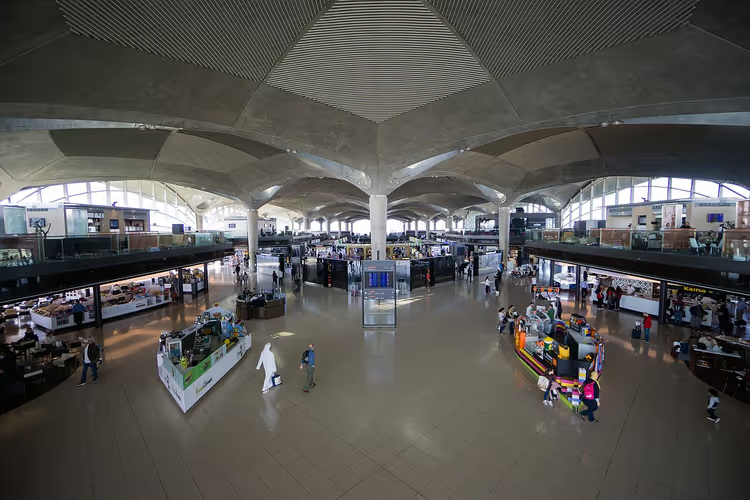 © chee.hong · CC BYPhoto: chee.hong, CC BY (https://creativecommons.org/licenses/by/2.0), Wikimedia Commons
When flying through Europe, be ready for passport control and security screening. You will have to leave water at security. Alcohol from Duty Free in a sealed STEB bag is usually allowed through. Screening rules vary, so take only what is permitted.
Important: even in transit, many countries require a transit visa. Check the requirements on the consulate or visa center website of the country where the transfer takes place. If you lose your boarding pass, you can get it reissued.
Study the airport map in advance, and ideally print it out. That way you will find your gate quickly and will not have to run.
How much time to allow for a connection
Transfer time depends on the airport and the route. In a small terminal, forty minutes is enough, while at a major hub moving between terminals takes an hour.
Each airport publishes its own minimum connection time. This is the threshold below which a connecting ticket simply will not be sold to you.
For long-haul flights, leave at least two to three hours. That covers the risk of queues at control and gate changes.
Do not be afraid of a long transit. Even a wait of many hours can be turned into a short city tour.
What to do if your flight is delayed and you miss your connection
If you missed the second flight through the airline's fault and you have a single ticket, there is nothing to worry about. The carrier is required to put you on the next available flight free of charge. If there are no seats that day, you will be given a hotel room.
In such cases, you may be entitled to compensation of 250 to 600 € (as of 09/2026, EU air passenger rules). Payment is due if the flight departed from the EU or was operated by an EU carrier. The second condition: you arrived at your final destination at least 3 hours late. The amount depends on the distance. You can check your right to compensation through AirHelp.
If the tickets were bought separately, responsibility for baggage and the transfer lies with you. If you are late, you buy a new ticket at your own expense. So when buying, make sure the arrival and departure airports match, and leave a time buffer.
⁉️🤔 Frequently asked questions
Do I need a visa for transit?
Often yes, even if you do not leave the airport. Many countries require a transit visa for passengers of certain nationalities. The requirements depend on your citizenship and route, so check them on the consulate website of the transit country. Verify the rules before buying a ticket.
Who is responsible for baggage during a transfer?
With a single ticket, the suitcase is usually checked through to the final airport, and the carrier is responsible for it. With separate tickets, you will have to collect and re-check your baggage at each airport. That is your task, and it takes time.
In short: what to book
The decision matrix is simple.
- You need a cheap flight on a long-haul route: take a single ticket with a connection.
- You value your time: compare the connection with a direct flight and calculate the difference.
- You are flying through a major hub for the first time: leave at least two to three hours between flights.
- You are carrying valuable baggage: check whether the suitcase is checked through to the final destination.
A single ticket is better for the passenger because it removes the risk of missing a flight and losing baggage. If you want to save money and not lose out on delays, start by checking the carrier's terms. A convenient way to compare options and prices is Trip.com.

A small editorial team writing guides for independent travel. We travel ourselves, but we haven’t been everywhere, so we check prices, opening hours and how to get there against official sources.