
















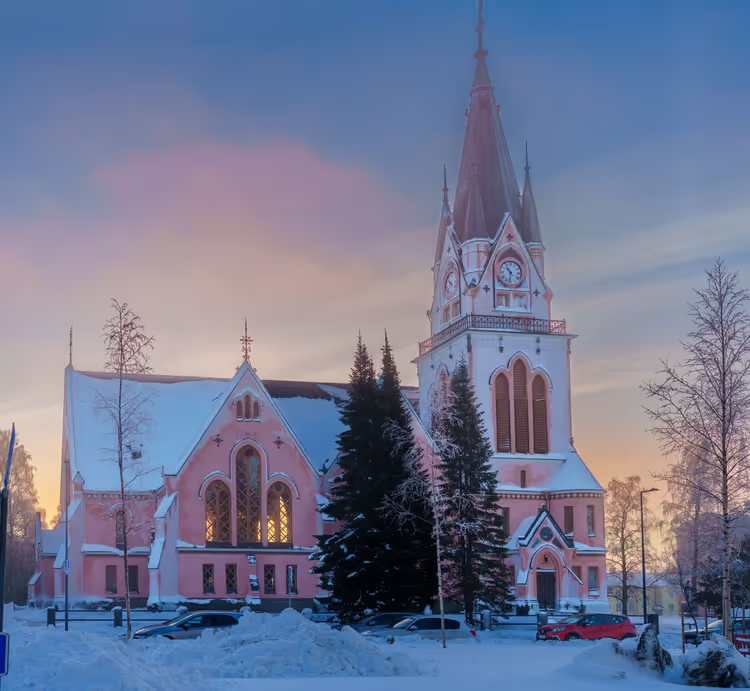
25 Main attractions of Finland: from the rock church to Lapland
Finland is more compact than it seems. In one trip you can see Santa Claus Village above the Arctic Circle, a rock church in central Helsinki, and an archipelago of thousands of islands in the west. Nature here starts right outside the city limits, and getting between cities by train is easy.
The main attractions are often cheaper than tourists expect. Entry to Santa Claus Village is free (verified 09/2026 on the village's official website). Temppeliaukio Rock Church charges €8 for adults, children under 18 enter free (as of 09/2026, church's official website).
We've put together 25 attractions in Finland: fortresses, museums, parks, and lakes. For each one you'll find a photo, a short description, and practical details: how to get there, how much entry costs, and the catch.
Ad: this article contains affiliate links. We earn a commission if you book through them, at no extra cost to you.
What to see in Finland: trip plan
💡 In short:
- Best time: May to September for nature and lakes, December to March for Lapland and the northern lights.
- Southern cities are connected by trains and buses; flying is more convenient for Lapland.
- Prices and opening hours: 09/2026, verified on official museum websites.
Plan your trip in blocks: first the south with Helsinki, Turku, and Lake Saimaa, then the north with Rovaniemi, Lapland, and the national parks. Flying between these parts is convenient, so you don't lose a day on the road. In winter, allow extra time for travel, bring warm clothes, and check water release and ferry schedules in advance.
1. Santa Claus Village
 © Tom Corser · CC BY-SAPhoto: Tom Corser, CC BY-SA (https://creativecommons.org/licenses/by-sa/3.0), Wikimedia Commons
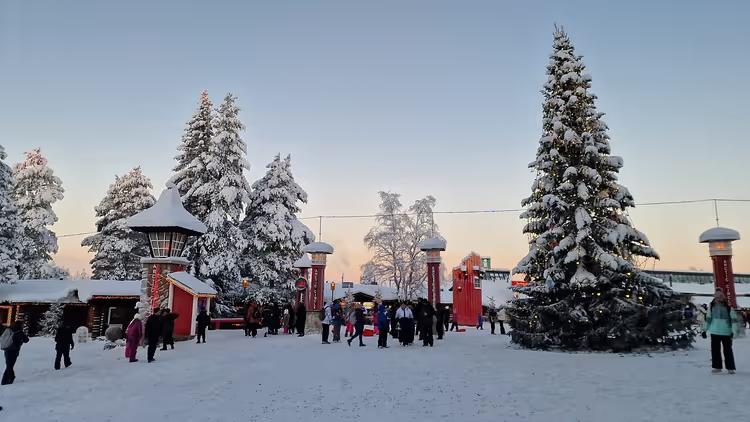
Santa Claus Village sits on the Arctic Circle, 8 km north of Rovaniemi (on the map). It's Santa Claus's official residence, and it welcomes guests year-round (verified 09/2026 on the Santa Claus Village website). Letters here are addressed to "Arctic Circle, Lapland," and the local post office stamps envelopes with a special postmark.
The main reason to go in winter is simple: you step across the Arctic Circle line and meet Santa Claus in person. In summer the grounds operate the same way, but there are noticeably fewer tourists. Nearby you can ride reindeer and dog sleds and see reindeer. Besides the residence, there are shops, cafes, and several hotels, so you can stay right on the Arctic Circle.
According to Finnish legend, Joulupukki himself lived on Korvatunturi Fell near the eastern border, but guests are received near Rovaniemi. Similar villages exist in Swedish and Norwegian Lapland, so the Finnish one is chosen for its scale and year-round reception.
- How to get there: bus No. 8 from central Rovaniemi, about 15 minutes; by car via the E75 highway.
- Price: entry is free, you only pay for individual attractions and photos.
- Who it's for: families with children and anyone who wants the Christmas atmosphere in any season.
- The catch: in December there are lots of tourists, so arrive at opening time.
2. Sibelius Monument
The Sibelius Monument stands in the park named after him in the Töölö district, north of central Helsinki. The composition of hundreds of steel pipes was created by sculptor Eila Hiltunen, and the metal really does sound in the wind. Jean Sibelius is Finland's most famous composer, author of the symphonic poem "Finlandia."
The monument was unveiled in the late 1960s and immediately became one of the capital's symbols. There are benches and lawns nearby, so you can easily take a break between museums. People come here in winter too, to hear the pipes hum in the frosty wind.
- How to get there: by tram or bus to the stop near Sibelius Park, then on foot.
- Price: free entry, the monument stands in the open air.
- Who it's for: a short walk on the way to other Töölö sights.
- The catch: the monument itself is small, so it's not worth a dedicated trip.
3. Imatrankoski Rapids
 © Ninaraas · CC BYPhoto: Ninaraas, CC BY (https://creativecommons.org/licenses/by/4.0), Wikimedia Commons
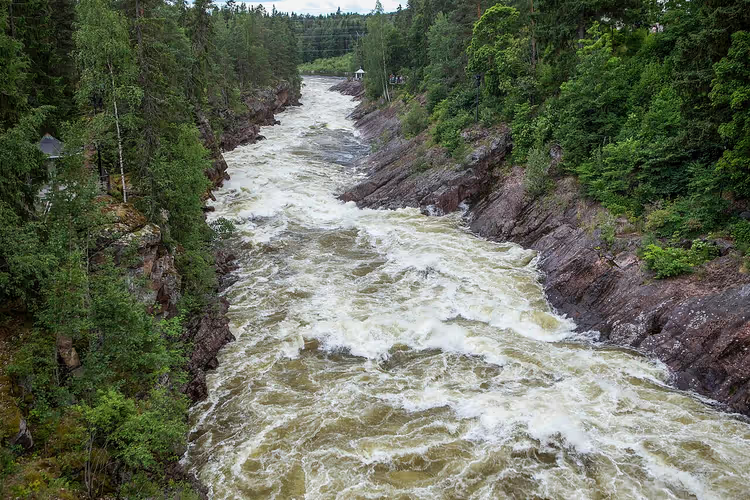
Imatrankoski is a rapid on the Vuoksi River in central Imatra, in the southeast of the country. Water plunges down from a high rocky ledge. On summer evenings the hydroelectric dam is opened, and the flow rushes through the rocks again to the music of Sibelius.
The waterfall was tamed in the 20th century when a dam was built for the hydroelectric power station. Since then, water releases have been scheduled during the tourist season, and it's best to check the exact show times locally. Nearby stands the former Valtionhotelli hotel, which looks like a medieval castle, and you can easily combine watching the show with a stroll along the embankment. The first water release shows were staged for guests of the Russian Empire, and a nature reserve existed around the rapids for almost a hundred years. Today thrill-seekers ride a bungee swing here.
- How to get there: by train to Imatra, from the station to the rapids it's a 10-15 minute walk (on the map).
- Price: you can watch the show for free from the bridge and embankment.
- Who it's for: families and photographers who want a striking shot.
- The catch: outside the release season you'll only see a dry rocky riverbed.
4. Sapokka Water Park
 © Алексей Решетников · CC BYPhoto: Алексей Решетников, CC BY (https://creativecommons.org/licenses/by/3.0), Wikimedia Commons
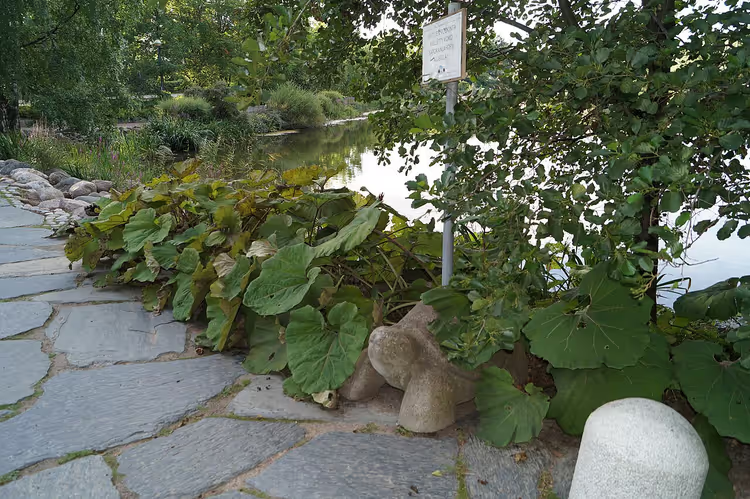
Sapokka is a water park in central Kotka, a port city in southeastern Finland. It was laid out around a bay shaped like a boot, hence the name. Landscape designers combined rocks, ponds, a waterfall, and linden alleys into a single ensemble.
The park is open year-round and changes with the seasons: flowerbeds bloom in spring, street musicians play in summer, everything turns colorful in autumn, and lights are switched on in winter. You'll see sculptures, bridges, and a cascade right by the water. Both locals and tourists stroll here, so mornings are quieter.
- How to get there: on foot from Kotka bus station, about 20 minutes (on the map).
- Price: free entry.
- Who it's for: a relaxed walk and photos by the water.
- The catch: the area is small, an hour is enough to see it.
5. Arktikum Museum
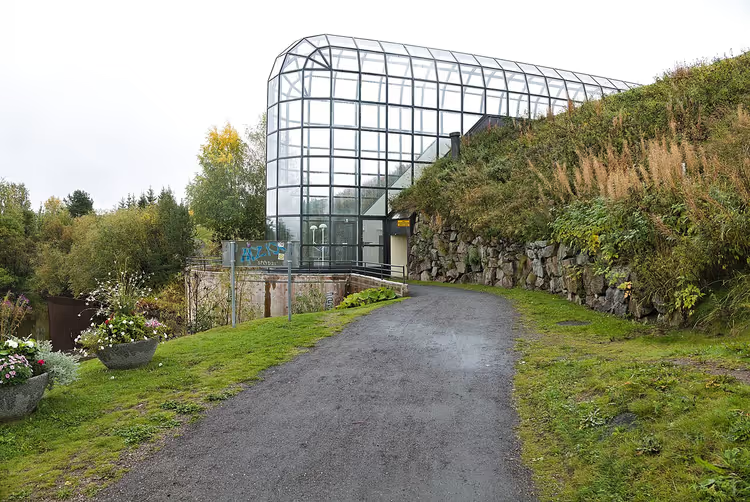
Arktikum is a museum and science center in Rovaniemi, standing on the bank of the Ounasjoki River (verified 09/2026 on the official website). A glass gallery runs through the entire building, while the main exhibition halls extend into the bedrock.
The exhibitions cover life above the Arctic Circle: Arctic nature, Sami culture, and the daily life of reindeer herders and gold prospectors. A separate hall is dedicated to the northern lights and climate change. There is an interactive section for children, while adults tend to find the ethnography more interesting. The building has a congress hall, and the interiors are finished with Karelian birch and Scandinavian pine.
In winter, Arktikum is easy to combine with Santa Claus Village: both are in Rovaniemi. There is a cafe and a shop inside, with parking nearby. Allow several hours for your visit, because the exhibitions are extensive and you will not be able to see everything in one hour.
- How to get there: on foot from Rovaniemi railway station, about 15 minutes (according to the map).
- Price: buy your ticket at the entrance or online (as of 09/2026, official website).
- Who it's for: families with children and anyone traveling to Lapland.
- The catch: it is hard to see all the halls in a single visit.
6. Esplanadi Park
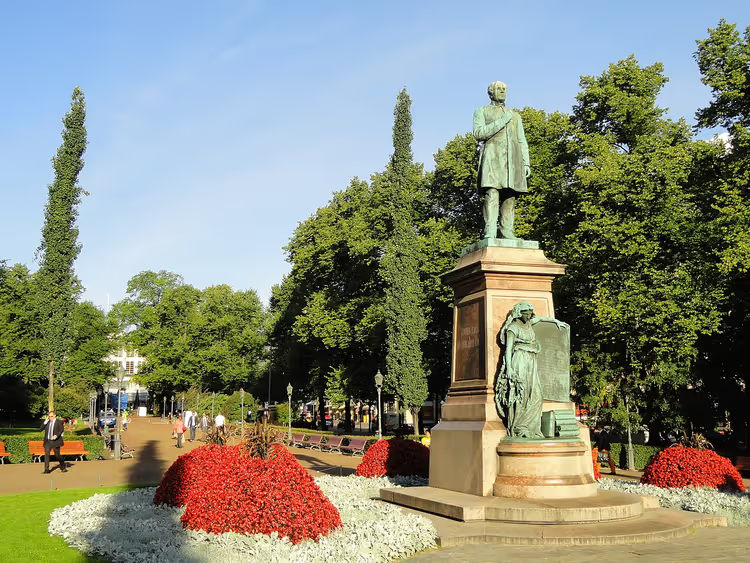
Esplanadi Park (Esplanadin puisto) is a green strip in the very center of Helsinki, between two main streets. It was laid out in the 1830s, with architect Carl Ludvig Engel working on the design. Old trees are gradually being replaced with new ones to preserve the avenues.
The park features a monument to the poet Johan Ludvig Runeberg, author of the Finnish national anthem. At the end of the avenue, the market square buzzes with vendors selling fresh fish, berries, and coffee. In summer, free concerts take place on the open-air stage, and you can listen to the music right from the lawn. The Runeberg monument was erected first, and later sculptures of other Finnish literary figures appeared nearby.
- How to get there: on foot from Helsinki Central Station, about 5 minutes (according to the map).
- Price: free entry.
- Who it's for: for a stroll between museums and shops.
- The catch: the market square area is crowded and noisy in summer.
7. Temppeliaukio Church
 © Lauren Stevens · CC BY-SAPhoto: Lauren Stevens, CC BY-SA (https://creativecommons.org/licenses/by-sa/4.0), Wikimedia Commons
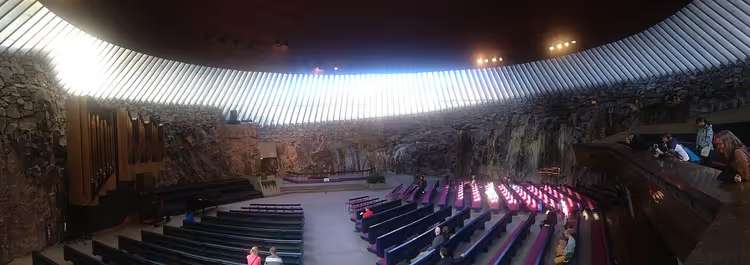
Temppeliaukio Church was carved directly into bedrock in central Helsinki. It was designed by brothers Timo and Tuomo Suomalainen and opened in the late 1960s. Light enters through a glass dome, and the walls remain raw, unfinished stone.
The acoustics here are so good that the church regularly hosts concerts. Admission is paid: €8 for adults, children under 18 enter free (as of 09/2026, official website). Near Kamppi Square there are plenty of cafes and souvenir shops, so you can easily combine the visit with a walk.
- Getting there: on foot from Kamppi bus station, about 10 minutes (per map).
- Price: €8 for adults, children free (as of 09/2026, official website).
- Who it's for: fans of unusual architecture and music.
- The catch: tourists are not always allowed in during services.
8. Suomenlinna Fortress
 © Michal Pise, Michal.Pise · CC BYPhoto: Michal Pise, Michal.Pise, CC BY (https://creativecommons.org/licenses/by/2.0), Wikimedia Commons
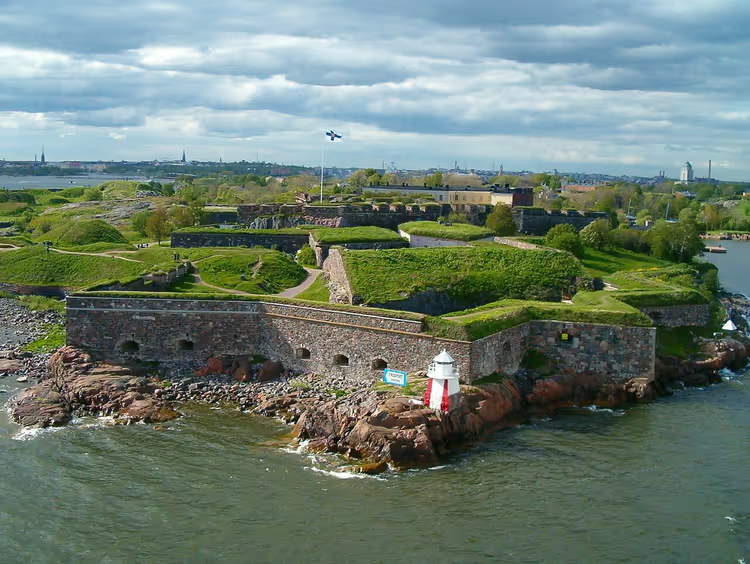
Suomenlinna is a sea fortress spread across eight islands near Helsinki and a UNESCO World Heritage Site. Construction began in the 18th century to defend the port. Today about 900 people live on the islands, and the fortress has become a district with museums, parks, and workshops.
The islands are connected by bridges and causeways, so walking around is easy. You'll see the King's Gate, bastions with cannons, and the old church of the Russian garrison. Allow at least half a day for the walk, and in summer it's a lovely spot for a picnic by the water. A deeper dive into the site's history is available through a guided tour on GetYourGuide.
- Getting there: by ferry from Helsinki Market Square, about 15 minutes (as of 09/2026, HSL).
- Price: the ferry ticket is covered by HSL travel cards, entry to the islands is free.
- Who it's for: a full-day outing with a picnic by the sea.
- The catch: it's windy on the exposed rocks even on a warm day.
9. Olavinlinna Castle
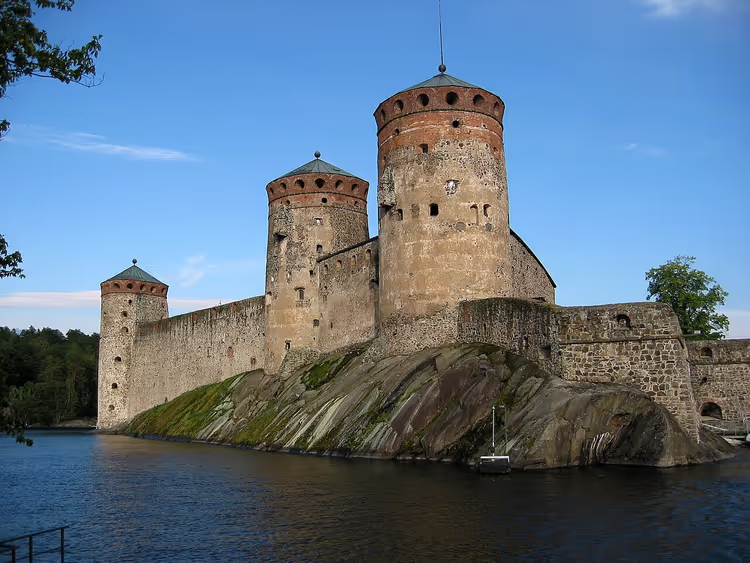 © User:Mikko Paananen · CC BY-SAPhoto: User:Mikko Paananen, CC BY-SA (http://creativecommons.org/licenses/by-sa/3.0/), Wikimedia Commons
Olavinlinna (Olofsborg) is a medieval castle in Savonlinna, on a rocky island between lakes Pihlajavesi and Haapavesi. It was built by the Swedes in the 15th century to defend the northeastern border. Inside there are museums, and in summer the courtyard hosts an opera festival.
The castle is well preserved: you'll see the walls, towers, and inner halls. Tours run in Finnish and English, and some rooms are accessible only with a guide. Festival concert tickets should be booked in advance.
- Getting there: on foot from central Savonlinna, about 15 minutes (per map), or by boat from the pier.
- Price: castle admission is paid, check the official museum website for current prices.
- Who it's for: history buffs and opera festival fans.
- The catch: in July, festival tickets sell out well in advance.
10. Turku Castle
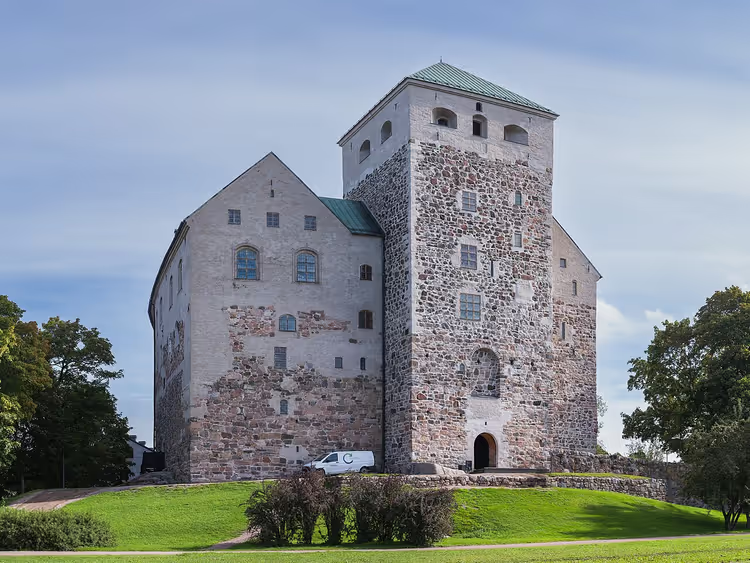 © Christian David · CC BY-SAPhoto: Christian David, CC BY-SA (https://creativecommons.org/licenses/by-sa/4.0), Wikimedia Commons
Turku Castle is one of Finland's largest medieval fortresses. It was founded in the late 13th century at the mouth of the Aura River. Over the centuries the castle served as a residence for Swedish kings, a warehouse, and even a prison, and today it's a museum.
You'll walk through halls with thick walls, see a costume collection and knight's halls. There's also a restaurant with a medieval-inspired menu. The exhibitions are extensive, so allow two to three hours for the visit.
- Getting there: from central Turku by bus or bike, about 3 km (per map).
- Price: admission is paid, check the official museum website.
- Who it's for: families and history lovers.
- The catch: the castle sits away from the historic center.
11. Häme Castle
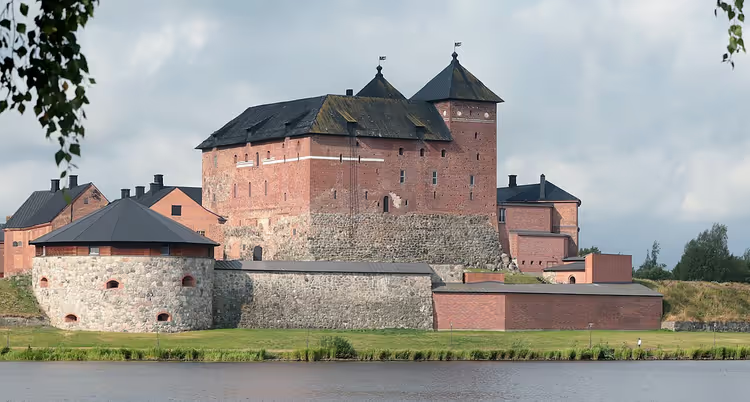
Häme Castle stands on the shore of Lake Vanajavesi in Hämeenlinna. The red-brick fortress was begun in the 13th century and has survived almost entirely intact. It's one of the few medieval castles in Finland with brick walls.
Inside, halls display weapons, armor, and everyday objects. Nearby are Aulanko Park and old barracks, so it's easy to extend your walk. The castle is convenient to visit en route between Helsinki and Tampere, and it won't take up a whole day.
- Getting there: on foot from Hämeenlinna station, about 20 minutes (per map).
- Price: admission is paid, check the official museum website.
- Who it's for: those doing a day trip from Helsinki.
- The catch: buses to the castle are infrequent, so walking is more practical.
12. Lappeenranta Fortress
 © Images taken and stitching to panorama done by Sami Tikka . · CC BY-SAPhoto: Images taken and stitching to panorama done by Sami Tikka ., CC BY-SA (https://creativecommons.org/licenses/by-sa/2.0), Wikimedia Commons
Lappeenranta Fortress is a historic district on a cape by Lake Saimaa. Old bastions, barracks, and powder magazines now sit alongside residential buildings and museums. It's also home to Finland's oldest Orthodox church.
A walk along the ramparts takes about an hour. In summer, cafes and craft shops operate on the grounds; in winter, everything is quiet. It's a good starting point for exploring the city, after which you can head down to the pier for views of Saimaa.
- Getting there: on foot from central Lappeenranta, about 15 minutes (per map).
- Price: entry to the grounds is free, museums are paid.
- Who it's for: a relaxed stop on the way to Savonlinna.
- The catch: most museums are closed in winter.
13. Ateneum Art Museum
Ateneum is Finland's main art museum and part of the National Gallery. The collection includes thousands of paintings by Finnish masters of the 19th and 20th centuries, including works by Halonen, Gallen-Kallela, and Edelfelt. The building in central Helsinki was constructed in the late 19th century.
A ticket costs €21 online, with discounts for students and visitors aged 18-24 (as of 09/2026, official website). The exhibition spans several floors, and seeing it takes half a day. There is a cafe and a shop downstairs, and it's convenient to buy Helsinki museum tickets on Tiqets. The main Finnish painting exhibition occupies the third floor, and the collection has been growing since the late 19th century. The galleries feature not only Finnish masters but also well-known European names from earlier collections.
- How to get there: about a 5-minute walk from Helsinki Central Station (on the map).
- Price: €21 for a standard ticket (as of 09/2026, official website).
- Who it's for: painting enthusiasts and families with teenagers.
- The catch: the museum is closed on Mondays.
14. Moomin World
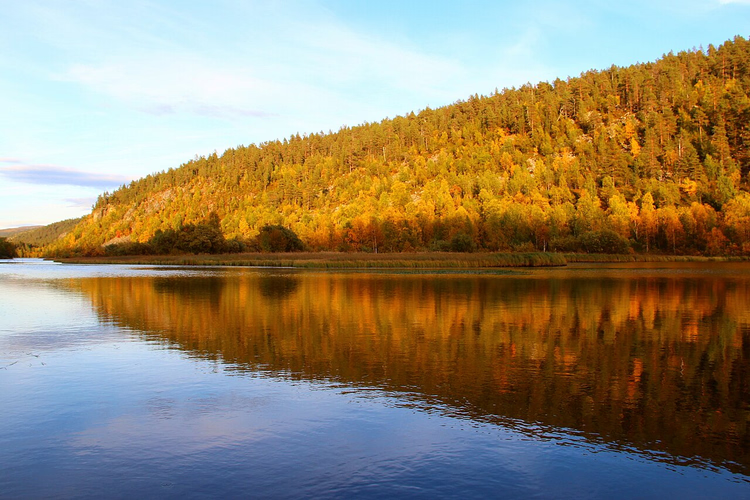 © Ilona Simomaa · CC BY-SAPhoto: Ilona Simomaa, CC BY-SA (https://creativecommons.org/licenses/by-sa/3.0), Wikimedia Commons
Moomin World (Muumimaailma) operates on an island near Naantali, about 16 km from Turku. The park is open only during the summer season, usually from June to August (as of 09/2026, official website). The sets recreate Moominvalley from Tove Jansson's books.
There is the Moomin family's house, a theater with daily performances, and characters walking along the paths. Kids take photos with the characters while parents relax in cafes. Tickets are cheaper when purchased in advance.
From the park, you can send friends a postcard with a local postmark. There are plenty of food options on the grounds, and souvenir shops are open all day. If you're going with young children, plan for a full-day visit. A miniature train runs to the park, so the journey itself becomes part of the fun. The skits are performed in Finnish, but the actors' live performance is understandable even without words.
- How to get there: by bus from Turku, about 20 minutes; from Helsinki the trip takes several hours.
- Price: tickets are paid, buy them in advance on the official website.
- Who it's for: primarily families with children aged 3-10.
- The catch: the park is open only in summer.
15. Lemmenjoki National Park
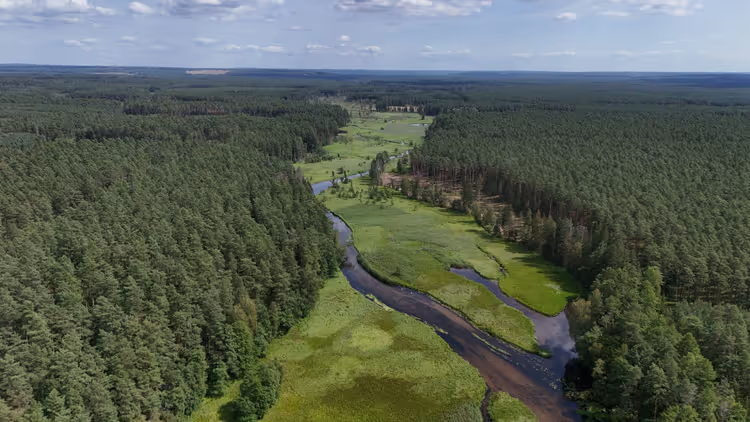
Lemmenjoki National Park is Finland's largest nature reserve, located in Lapland north of Rovaniemi. The central Lemmenjoki River translates as "river of love," and gold is still panned on its banks to this day. Tourists are allowed to watch the panning, and it does not harm the environment.
The park has marked trails with signposts, along with campsites that have fire pits and toilets. Spin fishing in the lakes here requires a paid permit. Forest huts are available for overnight stays, with lighting and a place to charge your phone.
You will pass river rapids, cliffs, and forests rich in mushrooms and berries. Picking them is allowed, but do not forget about mosquitoes: Lapland really has a lot of them. Some routes border a Norwegian nature reserve, so bring a map.
- How to get there: by bus from Rovaniemi to Inari, then by car.
- Price: park entry is free; you pay for equipment and boat rental.
- Who it's for: hikers and wilderness lovers.
- The catch: reaching the trails without a car is difficult.
16. Koli National Park
Koli National Park covers the hills on the eastern shore of Lake Pielinen. The view from the top of Koli is considered one of Finland's most famous landscapes: water, islands, and pine forests stretching to the horizon. People come here for hiking trails and winter sports.
The trails are marked and suit different fitness levels, and there are routes for people with limited mobility. Cross-country ski trails operate in winter, while kayaking and horseback riding are popular in summer. The park has campsites and tent areas, and at the foot of the hills you will find cafes and hotels.
- How to get there: by train to Joensuu or Lieksa, then by bus or car.
- Price: staying in the park is free; only services are paid.
- Who it's for: active family recreation.
- The catch: the weather at the summit changes quickly, so warm clothing is essential.
17. Oulanka National Park
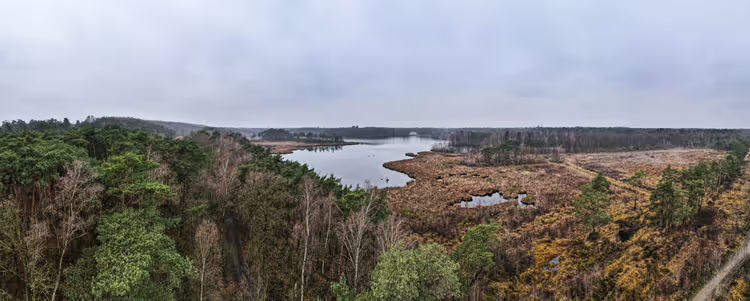
Oulanka National Park runs along the Oulanka River in northeastern Finland. The main route, the "Bear's Ring," crosses forests, marshes, and canyons, and takes several days with overnight stays. In summer people kayak here, and in winter they go snowshoeing and skiing.
Along the way you will encounter rapids, waterfalls, and red dolomite cliffs. The routes are marked, and campsites have fire pits and firewood. Some of the shorter walks are suitable for families with children.
On weekends, whole families come here to get away from the city. You can rent a kayak or bicycle right at the hotels, and in winter you can get snowshoes. Besides the Bear's Ring, visitors also mention the Jyrävä waterfall, the Kitka River rapids, and the Valtavaara fells.
- How to get there: by bus or car to the village of Ruka, then to the trails.
- Price: park entry is free; you pay for equipment and accommodation.
- Who it's for: hikers and kayaking enthusiasts.
- The catch: mosquitoes are abundant in early summer.
18. Linnanmäki Amusement Park
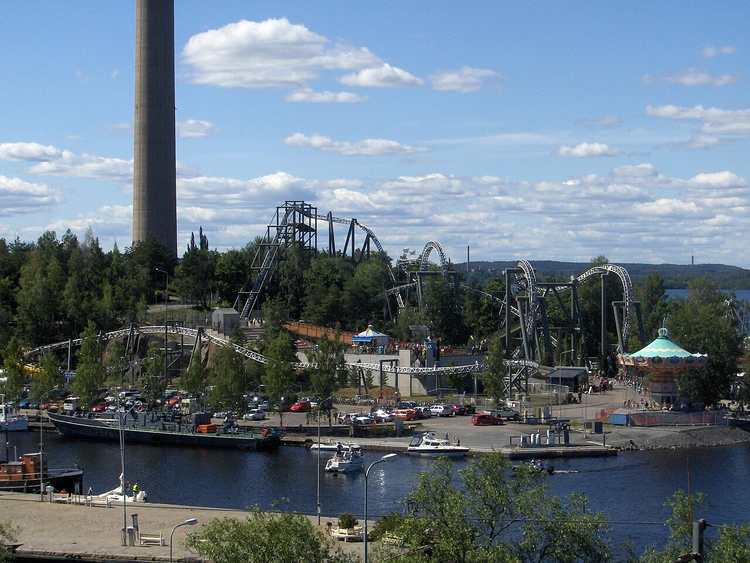 © Visa580 · CC BYPhoto: Visa580, CC BY (https://creativecommons.org/licenses/by/2.5), Wikimedia Commons
Linnanmäki is Helsinki's most popular amusement park. Entry to the grounds is free; you pay for a full-day wristband or for individual rides. It has roller coasters, a Ferris wheel, and a haunted house.
For little ones there is a small train and gentle rides, while teenagers can enjoy high-speed coasters and a 4D cinema. Lines are longer on weekends, so it is better to arrive in the morning. You can combine the park with a walk through the neighboring districts of Helsinki.
- How to get there: by tram from Helsinki Central Station, about 15 minutes.
- Price: entry is free; buy a day wristband at the ticket office or online.
- Who it's for: families with children of different ages.
- The catch: lines for popular rides are long on weekends.
19. Särkänniemi Amusement Park
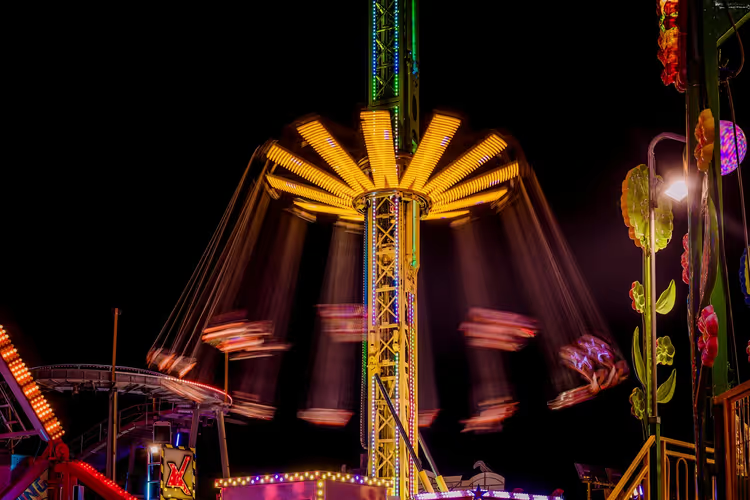
Särkänniemi is an amusement park in Tampere, the second most popular in the country. It has been operating since 1975 and updates its list of attractions every year. The grounds include a tall observation tower with a view of the entire city.
Besides coasters and carousels, there is an aquarium, a planetarium, and a small petting zoo with farm animals. Walks by the water are a good option for a relaxed visit. In summer the observation deck stays open longer, while in winter some areas are closed.
- How to get there: on foot from central Tampere, about 20 minutes (check the map).
- Price: entry to the grounds is free; rides are paid.
- Who it's for: families with children and teenagers.
- The catch: some rides are closed during the cold season.
20. Veijo Rönkkönen sculpture park
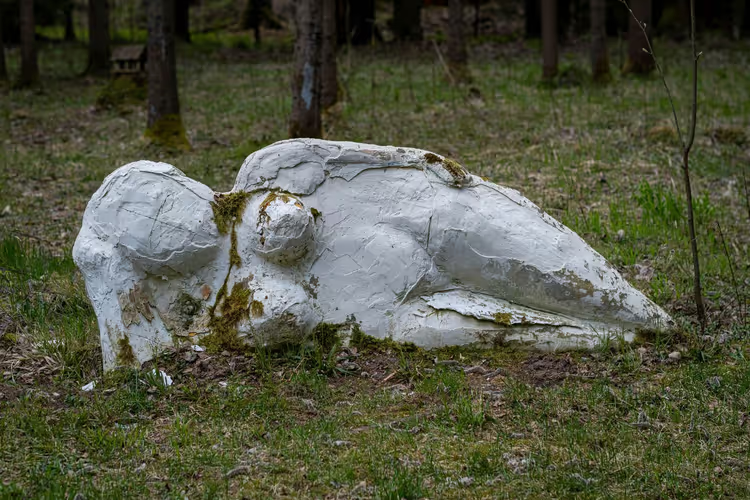
Veijo Rönkkönen Sculpture Park is the strangest place in Finland. The self-taught artist sculpted concrete figures right next to his home in Koitsanlahti near Parikkala. He worked for almost half a century and left behind hundreds of statues.
They include people, animals, and characters from the Kalevala, and some figures have real dentures. After the artist's death, the park is no longer being expanded and is slowly deteriorating, but entry remains open. It is best to visit in summer, because in winter the statues are hidden under snow.
- How to get there: by car along the highway between Parikkala and Savonlinna.
- Price: entry is free.
- Who it's for: those looking for unusual photo opportunities.
- The catch: getting there without a car is almost impossible.
21. Lake Oulujärvi
Oulujärvi is Finland's fifth largest lake, located in the Kainuu region in the center of the country. The lake is shallow but rich in fish: rare and commercial species spawn here. The lake hosts sport fishing championships.
The shores are covered with old-growth forest, and rare mosses and lichens are found in the backwaters. The largest island, Manamansalo, is inhabited: it has cottages, saunas, and boat rentals. Both anglers and eco-tourism lovers come here to relax, and you will find an option for any budget.
- How to get there: by train to Kajaani, then by car to the shore.
- Price: fishing requires a license; cottage accommodation is paid.
- Who it's for: anglers and those seeking peace and quiet.
- The catch: mosquitoes and blackflies are active all summer.
22. Lake Inarijärvi
Inarijärvi is Finland's third largest lake. It lies beyond the Arctic Circle, so white nights occur here in summer. The shores are home to the Sámi people, who have preserved their way of life and language.
The lake has more than three thousand islands, and one of them contains an ancient Sámi cemetery with a sacrificial stone. Salmon, trout, and pike are caught here in both summer and winter. You can take a seaplane ride over the water or rent a boat.
In winter the lake freezes over, and routes are laid across the ice. You can combine the trip with hunting for the northern lights and return to a warm house in the evening.
- How to get there: by bus or car from Rovaniemi, about 4 hours.
- Price: accommodation and fishing are paid; the shore is freely accessible.
- Who it's for: those traveling to see the northern lights.
- The catch: in winter the lake is frozen from October to April.
23. Lake Saimaa
 © Adrián Pérez from Helsinki, Finland · CC BY-SAPhoto: Adrián Pérez from Helsinki, Finland, CC BY-SA (https://creativecommons.org/licenses/by-sa/2.0), Wikimedia Commons
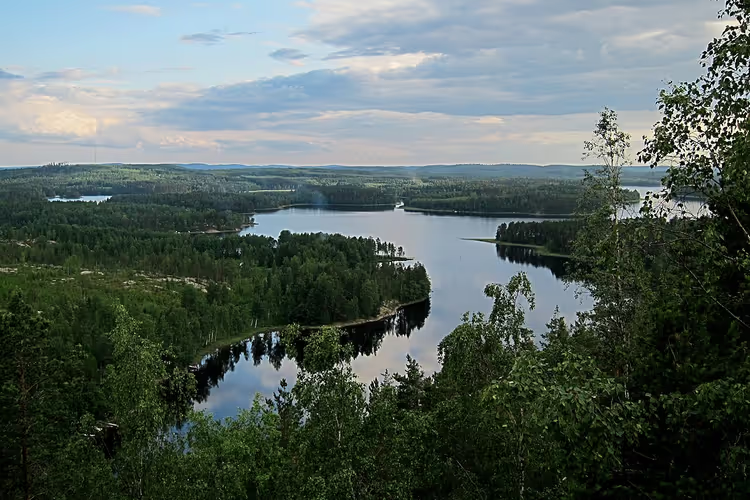
Saimaa is Europe's fourth largest lake, stretching across southeastern Finland. The water here is so clean that it is drunk without treatment. The Vuoksi River flows out of the lake, and the shores are covered with protected forests.
Saimaa has more than thirteen thousand islands, with yachts, kayaks, and canoes moving between them. These waters are home to the rare Saimaa ringed seal, which is why part of the area is closed to net fishing. Fishing is allowed year-round with a license, and you can easily find boat rentals.
- How to get there: by train to Lappeenranta, Imatra, or Savonlinna.
- Price: fishing requires a license; cruises and boat rentals are paid.
- Who it's for: those who want a peaceful vacation on the water.
- The catch: mosquitoes are abundant near the shore in summer, so bring repellent.
24. Seurasaari open-air museum island
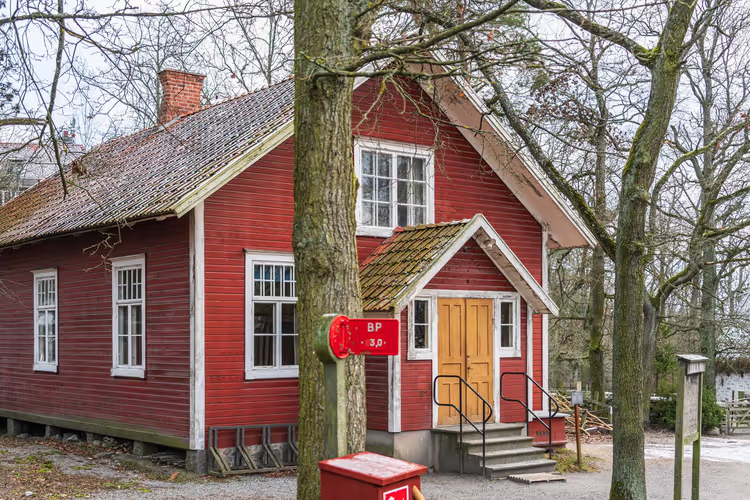
Seurasaari is an open-air museum island in western Helsinki. You can walk here across a bridge or take a bus. The island has old farmhouses, barns, mills, and stables brought from all over the country.
The exhibits show how Finnish villages lived in past centuries. The park is open year-round, and it gets especially busy in summer: squirrels run across the lawns, and locals have picnics. Because of the scenic views, weddings are often held on the island, so you'll get a quiet walk on a weekday.
- How to get there: bus 24 from central Helsinki or on foot across the bridge.
- Price: free entry, you only pay for individual services.
- Who it's for: families and ethnography enthusiasts.
- The catch: some houses are only open in the summer season.
25. Kvarken Archipelago
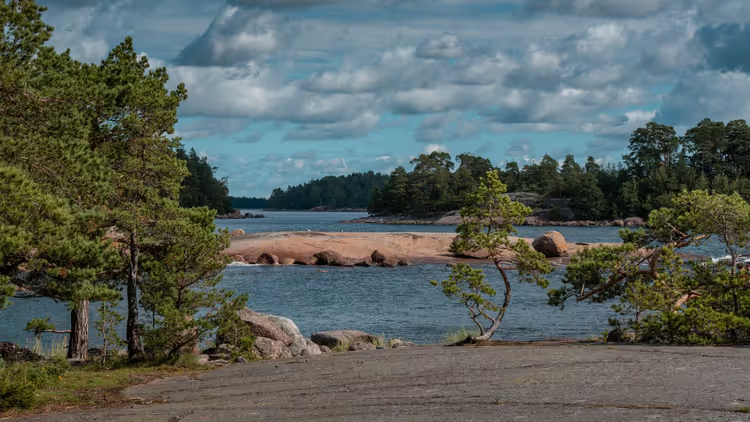
The Kvarken Archipelago is the only place in the world where land uplift is visible to the naked eye. The islands are slowly rising out of the Baltic Sea, and the coastline changes every year. It's a UNESCO World Heritage Site.
The hills, bays, and low rocky islets were formed after the glaciers retreated many thousands of years ago. There are thousands of islands here, and the land belongs to private owners whose plots are gradually growing. Many islands are connected by bridges, so they're easy to explore by bike.
- How to get there: ferry from Vaasa, then by bike or on foot.
- Price: free entry, you pay for the ferry and accommodation.
- Who it's for: geology lovers and fans of quiet nature.
- The catch: lots of mosquitoes in summer, and limited infrastructure.
Finland attractions on the map
Below, all 25 spots are gathered on one map to make it easier to plan your route and estimate travel times.
25 attractions in Finland
Places on the map
- 1Santa Claus Village Residence on the Arctic Circle 8 km from Rovaniemi, free admission
- 2Sibelius Monument Hundreds of steel pipes by Eila Hiltunen in Töölö park
- 3Imatrankoski Rapids Rapids on the Vuoksi in central Imatra, in summer water is released to Sibelius's music
- 4Sapokka Water Park Park in central Kotka with cliffs, ponds, a waterfall and lime-tree avenues
- 5Arktikum Rovaniemi's museum and science centre about life above the Arctic Circle
- 6Esplanadi Park Green strip in central Helsinki with a monument to Runeberg
- 7Temppeliaukio Church Church carved into rock, admission 8 euros, free for children under 18
- 8Suomenlinna Fortress Sea fortress on eight islands, a World Heritage site
- 9Olavinlinna Castle Medieval fortress on an island in Savonlinna, an opera festival in summer
- 10Turku Castle One of the country's largest medieval fortresses, at the mouth of the Aurajoki
- 11Häme Castle 13th-century red-brick fortress on the shore of Lake Vanajavesi
- 12Lappeenranta Fortress Bastions on a cape by Lake Saimaa and Finland's oldest Orthodox church
- 13Ateneum The country's main art museum, ticket 21 euros
- 14Moomin World Park based on Tove Jansson's books near Naantali, open only in summer
- 15Lemmenjoki National Park Finland's largest nature reserve, gold is still panned in the river
- 16Koli National Park Hills above Lake Pielinen and the country's most famous landscape
- 17Oulanka National Park The Bear's Ring route through forests, bogs and the Oulanka river canyons
- 18Linnanmäki Helsinki's main amusement park, free admission, a paid ride wristband
- 19Särkänniemi Tampere amusement park with an aquarium, planetarium and observation tower
- 20Veijo Rönkkönen Sculpture Park Hundreds of concrete figures by a self-taught artist near Parikkala, free admission
- 21Lake Oulujärvi The country's fifth-largest lake in Kainuu, fishing championships
- 22Lake Inarijärvi The third-largest lake above the Arctic Circle, more than three thousand islands
- 23Lake Saimaa Europe's fourth-largest lake, home to the Saimaa ringed seal
- 24Seurasaari Open-air museum island with farmhouses from across the country
- 25Kvarken Archipelago The only place where the land uplift from the sea is visible to the naked eye
The spots are spread from Helsinki in the south to Lapland in the north, so it's best to split the trip into two stages. The south is easy to see by train, while the north requires a car or a plane.
Tours and tickets in Helsinki
Guided tours, skip-the-line tickets and activities — most offers can be cancelled free of charge.
See offers on TiqetsThe widget loads once you give your consent.
⁉️🤔 Frequently asked questions
How many days do you need to see the main attractions in Finland?
For the south, allow three to four days: Helsinki, Suomenlinna, Turku, and Lake Saimaa. Lapland with Santa Claus Village and the national parks needs just as much time, and a car is better. In one week you can comfortably cover the essentials if you don't try to hit all 25 spots.
When is the best time to visit Finland?
For nature and lakes, choose May to September, when parks are open and trails are accessible. For the northern lights and winter activities, go between December and March. In December, popular hotels in Rovaniemi sell out early, so book accommodation months in advance.
Do you need a car to see the castles and parks?
Some sites are accessible by train: Helsinki, Turku, Savonlinna, Tampere, and Hämeenlinna are connected by rail. But getting to Koli, Oulanka, and Lemmenjoki national parks without a car is difficult. If you're planning to see nature, rent a car.
How much does entry to the main museums and churches cost?
Temppeliaukio Rock Church charges €8 for adults, and children under 18 enter free (as of 09/2026, official website). At Ateneum, a standard ticket costs €21 (as of 09/2026, current museum prices). Prices at fortresses and parks are best checked on their websites before your trip.
What to see in Finland with kids?
Kids love Santa Claus Village, Moomin World in Naantali, and the Linnanmäki and Särkänniemi amusement parks. Arktikum has interactive exhibits, and squirrels run around Seurasaari. Plan one park per day so you don't overload your child.
In short: what to book
- If you have three to four days: Helsinki, Suomenlinna and the Rock Church, then Turku.
- If you're traveling with kids: Moomin World, Linnanmäki, or Santa Claus Village.
- If you love nature: Lake Saimaa and Koli, Oulanka, and Lemmenjoki national parks.
- If you want the Middle Ages: Olavinlinna, Turku Castle, and Häme Castle.
Book hotels in Finland in advance, as availability is limited in summer and December. Choose a hotel in Helsinki on Trip.com.

A small editorial team writing guides for independent travel. We travel ourselves, but we haven’t been everywhere, so we check prices, opening hours and how to get there against official sources.