
















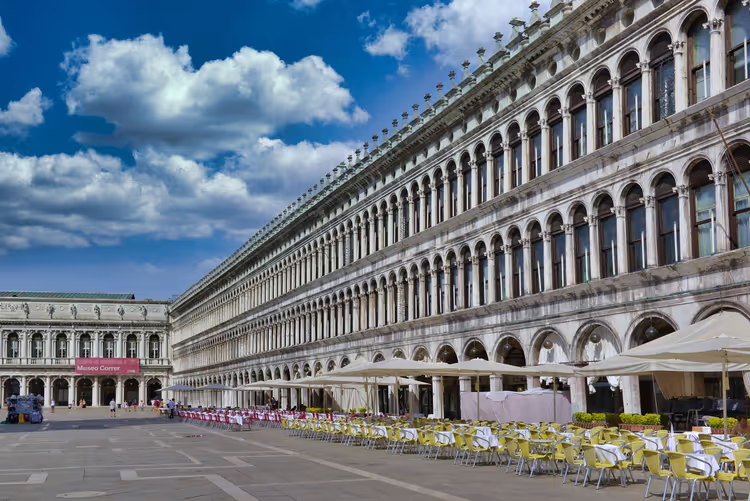
Museo Correr in Venice: what to see and how to buy a ticket
A ticket to St. Mark's Square costs €35 and gives access to four museums at once (as of 09/2026, official museum website). The Museo Correr in this bundle is most often skipped. Tourists head to the Doge's Palace, while the collection across from St. Mark's Basilica simply goes unnoticed.
Meanwhile, the Correr halls hold works by Carpaccio and Bellini, Canova's "Daedalus and Icarus," and the entire history of the Venetian Republic. You will see coins of the doges, old maps, porcelain, and Venetian costumes. Below we explain what to see, when to come, and how to buy a ticket.
Ad: this text contains affiliate links, we earn a commission from them, the price for you does not change.
Museo Correr: what it is and why go
💡 In short:
- The Correr is included in a single ticket with the Doge's Palace, the Archaeological Museum, and the Marciana halls.
- See the second floor: Carpaccio's "Two Venetian Ladies," works by Bellini, and Canova's "Daedalus and Icarus."
- Prices and opening hours: 09/2026, verified on the official website.
The Museo Correr is the city museum of Venice on St. Mark's Square. It occupies the Napoleonic Wing and part of the Procuratie, directly across from St. Mark's Basilica. The museum is sold as one package with the Doge's Palace, the Archaeological Museum, and the halls of the Marciana Library.
While tourists stand in line at the Doge's Palace, you can calmly walk through the empty halls of the Correr.
History: from the Correr collection to St. Mark's
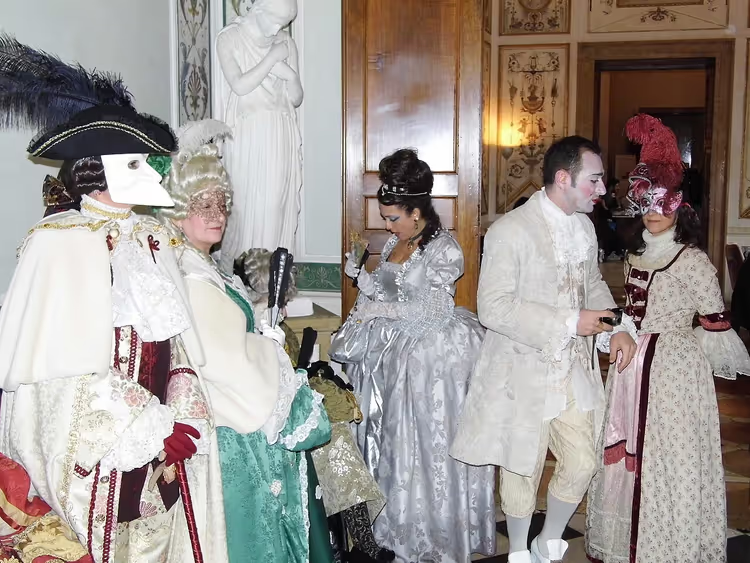 © fotogoocom · CC BYPhoto: fotogoocom, CC BY (https://creativecommons.org/licenses/by/3.0), Wikimedia Commons
The museum grew out of the private collection of the Venetian patrician Teodoro Correr. He was born in 1750 and died in 1830, and he bequeathed his entire collection to the city (according to Wikipedia). The count served in the state apparatus without much enthusiasm. Instead, he collected everything he could get his hands on: paintings, sculptures, weapons, porcelain, old maps.
During the Napoleonic occupation, Correr saved some items from being taken to France. In his will, he left the city not only the collection but also money for a future museum. A few years later the museum opened, and its first director was the Venetian historian Vincenzo Lazari.
Later the city purchased the Palazzo Fondaco dei Turchi for the museum. But even its large apartments could not hold the entire collection. The exhibits were distributed among Venice's museums, while the most valuable items remained in the building on St. Mark's Square.
The building itself began construction under Napoleon. He ordered the completion of a wing between the old Procuratie, which have stood here since the 16th century. The facade repeats the galleries of the same era, while inside hides a huge ballroom. The interior decoration was handled by the Venetian artist Giuseppe Borsato, already under the Austrian Habsburgs.
The ceilings were painted with frescoes, the walls covered with sculptural ornament. The halls were furnished with mahogany furniture with bronze and marble, and chandeliers of Venetian glass were hung above. In the early 20th century, the rooms became one of the main repositories of Italian art.
Exhibition: what to see in the halls
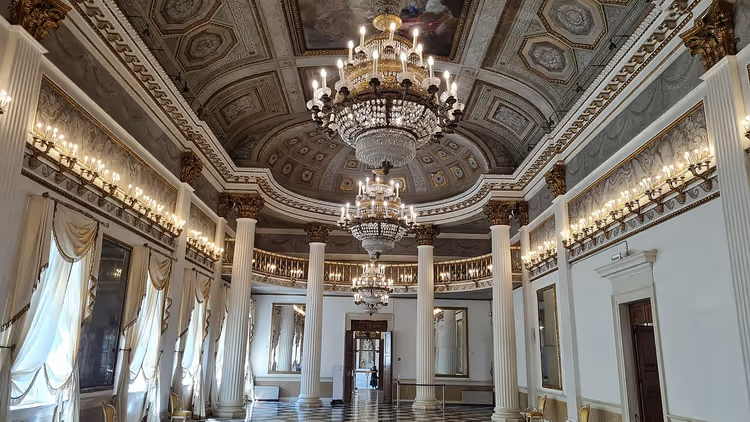 © Derbrauni · CC BYPhoto: Derbrauni, CC BY (https://creativecommons.org/licenses/by/4.0), Wikimedia Commons
The exhibition shows the political, spiritual, and cultural character of the republic. The halls tell about paintings, engravings, everyday objects, and sculpture. In the large halls you will see marble statues of mythical heroes: Orpheus, Eurydice, and Venus. Orpheus and Eurydice were created by Antonio Canova.
The work of Antonio Canova stands apart. His halls are located on the piano primo floor. The sculptor depicted Daedalus fitting fragile wings onto Icarus. This is one of the museum's most recognizable pieces.
On the second floor are objects that show how Venetians lived. Here you will find coats of arms, coins, medals, seals, books, portraits of doges, ship models, and costumes. The picture gallery takes center stage.
Among the paintings, note "Two Venetian Ladies" by Vittore Carpaccio. Two ladies sit on a terrace with a balustrade. One plays with dogs, the other gazes into the distance with a white handkerchief in her hand. Nearby stands a young man watching them.
Do not miss the 14th-century panel by Lorenzo Veneziano, "Christ Handing the Keys to Saint Peter." Christ stands against a gold background surrounded by apostles and angels. From Giovanni Bellini, see "Dead Christ Supported by Angels" and "Madonna and Child."
There are also paintings about the city's history. Cesare Vecellio's painting "Procession in St. Mark's Square" shows the doge's procession with his retinue. The canvas depicts the crowd, the palaces, and the entire square.
Tickets and opening hours (as of 09/2026)
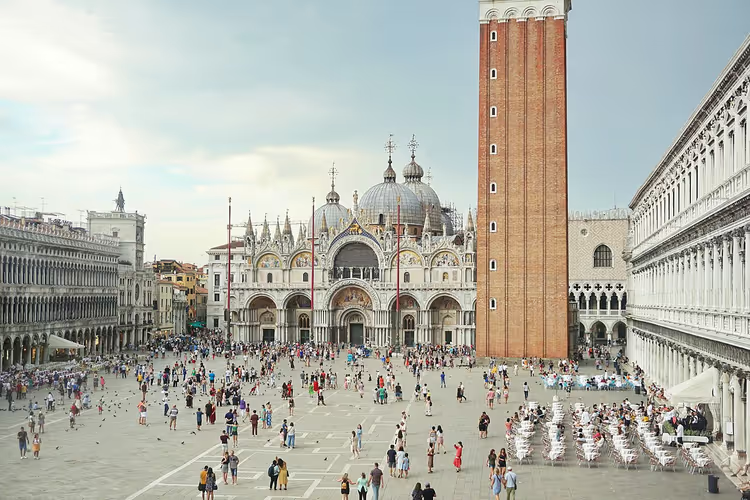 © Armin Kleiner · CC BY-SAPhoto: Armin Kleiner, CC BY-SA (https://creativecommons.org/licenses/by-sa/4.0), Wikimedia Commons
The combined ticket "St. Mark's Square Museums" costs 35 € (as of 09/2026, prices on the Correr Museum website). The reduced ticket costs 15 € (as of 09/2026, official website rates). When purchased online at least 30 days in advance, the price is lower: 30 € (as of 09/2026, official website rates). The ticket is valid for the Doge's Palace, the Correr, the Archaeological Museum, and the Marciana halls.
Opening hours depend on the season. Check the table before your trip:
Season | Hours | Last entry |
|---|---|---|
April-October | 10:00-18:00 | 17:00 |
November-March | 10:00-17:00 | 16:00 |
The schedule is confirmed on the official website (as of 09/2026, visitmuve.it). In summer, on Fridays and Saturdays, the museum is open until 23:00, with last entry at 22:00. In 2026 this applied from May 1 to September 26, check the dates for the next season on the official website.
The reduced ticket is available to children aged 6-14, students aged 15-25, and visitors over 65. The audio guide in the MUVE app is already included in the price. You don't need to pay extra for it.
Tours and tickets in Venice
Guided tours, skip-the-line tickets and activities — most offers can be cancelled free of charge.
See offers on TiqetsThe widget loads once you give your consent.
For timed-entry tickets and tours of Venice, check GetYourGuide.
Location and how to get there
The museum stands on St. Mark's Square, in the Procuratie complex opposite St. Mark's Basilica. It's the very center of Venice, and all pedestrian routes lead here. From the San Marco pier, you can walk to the entrance in a couple of minutes.
The easiest way is to take a vaporetto to the San Marco stop. From the Santa Lucia railway station, the journey takes about half an hour (by map). From the Rialto Bridge, you can walk to the square following the signs.
Bring water and come in the morning, while the halls are still empty.
Correr Museum on the map
The museum is located in the western part of the square, opposite the basilica, with the entrance on the Napoleonic Wing side. Plan your route from your hotel in advance: Open on map.
⁉️🤔 Frequently asked questions
Is the Correr Museum included in the Doge's Palace ticket?
Yes. The combined ticket "St. Mark's Square Museums" is valid for both the Doge's Palace and the Correr. A separate ticket for the Correr alone is not sold. The ticket gives one entry to each museum, and booking in advance is not required.
How much time do you need for the Correr Museum?
Allow about two hours. That's enough to go through both floors without rushing. If you're short on time, go straight to the second floor to the picture gallery. The gallery and the Canova rooms will take about an hour.
When should you come to avoid crowds?
In the morning after opening or closer to the evening. There is usually no long line at the Correr: the main flow goes to the Doge's Palace. In summer on Friday and Saturday the museum is open until 11:00 PM, and an evening visit is the quietest (as of 09/2026, opening hours on the museum website).
What to see first?
The second floor with the paintings. Start with Carpaccio's "Two Venetian Ladies", then the works of Bellini and Lorenzo Veneziano. After the paintings, move on to Canova's sculpture and the collection of coins and maps of the doges. The historical canvases by Cesare Vecellio are also worth a look.
How to get to the Correr Museum?
Take the vaporetto to the San Marco stop, then it is a couple of minutes on foot across the square. All pedestrian routes in the center lead here. The entrance is from the Napoleonic Wing, next to the Archaeological Museum. Signs on the square will help you find your way.
In short: what is worth booking
The Correr is a convenient way to understand Venice before going to the Doge's Palace. The museum is short, calm, and included in the same ticket. If you have one day for San Marco: get the combined ticket and start with the Correr.
- If you love painting: set aside time for the second floor and the picture gallery.
- If you are traveling with children: stop by the rooms with costumes and ship models.
- If you want to avoid the crowds: come in summer on Friday or Saturday evening.
An online ticket is cheaper if you buy at least 30 days in advance (as of 09/2026, official museum website). Tours of Venice are easy to browse on GetYourGuide.

A small editorial team writing guides for independent travel. We travel ourselves, but we haven’t been everywhere, so we check prices, opening hours and how to get there against official sources.