
















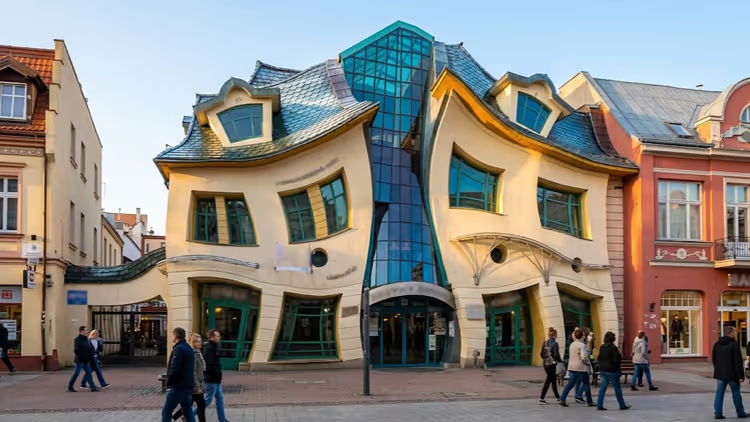
 AIIllustrative image: AI-generated
Crooked house in Sopot: entrance, architecture and what is inside
The Crooked House in Sopot looks like it was drawn by a child. The building has stood on the city's main promenade for more than twenty years. Inside, there isn't a single crooked corner, and entry is free.
Tourists come here for one photo, but the house is more interesting than it looks in pictures. We've gathered the essentials: the architects, the construction, the opening hours, and what's inside the wavy facade.
Ad: this article contains affiliate links, we earn a commission if you book through them, at no extra cost to you.
History and authors of the project
💡 In short:
- The project was created by the Sopot studio Szotyńscy & Zaleski, and the house opened in the early 2000s.
- Inside there are shops, offices, and a Food Hall, and entry to the building is free.
- As of 09/2026, verified on the official website.
The project was designed by the Sopot studio Szotyńscy & Zaleski, with Rezydent S.A. as the developer. The architects drew inspiration from the drawings of Jan Marcin Szancer, the work of Swedish artist Per Dahlberg, and the forms of Antoni Gaudí. Construction began in 2003, and the grand opening took place in 2004.
The design was based on a sketch that combined deconstructivism with fairy-tale archaism. The house looks like an illustration from a children's book, just life-sized. That's why it was quickly nicknamed the Crooked House.
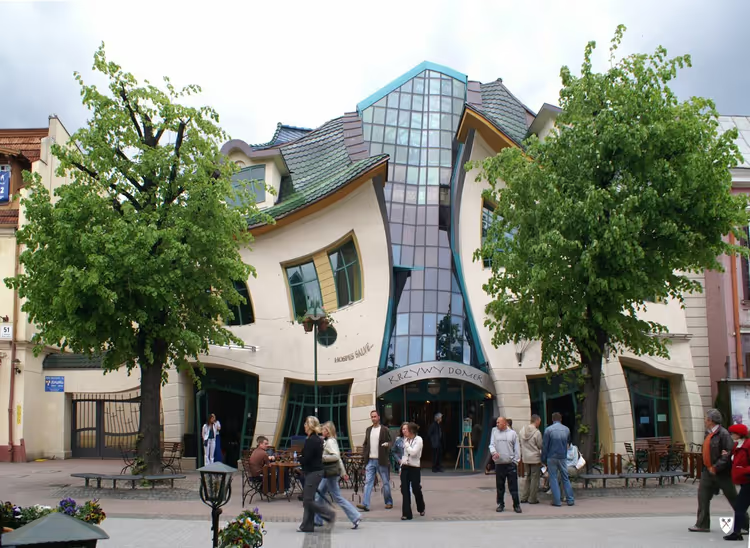 © Topory https://commons · CC BY-SAPhoto: Topory https://commons, CC BY-SA (http://creativecommons.org/licenses/by-sa/3.0/), Wikimedia Commons
Over more than twenty years, the building has become a symbol of the Tricity. CNN and BBC Travel have written about it. According to the Krzywy Domek website, it's not a film set but a working retail and office center.
Construction and the "crookedness" of the house
On the outside, every detail is crooked: the walls, windows, cornices, roof, and doors. A simple association comes to mind: the house squatted under its own weight or was reflected in a funhouse mirror. But the crookedness applies only to the two front facade walls and the glass entrance portal.
The two rear walls are built with ordinary geometry. The house looks unstable, but it stands firm and has no intention of falling. The exterior curves don't affect its structural strength, which adds to the facade's paradoxical quality.
The house has two floors and a mansard roof, and the building occupies about 4,000 m² (according to naszsopot.pl). The materials are quite ordinary: sandstone, metal, and glass. There are no previously unknown technologies here, although it may seem otherwise from the outside. You don't need to be an architect to appreciate the concept.
Where it is and how to get there
The address is simple: ul. Bohaterów Monte Cassino 53, 81-767 Sopot. The house stands on Monciak, the resort's main pedestrian street. From Sopot Centrum station, it's about a 10-minute walk.
Inside you'll find shops, offices, clinics, and eateries.
- The catch: in high season, Monciak is crowded, and getting a shot without passersby is difficult.
You don't need a separate map. Just walk along Monciak toward the sea and you'll see the house with the crooked windows.
Architecture and materials
The house has two floors and a mansard roof. The crooked look is created by the two front facade walls and the glass entrance portal. The rear walls are straight and barely visible from the street.
At first glance, the building seems to be made of super-new materials. In practice, it's sandstone, metal, and glass. Despite its apparent instability, the house rests on a solid foundation.
The exterior curves don't affect the structure's stability. That's the building's main paradox: it looks fragile but behaves like an ordinary permanent structure.
Exterior details of the building
The ground-floor display windows are huge and made of colored glass. They enhance the fairy-tale effect, especially in the dark. The second-floor windows are smaller, but their shapes are no less elaborate.
By day, the glass sparkles with multicolored glints; by night, it glows in the reflections of street lamps. Looking at these openings, you realize how much work went into making them.
The central entrance deserves special attention. Wide glass doors stand beneath a stained-glass span, with a stainless steel strip below bearing the inscription "Krzywy Domek." Above, the span transitions into the broken asymmetry of the roof.
The roof is covered with enameled metal tiles shaped like scales. This covering wasn't chosen by accident: it resembles the skin of a crocodile or a fish. Nearby stands a bronze statue of a fisherman with a net and a fish, a symbol of seaside Sopot.
Interior spaces
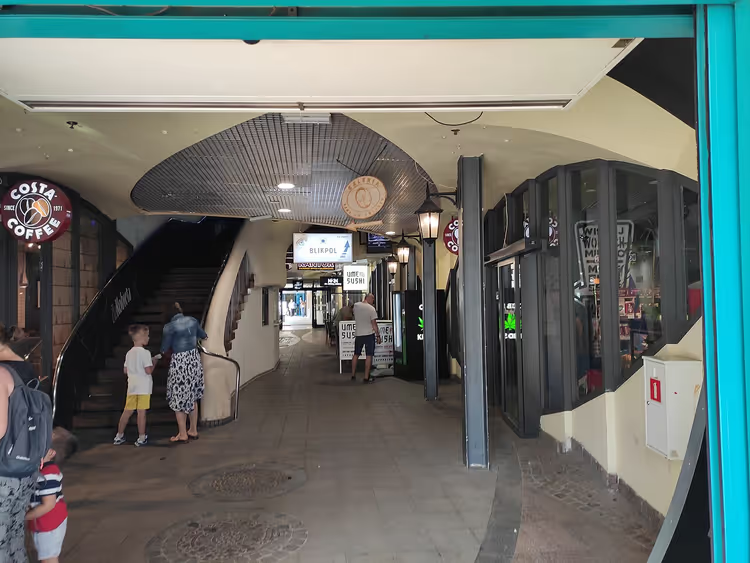
Inside, nothing reminds you of the crookedness. The walls are straight and smooth, painted in light tones, and the corners are right angles. The lobby is done in warm sandy shades.
A massive staircase with metal railings looks almost cosmic. Nearby, 18th-century-style lanterns hang on the walls. Modernism and conservatism coexist peacefully here.
 © Fry72 , Karel FRYDRÝŠEK · CC BY-SAPhoto: Fry72 , Karel FRYDRÝŠEK, CC BY-SA (https://creativecommons.org/licenses/by-sa/4.0), Wikimedia Commons
Office spaces are separated by glass partitions and arched vaults. Panoramic windows and ceiling lights provide plenty of light both day and night. This is also where the Wall of Fame is located, where visitors leave their wishes.
What's inside: shops and Food Hall
Today it's a retail and office center (according to the complex's page). Boutiques, a bookstore, medical offices, offices, and clinics operate here. You'll also find the Food Hall, the main draw for visitors.
It brings together eight dining concepts: Thai cuisine, Korean ramen and sushi, Neapolitan pizza, smash burgers, and Georgian pastries. A bar operates on the ground floor, and upstairs the Studio 53 program runs concerts and stand-up.
- Who it's for: those who want to see an unusual facade and grab a bite in the center of Sopot.
For families with children, Muzeum Iluzji, Kino 7D, and a play area are open. These attractions are paid, and tickets and schedules are available on the center's website. If you're short on time, the facade and lobby will be enough.
Opening hours and admission
Entry to the building is free. The house itself is accessible year-round, and each establishment has its own opening hours (according to a local Sopot portal). Shops are open during the day, while bars and the Food Hall stay open into the evening.
Tickets are needed only for individual attractions: Muzeum Iluzji, Kino 7D, and the play area. The schedule changes, so check the times on the house's website before your visit. Opening hours were verified in September 2026.
Tours and tickets in Sopot
Guided tours, skip-the-line tickets and activities — most offers can be cancelled free of charge.
See offers on GetYourGuideThe widget loads once you give your consent.
The crooked house in Poland on the map
The house stands right on the promenade, so you won't miss it. Below is a map marker if you want to plan your route in advance.
Crooked House in Poland
Places on the map
- Crooked House (Krzywy Domek) Wavy building on the Monciak promenade, a shopping and office center
⁉️🤔 Frequently asked questions
Do I need to buy a ticket for the Crooked House?
No, entry to the building is free. You only pay for individual attractions: Muzeum Iluzji, Kino 7D, and the play area. The facade and lobby are open to everyone while the establishments are operating. Check attraction prices on the official website before your trip.
When is the best time to visit to avoid crowds?
A weekday morning is the quietest. By midday, Monciak fills with people, and a photo line forms at the facade. In the evening, the crowd thins out again, and the lighting comes on. For photos, choose early morning or the time after sunset.
How much time should I allow for a visit?
Half an hour is enough for the facade and lobby. If you're going to Muzeum Iluzji and the Food Hall, allow several hours. With children, add time for Kino 7D and the play area, where it's easy to stay longer than planned.
How do I get there from Gdańsk?
Frequent SKM trains run between Gdańsk, Sopot, and Gdynia. From Sopot Centrum station, it's a short walk along Monciak to the house. It's better not to drive: parking is scarce in the resort center, and the promenade is pedestrian-only.
Is the house open in winter?
Yes, the building is accessible year-round. In winter, some summer spots close, but shops, offices, and the Food Hall keep operating. The facade lighting also remains, so evening photos work even in the cold season.
In short: what's worth booking
You don't need to book a visit to the house itself. You only pay for the indoor attractions and food. If you're short on time, photograph the facade, step into the lobby, and head up to the Food Hall.
If you're with children: book tickets for Muzeum Iluzji and Kino 7D in advance. If you want dinner by the sea: come in the evening, when the lighting comes on. For sightseeing tours of the Tricity, find an option on GetYourGuide.

A small editorial team writing guides for independent travel. We travel ourselves, but we haven’t been everywhere, so we check prices, opening hours and how to get there against official sources.