
















Dalat: a route through the city, waterfalls and coffee farms
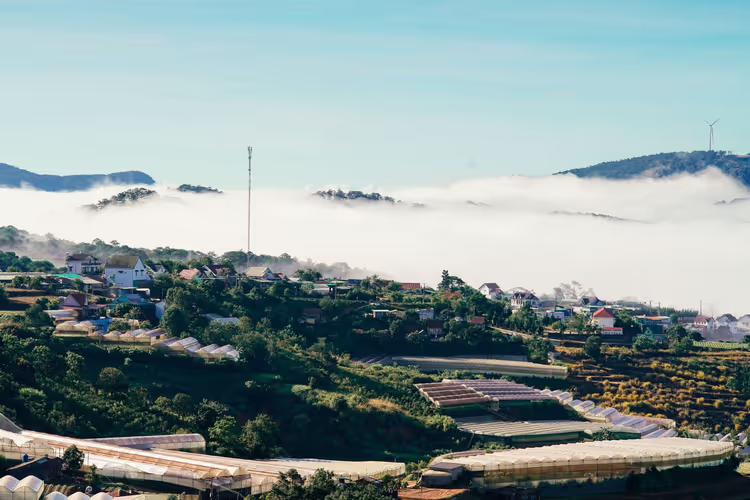
Dalat is nothing like Nha Trang or Phan Thiet. There are no beaches or heat here, but there are pine-covered hills, waterfalls, and flower gardens. The city sits on a plateau in the mountains of central Vietnam, at an altitude of about 1,500 meters (as of 09/2026, climatestotravel). The weather stays mild all year round, which is why Dalat is called the city of eternal spring.
One relaxed day is enough for the city itself. Set aside two more for the surrounding area and waterfalls. We have put together the places worth seeing both inside Dalat and within a fifty-kilometer radius: from colonial villas and the Crazy House to coffee farms and a winery.
The French discovered this place in the late nineteenth century and quickly began building villas and hotels. Today Vietnamese couples love Dalat and come here for wedding photos. The city is known as the city of lovers, flowers, and eternal spring. Below you will find what to see in Dalat and how to plan your trip without unnecessary rushing around.
Ad: this article contains affiliate links, we earn a commission if you book through them, at no extra cost to you.
What to see in Dalat
💡 In short:
- One full day is enough for the city itself: the colonial quarter, the Crazy House, the lake, and the market.
- Set aside two more days for the surrounding area and waterfalls, ideally with a car or motorbike.
- Entrance tickets and opening hours: 09/2026, according to the official Vietnam tourism portal
Place | Entry | How much time |
|---|---|---|
Crazy House | paid | one hour |
Xuan Huong Lake | free | one and a half hours |
Flower garden | paid | one hour |
Central market | free | two hours |
Golden Buddha | free | forty minutes |
French Quarter
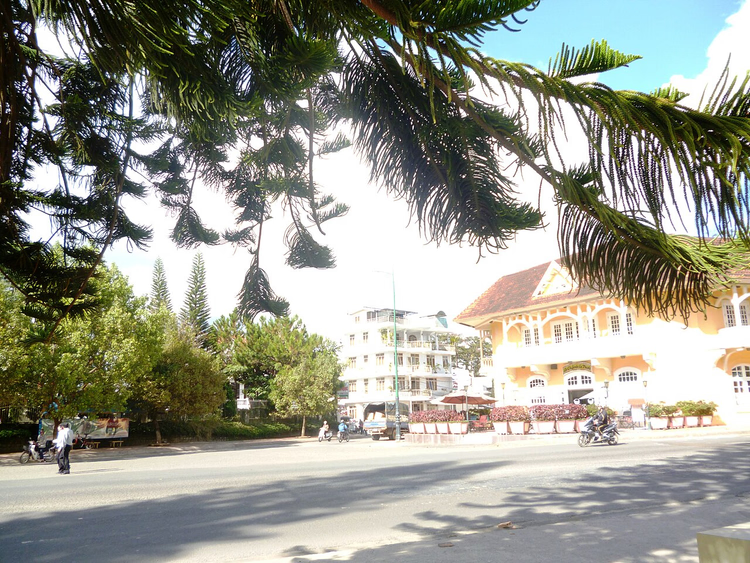
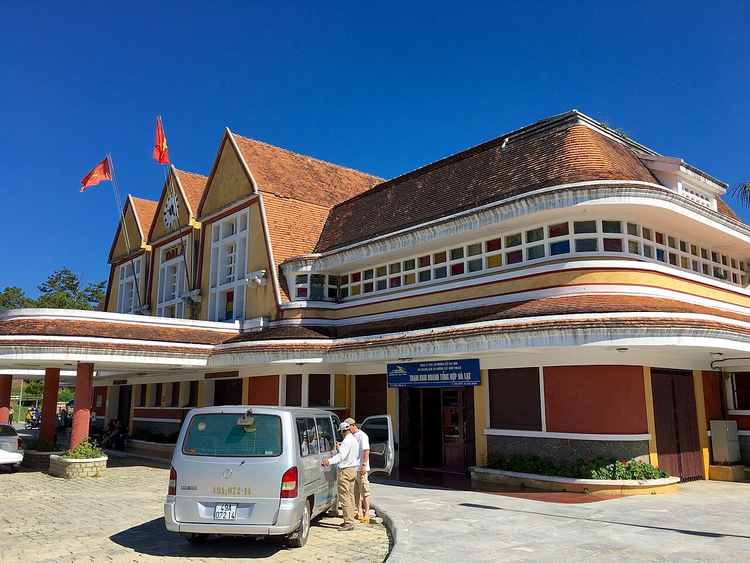
The colonial period makes itself known through typical French architecture. Elegant villas from the twenties and thirties stand here, along with a Catholic cathedral and a mini replica of the Eiffel Tower that serves as a radio tower. Nearby there are golf courses, tennis courts, and horseback riding areas. It feels like a little piece of Europe in the middle of Asia. But the Vietnamese character is everywhere, and that is for the best: for pure France, you would go to France.
 © Phương Huy · CC BY-SAPhoto: Phương Huy, CC BY-SA (https://creativecommons.org/licenses/by-sa/4.0), Wikimedia Commons
Crazy House
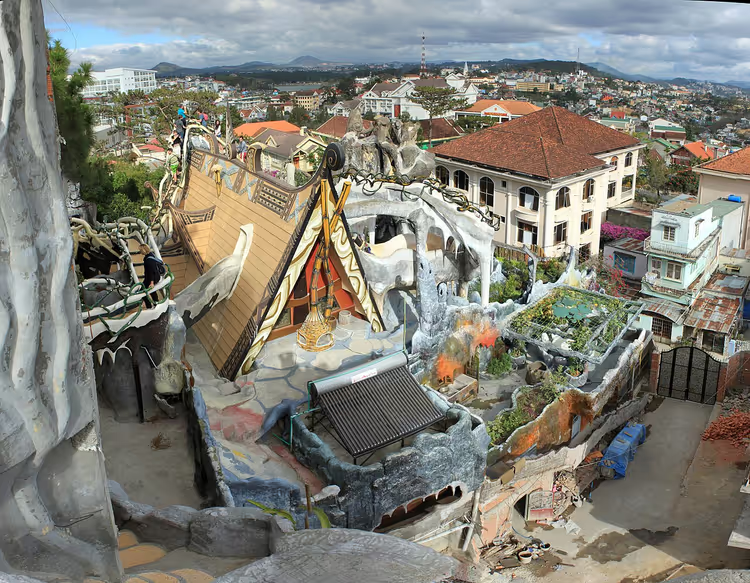
The Crazy House was built as an unusual hotel next to a Catholic church. The building was constructed in the nineties, and it has no straight lines or corners. The house resembles the trunk and roots of a giant tree, and the interiors are just as whimsical. Visitors are allowed inside with an entrance ticket; you do not need to stay overnight. An adult ticket costs about 50,000 dong (as of 09/2026, official website).
 © Michael Karavanov · CC BY-SAPhoto: Michael Karavanov, CC BY-SA (https://creativecommons.org/licenses/by-sa/3.0), Wikimedia Commons
Xuan Huong Lake
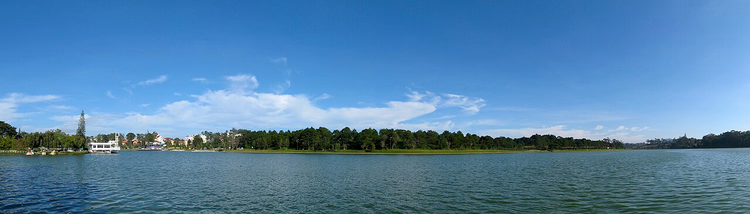
Xuan Huong Lake was created artificially when a dam was built. Locals love walking here in the evenings, and gardens, flower beds, and lawns surround it. You can rent a boat and take a ride on the water, then have some local wine at a cafe on the embankment. An hour and a half is enough for a leisurely loop around the lake.
 © Trần Huy Phương · CC BY-SAPhoto: Trần Huy Phương, CC BY-SA (https://creativecommons.org/licenses/by-sa/3.0), Wikimedia Commons
Flower garden
On the other side of the lake lies a garden with more than three hundred species of flowering plants. The flower beds are constantly refreshed, so the garden is beautiful in any season. It is especially lovely in December, when Dalat hosts a flower festival with carts and outfits decorated with flowers. Allow about an hour for a visit, and more during festival days.
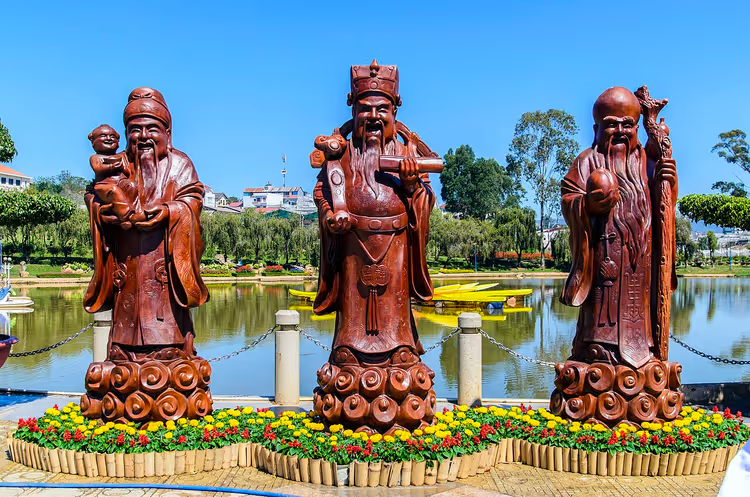 © Александр Попрыгин · CC BYPhoto: Александр Попрыгин, CC BY (https://creativecommons.org/licenses/by/3.0), Wikimedia Commons
Central market
The central market lets you experience the real Vietnam. The trading area is huge, with more than a thousand shops and stalls. They sell fresh fruit, unbranded factory clothing, and local sweets. Street food stalls at the market cook traditional dishes, and lunch here is cheaper than at a restaurant. The market works from morning until late evening, and a night market opens nearby.
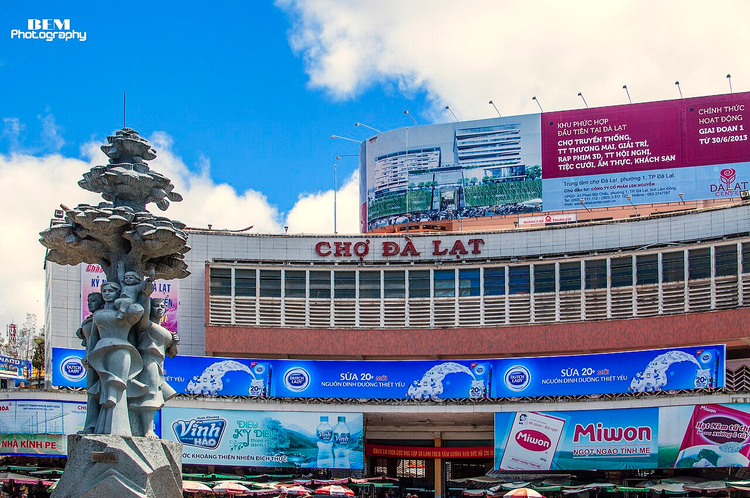 © Bem photography: · CC BYPhoto: Bem photography:, CC BY (https://creativecommons.org/licenses/by/2.0), Wikimedia Commons
Golden Buddha
The golden Buddha statue, about twenty-four meters tall, was installed in the early two thousands. It occupies the highest point of the city, so the platform at its base offers a panorama of Dalat. Nearby stands the Van Hanh Pagoda with a museum and workshop of Buddhist art. Visitors enter the temple in modest clothing and leave their shoes at the entrance.
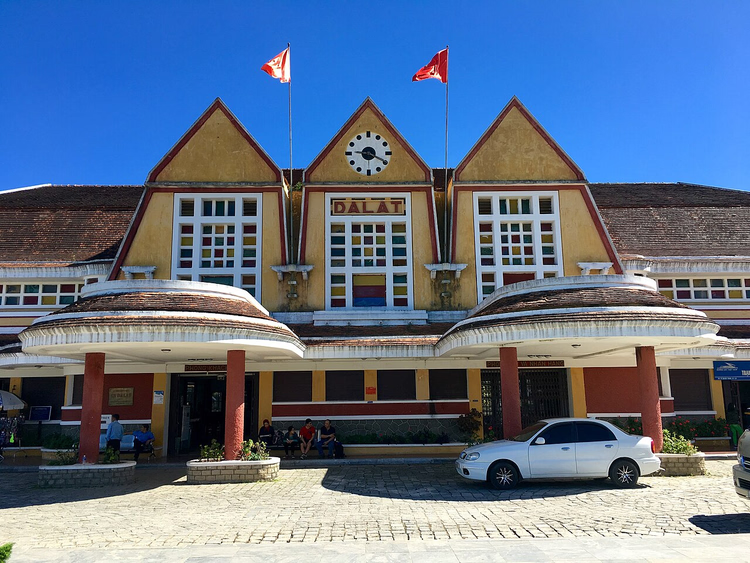 © Sandra Cohen-Rose and Colin Rose from Montreal, Canada · CC BY-SAPhoto: Sandra Cohen-Rose and Colin Rose from Montreal, Canada, CC BY-SA (https://creativecommons.org/licenses/by-sa/2.0), Wikimedia Commons
What to see near Dalat
Lang Biang Mountain
From the top of Lang Biang, which is more than two kilometers above sea level, you get a view of Dalat and the surrounding valleys. The climb to the actual peak is not easy; the last section is on foot along a steep trail. The catch: without proper shoes and a supply of water, it is not worth climbing, especially in the rain. By car you can reach the lower station, then part of the way is on foot or by jeep.
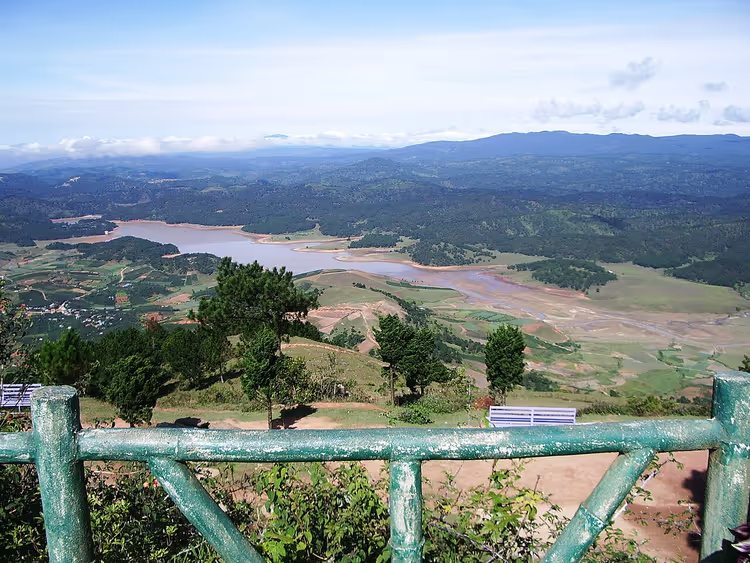 © Liangu · CC BY-SAPhoto: Liangu, CC BY-SA (https://creativecommons.org/licenses/by-sa/3.0), Wikimedia Commons
Valley of Love Park
The Valley of Love greets you with a large themed park with paid entry. The staff are dressed like characters from a Western, and the grounds include a museum of world landmarks in miniature. There are green hills, fruit orchards, and a lake with a scenic promenade. The catch: the area is so large that it is hard to cover it in a day without an electric car. Plan for at least half a day, and in the evening stop by the Garden of Lights with hundreds of lanterns under the open sky.
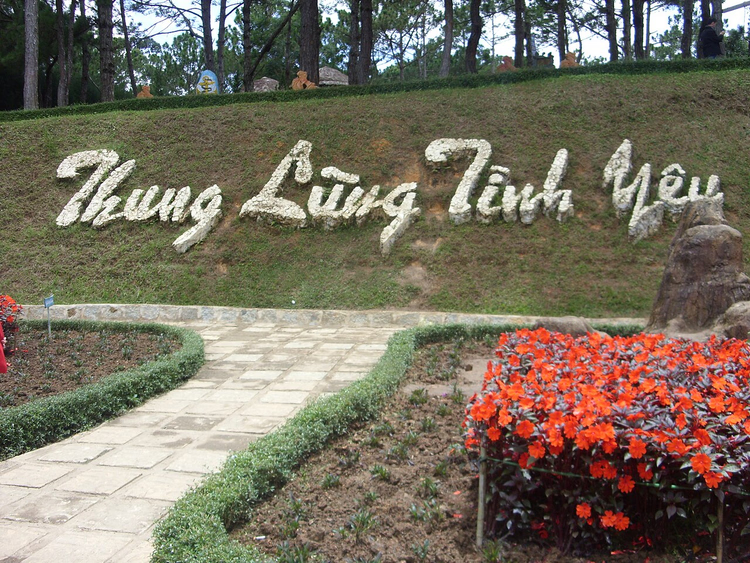 © Ho Tuan KIet · CC BY-SAPhoto: Ho Tuan KIet, CC BY-SA (https://creativecommons.org/licenses/by-sa/3.0), Wikimedia Commons
Embroidery Village
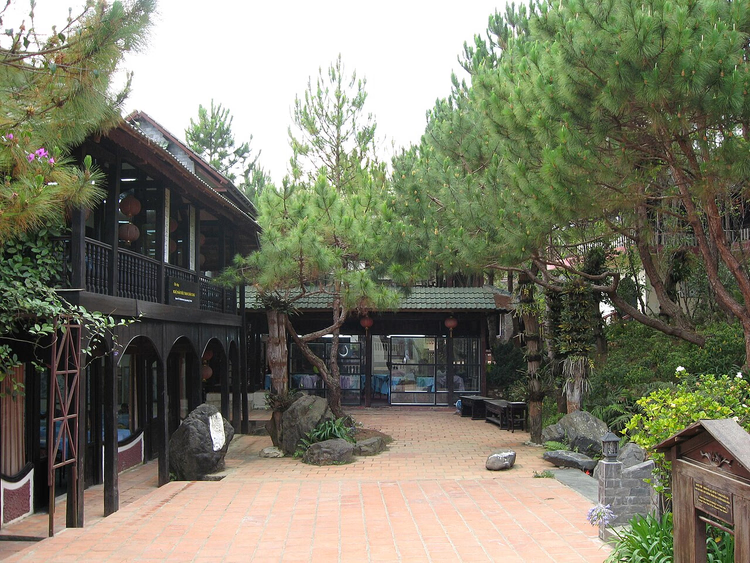
Across the road from the Valley of Love stands the XQ brand museum, also known as the embroidery village. Here you can learn the history of silk embroidery and see handmade works. Artisans work right in the halls, and some of the pieces are available for purchase. The museum is convenient to visit together with the Valley of Love, as they are just a short walk from each other.
Cable car
The cable car runs above the pine treetops to the Truc Lam Pagoda. The flight over the forest is an attraction in itself: valleys and lakes open up below. The cable car takes you to one of the newest pagodas in the region. Only part of the male monastery is open to visitors, while the rest is occupied by an active Buddhist school.
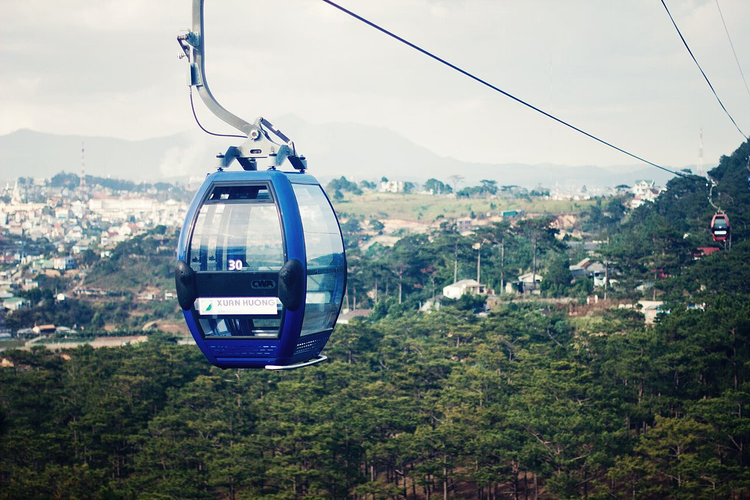 © Anastasia Zhebyuk · CC BY-SAPhoto: Anastasia Zhebyuk, CC BY-SA (https://creativecommons.org/licenses/by-sa/3.0), Wikimedia Commons
Linh Phuoc Pagoda
Linh Phuoc Pagoda is striking in its colors and details. The decoration uses mosaics made from glass shards and clay fragments. Here you will find a dragon about forty-nine meters long assembled from beer bottles, and a bell tower thirty-seven meters high. Allow an hour for your visit: there are so many details that your eye catches on every one.
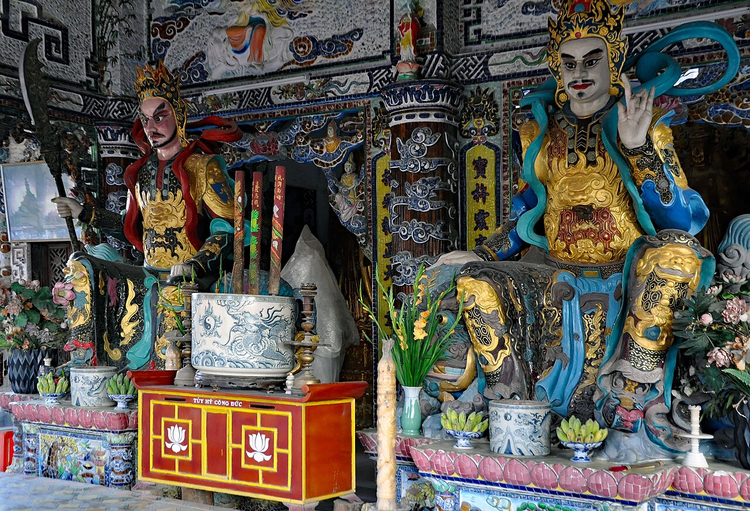 © P. Hughes · CC BYPhoto: P. Hughes, CC BY (https://creativecommons.org/licenses/by/4.0), Wikimedia Commons
Waterfalls near Dalat
There are several waterfalls around Dalat, and each one is noticeably different from the others. You can reach Prenn in half an hour, while Elephant Falls and Pongour require a longer drive. It is easier to take a ready-made Dalat waterfalls tour than to arrange transport on your own.
Prenn
The main feature of Prenn is the path behind the wall of water. A wooden walkway has been built for tourists, making it easy to watch the streams falling from a height of ten meters. Near the waterfall there is a park with Vietnamese character, and the Au Lac Temple stands close by. Entry to the grounds is paid, and the ticket costs a symbolic amount.
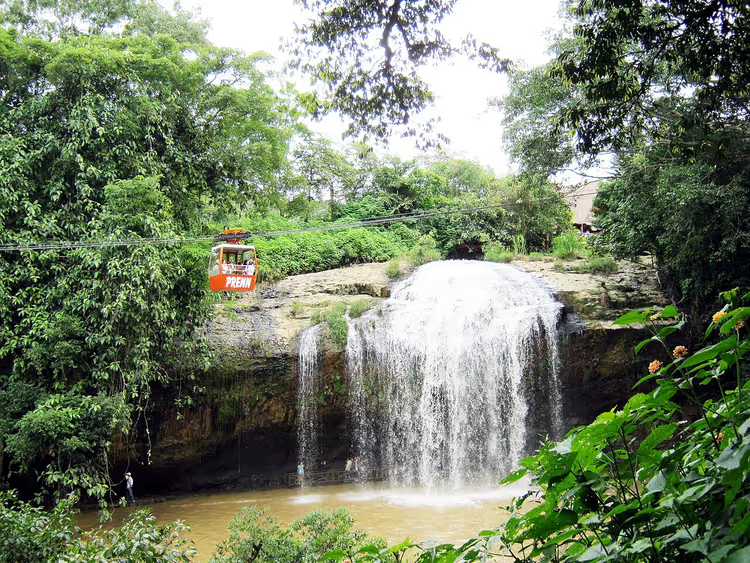 © Bùi Thụy Đào Nguyên · CC BY-SAPhoto: Bùi Thụy Đào Nguyên, CC BY-SA (https://creativecommons.org/licenses/by-sa/3.0), Wikimedia Commons
Elephant Falls
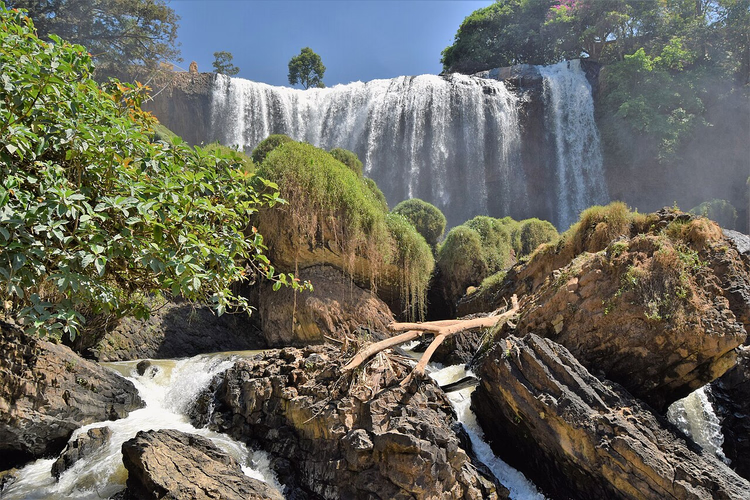
Elephant Falls is located thirty kilometers from Dalat, so it is usually visited together with Pongour. The water falls in an even white band from a height of about thirty meters and a width of roughly fifteen meters. The Linh An Tu Pagoda is nearby. The catch: getting there takes a long time, and you cannot do it without a car or motorbike.
Pongour
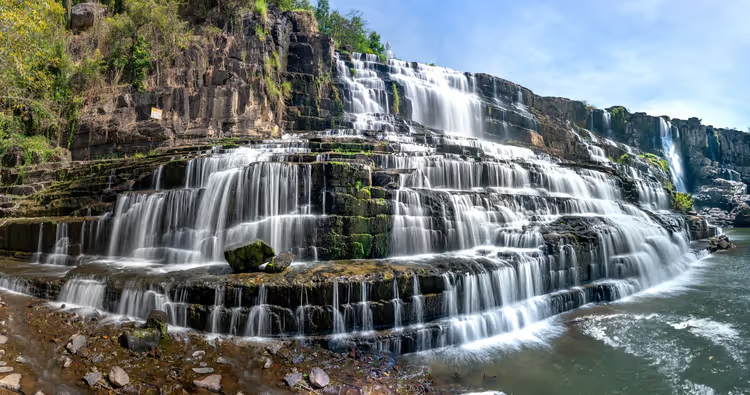
Pongour is considered the largest multi-level waterfall in Vietnam. During the rainy season it spreads across the rocks to a width of about one hundred meters, and the height of the flows reaches twenty meters. The waterfall is about 45-50 kilometers from Dalat. The best view opens up from the lower observation deck, which is reached by a staircase.
What else is worth seeing in the area
Coffee plantations
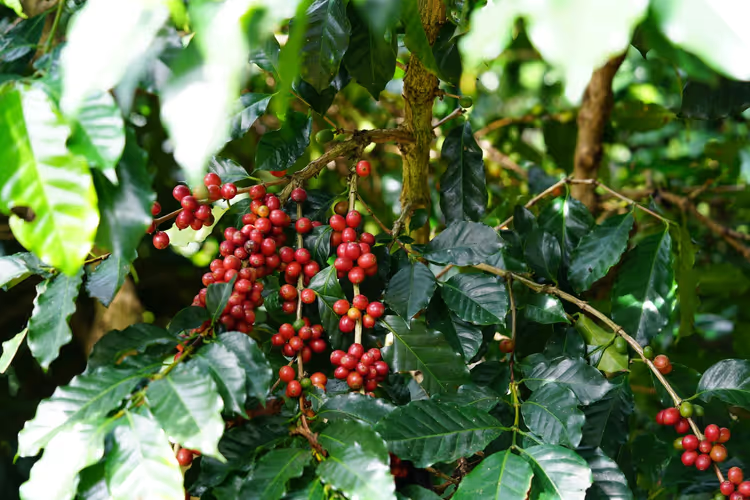
If you're curious about how Vietnamese coffee is grown, stop by a local farm. There are plenty of them around Dalat, and the coffee here tastes nothing like Brazilian or African varieties. Ask the owners about kopi luwak: a cup of this coffee gives you a sense of a rare variety. The processing method is unconventional, the beans pass through the digestive tract of Asian palm civets. It's worth trying, but a kilogram of beans will cost you a very large sum.
Winery
Grapes were first grown here by the French during the colonial period, and the conditions turned out to be suitable. The most famous Vietnamese brand is called Vang Dalat, but there are plenty of small producers around the city. A convenient option for a tasting is Fairytale Land park: they introduce you to local production and let you walk around the park, which is designed like a gnome village. Without a car, it's hard to visit several farms in one day.
 © Sandra Cohen-Rose and Colin Rose from Montreal, Canada · CC BY-SAPhoto: Sandra Cohen-Rose and Colin Rose from Montreal, Canada, CC BY-SA (https://creativecommons.org/licenses/by-sa/2.0), Wikimedia Commons
Silk factory
Vietnamese silk is known far beyond the country's borders. If you want to see the whole process, from cocoon to finished fabric, head to one of the factories near Dalat. On site, you can buy a couple of meters of fabric or a finished product. In the city, it's easier to join a group tour to the factory than to go on your own.
Tours and tickets in Da Lat
Guided tours, skip-the-line tickets and activities — most offers can be cancelled free of charge.
See offers on GetYourGuideThe widget loads once you give your consent.
⁉️🤔 Frequently asked questions
How many days do you need for Dalat?
One full day is enough for the city itself. Set aside two more days for the surrounding area and waterfalls, otherwise you'll be rushing around in circles and miss half the places. If you want to add coffee and wine farms, take a fourth day. It's best to come during the dry season.
When is the best time to visit Dalat?
The dry season here lasts from December to March, when there's less rain and clearer views. From May to October it rains, but the showers are usually short and come in the second half of the day. A flower festival takes place in December, so the city gets busier and more expensive. In winter it's cool in the mountains, so bring a warm jacket.
How do you get there from Nha Trang or Phan Thiet?
Intercity buses run from Nha Trang and Phan Thiet to Dalat, and the trip takes several hours along a winding mountain road. Buses depart in the morning and afternoon, and tickets are inexpensive. If flexibility matters to you, book a transfer or a car with a driver. You should only take your own motorbike if you have experience with mountain roads.
What should you see in Dalat in one day?
Start with the colonial quarter, then visit the Crazy House while there are still few people. After lunch, walk around Xuan Huong Lake and the flower garden, and finish at the central market. In the evening, it's easy to return to the lake or stop by the night market for food. That way you'll see the main sights without rushing.
How much does it cost to enter the waterfalls and the cable car?
Entrance to the waterfalls costs a symbolic amount, while the cable car will cost more. Exact prices change every season, so check them on site or online. Buy cable car and park tickets first thing in the morning to avoid lines. Check current prices and hours on the official pages of the attractions.
In short: what's worth booking
Dalat is a good fit for a relaxed two- to three-day trip. If you only have one day, stick to city sights: the Crazy House, the lake, and the market. If you have a car or motorbike, add Prenn and Pongour waterfalls. If you're traveling with family, start with the Valley of Love and the cable car. For accommodation in the center, it's convenient to look for hotels in Dalat on Trip.com.

A small editorial team writing guides for independent travel. We travel ourselves, but we haven’t been everywhere, so we check prices, opening hours and how to get there against official sources.