








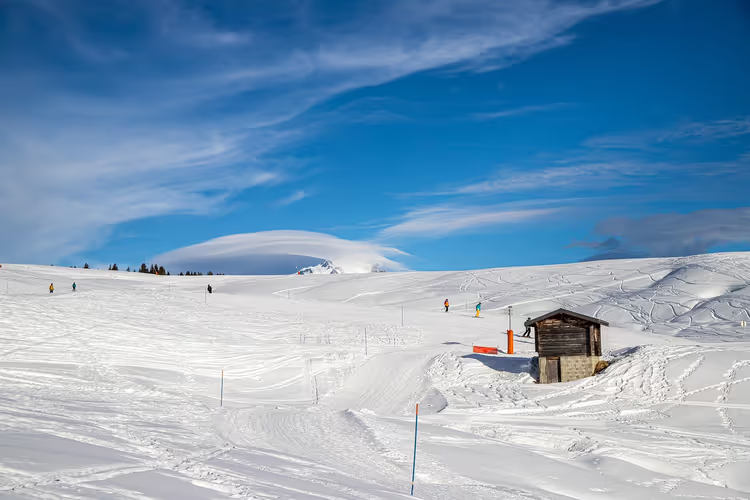
Ski areas in Germany: ten places with reliable snow
Skiing in Germany is unfairly underrated. Most major areas open in December, and from January the snow stays reliably until spring. We have put together ten ski areas across the country, with elevations, trail lengths, season dates, and ski pass prices.
The snow here does not depend on weather alone. Major areas invest in snow cannons and new lifts, so the season rarely falls through. You can reach many areas by train or car, with no flight or visa needed. Each area below includes a quick reference and a link to nearby hotels.
Ad: this article contains affiliate links, we earn a commission if you book through them, at no extra cost to you.
 AIIllustrative image: AI-generated
Ski areas in Germany: what you need to know
All areas on the list fall into two groups. The first is the low mountain ranges such as the Black Forest and Sauerland: not high, but close to major cities. The second is the Alps in southern Bavaria: higher, snowier, and noticeably more expensive. Beginners and families will find the low ranges easier, while long trails and reliable snow will take you to Bavaria.
💡 In short:
- The season in most areas runs from mid-December to April, and high-altitude areas in southern Bavaria stay open longer.
- Buy your ski pass online in advance: in some areas the price depends on the day of the week and how far ahead you book.
- For families, Sudelfeld, Oberstaufen, or Winterberg are good choices; for steep slopes, go for Garmisch Classic.
- Prices and season: as of 09/2026, verified on the official Skiliftkarussell Winterberg website.
Area | Region | What stands out | Who it suits |
|---|---|---|---|
Oberstaufen | Bavaria, Allgäu | several areas nearby, night skiing | families and beginners |
Winterberg | Sauerland | compact ski carousel and bobsled track | families and riders |
Feldberg | Black Forest | eight sub-areas under one ticket | those who like long trails |
Oberstdorf / Nebelhorn | Allgäu, Austrian border | high Nebelhorn and easy Söllereck | families and experienced skiers |
Zugspitze | Bavaria | glacier and the country's highest mountain | anyone who wants snow until May |
Garmisch Classic | Bavaria | three mountains and the Kandahar run | experienced skiers |
Fichtelberg | Saxony, Ore Mountains | the largest area in eastern Germany | families and snowboarders |
Fellhorn / Kanzelwand | Allgäu, Kleinwalsertal | freeride and fun park | freeriders and families |
Sudelfeld | Bavaria, near Munich | two children's areas and lessons | families and beginners |
Hindelang-Oberjoch | Bavaria, Allgäu | night skiing and the Allgäu-Tirol route | families and experienced skiers |
1. Oberstaufen, Bavaria
 © H.Helmlechner · CC BY-SAPhoto: H.Helmlechner, CC BY-SA (https://creativecommons.org/licenses/by-sa/4.0), Wikimedia Commons
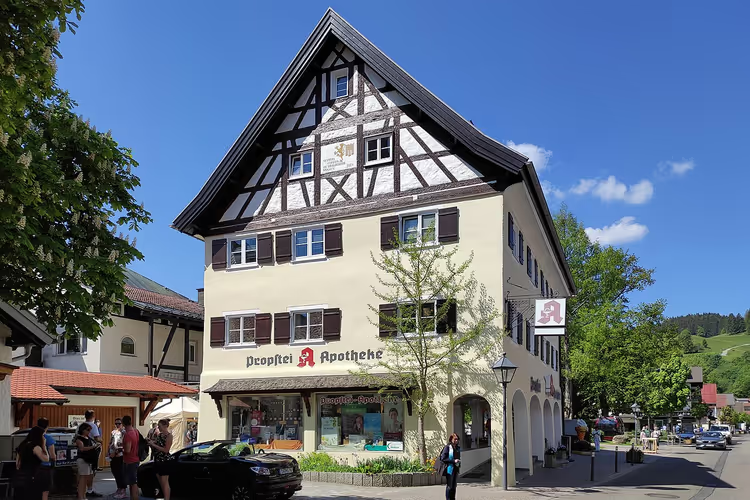
Oberstaufen sits in the Allgäu, about two hours from Munich. It is not a single mountain but a network of small areas connected by a ski bus. The slopes of Steibis-Imberg, Hündle-Thalkirchdorf, Sinswang, and Hochgratbahn lie at elevations from 860 to 1,708 meters, and all of them are covered by one ski pass (as of 09/2026, Oberstaufen tourist office).
Snowboarders come here for the fun park at Skiarena Steibis. Beginners and families will find Hündlebahn easier: in the evenings the floodlights come on and people ski under artificial light.
- How to get there: by train to Oberstaufen station, then a ski bus to the lifts (according to the Oberstaufen tourist office).
- Who it's for: families with children and skiers who want to get around without a car.
- Where to stay: hotels in Oberstaufen on Trip.com.
2. Winterberg, Sauerland
 © dronepicr · CC BYPhoto: dronepicr, CC BY (https://creativecommons.org/licenses/by/2.0), Wikimedia Commons
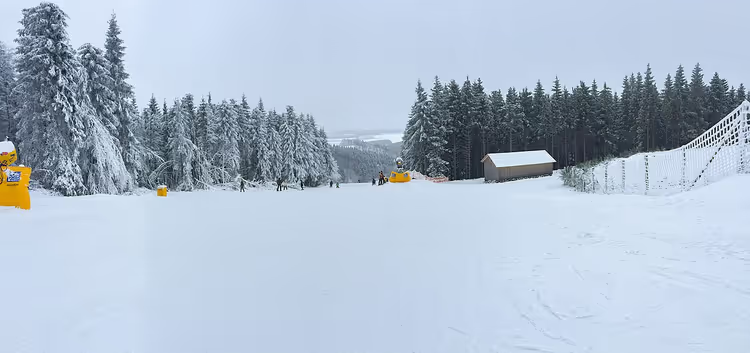
Winterberg in the Sauerland runs the Skiliftkarussell ski circuit. By area it is one of the most compact zones on the list, but the snow here is made with snow cannons and the slopes are kept in good shape all season. Day ski pass prices are dynamic: an adult ticket ranges from about 33 to 52 euros depending on the day of the week and how far in advance you book (as of 09/2026, official Skiliftkarussell website).
Winterberg is considered one of the most family-friendly zones in Germany. Those who do not ski can head to the bobsled track. Experienced riders find a steep slope for themselves near the St. Georg Schanze ski jump.
- How to get there: about two hours by car from Cologne and Dortmund; ski buses run between the zones in winter.
- Who it's for: families, snowboarders, and weekend skiers.
- Where to stay: hotels in Winterberg on Trip.com.
3. Feldberg, Black Forest
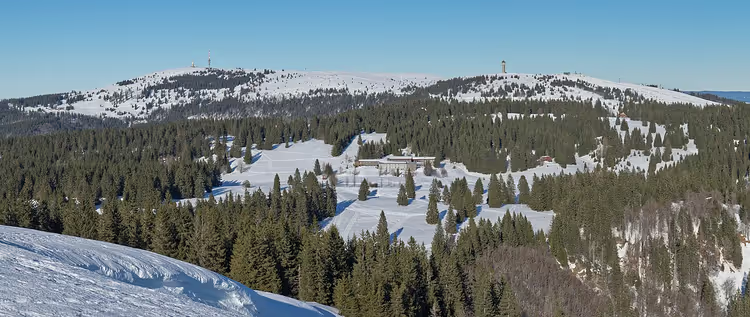 © Jörg Braukmann · CC BY-SAPhoto: Jörg Braukmann, CC BY-SA (https://creativecommons.org/licenses/by-sa/4.0), Wikimedia Commons
Liftverbund Feldberg combines several Black Forest zones into one linked area. Eight sub-zones are covered by a single ticket, and the main one is Feldberg itself. This is where the Hinterwaldabfahrt runs, the longest slope in the Black Forest: one long descent without changing lifts.
The family-friendly areas of Altglashütten and Muggenbrunn sit right next to Feldberg. Notschrei adds a toboggan run and cross-country ski routes through the forest. There is less snow in the Black Forest than in Bavaria, so some slopes are opened with the help of snow cannons.
- How to get there: just over half an hour by car from Freiburg, then a ski bus to the lifts.
- Who it's for: skiers who want long descents and panoramic views rather than high alpine terrain.
- Where to stay: hotels in Feldberg on Trip.com.
4. Oberstdorf and Nebelhorn, Bavaria
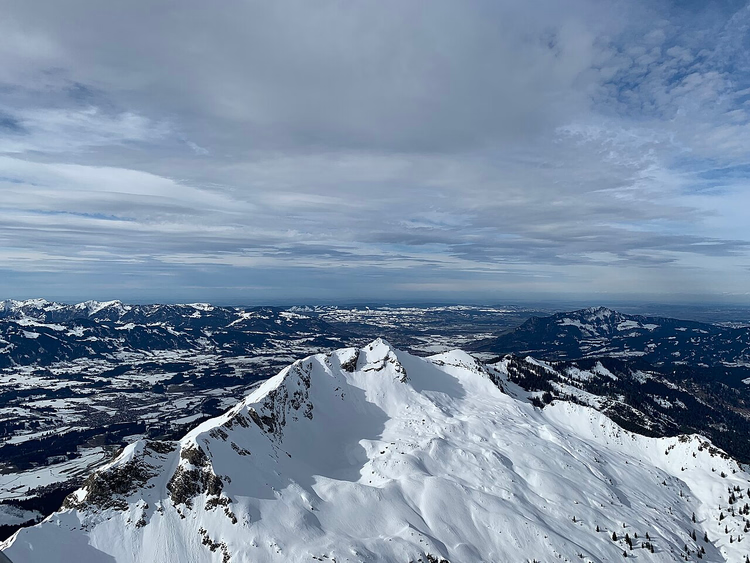 © M.Welp · CC BY-SAPhoto: M.Welp, CC BY-SA (https://creativecommons.org/licenses/by-sa/4.0), Wikimedia Commons
Oberstdorf sits on the border with Austria. The highest point here is Nebelhorn, which rises above two thousand meters. Germany's longest snow-covered valley run descends from it, so a day of skiing here starts with a long descent.
For families, the Söllereck side offers easy and intermediate slopes. Near the Seealpe station there is a three-kilometer toboggan run used by both skiers and beginners. For those getting on skis for the first time, the area offers ski schools and rentals.
- How to get there: by train to Oberstdorf, then a bus to the cable cars; direct trains run from Munich.
- Who it's for: families at Söllereck and experienced skiers at Nebelhorn.
- Where to stay: hotels in Oberstdorf on Trip.com.
5. Zugspitze, Bavaria
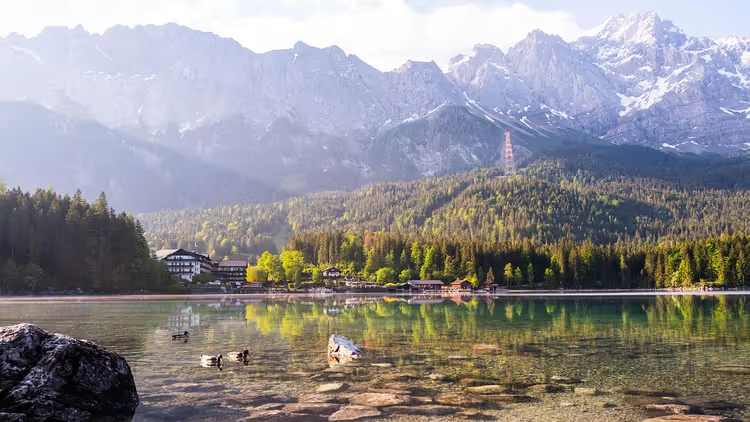
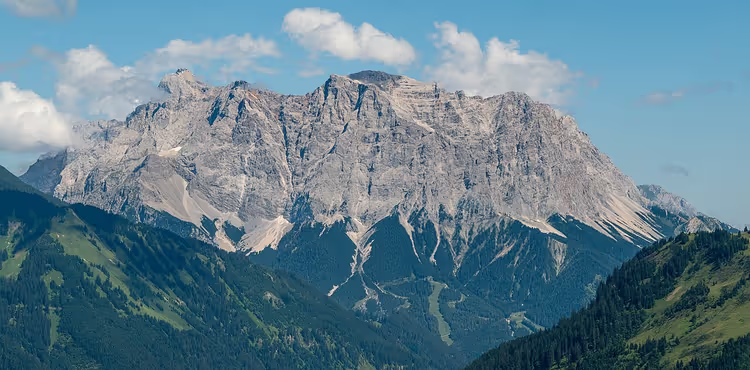 © Tuxyso · CC BY-SAPhoto: Tuxyso, CC BY-SA (https://creativecommons.org/licenses/by-sa/4.0), Wikimedia Commons
Zugspitze is Germany's highest mountain, 2,962 meters above sea level. The ski area's slopes reach up to 2,720 meters (as of 09/2026, official website). Skiing takes place on a glacier, so snow stays for almost half a year, and the twenty kilometers of slopes have enough room for both beginners and experienced skiers.
A separate reason to come here specifically is Iglu Dorf. A night in an igloo, the first morning run, and an open-air hot tub cost more than a regular hotel, but it's an experience you won't repeat. The igloo village is open from late December to early April.
- How to get there: from Garmisch-Partenkirchen on the Zugspitzbahn cog railway or by cable car (according to the operator).
- Who it's for: those who want to ski in May and not depend on a mild winter.
- Where to stay: hotels at the foot of the Zugspitze on Trip.com.
6. Garmisch Classic, Bavaria
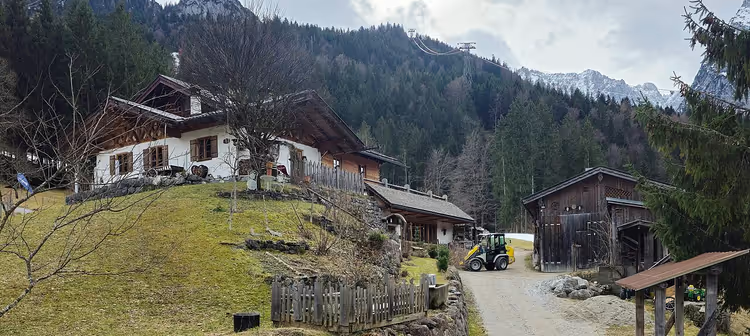 © Ricardalovesmonuments · CC BYPhoto: Ricardalovesmonuments, CC BY (https://creativecommons.org/licenses/by/4.0), Wikimedia Commons
Garmisch Classic combines three mountains: Hausberg, Kreuzeck, and Alpspitze. Together they offer almost forty kilometers of slopes covering all skill levels (as of 09/2026, operator Bayerische Zugspitzbahn).
The area's pride is the Kandahar-Abfahrt run. On certain sections the gradient reaches almost ninety percent, so the descent is suitable only for experienced skiers. There's also a separate slope where your run is filmed on video, and a fun park where riders practice tricks.
- How to get there: from Munich by train to Garmisch-Partenkirchen, then bus and cable car.
- Who it's for: confident skiers and athletes; beginners are better off starting on Hausberg.
- Where to stay: hotels in Garmisch-Partenkirchen on Trip.com.
7. Fichtelberg, Saxony
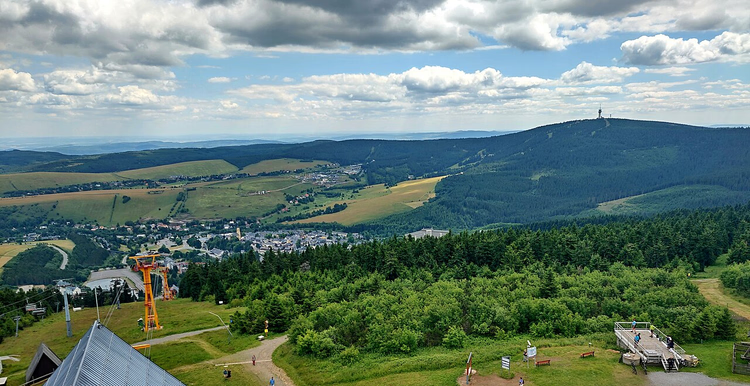 © Ladislav Boháč · CC BY-SAPhoto: Ladislav Boháč, CC BY-SA (https://creativecommons.org/licenses/by-sa/4.0), Wikimedia Commons
Fichtelberg in the Ore Mountains is considered the largest ski area in eastern Germany. Its ten slopes offer sixteen kilometers of runs (as of 09/2026, official website). The mountain rises above twelve hundred meters and gives you a view over the entire Erzgebirge.
Germany's oldest aerial cableway, the Schwebebahn, takes you to the top. Since 2018, the area has had a snow park where both kids and experienced riders train. Cross-country ski trails for flat skiing run alongside the slopes.
- How to get there: by train to Kurort Oberwiesenthal, the station is right at the bottom station of the cableway.
- Who it's for: families, snowboarders, and skiers coming from Dresden or Leipzig.
- Where to stay: hotels in Oberwiesenthal on Trip.com.
8. Fellhorn and Kanzelwand, Allgäu
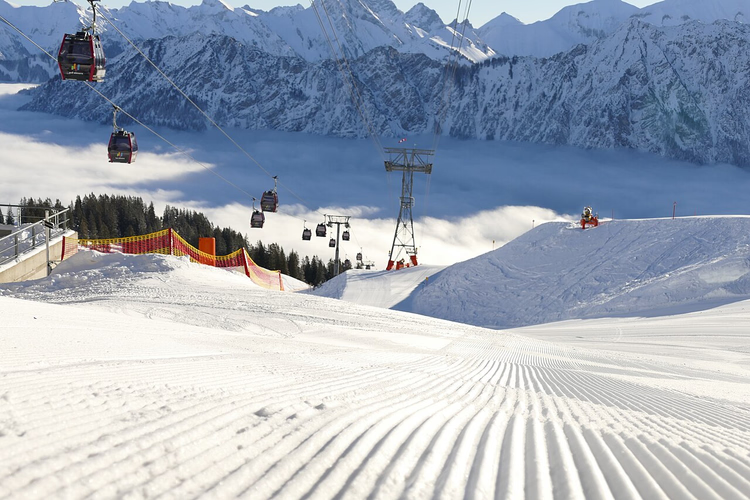 © OKBergbahnen · CC BY-SAPhoto: OKBergbahnen, CC BY-SA (https://creativecommons.org/licenses/by-sa/4.0), Wikimedia Commons
The Fellhorn and Kanzelwand pair sits by the Kleinwalsertal, on the very edge of the German Alps. The runs cross the border into Austria, so one ticket opens up slopes in two countries. In terms of difficulty, the area covers everything: from first turns to steep sections.
Freeriders will find off-piste descents here, and a fun park with Crystal Slope, Crystal Peak, and Crystal Ground sections is open for tricks. In a mild winter, snow on these slopes lasts longer than in the low mountain ranges in the north of the country.
- How to get there: from Oberstdorf by car in under half an hour, some skiers come by bus.
- Who it's for: freeriders, snowboarders, and families with older kids.
- Where to stay: hotels at the foot of Fellhorn on Trip.com.
9. Sudelfeld, Bavaria
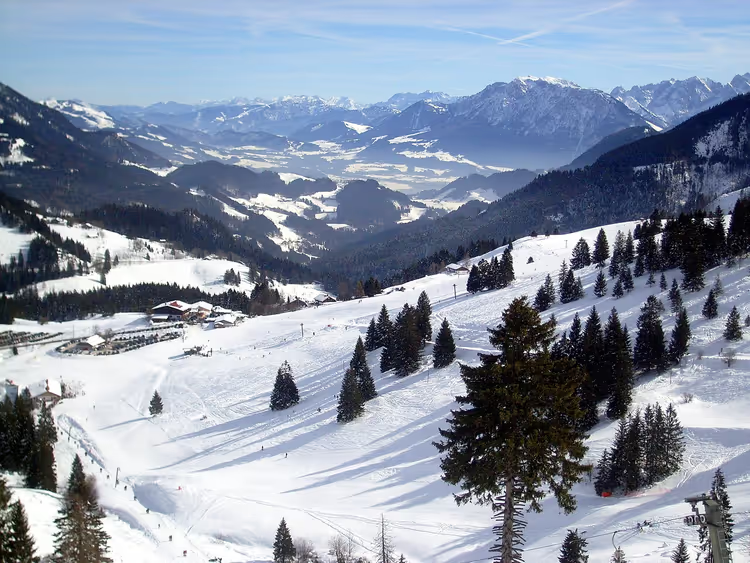 © LepoRello · CC BY-SAPhoto: LepoRello, CC BY-SA (https://creativecommons.org/licenses/by-sa/3.0), Wikimedia Commons
Sudelfeld lies about eighty kilometers from Munich, so it's easy to come here even for a single day (as of 09/2026, official website). Fourteen lifts serve thirty kilometers of runs, which is enough for both beginners and experienced skiers.
For kids, the area has two separate sections with a magic carpet, a tow lift, and a themed forest. Those who already ski confidently can take advanced courses. The season usually runs from mid-December to mid-April.
- How to get there: from Munich by car on the A8, about an hour; buses run from the station in Bayrischzell.
- Who it's for: families with kids and skiers who want courses to improve their level.
- Where to stay: hotels near Sudelfeld on Trip.com.
10. Hindelang-Oberjoch, Bavaria
The Bergbahnen Hindelang Oberjoch area in the Allgäu offers thirty kilometers of runs connected by tow lifts and chairlifts. There are blue, red, and black slopes here, so the skiing suits both beginners and experienced riders.
Night skiing takes place in the area every Thursday. The Allgäu-Tirol cross-country trail passes through Hindelang-Oberjoch: ninety kilometers of track for those who like flat routes. For families, this is one of the most convenient areas in the Allgäu.
- How to get there: from Kempten or Sonthofen by car, from Oberstdorf by ski bus.
- Who it's for: families with kids and skiers who want relaxed slopes and night skiing.
- Where to stay: hotels in Bad Hindelang on Trip.com.
Where snow lasts almost all winter
Snowfall in Germany is uneven, and by spring the difference between areas becomes noticeable. Here are the spots where snow cover usually lasts almost the entire season thanks to altitude and snow cannons:
- Nebelhorn: snow cover from mid-December to April.
- Hindelang-Oberjoch: from mid-December to April.
- Garmisch-Partenkirchen: from early December to late March.
- Zugspitze: from November to May.
If there isn't enough snow or you want to ski in summer, check out the Skihalle Bottrop indoor ski arena near Essen.
Other ski areas in Germany
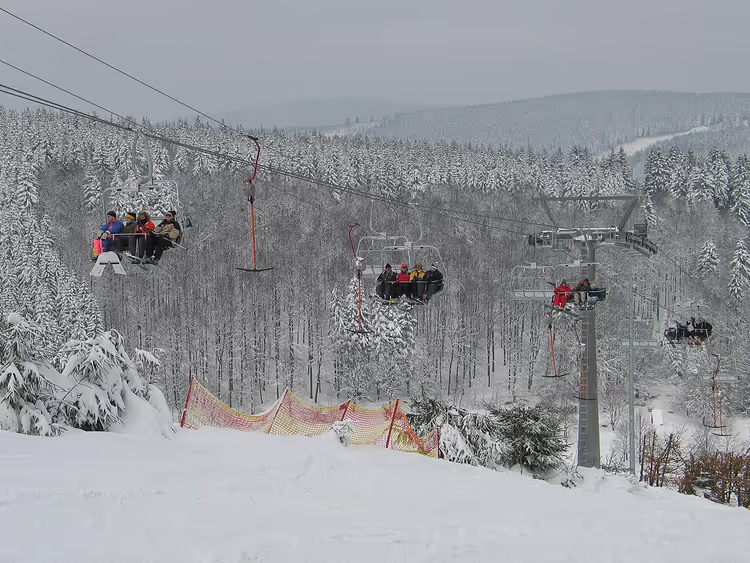 © Ixitixel · CC BY-SAPhoto: Ixitixel, CC BY-SA (https://creativecommons.org/licenses/by-sa/2.5), Wikimedia Commons
Besides the ten areas above, Germany has several more places worth a look. They are smaller in size, but cheaper and closer to a major city.
- Brauneck: the area in Lenggries is known not only for its slopes but also for its huts where you can grab a bite. The Bergbahn takes you straight from town up to easy and intermediate runs.
- Wurmberg: the highest mountain in Lower Saxony, almost a thousand meters. Besides classic runs, there is a cross-country trail, a toboggan run, and a freestyle section, and the longest cable car in northern Germany takes you to the top.
- Spitzingsee: an area for those who love off-piste snow. On Thursday and Friday evenings, the slopes are lit by floodlights.
- Riedbergerhorn: a small area in the Balderschwang valley with four lifts and good conditions from December to April.
- Berchtesgaden: this region of Upper Bavaria has several areas, including Götschen-Bischofswiesen and Obersalzberg.
- Winklmoosalm: a family area in Chiemgau with sixteen slopes and five lifts. The link with Austria's Steinplatte opens up even more runs and lifts.
⁉️🤔 Frequently asked questions
When does the ski season start in Germany?
The season in most areas starts in mid-December and ends in April. High-altitude areas in southern Bavaria open earlier, sometimes as early as November. Zugspitze and Nebelhorn hold snow longer than the rest. Check the exact dates on the website of your chosen area before you travel.
Where is the most reliable snow in Germany?
The most reliable is on the Zugspitze glacier, where snow stays for almost six months, and on the Nebelhorn. Hindelang-Oberjoch and Garmisch-Partenkirchen also hold cover well. All of them have invested in snow cannons, so they open runs even in a mild winter. If snow matters more to you than price and views, choose the high-altitude areas of southern Bavaria.
How much does a ski pass cost in Germany?
The price depends heavily on the area and the day of the week. In Winterberg, an adult day ticket varies roughly from 33 to 52 euros: the system is dynamic, and booking early is cheaper (as of 09/2026, Skiliftkarussell). In smaller areas, a day ticket usually costs less, and family rates are sold at the ticket office and online.
Can you ski in Germany with kids and without your own gear?
Yes. Almost every area on the list has schools and rentals. In Sudelfeld, there are two separate sections for children with a magic carpet and a themed forest. Rent gear at the lift, a helmet is included.
How do you get to the areas from Munich?
Sudelfeld is about eighty kilometers from Munich, direct trains run to Garmisch-Partenkirchen and Oberstdorf, and a ski bus takes you from there to the lifts. A car makes sense if you are heading to the Black Forest or the Sauerland.
In short: what to book
If you have a week of vacation, choose an area with a large linked network of runs. For a single weekend, Sudelfeld, Oberstaufen, or Winterberg are enough: they are easy to reach from Munich, Cologne, and Dortmund.
- If you are a family with small children: Sudelfeld or Oberstaufen.
- If you need snow until May: Zugspitze.
- If you want steep slopes: Garmisch Classic with the Kandahar run.
- If you are traveling without a car: Oberstdorf, Garmisch-Partenkirchen, or Oberstaufen.
Book ahead: find a hotel near your chosen area on Trip.com.

A small editorial team writing guides for independent travel. We travel ourselves, but we haven’t been everywhere, so we check prices, opening hours and how to get there against official sources.