
















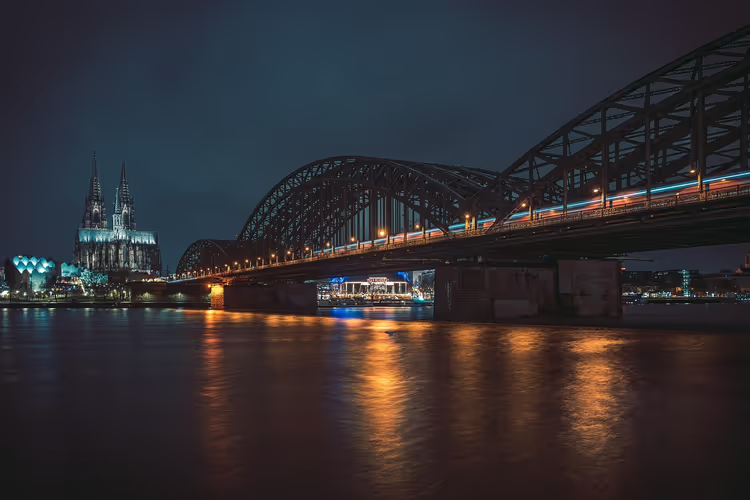
Bus tour of Germany: Berlin, Munich, Hamburg and the castles of Bavaria
You want to see all of Germany, but your vacation is short. A bus tour solves that problem: the route is planned for you, transfers and overnight stays are already included, and in each city you step off right at the sights.
A typical route is built around three hubs: Berlin, Munich with Bavaria, and Hamburg. From Munich you can reach King Ludwig II's castles in a single day.
Below we break down what each part of the route includes, when to go, and how to plan your budget without surprises.
Ad: this article contains affiliate links, we earn a commission if you book through them, at no extra cost to you.
What a bus tour of Germany includes
💡 In short:
- Bus tours of Germany run groups year-round; spring and fall are the most comfortable.
- Most programs build the route around Berlin, Munich with Bavaria, and Hamburg.
- Bavarian castles and Oktoberfest should be booked in advance, demand peaks on those dates.
- Tickets and castle prices: 09/2026, verified on the official website
A bus tour of Germany almost always touches neighboring countries. Operators pair Germany with the Czech Republic, Austria, or the Benelux countries, because distances in central Europe are short and borders are open.
Here are the routes that repeat year after year.
Route | Days | What it covers |
|---|---|---|
Berlin, Munich, Bavarian castles, Hamburg | 7 | Three German cities and Ludwig II's castles |
Berlin, Hamburg, Belgium, Netherlands, Luxembourg, Munich | 14 | German cities plus Benelux |
Berlin, Hamburg, Munich, Austria | 14 | German cities plus neighboring Austria |
What's usually included in the package: bus transportation with a guide, hotel overnight stays along the route, and breakfasts. Museum tickets and some lunches are paid separately; check the package details with your operator.
Seasonality is simple. Groups run year-round, but spring and fall offer comfortable weather without summer heat and without winter transfers through snow.
A fly-and-tour trip through Germany differs from a bus tour in one way: you don't spend half a day on transfers between cities. But the bus is cheaper and covers more stops in the same week. A small group is more convenient for families with children and for groups of friends, because the schedule is more flexible.
With your own car, book hotels and city tours separately and build the route yourself.
Berlin tours, Berlin sightseeing
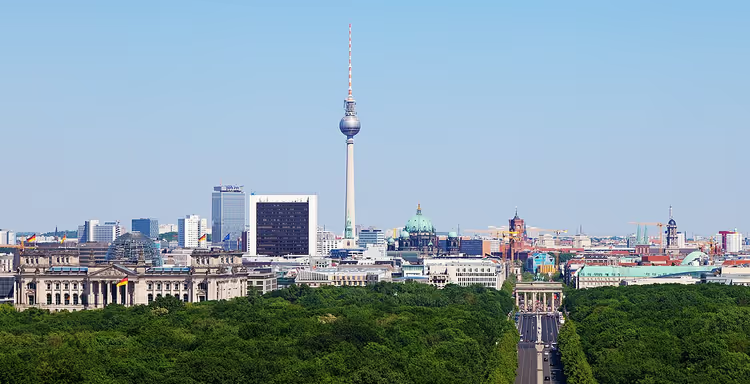
Berlin opens almost every tour of Germany. It's a capital with a dense center: museums, theaters, and traces of all of 20th-century German history are concentrated within a couple of subway stops.
Start with the Brandenburg Gate and the Reichstag, they stand next to each other on the same square. The Reichstag dome is open to visitors free of charge, but entry is only by advance reservation through the Bundestag website.
 © Thomas Wolf , www.foto-tw.de · CC BY-SAPhoto: Thomas Wolf , www.foto-tw.de, CC BY-SA (https://creativecommons.org/licenses/by-sa/3.0), Wikimedia Commons
An important note about museums. The Pergamon Museum is closed for major renovation and will not reopen its halls before June 4, 2027 (as of 09/2026, Staatliche Museen zu Berlin). Don't put it on your 2026 itinerary.
The rest of the program is available. The Hamburger Bahnhof contemporary art museum occupies a former train station building, the Jewish Museum and the DDR Museum focus on specific themes, and most of the collections on Museum Island are open.
The Berlin Wall is a whole separate layer. Fragments and memorials along the former border show how the city lived divided, and seeing them takes half a day.
The catch: some museums are closed for renovation, so plan your visit around the new schedule.
Next, food and shopping. Friedrichstraße and Alexanderplatz are a dense restaurant and shopping hub, and subway lines converge there as well. The S-Bahn ring line connects the city's main stations, so you can get around freely without a car.
It's also convenient with children: Berlin has zoos, Legoland Discovery Centre, and an amusement park, and you can take a boat ride along the Spree.
If you want to stay in the capital for a few nights, you can book a hotel in Berlin on Trip.com in advance.
Tours to Munich, excursions in Bavaria
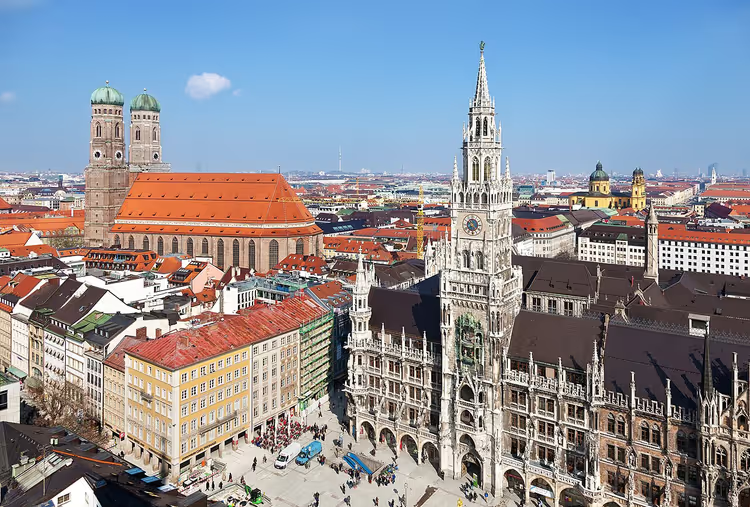
Munich is the capital of Bavaria and the main hub in southern Germany. Cathedrals with tall bell towers and old buildings with stucco make the center feel bright and stately.
 © Thomas Wolf , www.foto-tw.de · CC BY-SAPhoto: Thomas Wolf , www.foto-tw.de, CC BY-SA (https://creativecommons.org/licenses/by-sa/3.0/de/deed.en), Wikimedia Commons
The main date of the year is Oktoberfest. In 2026, the festival runs for 16 days, from September 19 to October 4 (as of 09/2026, official website). This is the city's 191st festival, and tourists from all over the world come for these dates, so book your tour in advance.
Ludwig II's castles
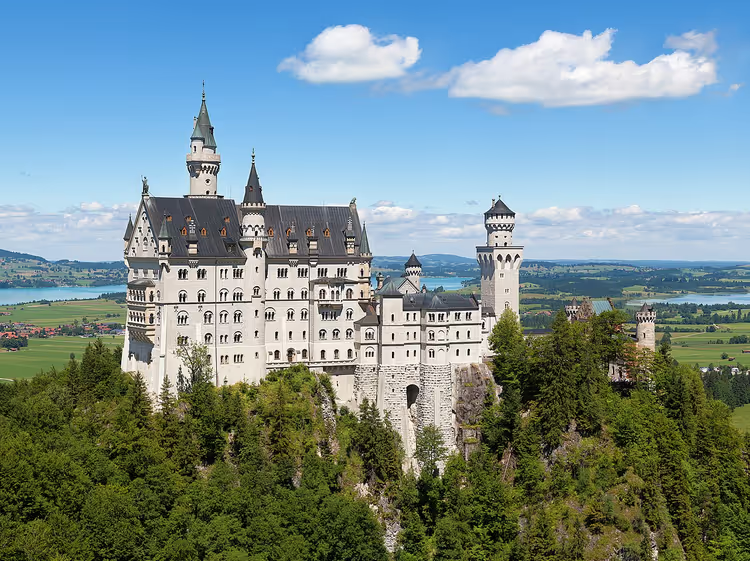
For romantics, the main thing in Bavaria is the three castles of King Ludwig II: Neuschwanstein, Linderhof, and Herrenchiemsee. They are located in the south of the state.
 © Thomas Wolf , www.foto-tw.de · CC BY-SAPhoto: Thomas Wolf , www.foto-tw.de, CC BY-SA (https://creativecommons.org/licenses/by-sa/3.0/de/deed.en), Wikimedia Commons
Nearby stands Hohenschwangau, built by Ludwig II's father. The future king spent his childhood years here. Neuschwanstein looks like a theatrical set, its decoration mixes Moorish style, Gothic, and Baroque. Linderhof is surrounded by a park with a grotto and an artificial lake.
A ticket to Neuschwanstein costs €21 for adults, children under 18 enter free, plus a €2.50 booking fee (as of 09/2026, official website).
The catch: tickets to the castles sell out quickly, so in high season buy them on the website in advance.
Munich is often combined with other Bavarian cities. The route includes Nuremberg with its medieval center and Würzburg with Baroque architecture and wines.
If you want to see the castles with a guide and without arranging your own transportation, tours to Bavaria's castles on GetYourGuide cover both travel and tickets.
Tour to Hamburg
Hamburg is a port and the country's second-largest city. In the historic center you'll find the City Hall, Cremon and Deichstraße streets, St. Catherine's Church, and the neo-Gothic St. Nicholas' Church.
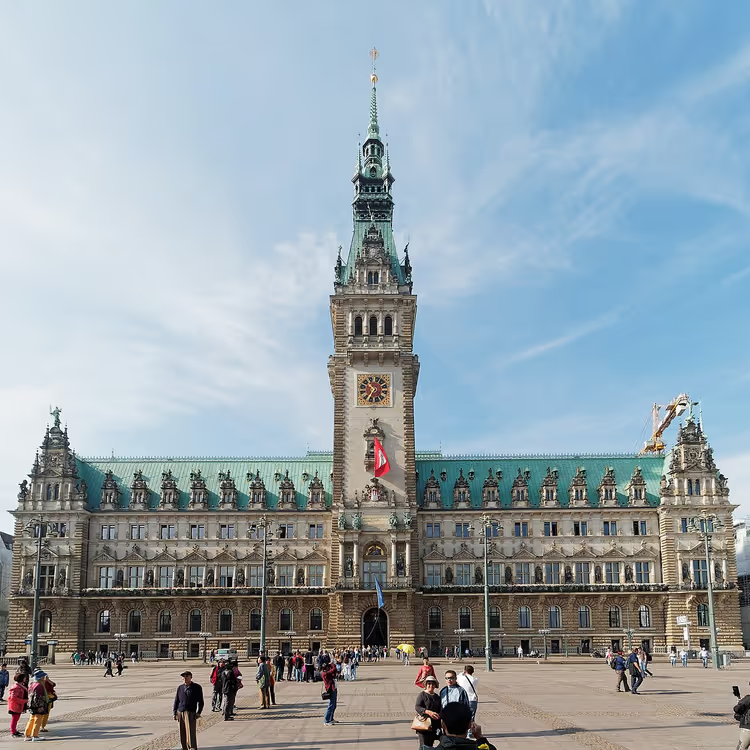 © Arnoldius · CC BY-SAPhoto: Arnoldius, CC BY-SA (https://creativecommons.org/licenses/by-sa/4.0), Wikimedia Commons
Next to the old town lies Speicherstadt, a district of warehouses on the water. Nearby stands Chilehaus, a building shaped like an ocean liner and an example of German expressionism.
Hamburg is called the city of bridges and parks. A huge number of bridges connect the banks of the Elbe, and the city has more than 120 parks. Around 60 museums serve art lovers, the most famous being the Hamburger Kunsthalle with a collection spanning the 15th to 20th centuries.
In the evening, you'll be drawn to Reeperbahn, the nightlife street in the Sankt Pauli district that locals call the "mile of sin." During the day, you can stroll along the waterfront and watch the port.
During maritime festivals, hotels get booked up quickly, so find a hotel in Hamburg as soon as you've settled on your dates.
Tours and tickets in Berlin
Guided tours, skip-the-line tickets and activities — most offers can be cancelled free of charge.
See offers on GetYourGuideThe widget loads once you give your consent.
⁉️🤔 Frequently asked questions
How many cities does a bus tour of Germany cover?
A typical itinerary includes Berlin, Munich with Bavaria, and Hamburg, and some programs add neighboring countries. In a week you can cover three German cities and a group of castles; in two weeks the route expands to Benelux or Austria.
When is the best time to go to Germany?
The best time to travel is spring and fall, when the weather is mild. If your goal is Oktoberfest, plan your trip for late September and book the tour in advance.
How much does a ticket to Neuschwanstein cost?
An adult ticket costs 21 €, children and students under 18 enter free, plus a 2.50 € booking fee (as of 09/2026). In high season, buy your ticket online, otherwise you risk not getting inside on your day.
Is the Pergamon Museum in Berlin open?
No. After renovations, the halls will not open before June 4, 2027 (as of 09/2026). In 2026, choose Hamburger Bahnhof, the Jewish Museum, the DDR Museum, or the collections on Museum Island.
How is a bus tour different from a fly-in tour?
On a bus tour you travel between cities with the group, but it is cheaper and covers more places in the same week. A fly-in tour saves time on transfers, but requires separate ground transportation and a bigger budget for tickets.
Can you travel around Germany in your own car?
Yes. In that case you book hotels and city tours yourself, and build the route to suit you. Parking in central Berlin and Munich is paid, so it is more convenient to choose a hotel near a metro or commuter rail station.
In short: what is worth booking
Three German cities are genuinely doable in one trip if you put the route together in advance. Pick based on your scenario:
- If you have a week: go with Berlin, Munich, and the castles of Bavaria.
- If you are traveling for the atmosphere: plan Munich for late September, for Oktoberfest.
- If you are traveling with kids: add Berlin with its zoos and a boat trip on the Spree.
- If you like port cities: set aside a day for Hamburg with the Kunsthalle and Speicherstadt.
If you want this kind of route with a guide and transfers, you can find a Germany tour on GetYourGuide in advance.

A small editorial team writing guides for independent travel. We travel ourselves, but we haven’t been everywhere, so we check prices, opening hours and how to get there against official sources.