















Feria de Abril in Seville: 2026 dates, casetas and how to get to the festival
Every April, Seville stops being an ordinary city for a week. During these days, the streets fill with riders, and locals come out in flamenco dresses.
The problem is that most casetas are closed to outsiders. These are private clubs, families, and companies where entry is by invitation only. Many tourists arrive and end up standing at the door. Below, we break down how the festival works, where everyone is welcome, and how to plan your trip.
Ad: this article contains affiliate links, we earn a commission if you book through them, at no extra cost to you.
What is Feria de Abril
💡 In short:
- The Feria lasts almost a week in late April, and entry to the grounds is free.
- The festival takes over the Los Remedios district, with more than a thousand casetas on 15 streets inside (according to the 2026 caseta list).
- Private casetas are invitation-only, while public ones are open to everyone.
- Dates and program are verified against the 2026 Feria program (as of 09/2026).
Feria de Abril is the main festival of Seville and all of Andalusia. Once a year, the city turns into a fairground town for a week, with its own streets, pavilions, and live music. In scale, the event is compared to a Spanish Oktoberfest, except sherry flows here instead of beer.
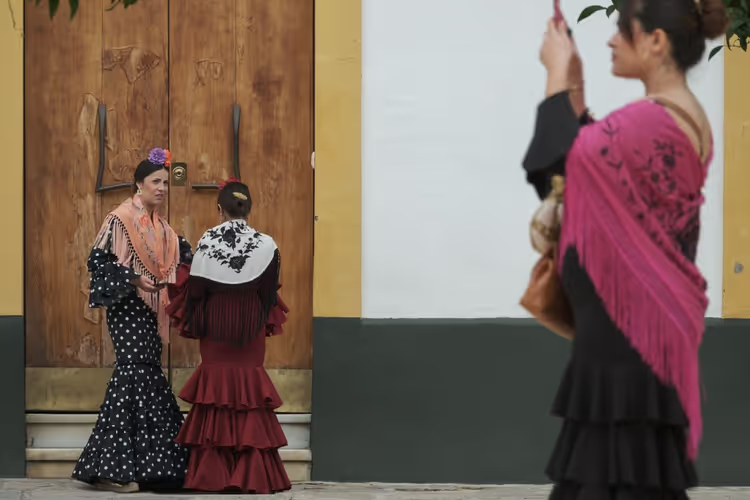
The main visual code of the festival is clear right away. Women wear flamenco dresses with ruffles, men choose formal suits, and riders and carriages move through the streets. Dresses are made to order, and an outfit here easily signals a family's wealth.
The Feria grounds lie in the Los Remedios district, on the left bank of the Guadalquivir. Inside, there are casetas, rides, and dozens of food stalls. If it's your first time, stick to the central streets, where it's easier to get your bearings.
How the Feria began: from livestock fair to casetas
The Feria started as an ordinary livestock fair. In the mid-19th century, traders came here for horses and cattle, and in the evening they dined in tents. Gradually, the trading rows turned into casetas, and deals gave way to dancing.
 © Chabe01 · CC BY-SAPhoto: Chabe01, CC BY-SA (https://creativecommons.org/licenses/by-sa/4.0), Wikimedia Commons
The memory of those years lives on in the details. Riders in traditional festive peasant costumes and carriages with families are a constant sight on the grounds. This is not a show for tourists but part of the tradition: horses and carriages were the fair's main transport.
The format kept shifting toward celebration. Today, the Feria officially lasts less than a week, although setup and cleanup take far more time. The first day is given to the opening, and the last is devoted to a farewell with fireworks.
Casetas: why you can't get in without an invitation
Every year, an entire city of casetas rises on the grounds. These are temporary pavilions the size of a small house, with a bar, kitchen, tables, and a music area. Most of them are closed because they belong to families, clubs, and companies.
You can only get into a private caseta by invitation. It's usually a chain of acquaintances that stretches back years. Being on the list for at least one caseta matters here, and that is the social side of the festival.
For visitors, the rule is simple: don't expect to walk through the first door you see, you won't be let in. Look for public casetas or come with local friends, and your evening will happen inside rather than at the entrance.
What to drink and eat: tapas, jamón, and rebujito
The festival starts in the afternoon and doesn't stop until morning. From lunchtime on, casetas serve tapas: Iberian jamón, Spanish potato omelette, seafood. Portions are small, so you'll try a lot over the course of an evening.
The main drink of the Feria is called rebujito. A mix of sweet sherry, lemonade, and ice is consumed here by the liter. The cocktail is deceptive: it masks the alcohol, and the strength doesn't hit right away. If you plan to dance until morning, pace yourself and don't forget water.
Nearby, there's a rides area: along Calle del Infierno stand dozens of carousels, shooting galleries, and churro stands. Families with children spend more time here than in the closed pavilions.
Alumbrao: how the Feria lights up
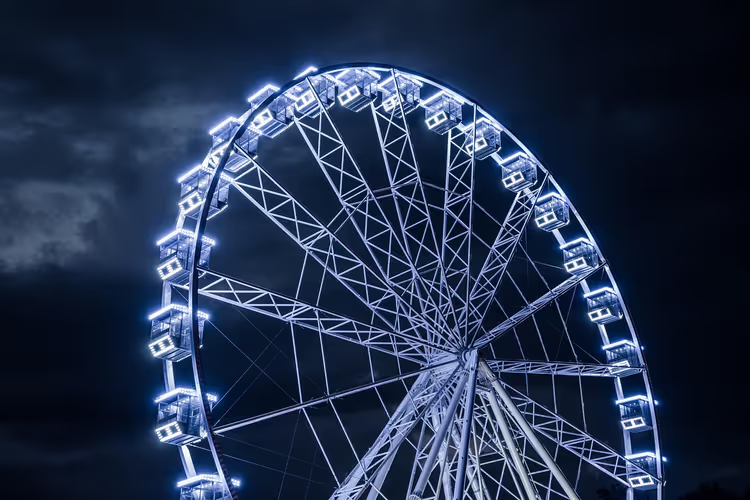
The official start is given by the alumbrao, the lighting ceremony. It takes place at midnight from Monday to Tuesday: in 2026, from April 20 to 21 (alumbrao schedule). The 2026 Feria itself runs from April 21 to 26. At the signal, tens of thousands of bulbs light up across the grounds at once.
The main element of this scene is the huge entrance gate, the portada. Every year it is built anew from a new design, and it is the main symbol of the festival. People arrange to meet at the portada and start their walk through the casetas.
After the alumbrao, the sevillanas begin. This is a flamenco variant with open partner dances: couples form a circle, and onlookers clap to the rhythm. The dance is learned in advance, so joining the circle spontaneously is hard.
The first evening sets the tone for the whole week, so if you want to see the Feria in full light and with its first guests, come by midnight rather than the next day.
Public casetas, bullfighting, and fireworks
Closed pavilions are not the only option, though. According to the caseta overview for 2026, there are 17 public casetas open to everyone. These are pavilions run by city districts, unions, and community organizations.
Even without a flamenco dress, you'll blend in. Large earrings or a carnation in your hair are enough. A full costume is appropriate but not required, and wearing it all day is heavy.
The program also includes bullfighting. At Plaza de Toros de la Maestranza, fights run from April 11 to 26, 2026 (realmaestranza.com). If you want to see the city and understand the context of the festival, book Seville tours on GetYourGuide in advance.
The Feria ends with fireworks. They go off on the night into Monday, after the casetas have closed. Thousands of people stay on the riverbank to see the festival off.
How to get there and where to stay
Real de la Feria is located in the Los Remedios district. You can get there by metro to Plaza de Cuba and Parque de los Príncipes stations, by bus, or by taxi. During the Feria, the center is closed to traffic, and access routes change. Allow more time for the journey than the map shows.
With luggage, it's more convenient to book a transfer in advance. The driver will meet you in the arrivals hall and take you to your hotel, so you won't have to look for a car after your flight.
Tours and tickets in Seville
Guided tours, skip-the-line tickets and activities — most offers can be cancelled free of charge.
See offers on KiwitaxiThe widget loads once you give your consent.
Accommodation for the Feria week gets booked up quickly, and prices are higher than usual during these days. You should book several months in advance, especially if you want to stay within walking distance of Real de la Feria. You can compare options and check prices on Trip.com.
⁉️🤔 Frequently asked questions
Do I need to buy a ticket for Feria de Abril?
No, entry to the grounds is free, and you don't need to buy tickets. You'll only pay for food, drinks, and rides inside. Tickets are sold separately for bullfighting at Plaza de Toros de la Maestranza and for concerts. If someone offers you a "Feria ticket," it's usually a paid tour or a seat at a table in a private caseta.
When does Feria de Abril take place in 2026?
The Feria takes place in late April and lasts six days. The exact dates and alumbrao time are listed in the alumbrao section. Plan your trip with some buffer.
Can I get into a private caseta?
Only by invitation from the hosts. Casetas belong to families, clubs, and companies, and getting in through someone else's list doesn't work. The easiest way is to go with local friends or simply choose public casetas, which welcome everyone without an invitation.
How much does a trip to the Feria cost?
There are no tickets, so the main expenses are accommodation, food, and transport. Hotels during the festival week cost noticeably more than usual, and nobody will sell you a table in a private caseta.
What should I wear if I don't have a flamenco dress?
A full costume is not required. Women often add large earrings or a carnation in their hair, and men wear a shirt and jacket. The main thing is comfortable shoes: you'll spend several hours on your feet in the casetas and on the fairground.
In short: what to book
If you have one evening, spend it on the alumbrao. That's where you'll find the lights, music, and the festival's first guests. If you're traveling with family, head to the rides and public casetas during the day, and return to the main square in the evening. Fans of tradition should get bullfighting tickets in advance.
Accommodation matters more than it seems. A hotel within walking distance of Real de la Feria saves you the trip every night, and a pre-booked airport transfer takes care of the luggage question on your very first day. Check hotels in Seville on Trip.com.

A small editorial team writing guides for independent travel. We travel ourselves, but we haven’t been everywhere, so we check prices, opening hours and how to get there against official sources.