
















Egypt: 13 attractions with prices 2026
Egypt preserves monuments from several eras at once. In a single trip you can see the pyramids of the pharaohs, rock-cut tombs, early Christian temples, and the reefs of the Red Sea.
The challenge is logistics. The sites are scattered from the Nile Delta to Nubia, and transfers eat into your vacation days. We have put together 13 sites that give you a full picture of the country and organized them by region.
Below you will find a quick cheat sheet, prices for 2026, and practical tips for each place.
Ad: this article contains affiliate links, we earn a commission if you book through them, at no extra cost to you.
What to see in Egypt: a quick cheat sheet
💡 In short:
- Egypt's main sites are concentrated in Cairo and Giza, Luxor, Alexandria, and Nubia. Natural attractions await you in Sinai and the White Desert.
- Buy tickets for the main sites in advance: the ticket office and lines eat up time.
- In one day you can cover Giza or Luxor, but not the whole country at once.
- Prices: 09/2026, verified on the Egyptian Ministry of Tourism website.
1. The pyramids of Giza near Cairo
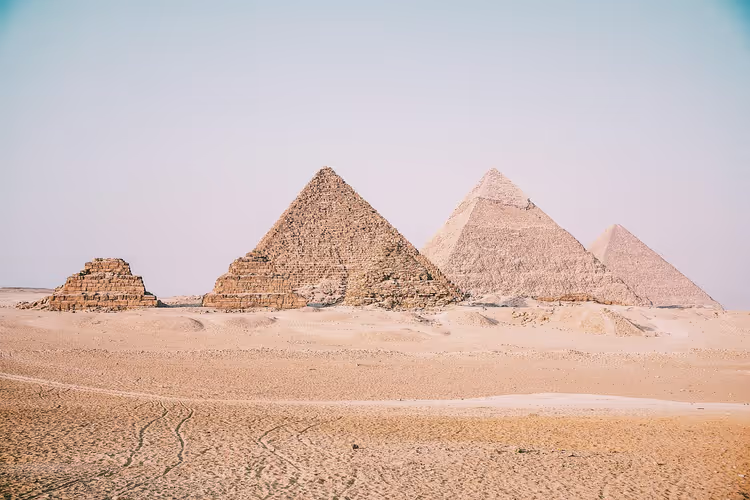
The Pyramids of Giza remain the only surviving wonder of the ancient world. Three large pyramids stand on the plateau: Khufu, Khafre, and Menkaure, with the smaller tombs of the pharaohs' wives and the Sphinx statue nearby (complex description).
The complex is open-air, so arrive right at opening time. During the day the heat intensifies, and there is almost no shade on the plateau. In 2026 tickets are sold by card; cash is not accepted at the entrance.
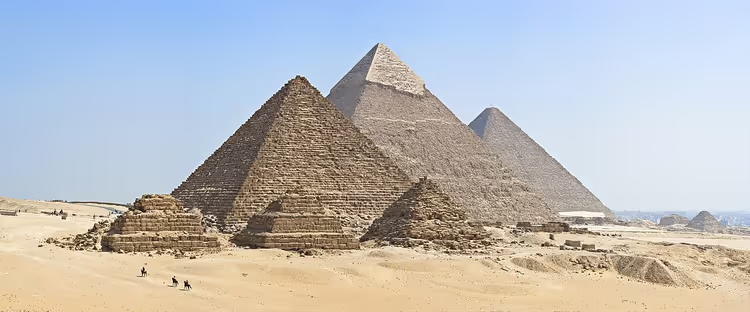 © KennyOMG · CC BY-SAPhoto: KennyOMG, CC BY-SA (https://creativecommons.org/licenses/by-sa/4.0), Wikimedia Commons
- How to get there: 8 km from central Giza, about 30 minutes from Cairo by taxi (by card).
- Cost: plateau entry 540-700 EGP, entry inside the Pyramid of Khufu is paid separately (as of 09/2026, price overview for 2026).
2. Valley of the Kings in Luxor
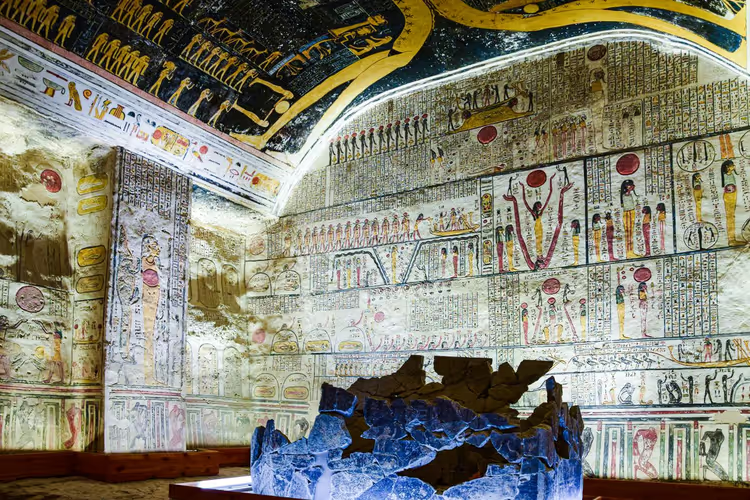
The Valley of the Kings lies on the west bank of the Nile opposite Luxor. Pharaohs were buried here for five centuries; 64 tombs have been found in the valley so far, and excavations continue (history of the necropolis).
The tomb of Tutankhamun brought the site worldwide fame. It was discovered in 1922, and inside they found gold, jewelry, chariots, and the pharaoh's tableware. Visit the tombs in the morning while the air is still cool.
- How to get there: taxi or minibus from the west bank, ferry across the Nile from Luxor.
- Cost: a combined ticket for three tombs is about 450 EGP; Tutankhamun and Seti I are paid separately (as of 09/2026, price summary for Luxor).
3. Colossi of Memnon near Luxor
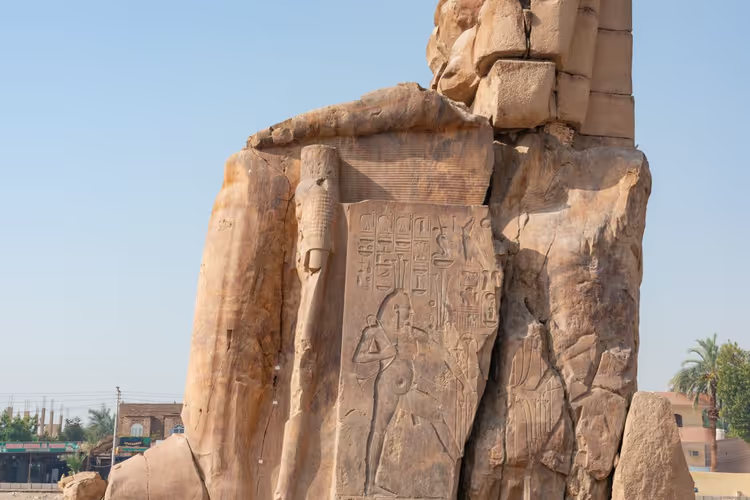
Two statues by the road to the Valley of the Kings remain from the mortuary temple of Amenhotep III. The colossi depict the pharaoh himself, not Memnon, as the Greeks decided (Colossi of Memnon).
The figures sit with their hands on their knees, statues of his wife and mother are carved at their feet, and the Nile god Hapi appears on the side panels. A visit takes 15 to 20 minutes, and no separate ticket is required.
- Getting there: on the way to the Valley of the Kings and the Temple of Hatshepsut, the stop is part of the standard route.
- When to visit: in the morning, along with other West Bank sites.
4. Luxor Temple in the city center
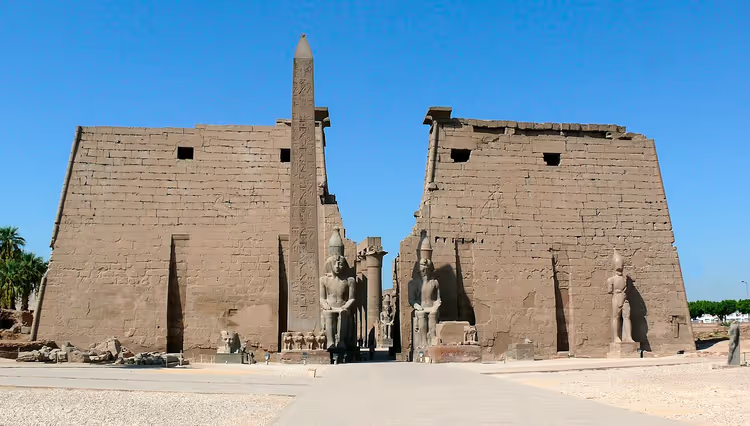
Luxor Temple was built in the 14th century BC under Pharaoh Amenhotep III. The complex was dedicated to the god Amun-Ra, his wife Mut, and their son Khonsu (Luxor Temple).
The building stretches 260 meters, and the towers at the entrance rise 20 meters. Statues of Ramesses II stand at the entrance, and the courtyard contains a 25-meter pink granite obelisk and 14 columns.
 © Ad Meskens · CC BY-SAPhoto: Ad Meskens, CC BY-SA (https://creativecommons.org/licenses/by-sa/3.0), Wikimedia Commons
- Cost: entry around 250 EGP (as of 09/2026, Luxor Temple price list).
- Tip: come in the evening, when the lights come on and the heat subsides.
5. Abu al-Abbas Mosque in Alexandria
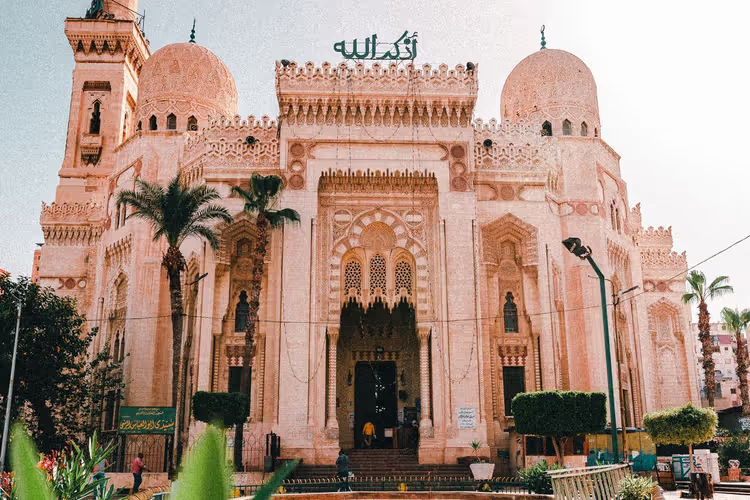
The Abu al-Abbas Mosque is dedicated to the Sufi saint Abul Abbas al-Mursi (Abu al-Abbas Mosque). The current mosque building was constructed in the 1940s. The saint moved to the city from Spain and spent the last years of his life here.
The snow-white building with fine carvings and tall minarets stands in the Anfushi district, right by the waterfront. The building is an active mosque, so please respect the rules for visitors.
- Getting there: Anfushi district, near the eastern harbor waterfront.
- When to visit: outside prayer times, so as not to disturb worshippers.
6. Citadel of Qaitbay on the sea
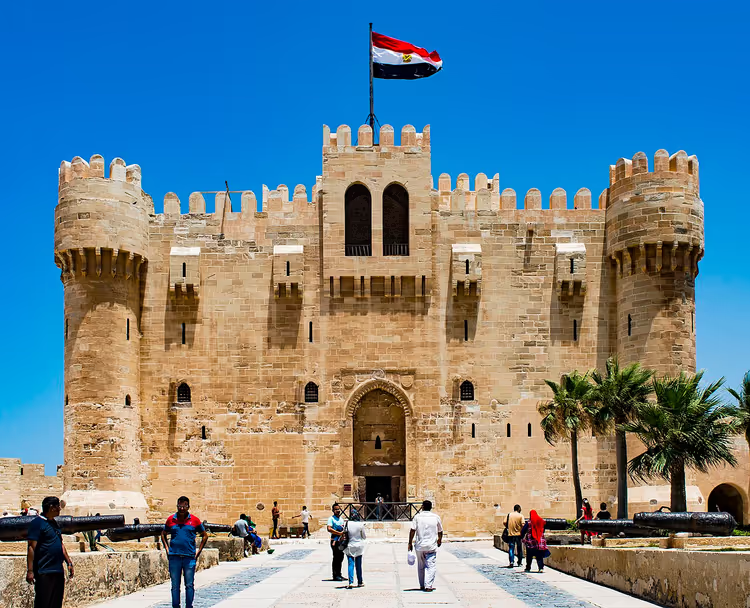
The Citadel of Qaitbay was founded in 1477 by the Mamluk Sultan Qaitbay. It was built on the site of the Lighthouse of Alexandria, one of the Seven Wonders of the Ancient World, and its ruins were used as building material (Citadel of Qaitbay).
Today the Alexandria Maritime Museum operates within the walls, and the fortress walls offer a view of the Mediterranean Sea. A visit takes about an hour.
 © Ahnaf Saber · CC BYPhoto: Ahnaf Saber, CC BY (https://creativecommons.org/licenses/by/3.0), Wikimedia Commons
- Getting there: eastern edge of Alexandria's bay, about 20 minutes from the center (on the map).
- Tip: photograph the fortress from the water during a walk along the waterfront.
7. The hanging church in Cairo
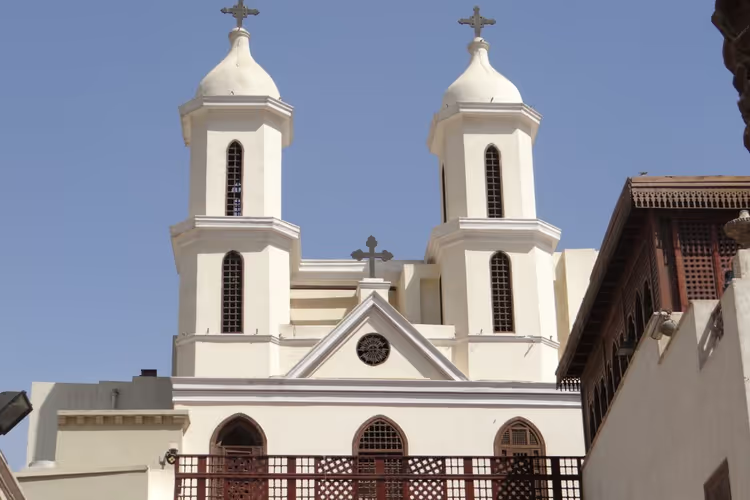
The Hanging Church is considered one of the oldest Christian churches in Egypt. It was built on a bastion of a Roman fort, so the building seems to hover over the street (The Hanging Church).
Inside there is an iconostasis made of Lebanese cedar with ivory inlay. The church houses about 100 icons, and the oldest ones date back to the 8th century.
- How to get there: the Coptic Cairo district, next to the Church of St. George.
- Tip: check out the neighboring churches in the quarter too, admission to them is free.
8. The rock temples of Abu Simbel
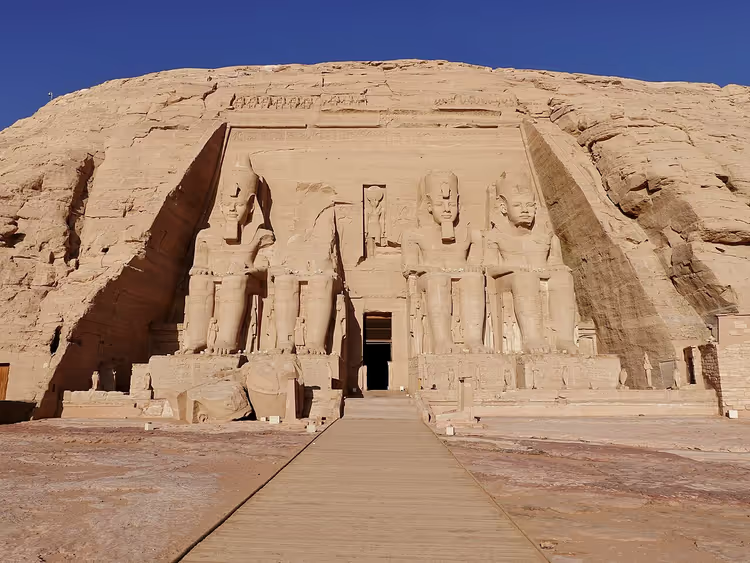
Two ancient temples are carved into the rock of Abu Simbel. The Great Temple was built in honor of Ramesses II and dedicated to the gods Amun, Ra-Horakhty, and Ptah, while the Small Temple was erected for Queen Nefertari and the goddess Hathor (Abu Simbel temples).
Twice a year, on February 22 and October 22, a sunbeam passes through the 65-meter corridor and illuminates the statues of the gods. The facade of the Great Temple is decorated with four colossi about 20 meters tall.
- How to get there: from Aswan, usually early in the morning as part of a convoy of vehicles.
- Cost: admission is paid, check the exact amount at the ticket office (ticket summary).
9. Mount Sinai and the monastery at its foot
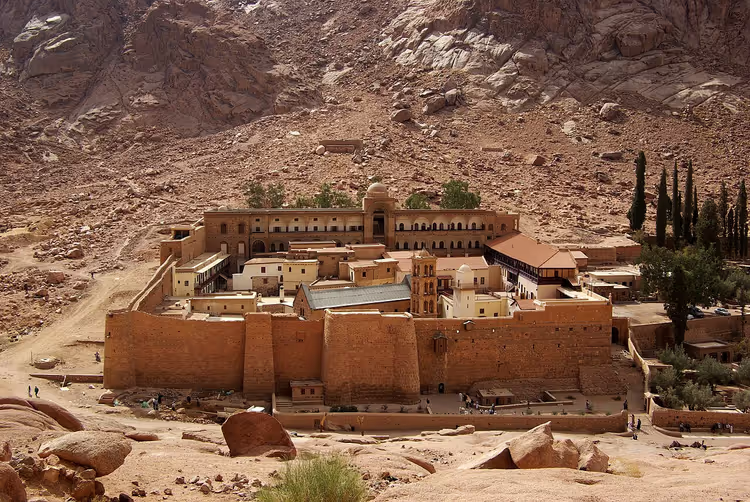
Mount Sinai is mentioned in the Bible. According to tradition, God appeared to Moses on the summit and gave him the Ten Commandments (Mount Sinai). The mountain is 2,285 meters high, and people climb it at night to catch the sunrise.
 © Berthold Werner · CC BY-SAPhoto: Berthold Werner, CC BY-SA (https://creativecommons.org/licenses/by-sa/3.0), Wikimedia Commons
At the foot of the mountain stands St. Catherine's Monastery, founded in the 6th century. Inside there are 12 chapels, a garden, and a large library of manuscripts, and the altar rises above the roots of the burning bush.
- How to get there: from Sharm El Sheikh by night transfer to the trailhead.
- Tip: set out at night to catch the sunrise at the summit and avoid hiking in the heat.
10. Ras Mohammed National Park
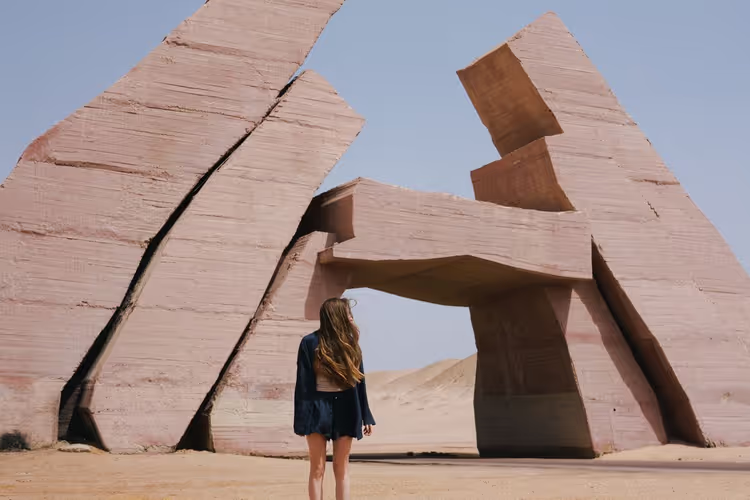
Ras Mohammed is considered Egypt's first national park and lies in the south of the Sinai Peninsula (Ras Mohammed National Park). It covers 480 square kilometers, most of which is marine area.
The park has two bodies of water with unusual properties. The Lake of Wishes is partly freshwater, and the Salt Lake is twice as salty as the sea. Near the southern beaches you'll see coral reefs, turtles, and rare fish.
- Getting there: about 20 km from Sharm El Sheikh (on the map), usually with a tour or by taxi.
- Cost: park entry is paid, tickets are purchased at the entrance.
11. Karnak Temple in Luxor
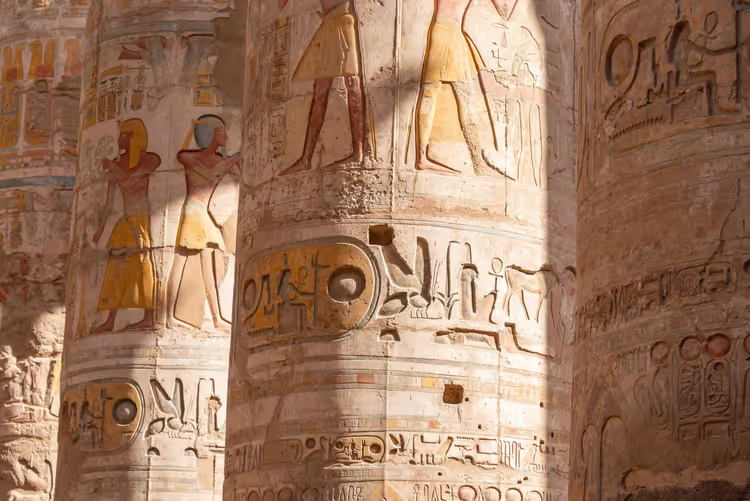
Karnak Temple is considered the largest temple complex of Ancient Egypt and the main sanctuary of the New Kingdom (Karnak). It includes 33 structures, built over 13 centuries.
At the entrance stretches an avenue of ram-headed sphinxes, then you enter a hypostyle hall with 134 columns. The complex is divided into three sections: one for Amun-Ra, one for his wife Mut, and one for their son Khonsu.
- Cost: entry around 300 EGP (as of 09/2026, Karnak ticket prices).
- Tip: set aside a separate morning for Karnak; together with Luxor Temple it takes a full day.
12. Colored Canyon near Nuweiba
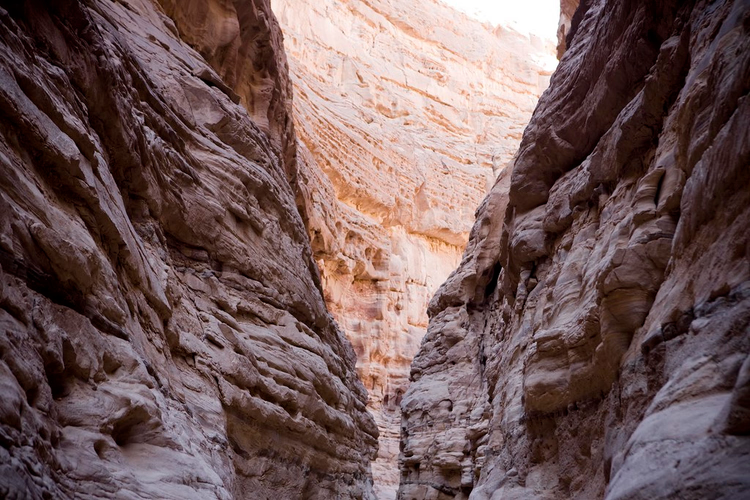
The Colored Canyon near Nuweiba runs as a gorge of rocks with uneven shades of red, purple, yellow, and pink (Colored Canyon). The trail through the gorge stretches about 1 kilometer, and the walls reach up to 30 meters high.
You walk through the narrow passage on foot, and in places you have to move sideways. The best time for a walk here is early morning.
 © Hossam el-Hamalawy حسام الحملاوي · CC BY-SAPhoto: Hossam el-Hamalawy حسام الحملاوي, CC BY-SA (https://creativecommons.org/licenses/by-sa/2.0/), Flickr
- How to get there: from Nuweiba with an organized jeep tour.
- Tip: bring water and closed-toe shoes, the rocks are slippery on the climb.
13. White desert near Farafra oasis
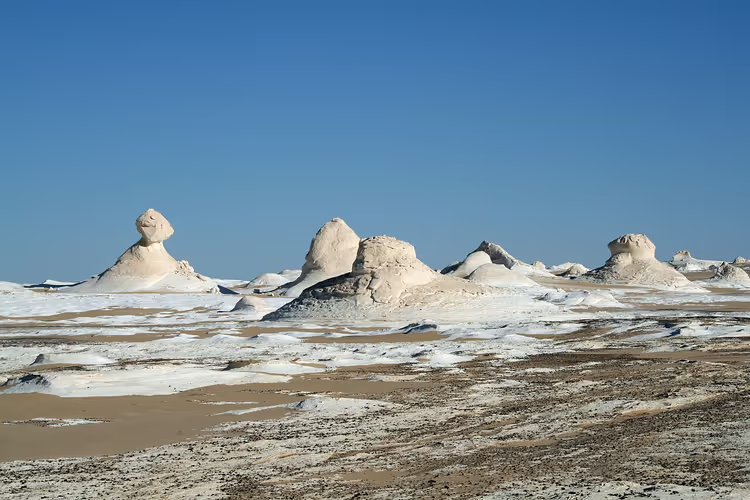
The White Desert occupies a small patch of the Sahara north of Farafra Oasis (White Desert). The regular sand here is mixed with snow-white chalk particles.
Thousands of years ago this area was the ocean floor. The wind has carved chalk figures up to 12 meters tall.
- How to get there: from Farafra Oasis, usually with an overnight stay in tents.
- Tip: bring something warm, it gets cold in the desert at night even in summer.
Tours and tickets in Egypt
Guided tours, skip-the-line tickets and activities — most offers can be cancelled free of charge.
See offers on TiqetsThe widget loads once you give your consent.
⁉️🤔 Frequently asked questions
Can you see the Giza pyramids and Luxor in one trip?
Yes, but you will have to split the trip into stages. Giza is near Cairo, while Luxor lies further south, about 650 km between them (on the map). The easiest approach is to fly into Cairo, see the plateau and the Sphinx, then take a separate flight or train to Luxor and focus on the Valley of the Kings and Karnak.
When is the best time to go to Egypt to avoid the heat?
October through April is the most comfortable. During these months, daytime at the Giza plateau and in the Valley of the Kings is tolerable, and night climbs up Mount Sinai pass without exhausting heat. In summer, temperatures are high in all regions, so plan your trip around the sea and Ras Mohammed Park.
Which sites should you book in advance?
Book tickets for the Valley of the Kings, Karnak Temple, and Luxor Temple in advance, and add Abu Simbel during peak season. Without a booking, you lose an hour or more in line. Tours to the White Desert and the Colored Canyon are also better to order before the trip.
What should you bring to the desert and Mount Sinai?
Bring water, a hat, closed-toe shoes, and a warm jacket. At the Giza plateau and in the White Desert it is hot during the day, while at night in the desert and on the summit of Sinai it is cold even in summer.
Is the route suitable for traveling with children?
Yes, if you split it by region and do not rush. Children usually enjoy the Giza pyramids, the Colossi of Memnon, and the coral reefs of Ras Mohammed. The night climb up Mount Sinai and the long drives to Abu Simbel are better postponed until the teenage years.
In short: what to book
If you are going to Egypt for the first time, start with the Giza pyramids and the Sphinx. If you want pharaonic history, plan for Luxor, the Valley of the Kings, and Karnak. For the sea and reefs, head to Ras Mohammed Park near Sharm El Sheikh. A quieter Cairo with Christian heritage opens up in the Coptic Quarter and at the Hanging Church.

A small editorial team writing guides for independent travel. We travel ourselves, but we haven’t been everywhere, so we check prices, opening hours and how to get there against official sources.