
















The Globe Theatre in London: how the auditorium works and how to get to a performance
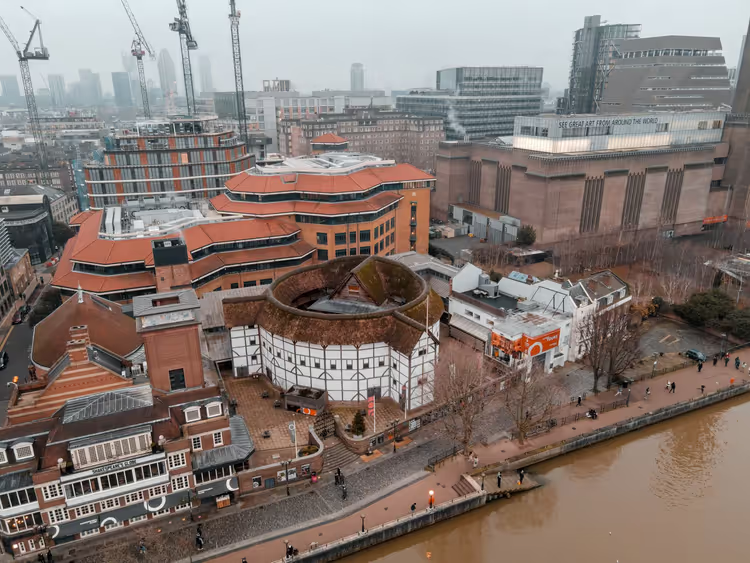
The first Globe Theatre burned down more than four centuries ago, but it is being performed in again. Today a working replica stands on the south bank of the Thames: an open-air stage under a thatched roof and a museum of the Shakespearean era in one place.
The building stands in the Bankside neighborhood, near the Millennium Bridge. Below is the history of the theater, the layout of the auditorium, and practical information: hours, address, directions, and tickets.
Ad: this article contains affiliate links, we earn a commission if you book through them, at no extra cost to you.
Two theaters and a museum at Bankside
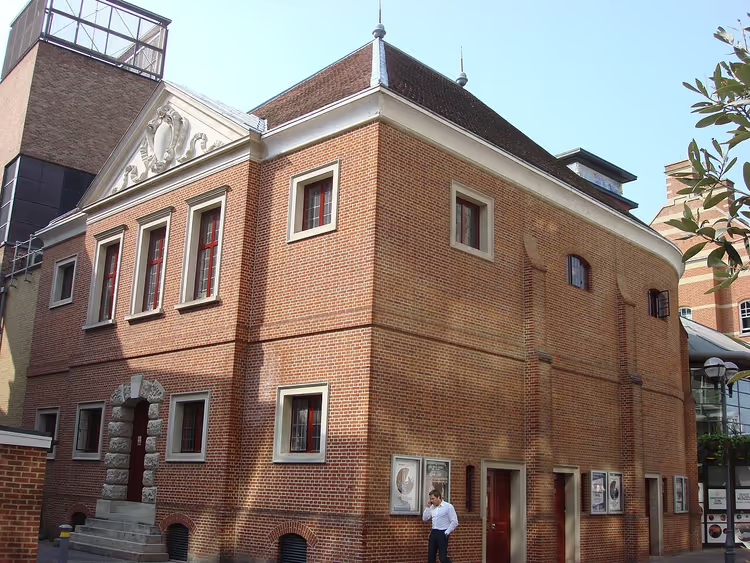
Two performance spaces operate on the site. These are the open-air Globe and the indoor Sam Wanamaker Playhouse for the cold season. Nearby there is an exhibition, a cafe, a shop, and the Swan bar and restaurant (as of the visit page, 09/2026).
 © Oxyman · CC BYPhoto: Oxyman, CC BY (https://creativecommons.org/licenses/by/2.5), Wikimedia Commons
The Globe tours have twice won the London For Groups Award, in 2024 and 2026.
💡 In short:
- Prices and opening hours: 09/2026, verified on the official website.
- Two performance spaces operate on the site: the open-air Globe and the indoor Sam Wanamaker Playhouse for the cold season.
- The theater stands in the Bankside neighborhood, near the Millennium Bridge.
The first Globe of Shakespeare's time
 © Colin Smith · CC BY-SAPhoto: Colin Smith, CC BY-SA (https://creativecommons.org/licenses/by-sa/2.0), Wikimedia Commons
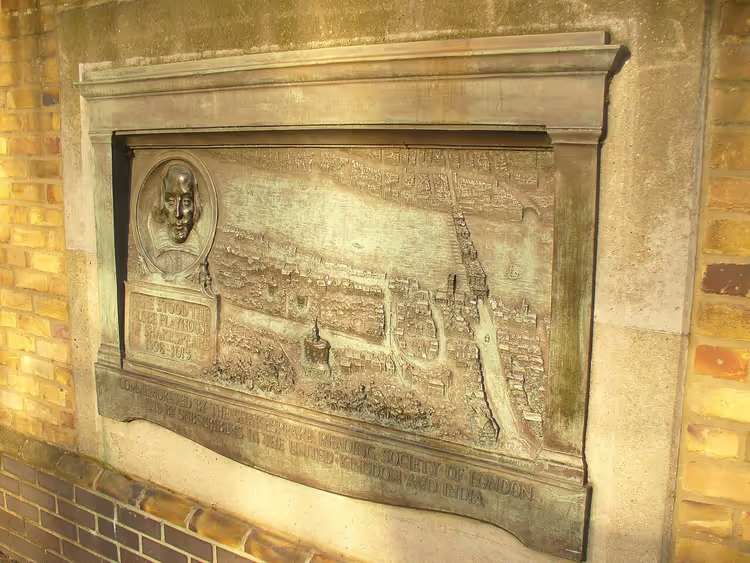
The first Globe opened in 1599 (as of the official website, 09/2026). It was assembled from the timber frame of the old theater belonging to the Burbage acting family. That theater had stood in the London district of Shoreditch since 1576 and closed in 1597 because the land lease had become too expensive.
The company dismantled the building beam by beam and transported the timbers across the river. In the suburb on the south bank, land was cheaper. That is how the Globe rose in its new location. It was owned by six shareholders from the core of the company, with the Burbage brothers investing the most. Shakespeare, as the author of the plays, also had a share, but a smaller one than the brothers.
The theater lasted only 14 years. In June 1613, at the premiere of Henry VIII, a stage cannon misfired (as of the theater's website, 09/2026). A spark landed on the thatched roof. The building caught fire and burned down in about two hours. No one was hurt.
The second Globe and the excavations
The very next year the theater was rebuilt. This time it was constructed of stone, and the roof was covered with tiles. Shakespeare had left the company by then, but his plays continued to be staged. The second Globe operated until 1642.
That year Cromwell's government closed the theaters of England. The Puritans rejected the stage and considered it a breeding ground for immorality. All the country's theaters closed, including the Globe. Two years later the building was demolished, and cheap lodging houses were put up in its place. The site of the old theater was considered lost.
In 1989 archaeologists found the remains of the foundation (as of the theater's website, 09/2026). The configuration was compared with archival descriptions, and they realized: this was the Globe. It turned out the building was not round but a twenty-sided polygon. Further excavation was not permitted: the foundation lies under the Anchor Terrace listed building, and digging there is prohibited. Only the outlines were marked on the site.
What the building was like in Shakespeare's time
 © Matt Brown · CC BYPhoto: Matt Brown, CC BY (https://creativecommons.org/licenses/by/2.0), Wikimedia Commons
There is no exact record of what the Globe looked like. Its appearance was reconstructed from documents, drawings of the similar Swan Theatre, remains of the foundation, and city views of London. From the outside, the building was a twenty-sided polygon. The auditorium was oval, measuring 29.6 by 31.1 m, with wooden walls. A thatched roof covered the upper seats and the stage.
The center of the auditorium was open to the sky. For that reason, performances took place only in warm weather, from May to September, and only during the day. There were no intermissions, scenery was almost never used, and instead signs reading "Forest" and "Garden" were put up. After a trumpet signal, the audience took their seats, payment was collected, and the performance began. All roles were played by men, including female roles.
Audience seating
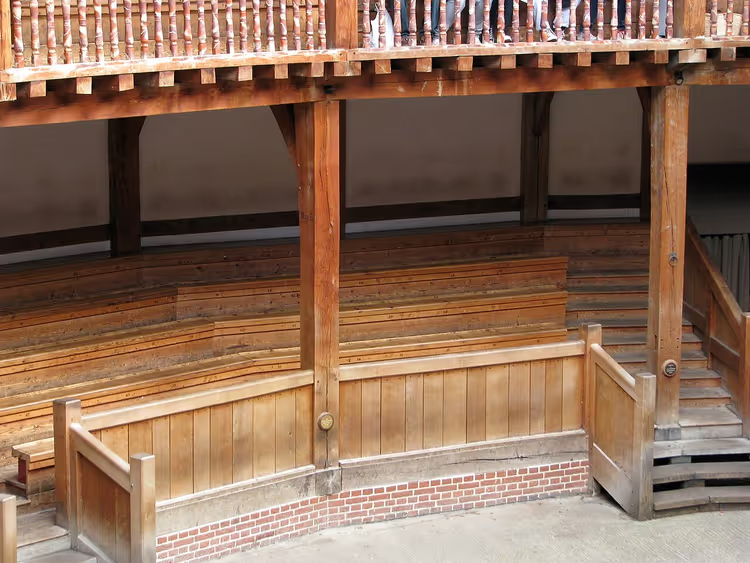 © McKay Savage from London, UK · CC BYPhoto: McKay Savage from London, UK, CC BY (https://creativecommons.org/licenses/by/2.0), Wikimedia Commons
By various estimates, the auditorium held between 1,200 and 3,000 spectators. People sat on wooden benches around the perimeter of the wall. The benches were arranged in three tiers and surrounded the stage on three sides. The lower tier was at stage level, where the nobility sat. The second and third tiers were occupied by wealthy townspeople. A few seats for special guests were placed to the side, on the stage itself.
The price depended on the prestige of the seat, with seats on the stage costing the most. The poor bought a ticket for one penny and watched the performance standing, from the "pit" around the stage. There were about 700 such places. The audience behaved freely: they shouted, talked among themselves, ate nuts and oranges, and threw scraps on the ground.
Backstage and musicians' area
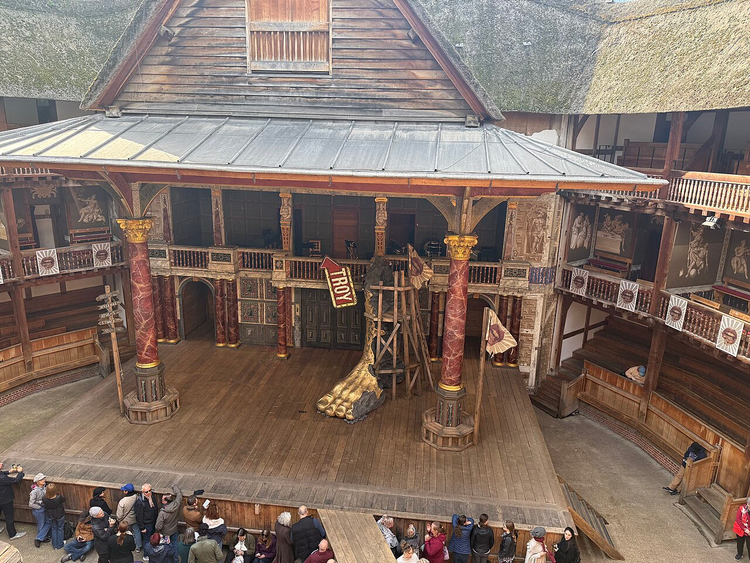 © Ian Hughes · CC BYPhoto: Ian Hughes, CC BY (https://creativecommons.org/licenses/by/4.0), Wikimedia Commons
The stage, 13 m wide and 8 m deep, projected into the auditorium as a rectangle. There was no curtain. The stage floor was raised about 1.2 to 1.5 m above the ground. The space around it was called the "pit." Under the stage, behind curtains, props were stored and brought up through a trapdoor. Through the same trapdoor, sinners fell into the "underworld" during the action, and ghosts, devils, and witches emerged from it.
At the rear of the stage there were three doors, behind which the actors changed. Above the back of the stage there was a gallery. In performances it served as a castle wall or a balcony. Juliet, the ghost of Hamlet's father, and heralds appeared there. Sometimes musicians sat on the upper gallery. The lute, drum, and flute were played here.
Above the balcony stood a small hut with two windows. Actors delivered monologues from them. A flag was raised on the roof of the hut. By its color, residents knew what was being performed: black meant tragedy, white comedy, red a history play. The stage was covered by a thatched roof called "the heavens," supported by two columns. Its underside was painted with signs of the zodiac. Through a trapdoor in it, angels, gods, and spirits were lowered on ropes.
How the Globe was rebuilt
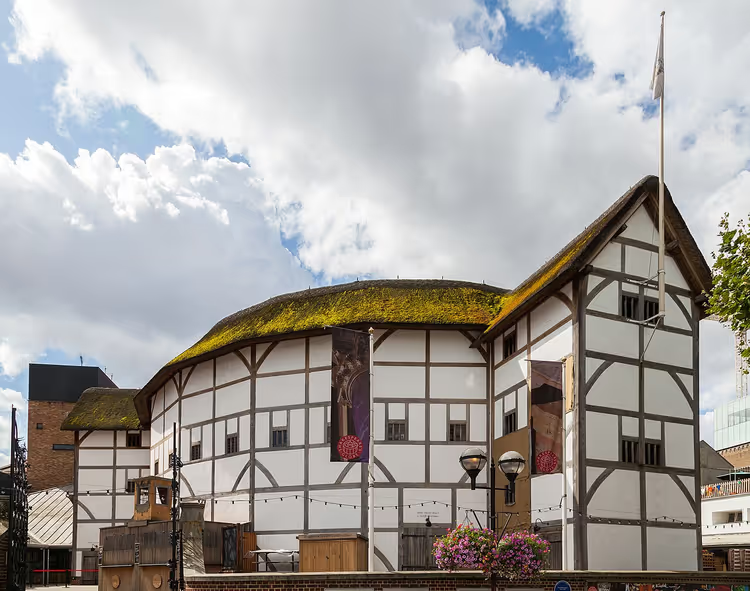 © Diego Delso · CC BY-SAPhoto: Diego Delso, CC BY-SA (https://creativecommons.org/licenses/by-sa/4.0), Wikimedia Commons
The theater was forgotten for more than 300 years. The idea of rebuilding it belonged to Sam Wanamaker, an American actor and director. In Britain, his proposal was met with skepticism and no funding was provided. In 1970 he founded a trust, gathered materials on the building's construction, and brought in architects. The site was chosen 200 m from the historic location (according to the theater's website, 09/2026).
By 1993 the frame was complete, but Wanamaker died. His successors finished the project in 1997. The new Globe was opened by Queen Elizabeth II. The building was assembled from massive oak timbers. The thatched roof over the stage and upper tier was made again, for the first time in London in 300 years. All materials were treated with fire retardants.
The stage projects into the auditorium in the same way, seating runs in three tiers, and 500 standing places surround the stage. In total, the auditorium holds 1,600 people. Standing tickets are the cheapest, and students and young people love them. Hundreds of thousands of spectators pass through the theater each season. Performances run from late April to late October. Outside the season, a museum operates: costumes and household items from Shakespeare's time, sketches, models, and scenery.
Tickets and opening hours
You need to book your visit in advance. There is no free entry to the building: the theater operates on a schedule of tours and performances (according to the session schedule, 09/2026).
The box office hours are as follows. On weekdays from 11:00 to 18:00, on Saturday from 10:00 to 18:00, on Sunday from 10:00 to 17:00 (as of 09/2026, official website). The shop on New Globe Walk is open daily from 10:00 to 17:00. The Swan bar and restaurant welcomes guests from 12:00, on Sunday from 11:30, until 20:45.
Tours of the Globe last about an hour and include exhibition entry (according to the city tourism office, 09/2026). If you are attending a performance, you can add the exhibition with costumes and items from Shakespeare's time to your ticket for £5 (as of 09/2026, theater website). Choose tickets for your date in advance: during high season, available slots go quickly.
Tours and tickets in Shakespeares Globe
Guided tours, skip-the-line tickets and activities — most offers can be cancelled free of charge.
See offers on TiqetsThe widget loads once you give your consent.
Performances: repertoire and season
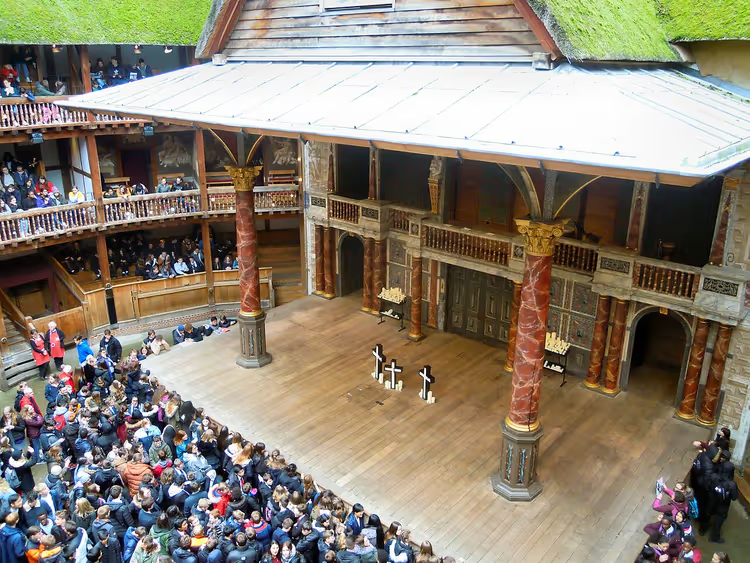
The theater has no permanent company: the cast is assembled anew each year. The repertoire consists mainly of Shakespeare's plays. Among them are The Taming of the Shrew, As You Like It, The Merchant of Venice, Henry IV, Othello, Hamlet, King Lear, and Macbeth. They also stage works by other authors and young English playwrights, and there are tours by companies from different countries.
What sets these performances apart from Shakespeare's era is that female roles are now played by women. In fall 2026, the stage will feature Much Ado About Nothing (September 14 - October 24) and As You Like It (September 15 - October 25) (as of 09/2026, official website).
Replicas of the Globe in other countries
The London Globe has replicas around the world. They stand in the US, Germany, Italy, and other countries (according to the Globe website, 09/2026). Calling them exact copies would be a stretch. They are more like interpretations with their own features: some change the layout, some add a roof.
Replicas in countries with cold climates also got roofs and are no longer summer theaters. But the London building remains the benchmark: it conveys the atmosphere of Shakespearean theater and lets the audience travel back to that time.
Where it is and how to get there
The Globe stands in the Bankside district on the south bank of the Thames, opposite the City of London. Address: 21 New Globe Walk, SE1 9DT (according to the theater's page, 09/2026). The Millennium Bridge starts right nearby, so you will have a prominent landmark (per the map).
It is convenient to walk to the theater from several Underground stations: Blackfriars, London Bridge, Southwark, and St Paul's. The walk takes about 10-15 minutes (per the map). Part of the route runs along the embankment, from where you can see St Paul's Cathedral on the other bank.
There are also bus routes, which are easy to check by address: stops are located around the Bankside district.
The Globe on the map
Below is a map: the theater stands by the Millennium Bridge, and the entrance is from the Bankside embankment. From Blackfriars and London Bridge stations you can walk here in about 10-15 minutes (per the map).
What to see near the Globe
The area around the Globe brings together the main sights of old London. Across the Millennium Bridge you can cross to the north bank to St Paul's Cathedral in a couple of minutes (per the map). In the other direction along the embankment stand Tower Bridge and the Tower of London. They deserve a separate day. There are also viewing platforms near them.
If you have only two days in the city, split them like this. On the first day, take the Globe and St Paul's Cathedral; on the second, leave the Tower and Tower Bridge.
⁉️🤔 Frequently asked questions
Can you visit the Globe without a performance ticket?
Yes. The theater welcomes visitors for tours and the exhibition. The tour includes entry to the exhibition, which displays costumes and items from Shakespeare's time.
How much does a visit cost?
Exact prices depend on the session and the performance. Standing places in the yard are traditionally the cheapest, and students and young people choose them.
When is the performance season?
The open-air theater runs from late April to late October. In fall 2026, Much Ado About Nothing and As You Like It are being performed. In winter, productions move to the indoor Sam Wanamaker Playhouse.
How do I get to the theater?
The theater is located at 21 New Globe Walk, SE1 9DT, in the Bankside district. The nearest Underground stations are Blackfriars, London Bridge, Southwark, and St Paul's. It is about a 10-15 minute walk from each (per the map).
Can you see the old foundations?
No. The remains of the foundations were found in 1989, but they lie under the Anchor Terrace monument. Excavations are prohibited here. Only the outlines of the former building have been marked on the site.
In short: what to book
The Globe stands right next to the Millennium Bridge, so it is easy to combine with St Paul's Cathedral or the Tower in one day. If you are short on time, take a tour with exhibition entry: in an hour you will see the auditorium and learn the theater's history. If you want a true Shakespearean evening, choose a performance and add the exhibition to it.
Planning a trip? Keep tickets to the Globe and other London venues in one place: Globe tickets on Tiqets and city tours on GetYourGuide.
For a hotel in the center, it is convenient to search near Bankside: hotels in central London on Trip.com. Book in advance: in summer, available slots go fast.

A small editorial team writing guides for independent travel. We travel ourselves, but we haven’t been everywhere, so we check prices, opening hours and how to get there against official sources.