
















North or South Goa: which coast to choose for beach, parties and family
Goa is split into two parts with very different personalities. The north of the state is parties, cheap bungalows, and the Anjuna market, while the south is quieter, pricier, and more convenient for families. The sand and water are similar; the difference is in the pace, prices, and the drive to the airport. Below, the tourism.com.de editorial team breaks down the beaches, accommodation, excursions, and season so you can choose your half of the coast.
Logistics have changed in recent years. In addition to Dabolim Airport in South Goa, Mopa now operates in northern Pernem, opened on December 11, 2022 (as of: Wikipedia). Now you can reach the northern beaches without crossing the entire state.
Ad: this article contains affiliate links, we earn a commission if you book through them, at no extra cost to you.
How north Goa differs from south Goa
💡 In short:
- North Goa: nightlife, budget bungalows, the Anjuna market.
- South Goa: quiet beaches, high-category hotels, families and couples.
- Airports: Dabolim in the south, Mopa in the north.
- Season, accommodation, and prices: 09/2026, verified against the official Goa tourism portal.
Both parts lie on the same shore of the Arabian Sea, and the climate is identical. What differs is the development, the crowd, and what you will be doing in the evening. The north historically welcomed hippies and downshifters, so it has plenty of inexpensive accommodation and bars right by the water. The south developed as a resort for affluent guests, and it has a higher share of hotels with grounds and a pool.
The easiest way to compare the two halves of the state is by practical criteria.
Criterion | North Goa | South Goa |
|---|---|---|
Pace | music and parties until morning | quiet, musical evenings |
Beaches | Candolim, Baga, Anjuna, Arambol | Colva, Cavelossim, Palolem |
Accommodation | bungalows, guesthouses, villas | high-category hotels, complexes |
Best for | young people, surfers, kitesurfers | families, couples, relaxed travelers |
Prices | lower | higher |
Beaches of South Goa
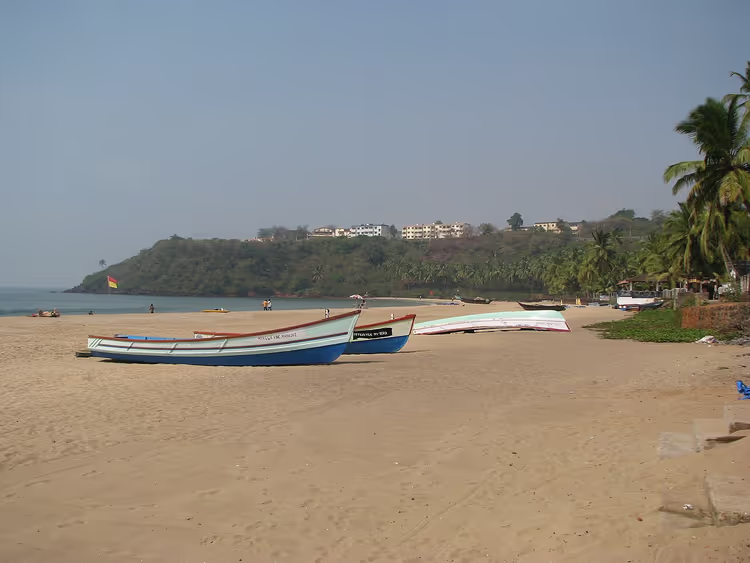
The southern coast begins right at Dabolim Airport. Bogmalo, Velsao, and Arossim lie next to it. This is a convenient option for those who arrive late and do not want to drive across the entire state.
 © KenWalker kgw@lunar.ca · CC BY-SAPhoto: KenWalker kgw@lunar.ca, CC BY-SA (https://creativecommons.org/licenses/by-sa/3.0), Wikimedia Commons
Further south, starting from Majorda, the stretch becomes calmer. Varca, Benaulim, and Patnem are good for swimming without crowds: there are fewer locals here, and seafood shacks stand on almost every beach. You will not find the atmosphere of a noisy market here, but you will not have to queue for a sunbed either.
The busiest sections are Colva and Cavelossim. Colva sits next to Margao; the entrance area usually has many Indians, while closer to the water there are more Europeans. The beachfront restaurants offer inexpensive food, and the shops have everything you need. Cavelossim is considered an upscale beach; affluent tourists come here, and dolphins often appear near the shore.
Further south are Mobor at the mouth of the Sal River and Patnem for those who value peace. Palolem is surrounded by green hills and remains highly popular in season. Choose the south if you want quiet and are willing to pay more for hotel infrastructure.
Beaches of North Goa
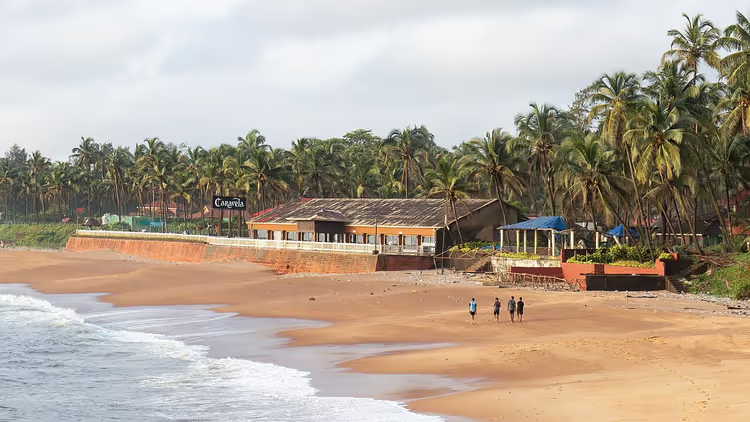
The northern coast is shorter and more densely built up. Candolim is closest to the south: soft clean sand, shallow water near the shore, so it is convenient for swimming with children. There are no loud parties in Candolim; the crowd is respectable and well-off. Nearby, at Sinquerim Beach, stand the walls of the old Aguada Fort.
 © iMahesh · CC BY-SAPhoto: iMahesh, CC BY-SA (https://creativecommons.org/licenses/by-sa/4.0), Wikimedia Commons
Calangute is favored by Indian tourists; there are noticeably fewer Europeans here. Baga is right next to it, with brown sand and developed infrastructure, and it is almost always lively. Both beaches are noisy, which is more of a plus for evening entertainment.
Anjuna gathers creative people from all over the world, some of whom stay here permanently. Anjuna is also known for the state's largest market, the Flea Market, which is worth visiting at least once.
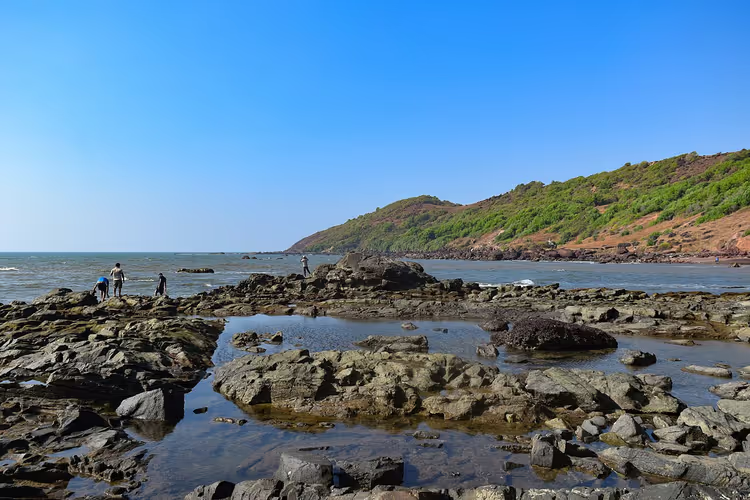
Neighboring Vagator was chosen by the first hippies, and today its cliffs attract lovers of views and cautious swimmers. Vagator is not suitable for children because of the sharp rocks near the water. Morjim has many foreigners who live here season after season. Arambol is noisy and youthful, with plenty of shacks and accommodation options.
The northernmost beaches, Kalacha and Keri, are small but picturesque. The first has long been favored by nudists, the second is kept by locals. Ashwem and Mandrem are calmer than their neighbors, and they are pleasant for a family stay. If you are already leaning toward the north, check out hotels in North Goa on Trip.com.
Accommodation: bungalows, guesthouses, and hotels
Historically, the state was considered a haven for downshifters, people who chose an ascetic lifestyle. That is why modest housing was in fashion here: bungalows made of reed leaves and plywood, thrown together in a hurry. As Goa turned into an international resort, the choice grew: chain hotels, guesthouses, villas, apartments, and flats appeared.
 © This Photo was taken by Timothy A. Gonsalves . Feel free to use my photos, but please mention me as the author. I would · CC BY-SAPhoto: This Photo was taken by Timothy A. Gonsalves . Feel free to use my photos, but please mention me as the author. I would, CC BY-SA (https://creativecommons.org/licenses/by-sa/4.0), Wikimedia Commons
South Goa excels in comfortable accommodation. High-category hotels of well-known chains usually stand on the first line, operate on an all-inclusive basis, and maintain a high level of service. You can also settle in quite well at three-star hotels. For stays longer than two weeks, it is more cost-effective to rent a private villa or house.
In the north, the choice of budget accommodation is noticeably richer. There are many cheap bungalows, guesthouses, and private apartments, and fewer upscale hotels. But houses and villas can be found right by the shore. A private option gives you freedom: no schedule, your own breakfasts, and quiet if you do not need bar neighbors. Check out hotels in South Goa on Trip.com if you want to compare prices by date.
How much a vacation in Goa costs
Rental costs depend on the season, area, property category, and length of stay. The range in the north is wide: from a modest apartment inland to a seaside villa in a gated complex. In popular resorts, Calangute, Baga, Candolim, and Anjuna, two-bedroom apartments in high season cost more than in less crowded villages.
In upscale areas such as Assagao, Bambolim, and Morjim, private villas with security and a pool are rented out, and the price is quoted per night. A simple house with a bedroom, living room, and balcony costs noticeably less. The most budget-friendly option is a thatched bungalow right on the sand, but its amenities are minimal.
South Goa has more guests who rent accommodation long-term. Foreigners more often choose Benaulim, Varca, and Betalbatim, where prices are slightly lower than in neighboring areas. Hotels of various levels at all southern resorts offer a wide range of daily rates. For those not willing to pay for a room, bamboo houses on stilts are available.
During the New Year period, prices double for any type of accommodation, including bungalows. So book in advance: by late December, there are almost no available options left. Off-season, the same apartments are offered at a discount, and bargaining is appropriate.
Excursions around the state
If you do not like depending on a guide, you can see the sights on your own. For that, there are bike rentals, car rentals, and taxi services. But the most convenient way to see the main attractions is an organized excursion: you do not need to watch the road, deal with traffic rules, or search for sites on a map.
Local guides run dozens of routes. A jeep trip to Dudhsagar Falls goes through jungles, villages, and mountain rivers. A walk through a tropical plantation introduces you to local cuisine and spices. The "Holy Places" tour in Old Goa shows the main religious sites left from the Portuguese period.
Entry tickets, meals, and drink tastings are usually included in the price. The cost depends on the number of tourists: the larger the group, the cheaper the trip per person. You can book a tour at a local agency, through a guide at your hotel, or online in advance. A convenient way to compare options is through Goa tours on GetYourGuide.
Beach activities and nightlife
North Goa is a place of lively discos and dance shows. Loud music and passionate dancing all night on the beaches of Calangute, Anjuna and Morjim are common. Water skiing is chosen by many guests of Candolim and Calangute, where there are many rental points.
 © Nikhilb239 · CC BYPhoto: Nikhilb239, CC BY (https://creativecommons.org/licenses/by/3.0), Wikimedia Commons
Windsurfing is popular in Vagator and Baga, especially in the afternoon when the waves pick up. In Morjim and Ashwem, conditions for kitesurfing are good in February and March. Boat trips along the coast are popular everywhere, and parasailing is available in Candolim, Calangute and Baga. Add yoga, elephant rides, fishing, beach volleyball and water parks to this list.
In South Goa, which is more upscale, there are no noisy discos; instead, musical evenings are held. Dolphin watching and dolphin tours here are as popular as fishing. In Cavelossim, surfing is actively practiced; windsurfing is practiced at Palolem and Dona Paula Beach. Kitesurfing is possible in February and March.
Diving enthusiasts base themselves in Bogmalo, where there is a large rental point and boats for trips to the islands. In Colva, parasailing is well developed: you go up and fly over the bay above the water. In Majorda, well-off guests go horseback riding, and ATVs are popular at Palolem. Choose activities based on your mood: the north for energy, the south for a relaxed day.
Attractions in both parts
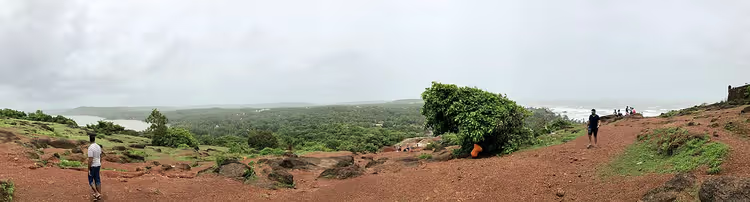
Chapora Fort on a hill at the river mouth holds first place among the northern viewpoints. Only fragments of walls and the bases of watchtowers remain from the Portuguese fortress, but from the height you can see the ocean to the horizon. People come to Vagator Beach for the stone face of Shiva, which sculptor Caroli carved into the rock.
 © Slyronit · CC BY-SAPhoto: Slyronit, CC BY-SA (https://creativecommons.org/licenses/by-sa/4.0), Wikimedia Commons
The same sculptor Caroli created a necklace of skulls and an image of a cobra, which are considered divine symbols here. In Arambol, the huge banyan tree is interesting; an old baba has been sitting under it for years, talking with tourists. It is also worth taking a separate trip to Dudhsagar Falls in the southeast of the state, near the border with Karnataka. It is the highest waterfall in the state. On the way there, people stop at an elephant village to ride the animals.
South Goa charms not only with nature: palm groves, white sand and the Cotigao Wildlife Sanctuary. The state's main architectural monuments, however, are in the north. In Old Goa, not far from Panaji, the Basilica of Bom Jesus with the relics of Francis Xavier attracts attention. Opposite it rises the Se Cathedral with a golden bell that can be heard across the entire state. Behind the cathedral is the Church of St. Cajetan, whose architecture replicates the Roman temple of St. Peter. In Margao, the capital of the south, there are many historic buildings, gardens and Hindu temples.
How to get from the airport
Goa has two international airports, and the choice depends on where you are flying for your vacation. Dabolim is located in the southern part of the state and serves the resorts of Colva, Cavelossim and Benaulim. Mopa is in the north, in Pernem district, and is closer to Calangute, Baga, Anjuna and Arambol. The opening of the second airport cut the journey to the northern beaches roughly in half.
From the terminal to the hotel, the most convenient option is a prepaid taxi or a pre-booked transfer. The drive to the northern beaches takes longer than to the southern ones, so book a car in advance rather than at the counter by the exit. Confirm the price before getting in; local cars usually have no meter.
Tours and tickets in Goa
Guided tours, skip-the-line tickets and activities — most offers can be cancelled free of charge.
See offers on KiwitaxiThe widget loads once you give your consent.
What to choose: young people, couples and families
The entire coast of North Goa has long been recognized as a place for young people's leisure with an atmosphere of fun and simplicity. The hippies who settled here in the seventies instilled a spirit of freedom without snobbery. Today the north is still in demand among young people: many come as backpackers for months and rent cheap bungalows in Anjuna, Vagator and Morjim.
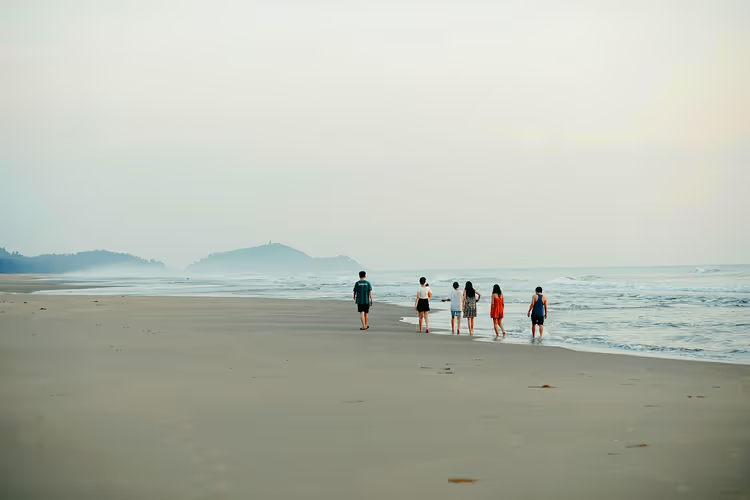
Arambol has especially many fans of free-spirited travel: kiters, yogis and other free spirits settle there for the whole season. Morjim has many foreigners who live there all season. Everyone is drawn by the range of water and land activities, nightlife and freedom. Vagator is famous for dance parties that attract young people from different countries. If you want energy and meeting people, choose the north.
The southern coast stands out for its scenic beauty, clean beaches and calm atmosphere. For vacations with children, the south is better suited: there are many all-inclusive hotels with facilities for children, and the beaches are quiet at night. Excursions to the Bondla and Cotigao sanctuaries will appeal to children and adults.
Interacting with animals at the zoo, elephant rides and watching monkeys in the jungle delight children. Boys are usually interested in the open-air Naval Aviation Museum in Bogmalo. There are also quiet spots in the north: Mandrem Beach is clean, with good little restaurants, and in Baga a river flows along the northern part. So a family with children will find an option in both parts, but the south is more convenient.
Best time to visit
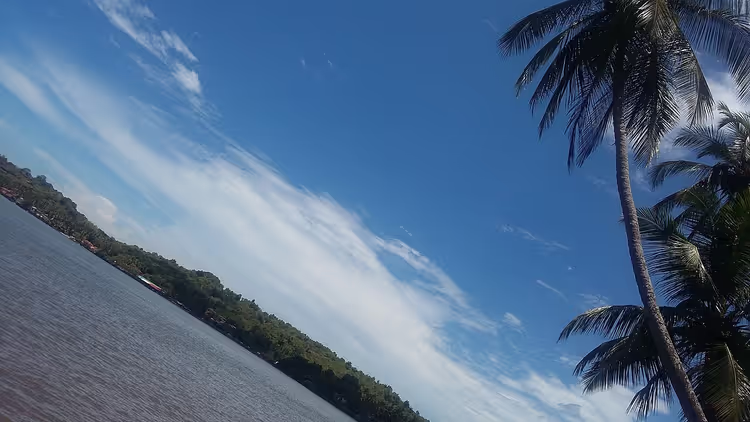
The weather depends on the seasons, dry and wet. The least rain falls from October to May, which is the high tourist season. The hottest month is May, and January is relatively cool. The best period for the beach is considered to be from November to February: no rain, comfortable air, warm water.
 © Sonal Bhandarkar · CC BY-SAPhoto: Sonal Bhandarkar, CC BY-SA (https://creativecommons.org/licenses/by-sa/4.0), Wikimedia Commons
Tourists start arriving in October, when the air warms up to comfortable levels and rain falls only occasionally. Toward mid-October the sea becomes cleaner and diving opens. November and December mark the peak of the season: bright sun, no wind and a pre-Christmas atmosphere in the hotels.
In January the temperature drops, and it can be cool at night, so warm clothes will not go amiss. There are many tourists in January and February, and prices rise. In March and April it is warm and dry, but at times strong winds blow and small storms occur. In May the heat sets in, rains begin and humidity rises. If you tolerate humidity easily and want to save money, you can also go during the monsoon.
⁉️🤔 Frequently asked questions
What to choose in Goa for the first time: north or south?
For a first trip, the south is easier. The beaches there are calm, hotels have grounds and pools, and the drive from Dabolim Airport is short. If parties and budget accommodation matter more to you, choose the north: Candolim, Baga, Anjuna or Arambol. Both options are connected by roads, and during your trip you will have time to see both parts.
Where is it cheaper to stay in Goa?
The cheapest is in the north: bungalows, guesthouses and private apartments cost less than hotels in the south. Budget spots are concentrated in Anjuna, Vagator and Morjim. In the south, prices are higher due to the share of high-category hotels. The difference is especially noticeable in the high season, from November to February, when prices rise along the entire coast.
Can you swim in Goa during the rainy season?
During the monsoon the sea is rough, storms are frequent, and lifeguards close swimming. The rainy season lasts roughly from June to September. Hotels offer discounts at this time, and the greenery becomes especially lush. If you are going for the beach, plan your trip for the dry season.
Where is the best place to vacation in Goa with children?
South Goa is more convenient for families: calm water, clean beaches and many all-inclusive hotels with children's facilities. In the north, Candolim with its shallow waters and quiet Mandrem are suitable. For children, trips are organized to the zoo, to the elephants and to the Bondla and Cotigao sanctuaries. Choose swimming in the northern rocky coves with caution.
How to get from the airport to the beaches of Goa?
From Dabolim in the south, the drive to Colva and Cavelossim is short; to the northern beaches it is longer. Mopa Airport in Pernem is closer to Calangute, Baga and Anjuna. Take a prepaid taxi or a pre-booked transfer and confirm the price before getting in. Local cars usually have no meter.
In short: what to book
Both parts of Goa work for a beach vacation, the choice depends on your pace. If you are with a group and want parties, cheap stays, and surf, go north: Anjuna, Vagator, Baga. If you are traveling as a couple or with kids and value quiet and service, choose the south: Colva, Cavelossim, Benaulim. The best time for the beach is November through February, and the most budget-friendly time to go is October or after March.
Comparing stay options by dates and areas is easy on Trip.com: find a hotel in Goa.

A small editorial team writing guides for independent travel. We travel ourselves, but we haven’t been everywhere, so we check prices, opening hours and how to get there against official sources.