
















Honokohau Falls on Maui: how to see it by helicopter
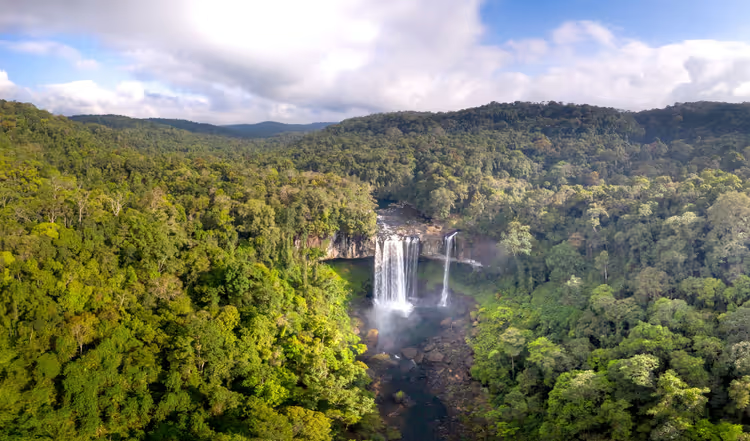
Honokohau Falls on Maui is visible only from the air. No roads or trails lead to it: the water drops in a closed valley in the West Maui Mountains. Honokohau is considered the tallest waterfall on the island, and its wall of water was filmed in Jurassic Park. Below you'll find facts about the waterfall itself, about the wet slope of Waialeale on Kauai known as the Wall of Tears, and about helicopter tours to Honokohau.
Ad: this article contains affiliate links, we earn a commission if you book through them, at no extra cost to you.
Honokohau Falls: the tallest on Maui
💡 In short:
- The water drops in two tiers, about 340 m in total.
- There is no hiking access; you can only get there by helicopter.
- Tours depart from Kahului Airport and are weather-dependent.
- Height and access: as of 09/2026, according to the To-Hawaii guide.
 © ideatrendz · CC BY-SAPhoto: ideatrendz, CC BY-SA (https://creativecommons.org/licenses/by-sa/2.0), Wikimedia Commons
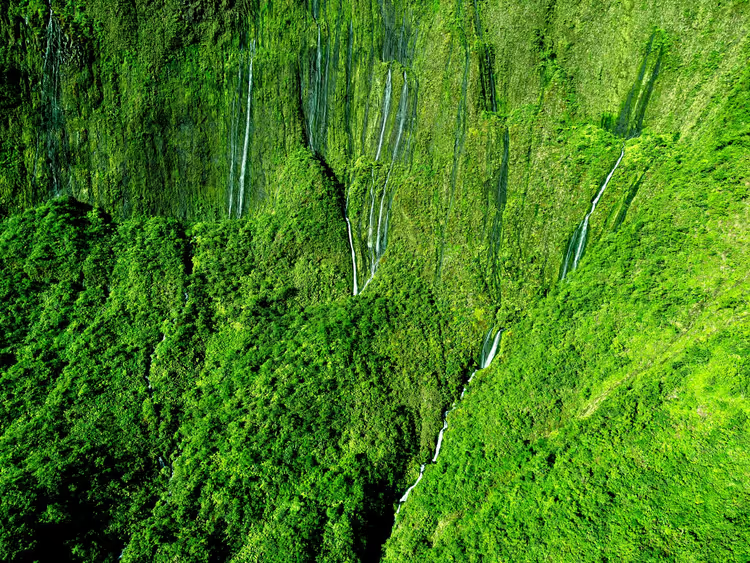
The water drops in two tiers with a total height of about 340 m, according to To-Hawaii. Honokohau sits in a closed valley in the West Maui Mountains, surrounded by nearly vertical ridges. There are no roads or trails to it.
The valley is overgrown with dense forest, and approaching the water from below is impossible. That's why you'll only see the waterfall from a helicopter. But from above it opens up completely: both tiers, the cliffs around it, and the narrow corridor of the gorge.
The flow changes with the rains. Wide streams have carved their channel into the rock and hold year-round. Thin rivulets appear after downpours and disappear just as quickly. The pattern of the gorge therefore looks different over time.
Waters bursting over the edge: Waialeale on Kauai
On the island of Kauai, the oldest of the major islands in the archipelago, stands the extinct volcano Waialeale. Its name translates roughly as "waters bursting over the edge." The translation is accurate: it rains here almost constantly, and even by tropical standards this is a very wet place.
The average annual rainfall at the summit is about 11,430 mm (as of 09/2026, Britannica). In 1982, a record 16,916 mm fell on the peak (same source). No other regularly measured place on the planet collects that much water.
The moisture runs down the slopes in countless streams. Some of it remains in the crater, which long ago turned into the swampy Alakai Plateau. Hiking to the summit is not easy: you'll have to walk through clouds and wet forest.
 © rjones0856 · CC BYPhoto: rjones0856, CC BY (https://creativecommons.org/licenses/by/2.0), Wikimedia Commons
Wall of Tears: why the slope "weeps"
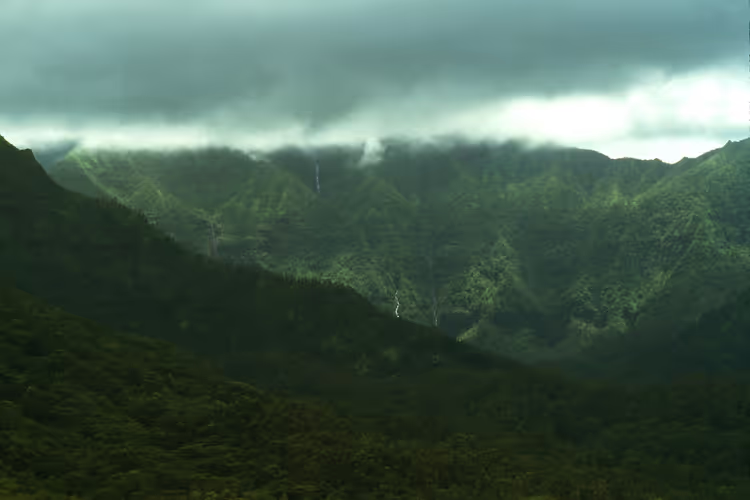
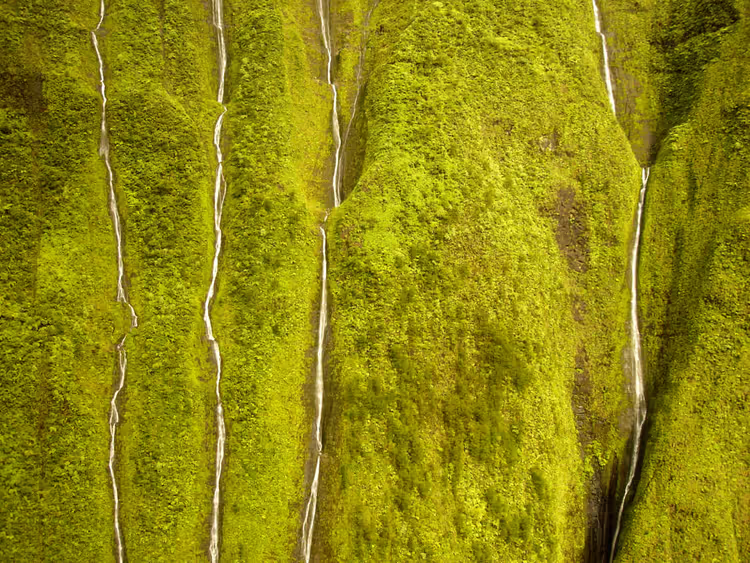
The wall of Waialeale in the crater is called the Wall of Tears. From the lookout you can see hundreds of thin streams running down the green cliff. From a distance they look like tear streaks, hence the name.
The number of streams and their fullness depend on rainfall. After heavy rains the wall turns into a solid curtain. In dry weeks only a few streams remain. The wall almost never dries out completely: it rains on Waialeale nearly every day.
You'll see the same effect at Honokohau. The sheer cliff is lined with streams from top to bottom, like giant scratches. The rivulets run along cracks that water once carved. It looks like the mountain is weeping.
 © Miguel Vieira · CC BYPhoto: Miguel Vieira, CC BY (https://creativecommons.org/licenses/by/2.0), Wikimedia Commons
Jurassic Park filming location
Honokohau made it into the frame of Jurassic Park. The film crew shot the waterfall from the air, and in the movie it became the backdrop for one of the scenes. You can recognize it by its two tiers and the dark walls of the gorge.
Today the flight follows the same course over the West Maui Mountains. The helicopter enters the valley through a corridor and turns right at the waterfall. At that altitude it's easy to imagine a dinosaur standing behind the ridge: the landscape here hasn't changed for thousands of years.
Hawaiian traditions: aloha, lei, and hula
The culture of the islands lives beyond museums. With the word "aloha," Hawaiians express greeting, farewell, love, and compassion. For locals this greeting is not a form of politeness but an attitude toward people.
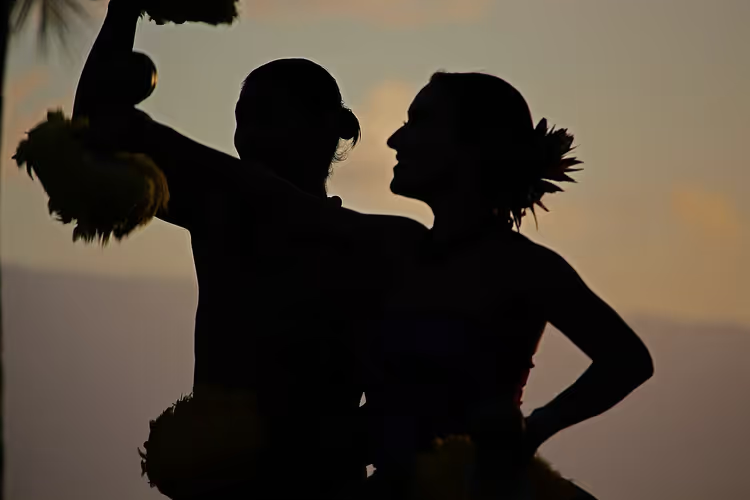
A flower garland called a lei will be placed around your neck upon arrival. It's made from orchids, hibiscus, and local leaves. The hula dance is performed to percussion and a small four-string guitar. Through movement, dancers tell stories rather than simply decorating a celebration.
Hawaiians considered the summit of Waialeale sacred. According to legend, the creator god Kane lived there. A heiau temple was built on the plateau from lava: a level platform with walls and an altar in the center. Flowers, food, and pieces of lava are still placed on the altar today.
 © Mezzapictura · CC BY-SAPhoto: Mezzapictura, CC BY-SA (https://creativecommons.org/licenses/by-sa/4.0), Wikimedia Commons
Kauai: Napali, Hanalei, and the island's laws
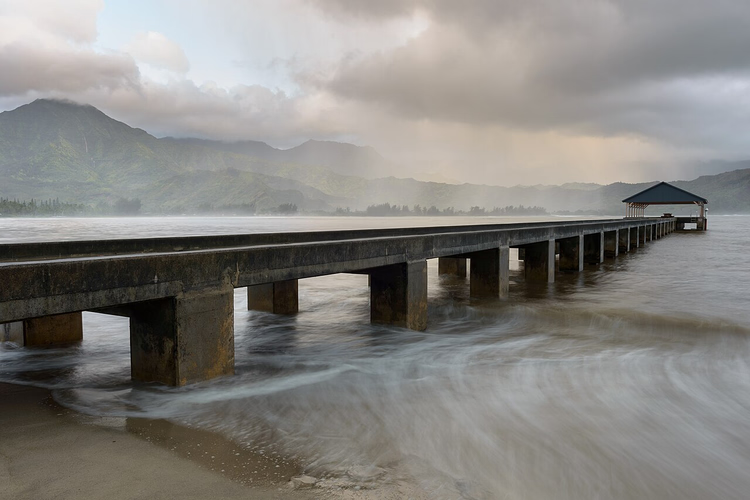
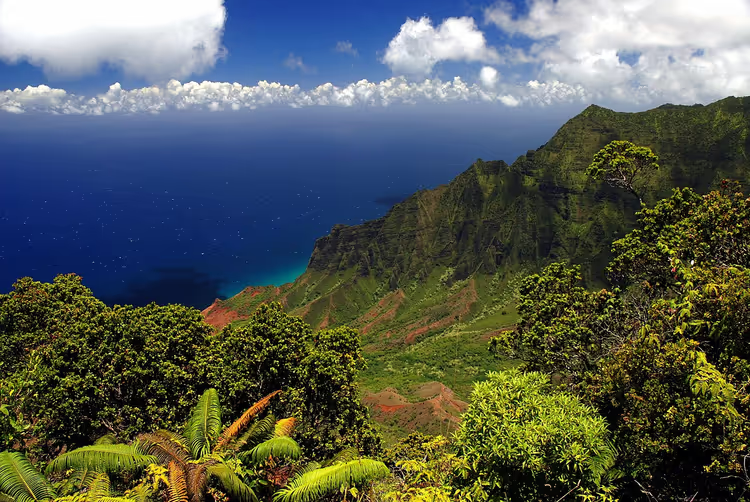
Kauai deserves a separate conversation. The Napali Coast is known for cliffs that rise straight out of the ocean. In Hanalei Bay you'll find a wide arc of beach and dense jungle all around. Both places lie in the north and northwest of the island.
 © Jawed Karim · CC BY-SAPhoto: Jawed Karim, CC BY-SA (https://creativecommons.org/licenses/by-sa/3.0), Wikimedia Commons
Kauai has two unusual rules. Bringing snakes here is prohibited, even as pets, so there are no snakes on the island. Buildings are not built taller than four stories or fifty feet, about fifteen meters (according to Kauai County, 09/2026). Locals call this rule the "palm law," and you won't find tall hotels on the island.
 © Jmblanco74 · CC BY-SAPhoto: Jmblanco74, CC BY-SA (https://creativecommons.org/licenses/by-sa/3.0), Wikimedia Commons
How to see Honokohau Falls
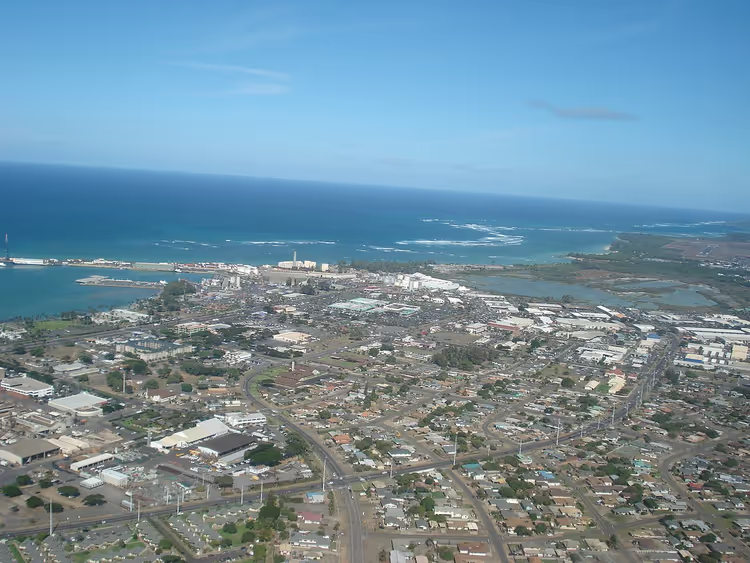
The only way to reach Honokohau is by helicopter. Tours depart from Kahului Airport on Maui (code OGG) and vary in route length. Some programs loop over West Maui with a pass through the waterfall valley.
Weather decides everything. The valley is often closed in by clouds, and then the flight is rescheduled. Book the morning: winds are lighter and cloud cover is lower. Build a backup day into your trip in case of cancellation.
Cost depends on route length and the number of stops. A flight with a pass by the waterfall is a premium option. You can compare programs and see helicopter tours on Maui at GetYourGuide.
Tours and tickets in Maui
Guided tours, skip-the-line tickets and activities — most offers can be cancelled free of charge.
See offers on GetYourGuideThe widget loads once you give your consent.
If you're flying from Europe, the connection is usually in Honolulu on Oahu, followed by a short inter-island flight to Maui. To Kauai, where Waialeale is visible, you fly into Lihue Airport.
⁉️🤔 Frequently asked questions
Can you hike to Honokohau Falls?
No. The waterfall sits in a closed valley in the West Maui Mountains, with no roads or trails leading to it. Hiking routes here are impossible due to steep slopes and dense forest.
Why is the Waialeale slope called the Wall of Tears?
That's the name for the wall of Waialeale crater on Kauai, not Honokohau Falls. Hundreds of thin streams run down the green cliff. From a distance they look like tear streaks. The number of streams and their fullness depend on rainfall, so the picture constantly changes. A similar pattern of streams can be seen on the cliff at Honokohau.
How much does a helicopter tour cost?
The price depends on flight length and the number of points on the route. A flight with a pass by the waterfall is one of the more expensive options because the route is longer. Exact prices vary by season and by operator, so compare programs from several companies and book in advance.
When is the best time to fly to the waterfall?
In the morning the valley is more often open. During the rainy season flights are rescheduled more often, so stay in touch with the operator. Weather over the West Maui Mountains can change literally within an hour.
Is it the same waterfall as in Jurassic Park?
Yes, the view of Honokohau appeared in the movie Jurassic Park.
Why are there no snakes in Hawaii?
Bringing snakes to the islands is prohibited by law, including as pets. Without snakes, local birds and plants have been preserved better than on other tropical islands. That's why the nature of Kauai and Maui looks untouched, and you won't encounter snakes in the forests.
In short: what to book
Honokohau is visible only from the air, so the main decision of the trip here comes down to the helicopter route. If you're short on time, take a short loop over West Maui with a pass through the valley. If filming and a full route matter, choose a longer program with time to spare. If you're traveling in the rainy season, schedule the flight for the morning and keep a free day.
Helicopter tours on GetYourGuide will help you combine the waterfall, the cliffs, and the coast into one trip.

A small editorial team writing guides for independent travel. We travel ourselves, but we haven’t been everywhere, so we check prices, opening hours and how to get there against official sources.