
















Five dances that tell more about a people than a guidebook
A country is usually explored through its cuisine, museums, and cathedrals. Dance almost always gets left out, even though it tells you as much about a people as museums do.
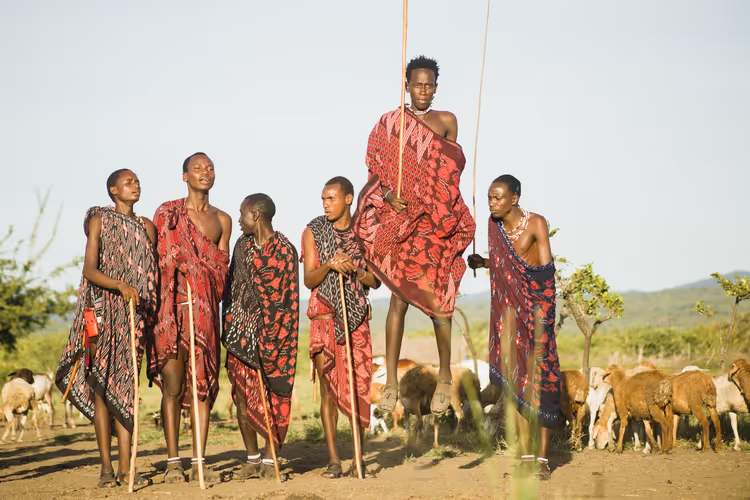
It's easy to miss. Below are five unusual traditions from around the world: what they mean and where you can see them with your own eyes. The adumu is danced by Maasai warriors in Kenya and Tanzania, the whirling dervishes can be seen in Turkey, the Tsam is performed in Tibet and Mongolia, and sirtaki and hula have become calling cards of Greece and Hawaii.
Our picks: five dances
💡 In short:
- Adumu: Maasai warrior jumps, part of a coming-of-age ritual.
- Whirling dervishes: an hour-long ceremony with four greeting pauses.
- Tsam: a hours-long mystery play in masks of gods and protectors.
- Sirtaki and hula: signature dances of Greece and Hawaii.
- Status and history of the traditions: 09/2026, verified on the official UNESCO website.
Dance | Country | What it is | Where to see it |
|---|---|---|---|
Adumu | Kenya, Tanzania | ritual jumps performed by men | Maasai villages on safari |
Mevlevi whirling | Turkey | Sufi ceremony | Konya and Istanbul |
Tsam | Tibet, Mongolia | masked mystery play | monasteries on festival days |
Sirtaki | Greece | modern dance from a film | tavernas and festivals |
Hula | Hawaii | storytelling dance | performances and festivals |
1. Adumu: the jumping dance of the Maasai
 © K15photos · CC BY-SAPhoto: K15photos, CC BY-SA (https://creativecommons.org/licenses/by-sa/4.0), Wikimedia Commons
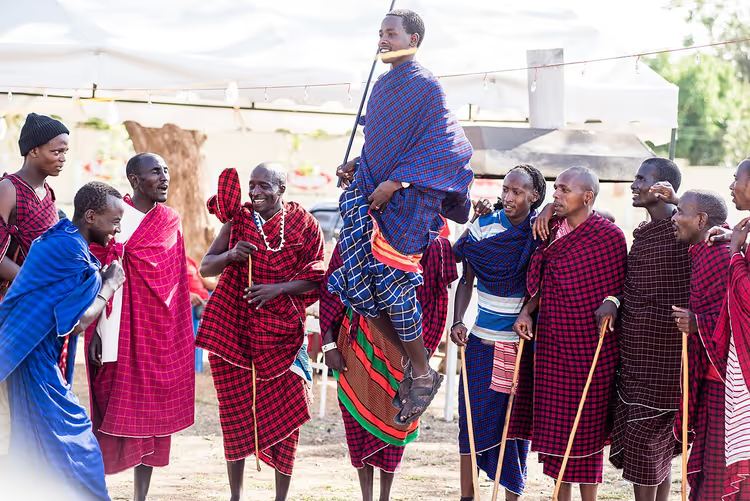
The adumu is known even to people who have never heard of the Maasai. Men form a circle and take turns jumping straight up. The jump is held during the chanting, pushing off with both feet. The meaning is simple: the higher a warrior jumps, the more respect he earns in the tribe. This is not a game but a way to show strength and endurance.
From the outside, it looks like you could jump just as easily. But on the first try, even fit visitors find their legs won't cooperate. The full adumu is performed at weddings and eunoto coming-of-age ceremonies (as of 09/2026, Wikipedia). Tourists on safari are shown a short excerpt, and that's enough to understand the Maasai character.
- Where to see it: in Maasai villages during safaris in Kenya and Tanzania.
- Who it's for: those who want to see both wildlife and living culture in a single trip.
- The catch: tourists are shown only an excerpt; the full ritual stays off camera.
2. Whirling dervishes (Turkey)
 © Baltazar Faunbäck · CC BY-SAPhoto: Baltazar Faunbäck, CC BY-SA (https://creativecommons.org/licenses/by-sa/4.0), Wikimedia Commons
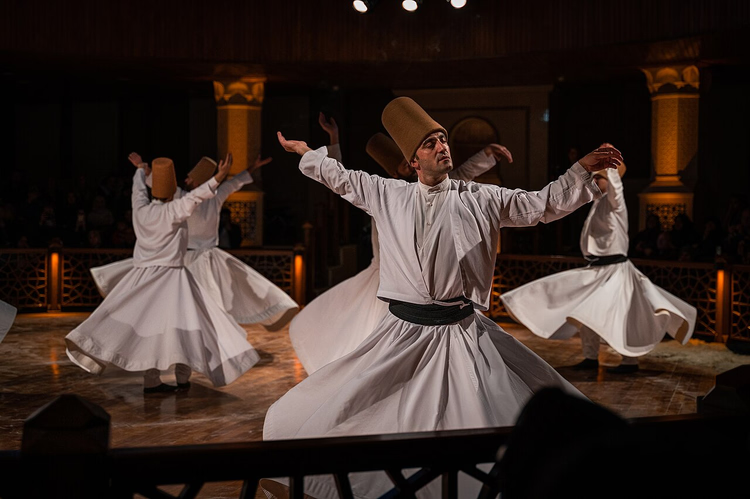
Whirling dervishes is not just spinning around your own axis. It is part of the Sufi ceremony of the Mevlevi order, founded in 1273 in Konya (as of 09/2026, UNESCO). The performance begins with readings of Rumi's poetry. Then, to music, dancers in white skirts come out and begin whirling from right to left, slowly moving around the circle.
The dervishes' arms are first crossed over the chest. As the music speeds up, the right hand rises toward the sky and the left hand lowers toward the earth. This conveys the idea that divine energy passes through the dancer. The ceremony lasts about an hour and is divided into four parts with greeting pauses. In 2008 it was added to the UNESCO list (as of 09/2026, official website).
- Where to watch: order centers in Konya and Istanbul.
- The catch: this is a religious ceremony, not a show: there will be no flashy sets or applause here.
- Who it's for: those interested not only in the form but also in the meaning of the Sufi tradition.
3. Tsam: the dance of the gods (Tibet and Mongolia)
 © S Pakhrin from DC, USA · CC BYPhoto: S Pakhrin from DC, USA, CC BY (https://creativecommons.org/licenses/by/2.0), Wikimedia Commons
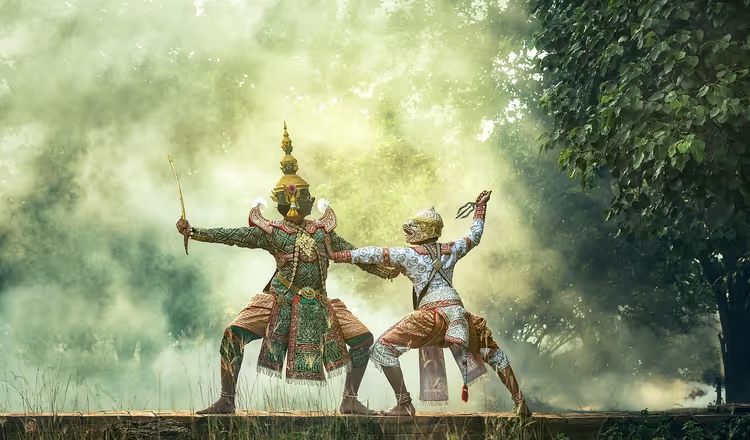
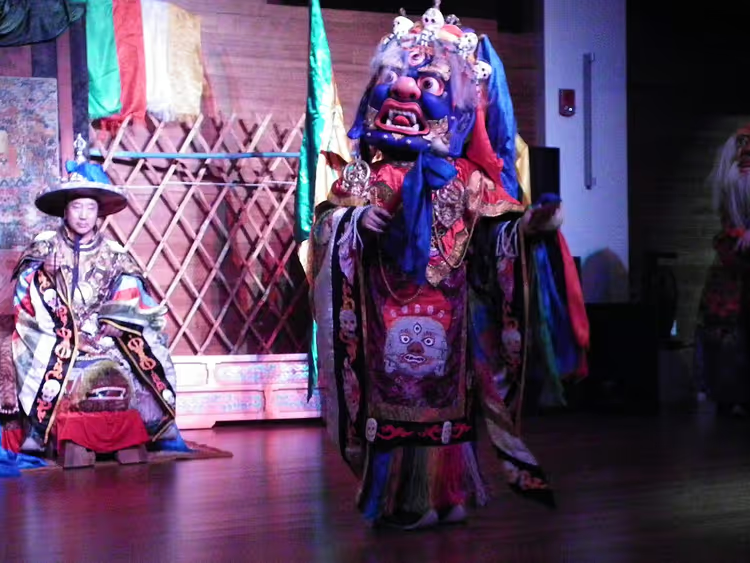
The most spectacular dance on this list is the Tsam, which translates as "dance of the gods." Its origins are tied to the Tibetan cham and reflect the essence of Buddhism (as of 09/2026, Wikipedia). Originally it was a closed religious performance for initiates, held only within monastery walls. Later the mystery play was moved to the square in front of the monastery and became accessible to spectators.
Today the Tsam is a hours-long ceremony of pantomime dances. Monks and lamas put on ritual masks of gods, spirits, and heroes, and the costumes are consecrated before the performance. To see a genuine religious ceremony, you should travel to mountain monasteries on festival days. Tourist performances happen more often but convey only part of the event.
- Where to watch: squares and courtyards of monasteries in Tibet and Mongolia.
- Who it's for: those interested in Buddhism, theater, and ritual masks.
- The catch: the full ceremony is tied to festivals; on ordinary days you'll see only a performance.
4. Sirtaki (Greece)
Sirtaki is the youngest dance in this selection. It was choreographed specifically for the 1964 film "Zorba the Greek" (as of 09/2026, Wikipedia). It is based on the old butchers' dance hasapiko: a slow part transitions into a fast one. The lead role in the film was played by Anthony Quinn, and it was after the film that the name sirtaki spread around the world.
There is a version that Quinn came up with the name himself. Officially, sirtaki is not recognized as a folk dance. But for tourists it has long become a symbol of Greece, and you'll hear it in tavernas and at festivals throughout the country.
- The catch: it's an original dance from a film, not an ancient folk tradition.
- Who it's for: those who enjoy light dances and evenings in tavernas.
5. Hula: the storytelling dance (Hawaii)
 © Ron Ardis · CC BY-SAPhoto: Ron Ardis, CC BY-SA (https://creativecommons.org/licenses/by-sa/2.0), Wikimedia Commons
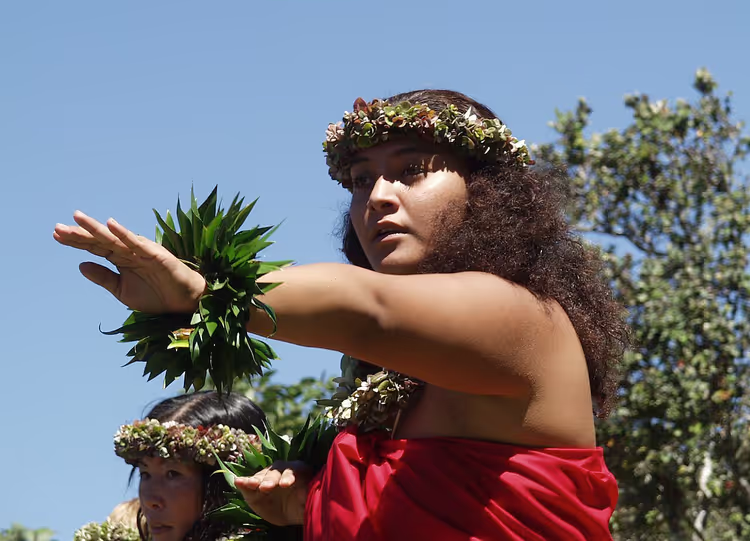
Hula is not just a dance but a way to tell a story. Through movements and chants, it conveys the genealogy of chiefs, prophecies, and legends of the past (as of 09/2026, Wikipedia). Native Hawaiians believe that during hula the bond between the land and the person grows stronger. For a long time the dance was shared by everyone, until missionaries declared it pagan and banned it.
Later Hawaiians brought hula back into public life. With the growth of tourism, a simplified version appeared: gentle swaying to soft music in beautiful costumes. It differs greatly from the authentic dance. To see the original hula kahiko, you don't have to stay in your hotel. You just need to step away from the tourist shows and find a performance by a local school.
- The catch: hotels show a simplified tourist version, not the traditional hula kahiko.
- Who it's for: those who care not only about the music but also about the meaning of the dance.
⁉️🤔 Frequently asked questions
Why are these dances called unusual?
When traveling, people usually look for cuisine, museums, and architecture, while dance gets left out. The adumu, Tsam, whirling dervishes, and hula are built on their own rules and symbols. They reveal a people's faith, strength, and memory better than a tour of the city center.
Where can I watch the whirling dervishes?
Live Mevlevi ceremonies take place in Turkey, most often in Konya and Istanbul. Some performances are aimed at spectators, while others remain religious practice. Schedules change, so it's best to confirm dates on site or on the official websites of the order's centers.
Before your trip, see how these traditions look in motion: a short overview of dances from different countries shows the rhythm, costumes, and movement that no photo can capture.
In short: what to book
Choose the tradition to match your trip, not the other way around. Want culture alongside a safari: see the adumu in Kenya and Tanzania. Drawn to mysticism and theater: plan for the Tsam or a Mevlevi ceremony. Need a light evening: sirtaki in a taverna and hula at a festival will do. If you have only a week, pick one country and one dance, not five at once. Book tickets for evening ceremonies in Konya and Istanbul in advance.

A small editorial team writing guides for independent travel. We travel ourselves, but we haven’t been everywhere, so we check prices, opening hours and how to get there against official sources.