
















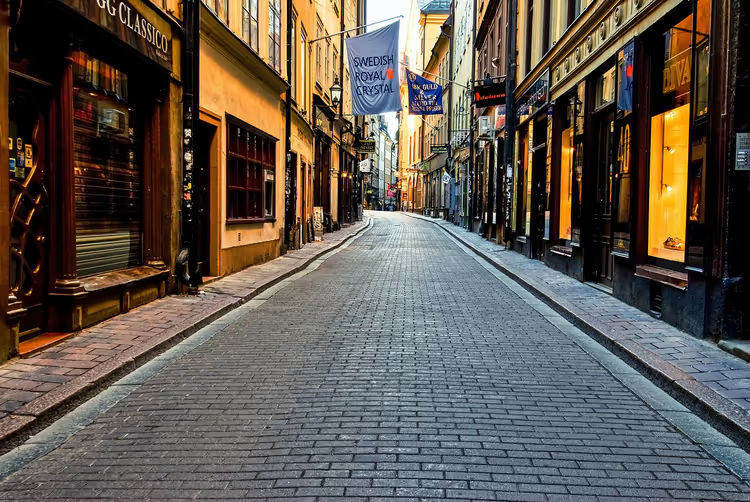
Stockholm in one day: a walking route through 25 places
Stockholm sits on 14 islands. In one day you can realistically cover only the center, but that's where almost all the main sights are. Gamla Stan, Södermalm, and Djurgården are close to each other. You'll need transport to move between islands and to reach outlying points; the rest you can walk.
We've put together 25 stops for a one-day route. For each one we've noted what to see, when to go, and where to turn. Check tickets and opening hours in advance: in summer the lines are longer, and some museums close earlier.
In one day you can fit in the old town, the Södermalm waterfront, and the museum island of Djurgården. Give the morning to the viewpoint and Gamla Stan, and keep the second half of the day for the Vasa Museum and Skansen. Children and teens under 18 get into the Vasa Museum free (as of 09/2026, Vasa Museum website). Wear comfortable shoes: cobblestones and uphill climbs put real strain on your feet.
Ad: this article contains affiliate links, we earn a commission if you book through them, at no extra cost to you.
Stockholm in one day: route plan and 25 places
💡 In short:
- Start your morning at the Katarina Elevator, then walk down through Gamla Stan toward City Hall.
- Save the museums for Djurgården: the Vasa Museum, Skansen, and the ABBA Museum are close together.
- Prices and opening hours: 09/2026, verified on the official Vasa Museum website.
Before you head out, take a look at what fits your schedule and interests. Below is a quick cheat sheet, followed by a detailed breakdown of each stop in order.
Our pick | What to see | When to go |
|---|---|---|
Katarina Elevator | Gamla Stan panorama | in the morning |
Vasa Museum | 17th-century ship | on a weekday |
Skansen | historic houses and zoo | after lunch |
ABBA Museum | costumes and holograms | after lunch |
City Hall | halls and tower | on a guided tour |
1. Katarina Elevator viewpoint
 © OleNeitzel · CC BYPhoto: OleNeitzel, CC BY (https://creativecommons.org/licenses/by/4.0), Wikimedia Commons
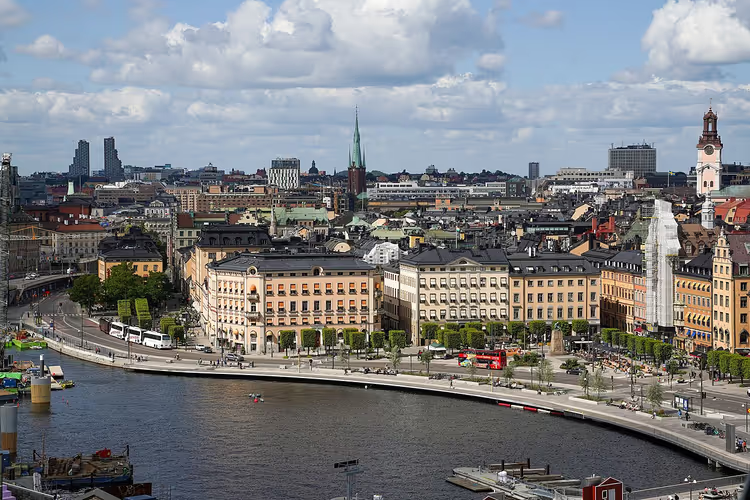
Katarinahissen stands at Slussen, 38 meters above the bay. The lift was built in 1881 and reconstructed in 1935. The mechanism wore out, and in 2010 the elevator was closed for safety reasons.
You go up via a zigzag staircase. The climb is short, but the open metal structure is exposed to the wind. From the top you can see Gamla Stan, Riddarfjärden bay, and the City Hall tower. The tall railing along the edge doesn't block the view.
Starting the day here works well: you descend straight into Gamla Stan. In the morning the platform has few people and soft light. By midday tour groups arrive, and the railing gets crowded.
- Entry: no ticket needed for the platform.
- The catch: the elevator doesn't work, and the stair climb isn't for everyone.
2. Monteliusvägen path
 © Esquilo · CC BY-SAPhoto: Esquilo, CC BY-SA (https://creativecommons.org/licenses/by-sa/3.0), Wikimedia Commons
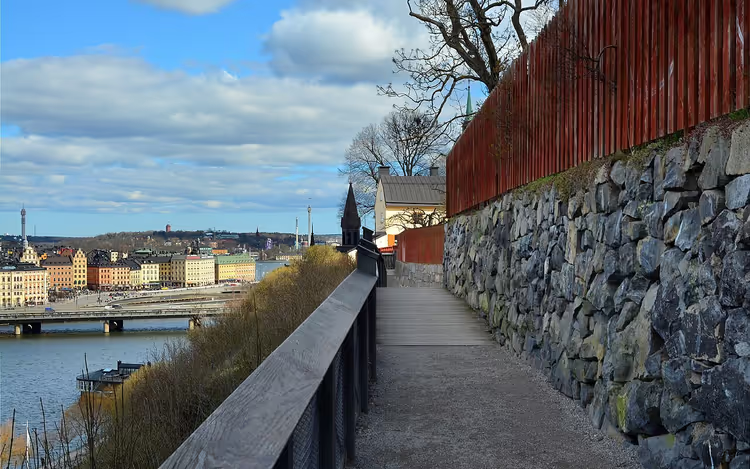
The Monteliusvägen path winds along the edge of a cliff on Södermalm. It's a walking path with benches, steps, and viewpoints. At the start is Ivar Lo-Johansson Park, named after the Swedish writer and social activist.
Couples stroll along the path and hang padlocks with wishes on the railings. Tourists come here for shots with the water in the background. From here you can see the City Hall tower, Riddarfjärden bay, Kungsholmen island, and the entire old town. On the other side of the street stand old houses with well-kept courtyards, among them the former brewery building stands out.
Start from the park side and head south: that way the views open up gradually. The best time for photos is early morning and sunset, when the light falls on the water.
- How to get there: about a 10-minute walk from Slussen metro station.
- Who it's for: a relaxed walk and city views without a ticket.
3. Skinnarviksberget viewpoint
 © Jorge Láscar from Melbourne, Australia · CC BYPhoto: Jorge Láscar from Melbourne, Australia, CC BY (https://creativecommons.org/licenses/by/2.0), Wikimedia Commons
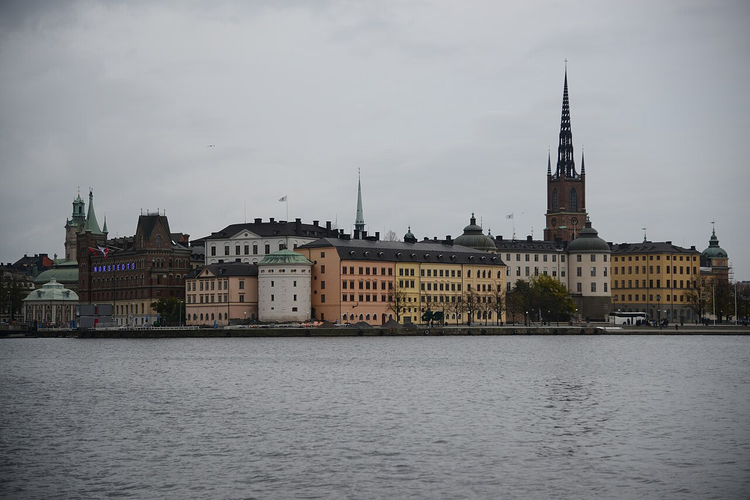
If you don't go down to the path, you'll come out onto the green hill of Skinnarviksberget, 53 meters above sea level. It's a favorite spot for local young people, who come here in the evening with blankets and food.
The hill offers a panorama of Södermalm and neighboring districts. On weekends every free meter of grass is taken, so it's better to claim your blanket spot in the morning. In the evening people watch the sunset here, and in winter the slope is used for sledding.
- Entry: you can climb the hill freely.
- The catch: there are no benches or cafes, so it's better to bring a blanket.
4. Royal Palace
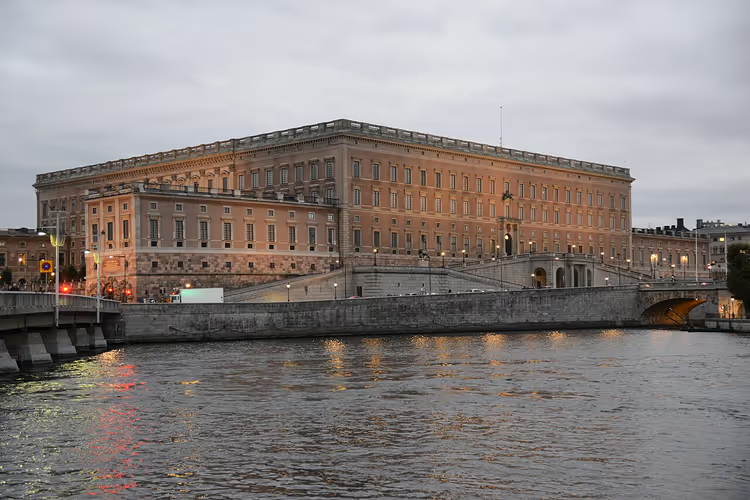 © Jorge Láscar from Melbourne, Australia · CC BYPhoto: Jorge Láscar from Melbourne, Australia, CC BY (https://creativecommons.org/licenses/by/2.0), Wikimedia Commons
The Royal Palace stands on the island of Stadsholmen right by the water. It's the official residence of the Swedish monarchs, with more than 600 rooms inside. They house the royal family's treasures and symbols of power.
Several museums operate inside the palace. In the treasury you'll see a crown with precious stones, robes, scepters, and orbs. The Royal Armoury shows five centuries of royal power: Charles XII's uniform, ceremonial carriages, military equipment, and clothing of executed members of royal families.
Visitors also go to the Museum of Antiquities with Italian marble sculptures and the Tre Kronor Museum with ancient fragments of the old castle. Seeing all the rooms takes several hours, which is hard to combine with Djurgården in one day.
- Entry: by ticket, some rooms are accessible only with a guided tour.
- The catch: in season there's a line at the entrance, so buy your ticket in advance.
5. Royal Treasury Livrustkammaren
 © Holger.Ellgaard · CC BY-SAPhoto: Holger.Ellgaard, CC BY-SA (https://creativecommons.org/licenses/by-sa/3.0), Wikimedia Commons
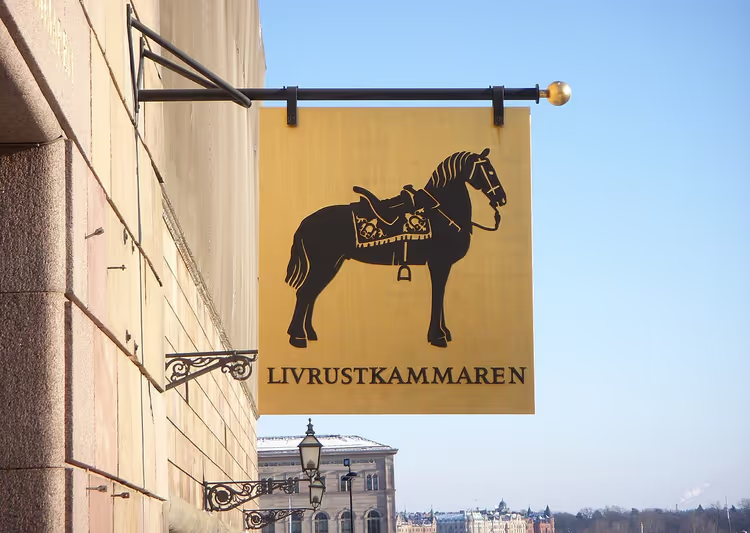
Livrustkammaren is the Swedish kings' treasury in the basement of the Royal Palace. It was opened by decree of King Gustav II Adolf in 1628. It holds symbols of power accumulated over centuries, and many exhibits have survived in their original form.
In the halls you'll see knight's armor: helmets, visors, chain mail. Separately displayed is a crested helmet worn by King Gustav Vasa. The women's halls show dresses with precious stones and lace.
Royal wedding attire and a collection of antique children's toys appeal to families with kids. For young visitors there's a "Play and Learn" room where the history of the crown is presented in a playful way.
- Who it's for: those who love history, weapons, and royal regalia.
- The catch: the halls are in the palace basement, entry with a general ticket.
6. Royal Dramatic Theatre
 © This picture has been taken by Oleg Yunakov . Contact e-mail: yunakov gmail.com . Image can be used in accordance with t · CC BY-SAPhoto: This picture has been taken by Oleg Yunakov . Contact e-mail: yunakov gmail.com . Image can be used in accordance with t, CC BY-SA (https://creativecommons.org/licenses/by-sa/4.0), Wikimedia Commons
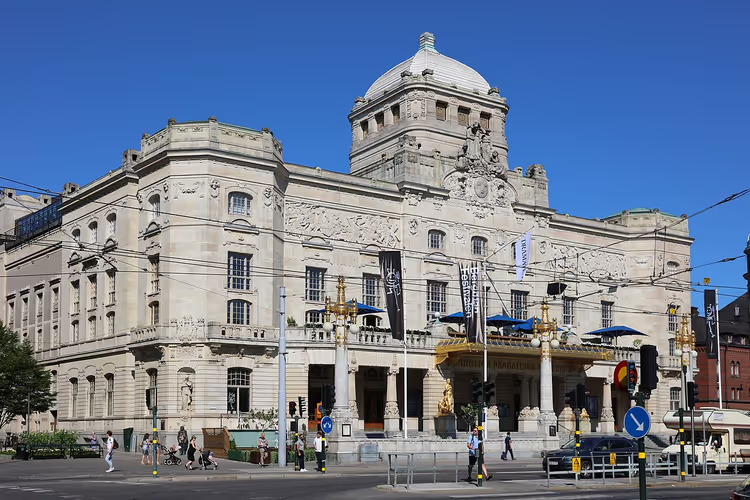
The Royal Dramatic Theatre stands in the center, and it's hard to walk past it. The national theater was founded in 1788, but for a hundred years operas were also staged in the building. It suited neither the actors nor the audience.
The old dilapidated building was demolished in the early 20th century and the current one was built. The facade is decorated with stucco, gilded statues, and columns with playbills. The theater was built with public money, and the lavish gilding in the foyer hints that quite a lot was raised.
Seven isolated stages allow several performances to run at once. The main auditorium seats 720, and the smallest one holds 60. At the corner of the theater stands a bronze sculpture of actress Margaretha Krook, heated to body temperature.
During the day tourists and locals sit on the steps; it's a convenient place to rest on the way to the Royal Palace. Plan your evening in advance: performance tickets sell out.
- The catch: you can only go inside with a performance ticket or on a guided tour.
7. "Boy Looking at the Moon" sculpture
 © randreu · CC BYPhoto: randreu, CC BY (https://creativecommons.org/licenses/by/3.0), Wikimedia Commons
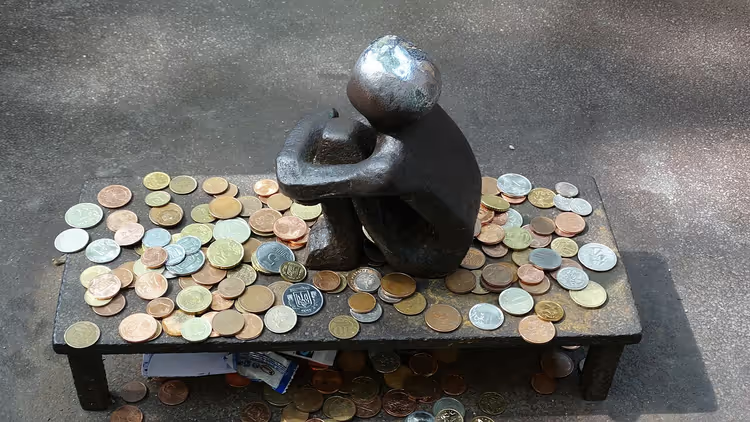
From the Royal Palace, turn onto Finska kyrkogården and Trädgårdsgatan and step into the Bollhustäppan courtyard. Tucked away there is a small sculpture, "Boy Looking at the Moon." Swedish sculptor Liss Eriksson created it in 1954, drawing on childhood memories.
The figure was carved from sandstone and coated with wrought iron. The boy hugs his knees and gazes upward. In winter, locals put little hats and scarves on him; in summer, they leave flowers on the bench beside him.
By tradition, passersby pat the figure on the head and make a wish. The spot is tiny, and without a tip you'll easily walk right past it.
- Admission: the courtyard is open to the public.
- The catch: the sculpture is hard to find without a map; the landmark is the Finnish Church.
8. Riddarholmen Church
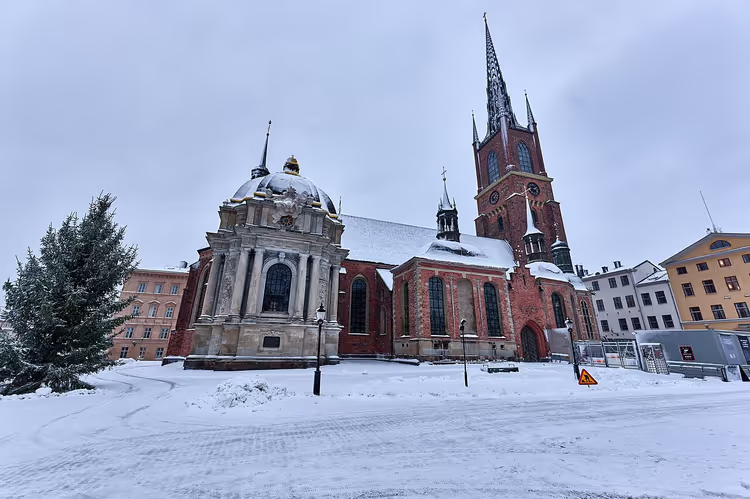
Near City Hall and the Royal Palace, the spire of Riddarholmskyrkan rises above the rooftops. It is one of the oldest buildings in the city. The church was founded by Franciscans in 1270, and the tall tower with its spire was completed in the 16th century.
After the Reformation, the church became the burial place of Swedish kings. Charles XII and Charles XIV John rest here, the latter in a sarcophagus made of red porphyry. Three chapels are reserved for royal burials.
Even from the outside, the pointed spire and brick facade are worth a stop. The interior is open only in the warm season, and no services are held here.
- The catch: in winter you will only see the facade, the entrance is closed.
9. St. Nicholas Cathedral (Storkyrkan)
 © ArildV · CC BY-SAPhoto: ArildV, CC BY-SA (https://creativecommons.org/licenses/by-sa/4.0), Wikimedia Commons
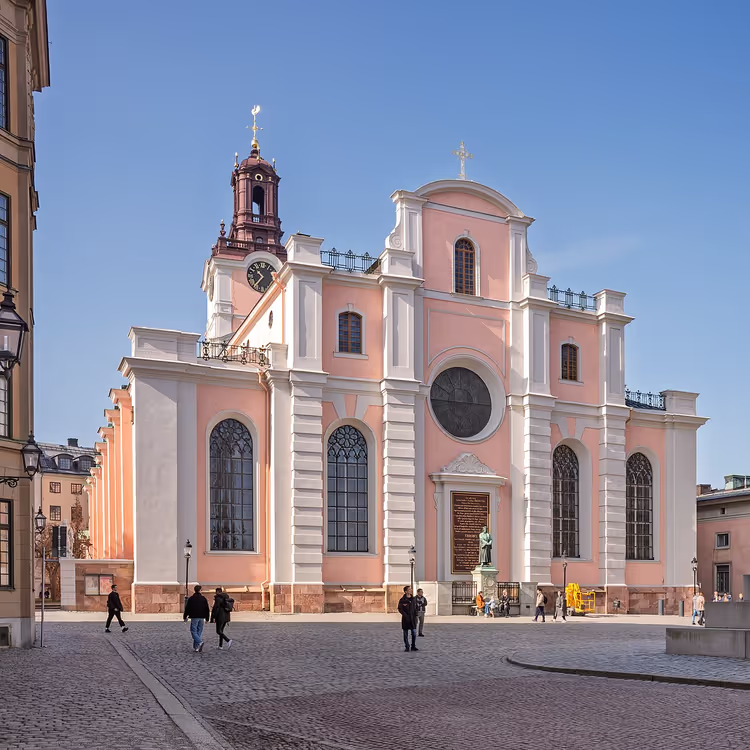
Stockholm's main cathedral stands in Gamla Stan next to the Royal Palace. Storkyrkan was built in the 17th century on the site of a 13th-century wooden church linked to the city's founder, Birger Jarl. The cathedral is smaller than Italian churches, but it has its own charm.
Red brick, white plaster, and gold details create an elegant appearance. Today, royal family ceremonies are held here. Inside, you will see Gothic brick columns, a black silver altar, and a bright stained glass window above it.
The main highlight is a 15th-century wooden sculpture: St. George slaying the dragon with his spear. The oak has darkened over time and looks all the more noble. A huge painting of the Last Judgment hangs on the wall, with copies of works by famous masters nearby.
Swedish monarchs were crowned and married in this cathedral, and several generations of the royal family have held their weddings here. The interior looks austere: brick columns rise upward, and light falls through tall windows.
- Admission: by ticket, the parish closes the cathedral during services.
- The catch: on service days, tourists are not allowed inside.
10. Nobel Prize Museum
 © User:Holger.Ellgaard · CC BY-SAPhoto: User:Holger.Ellgaard, CC BY-SA (https://creativecommons.org/licenses/by-sa/3.0), Wikimedia Commons
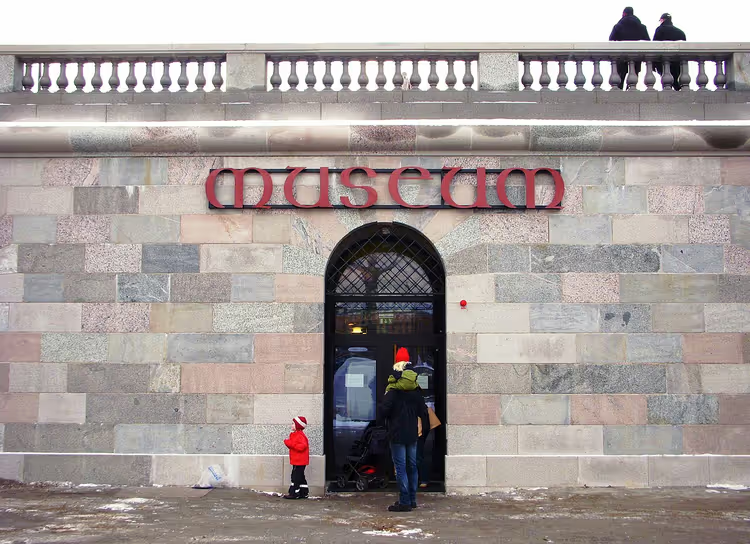
The Nobel Prize Museum occupies the former Stockholm Stock Exchange building on Stortorget square in Gamla Stan. It opened in 2001 for the centennial of the prize. The square's landmark is two brightly painted houses that have become a symbol of the city.
Inside, you are greeted by a wall of shimmering lights, and Alfred Nobel's white death mask hangs against a black background. The exhibits show the award ceremony: laureates' clothing, banquet tableware, photographs of guests in tuxedos and evening gowns.
At each item, you can press a button on the display and read an explanation. Texts are provided in Swedish and English, and videos with subtitles play on large screens. A separate exhibition covers the inventions and discoveries recognized by the prize. The climax is a "procession" of 900 laureates along a suspended cableway under the ceiling.
A visit takes about an hour, after which you return to Stortorget and the other stops on the route.
- Admission: by ticket; check hours and discounts on the official website.
- The catch: tickets are not cheap, and the rooms are small, so it gets crowded in season.
11. Medeltidsmuseet underground museum
 © Jorge Láscar from Melbourne, Australia · CC BYPhoto: Jorge Láscar from Melbourne, Australia, CC BY (https://creativecommons.org/licenses/by/2.0), Wikimedia Commons
Medeltidsmuseet is hidden under the Norrbro bridge, between the Royal Palace and the Royal Swedish Opera. The exhibition occupies a former secret underground passage beneath the strait. It shows daily life in Stockholm from the 13th to the 16th century.
In 1978, during the renovation of the parliament building, archaeologists found numerous artifacts. Specialists studied the finds and placed them right at the excavation site. Old furniture, clothing, tools, and clay children's whistles have survived remarkably well.
In the halls, you feel as if you have traveled back five centuries. Figures of medieval townspeople in authentic clothing look lifelike, like in a wax museum. The museum also includes a fragment of a 14th-century cemetery wall and a 16th-century ship raised from the seabed.
- Admission: by ticket; weekends are usually busier.
- Who it's for: families with children and anyone interested in archaeology. The museum is small and not tiring.
12. Stockholm City Hall
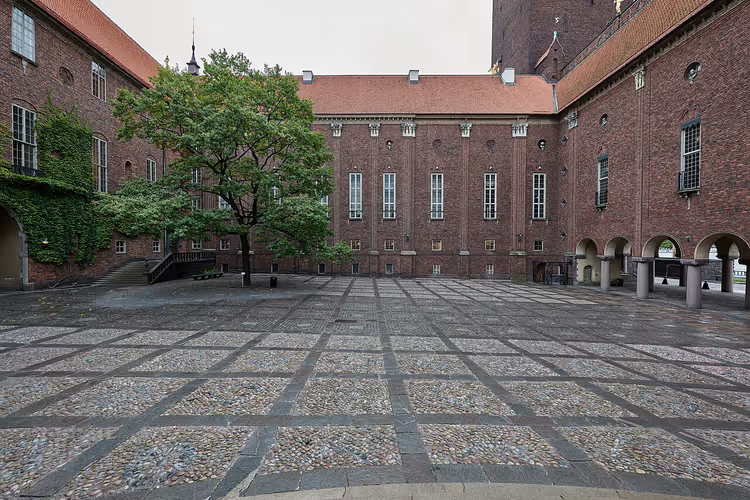
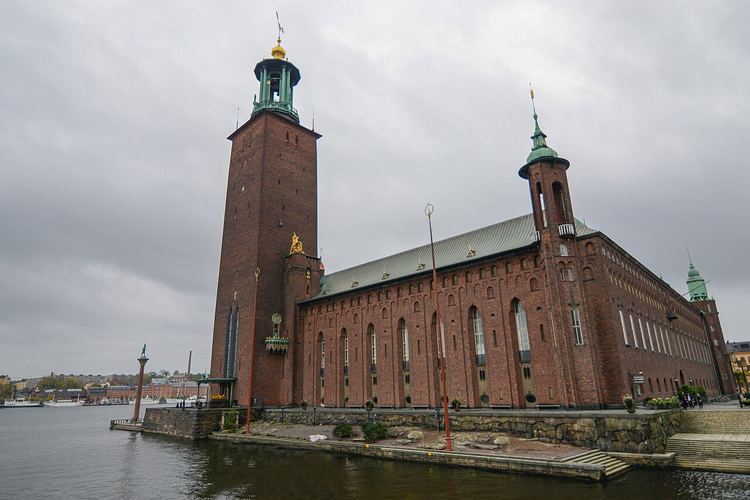
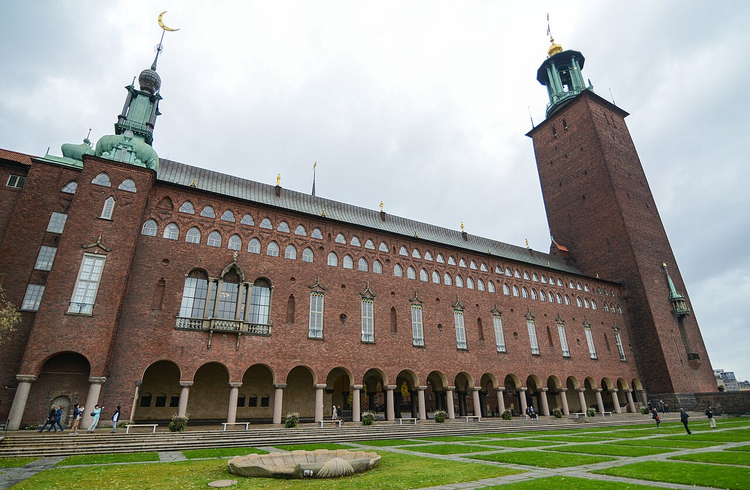
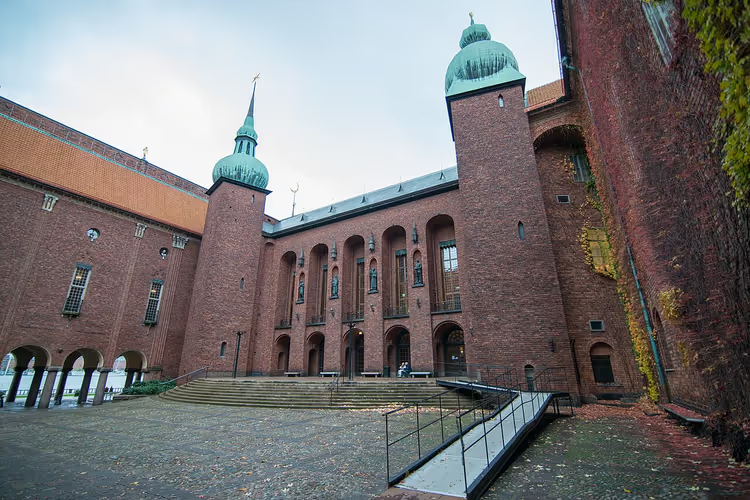
Stockholm City Hall stands on the tip of Kungsholmen island. The red brick building took 12 years to build, from 1911 to 1923, to a design by architect Ragnar Östberg. It is one of the city's symbols.
Visitors climb 365 steps to the 106-meter tower to see the city from above. The climb takes about 20 minutes; if you are unsure of your stamina, the tower has an elevator. The walls required roughly 8 million bricks, and the tower is crowned by a rotunda with three golden crowns.
You can only enter the interior with a guided group tour. The Golden Hall is decorated with a mosaic of 18 million gilded tiles. The Nobel banquet takes place in the Blue Hall, which seats 1,000 people, even though its walls remain brick.
City Hall looks best from the water: sightseeing boats and ferries pass alongside it. In the evening, the lighting reflects in the bay, and the embankment offers great photo opportunities.
The guide leads you through the halls where receptions are held and explains why the Blue Hall was left in brick. There is also a separate account of the construction and how the brick shade for the walls was chosen. From the tower, you get a view of Södermalm, Gamla Stan, and Djurgården, and in summer the observation deck is also open in the evening when the city is lit up.
- Admission: halls and tower only with a guided tour, arrive at the start of a session.
- The catch: the tower is visited in groups, and the climb takes time.
13. Royal Swedish Opera
 © Егор Журавлёв from Smarde, Latvia · CC BY-SAPhoto: Егор Журавлёв from Smarde, Latvia, CC BY-SA (https://creativecommons.org/licenses/by-sa/2.0), Wikimedia Commons
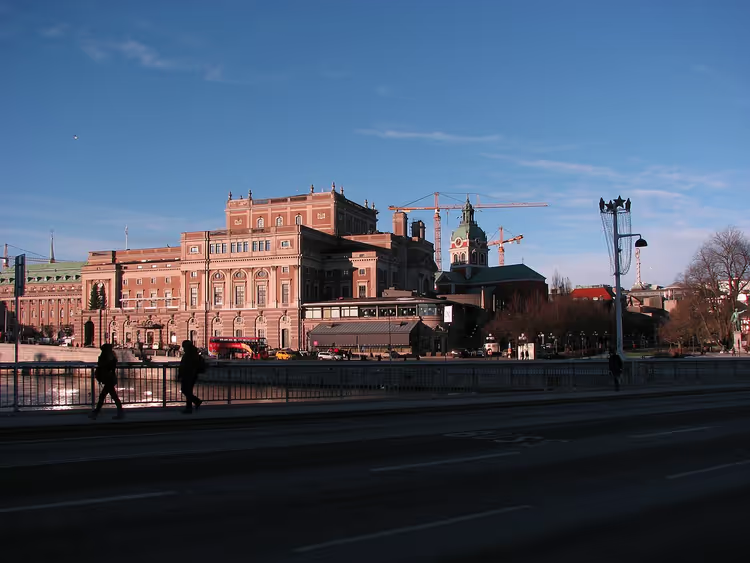
The Royal Swedish Opera stands next to the parliament building. The current building was constructed under King Oscar II in the late 19th century. The history of Swedish opera is tied to a tragedy: in 1792, King Gustav III was assassinated at a masquerade ball in the old opera house.
Later, Verdi wrote the opera Un ballo in maschera based on this murder. The king's son Gustav IV disliked opera, no money was allocated for repairs, and the dilapidated building was demolished in 1892. The new structure is striking in its decoration: gold, fine wood, velvet, and crystal.
The Golden Foyer, 28 meters long with 11-meter-high ceilings, is drenched in gilding. It is enhanced by two enormous chandeliers and wall sconces. Children's musical performances are also held here: parents sit on chairs while children settle comfortably on the parquet floor.
- Admission: the foyer and auditorium only with a performance ticket or guided tour.
- The catch: you will only see the grand interiors from the auditorium or on a tour.
14. Kungsträdgården Park
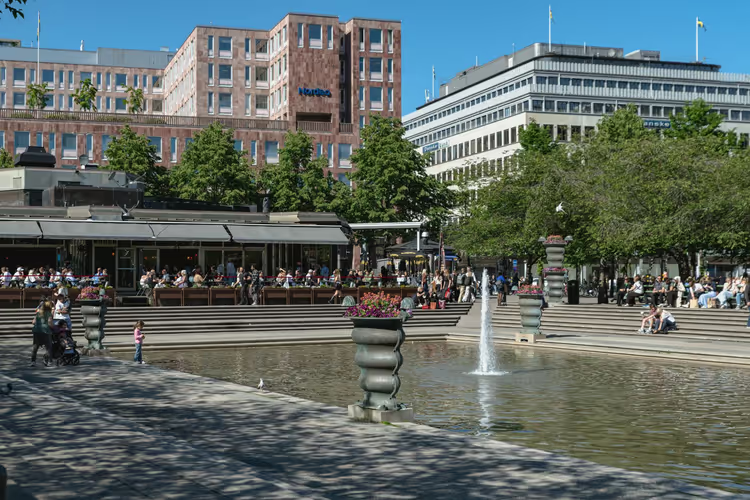
Kungsträdgården is a favorite strolling spot for locals in the city center. The site has been known since the 15th century as the "royal cabbage garden": vegetables were grown here for the royal family. In the 18th century, the garden was transformed into a Baroque park.
The Strömbron bridge leads to it from the Royal Palace across the Stallkanalen inlet. In the southern part of the garden stand monuments to two Charleses: Charles XII and, opposite him, Charles XIV. In the center, Johan Molin's fountain features heroes of Scandinavian epic.
The fountain basin is surrounded by sculptures of the sea ruler Aegir and his nine wave daughters. At the center of the composition sits a water spirit with a gusli, while valkyries in the form of black swans swim nearby. In spring, cherry blossoms bloom in the northern part of the park. In winter, an ice rink is set up here, and in summer concerts and festivals take place.
In summer, street musicians perform in the park, and in winter people skate between the alleys. Benches hide in the shade of trees, making it a comfortable place to rest in the heat.
- Admission: the park is open freely year-round.
- Who it's for: a break between museums and evening walks in the center.
15. Sergels torg square
To see modern Stockholm, stop by Sergels torg square. It appeared in the 1960s and was named after the 18th-century sculptor Johan Sergel: he had a workshop here and taught King Gustav III.
 © Wille Öhgren · CC BY-SAPhoto: Wille Öhgren, CC BY-SA (https://creativecommons.org/licenses/by-sa/4.0), Wikimedia Commons
The center of the square is adorned by an unusually shaped glass column. One corner is occupied by the city's largest department store. Among the glass-and-concrete buildings, Kulturhuset stands out with its galleries, concert venues, cafes, and shops.
All metro lines converge here, so the square is always crowded. In one of the panoramic cafes, you can grab an inexpensive bite and watch the flow of passersby. Beneath the square runs an underpass with black-and-white tiles, where musicians play in the evenings. The square hosts public celebrations and festivals.
- Getting there: it is a metro hub, all lines reach the square.
- Who it's for: shopping and modern architecture after the old quarters.
16. Brunkebergstunneln tunnel
 © Jorge Láscar from Melbourne, Australia · CC BYPhoto: Jorge Láscar from Melbourne, Australia, CC BY (https://creativecommons.org/licenses/by/2.0), Wikimedia Commons
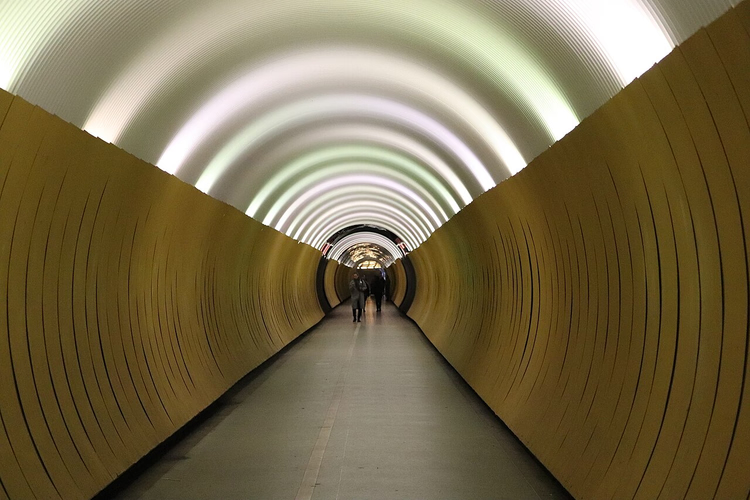
Brunkebergstunneln is an underground passage beneath the hill of the same name in the center. It was built in 1886 by order of King Oscar II. The project was designed by architect Lindmark, the creator of the Katarina Elevator.
The 231-meter passage connected the Norrmalm and Östermalm districts. The tunnel is 4 meters wide, almost 4 meters high, and lies 15 to 20 meters below ground. Inside there is a bike lane, admission is free, and it is open from early morning until late evening.
Construction was difficult: the western section was dug through loose sand and gravel. The rock was frozen with a refrigeration machine, then a metal frame was installed and concrete was poured. In rocky sections the vault was left unlined, but everything looks tidy. Even a quick glance is enough to appreciate the scale of the work.
The lighting and smooth walls make the tunnel look like a long corridor. It is dry and windless here, so cyclists use the passage all year round.
- The catch: it is a working passage, not a museum with an exhibition.
- Who it's for: for those who appreciate engineering structures and like to cut corners.
17. Kaknästornet TV tower
 © Jorge Láscar from Melbourne, Australia · CC BYPhoto: Jorge Láscar from Melbourne, Australia, CC BY (https://creativecommons.org/licenses/by/2.0), Wikimedia Commons
Kaknästornet is a TV tower in the east of the city. Construction began in 1963 on the site of a small medieval village, and it opened in 1967. After opening, it became the main television broadcasting center of Sweden and the city's highest observation deck.
The tower is about 170 meters tall including the antenna, and a park surrounds it. The facade is decorated with cast symbols of TV and radio signals. Today it is a cultural and entertainment venue, not just a technical facility.
On the top floor there is a restaurant, a cafe, and an observation deck. The windows are coated with a sun-protective film, so the light does not glare. Downstairs there is a souvenir shop and an elevator to the top. From the restaurant windows you can see the entire city. Works by contemporary artists are displayed on the walls.
- The catch: you need to travel to the tower separately from the center; you cannot walk there.
18. Armémuseum army museum
Armémuseum is located in the Östermalm district, within walking distance from the center. The museum is interesting for both adults and children. The collection includes 100,000 objects related to the centuries-long history of the Swedish army.
 © Алексей Решетников · CC BYPhoto: Алексей Решетников, CC BY (https://creativecommons.org/licenses/by/3.0), Wikimedia Commons
The three-story building with a round dome is surrounded by a lattice fence with military symbols. At the entrance stands a monument to those who fell in the Battle of Poltava, and old cannons are lined up along the facade.
Inside you will see many types of weapons: from antique pistols to modern models. There are exotic trophies from collectors, exhibitions of uniforms, greatcoats, and emblems. Wax figures of soldiers, peasants, and artillerymen show war from a human perspective. Nearly 5,000 exhibits are dedicated to the Thirty Years' War.
- Who it's for: for those interested in military history and weapons.
- The catch: the subject matter is heavy; it will be difficult with small children.
19. Junibacken children's museum
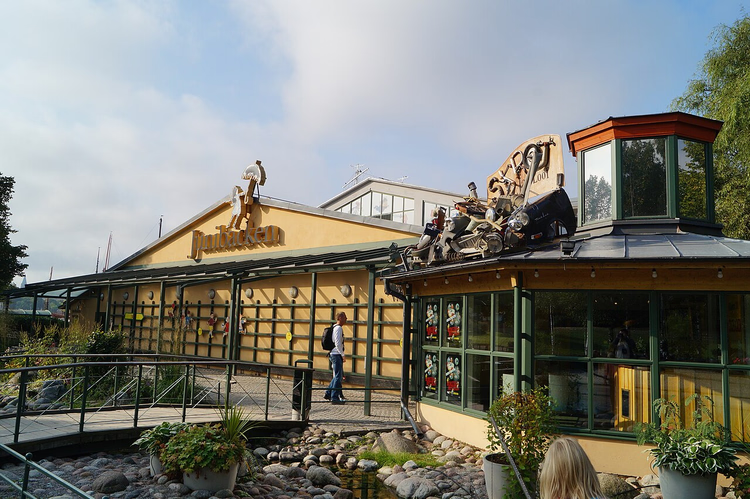
Junibacken is a children's entertainment center on the island of Djurgården. A fairy-tale house surrounded by installations stands in the very center of the museum island. Characters from Scandinavian fairy tales and sagas live here, and performances take place on weekends.
The center's opening in 1996 was supported by writer Astrid Lindgren, so the museum is often named after her. After her death in 2002, a monument was erected in the courtyard. In the first hall there are many little houses, rooms, and staircases that children freely climb.
Karlsson-on-the-Roof and Pippi Longstocking share the spotlight with Tove Jansson's Moomins and characters by other authors. The main attraction is a train ride through fairy-tale scenes with charming little carriages.
There is also Villa Villekulla, where children can make as much noise as they want. There is a fairy-tale town with tiny shops, banks, and a railway, where children play the roles of shopkeepers and cashiers. The museum restaurant is as colorful as everything around it.
- Admission: by ticket; it is better to book a specific time slot.
- The catch: it is designed for children; adults without kids will be bored here.
20. Vasa Museum
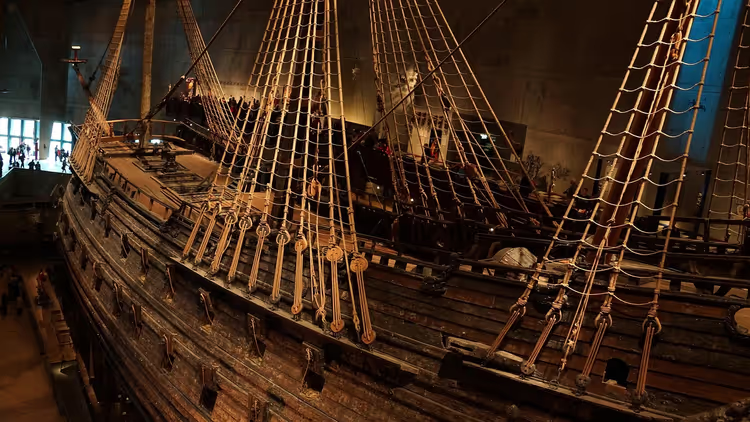
On the same Djurgården stands the Vasa Museum, dedicated to a single ship. The warship Vasa was built in 1627 as the flagship of the navy. Four hundred people worked on it, more than a thousand oak trees were used, and 50 bronze cannons were cast.
King Gustav II Adolf personally oversaw the construction, but immediately after launching in August 1628, the ship capsized and sank. Thirty years later, some of the cannons were raised from the bottom, while the Vasa itself lay underwater for 330 years, until 1961. The main parts of the hull survived.
Today it is the only well-preserved 17th-century ship in the world. The ship has become the country's most visited attraction. You examine hundreds of carved figures, listen to an audio guide in different languages, and watch a film about the ship's recovery.
- Admission: children and teenagers under 18 enter free (as of 09/2026, Vasa Museum tickets).
- Hours: the museum is open daily, longer in summer, shorter in winter (as of 09/2026, schedule).
- The catch: in high season there is a line at the entrance; arrive at opening time.
21. Skansen
Skansen is an open-air ethnographic museum on Djurgården. The former estate was bought by Artur Hazelius, and in 1891 a kind of miniature folk Sweden was created here. The grounds contain about 150 manor houses from the 18th and 19th centuries.
There are souvenir shops, craft workshops, and a zoo. You can watch potters, glassblowers, bakers, and leatherworkers. Like in a real small town, there is a church, a smithy, and cultivated vegetable gardens.
Each house shows the daily life of people of its social class. Guides wear period costumes, and the interiors are recreated down to the smallest details. Sometimes musicians in 18th-century outfits play in the little houses. In the zoo, natural conditions have been created for the animals, and there are even bison.
- Admission: day ticket, price depends on the season and is lower when purchased online, children under 15 enter free (as of 09/2026, official website).
- The catch: seeing everything takes half a day; in one hour you will only see part of it.
22. ABBA Museum
 © I99pema · CC BY-SAPhoto: I99pema, CC BY-SA (https://creativecommons.org/licenses/by-sa/3.0), Wikimedia Commons
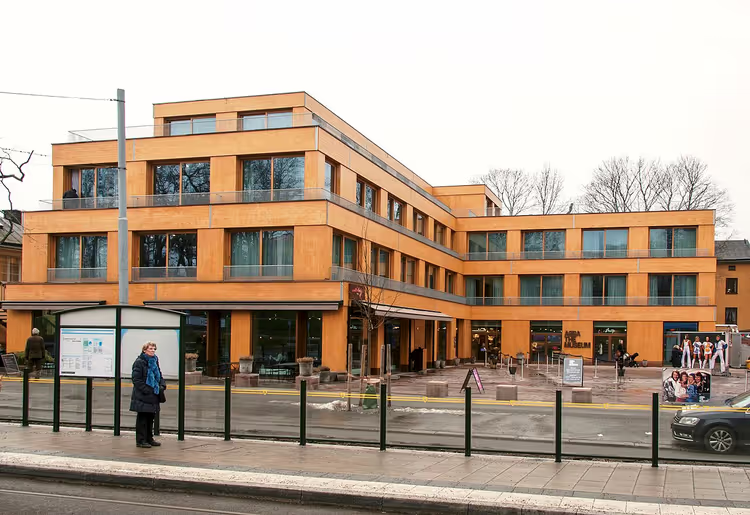
Djurgården is called the museum island for a reason: the ABBA Museum is also here. It is dedicated to the group whose hits are still loved around the world. The band members gave the museum rare items and suggested fresh ideas for the exhibitions.
The result is an interactive venue, one of a kind. Among the exhibits are concert costumes, instruments, posters, booklets, and video recordings. The main idea is that the visitor becomes a participant, not just a spectator.
Using an ordinary phone, you can "call" a band member. The museum piano sometimes plays by itself: it is connected to Benny Andersson's grand piano, and when he sits down at the instrument at home, music sounds in the hall.
If you wish, you can record any ABBA song and enter the studio. At the end, holograms of the musicians appear on stage, and you can join them in a dance.
- Admission: by ticket for a specific time slot (as of 09/2026, official website).
- The catch: tickets are by session; on weekends the desired slots are booked in advance.
23. Gröna Lund amusement park
 © Julian Herzog ( Website ) · CC BYPhoto: Julian Herzog ( Website ), CC BY (https://creativecommons.org/licenses/by/4.0), Wikimedia Commons
Gröna Lund is the city's oldest amusement park, located on Djurgården. More than 130 years ago, German entrepreneur Schultheis rented a plot of land and set up a few carousels. Locals loved them right away, and the park expanded year after year.
Today, modern rides operate alongside the historic attractions, ranging from fun to extreme. On the tall tower, you'll experience weightlessness as you drop down. Older kids will be drawn to the "Haunted House" with its trolls and scares.
You can test your agility on the "Viking Ship" and in the "Fun House," climbing wobbly staircases. In essence, it's a mini-town with cafes, restaurants, concerts, and shows.
- Who it's for: families with children and thrill-seekers.
- The catch: on weekends, popular rides have long lines.
24. Fotografiska photography museum
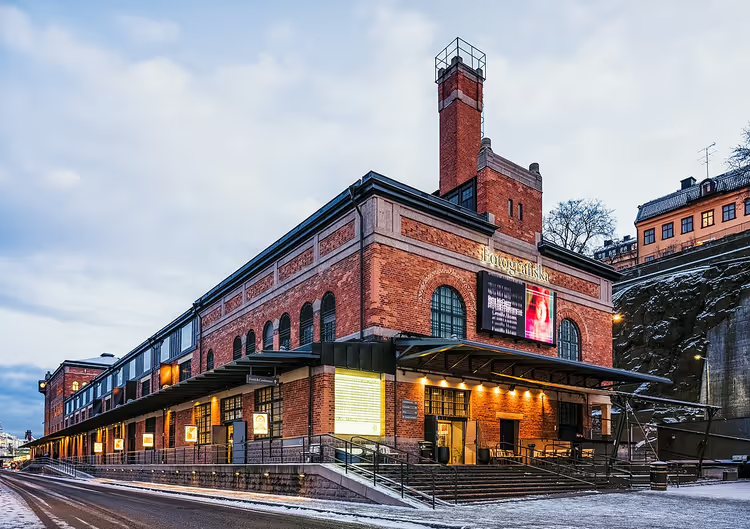
Fotografiska opened in 2010 in a historic former customs house by the water. It is one of the largest exhibition centers in Europe and a prominent point on the city map. Exhibitions by different photographers run simultaneously across three floors.
People come here in the evening, having booked a table at the restaurant in advance as the final point of the day. One floor showed works by the classic black-and-white photographer Christer Strömholm. Another featured projects by photographer Sally Mann about time and family.
Sally Mann's works explore the theme of life and death, which the artist returns to constantly. The top floor is given to artists who examine gender roles and society. The final touch is the restaurant with panoramic views, where you relax after the day's route.
- Who it's for: for those who love photography and evening views from the restaurant.
- The catch: exhibitions change periodically, check the schedule on the museum's website.
25. Himlen restaurant

Himlen restaurant occupies the top floors of the tallest building in Södermalm. The menu features European, Scandinavian and local cuisine, and the windows open onto a panorama of the center. Prices here are above average, but the dining rooms are almost always full, especially on weekends.
People are drawn not only by the food and cocktails, but also by the location at the highest point of the district. To get here, book a table in advance. If you are not planning dinner, reserve a spot at the bar and enjoy the city with a glass in hand.
- Who it's for: for dinner or a glass of wine with a sunset view.
- The catch: on weekend evenings there is usually no availability without a reservation.
How to get to the center
You get to central Stockholm from Arlanda Airport and from the ferry terminals. The fastest option is the Arlanda Express train: it runs from the airport to Central Station without stops in 18 minutes (as of 09/2026, official website).
A cheaper option is Flygbussarna buses, but the trip takes about 45 minutes to the station. Another option is the commuter train: it stops at the terminals and costs less than the express.
If you arrive by ferry, walk from the docks to the nearest metro station and take a train to the center. Buses run from different docks, but routes change, so check the schedule on site.
Getting around the city is convenient with an SL card: the ticket works on the metro, buses, trams and ferries. You can buy the card at kiosks and ticket machines. For a single day, get a single-use ticket for the number of rides you need.
- Tip: mark a return point on the map near the metro so you don't have to find your way in the dark.
One-day Stockholm route on the map
One-day route around Stockholm
Places on the map
- 1Katarinahissen Lookout Former lift, now stairs with a view of Gamla Stan
- 2Monteliusvägen Path Scenic path along the cliff edge with views of the bay and old town
- 3Skinnarviksberget Viewpoint Green hill 53 m high with a panorama of Södermalm
- 4Royal Palace Royal residence with 600 halls and a treasury
- 5Royal Armoury (Livrustkammaren) Armoury in the palace vaults, armour and regalia
- 6Royal Dramatic Theatre 1788 state theatre with a gilded foyer
- 7'The Boy Who Looks at the Moon' Statue Small statue in a courtyard, passers-by stroke it for luck
- 8Riddarholmen Church Burial place of Swedish kings, one of the city's oldest buildings
- 9Storkyrkan (Cathedral of St. Nicholas) Cathedral with a wooden statue of St. George and the Dragon
- 10Nobel Museum Exhibition about the prize in the former stock exchange building on Stortorget
- 11Medeltidsmuseet Underground Museum Life in medieval Stockholm in an underground corridor beneath a bridge
- 12Stockholm City Hall Red-brick building with a tower of 365 steps
- 13Royal Swedish Opera Late-19th-century opera house with a golden foyer
- 14Kungsträdgården Park Baroque park with a fountain and monuments to kings
- 15Sergels Torg Square Modern square with a glass column and Kulturhuset
- 16Brunkebergstunneln Tunnel Pedestrian-and-cycle underpass from 1886
- 17Kaknästornet TV Tower The city's highest viewpoint, with a restaurant
- 18Swedish Army Museum (Armémuseum) History of the Swedish army, 100,000 exhibits
- 19Junibacken Children's Museum Train ride through Astrid Lindgren's tales and Villa Villekulla
- 20Vasa Museum The only preserved 17th-century ship in the world
- 21Skansen Open-air ethnographic museum, about 150 farmsteads
- 22ABBA Museum Interactive exhibition about the band with holograms on stage
- 23Gröna Lund Amusement Park The city's oldest amusement park, from carousels to thrill rides
- 24Fotografiska Photography Museum Photography exhibition centre in a former customs house
- 25Himlen Restaurant Restaurant on the top floors of Södermalm's tallest building
The map shows all 25 points of the route: from the Katarina Elevator through Gamla Stan and Södermalm to Djurgården. Mark what you have visited so you don't lose momentum.
Tickets to Stockholm museums are easier to buy online: in high season, slots for the Vasa Museum and the ABBA museum sell out by morning.
Tours and tickets in Stockholm
Guided tours, skip-the-line tickets and activities — most offers can be cancelled free of charge.
See offers on TiqetsThe widget loads once you give your consent.
⁉️🤔 Frequently asked questions
How much money do you need for a day in Stockholm?
The budget depends on the museums. Walking around the city and viewpoints cost little, while entrance tickets are the main expense. The Vasa Museum, Skansen and the ABBA museum charge admission, and children under 18 enter the Vasa Museum free of charge (as of 09/2026, museum rates). Set aside money separately for transport with an SL card and for lunch.
Can you explore central Stockholm on foot?
Yes, Gamla Stan, Södermalm and the waterfronts are connected by walking routes. Between the islands you cross bridges or ride a couple of stops on the metro. In one day you can realistically cover the center, but you won't manage all the Djurgården museums at once.
When is the best time to go to the viewpoints?
In the morning or closer to evening. At the Katarina Elevator, groups gather during the day, and at Skinnarviksberget on weekends every free spot is taken. Sunset on the hill is a separate item on the program, come early and claim your spot.
What to see if it rains?
Move your route to indoor museums. The Vasa Museum, the ABBA museum, Medeltidsmuseet and the Nobel Prize Museum operate in any weather. In the City Hall, the halls are accessible only with a guided tour, so buy a ticket for it in advance. Check opening hours on museum websites, schedules change by season.
Do you need to book tickets in advance?
In high season, yes. The ABBA museum sells timed tickets, the City Hall tower admits visitors in groups, and tickets to the Royal Opera sell out weeks ahead. Online you choose a convenient slot and don't stand in line at the entrance.
In short: what to book
If you have one day, build it from proven points. In the morning, go up to the Katarina Elevator, walk along Monteliusvägen and stop by Gamla Stan. After lunch, head to Djurgården: the Vasa Museum, Skansen and the ABBA museum offer different experiences.
If you are a family with children, choose Junibacken and Skansen. If you love history, pick the Royal Palace and Stockholm City Hall. If you want a modern city, save the evening for Sergels torg and Fotografiska.
Airport-to-hotel transfer is convenient to book in advance: check transfer options.

A small editorial team writing guides for independent travel. We travel ourselves, but we haven’t been everywhere, so we check prices, opening hours and how to get there against official sources.