















How to travel around Malaysia: buses, ETS trains, ferries and Grab
Malaysia itself hints at how to get around. Buses run on schedule, tickets are sold online, and the Kuala Lumpur bus terminal greets passengers with separate exits to the platforms. We checked schedules and carrier rules on official websites in September 2026 and put every mode of transport into one guide.
The nuances start further out. On Borneo schedules shift throughout the day, ferries depend on the season and water levels, and a taxi from the airport costs several times more than the bus. Below you will find estimated travel costs and the main hubs where transfers are convenient.
In short: the intercity bus remains the country's main form of transport, the ETS train is faster on long stretches along the west coast, and within the city the cheapest options are the bus or the Grab app.
Ad: this article contains affiliate links. We earn a commission if you book through them, at no extra cost to you.
Buses in cities and between cities
💡 In short:
- Intercity buses: buy tickets online in advance, otherwise only inconvenient departures will be left.
- ETS trains: the Platinum class makes fewer stops and saves you time on the road.
- Ferries are needed for Penang, Langkawi and the islands of Borneo.
- Within the city the cheapest option is the bus, and for a group of three or more Grab is better value.
- Prices, schedules and routes: 09/2026, verified on the official KTMB carrier website and ERL.
In any major Malaysian city you will find city buses. Get on and ask the driver whether the bus goes in the direction you need. Pay when you board, to the driver. The price depends on the distance and stays within a few ringgit.
 © *angys* · CC BY-SAPhoto: *angys*, CC BY-SA (https://creativecommons.org/licenses/by-sa/4.0), Wikimedia Commons
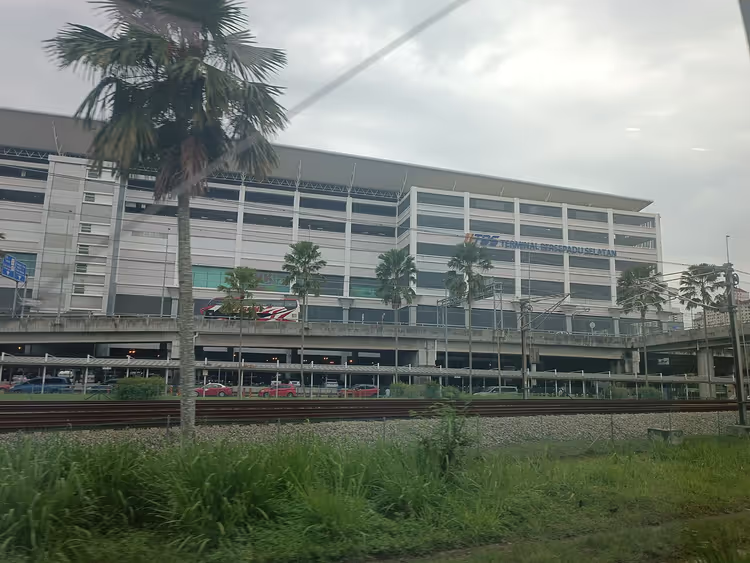
A bus also runs from the airport. In Kuala Lumpur it picks up passengers at the terminal and takes them to KL Sentral, the central station. This bus is cheaper than the KLIA Ekspres train, but the trip takes longer, and at rush hour you sit in the same traffic jam as the rest of the city.
Below is a comparison of three options if you need to get from Kuala Lumpur airport into the city.
Option | Price | What matters |
|---|---|---|
Bus to KL Sentral | the lowest | takes longer, depends on traffic |
KLIA Ekspres | higher than the rest | no stops, arrives at KL Sentral |
Grab | mid-range | good value from three passengers up |
Intercity buses: the country's main transport
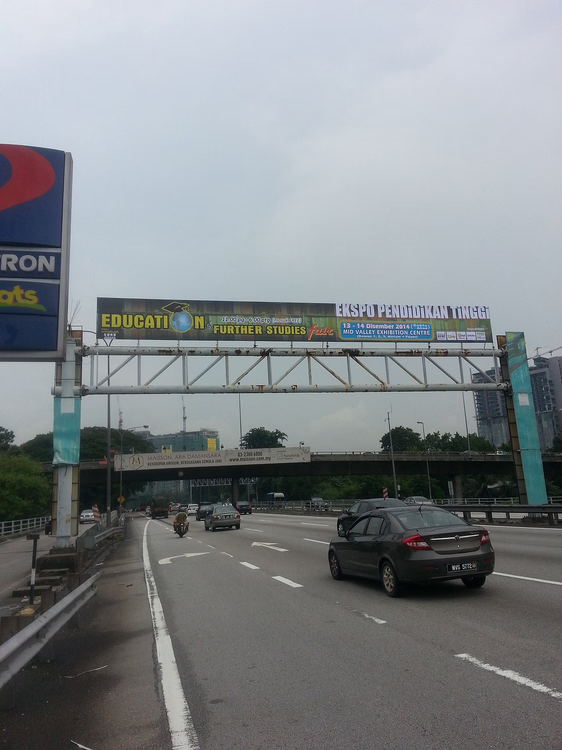
The bus is the most commonly used form of transport in Malaysia. Almost every city has a bus terminal for intercity routes, and from there you can travel to any part of the country. The vehicles are modern, with air conditioning and decent legroom. Delays happen, but rarely.
 © Jerry Lim · CC BY-SAPhoto: Jerry Lim, CC BY-SA (https://creativecommons.org/licenses/by-sa/3.0), Wikimedia Commons
There is no toilet on board. However, drivers make a short stop every couple of hours at a bus terminal or a roadside eatery with a toilet and local food. This is convenient: you have time to eat and stretch your legs.
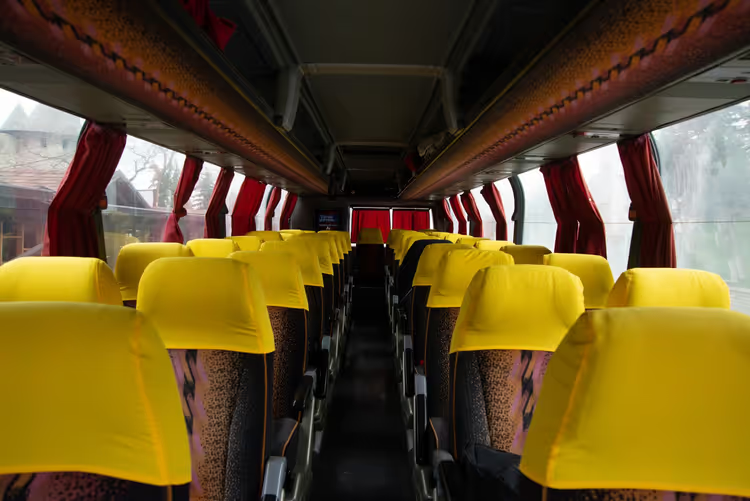
Pick seats in the middle of the bus. Roads are uneven in places, and in the middle you get bounced around less when you are trying to sleep. Also pack a sweater and long pants in your carry-on: air conditioning on Malaysian buses runs at full blast.
It is better to buy tickets online in advance. This way you get the departure time you need and can compare current schedules rather than whatever is left in the morning. compare bus schedules and prices on Trip.com
You show the digital ticket at the bus station at the carrier's window, after which you receive a regular ticket. At major stations, such as in Kuala Lumpur, platform exits are numbered, so you will find the right bay without any help. The cost depends on the distance: short segments cost a few ringgit, while long-distance trips are noticeably more expensive. Compare prices across different platforms, sometimes the difference is significant.
If an online platform does not work for you, buy a ticket at the bus station counter. Seats are usually available, except during holidays and long weekends. On public holidays, get tickets several days in advance, otherwise you will be left with only night services.
ETS trains: west coast and the Thai border
The train is useful for long stretches along the west coast. The ETS runs on an electrified double-track line from Gemas via KL Sentral to Padang Besar at the Thai border, reaches 140 km/h (as of 09/2026, KTMB), and is considered one of the fastest meter-gauge trains in the world.
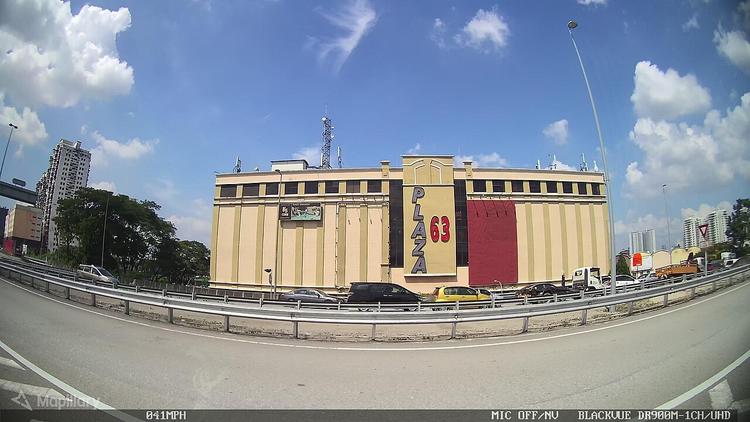 © kaart5 @ Mapillary.com · CC BY-SAPhoto: kaart5 @ Mapillary.com, CC BY-SA (https://creativecommons.org/licenses/by-sa/4.0), Wikimedia Commons
Classes differ in the number of stops. Platinum stops only at major stations and is the fastest. Gold runs with more stops. Silver is the cheapest and operates mainly between KL Sentral and Ipoh. If you are short on time, take Platinum.
Checked on 10.09.2026 on the official KTMB website: the timetable includes routes KL Sentral - Ipoh, KL Sentral - Butterworth, and KL Sentral - Padang Besar. There is no through Singapore - Bangkok route in the timetable; the line ends at the border. At Padang Besar you get off and transfer to a Thai train. ETS tickets sell out in advance, especially on weekends and holidays, so buy them together with your travel plan. ETS tickets on Trip.com
Ferries: Penang, Langkawi, and the islands of Borneo
To reach the islands in the north of the country, Penang and Langkawi, it is convenient to travel from the bus station of the port city. The bus station near the port is usually right next to the pier: you collect your luggage and walk to the ferry. Tickets are sold at the counter right by the pier.
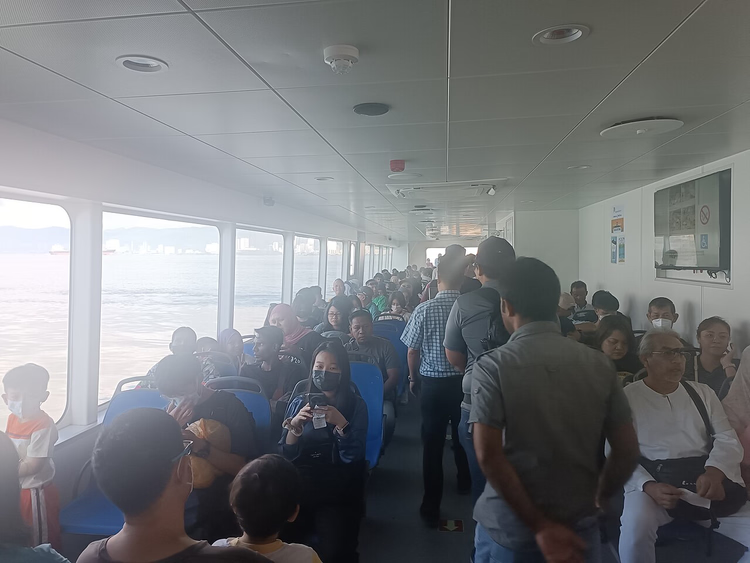 © *angys* · CC BY-SAPhoto: *angys*, CC BY-SA (https://creativecommons.org/licenses/by-sa/4.0), Wikimedia Commons
The Butterworth - George Town crossing carries only pedestrians and motorcycles (as of 09/2026, Visit Penang). The pier in George Town is a few minutes' walk from the historic center, and on the Butterworth side the railway station and bus station are nearby.
Ferries to Langkawi depart from Kuala Perlis and Kuala Kedah. The schedule changes, and the crossing depends on the season and water level (according to Langkawi Ferry Line, 09/2026). If you are on a tight schedule, check the service online and get a ticket in advance: seats run out in high season. If you want to explore the island with a guide, island tours on GetYourGuide will save you a day of logistics.
Taxis and Grab: when you cannot do without them
Taxis in Malaysia are more expensive than other types of transport. Most often people take one to or from the airport when buses are no longer running. Drivers stay calm when haggling, but an app is more predictable: you see the price before you book.
Almost everywhere people use Grab for rides, the local equivalent of Uber. In the app you see the final amount in advance, and there is no need to haggle. For an airport trip, the driver sometimes adds an entry fee that he pays at the barrier himself, so check the final total in the app.
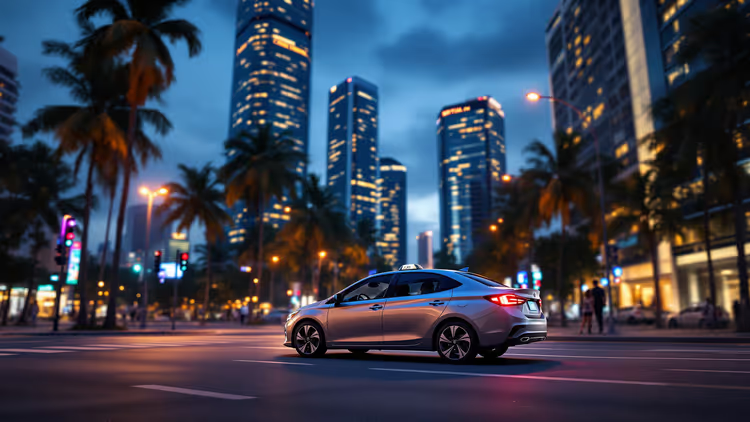 AIIllustrative image: AI-generated
You can pay for the ride in cash or with a card linked in the app. Grab requires internet, so get an eSIM for Malaysia in advance rather than at the airport counter. In the rain and during peak hours, you have to wait longer for a car, and the price goes up at those times.
Moped and car rental for the day
A moped gives you freedom of movement. In small towns and on islands without city buses, it is often the only way to get to a beach or a viewpoint. Fuel costs a couple of ringgit, and a day's rental comes to a double-digit amount that depends on the island and the season.

Take a helmet and check the brakes before you ride off. If a moped is not for you, rent a car: on the mainland it is convenient for trips to the Cameron Highlands or along the coast, and you are not tied to bus schedules. compare car rental offers
Planes and domestic flights
If you are short on time, long distances are easier to fly. There are airports in Ipoh, Kuala Lumpur, Johor Bahru, Langkawi, and Penang. Domestic flights are sold both by the airlines themselves and by aggregators. Low-cost carriers charge extra for baggage, so factor in the price with a suitcase from the start.
If there are no flights from the city you need, check a neighboring airport: buses between cities run frequently, and sometimes it is cheaper to get to Johor Bahru or Penang by ground transport. domestic flight tickets on Kiwi.com
Getting around Borneo: how to travel across the island
Borneo runs on a different rhythm. Roads and rail lines follow parts of the coast, and there are no through highways across the island, so getting from place to place takes longer. But the journey itself becomes more interesting: you see jungle and villages, not just highway.
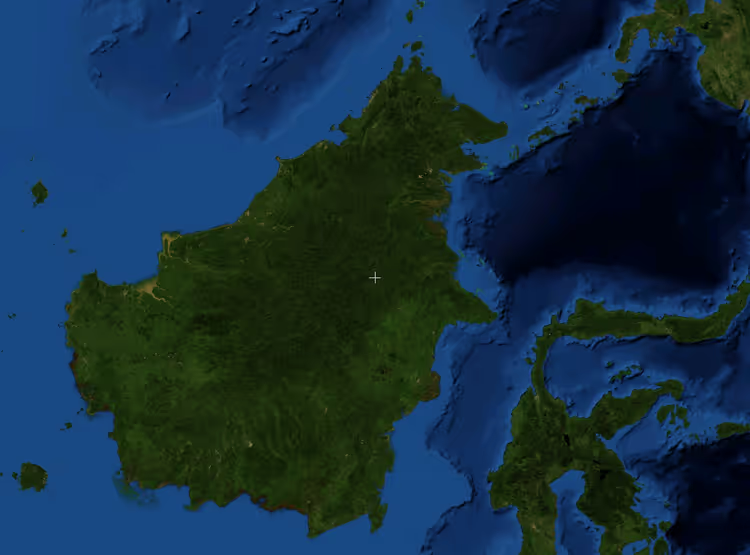
City buses exist here too, but schedules change. Check the times at the stop and don't rely on an old timetable someone gave you at the hostel. Sometimes a route has no schedule at all, and the driver will tell you to come at eight in the morning, or even later.
Intercity buses connect the coastal cities: from Kuching to Kota Kinabalu and on to Sandakan. The roads aren't built for heavy traffic, the stretches are long, and you'll spend several hours in transit. Check the schedule online or at the bus station, otherwise it's easy to lose half a day waiting for the next departure.

If time is tight, you can't do without a plane on Borneo. There are airports in Kota Kinabalu, Kuching, Miri, Mulu, and Sandakan. Book accommodation in these cities in advance, especially in high season: hotels in Kota Kinabalu on Trip.com.
Main hubs of the peninsula
Planning your travel is easier from the major hubs. Bus and rail routes pass through them, so you'll almost always find a connection without unnecessary transfers. Tours and day trips from Kuala Lumpur cover the days when you're staying in the city.
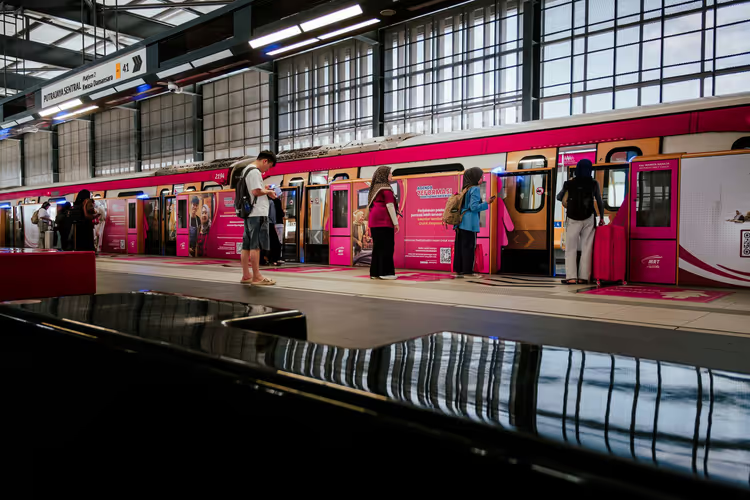
Kuala Lumpur
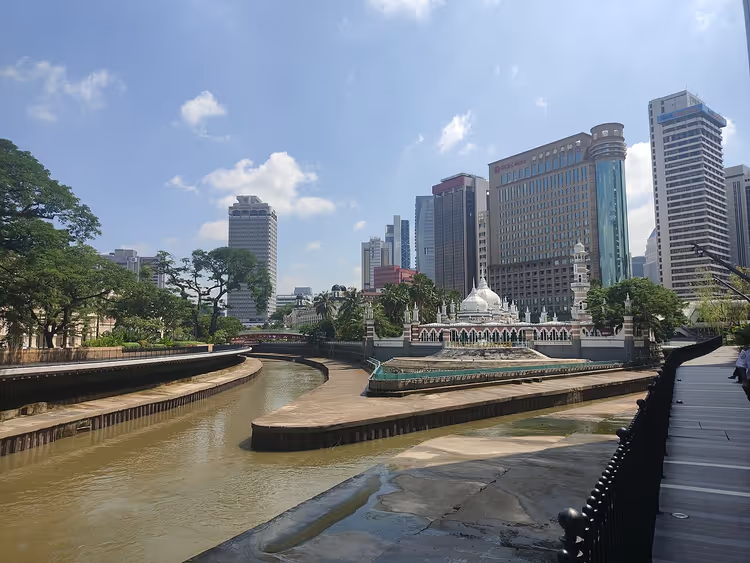
From Kuala Lumpur you can reach any part of the country. The bus terminal is huge, the platform gates are numbered, and buses depart in every direction. ETS trains and domestic flights to nearly every airport in Malaysia and neighboring countries also start here.
 © *angys* · CC BY-SAPhoto: *angys*, CC BY-SA (https://creativecommons.org/licenses/by-sa/4.0), Wikimedia Commons
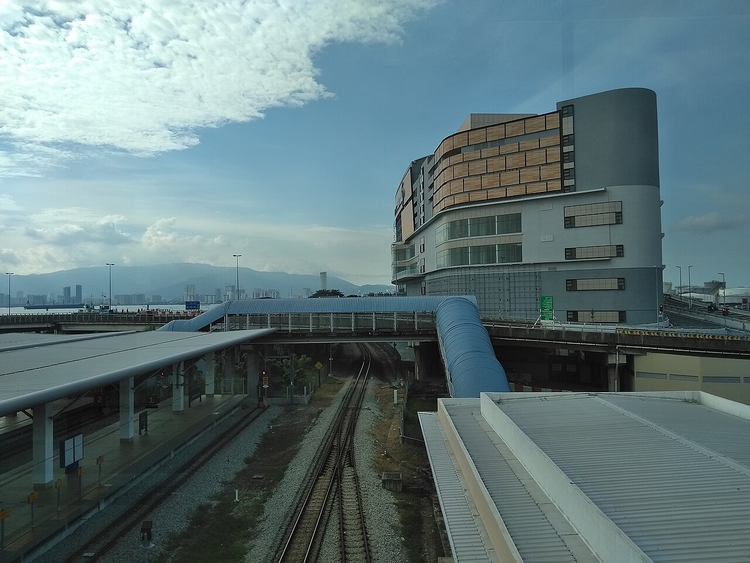
Butterworth
Butterworth sits across from Georgetown on Penang Island. From here, buses head north to Kuala Perlis, where the ferry to Langkawi departs, and onward to Thailand. Southbound buses go to Kuala Lumpur and Malacca, and eastbound ones to Ipoh and Tanah Rata in the Cameron Highlands. The ETS on the KL Sentral - Butterworth route also stops here.
 © *angys* · CC BY-SAPhoto: *angys*, CC BY-SA (https://creativecommons.org/licenses/by-sa/4.0), Wikimedia Commons
Penang
Penang Island also has a bus terminal, with buses departing to different parts of the country: north to Kuala Perlis, where the ferry to Langkawi leaves, south to Kuala Lumpur and Malacca, and southeast to the Cameron Highlands and Tanah Rata.
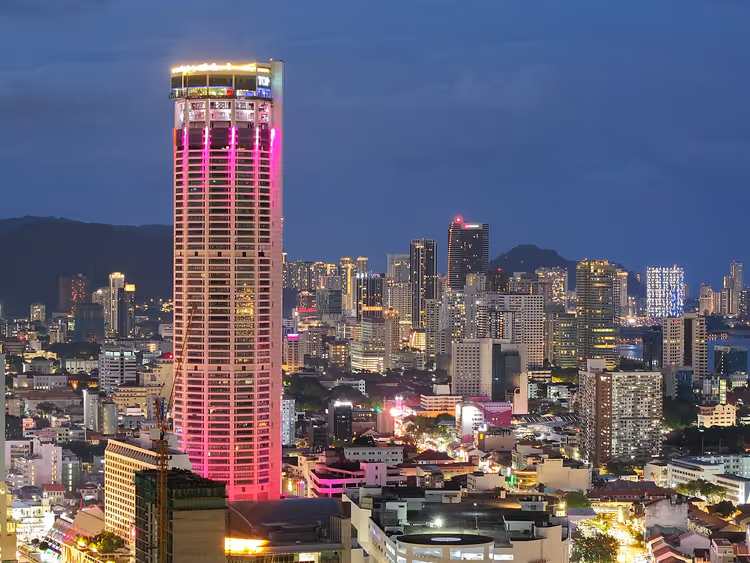 © HundenvonPenang · CC BY-SAPhoto: HundenvonPenang, CC BY-SA (https://creativecommons.org/licenses/by-sa/4.0), Wikimedia Commons
Cameron Highlands
The Cameron Highlands are a convenient stop on the way from north to south or from west to east, toward the Perhentian Islands and Tioman. From here you can also reach Taman Negara National Park and the tea valleys around Tanah Rata.
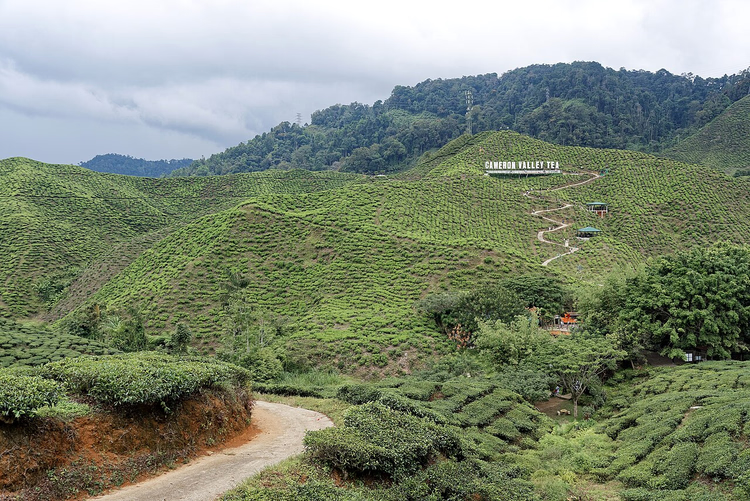 © Jakub Hałun · CC BYPhoto: Jakub Hałun, CC BY (https://creativecommons.org/licenses/by/4.0), Wikimedia Commons
Borneo hubs: Kuching, Kota Kinabalu, Miri, and Sandakan
On Borneo, four cities serve as hubs. Intercity buses fan out from them, and each has an airport.
Kuching
From Kuching, it is easy to reach Bako, Kubah, and Gunung Gading National Parks, as well as the Semenggoh orangutan rehabilitation center.
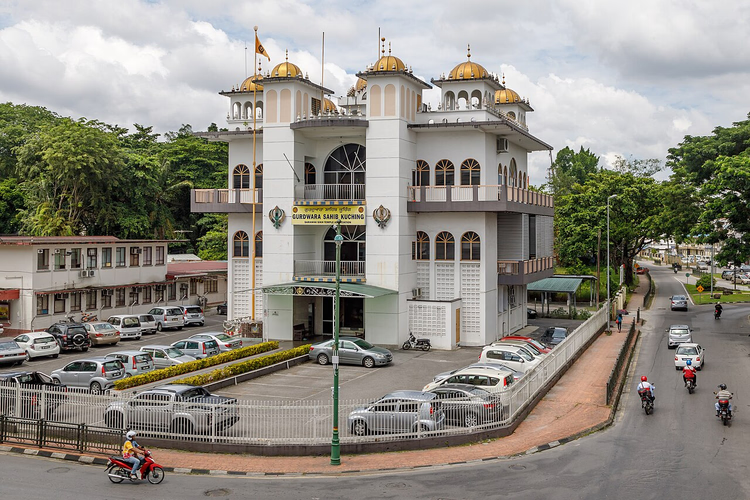 © CEphoto, Uwe Aranas · CC BY-SAPhoto: CEphoto, Uwe Aranas, CC BY-SA (https://creativecommons.org/licenses/by-sa/4.0), Wikimedia Commons
Kota Kinabalu
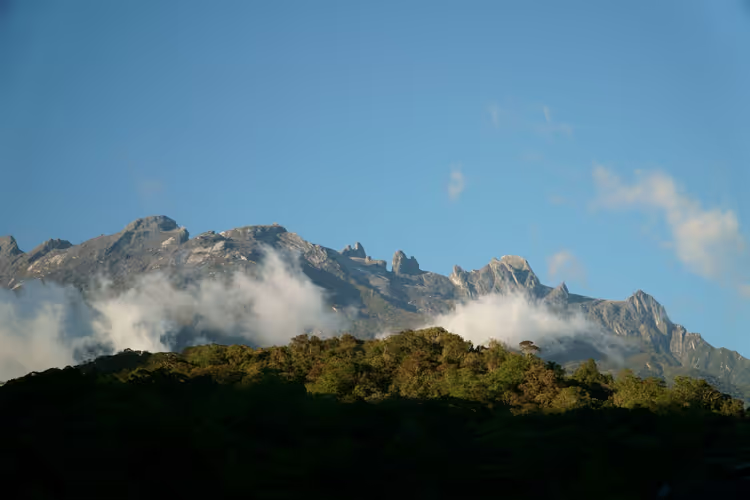
From Kota Kinabalu, you can quickly get by boat to the small islands just offshore. In the other direction, the road leads into the mountains, to Mount Kinabalu and Kinabalu National Park. The bus to Sandakan takes almost a full day.
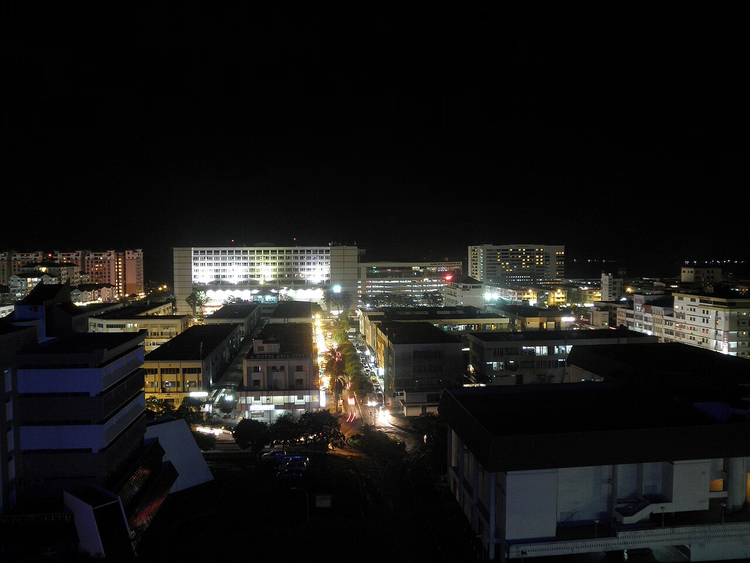 © Jason Thien from Kota Kinabalu, Malaysia · CC BYPhoto: Jason Thien from Kota Kinabalu, Malaysia, CC BY (https://creativecommons.org/licenses/by/2.0), Wikimedia Commons
Miri
Miri is most often used as a base for trips to Mulu National Park with its caves. The shortest flights leave from here, but you can also reach the park by boat or on foot on a multi-day trek.
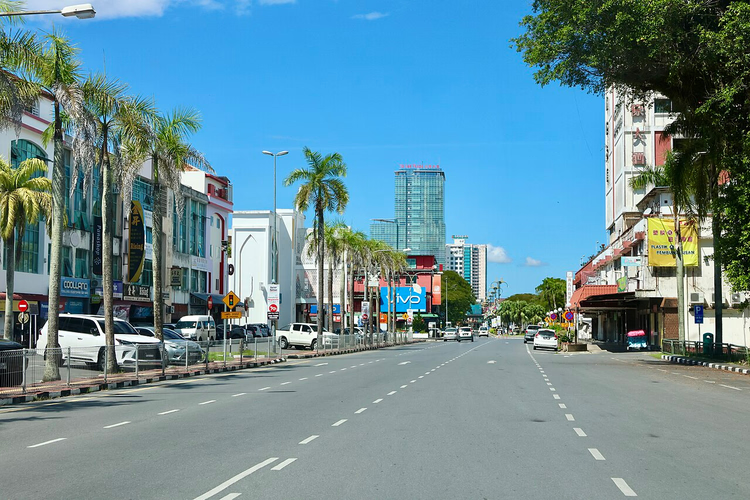 © Yu Chu Chin · CC BY-SAPhoto: Yu Chu Chin, CC BY-SA (https://creativecommons.org/licenses/by-sa/4.0), Wikimedia Commons
Sandakan
From Sandakan, it is easy to get to the Sepilok orangutan rehabilitation center, Danum Valley, and the country's best dive spots.
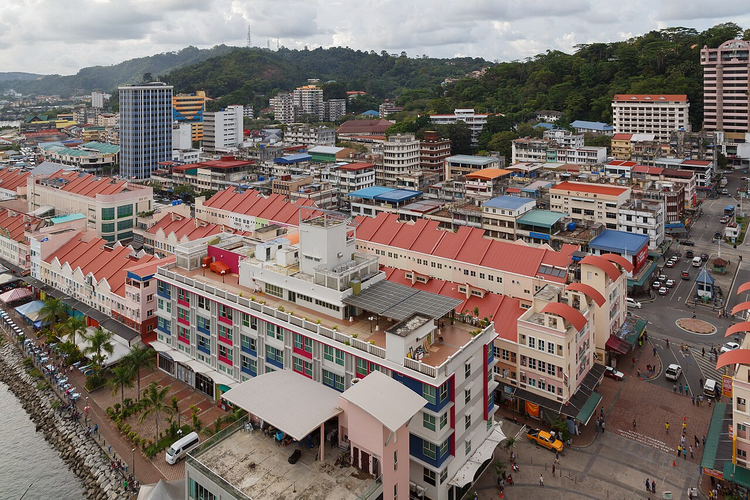 © CEphoto, Uwe Aranas · CC BY-SAPhoto: CEphoto, Uwe Aranas, CC BY-SA (https://creativecommons.org/licenses/by-sa/4.0), Wikimedia Commons
National parks and wildlife of Borneo
Borneo deserves to be planned as a separate block of your trip. Many people come to Malaysia specifically for it, and here you have a choice between jungle, caves, and diving.

At Semenggoh near Kuching, visitors see orangutans being prepared for life in the wild. Bako is reached by boat from Kuching: the park is home to proboscis monkeys, snakes are common, and the trails open up views of the coast.
The Mulu caves and Danum Valley cover the two remaining scenarios: underground chambers with bats and untouched rainforest. Both places require time, so do not put them on the same day as a travel leg.
How much it costs to get around the country
Transport rarely becomes the main expense in Malaysia. Intercity buses and trains cost less than their European counterparts, and on short stretches the costs are almost negligible.
It is easier to budget by mode of transport. Buses cover inexpensive trips between cities, ETS saves time on long stretches, a scooter remains the cheapest way to get around an island, and a domestic flight costs more but saves you a day of vacation.
Plan your route around hubs: that way you have fewer transfers and fewer wasted nights on the road. One travel leg per day leaves time for the city itself, while two legs in a row turn the trip into nonstop transit.
Get travel insurance before you fly: medical costs in Malaysia are billed in foreign currency, and comparing insurance options is easier in advance, not at the airport.
From Kuala Lumpur airport to your hotel, the most convenient option is a transfer with a fixed price. Book it in advance, together with your accommodation.
Tours and tickets in Kuala Lumpur
Guided tours, skip-the-line tickets and activities — most offers can be cancelled free of charge.
See offers on KiwitaxiThe widget loads once you give your consent.
⁉️🤔 Frequently asked questions
Can you get around Malaysia without a car?
Yes. Intercity buses connect almost all cities on the peninsula, ETS trains run along the west coast, and ferries will take you to the islands. A car is only needed for remote places with no public transport, and on Borneo, where routes are fewer and bus travel takes longer.
How do you get from Kuala Lumpur airport to the city?
You have three options. The bus is the cheapest and slowest, and it takes you to KL Sentral. The KLIA Ekspres train is the most expensive, but it runs nonstop. The Grab app is a good deal if there are three or more of you: you see the price before ordering, and you will not be stuck in traffic alone.
Are there trains from Singapore to Bangkok?
There is no through route on the ETS schedule. The line runs from Gemas via KL Sentral to Padang Besar at the Thai border, where you transfer to a Thai train. Book ETS tickets in advance: seats sell out quickly on long weekends and holidays.
Can you trust bus schedules on Borneo?
Not always. Departure times change, some routes have no schedule at all, and the driver will tell you to show up at eight in the morning. Check the departure at the bus station or online on the day of travel, and keep a buffer of several hours so you do not lose half a day.
How do you pay for transport in Malaysia?
On city buses, you pay the driver in cash. Grab rides are charged to the card linked in the app, so you need internet access beforehand. Buy intercity bus and train tickets online before your trip, so you get the departure time you need.
In short: what to book
Before your trip, decide on your hubs and mode of transport; everything else can be sorted out on the spot.
- If you have few days: domestic flights between cities.
- If you are traveling with a backpack and no rush: intercity buses and ETS trains.
- If you are heading to the islands: ferry and a scooter on the spot.

A small editorial team writing guides for independent travel. We travel ourselves, but we haven’t been everywhere, so we check prices, opening hours and how to get there against official sources.