
















Moai of Easter Island: how the statues were carved and why some remained in the quarry
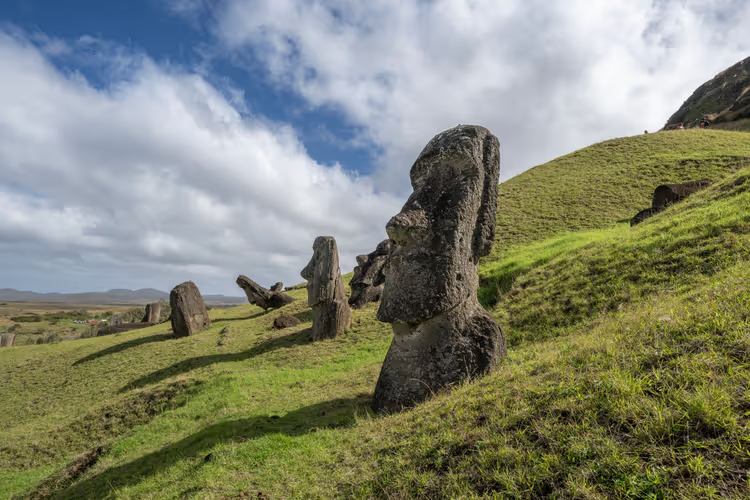
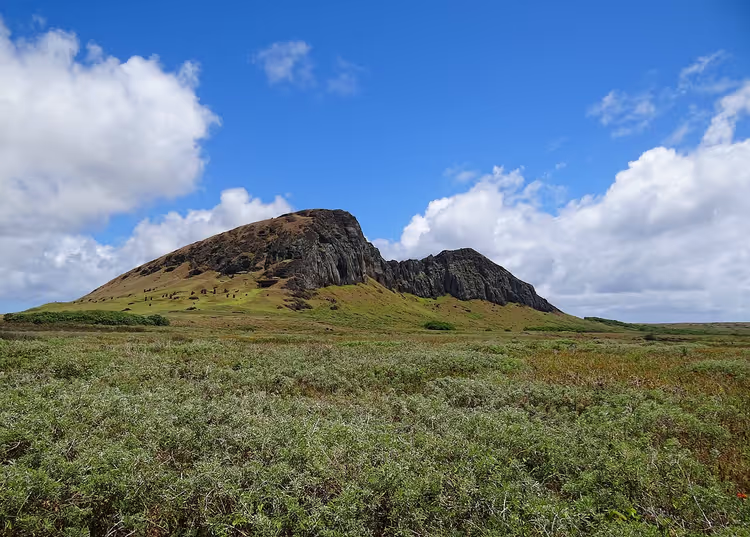
The moai of Easter Island have stood on the edge of the Pacific Ocean for more than five centuries. The stone giants weigh an average of 12-14 tons, and they were carved in the quarry of the Rano Raraku volcano. The island belongs to Chile and remains one of the most remote places on the planet.
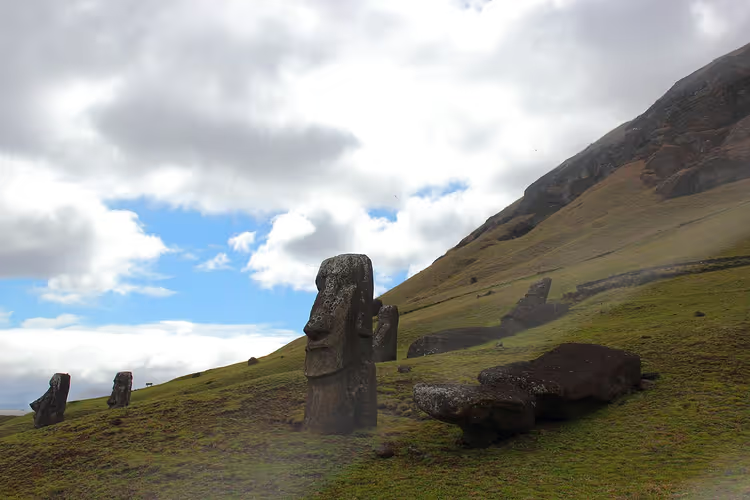
For science, the main question is not the size of the statues, but their number. Almost half of the 887 documented moai never left the slopes of the quarry (according to the Easter Island Statue Project). This number shows how much effort went into cutting and transporting the stone.
The trip should be planned in advance. Entry to Rapa Nui National Park requires a ticket, and some sites are accessible only with an accredited local guide.
Ad: this article contains affiliate links, we earn a commission if you book through them, at no extra cost to you.
 © Rivi · CC BY-SAPhoto: Rivi, CC BY-SA (http://creativecommons.org/licenses/by-sa/3.0/), Wikimedia Commons
History of the island and its names
💡 In short:
- The moai were carved from volcanic tuff between 1250 and 1500 (chronology and description).
- 887 statues have been documented, almost half of them remain at the quarry (Easter Island Statue Project inventory).
- A national park ticket costs about $80 and is valid for ten days (national park guide).
- Figures and tickets: 09/2026, according to EISP and the Rapa Nui park guide.
The first European to see the island was the Dutch navigator Jacob Roggeveen. His ship approached the shore in April 1722, on Easter Day, and the island got its name (history of the moai). Before that, the island had lived in complete isolation for many centuries.
By that time the statues were already standing on platforms. The Dutch saw stone idols, in front of which the locals lit fires and prayed. You are unlikely to confuse that sight with anything else, and it is what made the island famous around the world.
Then the mystery began. The islanders lived by Stone Age customs and worked only with stone tools. How they transported the multi-ton statues is still explained only by hypotheses.
 © kallerna · CC BY-SAPhoto: kallerna, CC BY-SA (https://creativecommons.org/licenses/by-sa/4.0), Wikimedia Commons
The purpose of the moai statues
For lovers of sensationalism, the size of the statues gave rise to theories of extraterrestrial origin. Science does not confirm such theories. Hypotheses replaced one another: the moai were considered tombstones, places of worship of pagan gods, and monuments to famous islanders.
Some theories fell apart quickly. At first it was thought that the statues were molded from clay or brought from the mainland. Examination showed otherwise: the moai are monolithic, and they were carved directly from the rock (overview article on the moai).
A turning point came after James Cook's visit. The navigator was accompanied by a Polynesian who understood the islanders' language. Through him it became clear that the statues were erected not to gods, but to deceased chiefs and rulers (data on the ancestor cult). This explanation is still considered the main one.
The moai are connected with the ancestor cult: the figures were carved in honor of specific people, and the ahu platforms served as ceremonial centers of the clan. The statues' gaze is directed toward the settlement, not the ocean, and that is also part of the design.
 © Dennis G. Jarvis · CC BY-SAPhoto: Dennis G. Jarvis, CC BY-SA (https://creativecommons.org/licenses/by-sa/2.0), Wikimedia Commons
The material of the statues also puzzled researchers. The moai were carved from volcanic tuff, a relatively soft stone. The tools were simple: stone hammers and adzes. One figure took months of work, and that is without accounting for transportation.
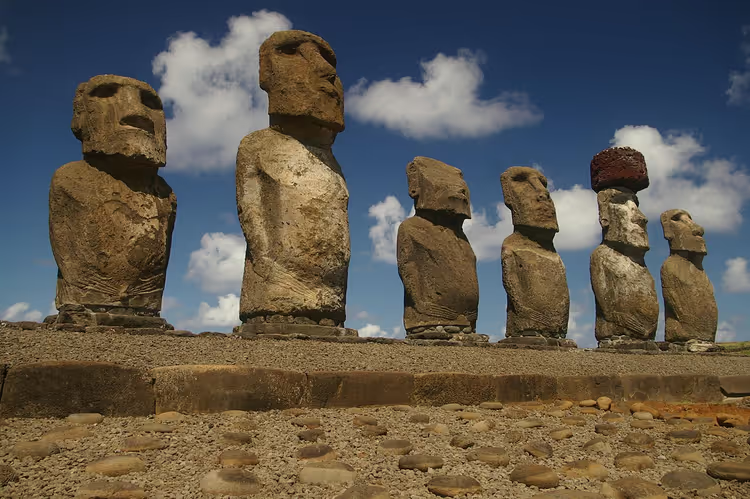
The moai headdresses are called pukao. They are separate stone cylinders made of red tuff. They were carved in a different quarry and then lifted onto the statues' heads. The shades and sizes of the cylinders vary, so each hat looks different.
How the moai were created and moved
Work began with the face. The carver cut the profile, then moved on to the sides, arms, and torso. The statues had no legs: the carvers made a long bust that rests on a flat base.
Finished moai were separated from the rock and lowered down. Then they faced the journey to the platform, and here begins the main mystery of Easter Island (how the moai were moved).
You can appreciate the scale of the task from the numbers. The average moai weighs 12-14 tons. The tallest one ever erected, the Paro statue, rises almost 10 meters and weighs about 82 tons (data on the Paro statue).
The distribution of the statues, however, is known precisely:
Metric | Value | Source |
|---|---|---|
Documented moai | 887 | |
Still in the Rano Raraku quarry | about 397 | |
Moved to platforms | about 288 | |
Still "in transit" | about 92 |
The table answers the main question tourists have: you should not look for the statues in just one place. Almost half of all moai never left the slopes of Rano Raraku, and you will see some of them for the first time right on the volcano slope. Some figures were abandoned because of cracks and flaws in the stone. Others were left unfinished when work in the quarry stopped.
 © Bjørn Christian Tørrissen · CC BY-SAPhoto: Bjørn Christian Tørrissen, CC BY-SA (https://creativecommons.org/licenses/by-sa/3.0), Wikimedia Commons
The mystery of transportation and the legends
A great many stories have grown up around how the statues were moved. According to one legend, the moai once knew how to walk, but lost that ability on the island. Another told of Inca treasures inside the figures, and fortune hunters smashed more than one statue. They found nothing inside but empty space.
Modern explanations look more down to earth. Researchers have tested different methods: dragging them on sleds, rolling them on log rollers, and moving them upright with ropes. Experiments showed that a statue can be rocked and "walked" forward step by step (transportation hypotheses).
If you were looking for a definitive answer, there is not one yet. No single proven method of transport exists, but the upright "walking" theory explains the old stories about statues that move by themselves.
 © Mbmerino · CC BY-SAPhoto: Mbmerino, CC BY-SA (https://creativecommons.org/licenses/by-sa/3.0), Wikimedia Commons
Tourism on Easter Island
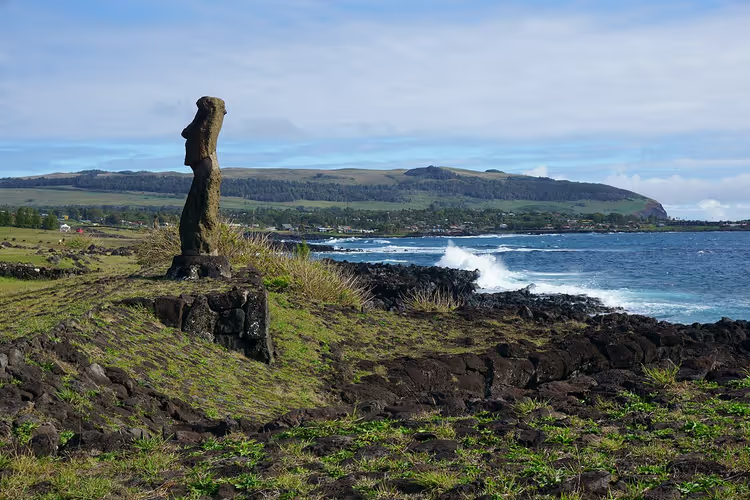
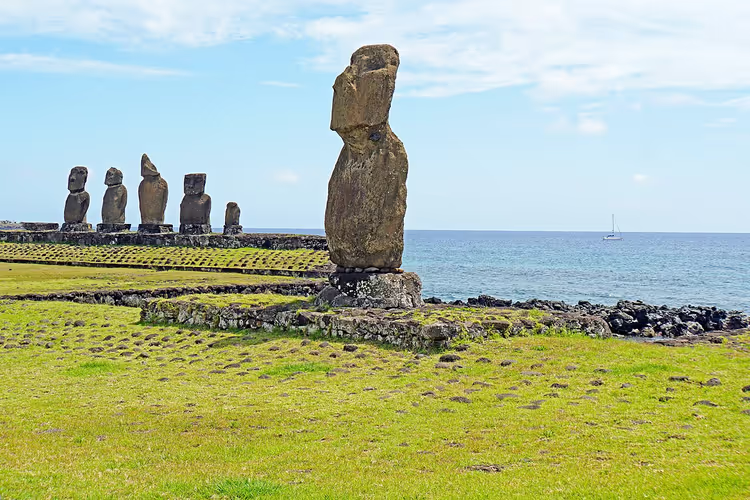
Easter Island has long ceased to be a dot on the map for the chosen few. Every year thousands of people come here to see the moai with their own eyes. Each statue is individual: shape, size, decorations, and head tilt all differ.
Besides the platforms, the island has ancient caves and channels that run into the ocean. They are shown as part of guided tours, but some sites are closed to independent access. It is better to find out the rules in advance, because once you are there, there is no time to ask around.
You will need at least a few days. The island is small, but the sites are scattered, and some roads are unpaved, so you cannot cover everything in one day even by car.
It is better to think about guides and transport in advance: Easter Island tours and excursions on GetYourGuide.
 © Natalia Reyes Escobar · CC BY-SAPhoto: Natalia Reyes Escobar, CC BY-SA (https://creativecommons.org/licenses/by-sa/4.0), Wikimedia Commons
Ahu Tongariki and its fifteen moai
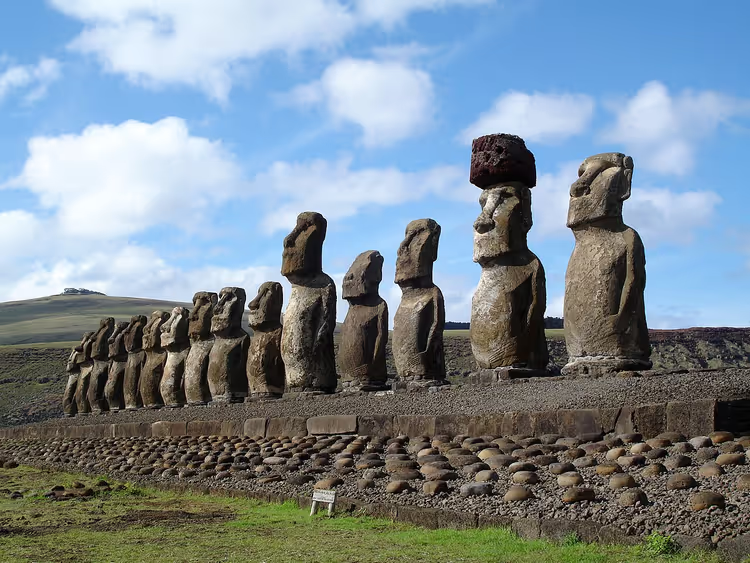
The island's most famous site is Ahu Tongariki. Fifteen moai of different sizes stand on a single platform, with the ocean roaring behind them (history of Ahu Tongariki).
The platform survived two disasters. First, the moai were toppled during civil wars between clans. Then, in 1960, a tsunami from the Chilean earthquake reached the island, and the wave pushed the platform about 100 meters inland (tsunami data).
Restoration took years. An international team led by archaeologists reassembled the platform only in the 1990s (restoration timeline). Today Ahu Tongariki is called the island's calling card.
 © The original uploader was Hhooper1 at English Wikipedia . · CC BYPhoto: The original uploader was Hhooper1 at English Wikipedia ., CC BY (https://creativecommons.org/licenses/by/2.5), Wikimedia Commons
It's convenient to visit the platform together with the quarry. Ahu Tongariki stands near the Rano Raraku volcano, where almost all the statues were brought from. Arrive by sunrise: you'll get soft light and a nearly empty site.
During the day it's hot and crowded here. The sun hits the statues' backs, shadows become harsh, and tour groups line up at the site. If you want a calm shot, come at opening time.
Tickets, guides and visiting rules
To enter most archaeological sites you need a Rapa Nui National Park ticket. For foreigners it costs about $80 and is valid for ten days (terms and prices). Buy your ticket online in advance: that way you won't lose a morning on paperwork.
The park is managed by the local Rapa Nui community, not by a Chilean ministry (who runs the park). The rules are set by the island community itself, so they change more often than in ordinary reserves.
Some sites can only be visited with an accredited guide (visiting rules). This is a local measure that reduces pressure on the monuments. Groups are formed in advance, so it's better to find a guide before the trip rather than on the spot.
Opening hours vary from site to site and change with the season. Check current information on your ticket and on the park website, not in old guidebooks. Most sites close at nightfall.
Tours and tickets in Easter Island
Guided tours, skip-the-line tickets and activities — most offers can be cancelled free of charge.
See offers on GetYourGuideThe widget loads once you give your consent.
How to get to Easter Island
The journey is long and expensive, but there is only one regular flight. LATAM planes fly from Santiago, the capital of Chile, and you'll spend more than five hours in the air (Mataveri Airport information).
Tickets should be bought several months in advance. There are few flights, even fewer seats, and prices rise quickly in high season. A detailed breakdown of routes is in a separate article: how to get to Easter Island: three options and a map.
The second option is by sea. Cruise ships and yachts call at the island's port on the way between Chile and French Polynesia, and passengers are let ashore for the day. It's an irregular option, but sometimes the only one available.
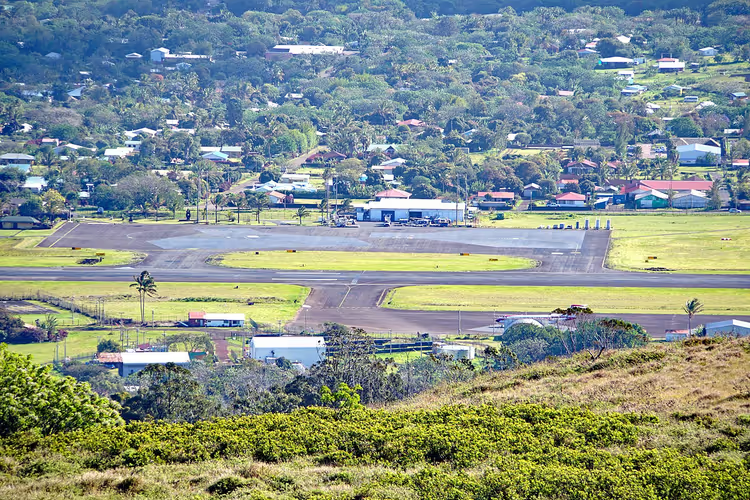 © Dennis G. Jarvis · CC BY-SAPhoto: Dennis G. Jarvis, CC BY-SA (https://creativecommons.org/licenses/by-sa/2.0), Wikimedia Commons
If you're interested in South America as a whole, check out our guide to the marble caves of Chile Chico in Chile. It's a different climate, different roads and a completely different travel logic.
Easter Island on the map
Easter Island stands apart, and that's immediately clear on a map. The nearest inhabited mainland is thousands of kilometers away, which is why the flight and preparation take so much time.
⁉️🤔 Frequently asked questions
How many moai statues are there on Easter Island?
Researchers have documented 887 figures (catalog of statues on the project website). Almost half of them remain at the Rano Raraku quarry, about 288 were moved to platforms, and roughly 92 were found "in transit" (Guinness registry). The number keeps growing: excavations and new finds add statues, which is why older guidebooks list lower figures.
Is it true that the moai could walk?
This is a Rapa Nui legend: according to tradition, the statues walked to their installation sites on their own. Scientists found a more down-to-earth explanation. If you pull a moai upright with ropes and rock it side to side, the heavy figure really does "walk" forward (rope experiments). This method saved both manpower and logs, which were scarce on the island.
How much does it cost to enter the national park?
An adult ticket costs about $80 and is valid for ten days (ticket price). You only pay once: the ticket covers all official park sites. Check child discounts at the time of purchase, as the community changes the rules regularly.
Can you see the moai without a guide?
You can visit some platforms on your own if you have a park ticket. But certain sites are only accessible with an accredited local guide (visitor rules). Look for a guide before your trip.
How do you get to Easter Island?
There is one regular flight: LATAM from Santiago, with more than five hours in the air (island airport information). Tickets are expensive and sell out quickly, especially in high season. Cruise ships also travel there by sea, but this is an irregular option and hard to plan in advance.
Where should you photograph the moai?
The classic shot is at Ahu Tongariki, where fifteen statues stand on a single platform (history of the platform). The best light here is at dawn.
In short: what to book
A trip to Easter Island is planned months in advance, not weeks. If you are short on time, use a simple decision matrix.
- If you want one strong photo: get to Ahu Tongariki at dawn.
- If it is your first visit: book tours and excursions on Easter Island on GetYourGuide in advance.
- If you value freedom: rent a car and buy your park ticket online, then the itinerary depends only on you.
The ticket is valid for ten days, so there is no rush. Set aside a separate day for the Rano Raraku quarry: that is where the statues stand that never made it to the platforms.

A small editorial team writing guides for independent travel. We travel ourselves, but we haven’t been everywhere, so we check prices, opening hours and how to get there against official sources.