
















Mauritius on your own: 16 days around the island in a rental car
Mauritius only seems like an expensive and complicated destination at first glance. The island in the Indian Ocean is genuinely easy to explore on your own: rent a car, book accommodation on the west coast, and discover a new place every day. We put together a 16-day plan with ticket prices, park opening hours, and a clear route logic. You’ll understand when to fly, where to stay, how to handle entry requirements, and which coast to base yourself on so everything worth seeing is close by. Below is a day-by-day itinerary, no travel agent and no unnecessary markups.
Ad: this article contains affiliate links, we earn a commission if you book through them, at no extra cost to you.
How to get there on your own
💡 In short:
- We drive around the island in a rental car, based in La Gaulette on the west coast.
- We fly with one layover via Dubai or Istanbul.
- Visa rules depend on your citizenship; at the border they ask for return tickets and a hotel booking.
- Prices and park opening hours: 09/2026, verified on the official La Vanille Nature Park website.
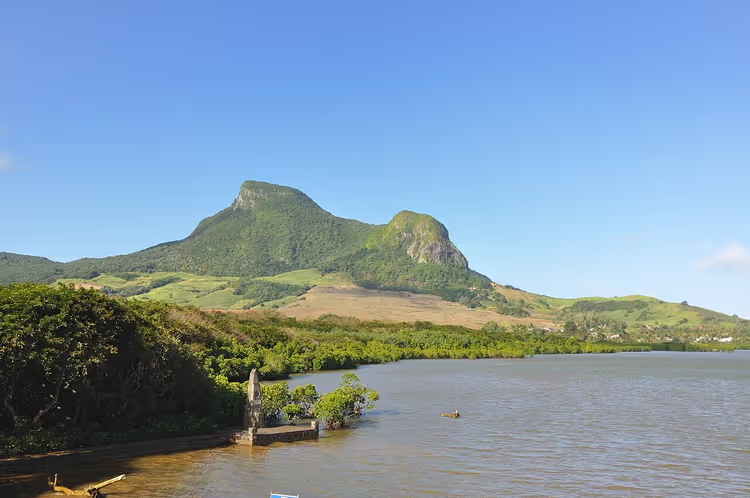
From most cities, you fly to Mauritius with one layover, most often via Dubai or Istanbul. Emirates offers a convenient option with a short connection in Dubai. With a layover, you spend almost a full day in transit, so the first day goes to the flight and check-in. The plane lands at the country’s only international airport, named after Sir Seewoosagur Ramgoolam.
 © Simisa ( talk · contribs ) · CC BY-SAPhoto: Simisa ( talk · contribs ), CC BY-SA (https://creativecommons.org/licenses/by-sa/3.0), Wikimedia Commons
Visa
Whether you need a visa depends on your citizenship: check the rules for your passport on the official immigration service website. At the border, a passport, return tickets, hotel booking, and proof of sufficient funds are usually enough, around $100 per person per day (as of 09/2026, Mauritius immigration service). For a child, put a birth certificate in the document folder.
Before boarding, flight attendants hand out immigration and health cards. On the first one, state your purpose of visit, passport details, and hotel address. The second, a quarantine declaration, is for noting your health status. Fill out the forms in advance, before passport control, so the line moves faster.
Where to stay
 AIIllustrative image: AI-generated
The main hotels are concentrated on the west and north coasts. That’s where you’ll find the most beaches, restaurants, and entertainment. The housing stock varies: from modest bungalows to villas with a pool. There is no global star rating system on the island; hotels assign their own category. No need to worry: service levels at good properties are high.
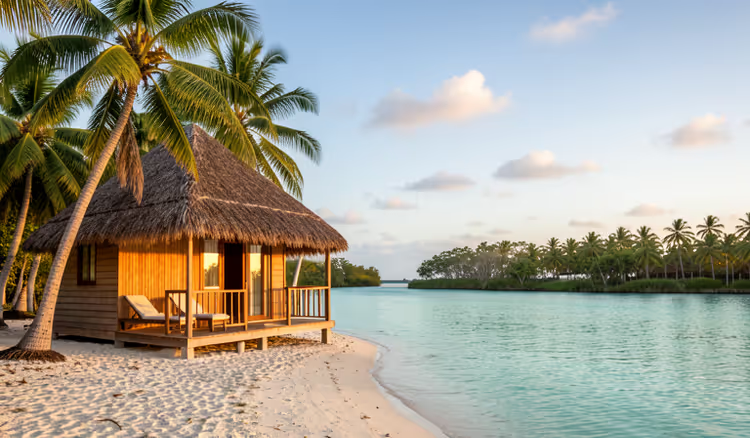
Many guests choose villas in a tropical garden near the beach. Others rent bungalows that echo the architecture of local huts. Most properties have their own grounds with a pool, restaurant, and sea access. Meals are usually buffet style.
For a longer trip, it’s more convenient to base yourself in one place and take day trips. That way you pay less per night than with frequent moves. Check available options for your dates through the hotel search on Trip.com.
see hotels in Mauritius on Trip.com
Best time to visit

Mauritius welcomes visitors all year round. The climate is tropical maritime, like on other islands in the southern hemisphere. Peak season runs from November to April. During these months the air is hot and humid, and the water in the lagoons warms up to the temperature of warm milk. In high season there are frequent short downpours, but they do not break the heat.
Constant trade winds bring cooler air. If you struggle with intense heat, choose the low season from May to September. The weather is sunny and mild then, and evenings are noticeably fresher. The water stays comfortable for swimming almost the whole time.
The low season has its own advantages. Crowds are smaller, and accommodation and activities are cheaper. In the southern hemisphere winter, evenings are cooler because of the winds. Cyclones occasionally occur in summer, from November to April. Check the forecast before your trip and bring a light windbreaker.
Tides
Coral reefs surround the island. They absorb waves and strong currents, so swimming in the lagoons is calm. Tides occur twice a day, but they noticeably change the depth only in shallow water. For a regular beach holiday the difference is almost imperceptible: the reef keeps the lagoon level.
Tide schedules matter for people who do water sports. Kitesurfers and surfers check them to catch the right wind and water. If you are just swimming and sunbathing, follow the signs on the beach.
Getting around
The island does have public transport: buses, taxis, and ferries. But independent travelers more often rent a car. That way you do not depend on schedules and can fit more into your day. Traffic drives on the left here, which takes some getting used to. The roads are narrow and winding, but they have good asphalt and clear markings. They run through hills, along the coast, and past mangrove groves.
It is better to book a rental car in advance, especially in high season. You can conveniently compare offers from different rental companies and book a car through Discover Cars. The cost depends on the car class and season, so provide exact dates in advance. Gas stations appear regularly, but in remote areas you should not drive on an empty tank.
Activities
Outside your hotel, there is plenty to do on Mauritius. Tourists visit nature parks, walk through jungles, climb peaks, and go fishing. Helicopter flights and swimming with dolphins are popular. Water lovers can enjoy kayaks, catamarans, yachts, water skis, and jet skis.
The reserves are home to tigers, leopards, lions, monkeys, lemurs, ostriches, and iguanas. They are shown in conditions close to their natural habitat. One of the attractions is a zipline descent over the jungle. The route passes over gorges and rivers and reveals hidden corners of the island.
Divers can explore the third largest barrier reef in the world. Underwater you can see coral gardens, caves, and schools of bright fish. If you do not scuba dive, you can take a submarine ride with large portholes to sunken ships.
You can rent equipment and book a dive on site at dive centers near the beaches. Beginners are first offered a trial dive in the lagoon, and only then a trip to the reef. Bring a towel and a windbreaker: after being in the water, it is easy to get cold in the wind.
Excursions
Island excursions introduce you to nature and culture at once. Most operators build routes from the same points, and they are easy to drive yourself.
One of them is the extinct volcano Trou aux Cerfs. At the bottom of its wide crater lies a marshy lake, not lava. From the top you can see Curepipe and the center of the island.
A trip on a sailing yacht or motorboat adds the sea to the route. In the early 19th century, a naval battle between the British and the French took place near Grand Port, a reminder of the island's colonial history.
Add Port Louis to your itinerary. Modern buildings there sit alongside colonial monuments. At Place d'Armes, examples of French architecture have been preserved. Worth seeing are the Government House, the old citadel, the Catholic cathedral, the Chinese pagoda, the mosque, and the Hindu temple.
If you want ready-made guided excursions, check the options on GetYourGuide.
Day 1: flight and check-in
The drive from the airport to the capital of Mauritius, Port Louis, is short.
Check customs rules before you leave home. Imports of alcohol and perfume are limited, and weapons, drugs, and some medicines are prohibited. Check the exact limits on the official customs website before your flight.
From the airport to the hotel, you can take a taxi or a car you rented in advance. We recommend basing yourself in La Gaulette. It is a quiet town in the west, close to almost all the points on the route. From here it is convenient to head out to the southern parks and to the capital.
Day 2: Chamarel colored sands and Tamarin Falls
 © Hannes Grobe · CC BY-SAPhoto: Hannes Grobe, CC BY-SA (https://creativecommons.org/licenses/by-sa/4.0), Wikimedia Commons
Sleep in and take your time getting ready. Bring mosquito repellent, comfortable loose clothing, and a camera. From La Gaulette to the colored sands is a short drive, just a few kilometers on a good road.
First you come to the viewing platform above Tamarin Falls. Steep trails lead down to the water, and only the truly daring risk the descent. Most visitors simply look from above and take photos.
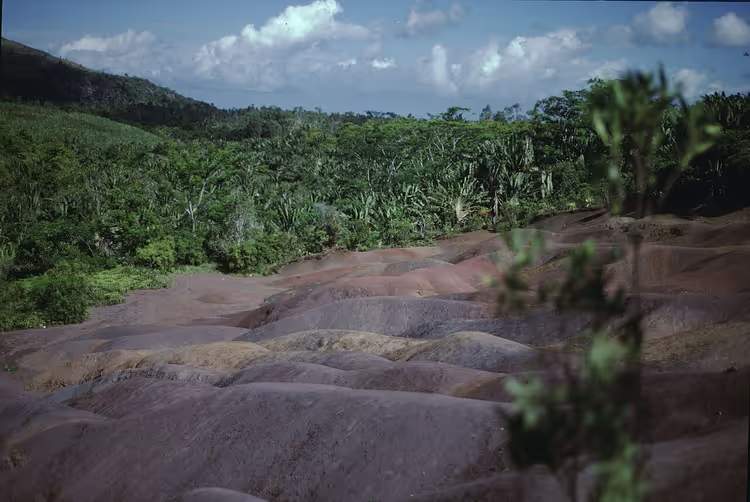
Next is the climb up the orange staircase to the colored earth. The Chamarel sands consist of seven shades, hence the name "seven-colored earth." To this day, no one has explained why the colors never mix despite the rain and wind.
The dunes are fenced off with a wooden barrier, and walking on the sands is not allowed. But you can take as many photos as you want, free of charge. The best light for pictures is in the morning or before sunset, when shadows emphasize the bands of color.
In the evening, stop by a local cafe and try Noodle, a spicy noodle dish with chicken, cabbage, and carrots. If you don't like spicy food, ask the waiter to leave out the spices.
Tamarin Falls holds the title of the island's top waterfall. From the platform you can see the water plunge into a narrow gorge and disappear into the greenery below.
The two sites are close together, so it's easy to combine them in half a day. After rain, the trails to the water are slippery, so wear shoes with good tread. Repellent is necessary even during the day.
Day 3: beach day
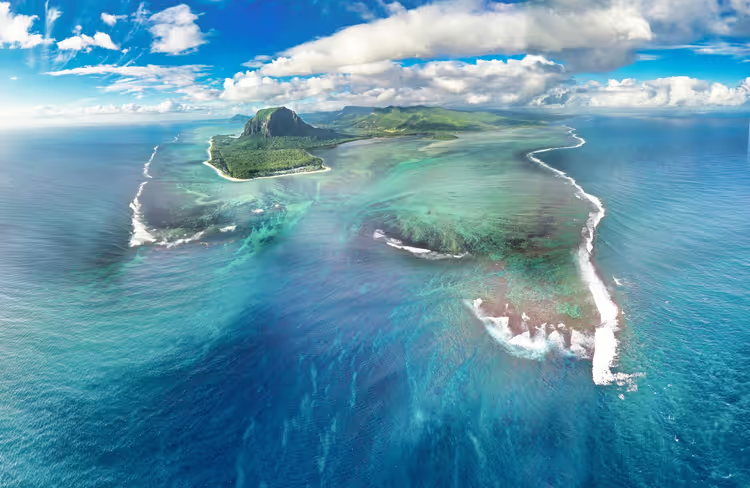
Flying to Mauritius and not swimming in the Indian Ocean would be a mistake. The island is surrounded by coral reefs that protect the shore from sharks and dangerous fish. However, sea urchins live near the bottom on almost all beaches.
Before your trip, stop by a store and buy special water shoes. With them, you can walk into the water without worrying about stepping on an urchin. Also bring sunscreen: the sun here is strong all year round, even on cloudy days.
Bring water and a light snack. Wild beaches have no cafes, and the nearest store may be far away. This way you can spend the whole day by the sea without any hassle.
Day 4: La Vanille Nature Park
 © Lukas von Daeniken from Schweiz · CC BY-SAPhoto: Lukas von Daeniken from Schweiz, CC BY-SA (https://creativecommons.org/licenses/by-sa/2.0), Wikimedia Commons
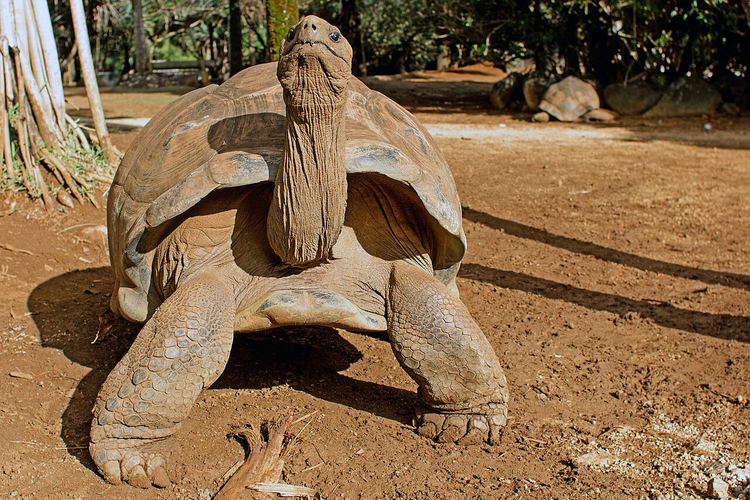
Today we're heading to La Vanille Nature Park in the south of the island. Crocodiles, monkeys, birds, giant tortoises, and other animals live here. The park is open every day from 9:00 to 17:00, an adult ticket costs 975 rupees, a child's ticket 685 (as of 09/2026, La Vanille Nature Park website). Arrive before 15:00 so you can comfortably see everything in a couple of hours.
The main attraction is meeting the giant tortoises. Some of them are over a hundred years old, and children find them especially fascinating. The grounds feel like a real jungle: you walk among tropical plants and observe the animals.
After your walk, grab a bite at the cafe inside the park or head back to La Gaulette. There are plenty of inexpensive family-run eateries there serving hearty, home-style food. They're usually small family businesses with large portions and prices lower than hotel restaurants.
Day 5: Le Morne beach
 © ”dronepicr” · CC BYPhoto: ”dronepicr”, CC BY (https://creativecommons.org/licenses/by/2.0), Wikimedia Commons
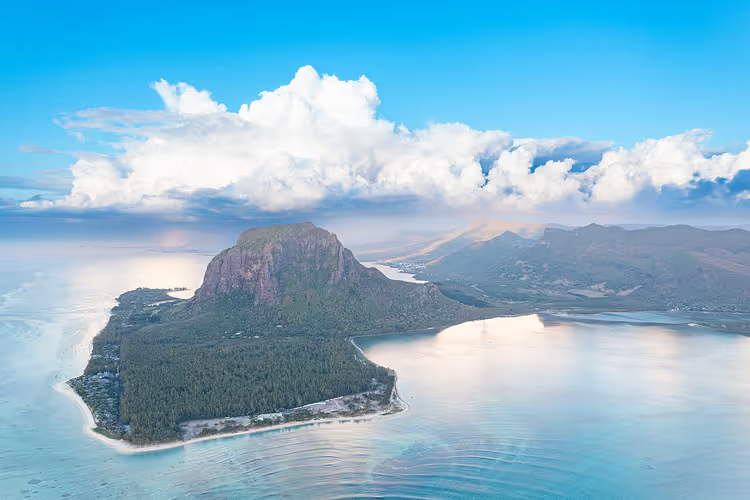
Have a hearty breakfast and pack light clothing: a hat or a baseball cap. Today we're going to Le Morne beach, at the foot of Le Morne Brabant mountain. It's a popular and very scenic spot, visited by both locals and tourists.
On the beach itself, vendors sell natural stone jewelry, souvenirs, and cotton scarves. A cafe is about a hundred meters away, where you can have lunch and take food back to the beach.
People usually spend the whole day here. If you don't feel like lying on the sand, talk to the locals, they often invite guests to try Creole pies. In the evening, get a good rest: tomorrow you have a drive into the mountains.
Day 6: Bois Chéri tea plantation
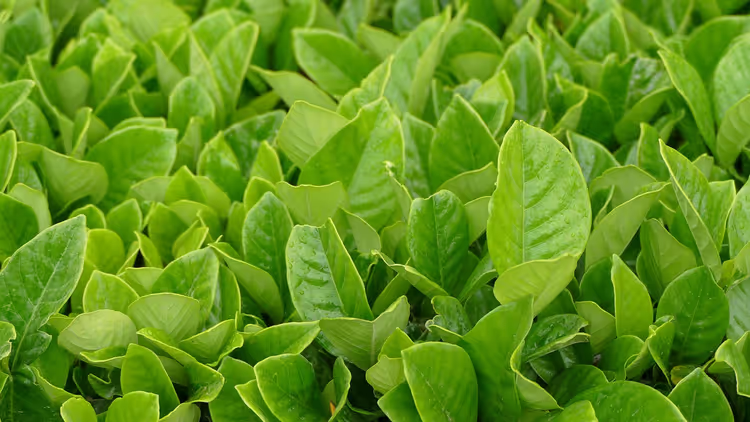
Dress comfortably and sporty for the plantation: it's a long drive and there's a lot of walking. The Bois Chéri complex includes a restaurant, viewing platforms, and a tea museum. Tea under this brand is sold all over the island, but fresh tea is best bought right here, where they also offer tastings. You can take tea out of the country with almost no restrictions.
The plantations are part of the "tea route," a three-stop itinerary. The first stop is the colonial house Domaine des Aubineaux, the second is the Bois Chéri plantations themselves. The most convenient way is to drive a rental car, though a taxi works too.
At the gate you buy a ticket and leave your car. From there you walk through the grounds: plantations, museum, and restaurant. First, see how tea grows, a camera comes in handy here. A little further on, viewing platforms offer views of the valley and mountains.
The museum tells the history of Mauritian tea and compares it with Ceylon tea. You'll see all stages of production, from sorting to drying and packaging. The exhibition is small but easy to follow even without a guide.
At the restaurant you can taste local varieties: coconut, fruit, jasmine, and vanilla. The menu is mostly sweet, try the waffles with ice cream, they're made right in front of you. Don't rush to leave: along the paths among the plants you'll find ponds with black swans, monkeys, and exotic birds.
The road to the top winds among the tea bushes. Along the way, valleys and mountain slopes open up, and in summer everything is covered with a green carpet. Stop at the viewpoints: they offer the best shots of the plantations.
There's a souvenir shop on the grounds. Fresh tea here is cheaper than in the city and easy to bring home. Buy small packages so you can try several varieties at once.
Day 7: to the capital, Port Louis
 © 7oanna · CC BY-SAPhoto: 7oanna, CC BY-SA (https://creativecommons.org/licenses/by-sa/4.0), Wikimedia Commons
Today we're going to Grand Baie, and on the way back we'll stop in the capital, Port Louis. We'll combine the trip with shopping: here you can buy souvenirs, clothes, and cosmetics at reasonable prices. Port Louis is a couple of hours' drive from La Gaulette, so leave in the morning.
First stop is Grand Baie. There are plenty of good restaurants and bars here, so you can have lunch. Check out the Harley Davidson store: they sell not only motorcycles but also clothing, accessories, and souvenirs. Locals know this place well, and it's easy to find an unusual gift here.
Next, the capital. Stroll along the waterfronts and, if you like, visit a casino or the racecourse. A must-see is the central market. It has almost everything: exotic fruits, vegetables, and souvenirs for friends. Mauritians, Indians, and Chinese all sell here. Indians sell saris, Chinese sell sailboat models and woven hats.
If your trip falls on a weekend, stop by the local racecourse. It has been operating for many years, and a VIP stand ticket includes champagne. It's more about entertainment than betting.
Shops are concentrated in the city center. Unknown brands sit alongside global names like Armani and Lacoste. Look for shops selling natural cosmetics: shampoos, oils, and creams are cheaper here than at the hotel. If you get hungry, grab a bite at a cafe on the waterfront or in a shopping center.
Bargaining is expected at the market, so don't hesitate to negotiate the price down. Spices and seasonings are easy to bring home: they're light and travel well.
Before heading back, fill up the tank: the drive is long and there aren't many gas stations in the center. Leave the city before the evening rush hour and you'll get back to La Gaulette without traffic.
Day 8: Pamplemousses Garden
 © Lukas von Daeniken from Schweiz · CC BY-SAPhoto: Lukas von Daeniken from Schweiz, CC BY-SA (https://creativecommons.org/licenses/by-sa/2.0), Wikimedia Commons
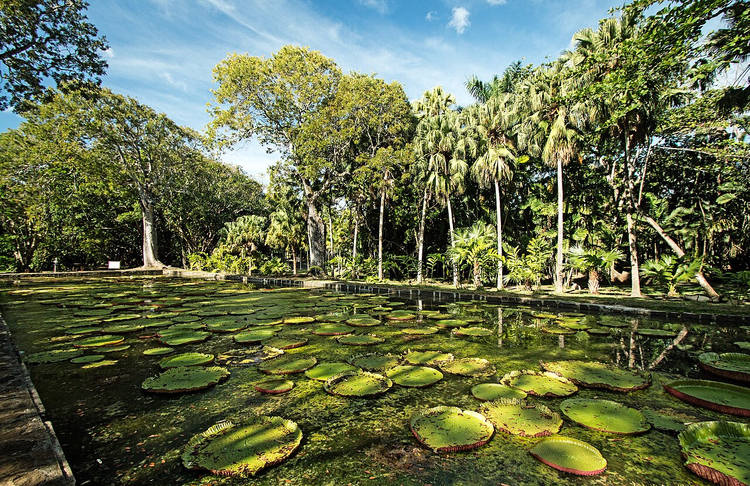
We head to the Pamplemousses Botanical Garden, one of the oldest in the southern hemisphere. Its grounds are home to hundreds of species of exotic plants. Vegetables for the island's governor used to be grown on this site.
The garden was laid out in the late 18th century under the direction of French botanist Pierre Poivre. He cultivated plants here for their spices. The drive from La Gaulette is long but comfortable: the road runs along the Indian Ocean. The garden is open daily; check the exact hours and ticket price on the official website (as of 09/2026).
The garden is recognizable by its wrought-iron gates with coats of arms and figures of unicorns and a lion. Beyond the gates you will find breadfruit, nutmeg, clove and camphor trees. Magnolia, cinnamon, cloves and lotuses fill the air with fragrance. It is easy to spend two or three hours here without noticing the time.
The main attraction is the Victoria amazonica water lily. It grows right in the pond and is striking in size; the leaves easily support the weight of a child. There are also smaller water lilies here, no less beautiful. The area near the pond is great for photos; the light is soft for most of the day.
The garden is large, so take your time and bring water. In a couple of hours you can cover the main paths. A guide is not necessary: the plants have name tags.
If you want quiet, come at opening time; by midday tour groups are walking around. Near the pond, stay in the shade; the midday sun is strong.
After you have had your fill of walking, return to La Gaulette. In the evening, take a stroll, sit by the ocean or rest at the hotel before the next day.
Day 9: the upscale Flic-en-Flac beach
 © ”dronepicr” · CC BYPhoto: ”dronepicr”, CC BY (https://creativecommons.org/licenses/by/2.0), Wikimedia Commons
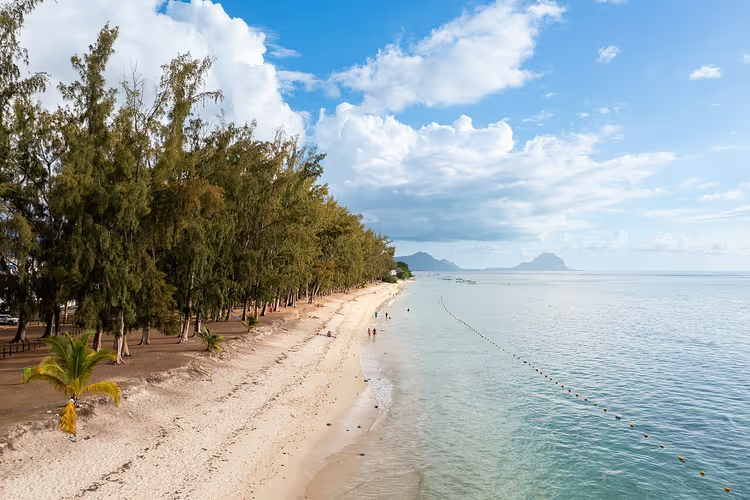
Today we head to one of the island's most prestigious beaches, Flic-en-Flac. It is not far from La Gaulette, so no long drive is needed. Divers will be especially lucky here: the beach has a rich underwater world. It also works well for a relaxing break.
Bring sunglasses, a sun hat, a swimsuit and sunscreen. Buy a basket of fruit in advance at the local market in La Gaulette; there are plenty of sweets here. The beach is long and wide, so you will find a spot even in high season.
Flic-en-Flac is a fishing village. If you want to meet locals, you are in luck: fishermen often take guests fishing or on a boat trip. If you get bored on the sand, there are activity areas nearby. By evening it gets busy here; the sunset over the ocean is worth your attention.
Day 10: Grand Bassin
 © Balou46 · CC BY-SAPhoto: Balou46, CC BY-SA (https://creativecommons.org/licenses/by-sa/4.0), Wikimedia Commons
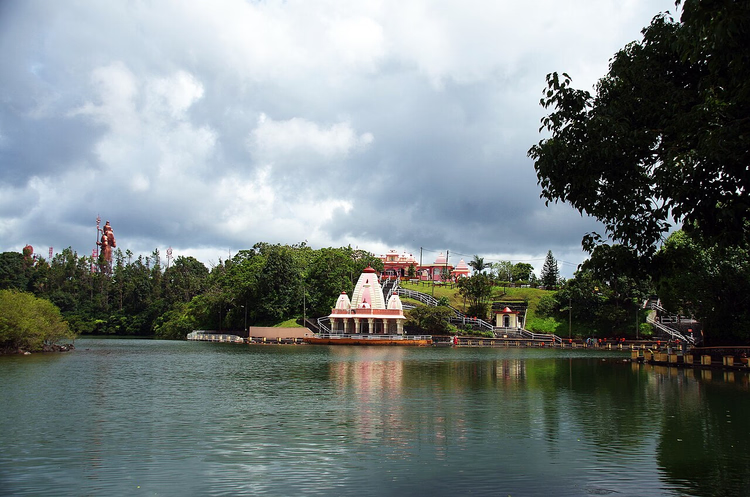
Today we head to Grand Bassin, a lake sacred to Hindus in the crater of an extinct volcano. This place is valued for its character and special atmosphere. It lies near the La Vanille reserve and the Bois Chéri plantation, so the trip is easy to combine with them.
The landmark is a giant statue of Shiva above the water. Nearby stands a temple dedicated to Shiva, and the lake itself. The scene becomes more vivid when locals arrive with baskets of offerings. Behave calmly, follow the rules of the place and do not disturb worshippers.
After the lake, stop by Gris Gris beach; it is very close. Here the shore is open to the ocean, and waves crash against the rocks. Swimming is not always safe here, but the views are powerful. This is a good spot to end the day and return to La Gaulette.
Day 11: the history museum in Mahébourg
 © आशीष भटनागर · CC BY-SAPhoto: आशीष भटनागर, CC BY-SA (https://creativecommons.org/licenses/by-sa/3.0), Wikimedia Commons
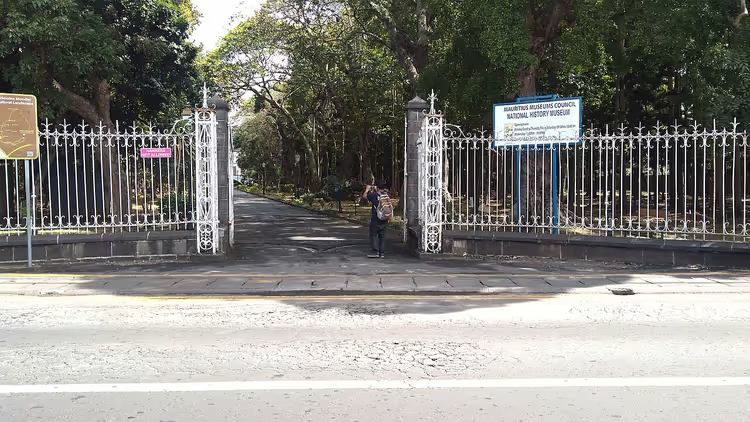
We head to the history museum in Mahébourg, not far from the airport. The museum is open almost every day, closed on Tuesdays, and admission is free. Check the hours before you go; on Sundays it closes earlier than usual.
The museum is made for lovers of mysteries, old maps, ships and engravings. It houses corsairs' weapons, cannons, colonial furniture and shipwreck fragments. A large display is dedicated to the naval battle between the French and the British in the early 19th century. At that time the French fought for Mauritius, a former French colony.
Tourists buy model ships here: they are packed so well that they survive a flight without trouble. Spend the rest of the day relaxing on the beach or at the hotel. Tomorrow a full day on the water awaits you.
Day 12: around the island by boat
 AIIllustrative image: AI-generated
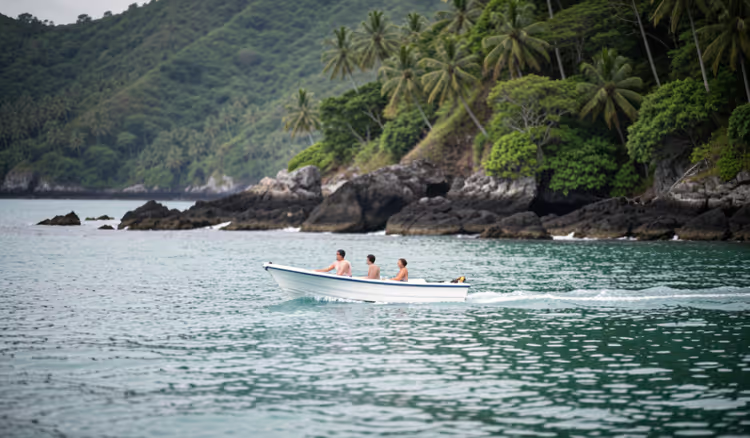
The busiest day of the trip. You rent a boat and travel along the island. Arrange things in advance with a captain or with locals who rent out boats and run tours themselves. That way the trip will go smoothly and follow your route.
If you are staying at a hotel in La Gaulette, you will have no problems: almost all of them offer boat trips. Fishermen and divers love these outings. Leave in the morning so you can cover more places and return before dark.
Bring food only if you are going without locals. With them, you do not need to think about meals: they will catch sea urchins for you, and those are a delicacy. Fishermen have a field day here; the chance to catch a big fish does not come every day. Catching a marlin is hard, but octopus turns up often. Tourists usually release it; locals suggest cooking it into a hot dish.
The ideal option is to stay out on the ocean for the whole day. It is beautiful here both at midday and closer to sunset. Bring sunscreen and a light shirt; on the water you burn faster than you think.
Day 13: heading to Goodlands
We dedicate the last days to the island's towns. Today we head to Goodlands, one of the most populated towns in Mauritius. It is far from La Gaulette, and that is a plus: along the way you will see many beautiful places.
Come on Wednesday or Saturday. On those days the vegetable market is open, selling the freshest produce on the island. Goodlands has many cafes and restaurants, as well as good shopping spots. Have a leisurely lunch and walk through the market; here you feel the everyday life of the island, far from the resorts.
Day 14: Casela park
 © 7oanna · CC BY-SAPhoto: 7oanna, CC BY-SA (https://creativecommons.org/licenses/by-sa/4.0), Wikimedia Commons
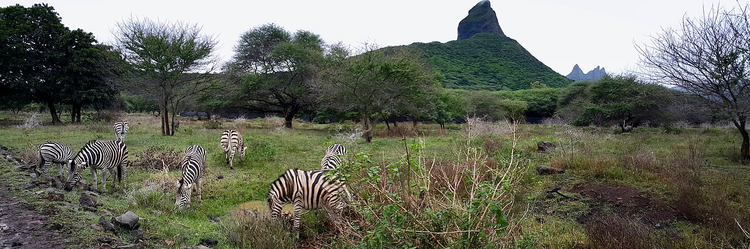
If you love wildlife, Casela Nature Parks is for you. It is often confused with the La Vanille reserve, but this is a different park. Its grounds are home to ostriches, zebras, lemurs, monkeys, tigers and tortoises. The park is open daily from 9:00 to 17:00, and the ticket price depends on the package you choose: basic entry and individual activities are priced separately (as of 09/2026, official Casela website).
The park offers photo safaris, fishing, a Segway ride and a walk across suspension bridges. There is also a tiger encounter. Decide in advance what your ticket includes so you do not overpay at the entrance. Bring water and comfortable shoes: part of the route is on foot under the open sun.
Day 15: swimming with dolphins in Tamarin Bay
 © Vaughan McShane · CC BY-SAPhoto: Vaughan McShane, CC BY-SA (https://creativecommons.org/licenses/by-sa/2.0), Wikimedia Commons
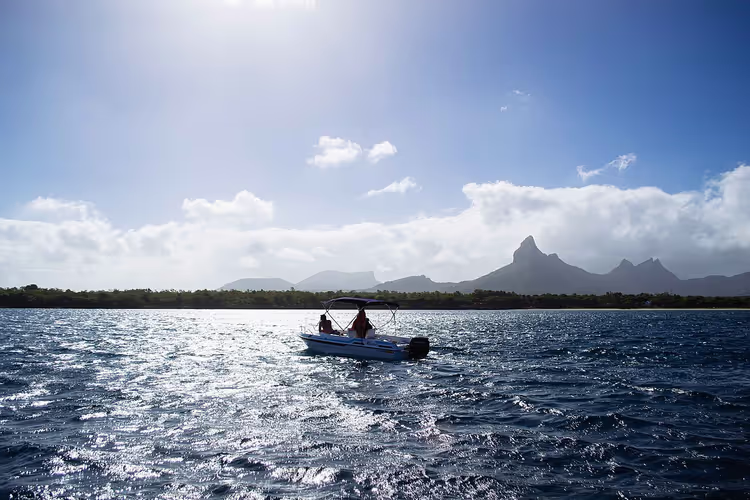
Today we head to Tamarin Bay, not far from Casela park and Tamarin Falls. This is a small bay where dolphins come. Boat trips and swimming with dolphins are available here.
The activity is popular, so arrive early, while there are fewer boats and the animals are calmer. Check prices for the trip and the swim on site with operators; they change by season. The dolphins here are wild, so be quiet and do not grab the animals; that gives you a better chance of seeing them up close.
Return early in the evening. Tomorrow morning we head to Curepipe, one of the most beautiful towns on the island.
Day 16: exploring the town of Curepipe
 © mwanasimba from La Réunion · CC BY-SAPhoto: mwanasimba from La Réunion, CC BY-SA (https://creativecommons.org/licenses/by-sa/2.0), Wikimedia Commons
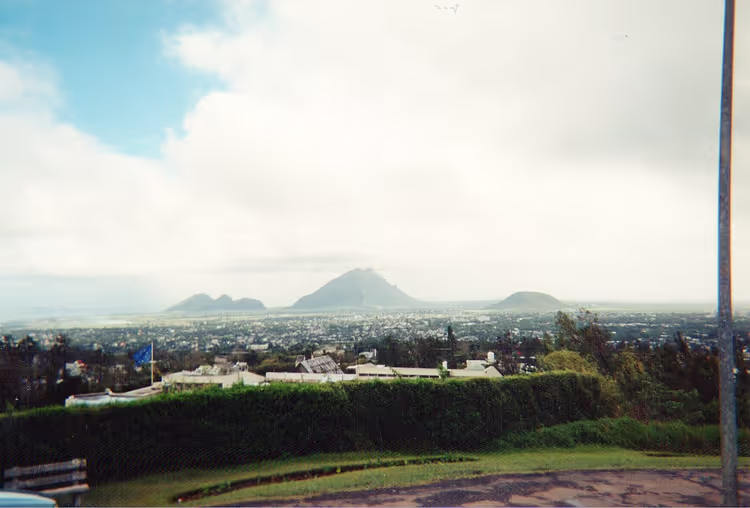
Curepipe is one of the most beautiful towns on the island. To some it resembles India, to others China, and to others England. The whole town is visible from a high hill. There are many unusual buildings and shops here, and it has its own botanical garden.
Save the last days for the beaches and the ocean. Before leaving, toss a coin into the Indian Ocean for good luck, that is the right way to end the trip.
How and where to save money
A trip to Mauritius is not a budget one. But you can save on a few things, and it will not spoil your vacation.
Fly in the low season from May to September: accommodation and activities are cheaper, and the weather is mild. Stay in one place for the whole trip and take day trips, so you pay less than for frequent moves between hotels. Book your car and park tickets in advance, in high season prices are higher and choices are fewer.
Eat at local cafes, not only at hotel restaurants. For a long trip this is a noticeable saving. Buy groceries and fruit at markets: in Goodlands and Port Louis they are fresh and cheap.
Do not forget insurance before your flight: you can compare conditions of different plans through the insurance selection service.
Tours and tickets in Mauritius
Guided tours, skip-the-line tickets and activities — most offers can be cancelled free of charge.
See offers on KiwitaxiThe widget loads once you give your consent.
⁉️🤔 Frequently asked questions
Do I need a visa for Mauritius?
It depends on your citizenship: many countries do not need a visa, but check the rules for your passport on the official website. The length of stay is limited. At the border they may ask for return tickets, a hotel booking, and proof of funds, around $100 per person per day (as of 09/2026, immigration service website). Bring printed copies of your booking and insurance, and the check will go quickly.
When is the best time to visit Mauritius?
If you want warmth and swimming all day, choose the season from November to April. But be prepared for heat and short downpours. If you find intense heat hard to handle, the low season from May to September is a good fit: mild sun, cool evenings, and fewer tourists. Prices in these months are usually lower.
How much does it cost to enter the island's parks?
Prices vary. At La Vanille Nature Park an adult ticket costs 975 rupees, a child ticket 685 (as of 09/2026, La Vanille tickets and hours). At Casela park the cost depends on the package you choose; basic entry and activities are priced separately. It is better to buy tickets online in advance.
Do I need to rent a car in Mauritius?
For a route around the island, a car makes life much easier. Buses run infrequently, and taxis get expensive over long distances. With a rental car you set your own pace and can see more. Keep in mind that traffic drives on the left and mountain roads are narrow, so drive carefully at first.
Is it safe to swim in the lagoons?
Yes, coral reefs break the waves, so the water in the lagoons is calm. There are no sharks near the shore; the reef keeps them out. The main things to watch for are rocks and sea urchins on the bottom. Bring water shoes and do not touch the coral with your hands, it is easy to cut yourself on it.
In short: what to book
Mauritius is easy to explore on your own if you sort out three things in advance: tickets, accommodation, and transport.
If this is your first trip, stay on the west coast in La Gaulette and rent a car. If you are traveling with children, add Casela and La Vanille. If you want a quiet getaway, choose the beaches of Le Morne and Flic-en-Flac.
Book your accommodation in advance on Trip.com and check out ready-made island tours.

A small editorial team writing guides for independent travel. We travel ourselves, but we haven’t been everywhere, so we check prices, opening hours and how to get there against official sources.