
















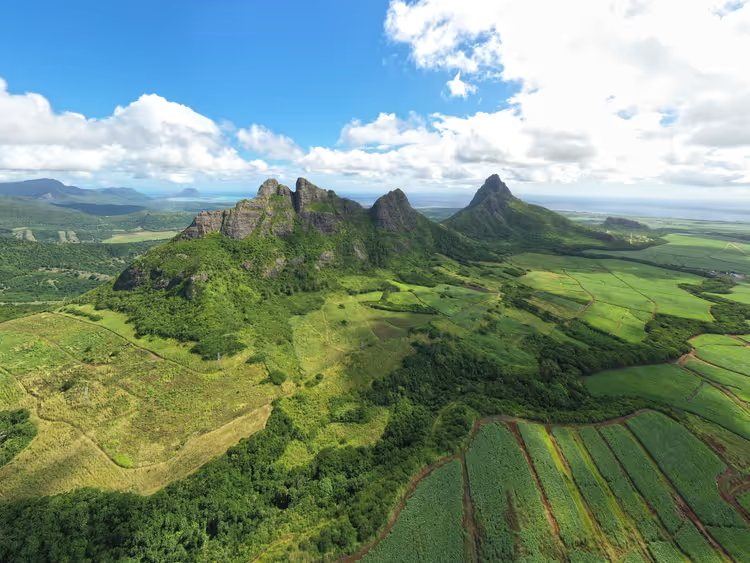
Mauritius: beaches, waterfalls and the seven colors of Chamarel
You want to see all of Mauritius, not just the beach by your hotel. Then you'll have to plan the trip yourself, and it's easy to get confused here. Let's go through the visa, beaches, waterfalls, and the island's main sights in order.
Mauritius is compact, so you can realistically drive around the island in a week. From Port Louis to Le Morne in the south, you'll get there in about an hour (on the map). English is official here, so you'll be understood at the hotel, restaurant, and on excursions.
Take a package tour if you only need a seaside vacation. Your own car comes in handy when you want to see Chamarel, Tamarin, and Grand Bassin without a group. From here on, everything in order: what to prepare, where to swim, and where to go.
Ad: this article contains affiliate links, we earn a commission if you book through them, at no extra cost to you.
What you need to know before the trip
💡 In short:
- Entry for EU, UK, and US citizens is visa-free, but keep your passport and return ticket handy.
- The best season to visit runs roughly from May to November, when there is less rain.
- Rent a car if you plan to drive around the island on your own.
- Prices and opening hours for the Chamarel geopark are on the official Chamarel website.
Citizens of most European countries, as well as the US and UK, enter Mauritius visa-free. The exact length of stay depends on your passport, so check it before buying a ticket. At the border, you may be asked for a hotel booking and a return ticket, so keep them on your phone.
The official language is English, but French and Creole are used in everyday life. English will be enough at the hotel and on excursions. In rural areas, a couple of French words will help, although locals are responsive and will help with gestures.
The best time for a vacation runs from May to November, when there is less rain and the humidity is more comfortable. From January to March, the risk of cyclones increases, and some beaches in the south are temporarily closed for swimming.
Exchange money at banks in Port Louis, not at the airport. The rate there is usually worse for you. Cards are accepted at hotels and restaurants, but cash will come in handy at markets.
Beaches and lagoons of Mauritius
The warmest and calmest coast is the northwest around Grand Baie and Trou aux Biches. Here the lagoon is protected by a reef, so there are almost no waves. The water is shallow near the shore, which is convenient for swimming with children.
Along most of the coast of Mauritius, the sand is white, and the ocean is shielded by a coral barrier. You can swim in the lagoons year-round, but in some places sea urchins lie on the bottom. Wear coral shoes, otherwise one careless step will ruin your day.
Hotels on the island maintain a high standard: spacious rooms, well-kept grounds, attentive service. Hotels in Mauritius on Trip.com are easy to compare by area and dates. The northwest is chosen for its calm sea, and the east for the wind for kiting.
Among the activities available to you are diving, snorkeling, kiting, and windsurfing. You rent equipment on site, and schools are located at every major beach.
Preparing for the trip: small things that save your nerves
- Drink bottled water, even though tap water here is filtered.
- Bring a first aid kit: the local cuisine is spicy, and your stomach may react.
- Bring an adapter: Mauritius uses the British type of sockets with three pins.
- Bring a mosquito repellent. Humidity is high, so there are many mosquitoes in the evening.
- Don't buy corals and shells to take out, it's illegal.
- Bargain at markets, the price here is almost always negotiable.
- Get extended insurance in advance, not on the day of departure.
Medical insurance here is not a formality. It's better to arrange it at home, so you can compare options calmly. Get a policy with activity coverage if you plan to dive.
Sweets as a gift for locals make any conversation easier. Someone helped you, you give them a chocolate bar, and everything goes more smoothly after that.
Sights of Mauritius
The island was uninhabited until colonization, so almost all of its wonders were created by nature. Architecture and museums also exist, but you come here for volcanoes, waterfalls, and sands. Island excursions on GetYourGuide help out if you don't want to drive.
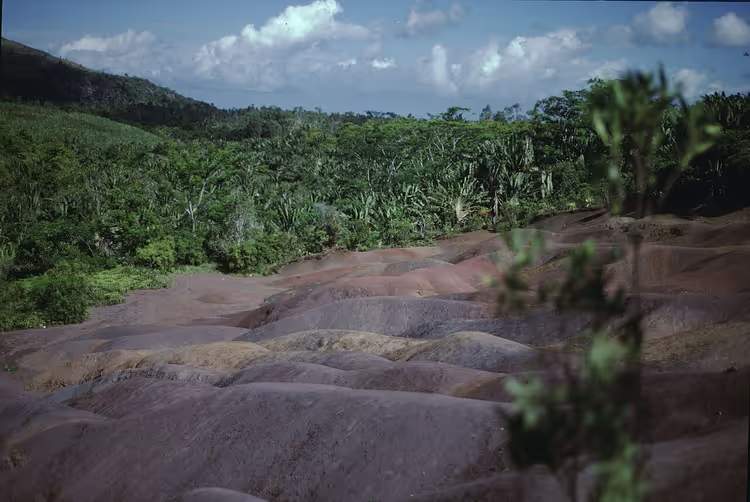
Seven colored earths of Chamarel
 © Hannes Grobe · CC BY-SAPhoto: Hannes Grobe, CC BY-SA (https://creativecommons.org/licenses/by-sa/4.0), Wikimedia Commons
These are several sand dunes near the village of Chamarel. What you see is not sand at all, but grains of basalt that surfaced after volcanic activity and oxidized. Iron gives warm shades, aluminum gives cold ones. The layers don't mix, even if you try to mix them with your hands.
Souvenirs here are sold as glass vials with colorful layers. Walking on the slopes is prohibited, and trails and viewing platforms are laid out for you. Buy tickets in advance, and check prices and opening hours on the official geopark website.
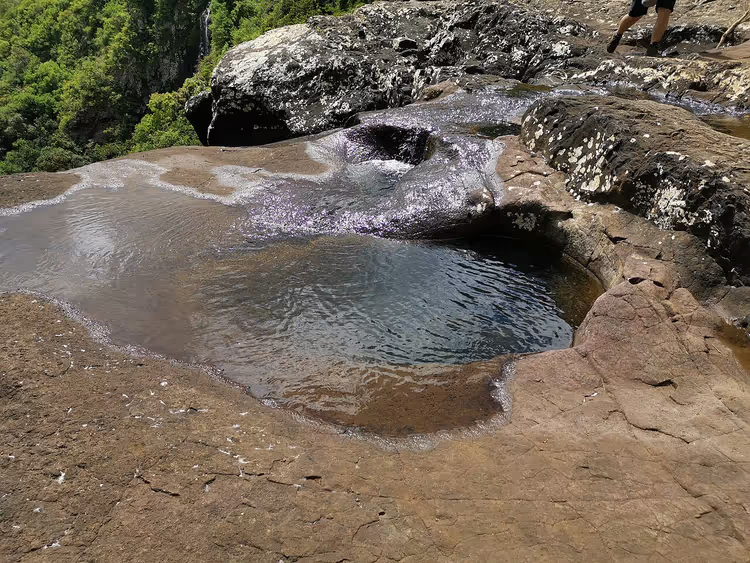
Tamarin waterfalls
In the gorge near the village of Henrietta, a cascade of several streams roars. You can get there from Curepipe. From there, you either go to a viewing platform or on a hike with a local guide.
 © Z thomas · CC BY-SAPhoto: Z thomas, CC BY-SA (https://creativecommons.org/licenses/by-sa/4.0), Wikimedia Commons
From the viewpoint, only one cascade is visible. If you want more, take a trek along the riverbed, it's slippery in places. Wear closed shoes and bring water, there is little shade on the trail.
Underwater waterfall at Le Morne
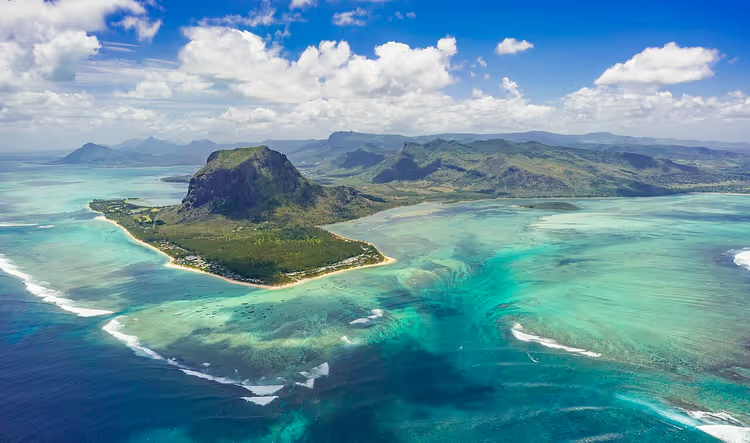
This is not a waterfall, but an optical illusion. Sand cascades carried by currents create the appearance of falling water. The effect can only be seen from above; from the ground it doesn't read.
The cheapest way is to climb to the top of Le Morne Brabant, if you're ready for the ascent. The comfortable option is a helicopter or seaplane. You'll pay several hundred euros per person for the flight, so plan your budget in advance.
Pamplemousses Botanical Garden
One of the oldest botanical gardens in the world. French botanists founded it for spice plantations. Today the garden covers dozens of hectares and collects thousands of plant species.
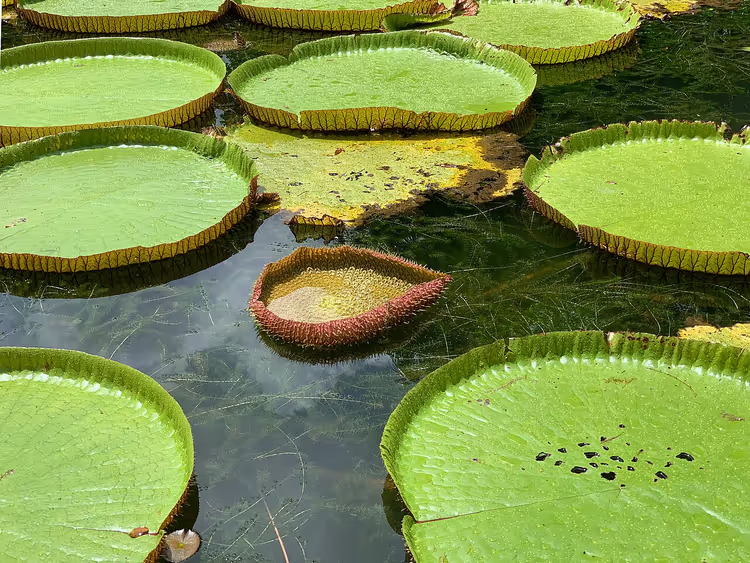
The scents here are like at a perfume factory. Come in the morning: fewer groups and softer light. Bring water and a hat, there is little shade on the paths.
La Vanille Nature Park
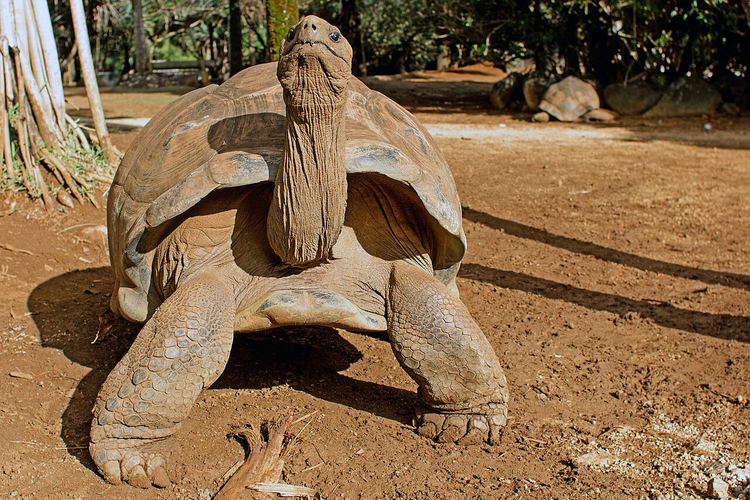 © Lukas von Daeniken from Schweiz · CC BY-SAPhoto: Lukas von Daeniken from Schweiz, CC BY-SA (https://creativecommons.org/licenses/by-sa/2.0), Wikimedia Commons
The reserve is called the crocodile park. Hundreds of alligators live here, and feeding is shown on Wednesdays and Saturdays. Exotic meat is served in the local restaurant.
The pride of the park is the giant Aldabra tortoises. You can pet and feed them, and some live longer than a human. You'll also see lemurs, iguanas, and deer, and the museum houses a stuffed specimen of the extinct dodo bird.
Shiva statue in Grand Bassin
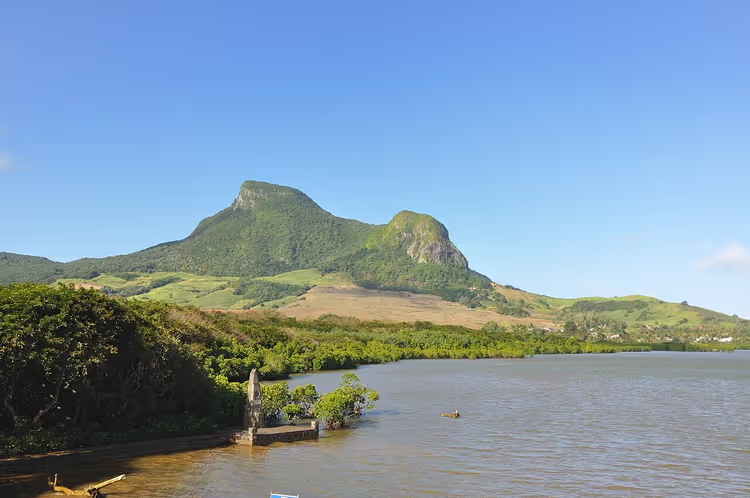 © Simisa ( talk · contribs ) · CC BY-SAPhoto: Simisa ( talk · contribs ), CC BY-SA (https://creativecommons.org/licenses/by-sa/3.0), Wikimedia Commons
More than half of the island's residents have Indian roots. Indian culture is visible everywhere, from cuisine to temples. In 2007, a giant statue of Shiva was erected by Lake Grand Bassin. The place became popular with both pilgrims and tourists.
Nearby stands the country's largest temple complex. Respect local rules: take off your shoes before entering, and photograph people with permission.
Tours and tickets in Mauritius
Guided tours, skip-the-line tickets and activities — most offers can be cancelled free of charge.
See offers on GetYourGuideThe widget loads once you give your consent.
What else to see in Mauritius
You can stop by Fort Adelaide in Port Louis and see the island's history from above. You can take a photo at the colorful church with a scarlet roof. This is Chapelle Notre-Dame Auxiliatrice on Cap Malheureux beach. Drive to Gris Gris point, where the ocean crashes against the rocks without a reef.
Taste local rum at the factory and walk through the illusion museum. Driving around all the points is more convenient by car: car rental on DiscoverCars. The roads here are good, but traffic is left-hand, so get used to it.
⁉️🤔 Frequently asked questions
Do I need a visa for Mauritius?
Citizens of most European countries, the US, and the UK do not need a visa. At the border, a passport, return ticket, and hotel booking are enough.
When is the best time to go to Mauritius?
The optimal season runs from May to November. There is less rain during this time, and the humidity is comfortable. For diving, choose calm months without strong wind.
How much does entry to Chamarel cost?
The geopark is paid, and tickets are easier to buy online on the official Chamarel website. The price includes access to the Seven Colored Earths and the waterfall. Check the exact price and opening hours on the website before your trip, as they change by season.
How do I get around the island?
The most convenient option for you is car rental. The roads are good, but traffic is left-hand, so be careful. Without a car, take excursions with transfers: they cover the main points of Chamarel, Tamarin, and Grand Bassin.
Is it safe to swim in the lagoons?
The lagoons are protected by a coral reef, so there are almost no waves. Don't touch the corals and don't go beyond the reef, there is a strong current there.
In short: what to book
Plan Mauritius in advance, and the trip will go smoothly. Take a hotel in the northwest for the calm sea, and in the east for the wind for kiting. Excursions cover the waterfalls and Grand Bassin, and a car gives you freedom of movement.
- If you want a beach vacation: take a hotel with a lagoon in the northwest.
- If you want to drive around the island: take a car and start early in the morning.
- If the trip is short: choose excursions to cover more places.
You can compare options and find hotels on Trip.com in a couple of clicks.

A small editorial team writing guides for independent travel. We travel ourselves, but we haven’t been everywhere, so we check prices, opening hours and how to get there against official sources.