
















What surprises in Germany: breweries, autobahns and strict laws
Germany is known for autobahns, order, and beer. But even people who have lived here for years are surprised by local laws and numbers.
Below you will find verified facts about Germany: the economy, laws, everyday life, and inventions. We confirmed every number with a link to an official source or converted it into a general form. Myths from old listicles did not make it in here.
Germany in numbers and records
💡 In short:
- Germany is one of the world's largest economies and remains Europe's leading exporter.
- Statistics and laws: 09/2026, verified on the Destatis website.
Germany has long held first place in Europe by economic output. The country produces cars, machine tools, chemicals, and medical equipment that are bought all over the world, which is why the German economy relies on exports and a strong engineering tradition. For you, this means Germany remains a country with high salaries and a stable labor market.
The country surprises people most with its autobahns. Germany remains the only country in Europe without a general speed limit on autobahns (as of: 2026, ADAC). In a 2026 ADAC survey, 56% of participants supported a general limit, while 39% were against it. Permanent speed limit signs are still in place on some sections, and in the rain speed drops on its own.
 © dronepicr · CC BYPhoto: dronepicr, CC BY (https://creativecommons.org/licenses/by/2.0), Wikimedia Commons
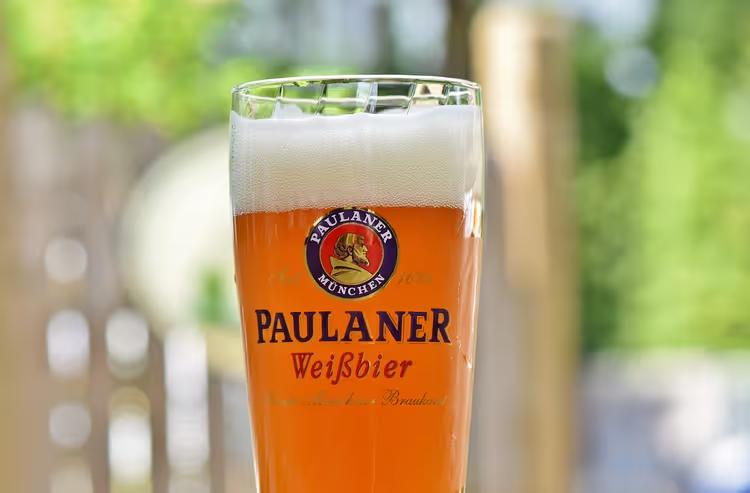
Beer has long been a symbol of the country, and not only because people love it here. In 2025, there were 1,415 breweries operating here, and 588 of them are concentrated in Bavaria (as of: 2025, Destatis). The world's largest beer festival, Oktoberfest, is hosted by Munich. Guests come from dozens of countries, and the festival itself has been held since the century before last.
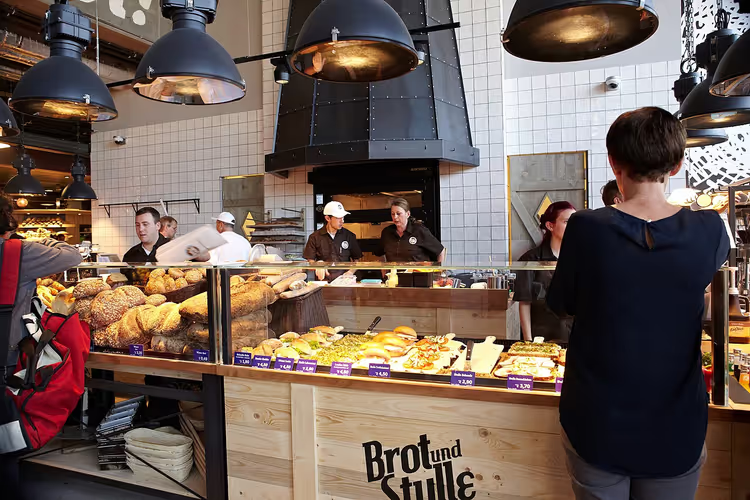
Germany's strong reputation is built on more than just cars. Beer is brewed here according to the medieval purity law Reinheitsgebot, which still influences recipes today. Bread is valued no less in Germany: its varieties are listed in a separate official register.
Laws that surprise foreigners
Fishing in Germany requires serious preparation and passing an exam. To pick up a rod, you need a Fischereischein, and to get one you must pass an exam and often complete a preparatory course. The classes also cover humane treatment of fish. According to DAFV, fishing without confirmed qualifications is not allowed.
Another habit concerns weekends. On Sundays and public holidays, almost all shops are closed. Since 2006, shop opening hours have been regulated by federal state laws (Ladenöffnungsgesetze). Germans do their shopping on Saturdays, and on Sundays only gas stations, kiosks at train stations, and airport shops are open.
You pay a deposit, Pfand, on glass and plastic containers. You then return the bottle to a machine at the supermarket and get your money back. That is why Germans carry empty containers to the store as routinely as they carry a shopping bag.
Rental housing protects tenants more strongly than in many countries. It is difficult for a landlord to terminate a contract without cause, and rent increases are limited by local rules. That is why many Germans rent an apartment for decades and are in no hurry to buy their own home.
Everyday life and German habits
Cash has not gone out of style in Germany. Cards are not accepted everywhere, especially in bakeries, at markets, and in small cafes. Keep some cash on you for everyday use, it makes life easier.
Waste sorting is mandatory in Germany, and the whole street keeps an eye on compliance. Glass, paper, plastic, organic waste, and residual waste go into different bins, and neighbors may call you out for mistakes. The habit has taken root: Germany is among Europe's leaders in waste recycling.
 © Andrea Lang · CC BY-SAPhoto: Andrea Lang, CC BY-SA (https://creativecommons.org/licenses/by-sa/4.0), Wikimedia Commons
Another everyday detail concerns dogs. In Germany, you pay a dog tax, Hundesteuer, and the amount depends on the city. The state does not pay any benefits for keeping an animal, although such a myth circulates on the internet.
The German language loves long words. Compound nouns like Rechtsschutzversicherungsgesellschaften take up an entire line. Translating them piece by piece is pointless, so translators often come up with a short description. Among the words that are hard to translate is Feierabend, the sacred German right to rest after work.
Inventions that changed the world
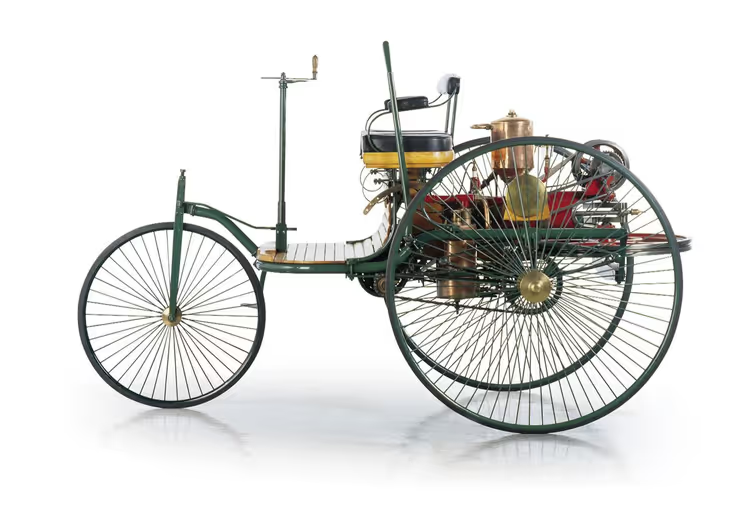
German inventors changed everyday life for almost everyone. Johannes Gutenberg assembled the printing press with movable type around 1440, Karl Benz patented the first automobile in 1886, Wilhelm Röntgen discovered X-rays in 1895, and Bayer launched aspirin in 1899 (as of: Wikipedia).
 © DaimlerChrysler AG · CC BY-SAPhoto: DaimlerChrysler AG, CC BY-SA (http://creativecommons.org/licenses/by-sa/3.0/), Wikimedia Commons
Back in 1840, Friedrich Fröbel opened the first kindergarten. The word Kindergarten itself entered the English language without translation and sounds German there. Much later, the MP3 format from the Fraunhofer Institute joined the list.
The German language loves long words. Compound nouns like Rechtsschutzversicherungsgesellschaften take up an entire line. Translating them piece by piece is pointless, so translators often come up with a short description.
⁉️🤔 Frequently asked questions
Is it true that German autobahns have no speed limit?
On most autobahns there is indeed no permanent limit, and Germany remains the only country in Europe without a general limit (as of: 2026, ADAC). But on individual sections, signs limit the speed, and in the rain and at construction sites you will not be able to drive fast. Be prepared to be overtaken.
Do you need an exam to fish in Germany?
Yes, in almost every federal state you need a Fischereischein for that. Before getting one, you pass an exam and often complete a preparatory course (DAFV data). Without the document, fishing is not allowed, so do not pick up a rod without preparation.
Do shops work on Sundays?
In most cities, almost all shops are closed on Sundays. Shop opening hours are determined by federal state laws. Buy groceries and everything you need on Saturday, otherwise you will be left facing closed doors.
What is Pfand and how do you return it?
Pfand can be described as a deposit on a bottle or can. You pay it at the store, then return the empty container to a machine and get your money back. The machines are in almost every supermarket.
Do Germans really pay in cash more often than others?
Yes, cash is more popular in Germany than in neighboring countries. A small supply of cash will save you from hunting for an ATM.
If you prefer watching to reading, turn on a short overview in English. In ten minutes, the author covers the same topics: rules, laws, and everyday life in Germany.
In short: what is worth booking
If you are going to Germany, plan your trip in advance.
- If you only have two days: pick one city and book train tickets in advance, seats on popular dates sell out quickly.
- If you are traveling with family: book accommodation in advance and compare prices on weekdays and weekends.
- If you are driving: check your autobahn route and account for toll sections outside the country.
Start with the official websites of museums, hotels, and carriers: they have the most accurate prices and opening hours.

A small editorial team writing guides for independent travel. We travel ourselves, but we haven’t been everywhere, so we check prices, opening hours and how to get there against official sources.