
















China: inventions, customs and myths people believe for nothing
Everyone has heard of China, but half of the usual facts about it turn out to be myths. Fortune cookies were not invented here, ping-pong is not from here either, and the country's population is falling for the first time in decades. As of December 31, 2025, China had 1.404 billion people (as of 09/2026, Wikipedia). We have gathered facts that surprise and explain the country better than a promotional brochure.
A little history of China
💡 In short:
- The name "China" comes from the Qin dynasty, which unified the country.
- Some finds at excavation sites are dated by scholars to 6000 BC.
In English, China is called "China". The country got its name from the Qin dynasty, whose rulers were the first to join the lands into a single state. The word traveled along the Silk Road and reached Europe through merchants.
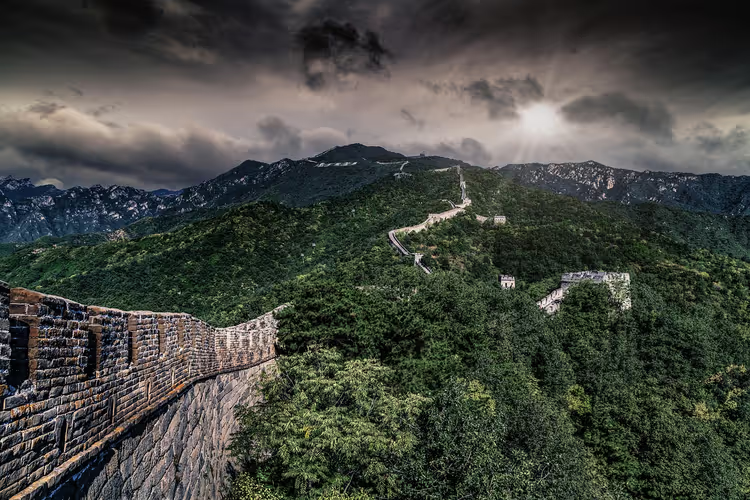
China is considered one of the oldest civilizations on the planet. Archaeologists date some finds to 6000 BC (as of 09/2026, Wikipedia). The Great Wall of China was built over centuries and in total stretches for more than 21,000 km (as of 09/2026, Wikipedia). You can walk the restored sections near Beijing in a day.
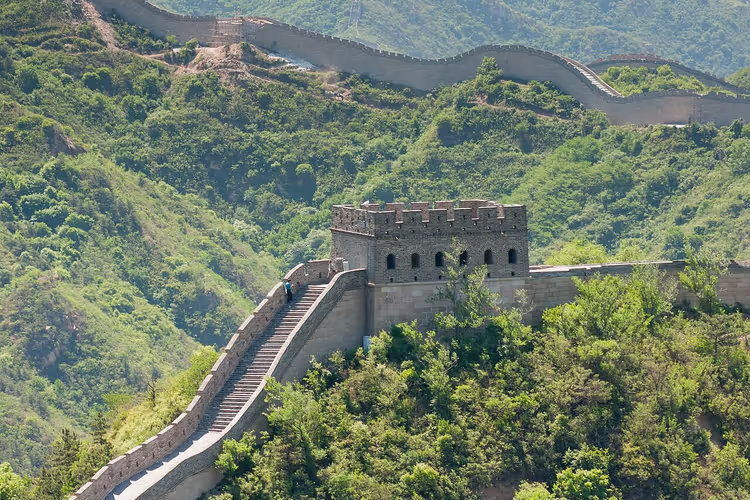 © CEphoto, Uwe Aranas · CC BY-SAPhoto: CEphoto, Uwe Aranas, CC BY-SA (https://creativecommons.org/licenses/by-sa/3.0), Wikimedia Commons
Interesting facts about the country
If you decide to count the islands along the Chinese coast, the number will run into the thousands. Some are connected to the mainland by bridges, others remain uninhabited.
 © Thomas Chu ( Instagram ) · CC BY-SAPhoto: Thomas Chu ( Instagram ), CC BY-SA (https://creativecommons.org/licenses/by-sa/4.0), Wikimedia Commons
You probably thought fortune cookies were a Chinese tradition. In fact, that is a myth: the treat was popularized in the US in the early 20th century, and it was most likely invented by Japanese immigrants in California (as of 09/2026, Wikipedia). In China itself, the cookie was long considered too American. Today, about 3 billion of them are produced worldwide each year.
China more than lives up to its title as the kingdom of flowers. Many of the ornamental plants you see in flower beds and pots around the world were bred right here.
Great inventions of China
Gunpowder, the compass, paper, and printing are called the Four Great Inventions of China (As of: 09/2026, Wikipedia). Historians rank their impact on the world alongside the Industrial Revolution, and you encounter many of them every day.
Paper is associated with the court official Cai Lun: around 105 AD he made a sheet from mulberry fibers, nets, and rags. The compass in the form of a "south-pointing chariot" was already known during the Warring States period, between 476 and 221 BC. Gunpowder was invented in the 9th century by alchemists searching for an elixir of immortality.
Not all discoveries were military. The imperial family was the first to appreciate toilet paper. Mechanical clocks also appeared here, as did a device that determined the direction and strength of earthquakes.
The kite also first took to the sky in China. Initially it served not as entertainment but as a military tool: it was used to frighten the enemy on the battlefield (As of: 09/2026, Wikipedia).
China also disputes the right to be called the birthplace of football. The ancient game cuju is mentioned in Han dynasty chronicles, and FIFA calls it the earliest documented form of ball game (As of: 09/2026, Wikipedia). Players kicked the ball without using their hands, keeping it from touching the ground.
Table tennis, however, incredibly popular in the country, was not invented by the Chinese. England is considered the birthplace of ping-pong.
China was the first to extract natural gas for heating, and by the 2nd century BC people there already knew the role the heart plays in the body.
Most popular among the Chinese
The most spectacular entertainment in China: cricket fighting. Insects hold a special place here, and in many homes a child's pet is precisely a cricket (As of: 09/2026, Wikipedia).

A popular pastime among the Chinese: stamp collecting. If you collect stamps, this is close to your heart. And the Chinese consider ice cream one of their favorite treats.
Surprising quirks and customs
In the past, long fingernails were a sign of noble status in China. And thin, small feet, achieved through binding, were considered very beautiful (As of: 09/2026, Wikipedia). You are unlikely to encounter this tradition today, but museums tell about it.
The birth control program led to a gender imbalance. At birth, there are about 1.09 boys for every girl, and in total there are almost 30 million more men than women in the country (As of: 09/2026, Wikipedia).
⁉️🤔 Frequently asked questions
How many people live in China?
About 1.404 billion people at the end of 2025 (As of: 09/2026, Wikipedia). China is second in population after India and has been losing residents since 2022. Scientists link this to the one-child policy.
Is it true that fortune cookies were invented in China?
No. They were most likely invented by Japanese immigrants in California (As of: 09/2026, Wikipedia).
What is included in the Four Great Inventions of China?
They are gunpowder, the compass, paper, and printing (As of: 09/2026, Wikipedia).
Where was football actually invented?
In China: FIFA calls the ancient game cuju the earliest form of ball game (as of 09/2026, Wikipedia).
What else is surprising about everyday life in China?
Cricket fighting, long fingernails as a status symbol, and stamp collecting. Much of what seems like a Chinese tradition was actually invented in other countries.
In short: what to book
If these facts made you want to see China with your own eyes, start with the essentials. Plan your trip in advance: tickets and entry to popular places sell out weeks ahead. Choose your itinerary based on the season, not someone else's list.
- If you want history: put the Great Wall of China on your itinerary.
- If you want local flavor: visit museums that tell about old customs and cricket fighting.
- If you want food: try local ice cream and street food.
Check opening hours and prices on official websites before your trip, they change every season.

A small editorial team writing guides for independent travel. We travel ourselves, but we haven’t been everywhere, so we check prices, opening hours and how to get there against official sources.