
















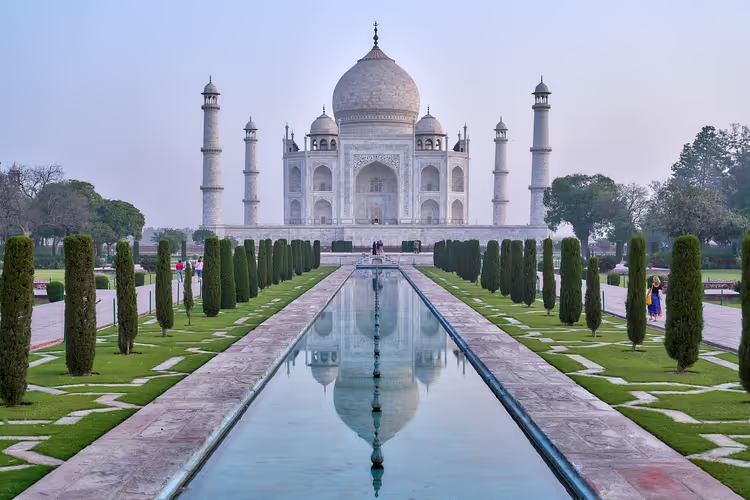
What surprises in India: temples, rupees and left-hand traffic
India surprises even experienced travelers. A temple here can stand in the middle of a market, and worshippers come to it before dawn. Many familiar rules work in reverse. Cars drive on the left, and the local currency cannot be taken out of the country without restrictions.
We have gathered facts about India that will be useful on your trip: religion and customs, road rules, cash limits, and two places worth seeing with your own eyes.
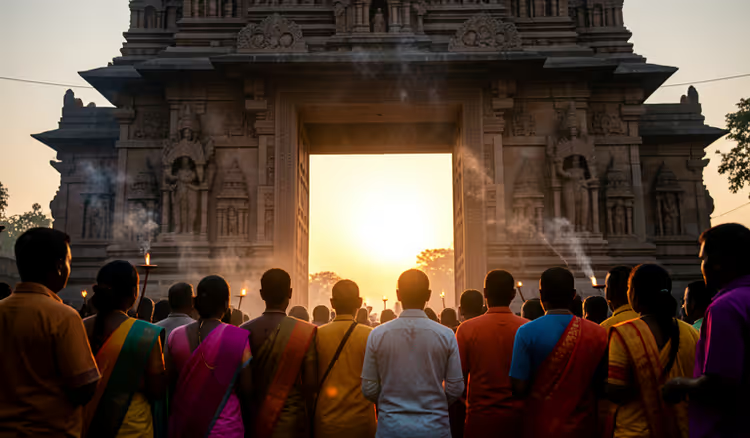 AIIllustrative image: AI-generated
Religion and its features
💡 In short:
- Temples open early in the morning, and prayers spread through the neighborhoods via loudspeakers.
- Some temples are closed to tourists, and entering active ones requires modest clothing.
- Facts and figures: 09/2026, according to the UNESCO list and the Reserve Bank of India website.
India is one of those countries where a temple appears at almost every turn. They open early in the morning, and the first prayers spread through the area. Loudspeakers are a common detail of the urban landscape here. There are many worshippers, so you will see a long line at the entrance to a famous temple.
Most Indians are religious. A visit to a temple almost always involves an offering, most often a set of flowers and fruit. Hindus also set aside a place for prayer at home. In a city apartment it is a separate room, in a village a small altar in the corner.
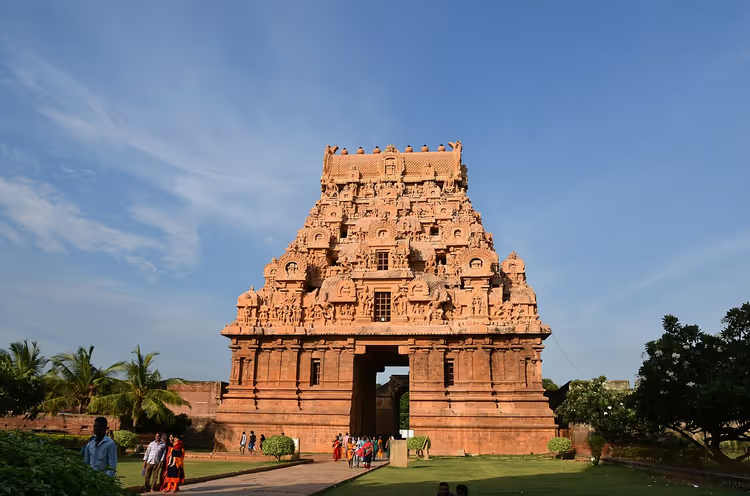 © Richard Mortel from Riyadh, Saudi Arabia · CC BYPhoto: Richard Mortel from Riyadh, Saudi Arabia, CC BY (https://creativecommons.org/licenses/by/2.0), Wikimedia Commons
Some temples are closed to foreigners, and a sign at the entrance warns about this. The rest allow free entry, but with conditions. Remove your shoes and cover your shoulders and knees. The inner halls of active shrines are often reserved for worshippers only, so check in advance where you will be allowed to go.
Culture and everyday life
If you see two men holding hands, do not jump to conclusions. This is a common expression of friendship, not something more. In India, friends casually hug and walk hand in hand on the street.
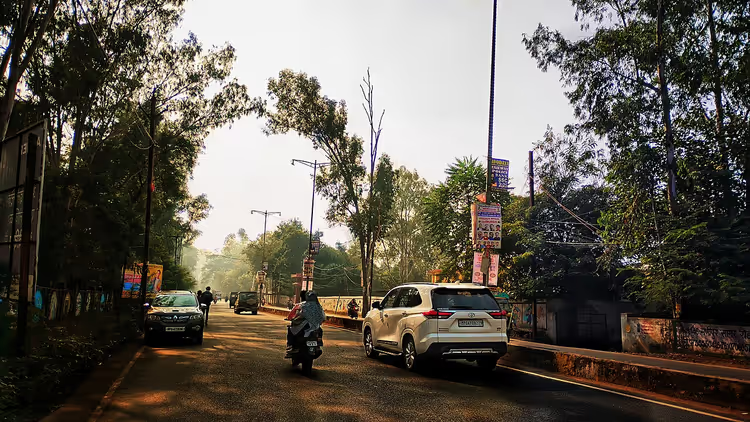 © Neelesh6116 · CC BY-SAPhoto: Neelesh6116, CC BY-SA (https://creativecommons.org/licenses/by-sa/4.0), Wikimedia Commons
India has left-hand traffic, a legacy of British rule. Rules are not strictly followed. The driver's main tool here is the horn: it is used to signal a maneuver, a stop, or a lane change. Turn signals are often not used. When crossing the street, look right first, then left.
Money and everyday rules
Indian laws restrict the movement of cash rupees across the border. The limit is set at 25,000 rupees in both directions (as of: 09/2026, Reserve Bank clarification). Amounts above the limit are confiscated at customs. For large purchases, it is more convenient to pay by card.
 © Biswarup Ganguly · CC BYPhoto: Biswarup Ganguly, CC BY (https://creativecommons.org/licenses/by/3.0), Wikimedia Commons
If you collect currency from different countries, keep a few banknotes as a souvenir.
Khajuraho temples
Khajuraho is known for its stone temples built by the Chandela dynasty between 950 and 1050 (as of: 09/2026, UNESCO data). About 20 structures have survived to this day. They are divided into three groups and belong to two religions, Hinduism and Jainism.
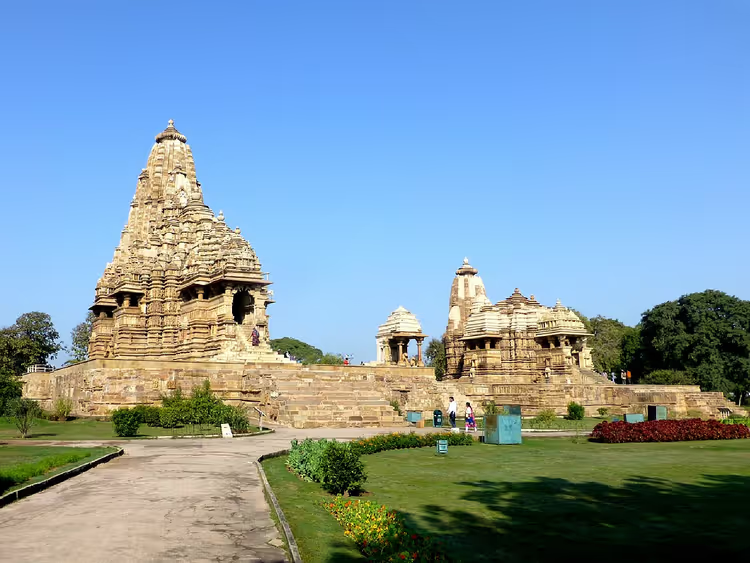 © Hiroki Ogawa · CC BYPhoto: Hiroki Ogawa, CC BY (https://creativecommons.org/licenses/by/3.0), Wikimedia Commons
The temples are famous for their sculptures, including erotic ones. Scholars still debate their purpose, and there is no single accepted version. Start with the western group: the largest structures stand there, including Kandariya Mahadeva Temple. Half a day is enough for a visit: there are fewer people in the morning and the light is softer for photos.
Lotus Temple in Delhi
The Lotus Temple was built in Delhi to a design by architect Fariborz Sahba. Work was completed in 1986, and since then the building has been visited by more than 70 million people (as of: 09/2026, architect's website). The shape is formed by 27 petals made of concrete and marble (as of: 09/2026, temple architecture page).
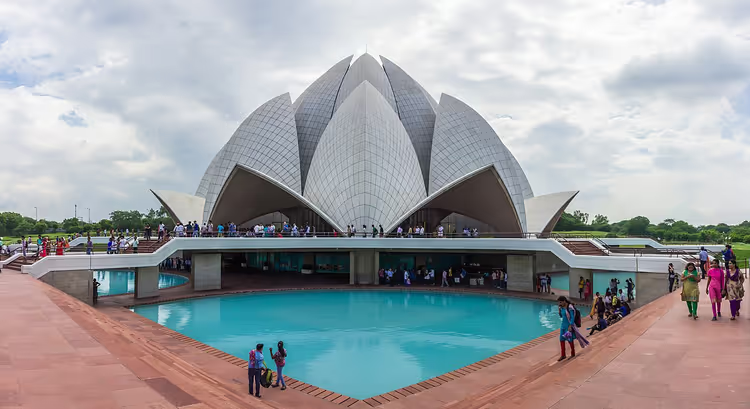 © Bijay chaurasia · CC BY-SAPhoto: Bijay chaurasia, CC BY-SA (https://creativecommons.org/licenses/by-sa/4.0), Wikimedia Commons
The temple belongs to the Bahá'í community. Inside there are no images or altars, and entry is open to people of any faith and even those without one. Before entering, you will be asked to remove your shoes and keep silence. Photography is not allowed in the prayer hall, but outside, the best photos of the gardens come at sunset.
⁉️🤔 Frequently asked questions
How much does it cost to enter the Lotus Temple in Delhi?
Entry is free for all visitors: it is a house of worship, not a museum (as of: 09/2026, official temple website). You only pay for water and souvenirs nearby. A visit takes about an hour. On weekends and holidays many people come, so it is better to arrive at opening time.
Can I take rupees out of India?
Cash rupees may be taken out and brought in within the limit of 25,000 rupees (as of: 09/2026, currency export rules). Do not hide small souvenir banknotes in your luggage. Cover your main expenses by card or exchange on the spot.
What should I see first in Khajuraho?
Start with the western group: the largest temples stand there, including Kandariya Mahadeva Temple (as of: 09/2026, world heritage register). You can hire a guide right at the entrance.
Why does India have left-hand traffic?
India inherited left-hand traffic from British rule, like other former colonies. In large cities, take a taxi through an app rather than hailing a car on the street.
Can a tourist enter any Indian temple?
No, some active shrines are open only to worshippers. In prayer halls, do not make noise and do not photograph people without permission.
In short: what to know before traveling to India
Follow the dress code at temple entrances and do not take rupees out beyond the limit. If you are traveling for impressions, put Khajuraho and the Lotus Temple at the top of your list.
Plan your route before departure: this will save you time on the ground and reduce haggling on the street.

A small editorial team writing guides for independent travel. We travel ourselves, but we haven’t been everywhere, so we check prices, opening hours and how to get there against official sources.