
















10 Interesting facts about Latvia: amber, lamprey and a prison hotel
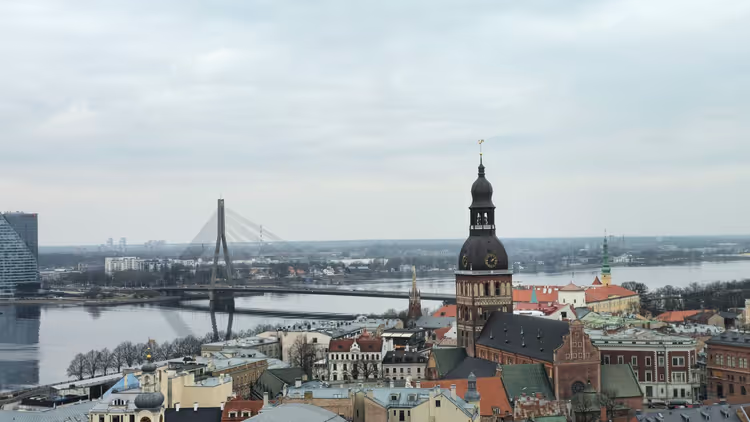
Latvia sits between Lithuania and Estonia, but it surprises more than its neighbors. It is home to the tallest tower in the European Union and the widest waterfall on the continent.
At the beginning of 2026, 1.845 million people lived in Latvia (as of 09/2026, Central Statistical Bureau of Latvia). These people take pride in Baltic amber, rye bread, and a language unlike any of its neighbors.
We have gathered ten facts about the country. Below you will find records, legends, and practical tips: what to see in Riga and what to look for beyond it.
Latvia: what to know before you go
💡 In short:
- Capital, currency, and language: Riga, euro, Latvian.
- Two major records: the tallest tower in the EU and the widest waterfall in Europe.
1. Riga has been known since 1201
Riga was founded by German knights and merchants on a natural harbor in the lower reaches of the Daugava. In 1201, the city was first mentioned in chronicles (as of 09/2026, Wikipedia). The name has not changed since.
The Daugava, also known as the Western Dvina, divides the capital in half. It is Latvia's largest river. You will see it from the embankment near the Old Town, where both spires and port cranes come into view.
2. Symbols of Latvia: bird, bread, and belt
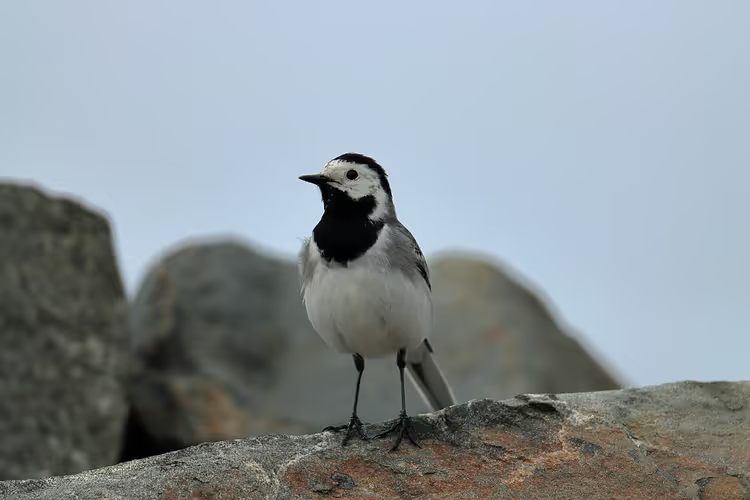
The white wagtail is considered the country's unofficial symbol. You will spot this long-tailed bird near rivers and in city parks.
Latvians also take pride in their rye bread: in 2025, the EU protected Aglonas maizes veistūklis bread with PGI status (as of 09/2026, EU press release).
A third recognizable sign: the Lielvārdes josta belt with its dense geometric pattern, which ethnographers study. It is worn as part of the national costume and bought as a souvenir.
 © Marius Vassnes · CC BY-SAPhoto: Marius Vassnes, CC BY-SA (https://creativecommons.org/licenses/by-sa/4.0), Wikimedia Commons
3. The Riga TV tower is the tallest in the EU
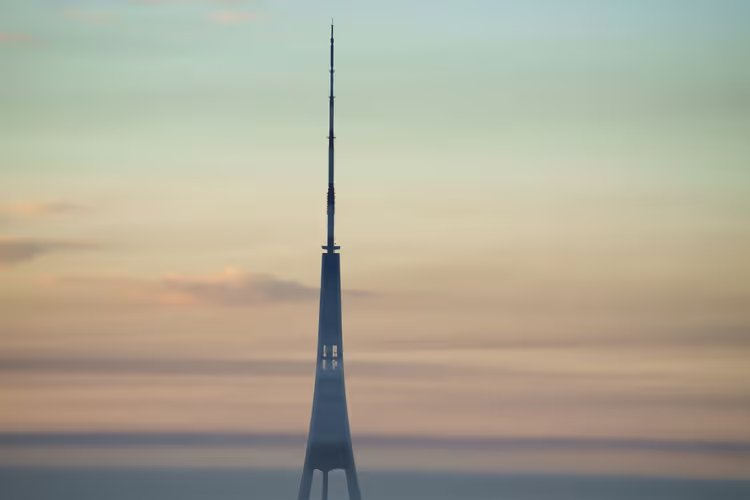
The Riga Radio and TV Tower rises to 368.5 meters (as of 09/2026, Riga Radio and TV Tower). It is the tallest structure in the European Union. The metal tower was built from 1979 to 1989 on Zaķusala island in the middle of the Daugava.
The observation deck is located at a height of about 97 meters (as of 09/2026, Wikipedia). Before your trip, check whether it is open to visitors.
4. The widest waterfall in Europe
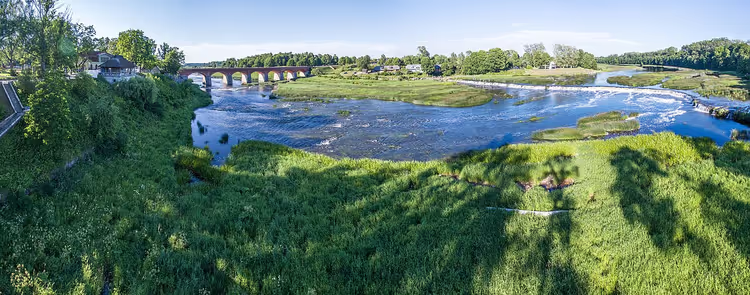
On the Venta River in Kuldīga lies the Ventas rumba waterfall. Its width reaches 249 meters (as of 09/2026, official Kuldīga website), making it the widest waterfall in Europe. During the spring flood, the water spreads to nearly 275 meters.
The drop is small, about two meters. In summer, people swim and fish at the waterfall. Come at sunset: the light on the water is soft, and there are fewer tourists.
 © BirdsEyeLV · CC BY-SAPhoto: BirdsEyeLV, CC BY-SA (https://creativecommons.org/licenses/by-sa/3.0), Wikimedia Commons
5. Eisenstein and Riga art nouveau
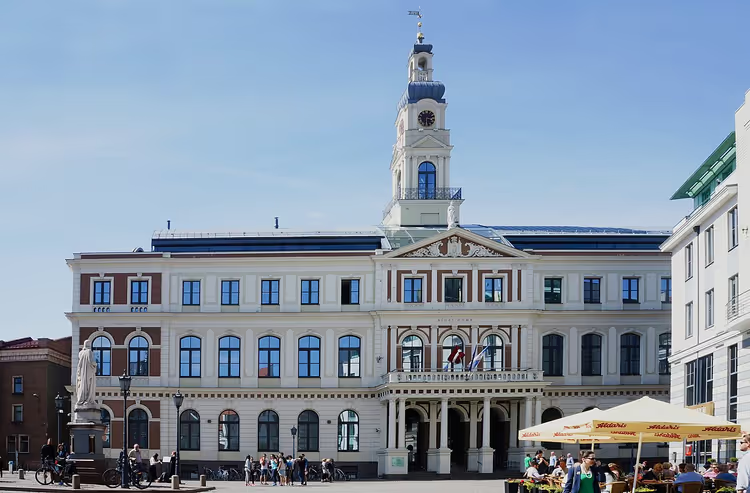
Film director Sergei Eisenstein was born in Riga (as of 09/2026, Wikipedia). He spent his childhood here, and his father served as the architect of the Livonia Governorate.
The family lived on Krišjāņa Valdemāra iela. His father's main project in Riga was a building on Elizabetes iela with four-meter female profiles on the facade.
Today these buildings are classified as Riga Art Nouveau, and architecture lovers travel to the city for them. You can see the profiles right from the sidewalk: step closer and look up.
 © PIERRE ANDRE LECLERCQ · CC BY-SAPhoto: PIERRE ANDRE LECLERCQ, CC BY-SA (https://creativecommons.org/licenses/by-sa/4.0), Wikimedia Commons
6. Jauniela: filming Sherlock Holmes
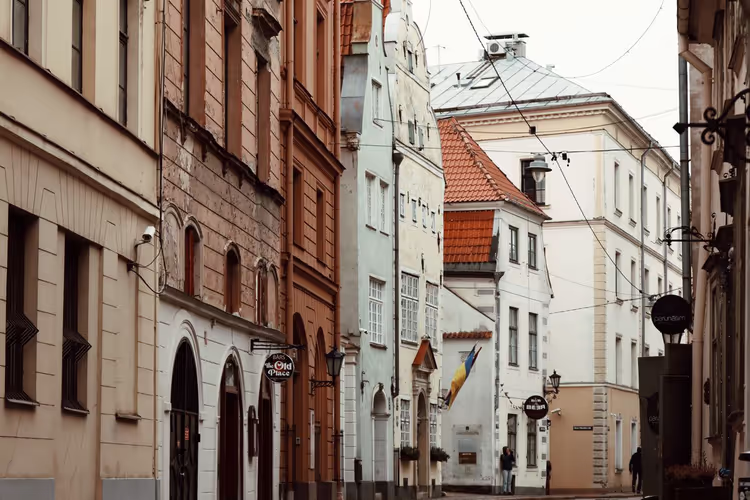
Jauniela lies in Riga's Old Town, which has been mentioned since 1201. The Soviet series "The Adventures of Sherlock Holmes and Dr. Watson" was filmed on this cobblestone street (as of 09/2026, Lidenz).
"Seventeen Moments of Spring" was also filmed here. Visitors point out the windows of the "detective's apartment" and the building across the street, from which Professor Pleischner jumped in the story. Find these windows yourself: there are almost no plaques, but the cobblestones and facades remain the same.
 © Spekozols · CC BY-SAPhoto: Spekozols, CC BY-SA (https://creativecommons.org/licenses/by-sa/4.0), Wikimedia Commons
7. The rings of King Nameisis
An old legend tells of Nameisis, the Semigallian chieftain. In the 13th century, he tried to unite the Baltic tribes against the crusaders.
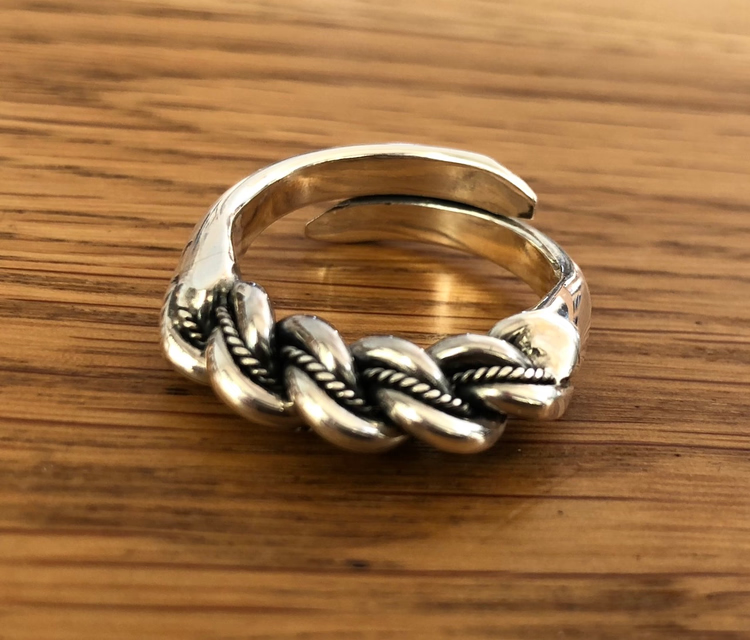
According to the tale, Nameisis forged copper rings for his warriors as a symbol of unity. Enemies believed the rings were made by the gods and held magical power. Today, the twisted Nameisis ring is worn as jewelry and brought back from Latvia as a souvenir. You can buy one in Riga's jewelry workshops.
 © Laima Gūtmane (simka… · CC BY-SAPhoto: Laima Gūtmane (simka…, CC BY-SA (https://creativecommons.org/licenses/by-sa/3.0), Wikimedia Commons
8. Lampreys and the fish weirs of Salacgrīva
Smoked lamprey is served as a delicacy in Latvia. It is caught using an ancient technique that has barely changed over the centuries.
People travel to Salacgrīva on the shore of the Gulf of Riga to see this. The river is blocked with a "weir": light footbridges made of spruce poles. From the footbridges, fyke nets are lowered, traps made of willow twigs or nylon netting.
The season is short, so if you arrive at the wrong time, you won't see the fishing. Check the dates with locals: lamprey run in autumn.
9. Amber of Courland: Kolka and Pāvilosta
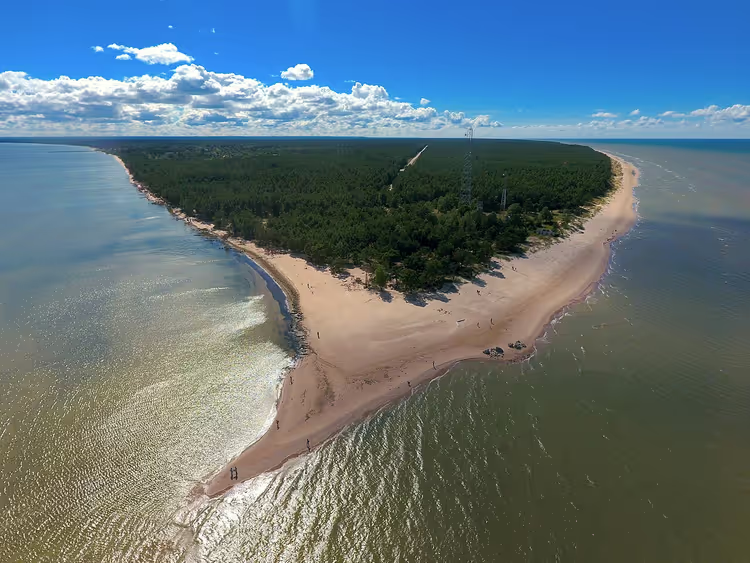
The Courland coast stretches from Liepāja to Cape Kolka. The stormy Baltic shore is a favorite of surfers, fishermen, and amber hunters.
 © Diego Delso · CC BY-SAPhoto: Diego Delso, CC BY-SA (https://creativecommons.org/licenses/by-sa/3.0), Wikimedia Commons
After a storm, amber is searched for right on the sand. The largest pieces of Baltic amber have been found in Pāvilosta. Locals wade into the water with nets on long poles and collect seaweed, among which the "sun stone" can be found.
If you love quiet, put Ventspils and Pāvilosta on your route: they have calm beaches and fewer people than near Riga.
 © Edgars Šulcs · CC BY-SAPhoto: Edgars Šulcs, CC BY-SA (https://creativecommons.org/licenses/by-sa/4.0), Wikimedia Commons
10. Prison hotel in Karosta
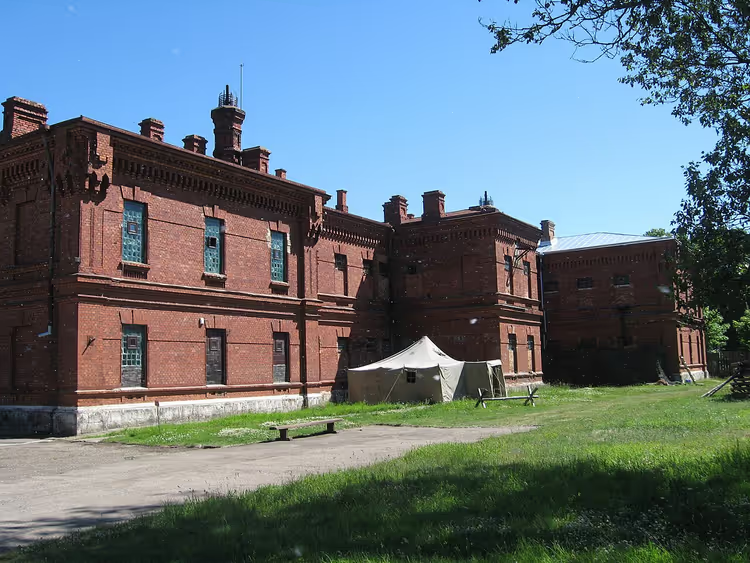
In Karosta, a military town near Liepāja, there is an unusual hotel. It was opened in the building of a former Military Port prison that is over a hundred years old (as of 09/2026, Karosta Prison).
It is the only military prison in Europe open to tourists (as of 09/2026, Liepāja tours). A night here is spent on plank beds, following a schedule and enduring guards' shouting. This experience appeals to travelers who want more than an ordinary hotel.
If you don't want to stay overnight, take a daytime tour: the escape stories are impressive even without the plank beds.
 © Wellstar69 · CC BY-SAPhoto: Wellstar69, CC BY-SA (https://creativecommons.org/licenses/by-sa/4.0), Wikimedia Commons
⁉️🤔 Frequently asked questions
When is the best time to visit Latvia?
Plan your trip for June through August: warm weather, long daylight hours, and open beaches. September is still comfortable, with fewer tourists. Come after storms for amber, and check the lamprey fishing dates with locals. Set aside a separate day for the Kuldīga waterfall.
Where can I find amber in Latvia?
Amber is collected on the Kurzeme coast after a storm. Go to Pāvilosta, Ventspils, or Cape Kolka: the stones lie right on the sand.
Is it worth staying overnight in the prison hotel?
Karosta Prison near Liepāja offers a night on plank beds, prison food, and guards' shouting. If an overnight stay seems too bold, take a daytime tour: you'll still hear the escape stories.
What should I try from Latvian cuisine?
Try smoked lamprey, rye bread, and local cheeses. Lamprey in Salacgrīva is caught using an ancient technique, and it is an autumn delicacy.
How wide is the Kuldīga waterfall?
The Ventas rumba waterfall is open year-round, admission is free. Its width varies from 200 to 249 meters, and during floods it reaches 275 (as of 09/2026, official Kuldīga website). In winter it freezes, and the view becomes completely different.
In short: what to book
Start with Riga: Eisenstein's Art Nouveau and the Jauniela street are in the center. The TV tower stands separately, on Zaķusala island. Then add Kurzeme for amber and a night in Karosta.
If you're after records, put the tower and the Kuldīga waterfall on your route. If you prefer the sea, choose Liepāja, Ventspils, and Cape Kolka. If food draws you in, plan Salacgrīva for lamprey season.
Build a route with three stops: that way you'll see both the capital and the coast in one trip.

A small editorial team writing guides for independent travel. We travel ourselves, but we haven’t been everywhere, so we check prices, opening hours and how to get there against official sources.