
















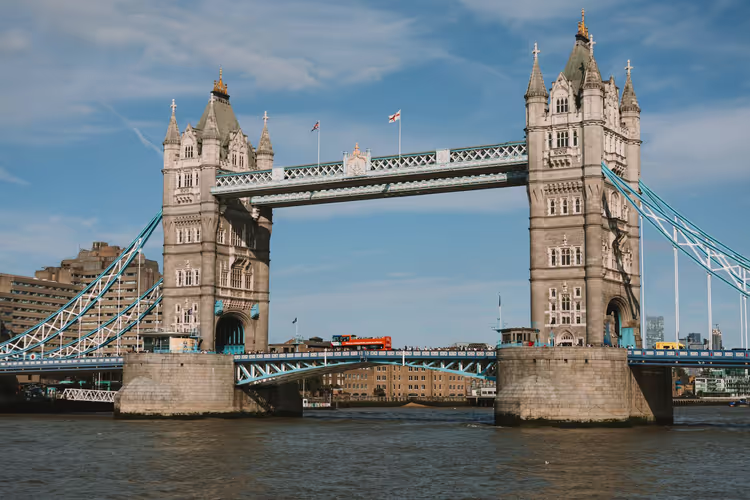
Interesting facts about Great Britain: customs, oddities and laws
Britain runs on habits that seem strange to a visitor. People here wear school uniforms, drink strong tea, and discuss the weather more often than politics. Most of these rules rest on custom rather than law. Fox hunting, however, has been officially restricted.
This guide will explain the country to you before your trip. We have gathered the customs, laws, and everyday details that tell you more about the British than any travel guide. Below we look at why local pork smells different, where the school uniform came from, and whether London really is the rainiest capital in Europe.
What the British eat and drink
💡 In short:
- Britain runs on traditions: school uniforms, strong tea, pork from uncastrated pigs.
- Each school sets its own uniform rules; the law does not require one.
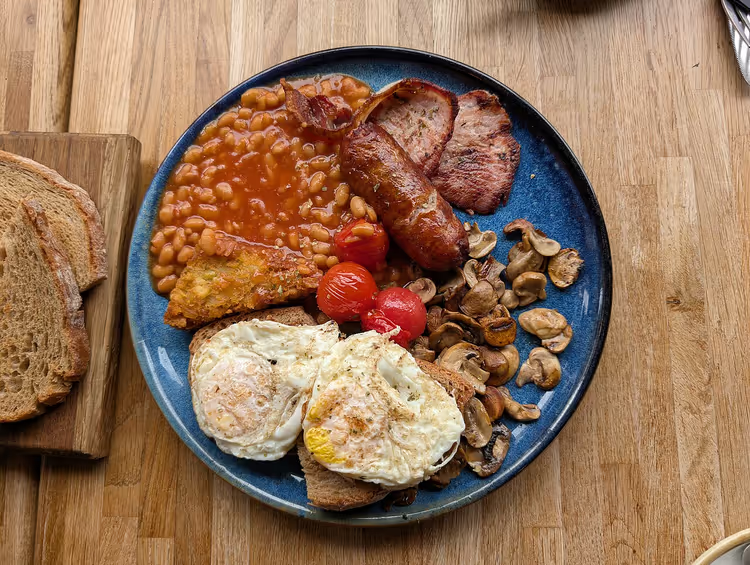
Pork in Britain is produced differently than in most European Union countries. Boars here are not castrated but slaughtered at a younger age (as of CIWF, 09/2026). As a result, the meat sometimes has a specific smell and taste that visitors notice. Not every guest will appreciate such bacon, although a traditional English breakfast is unthinkable without it.
You will see tea everywhere, from offices to construction sites. Britain drinks about 100 million cups a day, and roughly 70% of residents drink tea regularly (as of Tea Advisory Panel, 09/2026). A quality loose-leaf variety will require a trip to a specialty shop. Teabags are sold on every corner, and for locals that has long been the norm.
School, uniform, and discipline
School uniforms are worn in most schools here. You will notice them on the streets of any city on a regular school day. The law does not require a uniform; each school sets its own rules. There is no single style even in state schools. The uniform establishes discipline from the first grades and keeps children from standing out with expensive clothes.
 © ClemRutter · CC BY-SAPhoto: ClemRutter, CC BY-SA (https://creativecommons.org/licenses/by-sa/4.0), Wikimedia Commons
Corporal punishment in schools was abolished in stages. It was banned in state schools in 1987, and in private schools only in 1999 (as of Schools Week, 09/2026). Before that, the headmaster of an elite boarding school could cane a pupil for a serious offense, and it was considered normal.
Schooling starts early. Children begin school at age five, and compulsory education lasts at least until sixteen (as of gov.uk on school age, 09/2026). After sixteen you cannot simply leave education: for another two years you study at a college or do an apprenticeship (as of gov.uk on continuing education, 09/2026).
Weather, rain, and snow
London is called the rainiest capital in Europe, but that is a myth. By annual precipitation, the British capital trails many cities in continental Europe (as of Met Office, 09/2026). Rain here comes in short bursts, but often and at the worst possible moment.
 © Kwh1050 · CC BY-SAPhoto: Kwh1050, CC BY-SA (https://creativecommons.org/licenses/by-sa/4.0), Wikimedia Commons
Snow is rare in these parts; in winter rain is more common. That is why snow-clearing equipment is hardly ever purchased here. If snow covers the road even a little, the city faces a transport collapse. Buses stop running, flights are canceled, but children build snowmen in every yard.
Hardiness, animals, and hunting
The British are considered one of the hardiest nations. Children are not bundled up in warm clothes from birth, as they are accustomed to the damp, mild climate. In the middle of winter you can easily see someone outside in just a T-shirt. You will be surprised how calmly people here treat the cold and how strictly they economize on heating.
Fox hunting with dogs was long considered part of rural life. In England and Wales it was banned in 2005, when the Hunting Act 2004 came into force (source: Hunting Act 2004, 09/2026). In Scotland such a ban has been in place since 2002. In Northern Ireland there is still no separate ban.
Parks, memory and class divisions
In city parks you will come across unusual plaques. Benches are often inscribed in memory of a deceased relative or friend. This is how Britons honor their loved ones and, at the same time, help maintain parks with private money. Such plaques can be found both in London and in small towns in the north of the country.
Society is divided not by wealth, but by background and education. A person's accent and school reveal their class faster than their income level. Understanding this will help you avoid being surprised by oddities in communication.
For your first trip, you may find this 3-day London itinerary with a map and description useful.
⁉️🤔 Frequently asked questions
Is it true that fox hunting is banned in Britain?
Fox hunting with dogs has been banned in England and Wales since February 2005, when the Hunting Act 2004 came into effect (full text of the act, 09/2026). There are limited exceptions, for example with the landowner's consent. In Northern Ireland there is no separate ban, so there is no single rule for the whole country.
Why do Britons drink so much tea?
Tea remains the country's main drink: around 100 million cups a day, and about 70% of residents drink it regularly (according to a Tea Advisory Panel survey, 09/2026). The tradition took hold back in the 19th century. A tea bag is more common here than a teapot, and loose-leaf tea has to be sought out in a specialty shop.
Is school uniform mandatory in Britain?
The law does not require a uniform; each school sets its own rules. Most schools do introduce a uniform, and this is noticeable on the street on a school day. There is no single style even in state schools. Corporal punishment was abolished gradually: in state schools in 1987, in private schools in 1999 (according to a Schools Week article, 09/2026).
Is it true that London is the rainiest capital in Europe?
No, that is a common myth. By annual precipitation, London falls behind many cities in continental Europe (according to Met Office data, 09/2026).
How does British pork differ from what you are used to?
In Britain, boars are not castrated; they are slaughtered earlier, so the meat sometimes develops a specific odor (according to Compassion in World Farming, 09/2026). This is done for animal welfare, not to save money. Tourists should keep this in mind when ordering a traditional English breakfast with bacon.
Is there a class divide in Britain?
Yes, and it is more noticeable than in many EU countries. Society is divided by background and education, not only by income. Accent and school reveal a person faster than salary size. This is one reason why the British are so attentive to manners and speech.
A walk through Britain on video
If you want to see the customs live, watch a short breakdown from a native speaker.
In short: what to remember about Britain
Britain is built on traditions, and only some of them are enshrined in law. School uniforms are introduced by the schools themselves, tea is drunk by the liter, and fox hunting with dogs was banned in 2005. For a tourist, this means one thing: observe the customs and do not argue with them.
If you are planning a trip around the country, here is a short matrix. If you are interested in cuisine, go for the traditional breakfast and remember the specific taste of pork. If your trip falls in autumn or winter, keep an umbrella and check the forecast in advance. If you are traveling with children, consider school uniform part of the local culture.
To continue getting to know the country, it is convenient to move on to the 3-day capital guide.

A small editorial team writing guides for independent travel. We travel ourselves, but we haven’t been everywhere, so we check prices, opening hours and how to get there against official sources.