
















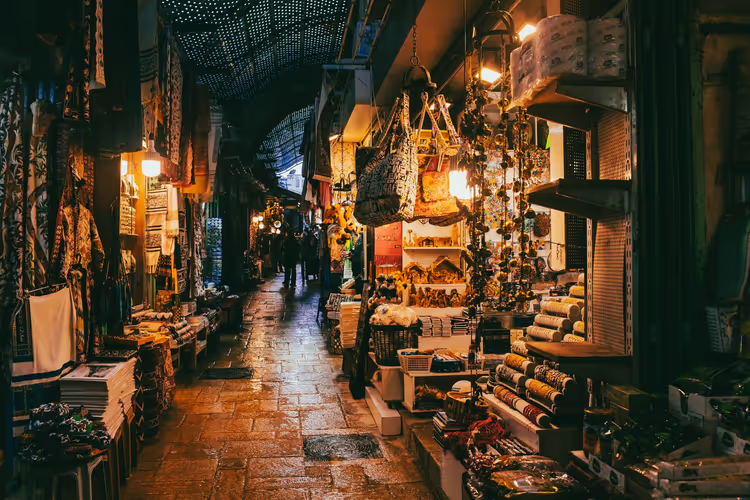
What to bring from Israel: markets, boutiques and VAT refund
In Israel, Shabbat closes nearly all shops and markets. You have to plan shopping here just as carefully as sightseeing. On Friday afternoon, markets wind down. On Saturday, malls and boutiques are closed, while cafes and bars stay open.
If you want to bring home Dead Sea cosmetics, Judaica, and some vintage finds, build your route around three cities: Tel Aviv, Jaffa, and Jerusalem. Below, we break down what to look for in each city and how to claim part of the tax back when you leave.
Ad: this article contains affiliate links: we earn a commission if you book through them, at no extra cost to you.
What and where to buy in Israel
In Tel Aviv, people buy clothing, shoes, and electronics; in Jaffa, they hunt for vintage and ceramics; in Jerusalem, they pick up souvenirs, spices, and Judaica. Distances here are short. From central Tel Aviv to Jaffa is about 4 km on the map, a 10-15 minute bus or tram ride.
City | What to buy | Where | When |
|---|---|---|---|
Tel Aviv | clothing, shoes, jewelry, cosmetics | Azrieli Center, Dizengoff Center, Ramat Aviv Mall, Shenkin Street | Sun-Thu, Friday until early afternoon |
Jaffa | vintage, ceramics, rugs, Judaica | Shuk Hapishpeshim flea market | Sun-Fri, around 9:00-17:00 (as of 09/2026, Tel Aviv tourist office) |
Jerusalem | souvenirs, Judaica, spices, Dead Sea cosmetics | Ben Yehuda, Nahalat Shiva, Mahane Yehuda market | Sun-Thu 8:00-19:00, Fri until 15:00 (as of 09/2026, official Mahane Yehuda market website) |
💡 In short:
- Markets are closed on Shabbat: come Sunday through Thursday or on Friday morning.
- Look for brand-name items in Tel Aviv; souvenirs and spices are cheaper in Jerusalem.
- Tax-free is processed at Ben Gurion Airport before check-in; keep your receipts.
- Market hours: 09/2026, verified on the official Mahane Yehuda market website.
Tel Aviv shopping malls
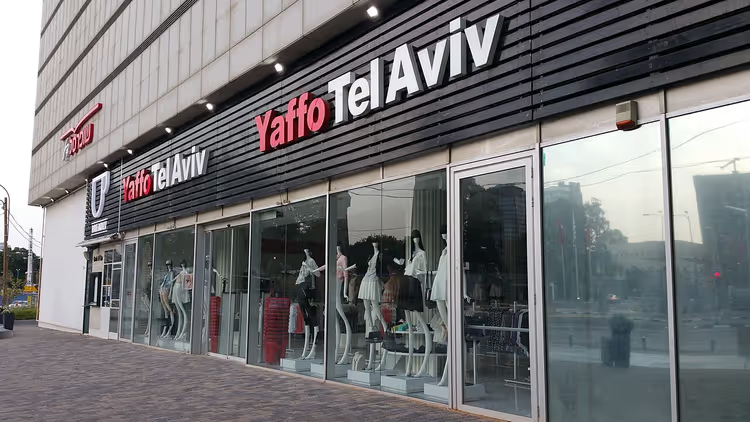
In Tel Aviv, malls cover almost all of the city's mass-market shopping. Come on weekdays in the morning. On Friday afternoon, some stores are already closed. On Saturday, most malls are closed, but some stores operate at Tel Aviv Port and in Sarona.
 © Konrad Summers from Santa Clarita (Valencia) , California, USA · CC BY-SAPhoto: Konrad Summers from Santa Clarita (Valencia) , California, USA, CC BY-SA (https://creativecommons.org/licenses/by-sa/2.0), Wikimedia Commons
Azrieli Center
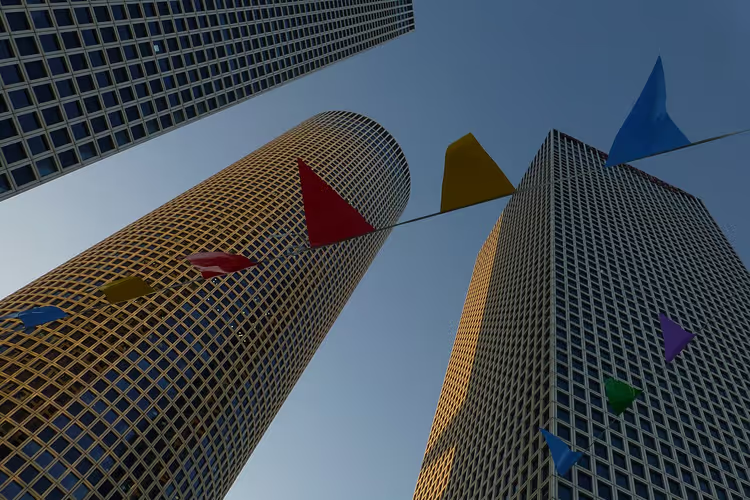
Azrieli Center occupies the base of three towers in the city center. It has around two hundred shops and restaurants: international mass-market brands, Israeli clothing labels, and a large food court. If you came for a single day of shopping, this is the most convenient starting point.
 © Chenspec · CC BY-SAPhoto: Chenspec, CC BY-SA (https://creativecommons.org/licenses/by-sa/3.0), Wikimedia Commons
Dizengoff Center
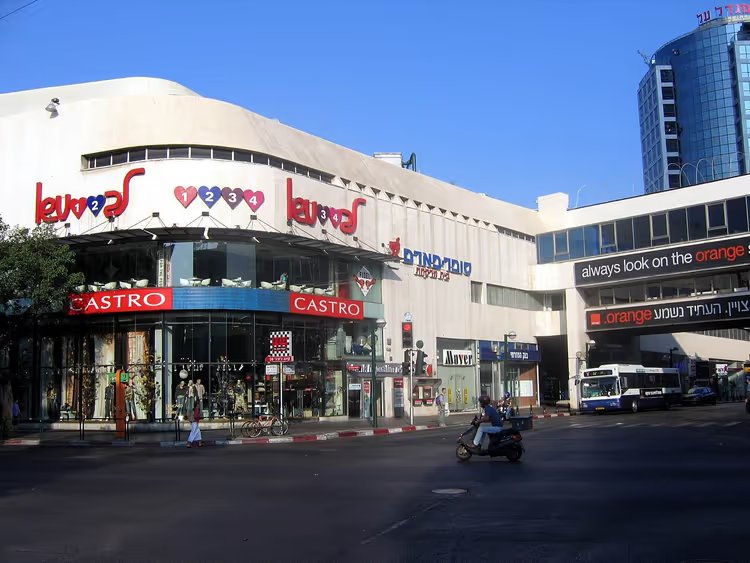
Tel Aviv's oldest mall, Dizengoff Center, stands in the city center. International brands and Israeli manufacturers operate side by side here. Dead Sea cosmetics are sold in several stores at once, so you can compare prices.
 © User:Beny Shlevich · CC BY-SAPhoto: User:Beny Shlevich, CC BY-SA (http://creativecommons.org/licenses/by-sa/3.0/), Wikimedia Commons
Ramat Aviv Mall
Ramat Aviv Mall is an upscale shopping center at 40 Einstein Street. Louis Vuitton, Emporio Armani, and Montblanc are listed among its tenants (according to Wikipedia). People come here for bags, shoes, and watches, not souvenirs.
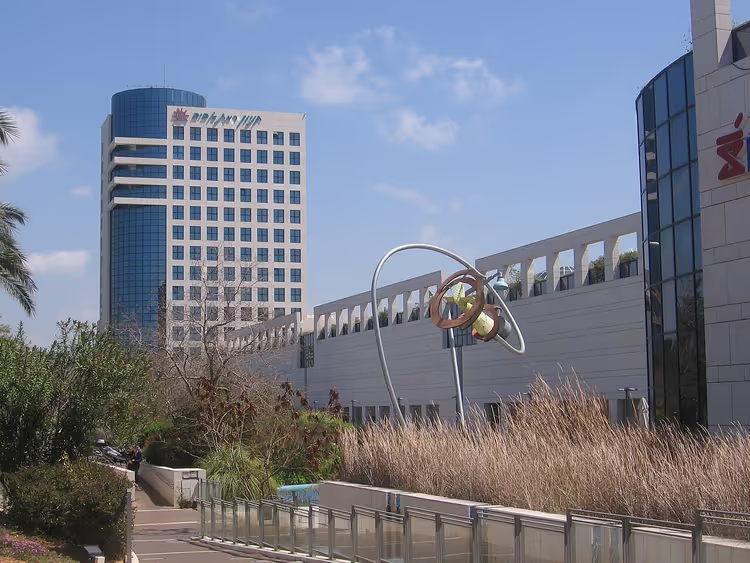 © AlexJilitsky · CC BY-SAPhoto: AlexJilitsky, CC BY-SA (https://creativecommons.org/licenses/by-sa/3.0), Wikimedia Commons
Gan Ha'Ir
Gan Ha'Ir is more compact and quieter. It is convenient if you are staying near the Dizengoff area. The selection of stores is smaller than at Azrieli, but so are the lines.
Luxury boutiques at Kikar Hamedina
Kikar Hamedina square is in the north of Tel Aviv, and high-end boutiques have held their ground around it for decades. Gucci, Louis Vuitton, and Armani storefronts sit next to jewelry salons. It is worth shopping here if you are looking for a specific item from a well-known brand, not souvenirs. On Saturday the area looks empty: almost all stores are closed.
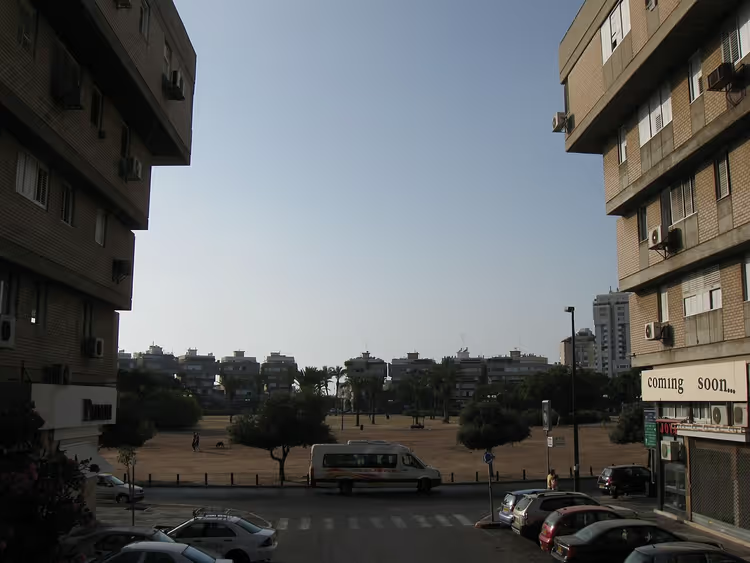 © Ori~ · CC BYPhoto: Ori~, CC BY, Wikimedia Commons
Shenkin street and shuk hacarmel market
Shenkin Street starts at Shuk Hacarmel market and runs toward the city center. Vendors here sell vintage jewelry, Israeli cosmetics, shoes, and home goods. Shuk Hacarmel market is open Sunday through Friday and winds down before Shabbat, so on Friday arrive before noon (as of 09/2026, market page).
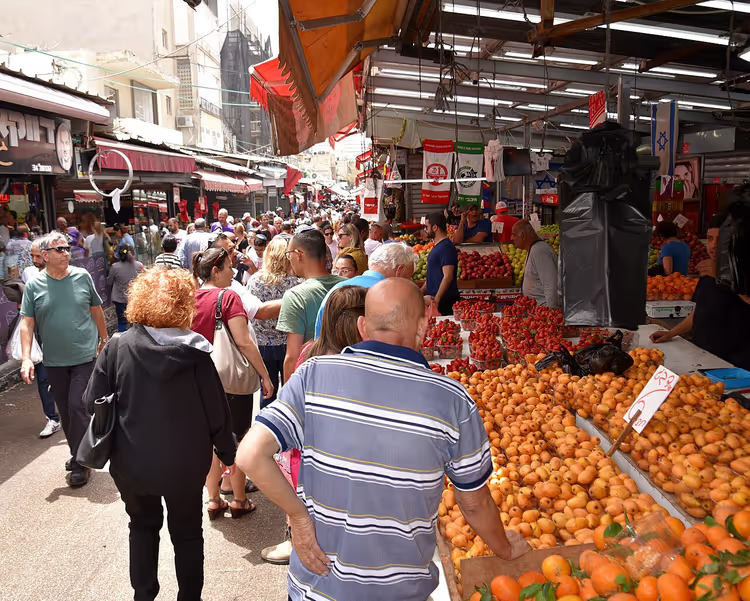 © Bahnfrend · CC BY-SAPhoto: Bahnfrend, CC BY-SA (https://creativecommons.org/licenses/by-sa/4.0), Wikimedia Commons
Nearby, on Nachalat Binyamin Street, an arts and crafts fair takes place twice a week. On Tuesdays it is open from 10:00 to 17:00, on Fridays from 10:00 to 16:30 (as of 09/2026, official fair website). More than a hundred artisans sell ceramics, jewelry, and graphic art. Come at opening time, because by midday the narrow street gets crowded.
Shuk Hapishpeshim flea market in Jaffa
Shuk Hapishpeshim flea market is open Sunday through Friday, roughly from 9:00 to 17:00, and closed on Saturday (as of 09/2026, Tel Aviv tourism office).
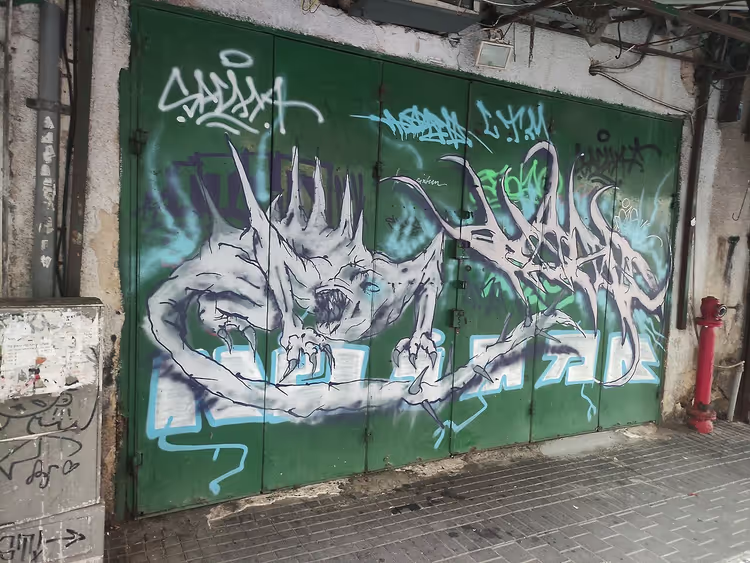 © Nizzan Cohen · CC BYPhoto: Nizzan Cohen, CC BY (https://creativecommons.org/licenses/by/4.0), Wikimedia Commons
The stalls mix old mass-produced goods with genuine rarities: handmade rugs, ceramics, Judaica, vinyl, and furniture. Haggling is part of the process here; sellers expect it and build a cushion into the price. Come in the morning, because by evening the best items are gone.
Jerusalem souvenirs: Ben Yehuda and Nahalat Shiva
From Jerusalem people bring back Judaica and souvenirs rather than clothing. The pedestrian streets of Ben Yehuda and Nahalat Shiva are lined with souvenir shops: menorahs, mezuzahs, Armenian ceramics, and olive wood items.
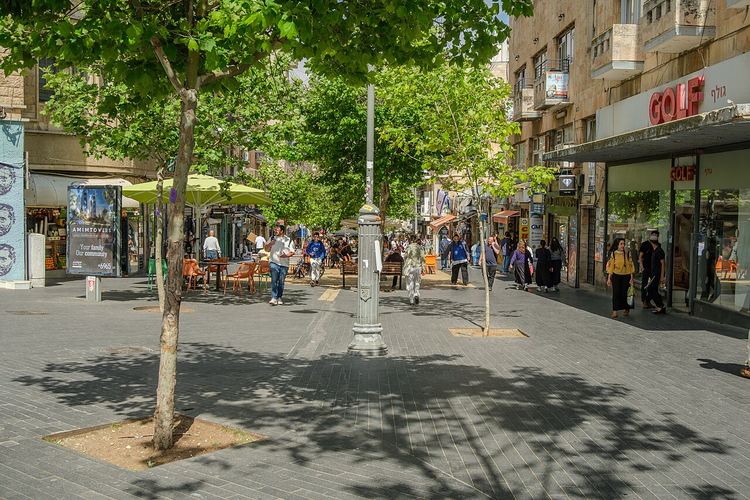 © מקף־עברי · CC BY-SAPhoto: מקף־עברי, CC BY-SA (https://creativecommons.org/licenses/by-sa/4.0), Wikimedia Commons
Dead Sea salt and mineral cosmetics are also sold here, but compare prices with pharmacies: the difference can be significant. On Friday the streets empty out by midday, as vendors leave before Shabbat.
Mahane Yehuda market: food and spices
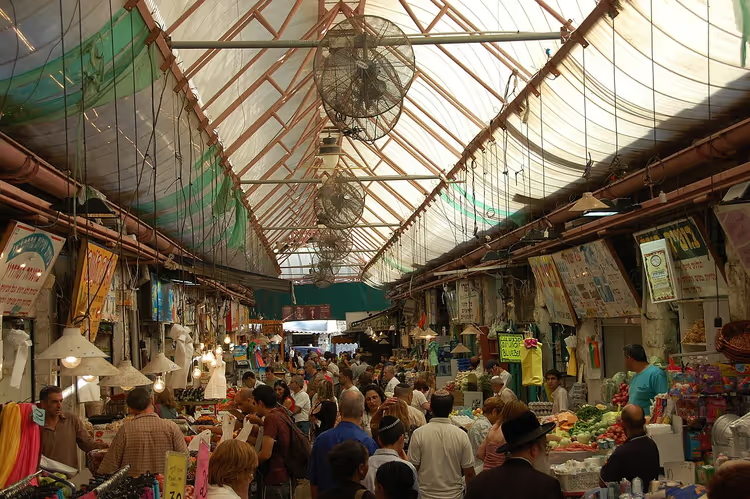
Mahane Yehuda market remains Jerusalem's main food destination. During the day people buy spices, nuts, cheeses, and fresh baked goods. Toward evening, bars and restaurants open. Falafel and shawarma at the market are the easiest way to try local cuisine without booking a table. On Saturday evening the stalls are closed, but the cafes are open.
Practical tips: Shabbat, haggling, and tax-free
Shabbat changes your plans more than the weather. From Friday afternoon to Saturday evening, markets and most stores are closed. The exceptions are cafes, bars, and some restaurants. Plan major purchases for Sunday through Thursday.
Haggling is appropriate at markets and flea markets. Sellers almost always give a discount, especially if you buy several items. In malls, pharmacies, and chain stores, prices are fixed, and haggling is not accepted there.
VAT in Israel is 18% (as of 09/2026, tax-free guide), and tourists can get part of the tax refunded when leaving the country. Shop at stores with a tax-free sticker, keep your receipts, and process the refund at Ben Gurion Airport before checking in for your flight (as of 09/2026, TLV Flights VAT refund guide).
⁉️🤔 Frequently asked questions
When is the best time to go shopping?
Sunday through Thursday: both markets and malls are open. Friday only works for the first half of the day, because markets close before Shabbat. On Saturday, almost everything in Israel shuts down, so it's better to plan shopping as a separate day of your trip.
Is the Jaffa flea market open on Saturday?
No, Shuk Hapishpeshim welcomes shoppers from Sunday through Friday and is closed on Shabbat (as of 09/2026, tourist office page). On Saturday, only some bars and restaurants in Jaffa are open; the market stalls are closed.
Where should I buy souvenirs and Judaica?
In Jerusalem: on Ben Yehuda and Nahalat Shiva streets and at Mahane Yehuda market. That's where you'll find the widest selection of menorahs, mezuzahs, Armenian ceramics, and spices, and it's also easier to compare prices across several shops. In Tel Aviv, souvenir stalls are concentrated around Shuk Hacarmel market.
Is haggling worth it in Israel?
At markets and flea markets, yes. Sellers build a margin into the price and are happy to give a discount.
How do I get a VAT refund on purchases?
Shop at stores with a tax-free sticker and ask for a tax refund receipt. You process it at Ben Gurion Airport before checking in for your flight. Part of the tax is refunded in cash or to your card, and the operator charges a fee. Check the exact amount at the counter.
In short: what to book
If you have one day and you're looking for brands: start at Azrieli Center and finish at Ramat Aviv Mall. If you need souvenirs and Judaica: go with Jerusalem, Ben Yehuda and Nahalat Shiva streets. If you're hunting for vintage finds: plan your morning at Shuk Hapishpeshim in Jaffa. Building your trip around shopping? Then it's more convenient to choose a hotel near the tram line between Tel Aviv and Jaffa: check prices on Trip.com.

A small editorial team writing guides for independent travel. We travel ourselves, but we haven’t been everywhere, so we check prices, opening hours and how to get there against official sources.