
















Malaysia: when to go and why east and west do not match by season
The climate of Malaysia is influenced by two monsoons. While the east coast of the peninsula gets rain, the west coast enjoys dry, sunny weather, and vice versa. So the question of when to go is decided not for the whole country, but for a specific region.
Kuala Lumpur, Langkawi, the east coast islands, the Cameron Highlands, and Borneo lie in different climate zones. In the same month, one region welcomes tourists while another closes hotels and dive schools.
The worst months to travel around the country are October and November, when the number of rainy days reaches 18-19 per month (as of 09/2026, data from the Malaysian Meteorological Department).
Ad: this article contains affiliate links, we earn a commission if you book through them, at no extra cost to you.
Overview: when to go to Malaysia
💡 In short:
- Plan your trip for a specific region and month, not for "Malaysia in general": the coasts have different seasons.
- For a big trip around the country, the best window lasts from March to September; in June, July, and August it is dry almost everywhere at once.
- The rainy season on the east coast runs from October to February, on the west coast from April to November with a drier break in June-August.
- Climate and seasonality: 09/2026, checked on the official website of the Malaysian Meteorological Department

Malaysia is divided into several climate zones, and each has its own rainy season. The west coast of the peninsula (Kuala Lumpur, Penang, Langkawi) and the east coast (Tioman, the Perhentians) live in opposite rhythms. Borneo with its states of Sabah and Sarawak adds a third picture.
Therefore, the country can be visited almost all year round. The tropical climate keeps the temperature steady, and the season is determined not by the thermometer, but by the amount of rain. You need to plan your trip for a specific region and month.
The best window for a big trip around the country lasts from March to the end of September. During these months, the east coast, where the most beautiful islands are located, has dry weather. June, July, and August stand out especially: the sky is clear, the sea is calm, and the west coast is also relatively dry in summer.
The rainy season on the east coast lasts roughly from October to February, on the west coast from April to November. On the west coast, there is a comparatively dry break in June-August. On the east coast, there is noticeably more rainfall.
The most rain falls in October and November. These months are the worst for traveling around the country (as of 09/2026, forecast from the Malaysian Meteorological Department).
Tip 1: summer vacation. The best time for a route around the country is June, July, and August, when it is dry almost everywhere. But at the same time, the high season begins: hotels get more expensive, and popular islands become crowded.
Tip 2: shoulder season. March and September offer a compromise. There are fewer tourists and lower prices, although a couple of short downpours are quite likely.
Tip 3: look at the region. The west coast is ideal from December to February, the east coast islands in summer. In the same month, these regions do not match in weather.
Climate and weather in Malaysia
The climate in Malaysia is tropical, monsoonal. The temperature stays in the range of 25-32 °C all year round, the sea is warmed to 25-30 °C (as of 09/2026, climate data from MET Malaysia). There are no sharp seasonal changes here: the season is determined not by temperature, but by the amount of rain.
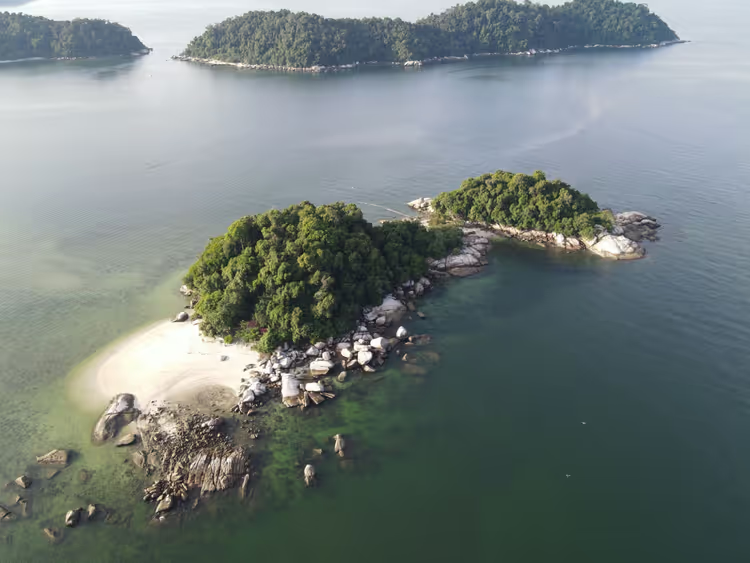
It is cooler only in the mountains. In the Cameron Highlands and on the slopes of Mount Kinabalu, it is noticeably colder at night than on the coast, so a warm sweater will come in handy even in the tropics.
Monsoons come to Malaysia from two sides. The southwest monsoon brings moisture to the west coast, the northeast monsoon hits the east coast. Between them remain short transitional periods when the weather is the most even. Therefore, when choosing dates, you look not at the country, but at a specific coast.
West coast: Kuala Lumpur, Penang, Langkawi
The west coast welcomes guests from December to February and from June to August. During these months, it rains 5-9 days per month, the sky is more often clear, and the sun rarely hides behind clouds (as of 09/2026, statistics from the Malaysian Meteorological Department).
The rainy season here lasts from April to November, but it is less pronounced than on the east coast. In June to August there is a relatively dry break. The Indonesian island of Sumatra takes the brunt of it, so mostly short downpours reach the peninsula. The most rain falls from September to November: on average up to 18 rainy days per month (as of 09/2026, Malaysian meteorological service report). In Kuala Lumpur a downpour is easy to wait out in a shopping mall, but on the islands it is harder.
East coast: Tioman and the Perhentians
The east coast works best from March to September. It is especially dry from June to August: the sea is calm, the water is clear, and underwater visibility is the best of the year.
The rainy season lasts from October to February. It rains 16-19 days per month (as of 09/2026, Malaysian meteorological service summary), the sea is rough, and most hotels and dive schools close. Boats to the islands often do not run at all. If you are planning a trip in these months, it is better to leave the east coast islands out of your itinerary.
Borneo: Sabah and Sarawak
On Borneo it rains all year round, on average almost every other day. Humidity deep in the jungle reaches 98% (as of 09/2026, meteorological service seasonal overview), so a raincoat is worth keeping at hand at all times.
 © Ruweti · CC BY-SAPhoto: Ruweti, CC BY-SA (https://creativecommons.org/licenses/by-sa/4.0), Wikimedia Commons
The rainiest months fall between October and January, when the island gets the wettest. The best time to go is from March to September.
What to pack
A basic kit for Malaysia: light clothing, a raincoat or umbrella, mosquito repellent, and a second pair of shoes. In the Cameron Highlands and on Mount Kinabalu, add a warm layer: it gets cool there at night.
Money and payments
Payments in Malaysia are made in ringgit (MYR). Cards are accepted in hotels, shopping malls, and larger cafes, but cash will come in handy at markets and small eateries. Before your trip, check whether your bank charges a fee for transactions abroad and let it know your travel dates. That way you will avoid having your card blocked on the very first day.
 © Jerry Lim · CC BY-SAPhoto: Jerry Lim, CC BY-SA (https://creativecommons.org/licenses/by-sa/3.0), Wikimedia Commons
Rainy season and dry season in Malaysia
Rainy season: October to February
The rainy season in Malaysia roughly runs from October to February. You can travel during this time, but it all depends on the region.
On the east coast, these months bring a lot of rain and storms. The peak rainfall falls in October, November, and December.
On Borneo, it rains year-round, but from October to January it gets even wetter.
The west coast handles the rainy season more easily. The peak rainfall here falls in September, October, and November. Downpours mostly happen in the afternoon. From December, while the east coast is closed, you can already swim on Langkawi.
Tropical rain rarely lasts for days. Most often, a heavy but short downpour hits in the afternoon, after which the sun comes out again. If you go out in the morning and evening, you will see a lot even during the rainy season.
When planning a trip during the rainy season, it is better to think by region. In the west, the tourist infrastructure operates year-round. So in winter, it makes sense to build your itinerary around Kuala Lumpur, Penang, and Langkawi, and leave the eastern islands and part of Borneo until spring.
Pros of the rainy season
- Fewer tourists and lower prices. The low season does its job: attractions are less crowded, and accommodation and tickets are cheaper.
- West coast. Langkawi, Penang, Kuala Lumpur, and the Cameron Highlands are relatively dry from late December.
- Waterfalls are fuller. In the dry season, some waterfalls dry up, but in the rains they look completely different.
- Thaipusam festival. In January or February, Kuala Lumpur hosts one of the most spectacular Hindu celebrations in Asia.
Cons of the rainy season
- Mosquitoes. The wet season is their favorite, so bring long-sleeved clothing and repellent.
- More rain and higher humidity.
- Poor visibility for diving and trekking. The sea gets murky, dive schools are closed, and the trails on Mount Kinabalu are slippery.
- The eastern islands are closed.
Dry season: March to September
On the west coast, the dry season starts as early as December and ends by April. From June to August, it is relatively dry again here, with at most a couple of short downpours.
In June, July, and August, it is dry in almost all regions at once. At the same time, the most popular season begins, so be prepared for crowds.
Pros of the dry season
- Diving. The water is clear, the sea is calm, and dive schools are open.
- National parks and wildlife watching on Borneo.
- The east coast islands.
- A country-wide itinerary: warm and relatively dry almost everywhere.
Cons of the dry season
- High season: accommodation prices rise, and popular spots are packed.
- On the most famous islands, beaches and boats are overcrowded.
Summer overcrowding is most noticeable on the east coast: that is where most tourists head for the islands and diving. In the mountains and in Kuala Lumpur, the load is lower, and even in July you can find quiet corners there. If you want both good weather and fewer people, look at late June or early September.
Transition months. March and September sit on the border between seasons. In March, the dry season begins in the east, while in the west it ends. In September, the dry season ends in the east, while the west enters its peak rainfall. These months suit those who want to avoid peak prices and crowds.
Summary on the rainy season and dry season
The west coast can theoretically be visited year-round. For the eastern islands, the rainy season is genuinely a bad time.
The largest number of regions align on good weather from June to August. If you want to escape the crowds, choose March, April, or early September: there are fewer tourists, and the weather usually still holds up.
If you take one vacation a year and want the maximum, go for late June or July. At that time, conditions are good in the east, in the west, and on Borneo.
Best time by month in Malaysia
Month by month, the picture looks like this. The table shows average temperatures and the number of rainy days across the country.
Temperatures and the number of rainy days are based on data from the Malaysian meteorological service (as of 09/2026).
Month | Best area | Average temp | Rainy days |
|---|---|---|---|
January | West coast | 27 °C | 12 |
February | West coast | 27 °C | 11 |
March | Whole country | 27.5 °C | 11.5 |
April | East coast and Borneo | 28 °C | 14 |
May | East coast and Borneo | 28 °C | 14.5 |
June | Whole country | 28 °C | 12 |
July | Whole country | 27.5 °C | 12 |
August | Whole country | 27.5 °C | 13.5 |
September | Transition month | 27.5 °C | 16 |
October | Worst month | 27.5 °C | 18 |
November | Worst month | 27.5 °C | 19 |
December | West coast | 27 °C | 16.5 |
How to choose your month
The choice depends on what you want to get from your trip. Let us break it down by goal.
If you want beach and diving on the eastern islands, look at June, July, and August. Then the sea is calm, the water is clear, and dive schools are running at full capacity.
If you are traveling in winter and are ready to limit yourself to the west, go for January and February. At that time, it is dry in Kuala Lumpur, Penang, and Langkawi, while the eastern islands will have to wait until your next trip.
If mountains, tea plantations, and cool weather matter to you, the Cameron Highlands are best visited in January, February, June, and July. Then the rains are short, and the plantation views are at their greenest.
If you want the fewest tourists, choose March, April, or early September. The weather still holds up, and the queues and high prices are already gone.
Do not be afraid to combine goals: in one trip, you can mix city, beach, and mountains. The main thing is that the months you choose align on weather in the regions you include in your itinerary.
Month-by-month breakdown
January. The best month for the west coast: Kuala Lumpur, George Town, and Langkawi are dry and sunny. In the east and on Borneo, it rains. But the city and mountain program runs without restrictions.
February. The picture is almost the same: dry in the west, wet in the east and on Borneo. It is convenient to combine cities and beaches. In Kuala Lumpur and Penang, keep the dates of Chinese New Year and Thaipusam in mind: hotels get more expensive on those days.
March. A transition month. The dry season begins in the east, while in the west it ends. Both Langkawi and the Perhentians with Tioman are open. On Borneo, it is a good time for jungle and wildlife watching.
April. More comfortable on the east coast and on Borneo, where the dry season continues. In Kuala Lumpur, April is one of the wettest months, but the downpours are short and fall in the afternoon.
May. Similar to April: dry in the east and on Borneo. A good time for diving, trekking, and safari, with even fewer tourists than in July. In the west, short downpours are possible.
June. The best time across the whole country. The eastern islands are open, on Borneo the chance of seeing orangutans and proboscis monkeys increases, and the west coast is dry too. The catch: high season begins.
July. The peak of the dry season. Suitable for a country-wide itinerary, islands, and diving. At the same time, it is the busiest month, so book hotels and tours in advance.
August. Another strong month: dry on both coasts and on Borneo. Suitable for beaches, jungle, and mountains. Prices remain at high-season levels.
September. The weather becomes changeable. In the east, the dry season ends, and on Langkawi and Penang the peak rainfall begins. It is still suitable for a trip, but the eastern islands should be planned for the first half of the month.
October. The worst month for most of the country. It rains almost everywhere. The west coast also gets wet, so it is better to postpone the trip.
November. The rainiest month across the whole country. Rainfall is at its highest, and the trails on Mount Kinabalu get washed out. If you go, focus on cities with indoor attractions.
December. The west coast comes back online: Langkawi and Penang are dry again, and Kuala Lumpur is warm. The eastern islands are still closed, so it is better to leave them until spring.
Best time by region in Malaysia
The peninsula and Borneo are divided into several tourist regions, and each has its own season. Below is a breakdown by region with the best and worst months.
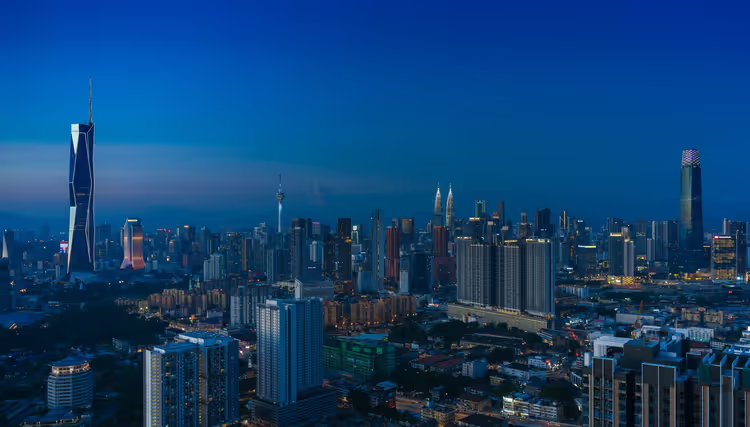
Kuala Lumpur
The climate in Kuala Lumpur is hot and humid all year round. The best time is from January to February and from June to September. You can't avoid rain entirely: the tropical climate always brings a couple of downpours.
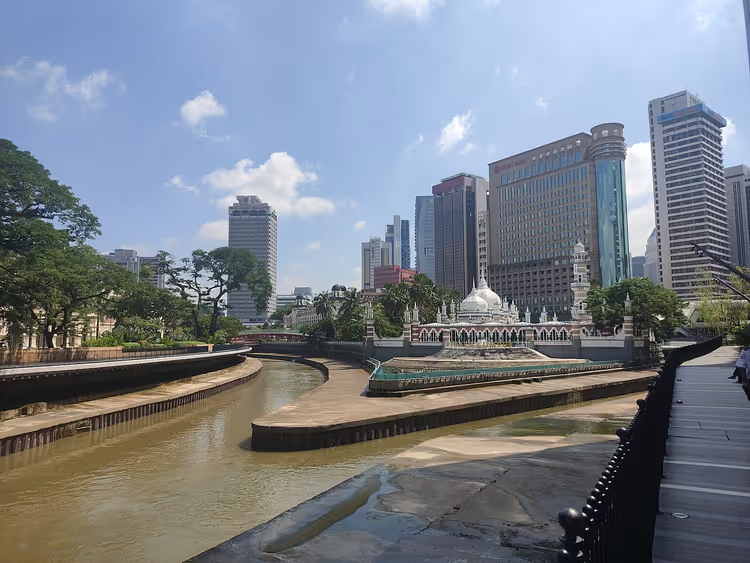 © *angys* · CC BY-SAPhoto: *angys*, CC BY-SA (https://creativecommons.org/licenses/by-sa/4.0), Wikimedia Commons
The wettest months are from March to May and from October to mid-December. During that period there are 15-18 rainy days per month (as of 09/2026, Malaysia meteorological observations). Rain is usually short and comes in the afternoon, so you can plan your day in advance.
A separate plus of the city: Kuala Lumpur has many indoor places. Huge shopping malls, museums, and restaurants let you hide from a downpour. For visiting the towers, mosques, and markets, take the morning while it's not too hot.
Langkawi and Penang (west coast)
The best time is from December to April. These months are dry and sunny, but high season starts at the same time, so accommodation is more expensive and beaches are crowded. The quietest periods are early December and March to April.
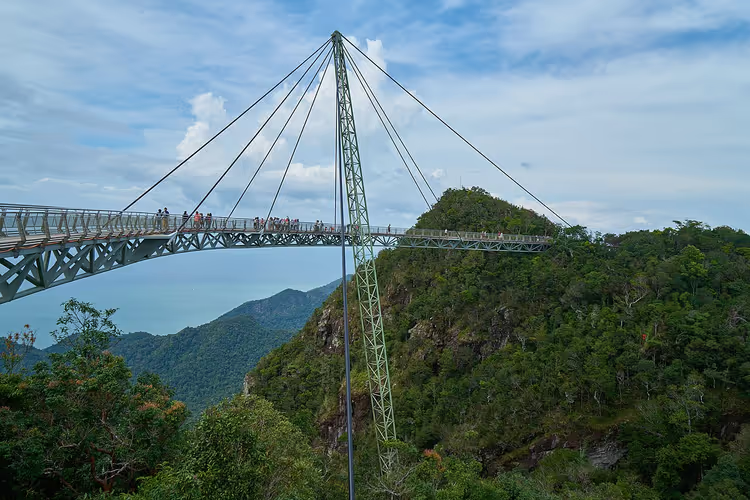
What to see: Cenang Beach and Tengah Beach on Langkawi, night markets and street food, Georgetown and Penang Hill on Penang.
The rainy season lasts from April to November, but it's mild. The most rain falls from September to November, while June to August is again relatively dry: about 11 rainy days per month. If you plan to stay here, you can check hotel prices on Langkawi in advance.
Tioman and the Perhentians (east coast)
The best time is from March to September, especially dry from June to August. The east coast islands are known for white sand, clear water, and diving.
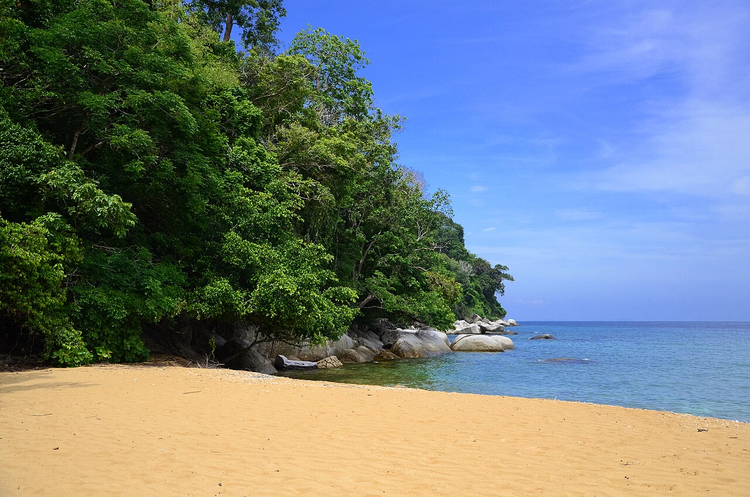 © Theo Crazzolara · CC BYPhoto: Theo Crazzolara, CC BY (https://creativecommons.org/licenses/by/2.0), Wikimedia Commons
What to include in your plan: the beaches of the Perhentians, Tioman, and Redang, snorkeling, diving, and island hopping. In the dry season the sea is calm and underwater visibility is the best of the year.
The rainy season lasts from October to February. If your vacation falls in these months, it's better to swap the islands for the west coast.
Cameron Highlands
Best time: January, February, June, and July. There are about 11-13 rainy days per month here, temperatures are more pleasant than on the coast, and the plantation views are at their greenest.
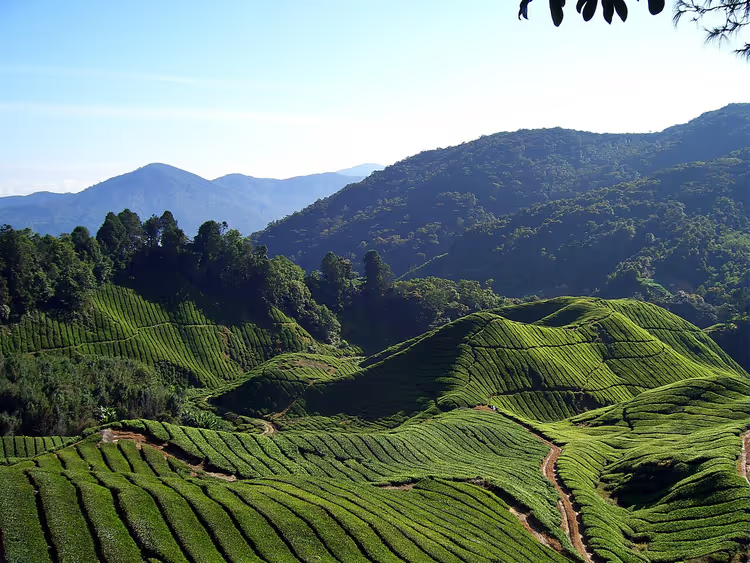 © Will Ellis from Reading, England · CC BYPhoto: Will Ellis from Reading, England, CC BY (https://creativecommons.org/licenses/by/2.0), Wikimedia Commons
What to see: tea plantations and the Boh factory, strawberry farms, Mossy Forest, hiking trails, and colonial architecture.
Worst months: April, May, and the period from September to December. Rain falls almost every day, clouds hang low, and visibility drops. Temperatures fall to 15-20 °C, evenings get cold quickly, and many guesthouses have neither heating nor hot water. If you do arrive during rain, head out on trails in the morning.
Borneo, northeast (Sabah)
The best time is from March to September. Sabah attracts with mountains, jungles, and diving: Mount Kinabalu, Kinabatangan and Danum Valley national parks, diving off Semporna, Sipadan and Mabul islands, and the Sepilok center.
 © Arthur Lee ( talk ) · CC BY-SAPhoto: Arthur Lee ( talk ), CC BY-SA (https://creativecommons.org/licenses/by-sa/3.0), Wikimedia Commons
The climate here is tropical, rain falls all year round, and humidity reaches 80-98% (as of 09/2026, meteorological service reference). The best months for safari, diving, and climbing Kinabalu are from March to July. Turtles lay eggs near Sipadan, and from March to May you can see hammerhead sharks near Layang-Layang. Orangutans are easier to spot from June to September.
It's cool on the mountain, especially in the morning and at night, so you need warm clothing. The rainy season from October to January: trails get muddy, underwater visibility drops, and some dive schools close. Climbing Kinabalu must be booked in advance through Sabah Parks.
Borneo, southwest (Sarawak)
The best time is from March to September, with the driest months being June, July, and August: about 12-14 rainy days per month. There are many national parks here where proboscis monkeys live: Gunung Mulu, Gunung Gading, Kubah, as well as the Semenggoh center and the city of Kuching.
The rainy season runs from October to February, with the most rain from October to January, when downpours come almost daily. Mornings usually stay dry, and thunderstorms arrive in the afternoon.
The rainy season has a bonus. From October to March, the rafflesia, the world's largest flower, blooms in Gunung Gading National Park. The bloom lasts only a few days, and timing varies from year to year, so check exact dates directly at the park.
Bako National Park is located near Kuching. You get there by boat, and on site you can see proboscis monkeys, snakes, and viewpoints over the jungle.
How to get around and what to keep in mind
Domestic flights in Malaysia are inexpensive and connect Kuala Lumpur with Penang, Langkawi, Kota Kinabalu, and Kuching. On the peninsula, buses and trains run, and islands are reached by ferries and speedboats. A rental car is useful on Borneo and in the Cameron Highlands, where public transport is sparse.
Kuala Lumpur. An express train and buses run from the airport to the center. Getting around the city is easy by metro and monorail, and a commuter train goes to the Batu Caves. Taxis and ride-hailing apps work, but during rush hour the trip takes a long time.
Langkawi and Penang. Direct flights from Kuala Lumpur land here, and a ferry runs between the island and the mainland. There are many hotels for any budget, but in December and January beach resort prices go up. Keep an umbrella handy: downpours are short but heavy.
Tioman and the Perhentians. The islands are reached by sea: to the Perhentians you go from Kuala Besut, to Tioman from Mersing or by ferry from Singapore. In the dry season boats run regularly, so plan island transfers in advance. Diving here is among the best in the country.
Cameron Highlands. You get here by bus or car from Kuala Lumpur and Penang, and the road winds along switchbacks. It's pleasant to walk through plantations, try local tea and strawberries, and have dinner in tea houses. Warm clothes are essential: the mountains are cooler than the coast.
Sabah. Direct flights to Kota Kinabalu connect the state with Kuala Lumpur. Climbing Kinabalu takes two days with an overnight stay, so permits must be booked in advance. For diving, it's convenient to base yourself in Semporna, from where trips to Sipadan are organized, and overnight cruises on the Kinabatangan River are popular.
Sarawak. It's convenient to fly to Kuching or Mulu, and buses and boats run between the city and the parks. In Gunung Mulu you should allow several days: caves and trails are accessible only with a guide. At the Semenggoh center, orangutans are fed on a schedule, so it's best to check times on site.
Practical notes for your itinerary
It's most convenient to plan your trip for June, July, and August: then it's dry in the east, the west, and on Borneo. A logical order for the trip: start in Kuala Lumpur, add Penang and Langkawi, then move to the east coast islands and finish on Borneo.
If your vacation is short, pick one region and don't spread yourself thin. The west coast pairs well with the Cameron Highlands, and the east coast islands with Borneo.
Plan your route around the seasons. In winter, options narrow to the west coast. Allow buffer time for every destination: tropical weather changes fast, and boat and ferry schedules depend on it.
Malaysia fits well into a longer trip through Southeast Asia: from Kuala Lumpur it's easy to continue on to neighboring countries.
Whatever you choose, build in a buffer for rain. One spare day per region saves your itinerary when a downpour disrupts the schedule.
Holidays in Malaysia and high season
Chinese New Year (January or February). The date shifts according to the lunar calendar. During these days, Kuala Lumpur and Penang, especially Chinatown, host parades, decorations, and lanterns. Hotels sell out quickly, so book in advance.
Ramadan (dates change every year). Ramadan lasts a month, and its dates shift each year according to the lunar calendar. Malaysia is a multiethnic country, but Muslims are the majority here. During Ramadan, some restaurants are closed during the day, but in the evening the streets and cafes are packed. Chinese and Indian restaurants operate as usual.
Thaipusam (late January or early February). One of the main Tamil Hindu festivals. If you are in Kuala Lumpur during these days, it is worth taking a trip to the Batu Caves. Check the exact date in advance, as it changes from year to year.
Diwali (late October or early November). The Hindu festival of lights. In Kuala Lumpur, it is worth stopping by Little India: everything is decorated there, and lights are lit in the evening.
Holidays affect not only hotels, but also the operation of museums, markets, and transport. On major dates, some establishments close, and ferry and bus schedules change. So it is worth checking your travel dates against the holiday calendar in advance. Also check local festivals in the regions separately: they often change excursion schedules and mountain climbing times.
The bottom line: when to book your trip
- Plan your trip around the region: the west coast from December to February, the eastern islands from March to September.
- The most stable weather across the whole country is from June to August, but that is also when high season begins.
- The worst time to go is October and November: it rains almost everywhere.
- If you want to avoid crowds, choose March, April, or early September.
- Kuala Lumpur and the west coast remain accessible even during the rainy months.
The west coast forgives date mistakes: there is almost always a dry window here. The east coast requires hitting the season precisely, otherwise closed hotels and canceled boats will ruin your trip.
A separate tip about accommodation. On the east coast, bookings for March and summer go first. In the west, there is a choice all year round, but in December and January prices at beach resorts go up. If you are planning diving or a mountain climb, book spots several months ahead.
⁉️🤔 Frequently asked questions
When is the best time to go to Malaysia?
The universal window runs from March to September, and the best months are June, July, and August. At this time it is dry on the east coast, the west coast, and Borneo. If you are traveling in winter, choose the west coast: Kuala Lumpur, Penang, and Langkawi. Check weather data on the meteorological service website.
When is the rainy season on the east coast?
On the east coast, it rains from October to February. During this time, there are 16-19 rainy days per month. If you want to go to the Perhentians or Tioman, plan your trip for March to September.
Are the Perhentian Islands and Tioman open in winter?
No. During the rainy season, from October to February, most hotels and dive schools on the east coast are closed. Boats also do not go out to sea because of high waves. The dry season runs from March to September, and those are the months to book accommodation and diving.
When is the best time to go to Borneo?
Borneo is divided into Sabah and Sarawak, but the overall dry season runs from March to September. The driest months are June, July, and August. From October to January, it rains almost daily, trails get muddy, and some dive schools close. For Mount Kinabalu, choose March to July.
What to do in Kuala Lumpur during the rainy season?
Kuala Lumpur handles rain well because the city is full of indoor places. During a downpour, head to shopping malls, museums, or restaurants, and see the towers, mosques, and markets in the morning. Downpours are short and most often arrive in the afternoon, so it is easy to adjust your schedule.
In short: what is worth booking
- If you are traveling in summer: plan a route along both coasts and add Borneo.
- If you are traveling in winter: choose the west coast, meaning Langkawi, Penang, and Kuala Lumpur.
- If your goal is diving and islands: the east coast, March to September.
- If you want quiet and low prices: March, April, or early September.
The islands of the east coast and popular hotels in Borneo sell out months ahead, so book accommodation in advance. Excursions and tours in Malaysia on GetYourGuide are also worth checking before your trip.

A small editorial team writing guides for independent travel. We travel ourselves, but we haven’t been everywhere, so we check prices, opening hours and how to get there against official sources.