
















Kilimanjaro: climbing routes, park fees and best time 2026
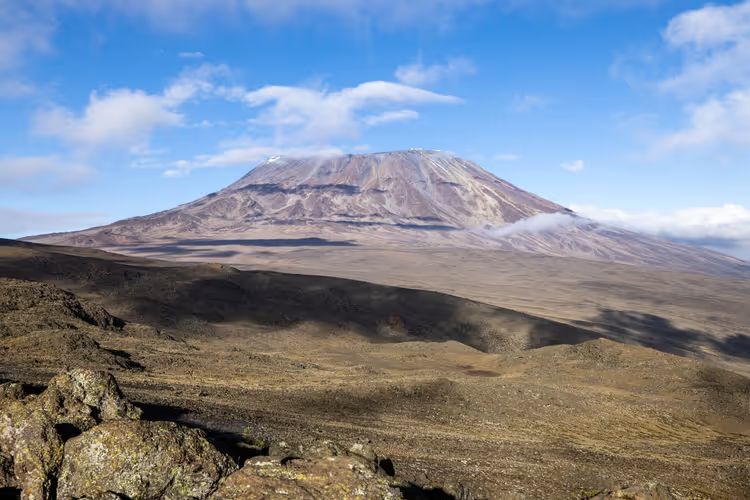
Kilimanjaro rises above the savanna to 5,895 m (according to UNESCO data). You can see this mountain from dozens of kilometers away, and many people have dreamed about it since childhood. But only about half of those who start the climb reach the summit, and the culprit is not the terrain but the altitude. You can climb it without mountaineering experience if you allow time for acclimatization. Below you'll find the routes, official park fees, and the best months for the trek.
Ad: this article contains affiliate links, we earn a commission if you book through them, at no extra cost to you.
Why Kilimanjaro is visible from far away
💡 In short:
- Kilimanjaro rises to 5,895 m and remains the highest point in Africa (elevation per UNESCO).
- The summit is only accessible in a group with a licensed guide.
- Park fees and climbing regulations: 09/2026, verified on the official TANAPA website.
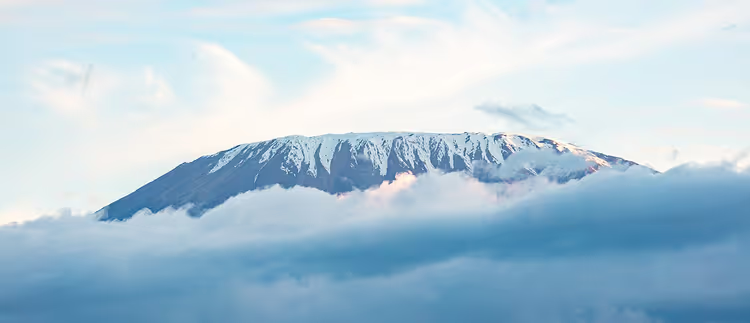
The white summit is visible from the neighboring plains and from Kenya, dozens of kilometers from the base. The base extends beyond the horizon, and on a hot day the bluish haze at the foot blends into the landscape. The snow cap seems to hang in the air, separate from the ground. When there is light cloud cover, the lower part of the mountain is hidden, and you see only the white top.
 © Diego Delso · CC BY-SAPhoto: Diego Delso, CC BY-SA (https://creativecommons.org/licenses/by-sa/4.0), Wikimedia Commons
The mountain is so large that it creates its own climate. Wind striking the slope releases moisture as rain and snow, and far more precipitation falls at the base than on the neighboring plain. That's why tropical crops grow in the lower part of the mountain, jungle stretches higher up, and even higher only lichens and mosses remain. The park identifies five altitudinal vegetation zones. Their boundaries depend on elevation and precipitation.
History and the three volcanoes
As far back as the Middle Ages, Kilimanjaro served as a landmark for travelers. The first written mentions of the white peak were left by Chinese sailors who came to the African coast. For a long time, stories of a snowy mountain almost on the equator were considered fiction. It was hard to believe that a glacier could exist near the equator.
 © Axelspace Corporation · CC BY-SAPhoto: Axelspace Corporation, CC BY-SA (https://creativecommons.org/licenses/by-sa/4.0), Wikimedia Commons
Europeans first saw the summit in 1848, but the highest point was only reached on October 6, 1889. The first to climb it was German geologist Hans Meyer with Austrian mountaineer Ludwig Purtscheller, as told in the history of ascents.
Today the area around the mountain is a national park covering 75,575 hectares (according to UNESCO data). The area received national park status in 1973, and it was added to the World Heritage list in 1987 (World Heritage status).
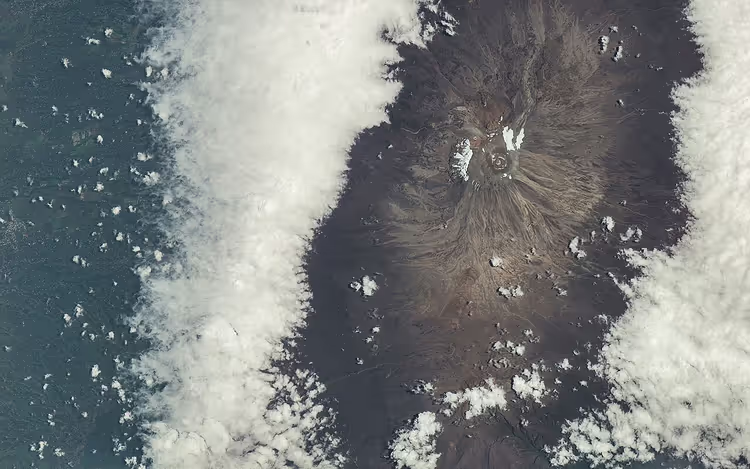
Kilimanjaro is made up of three volcanoes that merged into a single massif. The oldest volcano, Shira, occupies the western part and rises to 3,810 m, as described in the section on the geology of the massif. The younger Mawenzi adjoins it from the east and looks like a sharp peak about 5,148 m high. The mountain got its final shape from the newest volcano, Kibo, which left a flat summit with glaciers.
The snow cap shrinks every year. Over the 20th century, the mountain lost more than 80% of its ice, and the glaciers could disappear by the middle of the 21st century, as discussed in the article on melting glaciers. Some scientists blame the volcano's heat, others global warming. They agree on one thing: there is less ice on the summit, and you can see it even in old photographs.
How to climb Kilimanjaro
Every year, thousands of tourists come to Tanzania to try to reach the highest point in Africa. The mountain is climbed on foot, so it is open not only to mountaineers. But not everyone makes it to the top: the route has sections where you have to use all four limbs.
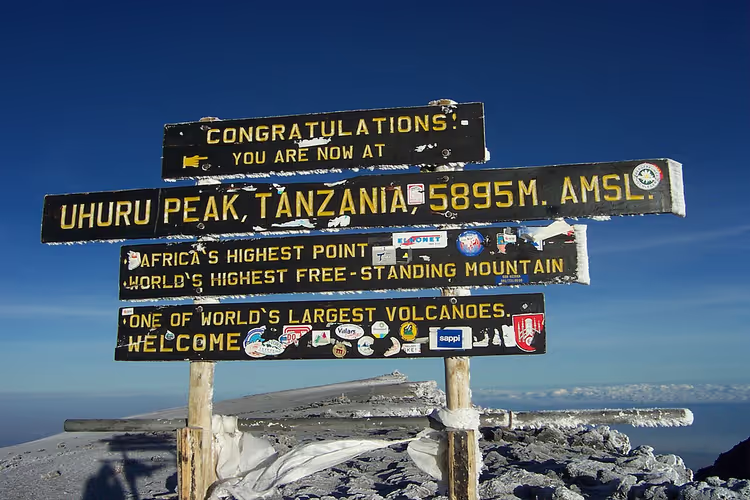
The hardest climb is Mawenzi, which requires rock, ice, and snow climbing skills. The main summit, Uhuru Peak on Kibo, is technically easier to climb, but you will need to acclimatize. The hardest part is coping with the altitude: at a certain point it becomes difficult to breathe, and headaches and nausea set in. That is why the ascent is spread over several days and includes a rest day.
Uhuru Peak was first summited in 1889, and Tanzania celebrated the centenary of the event widely. Today, roughly half of those who start reach the summit, and more people make it to Gilman's Point at about 5,685 m (according to Wikipedia data). You will feel the altitude as early as the second day, when you start gasping for breath on the climb.
Routes: Marangu, Machame, and Rongai
For beginners, Kilimanjaro offers several relatively easy routes, and each has its own character, duration, and type of overnight stay. A route overview helps compare them.
Route | Days | Overnight stays | Who it's for |
|---|---|---|---|
Marangu | 5-6 | mountain huts | beginners, no tents |
Machame | 6-7 | tents | those who want more scenery |
Rongai | 5-6 | tents | quiet, flora and fauna |
Source | route comparison, 09/2026 |
|
|
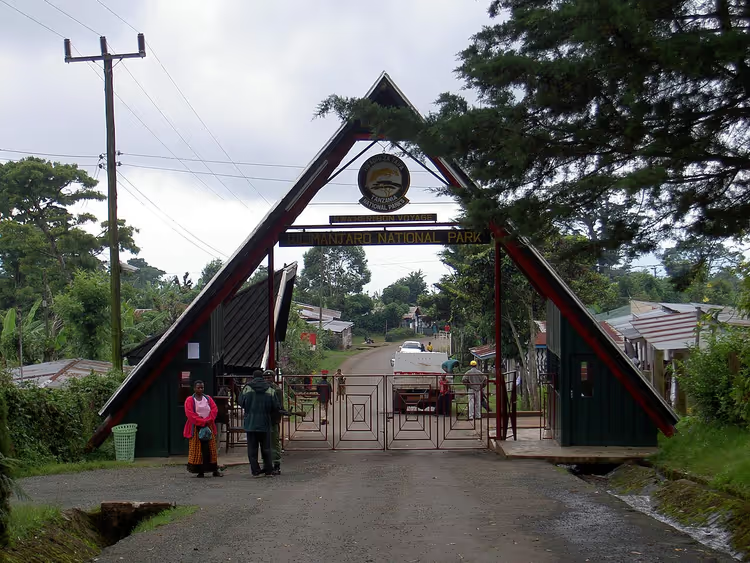
Marangu is considered the oldest and most popular route, also known as the "Coca-Cola route." It is the only one where you do not need tents: there are three mountain huts along the way. Mandara Hut is at 2,700 m, Horombo Hut at 3,700 m, Kibo Hut at 4,700 m. The huts have sleeping areas and a dining area, with basic conditions. Mandara accommodates about 80 people, and the other huts are smaller (according to Wikipedia data). The catch with this route is that you go up and down on the same trail.
 © Unknown author · CC BY-SAPhoto: Unknown author, CC BY-SA (https://creativecommons.org/licenses/by-sa/3.0), Wikimedia Commons
Machame is designed for 6-7 days. It is harder than Marangu, but manageable for ordinary people, and you will have to sleep in tents. If views matter to you, choose this option. Keep in mind that Machame is one of the busiest routes.
Rongai is currently the least known, but it's interesting. It goes along the northern slope, where the flora and fauna are more diverse. Here you can see animals typical of these places. It takes 5-6 days, more about it in the Rongai route description. For the ascent, start early in the morning: during the day it's hot on the open slope.
Each route has its own rules, and they are strictly enforced. Five trails on the mountain are ascent-only, going down them is prohibited. Three trails are descent-only, and only Marangu is used in both directions, these trail rules have been in place for many years.
Kibo Circuit and the summit push
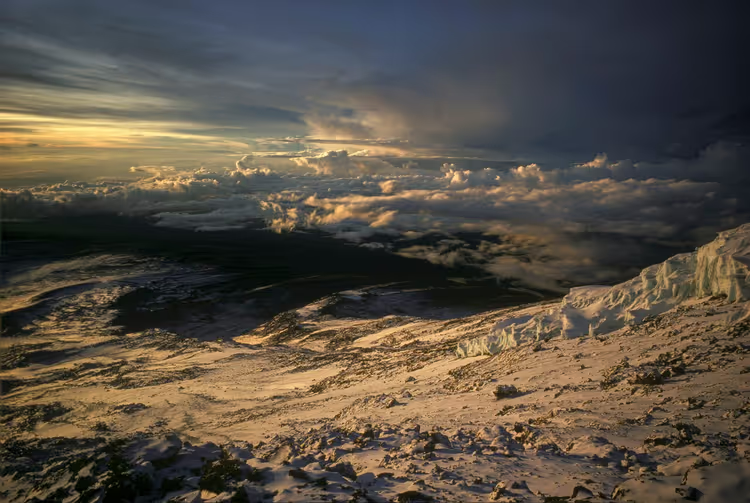
At around four kilometers, the trails of all routes reach the Kibo Circuit. This trail circles the entire mountain, and from it the ascent to the summit and the crater of Kibo volcano begins. From here there are three ways up: via the Glacier Arrow route, or the Western Breach, via the Barafu trail, and via an unnamed trail to Gilman's Point and the crater.
 © Maeder, Herbert, 1930–2017 · CC BY-SAPhoto: Maeder, Herbert, 1930–2017, CC BY-SA (https://creativecommons.org/licenses/by-sa/4.0), Wikimedia Commons
At the top you climb above the clouds, touch the eternal ice, and look inside the volcano. Kibo still shows signs of activity: fumaroles are active in the crater and you can smell sulfur. The difficulties of the ascent recede, and all that remains is the view of the glacier and the crater.
Guide, fees, and the best time
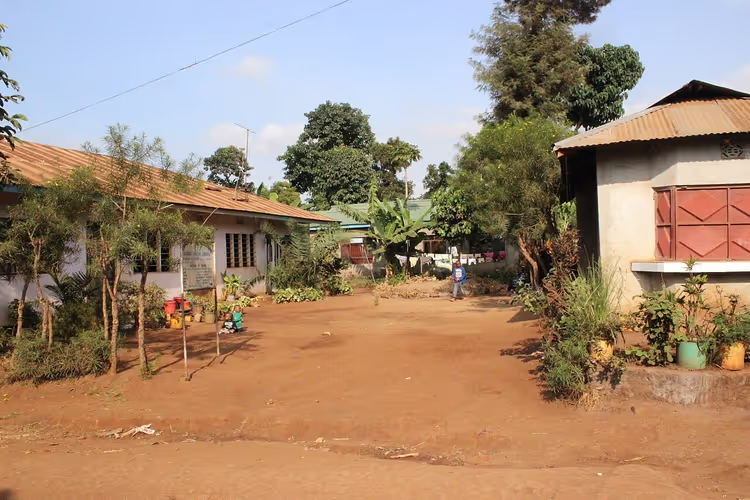
Climbing Kilimanjaro without a guide is prohibited. The town of Moshi, closest to the mountain, has many travel agencies that put together groups year-round. The cost of the trip depends on the group size, but a significant part of the price is made up of official park fees.
 © Michelle Maria · CC BYPhoto: Michelle Maria, CC BY (https://creativecommons.org/licenses/by/3.0), Wikimedia Commons
Every climber pays the fees, and there is no way around them. As of 09/2026, the official TANAPA rates apply:
Fee | Rate |
|---|---|
Conservation fee | $70 per day (as of 09/2026, TANAPA) |
Camping overnight | $50 per night (as of 09/2026, TANAPA) |
Hut overnight (Marangu) | $60 per night (as of 09/2026, TANAPA) |
Rescue fee | $20 per trip (as of 09/2026, TANAPA) |
VAT | 18% (as of 09/2026, TANAPA) |
Source | park rates, 09/2026 |
For a seven-day climb with six nights of camping, the park fees add up to roughly $970 per person including VAT (TANAPA fees, 09/2026). Guide services, porters, food, and transfer from Moshi are paid separately, but usually come as part of an operator's package.
If you want to plan your trek in advance, take a look at Kilimanjaro tours. At the same time, compare what operators include in the price: park fees, VAT, meals, and gear are all calculated differently.
Tours and tickets in Kilimanjaro
Guided tours, skip-the-line tickets and activities — most offers can be cancelled free of charge.
See offers on GetYourGuideThe widget loads once you give your consent.
Agencies operate year-round, but plan around the weather in advance. July and August are considered the best months: there are almost no tropical downpours, and the heat is easy to handle. September, October, and the period from January through March also work well. On the mountain you can encounter both tropical and near-polar conditions: at the base the average temperature is around +30 °C, at 3,000 m it is only +5-15 °C, and at night the temperature drops below freezing (that is how the mountain's climate works). So keep warm socks, gloves, waterproof pants, and a jacket in your backpack.
What else to do on Kilimanjaro
For those who are not ready for a multi-day trek, there are one-day excursions to the mountain. You won't have to climb high, but you will get a general sense of the "crown of Tanzania."
 © Daniel Msirikale · CC BY-SAPhoto: Daniel Msirikale, CC BY-SA (https://creativecommons.org/licenses/by-sa/4.0), Wikimedia Commons
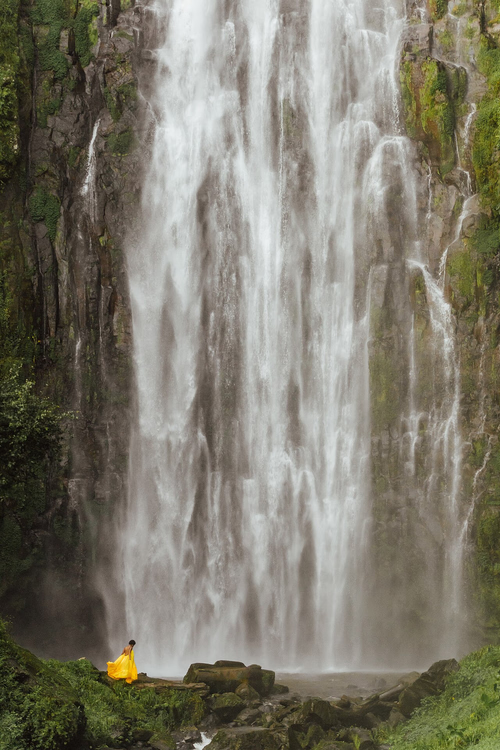
Besides the climb, the region has waterfalls, coffee plantations, and safaris in nearby parks. Still, experienced travelers recommend trying the ascent. Kilimanjaro is accessible to a beginner, and there are few mountains this high in the world that are. If you want to continue your trip through Africa, read the Uganda travel guide.
Kilimanjaro on the map
The mountain stands apart from other ranges, between the towns of Moshi and Arusha. Summit coordinates: 3°04′ south latitude and 37°21′ east longitude.
⁉️🤔 Frequently asked questions
How much does climbing Kilimanjaro cost?
Official park fees for a seven-day route with tent camping add up to almost a thousand dollars per person including VAT (according to the TANAPA tariff, 09/2026). On top of that, add guide services, porters, food, and transfer from Moshi. The final package price is higher than the sum of the fees, so always check what is included in the price.
Do you need mountaineering training?
No, technical training is not required. The mountain is climbed on foot, and the main obstacle is not the terrain but the altitude. Headaches, shortness of breath, and nausea are more common than difficult rock sections. That is why the itinerary is stretched over five to seven days, so your body can adjust to the altitude and you can reach the summit.
Which route should a beginner choose?
For a first time, Marangu is a good fit: five to six days with overnight stays in huts, no tents needed. Machame is harder and more scenic, but it is also one of the busiest routes. If quiet matters to you, choose Rongai: it is quieter and richer in nature.
When is the best time to climb Kilimanjaro?
July and August are considered the best months, along with September, October, and the period from January through March. During the rainy season the trails are wet and visibility drops. Even in the dry season it is freezing at altitude at night, so warm clothing is always necessary, regardless of the month you travel.
Can you climb without a guide?
No. The national park allows access to the routes only with a licensed guide, and this is a TANAPA requirement.
In short: what to book
Kilimanjaro suits almost any healthy person if you allow time for acclimatization. Choose the route based on your experience and budget, and calculate the park fees in advance.
- If you are a beginner: choose Marangu with overnight stays in huts.
- If you want views: choose Machame, and for quiet go with Rongai.
- If you are going in the dry season: plan for July or August.
You can book a climb in advance and compare prices on GetYourGuide.

A small editorial team writing guides for independent travel. We travel ourselves, but we haven’t been everywhere, so we check prices, opening hours and how to get there against official sources.