
















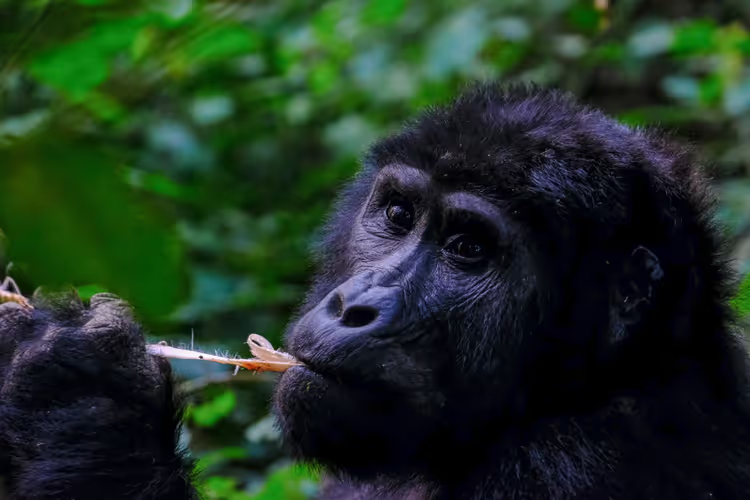
Uganda itinerary: safari, the Nile and mountain gorillas
Uganda packs in safari, rafting on the Nile, and gorilla encounters.
Planning an independent route through the country can feel daunting logistically. Distances are long, some roads are unpaved, and lodging inside the parks gets booked months in advance.
Below is a 12-day route through Entebbe, Kampala, Jinja, Murchison Falls, Fort Portal, Semliki, Kasese, and Ishasha. On the map it is about 1,500 km, with short driving days alternating with long ones.
Ad: this article contains affiliate links, we earn a commission if you book through them, at no extra cost to you.
What you will need for the trip
💡 In short:
- Visa: applied for online, costs $50 (as of 09/2026, Uganda visa portal)
- Vaccinations: get your yellow fever vaccination certificate in advance
- Car: rental in Kampala, driving is on the left, all vehicles are right-hand drive
- Money: cash dollars will come in handy in parks where there are no card terminals
- Park entry fees: about $40-45 per person per day (as of 09/2026, official UWA website)
Documents, money, and transport matter more in this country than the weather. Apply for your visa in advance, bring cash dollars, and book a car before you arrive. You pay park fees at the entrance.
How to get there
There are no direct flights from Europe to Uganda. You fly with one connection: Turkish Airlines via Istanbul, Qatar Airways via Doha, KLM via Amsterdam, Emirates via Dubai. You will spend almost a full day in transit, so choose a comfortable layover.
Entebbe Airport (EBB) sits on the shore of Lake Victoria, about 35 km from Kampala on the map. Tickets sell out quickly in high season, so book early and compare options: flights to Entebbe on Kiwi.com.
Visa
Almost everyone traveling to Uganda needs a visa. Apply online in advance: visas are not issued on arrival at Entebbe Airport. A single-entry tourist visa is valid for up to three months and costs $50 (as of 09/2026, Uganda immigration service).
The entry permit is valid for 90 days after approval. If you do not enter within that time, you will have to submit a new application.
Take care of your health separately. Uganda is in a yellow fever and malaria risk zone, so plan your vaccination and prophylaxis ahead of time. Your doctor or a vaccination center in your country can advise you on the exact list of medications and timing.
Day 1: flight to Entebbe
The whole day is spent traveling. On the plane you sleep, read, or watch movies: a packed itinerary lies ahead. Try to get some sleep, because in the morning passport control and the transfer to Kampala await you.
Day 2: Kampala
After landing, you go through passport control and get your visa if you applied for it online in advance. Entebbe Airport is known for more than just flights: in the 1970s, an Israeli special forces operation to free hostages held in the terminal building took place here.
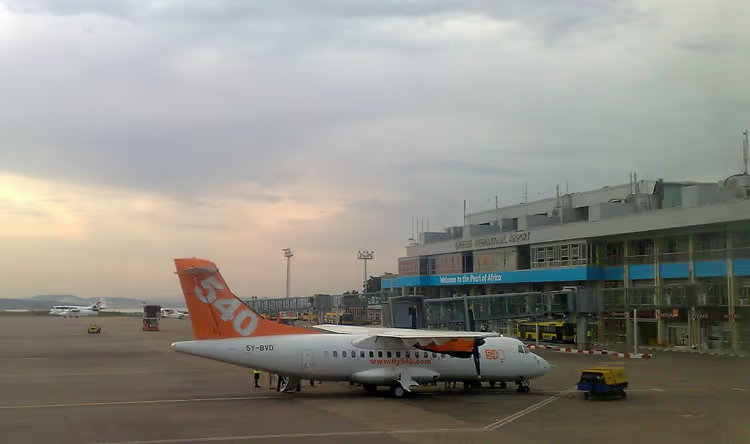 © PetterLundkvist · CC BYPhoto: PetterLundkvist, CC BY (https://creativecommons.org/licenses/by/3.0), Wikimedia Commons
A cup of local tea, brewed with milk here, helps you recover after the flight. Next comes the transfer to Uganda's capital and your first impressions of the city.
Kampala is not just a transit point on the route map. The capital grew up on hills near Lake Victoria, and in one day you can realistically see museums, temples, and the city panorama. Don't try to cover everything at once: pick three or four spots and leave time to rest after the journey.
Where to stay
For one night in Kampala, a budget hostel or mid-range hotel is enough. Book your place in advance, especially during high tourist season, and check ahead whether the hotel offers an airport transfer. If not, a taxi will get you into the city, and bargaining is the norm here: the discount from the quoted price can be substantial.
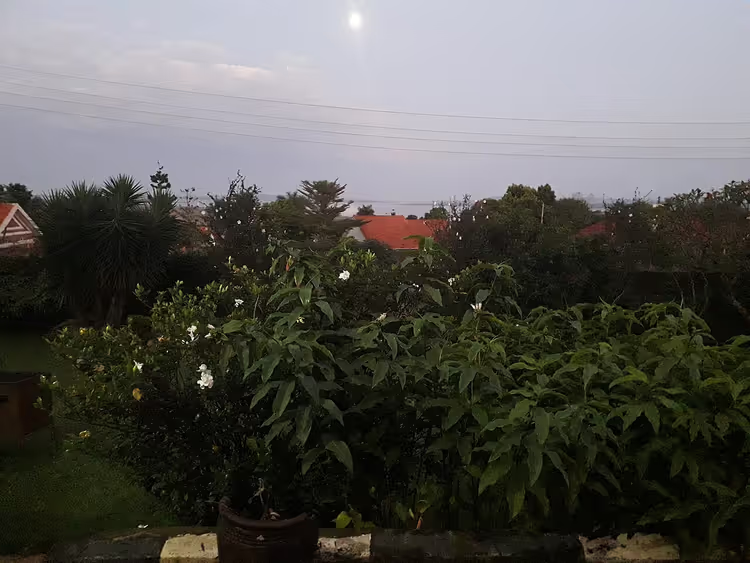 © Josefito123 · CC BY-SAPhoto: Josefito123, CC BY-SA (https://creativecommons.org/licenses/by-sa/4.0), Wikimedia Commons
Compare options in advance so you don't have to look for accommodation on arrival: book hotels in Kampala on Trip.com. If you're staying just one night, take a room closer to the center so you don't waste time on the road in the morning.
Car rental
For an independent trip around the country, it's more convenient to rent a car right in Kampala. Traffic in Uganda drives on the left, and all cars are right-hand drive, so first get used to the mirrors and interchanges. If you're not confident in your abilities, take a car with a driver-guide: that way you won't get tired behind the wheel on dirt roads.
Local rental companies have operated in the country for many years and know the roads to the parks. Book your car in advance, especially in the dry season, and bargain: the price here is negotiable.
Transport in Uganda
You can get around the country without your own car. The most popular transport is the matatu, local minibuses. A minivan is designed for eight to ten people, but in reality twice as many passengers get packed in.
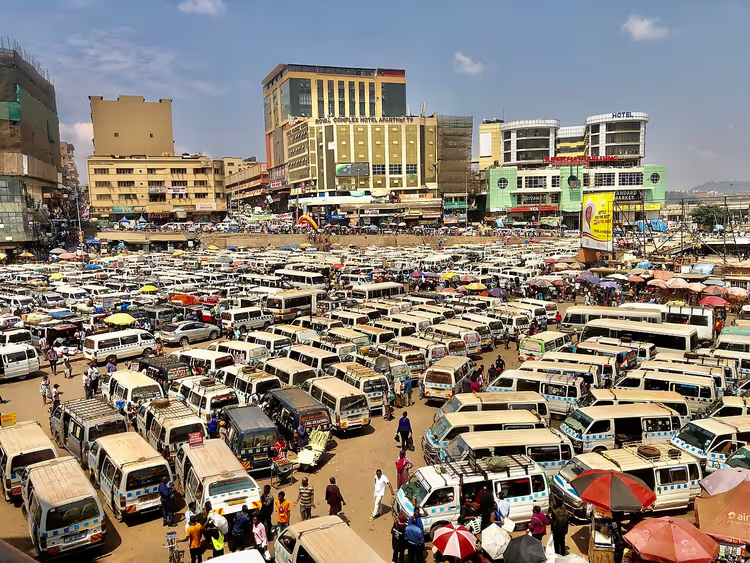 © Abdushariff Muhumuza · CC BYPhoto: Abdushariff Muhumuza, CC BY (https://creativecommons.org/licenses/by/4.0), Wikimedia Commons
If you don't handle crowding well, take the front seat next to the driver. For trips to neighboring cities and countries, there are buses. For short distances, locals offer motorcycle taxis, called "boda-boda" here, and bicycle taxis are popular in remote areas.
Kampala attractions
Once accommodation and transport are sorted, you can explore the city. Here are the places worth including on your first day if you still have energy after the flight.
Uganda Museum
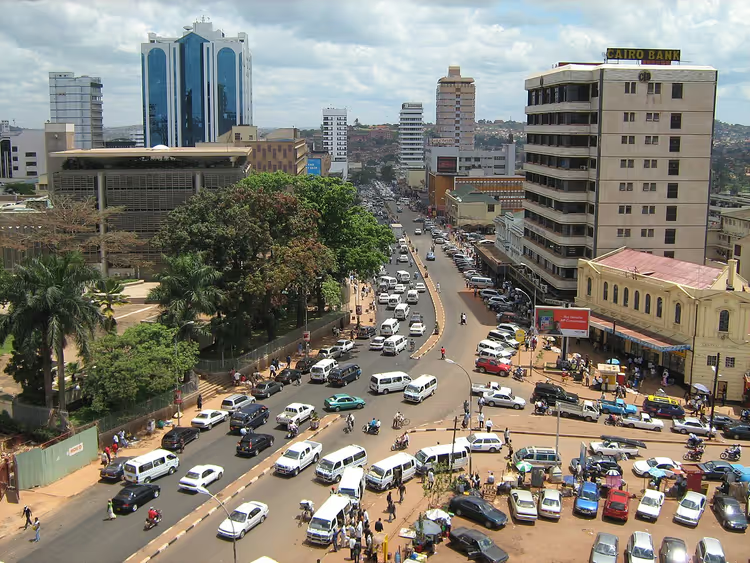
The country's main museum has been operating since the early twentieth century. It houses exhibits on culture, archaeology, ethnography, and music, with a separate hall dedicated to folk instruments. Tourists are allowed to try playing some of them, which is rare for a museum of this level.
 © kousek_cz · CC BYPhoto: kousek_cz, CC BY (https://creativecommons.org/licenses/by/3.0), Wikimedia Commons
Baha'i House of Worship
The largest Baha'i temple in Africa. It has nine entrances, each symbolizing a separate revealed religion. Inside, you need to turn off phones and audio and video equipment. You can get there by taxi from Kampala's old park or from Watoto Church, getting off at the Kanana gas station.
Gaddafi National Mosque
The largest mosque in Uganda stands on Old Kampala Hill. For a small extra fee, you can climb to the top of the minaret, which offers a view of the entire city center. Many locals don't even know about this option.
Namugongo Martyrs Shrine
A Catholic church in the village of Namugongo, about 15 km northeast of the center on the map. It stands on the site where Christian martyrs were executed, burned here at the end of the nineteenth century. Today pilgrims come here from all over East Africa.
Nommo Gallery
Kampala's national art gallery. In its halls you'll see paintings and other works by Ugandan masters and artists from other countries. A good place to see contemporary African art and buy a piece by a local artist.
National Theatre
The country's leading cultural center. It supports theater and music groups, including the National Dance Company of Uganda, which also performs abroad. In the evening there are concerts and performances here, and it's best to buy tickets in advance.
Forest Park Resort
A recreation area near Kampala that hosts shows, concerts, and family celebrations. After a long flight, this is a relaxed option: you can have a leisurely lunch and rest in the shade.
Ndere Centre
Here, on an open-air stage, they put on a show with national music, songs, and dances, and dinner is included in the evening program. The performance is interesting for both adults and children, so it's worth planning the evening in advance.
Namirembe Cathedral
The oldest cathedral in Uganda, on Namirembe Hill, also called St. Paul's Cathedral. It offers a panorama of the city, and the church itself remains active.
Rubaga Cathedral
A Catholic cathedral on Lubaga Hill and one of Kampala's main religious centers. Both pilgrims and tourists come here for the best view of the city.
Lubiri Palace
The official residence of the King of Buganda, built at the end of the nineteenth century. Tourists are not allowed onto the grounds on their own. With a guide, you can take a tour of the palace and learn its history. Keep in mind: after the tour, you'll be offered souvenirs at inflated prices, and whether to buy them is up to you.
Independence Monument
The Freedom Monument in the city center. It symbolizes Uganda's independence and serves as a starting point for walks along the central streets.
Botanical Garden
A garden on the shore of Lake Victoria, where one of the early Tarzan films was shot in the 1940s. Green monkeys and colobus monkeys live here, and the shady paths are pleasant for walking in the heat. Bring water and don't feed the monkeys.
Nightclubs
In the evening, clubs and bars operate in Kampala, mostly in the city center. The most famous clubs are "Silk" and "Ange Noir", as well as "Rouge". The music here is loud, and the evening easily stretches until morning.
If you prefer quiet bars, check out The Junction Bar on Kiwatule Road, Fas Fas in Bukoto, or Mish Mash on Acacia Avenue. For dinner, Planet Sports in Tirupati Mazima Mall on Gaba Road works well.
Practicalities: money, connectivity, and getting around
In Kampala, almost everything is paid for in cash with Ugandan shillings. Dollars are accepted at large hotels, but change is given at an unfavorable rate, so it's better to exchange money at a bank or exchange office. Keep small bills: they're handy for paying in matatus and taxis.
Mobile coverage in the city is stable, but the signal disappears in the parks. Buy a local SIM card with data on your first day, it's cheaper than roaming. Charge your devices in advance: at campsites along the route, outlets aren't always available.
Kampala's attractions are scattered across the hills, so you can't cover them on foot. The Uganda Museum is on Kira Road, the mosque on Old Kampala Road, and the Nommo gallery on Victoria Avenue. Between them, it's more convenient to travel by taxi or boda-boda motorcycle taxi: they get through where a car can't.
Agree on the boda-boda price before the ride, otherwise you'll be quoted a different amount at the end. Taxi drivers here tend to quote prices with a cushion, so bargain calmly and without rushing. During rush hour, the city center is jammed with traffic, so plan your transfers outside the morning hours.
Day 3: Jinja and the Nile
From Kampala to Jinja is about 80 km on the map, but traffic can stretch the drive to several hours. Leave early in the morning so you make it to the water in time.
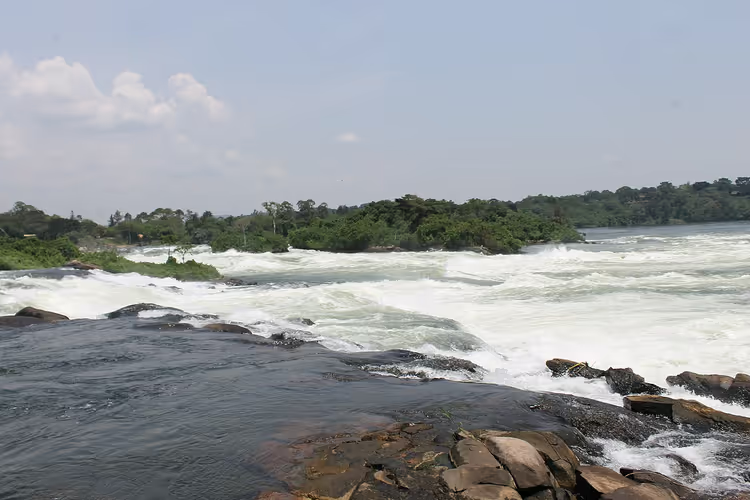
Jinja sits where the Nile flows out of Lake Victoria. This is where everything active travelers come to Uganda for begins: rafting, kayaking, ATVs, horseback riding, and trekking in the surrounding area. Rafting on the Nile is considered some of the strongest in Africa, and between the rapids you rest, swim, and watch birds.
The most convenient place to stay is Nile River Explorers. The campsite is 8 km from town on the banks of the Nile and offers a free transfer from Kampala, hot showers, Wi-Fi, satellite TV, and a bar with a sunset view. Book in advance on the company's website.
 © Owobusingye · CC BYPhoto: Owobusingye, CC BY (https://creativecommons.org/licenses/by/4.0), Wikimedia Commons
Nearby, you can stay at Wildwaters Lodge by Kalagala Falls. It's a pricier option, but with good food, attentive staff, and a river view.
If extreme sports aren't your thing, take the day easier: walk through the park, watch animals and birds, or head out on a day trip on Lake Victoria on a houseboat. Other activities here include mountain bikes, horses, ATVs, and fishing. People bungee jump from the bridge at Bujagali Falls, and there's a mini-golf park at the main entrance to Bujagali Falls.
A separate reason to come to Uganda is trekking to see mountain gorillas. They're listed in the international Red Book, and the entire world population lives in just a few mountain forests. A trekking permit in Bwindi Impenetrable National Park costs $800 per person in high season, while in April, May, and November 2026 a low-season rate of about $600 applies (as of 09/2026, UWA price list). Bwindi isn't part of this 12-day route, so set aside separate days for the trek. Permits are limited by quota, so book them and guide services in advance.
If you're traveling with kids, choose calm activities: horseback riding and bikes. Teenagers will enjoy ATVs, but they come with protective gear and a requirement to listen to the instructor.
The main rule here is to book ahead. Rafting and bridge jumping fill groups in advance, and in high season there are almost no open spots left. Plan Jinja not as a drive-through stop, but as a full day of activities.
Book tours from Jinja before your trip, otherwise only expensive options will be left on the spot: rafting and excursions on GetYourGuide.
Day 4: Murchison Falls
Today you're headed to Murchison Falls National Park. From Jinja to the park is about 300 km on the map, so leave at dawn.
In the park you'll see crocodiles, hippos, buffalo, giraffes, and antelopes. Entry is paid, about $45 per person per day (as of 09/2026, UWA rates). It's important to arrive in the morning so you can make the safari, see animals at the watering hole, and head out on a Nile cruise.
For an overnight stay right inside the park, Paraa Safari Lodge works well. From here you can book boat rides, fishing, park safaris, and other guided excursions. If you want to stay closer to nature and cheaper, choose Red Chilli Rest Camp.
 © Thomas Fuhrmann · CC BY-SAPhoto: Thomas Fuhrmann, CC BY-SA (https://creativecommons.org/licenses/by-sa/4.0), Wikimedia Commons
The morning safari is the main experience of the day here. Animals are viewed on the opposite bank of the Nile from the park entrance, and a ferry takes you across. The park is home to dozens of mammal species and hundreds of bird species, so keep your camera ready.
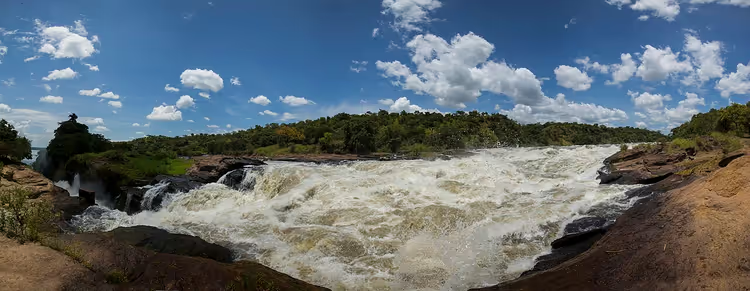
After the safari, everyone heads to the Devil's Cauldron at the base of the falls, then climbs to the top. The climb takes about an hour and a half, but from above you can see the Nile forcing its way between the rocks. In the evening you return to the lodge or campsite.
The cruise to the base of the falls runs along the shore, where crocodiles lie on sandbanks and hippos stand in the shallows. Stay inside the boat: animals come close, and an instructor keeps order.
Bring water, a hat, and binoculars. On open water the sun burns harder than it seems, and birds are easier to observe through optics. Keep your camera in a case, spray reaches the boat's sides.
It's more convenient to book safaris and cruises in advance: Murchison Falls safaris on GetYourGuide.
Day 5: transfer to Fort Portal
Keep this day open. If you didn't finish everything in the park or postponed the safari due to weather, the time will go to that.
 © Aqoragye · CC BY-SAPhoto: Aqoragye, CC BY-SA (https://creativecommons.org/licenses/by-sa/4.0), Wikimedia Commons
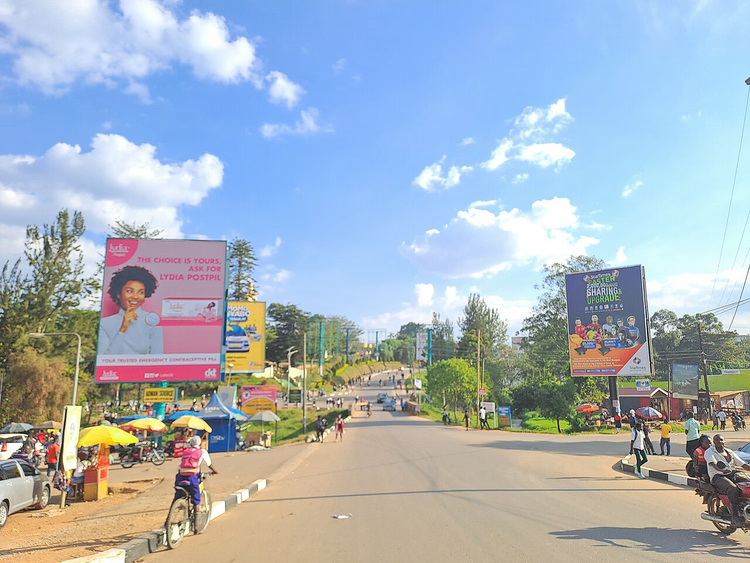
After lunch you head to Fort Portal, about 350 km on the map. The town is named after Gerald Portal and is considered the starting point for the national parks of western Uganda.
For the night, Kalya Courts Hotel or Fort Motel work well. Quieter and cheaper options are small guesthouses like Rwenzori View Guest House, Dutchess, or Chimpanzee Forest Guesthouse.
If you still have energy after the drive, walk to the center to see the statue of the town's founder and buy souvenirs. Fort Portal is the gateway to the Rwenzori Mountains, Kibale, and Queen Elizabeth parks, so from here the route continues south.
Day 6: Semuliki National Park
Early in the morning you drive across the Rwenzori range, one of the most impressive mountain roads in the country. The goal of the day is Semuliki National Park.
The park is small, but it's home to rare monkey species, mammals, and many birds. The park has hot springs, reached by short trails.
In the evening, head to Lake Nkuruba and stay at Lake Nkuruba Nature Reserve. Here you sleep in a campsite or in bandas. Be prepared for no electricity, but they'll bring you a kerosene lamp.
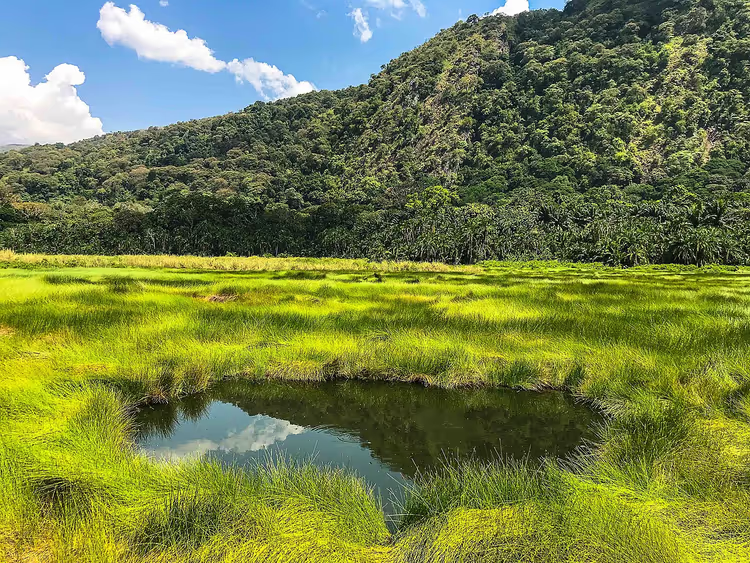 © Jim Joel · CC BY-SAPhoto: Jim Joel, CC BY-SA (https://creativecommons.org/licenses/by-sa/4.0), Wikimedia Commons
Day 7: crater lakes and rest
A day without long drives, and you need it after a packed first week. Swim in a crater lake, relax on the shore, and take a short forest trek for a panorama of the craters. You spend the night again at the lakeside campsite.
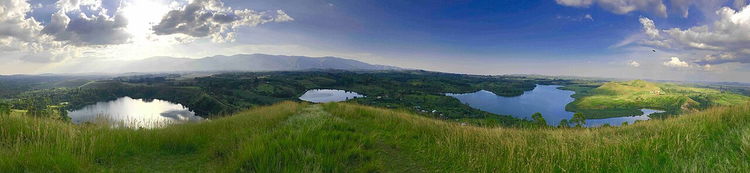 © Jim Joel · CC BY-SAPhoto: Jim Joel, CC BY-SA (https://creativecommons.org/licenses/by-sa/4.0), Wikimedia Commons
Day 8: Mahoma Falls and Kasese
Today you hike to Mahoma Falls. The trail is short but tricky: it is easy to get lost without a guide, so hire one.
Along the way you pass banana plantations and villages. If you brought treats or school supplies for local children, this is the most convenient place to hand them out.
At the falls you can cool off under the water and have a picnic. After that, you drive to Kasese, about 90 km on the map.
For the night, choose White House Hotel, Virina Garden Hotel, or Hotel Margherita. You stay in Kasese before your safari in Queen Elizabeth National Park.
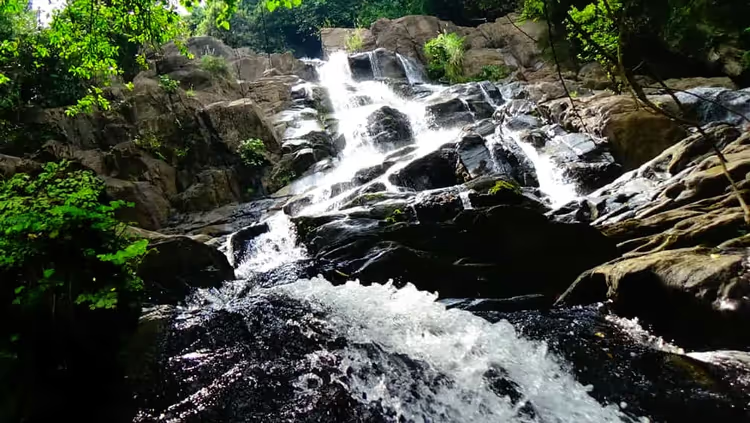 © Kato crescent · CC BY-SAPhoto: Kato crescent, CC BY-SA (https://creativecommons.org/licenses/by-sa/4.0), Wikimedia Commons
Day 9: Safari in Queen Elizabeth National Park
During the day you go on safari in Queen Elizabeth National Park. It is home to more than fifty mammal species, except rhinos, and hundreds of bird species.
The symbol of the park is the grey crowned crane, Uganda's national bird. The park is named after Queen Elizabeth II of Britain, who visited here.
You can only drive in the park on designated tracks. Driving off the route carries a heavy fine, so do not cut corners for a photo.
After the safari, head to Chambura Gorge to look for chimpanzees. This is a separate guided tour, and you need to book it in advance.
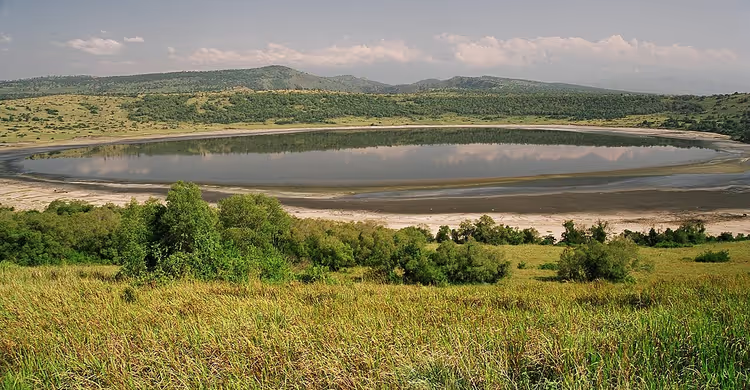 © Robert Weinkove using Minolta Dynax 4 camera · CC BY-SAPhoto: Robert Weinkove using Minolta Dynax 4 camera, CC BY-SA (http://creativecommons.org/licenses/by-sa/3.0/), Wikimedia Commons
Guided safaris here are booked in advance, especially in high season: Queen Elizabeth National Park safari on GetYourGuide.
Day 10: Kazinga Channel and Maramagambo Forest
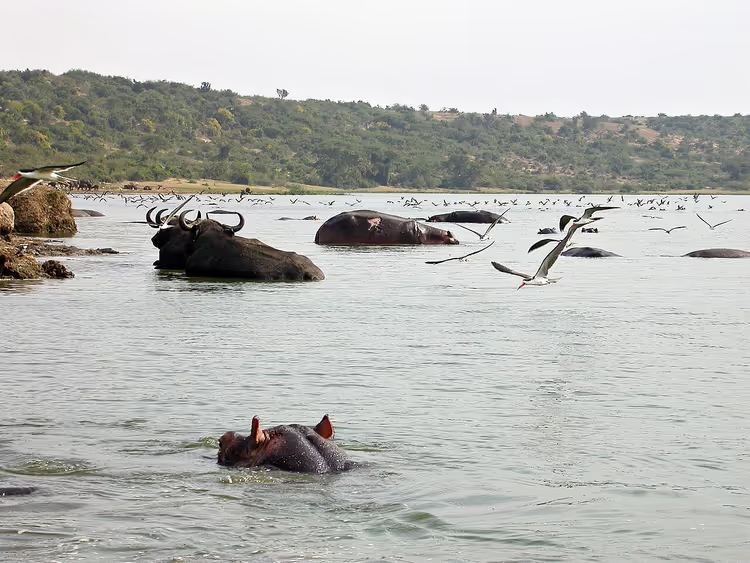
The Kazinga Channel connects Lake Edward and Lake George. Double-decker tour boats run along it several times a day, giving you a great view of the shores.
 © B722N · CC BY-SAPhoto: B722N, CC BY-SA (https://creativecommons.org/licenses/by-sa/4.0), Wikimedia Commons
Buy tickets in advance at the Mweya information center. Signs lead to it if you enter through the Kabatoro main gate. Seats on the boat are limited, so do not leave buying tickets to the last minute.
From the water you will see whole families of hippos: males rest near the shore, each surrounded by about twenty females. Birds here let the boat get very close and are almost unafraid of people, so you will get plenty of shots.
 © Duncan Wright · CC BY-SAPhoto: Duncan Wright, CC BY-SA (http://creativecommons.org/licenses/by-sa/3.0/), Wikimedia Commons
If you want more, visit Maramagambo Forest. It is the best place in the park for walking: you can spot rare birds and sometimes see pythons hunting bats. You can stay overnight at Mweya Hostel right inside the park.
Day 11: tree-climbing lions in Ishasha
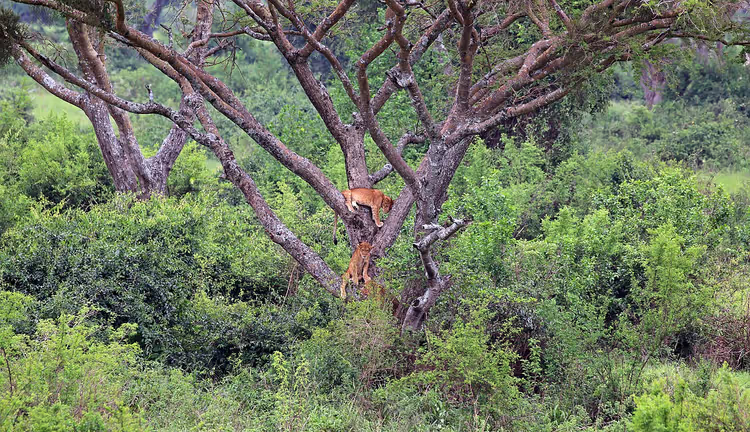
Today is a short drive to Ishasha, the southern part of Queen Elizabeth National Park. This is home to tree-climbing lions that rest on fig tree branches, and rare topi antelopes.
Male tree-climbing lions are easy to recognize by their black manes. Look for them in the treetops on morning and evening game drives; in the midday heat the animals usually sleep.
 © Charles J. Sharp · CC BY-SAPhoto: Charles J. Sharp, CC BY-SA (https://creativecommons.org/licenses/by-sa/4.0), Wikimedia Commons
From the park you drive out to the town of Mbarara, where it's worth trying the local milk. Be careful on the roads: there are plenty of reckless drivers here who ignore the rules.
Day 12: the equator and return to Kampala
The last day is a long drive back to Kampala. No need to be sad: another stop on the route awaits you along the way.
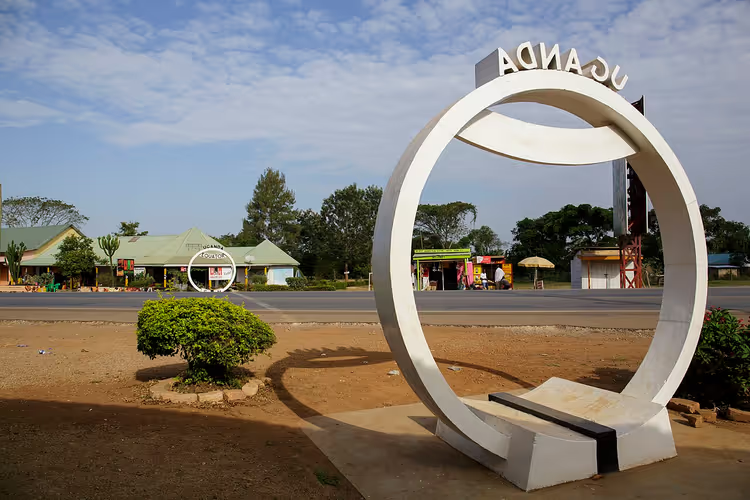
In Masaka, stop at the equator. Here you can take a photo on the line and buy souvenirs to remember the trip, then continue on to Entebbe Airport.
 © Thomas Fuhrmann · CC BY-SAPhoto: Thomas Fuhrmann, CC BY-SA (https://creativecommons.org/licenses/by-sa/4.0), Wikimedia Commons
Uganda on the map
Below is a map of all the route stops. Open it before your trip and save it in advance: mobile coverage in the parks is unreliable.
A 12-day route through Uganda
Places on the map
- Entebbe Airport Airport on the shore of Lake Victoria, about 35 km from Kampala
- Kampala The capital on hills by Lake Victoria, start and finish of the route
- Uganda Museum The country's main museum on Kira Road, a hall of folk instruments you can play
- Bahá'í Temple The largest Bahá'í temple in Africa, nine entrances for the number of revealed religions
- Nommo Gallery National art gallery on Victoria Avenue, works by Ugandan masters
- National Theatre The country's leading cultural center, concerts and shows in the evenings
- Forest Park Resort A resort near Kampala with shows, concerts and a relaxed lunch in the shade
- Ndere Centre Open stage with national music and dance, dinner included in the program
- Namirembe Cathedral Uganda's oldest cathedral on Namirembe Hill, a panorama of the city
- Lubaga Cathedral Catholic cathedral on Lubaga Hill, one of the best views of the city
- Lubiri Palace Residence of the Buganda king from the late 19th century, entry only with a guide
- Independence Monument Symbol of Uganda's independence in the city center
- Botanical Garden Garden on the shore of Lake Victoria where the first Tarzan film was shot, home to vervet monkeys
- Jinja Town at the source of the Nile, rafting, kayaking and quad bikes, about 80 km from Kampala
- Nile River Explorers Campsite 8 km from Jinja on the banks of the Nile, transfer from Kampala and a bar with a view
- Wildwaters Lodge Lodge by the Kalagala falls, pricier than the campsite, its own kitchen and a river view
- Bujagali Falls People bungee jump from the bridge, a mini-golf park operates by the main gate
- Bwindi Park Trekking to mountain gorillas, permit 800 dollars in high season and about 600 in low season
- Murchison Falls Crocodiles, hippos and giraffes, entry about 45 dollars a day, Nile cruise to the falls
- Paraa Safari Lodge Lodge on the park grounds, from here you book safaris, fishing and boat trips
- Fort Portal Gateway to the Rwenzori, Kibale and Queen Elizabeth parks, about 350 km from Murchison
- Kalya Courts Hotel An overnight option in Fort Portal
- Semuliki Park A small park with rare monkeys, birds and hot springs
- Mahoma Falls A trail through banana plantations and villages, easy to get lost without a guide
- Kasese Overnight stop before safari in Queen Elizabeth Park, about 90 km from the falls
- Hotel Margherita One of the lodging options in Kasese along with White House and Virina Garden
- Queen Elizabeth Park Over fifty mammal species, the park's symbol is the crowned crane
- Kyambura Gorge Chimpanzee tracking as a separate guided tour, book in advance
- Kazinga Channel Connects Lake Edward and Lake George, double-decker boats and hippo families by the shore
- Maramagambo Forest The best spot in the park for walks, rare birds and pythons
- Ishasha The southern part of the park, tree-climbing lions on fig tree branches and topi antelope
- Mbarara A town on the way back, worth trying the local milk here
⁉️🤔 Frequently asked questions
Do I need a visa for Uganda and how do I get one?
Yes, the visa is issued online in advance on the official Uganda portal. A single-entry tourist visa costs $50 and is valid for up to three months. Visas are not issued on arrival at Entebbe Airport, so apply in advance and bring a printed copy with you.
How much does a gorilla trekking permit cost?
Permits are issued by the Uganda Wildlife Authority. In high season they cost $800 per person, and in April, May, and November 2026 a low-season rate of about $600 applies. Quotas are limited, so book in advance through an operator or directly with UWA and don't count on buying a permit on the spot.
How much does it cost to enter the national parks?
Foreigners pay around $40-45 per person per day for park entry. The fee is higher in Murchison Falls and lower in Queen Elizabeth National Park, with separate fees added for game drives and boat trips. Check the current rates on the official UWA website before your trip.
When is the best time to visit Uganda?
The dry season is the most comfortable, when the dirt roads into the parks are passable and there is less rain. These months are also high season, so book your park accommodations in advance. During the rainy season some roads get washed out, and transfers take longer.
How to get from Entebbe Airport to Kampala?
The distance is about 35 km on the map, but because of traffic the drive easily stretches to an hour or more. A taxi driver will quote a padded price, so negotiate before getting in. If your hotel doesn't offer a transfer, arrange a car in advance or book accommodation with a transfer included.
Do I need a yellow fever vaccination?
Uganda is in a yellow fever risk zone, so get your vaccination certificate ready in advance, before the trip. Also talk to your doctor about malaria prevention: it's the most common problem for travelers in East Africa. Bring repellent and medication for stomach upsets.
Find hotels
Compare prices across booking sites and filter for rooms with free cancellation.
Compare prices on Discover CarsThe widget loads once you give your consent.
In short: what to book
If you have 12 days and a car, book your park accommodations in advance: places in Semuliki and Murchison Falls go first. If you're traveling without a car, choose lodges with transfers and take guided tours so you don't waste time figuring things out on the spot.
The main thing on this route is nights in the parks and safaris, which can't be bought at the last minute. First, book hotels through Trip.com for your first nights in Kampala. Then add rafting and tours on GetYourGuide and book flights to Entebbe on Kiwi.com in advance so you arrive in the dry season.

A small editorial team writing guides for independent travel. We travel ourselves, but we haven’t been everywhere, so we check prices, opening hours and how to get there against official sources.