






Munich by season: weather, crowds and prices without the gloss
Tickets and a hotel in Munich should be chosen before you lock in your travel dates. The nightly rate and the number of people in the center depend on the calendar here more than in most cities in Germany.
The main planning reference point: Oktoberfest 2026 runs from September 19 to October 4 at Theresienwiese (official festival website). During these two weeks, available rooms in the center run out long before the trip, and prices are higher than usual. At the same time, the year in Munich is divided not into four seasons, but into six periods, and each has its own character.
Below we break down each period by three criteria: weather, crowds, and prices. You will see where the date saves you money, where you pay for the celebration, and what actually works in the city during your days.
Ad: this article contains affiliate links, we earn a commission if you book through them, at no extra cost to you.
How to choose the time for a trip to Munich
💡 In short:
- First choose a period by weather, then check festivals and fairs on your dates.
- For a balance of weather and prices, take the first half of September or late April.
- Plan your trip for midweek: on weekends the center is noticeably more crowded.
- Festival dates and seasonal restrictions in the city: 09/2026, verified on the official Oktoberfest website.
Each period solves its own task, so it is easier to compare them by three parameters at once.
Period | Weather | Crowds | Hotels |
|---|---|---|---|
Second half of September | warm and dry | maximum during Oktoberfest | most expensive during the festival |
December | around freezing, snow is rare | moderate, markets in the center | moderate |
July and August | hot and stuffy | high | above average |
Late April and early May | mild and changeable | low | below average |
October and November | damp and unstable | low | low |
January through March | gray, around freezing | minimal | no peaks |
Below we go through each period in detail so you understand exactly what you are paying for on your dates.
September: the festival and the best weather
The second half of September offers the most successful combination of weather and events of the year. The summer heat recedes, the vacation flow subsides, and the days remain long. This is exactly the period locals moved Oktoberfest to, because in October the weather is already cold and damp.
 © Heribert Pohl --- Thanks for half a million clicks! from Germering bei München, Bayern · CC BY-SAPhoto: Heribert Pohl --- Thanks for half a million clicks! from Germering bei München, Bayern, CC BY-SA (https://creativecommons.org/licenses/by-sa/2.0), Wikimedia Commons
The festival opens on September 19 and runs until October 4 (official website). In the first half of the month, prices stay at their usual level, so you can see the city without queues. During the festival days themselves, hotels get more expensive, and available rooms need to be searched for several months in advance.
If the celebration does not interest you, September still remains a strong choice. Tourist groups gradually leave, and the warm weather lets you walk around the center until evening. Take the first half of the month if you want a calm trip and moderate prices.
- Who it's for: those who want warm weather and are ready for crowds during the festival days.
- Not for: those looking for a quiet center and low prices.
- The catch: during Oktoberfest, hotels in the center get more expensive, and you need to book in advance.
December: Christmas markets and a short day
In December, the center turns into one big Christmas market. Five markets operate in the pedestrian zone alone, and several more are set up in neighborhoods and parks. In the evening the city glows, and passersby hold mulled wine, the one all the guidebooks write about.
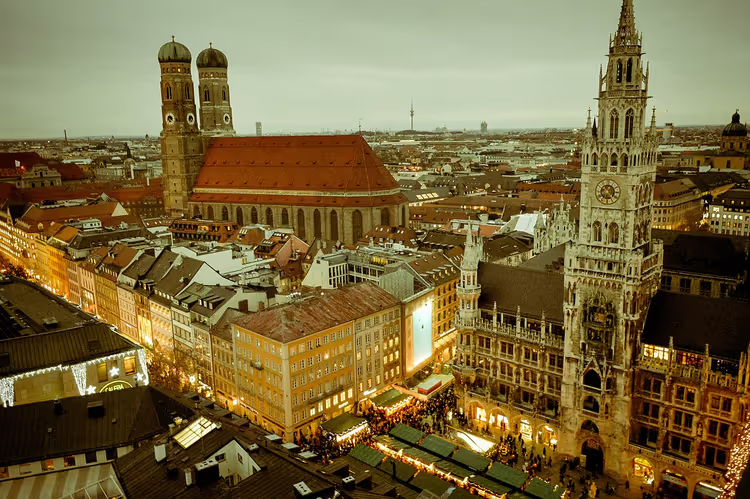 © Ashwin Chandrasekaran · CC BYPhoto: Ashwin Chandrasekaran, CC BY (https://creativecommons.org/licenses/by/2.0), Wikimedia Commons
Do not expect a snowy fairy tale, because winters in recent years have become mild. Lasting snow in the city is rare, and hard frosts almost never happen. But December remains the most atmospheric month if you are ready for early dusk.
Plan your walk so that the main part falls during daylight hours. The markets open during the day, so you can cover two or three without rushing.
- Who it's for: those who want markets, lights, and are not afraid of a short day.
- Not for: those coming for snowy views in the city itself.
- The catch: daylight hours are short, it gets dark long before evening.
July and August: hot, crowded, and expensive
The summer months bring the maximum number of tourist groups and the maximum heat to the city. Air conditioning in German hotels and cafes is rare, so the stuffiness is felt both day and night. For a first trip, we consider this time rather unsuccessful.
Munich is best explored on foot, and day trips like Neuschwanstein Castle require walking. In the heat, when the thermometer climbs well past thirty, such walks are exhausting. Indoor spaces without air conditioning do not help either.
Summer does have a plus, and it is a significant one. It is in the heat that hundreds of beer gardens across the city are open, and an evening there is more pleasant than in a stuffy room. If you are going for the beer gardens, July works, but book a hotel with air conditioning.
- Who it's for: those planning evenings in beer gardens and trips with children during school holidays.
- The catch: stuffiness, queues at the main sights, and high prices.
Late April and early May: the spring festival
Late April and the first half of May offer the best balance of the year. On these dates Frühlingsfest takes place, the younger sister of Oktoberfest, loved mainly by locals. In 2026 the festival runs from April 17 to May 10 (festival website).
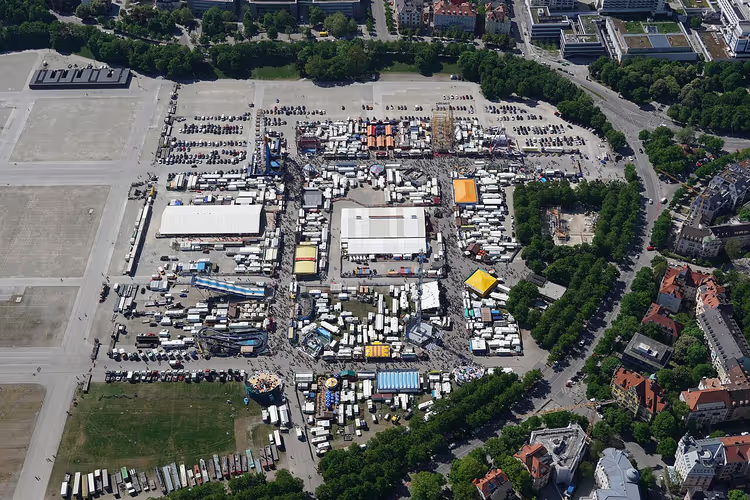 © Isderion · CC BY-SAPhoto: Isderion, CC BY-SA (https://creativecommons.org/licenses/by-sa/3.0/de/deed.en), Wikimedia Commons
The weather is usually mild, with less rain than in June and August. Hotel prices haven't reached summer levels yet, and the center isn't overcrowded. During the day you walk around in a jacket, and in the evening you sit outside.
There are several festivals during these weeks: Frühlingsfest and Auer Dult run almost back to back. Starkbierfest takes place earlier, in March. Check the calendar in advance, because the dates shift every year.
- Who it's for: those who want a festival without the Oktoberfest crowds.
- The catch: festival dates change, so you need to check the calendar before booking.
October and November: fall colors and unpredictable weather
Fall in Munich can be beautiful because the city is very green. The fall colors in the parks look striking, and photos turn out better than on gray winter days. But the forecast at this time of year is more likely to mislead you than in other months.
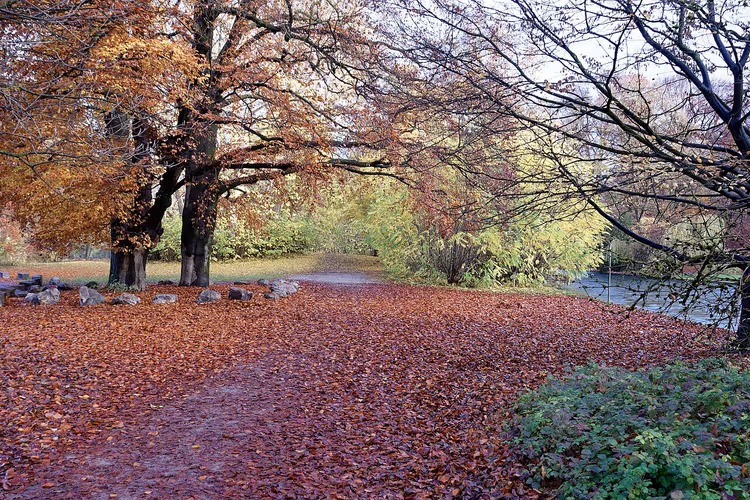 © Jakub Hałun · CC BYPhoto: Jakub Hałun, CC BY (https://creativecommons.org/licenses/by/4.0), Wikimedia Commons
In early October you can still walk around in a light jacket, and two weeks later it can turn sharply cold. The red foliage doesn't last long; rain or wind quickly strips it away. So you'll have to watch the forecast to catch the best day for a walk.
As a tourist, you're tied to your dates, and in the rain you'll have to change some of your plans. Keep a museum or a beer hall in reserve for that situation.
- Who it's for: those willing to adjust their walks to the weather forecast.
- The catch: the colors last only a few days before the wind strips them away.
January through March: skiing, museums, and gray skies
In winter, people come to the city mainly for the mountains. Munich is a convenient starting point for the Alps: the airport here is large, and trains run to Austria, Switzerland, and Italy. If you love skiing, the city works as a base for a few days.
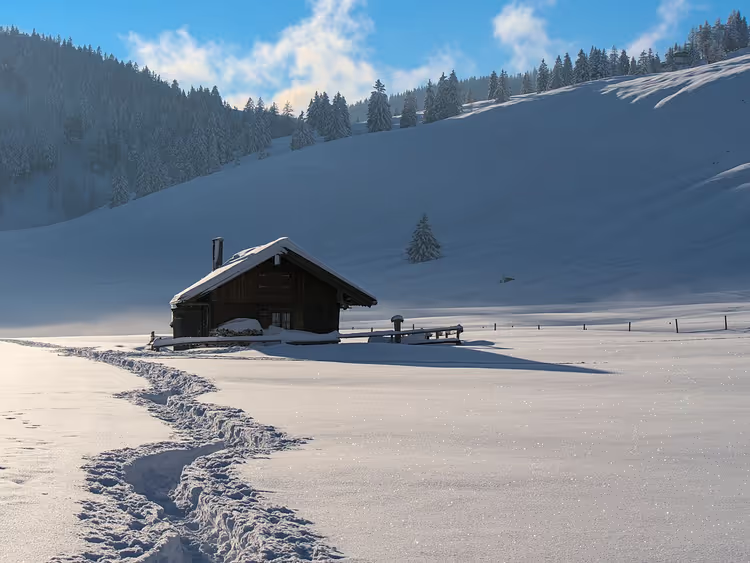 © LNA-DEV · CC BY-SAPhoto: LNA-DEV, CC BY-SA (https://creativecommons.org/licenses/by-sa/4.0), Wikimedia Commons
The main downside of winter in the city: gray weather. Rain and snow don't fall that often, but weeks of solid cloud cover at temperatures around freezing happen regularly. That kind of light isn't great for long walks.
On the plus side, hotel prices stay at normal levels, and there are almost no tour groups. Museums save the day in winter: the city has several dozen of them, and you can easily fill a bad-weather day. You can start with the museum overview on the city portal, and museum tickets and day trips are worth checking in advance in the GetYourGuide collection.
- Who it's for: skiers and those coming for museums and a quiet atmosphere.
- The catch: gray skies and little light in the city.
How the city changes with the seasons
Munich changes with the weather in more than just small ways. Beer gardens open around mid-May, and outdoor pools start operating no earlier than that and close by mid-September. Outside this window, you simply won't get into some of the city's places.
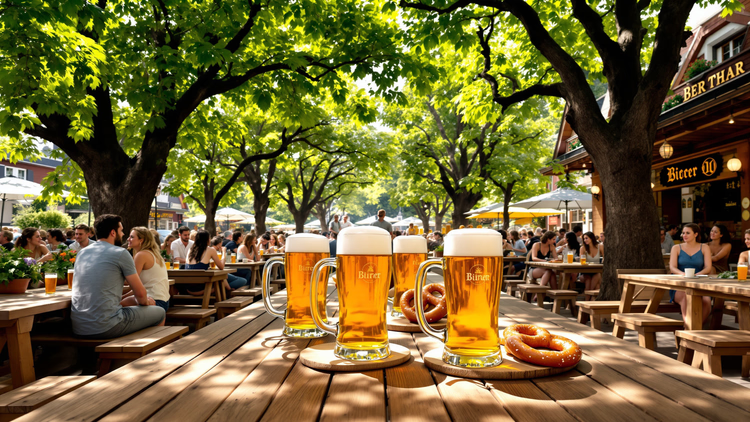 AIIllustrative image: AI-generated
From October, most public fountains in the city are turned off, and statues are hidden in wooden boxes for the winter to protect them from frost. That's why the view of Nymphenburg Palace differs greatly between summer and winter: you won't see some of the sculptures in the garden (Bavarian Palace Administration).
Light is another thing worth thinking about. In December and January, days are short, it gets dark already in the afternoon, and you have little time left for walking. Plan museums and markets for the first half of the day, and leave the evening for dinner.
Trade fairs: when hotels disappear from sale
Bavaria is considered one of the wealthiest regions in Germany, so major trade fairs run here almost all year round. During bauma, analytica, or automatica, good hotels are booked out months in advance, and room prices rise several times over. Trains and flights on those dates also sell out earlier than usual.
Check the trade fair calendar before booking, because Messe München publishes exact dates a year ahead. If your dates coincide with a major fair, start looking for a hotel right away, otherwise you'll be left without options. Tourists often overlook this detail, but it's exactly what determines whether you find a room or not.
Even outside trade fairs, something is always happening in the city: Tollwood, Frühlingsfest, Oktoberfest, the opera festival. Something big happens almost every month, so choose your dates based on your plans, not on the season.
- Who it's for: those who have already chosen their dates and are looking for a hotel.
- The catch: during trade fairs, your hotel budget can grow several times over.
Weekends in Munich are always more crowded
One factor you can work around in advance: the city is noticeably more crowded on weekends. Tourists from Italy and other regions of Germany come here specifically on Saturday and Sunday. Add to that locals who live on the outskirts and head to the center for shopping.
So shift your trip toward the middle of the week if your dates are flexible. Keep a second rule in mind too: many museums and palaces are closed on Mondays, and the city portal maintains a list of open venues. If you arrive for the weekend, start your day at eight in the morning.
⁉️🤔 Frequently asked questions
When does Munich have the fewest tourists?
The fewest people are around from January through March and in November. In those months, hotel prices stay at their normal level, the center has almost no tour groups, and museum lines are short. The price you pay for the calm is gray skies and little light, so bring warm clothes and leave more time for museums.
Should I book a hotel for Oktoberfest in advance?
Yes, and the earlier, the better. During the festival, available rooms in the center run out months ahead, and prices are noticeably higher than usual. If your dates fall within the two weeks of the festival, compare hotels right now: closer to September, the only options left will be on the outskirts.
What to do in Munich on a rainy day?
Go to a museum or a beer hall. The city has several dozen museums, including technical and art collections, so a bad day is easily filled with a half-day exhibition. Some museums are closed on Mondays, so that day is better left for markets and walks around the center.
Will I see snow in Munich in winter?
In the city itself, snow falls rarely and doesn't stay long. Winters in recent years have become mild, and a lasting snow cover appears only high in the mountains. For snow, it's better to head to the Alps, which are reachable by train from Munich.
Why do hotels get more expensive when there's no festival in the city?
The reason is trade fairs. During bauma, analytica, and automatica, tens of thousands of professionals come to the city, and good hotels are booked out months in advance. Check the trade fair calendar before booking: a single date can change the cost of a night several times over.
In short: what's worth booking
If your dates are flexible, take the first half of September or late April: that gives you warm weather and tolerable prices. If you're going for Oktoberfest, book your hotel six months ahead and check the trade fair calendar. For snow, head to the mountains, not the city.
The choice matrix is simple: for a first trip, the first half of September or late April works well; for celebrating with locals, Frühlingsfest; for museums and calm, January. Something big happens in the city almost every month, so first pick a period, then adjust your itinerary to it.
Compare Munich tickets and tours in advance: tickets and tours on GetYourGuide.

A small editorial team writing guides for independent travel. We travel ourselves, but we haven’t been everywhere, so we check prices, opening hours and how to get there against official sources.