
















Venice: how much money to take on a trip and where to lose it
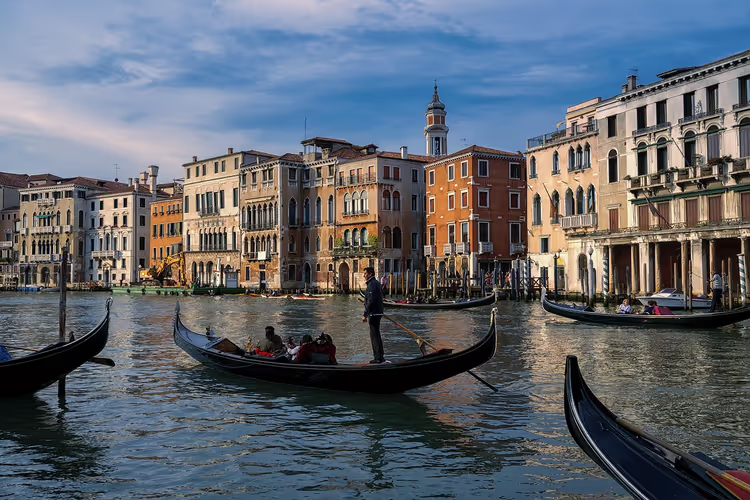
A trip to Venice costs more than the photo roundups promise. A single vaporetto ticket costs €9.50 (as of 09/2026, ACTV fares), coffee at a table in St. Mark's Square costs several times more than at the counter, and the official gondola rate starts at €90 for half an hour (as of 09/2026, City of Venice fares).
The good news is that you can walk and ride around the city for reasonable money. We gathered prices for September 2026 and broke them down by category: transport, lodging, food, and tickets.
Below you'll find a daily budget in three versions, ways to save on transit and accommodation, the coperto rule, and a list of tickets worth booking in advance. We list official fares with the date checked and the source, and give cafe and lodging prices as reference points.
Ad: this article contains affiliate links, we earn a commission if you book through them, at no extra cost to you.
How much a trip to Venice costs
💡 In short:
The day-tripper access fee is not charged from July 27, 2026, details in the fees section (as of 09/2026, official fee portal).
Vaporetto rides are pricier than they seem: single-ticket and pass fares are collected in the city transport section (ACTV fares).
Eating at the counter and on the go removes the coperto question: the charge applies only for a seat at a table.
Transit and gondola fares: 09/2026, checked on the ACTV website and the City of Venice website.
The most expensive part of the trip is not museum tickets, but transport and lodging. One single vaporetto ride costs almost as much as lunch at a trattoria. If you're going for three days and plan to visit the islands, do the pass math right away.
Plan your route in advance. You'll walk most of the historic center, and you'll need the vaporetto for Murano, Burano, and Lido. That way you won't buy extra tickets or overpay for single rides.
Daily budget: three scenarios
Don't calculate the whole trip at once, calculate one day. Then you can see where costs grow and what you can swap without losing anything.
 © T.Tseng · CC BYPhoto: T.Tseng, CC BY (https://creativecommons.org/licenses/by/2.0), Wikimedia Commons
Expense | Budget day | Mid-range day | Comfortable day |
|---|---|---|---|
Lodging | hostel bed from €25 | double room from €50 | hotel room in the center |
Lunch | slice of pizza on the go, about €3-4 | pasta at a trattoria from ~€10 | lunch with wine for two |
Dinner | supermarket and your own kitchen | dinner at a trattoria, about €20 | dinner for two, about €90 |
Coffee | at the counter, about €2 | at a table in a bar | coffee in St. Mark's Square, over €10 |
Transit | on foot | single vaporetto tickets | 24-hour pass |
Experiences | free views and walks | museum and traghetto crossing, about €2 | gondola at €90 per boat |
Transport and gondola fares in the table were checked in September 2026 against the official ACTV fares and city fares; food and lodging are given as reference points based on the Numbeo user database (08/2026). Recalculate lodging for your dates: during carnival, at Easter, and on summer weekends the same bed costs noticeably more.
Below we break down spending by category, then cover money-saving tricks. Let's start with the base price that the budget is built on.
Prices in Venice: what things cost
Below are reference points for September 2026: cafe and store prices are rounded based on the Numbeo user database (as of 08/2026) and vary from place to place. In summer, during carnival, and on holidays the numbers are higher.
Lodging and food take the biggest share of your money, so let's start with them.
- Hostel, bed in a shared room: roughly from 25 € per night
- Private double room: roughly from 50 € per night
- Camping: roughly from 25 € per night
- Lunch at a cheap restaurant (set menu): around 20 €
- Dinner at a cheap restaurant: around 15-25 €
- Dinner for two at a good restaurant: around 90 €
- 1.5 L water at a supermarket: around 0.60 €
- Cicchetti, a Venetian snack: around 2-3 € each
- Margherita pizza at a restaurant: roughly from 7 €
- Pizza with other toppings: around 9-12 €
- Pasta at a restaurant: from ~10 €
- Cappuccino: around 2 €
- Aperol Spritz: around 4-5 € at a bar
- Glass of wine at a bar: roughly from 3.50 €
- One scoop of gelato: around 2-3 €
- Bottle of wine at a supermarket: around 6 €
- 0.5 L local beer at a supermarket: around 1.50 €
- 0.5 kg white bread: around 2.40 €
A single vaporetto ticket costs more than other transport. Ticket and pass prices based on ACTV fares are collected in the section on getting around the city. Over several days the per-day price of a pass drops. Group your trips to the islands into one day, and one pass will be enough.
Coffee, water, and wine at a supermarket cost several times less than at a bar on the front line by the canal. You will feel that difference by the end of the trip.
Flying to Venice: when to buy tickets
The flight is usually the biggest line in the budget. The more flexible you are with dates and departure airports, the lower the price.
Check several dates at once, not just one. Comparing options and carrier combinations is easy on Kiwi.com: you can see how the price changes when you shift departure by a day.
Tickets bought a week before departure cost noticeably more than a month or two out. If your vacation is tied to specific dates, buy in advance and don't wait for sales.
Venice is served by two airports: Marco Polo and Treviso. From Treviso the trip into the city is longer and buses run less often, so check exactly where your flight lands.
Count the total with baggage, not just the ticket price. With low-cost carriers, a carry-on spot and a checked suitcase are sometimes more expensive than the flight itself, and on some fares baggage cannot be added later.
Fly on a weekday. Tuesday and Wednesday are cheaper than Friday and Sunday, and morning flights are a better deal than evening ones. If you fly with a connection, check the layover time: a short layover in an unfamiliar airport can wreck the whole trip.
By train and bus: book tickets in advance
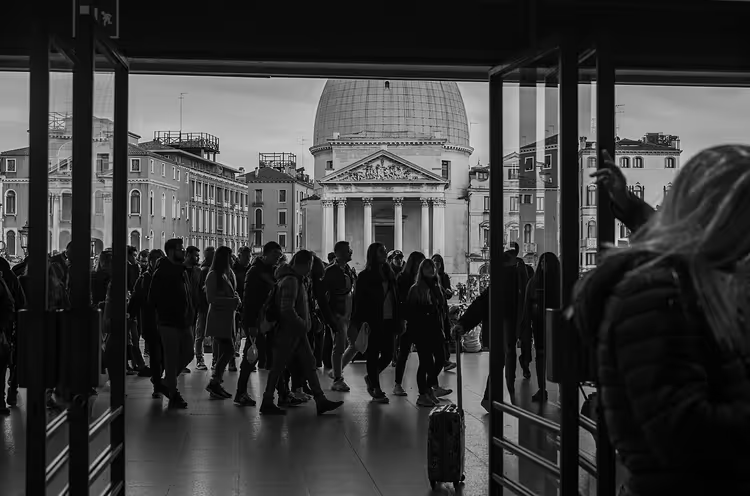
From Germany, Austria, and Switzerland the train is often cheaper than flying, and there is no baggage fee at all. Venice sits on the line from Milan, Verona, Florence, and Rome; trains arrive at Santa Lucia station right in the city.
Early booking matters here too. A spontaneous trip costs more than a ticket bought several weeks ahead. You can compare schedules and prices for trains and buses on Trip.com.
Long-distance buses stop at Piazzale Roma. From there you can walk to the Scalzi Bridge or take a vaporetto.
Check whether a seat is included in the ticket. On cheap fares a seat is assigned at purchase, while on long-distance trains it is already included in the price.
An overnight train from Germany or Austria arrives in Venice in the morning. That way you save one night in a hotel and start the day in the city. Within Italy, high-speed trains get cheaper one to two months before the trip, so look at tickets early.
 © Sanshiro KUBOTA from London, UK · CC BYPhoto: Sanshiro KUBOTA from London, UK, CC BY (https://creativecommons.org/licenses/by/2.0), Wikimedia Commons
From Marco Polo Airport to the city
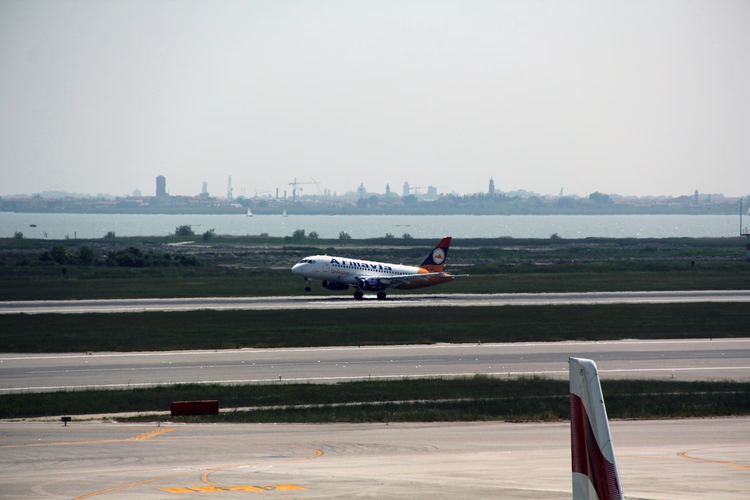
The airport is on the mainland, not on the island, so you get to the city by separate transport. There are four ways, and the price difference between them is noticeable.
 © SuperJet International · CC BY-SAPhoto: SuperJet International, CC BY-SA (https://creativecommons.org/licenses/by-sa/2.0), Wikimedia Commons
The cheapest options are the bus and the Alilaguna water bus. The bus takes about 30 minutes to Piazzale Roma and costs 10 € for a one-way ticket, while a round-trip ticket costs 18 €, cheaper than two separate ones. Tickets are sold at machines in the arrivals hall and at the ticket office (as of 09/2026, ACTV, tickets and fares).
Alilaguna goes by water and takes 40 minutes or more, a ticket costs 18 €, round trip 32 € (as of 09/2026, Alilaguna fares). This option is more convenient if your accommodation is far from Piazzale Roma: there are stops all over Venice, including Murano and Lido (Alilaguna).
The bus is a better deal when your accommodation is near the station or you plan to get an ACTV pass on your first day. Then the bus takes you to Piazzale Roma, and from there you ride to your stop on the same pass.
Water taxis are separate from public transport. If you book in advance, a seat on a shared water taxi costs a few dozen euros per person, while a private boat ordered on the spot starts at a hundred euros and up. For a group of four this is already a reasonable price, for a solo traveler it is not.
With luggage, it is more convenient to book a transfer from Marco Polo Airport: you will be met at the exit and taken to your pier or hotel, with no transfers and no hunting for a ticket office.
Tours and tickets in Venice
Guided tours, skip-the-line tickets and activities — most offers can be cancelled free of charge.
See offers on KiwitaxiThe widget loads once you give your consent.
By car: where to leave your vehicle
There are no cars inside Venice, so the only question is: where to leave your car. Treat parking as a separate budget line and plan it for the whole stay up front, not day by day on the spot. The car sits idle for days, especially if you are going for several days.
The municipal garage at Piazzale Roma costs 35 € per 24 hours (as of 09/2026, AVM, Autorimessa Comunale), but the entrance to the city is right there and you lose no time getting in. The Tranchetto garage is cheaper, but it is a 15-minute walk to the historic center.
The most economical option is parking in Mestre. At the Ca'Marcello lot, an hour costs 0.80 € during paid hours, and there are few spaces for one-off parking there (as of 09/2026, AVM, Ca' Marcello parking), while the regional train to Santa Lucia station takes just a few minutes. Check the ticket price in the section on transport in the city.
Another lot on the mainland: San Giuliano, 12 € per day when parking longer than six hours (as of 09/2026, AVM, San Giuliano parking). It works well if Venice is just one stop on your route and you are continuing through Italy.
If you are renting a car for the whole trip, compare car rental offers in advance: there is no parking in the historic center, and in Mestre a spot at the hotel is often included in the rate. From our experience traveling in Italy: get a car with full insurance and do not leave belongings in the cabin.
Book your parking before the trip: at Piazzale Roma and the Tranchetto garage, spaces sell out in advance, and available spots in Mestre are cheaper if you book online.
The simple option: leave the car in Mestre for the entire stay and take the regional train into the city (city transport and parking). Over a week, this approach pays for itself even with train tickets factored in.
Getting around the city: on foot or by vaporetto
Inside Venice, walking is the cheapest option. The center is compact, but there are many bridges, so wear comfortable shoes and plan routes with short stretches between stops.
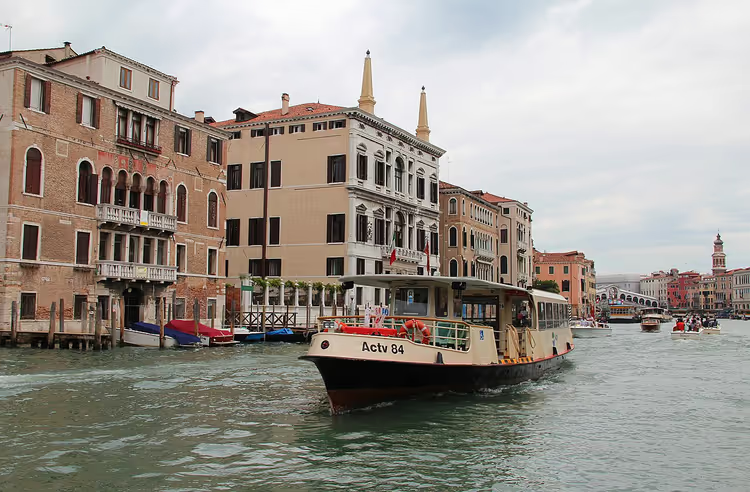
The vaporetto is for longer trips and the islands. A single ticket costs €9.50 and is valid for 75 minutes including transfers, so combine trips within that window (as of 09/2026, ACTV vaporetto fares).
A 24-hour pass costs €25 (as of 09/2026, ACTV) and pays for itself after three rides. For three days or more, get a multi-day pass: ACTV vaporetto tickets. The daily cost drops, and you stop counting every single ride.
You can cross the Grand Canal on a traghetto. It's a gondola ferry that takes a couple of minutes and costs about €2 per person. The cheapest way to ride in a gondola and cut your route short at the same time.
On the mainland, buses and trams use regular tickets, and the regional train from Mestre to Venice costs about €2. If you're staying in Mestre, factor the commute into your budget: round trips every day add up to a few euros per person.
 © Jean-Pol GRANDMONT · CC BYPhoto: Jean-Pol GRANDMONT, CC BY (https://creativecommons.org/licenses/by/4.0), Wikimedia Commons
Check transport schedules before your trip. Night water buses run less frequently, and the last departure to the islands leaves early. A day pass is valid for a set number of hours, not a calendar day, so the moment of first activation matters.
Where to stay: how to save on a hotel
Accommodation in Venice costs more than in almost any other Italian city. So book your hotel in advance, not on the way from the train station.
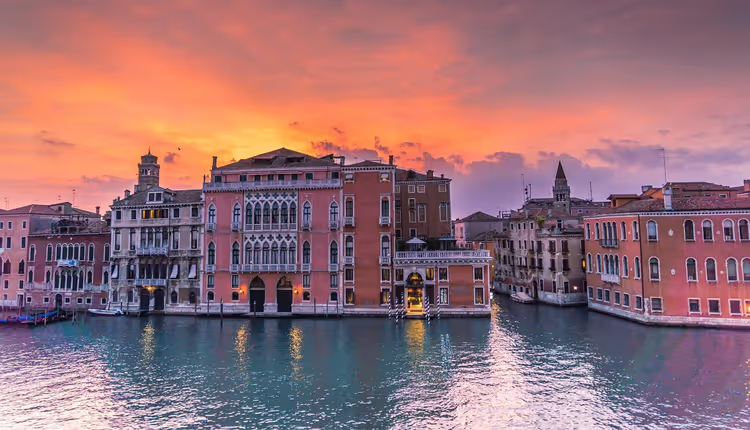
Start by comparing options. Find a hotel in Venice on Trip.com is convenient because you can see the price, guest ratings, and cancellation terms all at once. Choose a rate with free cancellation: plans change, and the surcharge for this is minimal.
The earlier you book, the more choice you have and the lower the price. A hostel bed starts at around €25, a private double room at around €50 per night, but in high season these numbers multiply several times over.
Carnival days, Easter, New Year's, and summer weekends are the most expensive. November works the opposite way: rooms are cheaper and there are noticeably fewer tourists. If your dates are flexible, shift your trip to the shoulder season and save on accommodation without losing the experience.
Staying in Mestre is cheaper than in the historic center, and the train to Santa Lucia takes just a few minutes. If you stay in Mestre, the round trip costs a few euros per person per day.
Another trick for longer trips: an apartment with a kitchen. Having your own kitchen covers breakfast and sometimes dinner, and you avoid paying coperto for every meal. Over a week, the difference compared to a hotel is significant.
Tourist tax and access fee
A tourist tax is added to the room price in Venice. It's charged per night of stay, and in most hotels it's already included in the rate, but not always. Check when booking, because on site this tax is often requested in cash (official website of the city of Venice).
The tax amount depends on the accommodation category and season, usually a few euros per person per night; the hotel states the exact amount at booking. In September 2026, the city was discussing an increase for higher categories, but no decision had been made at that point (venedig-magazin.com, 07.09.2026).
There is also a separate access fee (Contributo di Accesso). This is a charge for day-trippers, and in 2026 it applied on 60 days between April 3 and July 26, 2026, mostly on Fridays, Saturdays, Sundays, and holidays (access fee calendar).
In 2026, the fee was €5 if paid no later than four days in advance and €10 if paid in the last three days before the trip. It applied from 8:30 AM to 4:00 PM, and overnight guests in the city and residents were exempt from it (as of 09/2026, official fee portal). Since July 27, 2026, the fee is no longer charged.
Practical takeaway: check your travel dates against the fee calendar in advance. If the city reintroduces the fee and your day falls on the list, pay online ahead of time: in 2026, early payment was half the price.
Coperto: what it is and how to avoid paying extra
Coperto is a service charge, added per person when you sit down at a table in a restaurant. It is not a tip. The amount depends on the establishment and is listed on the menu or on a sign at the entrance, so check it before you take a seat.
Almost every restaurant in Venice charges coperto. In tourist menus it is often already included in the price of the dish, and then there will be no separate line on the bill.
There are two ways to avoid the charge. First: order al banco, at the counter or at a high table. Then you pay only for the coffee or snack, and the seating surcharge is not added. Second: get food to go and eat on the waterfront or in a square (Venice rules and fees).
When eating takeout, keep two rules in mind. Sitting on bridges is prohibited, and seagulls snatch food right out of your hands, so step away from the docks and do not leave your bag open.
Where to eat in Venice: budget tips
Before sitting down at a table, compare prices and menus at two or three places nearby. In Venice the price range for the same pasta is wide, and quality is not always tied to price (venedig.com).
The most expensive spot in the city is St. Mark's Square and the first row along the canal. With coperto, a cappuccino at a table on the square costs several times more than at the counter. Walk two streets inland, and the same drinks will cost half as much.
Do not plan two full restaurant meals a day. Italian snacks on the go are cheaper and leave time for walking around. A slice of pizza costs about 3-4 €, a serving of cicchetti about 2-3 €, and tramezzini, the Venetian crustless sandwich, runs about 3.5-5 €, prices depend on the bar.
Sweets also fit into the budget: cannoli and other pastries are sold in pastry shops at prices below a restaurant dessert. A serving of pasta in a trattoria starts at about 10 €, and that is already a full meal if you need to cut the budget to a minimum.
 AIIllustrative image: AI-generated
Food on the go and self-service
Restaurants in Venice are worth the money, but not every meal has to be a restaurant meal. You can cover one meal a day on the go and save not only on food but also on coperto.
A good lunch on the go option is paper boxes of pasta. The Dal Moro's chain is open from 11 am to midnight, address: Calle de la Casseleria 5324. The pasta is made in front of you, and the price is lower than for the same portion in a trattoria by the canal.
The second route is the supermarket and your own kitchen. If you rented an apartment, make breakfast yourself: it is cheaper, and you choose your own meal time. After a light breakfast you have more energy for walking until lunch.
Bring a water bottle with you. Tap water in Venice is drinkable and no worse in quality than bottled, and there are fountains all over the city where you can fill your flask for free (drinking water in Venice).
In the supermarket, check the prices of local products: a bottle of wine costs about 6 €, local beer 0.5 l about 1.50 €, water 1.5 l about 0.60 € (based on user data from Numbeo, 08/2026). For cheese, bread, and fruit for a picnic on the waterfront you will pay less than for a single dish at a restaurant by the canal.
 AIIllustrative image: AI-generated
Also stop by bacari, Venetian bars with snacks. A glass of wine there starts at about 3.50 €, and cicchetti are served with it free or for a small surcharge. That way you can try local cuisine without a restaurant dinner bill.
Museum tickets: passes and discounts
Almost every Venice attraction charges admission, so tickets eat up a noticeable part of the budget. First decide what you want to see, and only then choose a ticket or pass.
The most popular option is the combined ticket for the museums of St. Mark's Square. It includes the Doge's Palace, Museo Correr, the National Archaeological Museum, and the halls of the Marciana Library, and a full ticket costs 35 €, online no later than 30 days in advance 30 € (as of 09/2026, MUVE, tickets and passes).
If you have more than three museums on your list, consider the MUVE Museum Pass. It covers the museums of the city network and pays for itself after the Doge's Palace and two more sites; a full ticket costs 50 € (as of 09/2026, official MUVE tickets).
The third option is the Venezia Unica Pass, the city's official tourist pass. It can include transport and give discounts on individual sites. Take it only if your plans match its list.
It is better to buy entry tickets online in advance. Online sales are often cheaper than the ticket office, and more importantly, you do not stand in line: in summer it stretches to an hour or more. Compare Venice museum tickets online before your trip.
Check discounts for seniors, students, and youth. Many museums offer a reduced ticket with ID, but require you to show it at the entrance, so keep your document handy.
Check the calendar before buying. Some museums are closed on Mondays, and on holidays and days of state ceremonies the schedule changes, and a ticket for that day goes to waste.
The Doge's Palace and Museo Correr require you to choose an entry time, so you book your slot in advance. Take the morning: by midday the halls are crowded, and a line forms at the entrance even with a ticket.
Clothing also affects your trip budget. You won't be allowed into St. Mark's Basilica and other churches with bare shoulders, and on-site cover-ups are sold at souvenir prices. Bring a scarf or a light jacket with you.
Tours of the La Fenice opera house should also be booked in advance: they run in small groups, and spots for your preferred date may sell out.
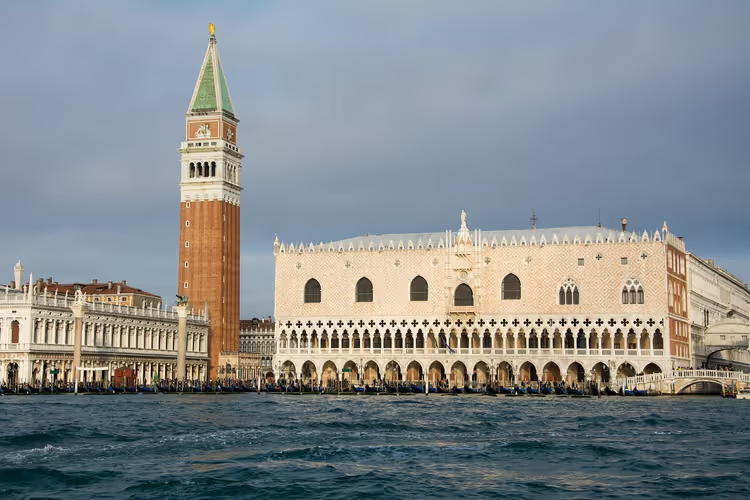
Spread museums across different days. A single ticket covers specific sites, and entry is by time slot, so you'll end up rushing through two major museums in one day.
Tours and tickets in Venice
Guided tours, skip-the-line tickets and activities — most offers can be cancelled free of charge.
See offers on TiqetsThe widget loads once you give your consent.
Gondola, observation deck, and a free view
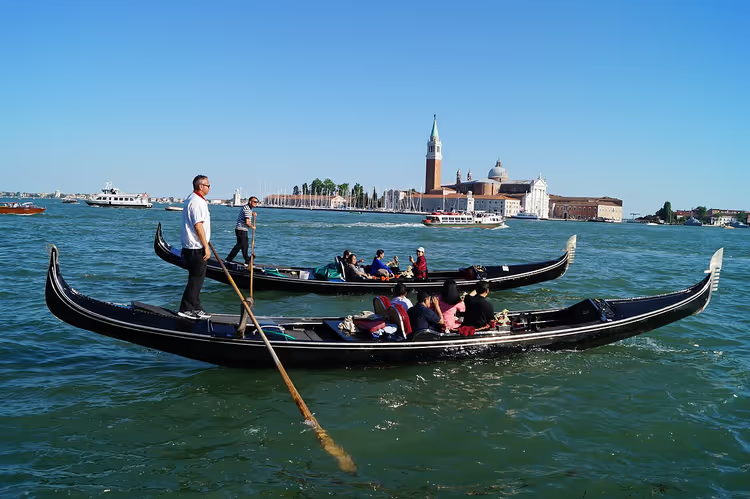
A gondola ride costs more than any other activity in the city. Official city rates: €90 for 30 minutes during the day and €110 for 35 minutes after 7:00 PM, and that's the price per boat for up to five passengers, not per person (as of 09/2026, city gondola rates).
Option | Price | Duration | How many people |
|---|---|---|---|
Traghetto, canal crossing | about €2 | about 2 minutes | each person pays for themselves |
Gondola during the day, before 7:00 PM | €90 per boat | 30 minutes | up to 5 people |
Gondola in the evening, after 7:00 PM | €110 per boat | 35 minutes | up to 5 people |
Group tour with a guide | a few dozen euros per person | about 30 minutes | mixed group |
If you split the daytime rate among five people, the ride works out to about €18 per person. In the evening the same route costs more, but the lights on the facades are worth it.
During the day the daytime rate applies; in the evening the nighttime rate kicks in. Plan your ride before 7:00 PM if you want to save money, and after 7:00 PM if the atmosphere matters more to you.
The rate is regulated, so haggling is pointless. But there are workarounds. First: cross by traghetto for about €2 per person. Second: share a boat with other travelers using the official gondolier rates. Third: join a group gondola tour where each person pays only for their own seat.
If the canal ride itself is what matters to you, check out this gondola ride with a fixed time. The price is higher than a gondolier at the dock, but the time and place are guaranteed.
A free view of St. Mark's Square exists too. Head to the Museo Correr entrance, go up the stairs, and at the top turn right toward the museum cafe and coat check. Take a seat at a table and look out over the square and St. Mark's Basilica, paying only for your coffee.
One tip about timing. The bell tower and observation decks fill up in the morning, so arrive at opening time or after 5:00 PM. That way you'll get to the top without a long wait.
 © NearEMPTiness · CC BY-SAPhoto: NearEMPTiness, CC BY-SA (https://creativecommons.org/licenses/by-sa/4.0), Wikimedia Commons
⁉️🤔 Frequently asked questions
How much money do you need per day in Venice?
A budget day starts at 50-60 € with a hostel bed, food on the go, and walking around. An average day with a double room, a trattoria, and a transit pass costs more. Exact figures depend on the season: during carnival days and at Easter, accommodation prices rise several times over.
How much does a vaporetto ride cost and what is the better deal?
A day pass is cheaper than single tickets if you take three or more rides. Over several days, the daily price drops; fares are listed in the section on getting around the city. If you walk through the center, you barely need tickets at all (ACTV, transit passes).
Do you have to pay the Venice entry fee?
In 2026, the fee applied only to day-trippers on specific dates from April 3 to July 26. From July 27, 2026, the fee is no longer charged; details are in the fees section (as of 09/2026, official fee portal).
What is coperto and is it mandatory?
Coperto is a per-person service charge added for a seat at a table. The amount is listed on the menu or on a sign at the entrance, so check it before you sit down. At the counter or for takeout, the charge is not applied, and in tourist menus it is sometimes already included in the price.
How much does a gondola cost and is there a cheap alternative?
Official fare: 90 € for half an hour during the day and 110 € for 35 minutes in the evening, for a boat of up to five people. Cheap alternatives: a traghetto crossing for about 2 €, sharing a boat with other guests, and a group ride where each person pays for their own seat (as of 09/2026, official gondola fares).
When should you go to Venice to spend less?
The shoulder season is the cheapest. November offers low accommodation prices and fewer tourists; in winter outside carnival, prices also drop. The most expensive times are carnival, Easter, New Year, and summer weekends, so if your dates are flexible, shift your trip by a couple of weeks.
In short: what to book
The takeaway is simple: Venice is not expensive in itself, but because of single tickets, high-season accommodation, and restaurants on the front line along the canal. Change these three things and your trip budget drops without losing the experience.
If you are short on time: get an ACTV pass and stay near the train station, so you avoid paying for water taxis. If you are going for a week: an apartment in Mestre with a kitchen and a regional train into the city. If you want to see museums: a combined ticket or the MUVE Museum Pass and timed entry booked online. If you are going for the canals: traghetto during the day and a gondola once in the evening.
Start with two bookings: hotels in Venice on Trip.com and tours and tickets on GetYourGuide.
For transport and trains from Germany and Austria, check Trip.com in advance: early booking saves you money again.

A small editorial team writing guides for independent travel. We travel ourselves, but we haven’t been everywhere, so we check prices, opening hours and how to get there against official sources.