













New York for 150 € a day: what actually eats the budget and where to save
New York is generally considered a city where a day costs no less than $300. For one style of travel, that is true: a Midtown hotel, restaurants with reservations, every observation deck in a row. For another style, it is not. The city is doable on €150 per person per day if you make three decisions: sleep simpler, eat at the counter, and limit paid attractions to two or three per week.
A subway ride costs $3 as of January 2026 (as of 09/2026, MTA press release). A hostel bed outside the center is under a hundred dollars, a pizza slice covers lunch, and admission to the Metropolitan Museum of Art for a visitor from Europe costs about as much as two lunches. Below is a rough daily budget for New York based on the editorial team's estimate as of 09/2026, including the surcharges that are not on the price tags.
Ad: this article contains affiliate links, we earn a commission if you book through them, at no extra cost to you.
First, the main mistake: tax and tips
💡 In short:
- Calculate any price with a surcharge: 8.875% sales tax and the usual 18-20% tip in restaurants (New York City Department of Finance).
- On the subway, pay with the same card: after 12 rides in seven days, the rest of your rides are free (as of 09/2026, OMNY rules).
- Sleep outside Manhattan, eat lunch at the counter, and pick one observation deck for the whole trip.
- Prices, fares, and hours: 09/2026, verified on the official subway website and the city Department of Finance website.
In New York, the final amount is never written anywhere. Sales tax is 8.875% and is added at the register, even though the price tag, menu, and ticket show the price without it (as of 09/2026, New York City Department of Finance).
At a sit-down restaurant, tips are added on top, by local custom 18-20% of the bill (the city tourism office). A dinner that looks like $30 on the menu actually costs about $39.
In practice, this means: calculate every restaurant check with a 1.3 multiplier, and every store purchase with a 1.09 multiplier (New York City Department of Finance). Without this habit, you will be off by 20-25% by the end of the first week and will start cutting back on the last day.
Hotels add not only tax to the room rate, but also a city hotel occupancy tax of 5.875% plus $2 per night and another $1.50 per night in state fee (as of 09/2026, Department of Finance). Sometimes a resort fee is added on top. A room listed at $120 on the website turns into roughly $140 on the bill.
Daily budget in numbers
Item | Budget | Standard option |
|---|---|---|
Lodging (hostel bed or inexpensive room outside Manhattan, with taxes) | $55 | $90 |
City transportation (OMNY) | $5 | $6 |
Breakfast (deli, bagel, coffee) | $7 | $10 |
Lunch (pizza slice, halal cart, sandwich) | $10 | $16 |
Dinner with tax and tip | $25 | $35 |
Water, coffee, small purchases | $6 | $10 |
Admission tickets (weekly average) | $10 | $20 |
Total per day | $118 | $187 |
This is the editorial team's calculation as of 09/12/2026: metro fares are taken from the new OMNY fares section, taxes and fees from the city website, and food and lodging prices are the editorial team's rough estimate, not official rates.
A realistic middle ground falls in the range of $150 to $165 per day. This fits the article's goal: €150 is roughly equal to $175. To stay within it, keep two line items under control: lodging and dinner.
If you stay in a Manhattan hotel, you blow the budget in the first row of the table, and there's nothing left to calculate: one room with taxes eats up half the daily amount. Think of admission tickets as a weekly average. One observation deck and one museum over five days spread across all the days and don't hit your wallet all at once.
Transportation: OMNY and the weekly cap
In New York, the subway and city buses cost the same: $3.00 per ride as of January 2026 (as of 09/2026, official MTA release). You pay contactlessly through OMNY: with a bank card, phone, or a dedicated OMNY card.
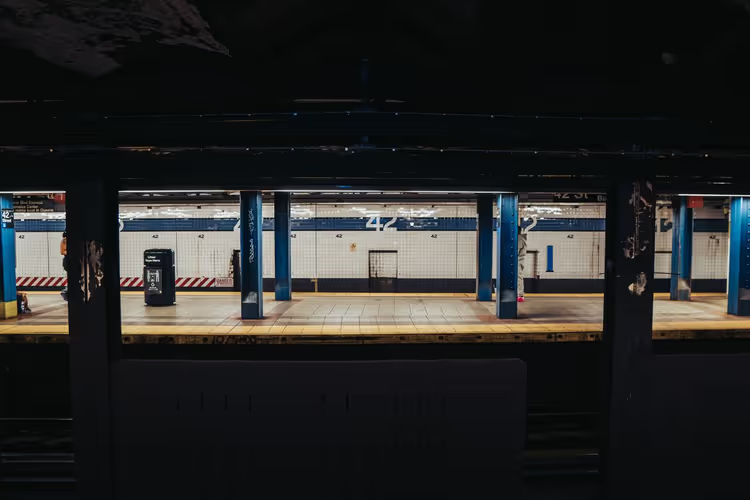
The main mechanism for tourists is called the Fare Cap, meaning a payment ceiling. Within a seven-day window, you pay a maximum of $35 for subway and bus, and after 12 rides all subsequent rides in that window become free (as of 09/2026, MTA).
You don't need to buy or activate anything. There's one condition: you tap the same card or the same device. If you're traveling as a couple, you can't pay for two people with one card, otherwise the cap won't apply and you'll overpay every day.
For a week, that's a maximum of $5 per day, and compared to European cities this fare looks like a good deal. The classic MetroCard is being phased out, and a new OMNY card costs $2 (as of 09/2026, MTA).
Two river options are almost free. The Staten Island Ferry runs around the clock and is free, and it offers the best view of the Statue of Liberty you can get without a ticket. NYC Ferry boats are paid, but noticeably cheaper than any harbor cruise.
Food: where the bill adds up
Everyday food in New York comes down to three formats, and each one is cheaper than a sit-down restaurant.
Pizza by the slice. A slice at an ordinary Manhattan spot costs a few dollars, and two slices already make a meal. You pay by card at the counter, and the terminal usually doesn't prompt for a tip.
Halal carts and food trucks. A cart with chicken and rice gives you a full portion noticeably cheaper than a restaurant. Tipping isn't required here, but leaving a dollar is customary.
Delis and bodegas. A bacon, egg, and cheese sandwich in the morning is inexpensive; at lunchtime a sandwich costs more. Coffee from a deli is cheaper than from a coffee chain, and the difference on a single drink is noticeable.
Where money goes to waste: expensive cocktails plus tips, hotel breakfast, lunch at a sit-down restaurant, water from a tourist shop. Tap water in New York is drinkable, restaurants serve it for free, and your own bottle saves a noticeable amount over a week.
Tipping in short: at a sit-down restaurant 18-20%, at a bar $1-2 per drink, housekeeping $3-5 per day, bellhop $1-2 per bag, this is standard practice, not a set rate (nyctourism.com). The tip prompt on a self-service terminal is voluntary, and you can select zero without any explanation.
Museums and attractions: the honest version
Popular guidebooks often get this wrong. The "pay what you wish" rule no longer applies everywhere, and it does not apply to visitors from Europe.
Museum | Admission | Who pays what they wish |
|---|---|---|
Metropolitan Museum of Art | $30 for adults, $22 for seniors, $17 for students (As of 09/2026, metmuseum.org) | New York State residents and students from New York, New Jersey, and Connecticut; children under 12 enter free |
Museum of Modern Art (MoMA) | $30 for adults, $22 for seniors, $17 for students (As of 09/2026, moma.org) | Children under 16 enter free; New York State residents on Fridays from 5:30 to 8:30 pm (MoMA) |
American Museum of Natural History | full adult general admission ticket (As of 09/2026, amnh.org) | "Pay what you wish" only for residents of New York, New Jersey, and Connecticut |
Plan for a full adult ticket; there are no discounts for visitors from Europe. On the bright side, most of the city costs nothing.
Free and worth a full day: Central Park, the High Line, a walk across the Brooklyn Bridge, Grand Central Terminal, the New York Public Library near Bryant Park, St. Patrick's Cathedral, the outdoor 9/11 Memorial, the view from the Staten Island Ferry, the Chelsea Market storefronts, Green-Wood Cemetery in Brooklyn, and the street art in Bushwick.
Broadway is cheaper through the TKTS booths in Times Square and Lincoln Center: they sell remaining tickets for tonight's evening show and tomorrow's matinee at up to 50% off (As of 09/2026, TDF). Many productions run digital lotteries with tickets noticeably cheaper than the box office, and you enter through the app the day before the performance. With a flexible schedule, you can see a big musical for less than a day at a museum.
Observation decks remain the most expensive line item in the city: the Empire State Building, Top of the Rock, One World Observatory, Summit, and Edge cost several dozen dollars, with prices depending on the time and add-ons. On a 150 € budget, one deck per trip is realistic. A cheap alternative: a rooftop bar, where the price of one drink gets you the same altitude.
It pays to book entry slots in advance: New York museum tickets on Tiqets.
Tours and tickets in New York
Guided tours, skip-the-line tickets and activities — most offers can be cancelled free of charge.
See offers on TiqetsThe widget loads once you give your consent.
Lodging under $90
Lodging decides everything: it eats up nearly half of your daily budget, and this is where you either stay within 150 € or you don't.
The first option: a hostel. A bed in a shared dorm room in Manhattan costs under a hundred dollars a night in high season and less in other months. Taxes are often not included in the displayed price, so check the final total on the last booking step.
The second option: sleep outside Manhattan. Long Island City, Astoria, and Sunnyside in Queens, as well as downtown Brooklyn, are 15 to 25 minutes by subway from Midtown and cost noticeably less. Check the subway connection. An address with two lines within walking distance matters more than saving ten dollars.
The third option: shift your travel dates. January and early March, as well as the second half of August, are the cheapest periods. You pay the most from late September to early December.
Important: short-term rentals of entire apartments for fewer than 30 days are heavily restricted in New York City. Listings that bypass the rules get canceled at the last minute, so it is safer to book licensed accommodation.
⁉️🤔 Frequently asked questions
How much money do you need per day in New York?
The benchmark in this article is one hundred fifty euros per person per day, roughly one hundred seventy-five dollars. Based on the budget table above, the frugal scenario comes to about one hundred eighteen dollars, and the standard option about one hundred eighty-seven. Airfare is not included; it is a separate line item and varies by season more than anything else.
Is it true that you can pay what you wish at museums?
No, not at all of them and not for everyone. Flexible pricing is reserved for New York State residents and students from New York, New Jersey, and Connecticut. Visitors from Europe pay the full adult ticket, which is thirty dollars at the Metropolitan Museum of Art. Plan for the full rate, and be deliberate about scheduling a day with two museums.
What is the cheapest way to get around the city, MetroCard or OMNY?
OMNY. A single ride costs three dollars, but after twelve rides in seven days you ride free, and the fare cap stays at thirty-five dollars. The MetroCard is being phased out, and a separate OMNY card costs two dollars.
How much should you tip?
At a restaurant with table service, eighteen to twenty percent of the bill; at a bar, one to two dollars per drink; for housekeeping, three to five dollars per day. At self-service cafes and street carts, tips are not required, but leaving a dollar is customary.
Is it worth buying a ticket to an observation deck?
One per trip, yes, if you want a view of all of Manhattan from above. Tickets cost several dozen dollars, with prices depending on the time and add-ons. A free alternative: the Staten Island Ferry, from which you can see the Statue of Liberty and the southern part of the city. Take a second deck only instead of a museum, not in addition to one.
In short: what to book
The bottom line is simple: 150 € a day in New York comes down to three decisions. Sleep outside Manhattan, eat at delis and street carts, and do one paid attraction every few days.
If you are on a short trip: book a museum or observation deck slot in advance so you don't lose a morning in line. If you are going for a week: add an evening Broadway show through the lottery, the ferry, and Central Park. If you are traveling with a group: make sure everyone has their own subway card, otherwise the fare cap won't kick in for anyone.
One last tip. Book timed-entry tickets in advance, for New York museums on Tiqets, and if you want to see the city with a guide, check out tours on GetYourGuide.

A small editorial team writing guides for independent travel. We travel ourselves, but we haven’t been everywhere, so we check prices, opening hours and how to get there against official sources.