
















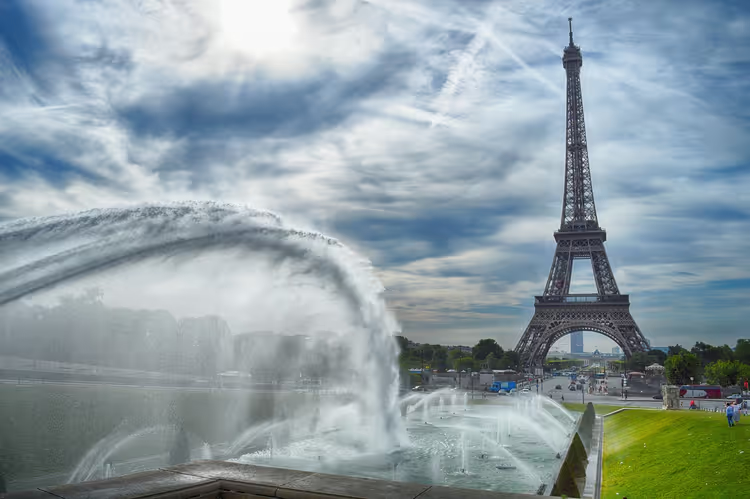
Paris in 2 days: a walking route through 23 locations
Two days in Paris fly by in a flash. We put together a walking route covering 23 spots that you can realistically fit into 48 hours, and added prices, opening hours, and directions between locations.
Buy your Eiffel Tower ticket online: at the ticket office you will stand in line for over an hour, and in high season slots sell out days in advance.
The route covers both banks of the Seine, stops at the Île de la Cité, and ends in Montmartre. Below you will find a ready-made plan for each day, the honest catches of popular spots, and a table of tickets worth buying in advance.
Ad: this article contains affiliate links, we earn a commission if you book through them, at no extra cost to you.
Paris in two days: route plan
💡 In short:
- Buy Louvre tickets, Eiffel Tower tickets, and catacombs tickets online: at the ticket office you will lose over an hour.
- Walk, and take the metro for long stretches so you still have energy by evening.
- Prices and opening hours: as of 09/2026, verified on the official Louvre website
Day | Highlights | Tickets in advance | Walking, km (on the map) |
|---|---|---|---|
Day 1 | Eiffel Tower, Les Invalides, Panthéon, catacombs, Seine cruise | tower, catacombs, cruise | about 11 |
Day 2 | Arc de Triomphe, Louvre, Notre-Dame, Père Lachaise, Montmartre | Louvre, arch | about 12 |
Calculate distances between spots on the map: even a short stretch in the center takes about fifteen minutes. Both days start at metro stations, so you don't need a car, and taxis are expensive during rush hour.
Day 1 in Paris: the tower, the Left Bank, and the Seine
The first day starts on the Right Bank and ends with a river cruise. The starting point is at the Trocadéro metro station, which you can reach on any convenient line.
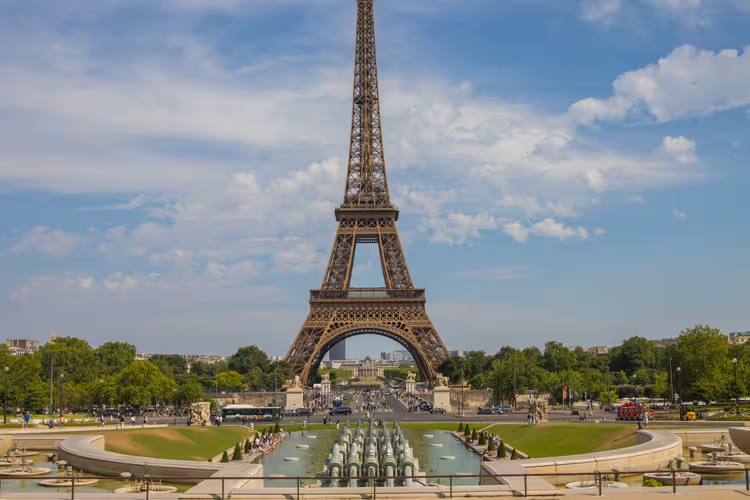
Trocadéro
The parapet of Place du Trocadéro offers the best free view of the Eiffel Tower. Come early in the morning, before the railing is packed with selfie-takers and tripods. From here you can also see the Trocadéro Gardens with the Warsaw Fountain. No ticket is needed, the square is open around the clock, and you can walk to the tower in ten minutes across the bridge.
 © Olevy · CC BY-SAPhoto: Olevy, CC BY-SA (https://creativecommons.org/licenses/by-sa/4.0), Wikimedia Commons
Eiffel Tower
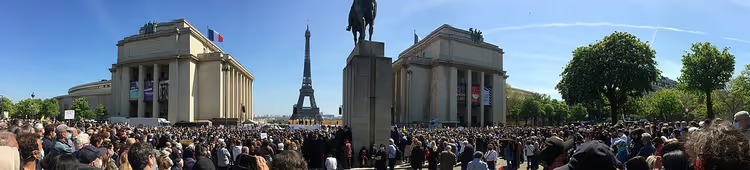
The Eiffel Tower was built for the World's Fair at the end of the 19th century, and today it is the tallest structure in Paris. Elevators and stairs lead to the top, and there are observation decks and cafés inside. An elevator ticket to the summit costs €36.70 (as of 09/2026, rates on the tower's website). The line at the ticket office and for the elevator stretches for an hour, so a skip-the-line tower tour will save you an entire morning.
 © Yann Caradec from Paris, France · CC BY-SAPhoto: Yann Caradec from Paris, France, CC BY-SA (https://creativecommons.org/licenses/by-sa/2.0), Wikimedia Commons
Champ de Mars
The Champ de Mars lies at the foot of the tower and is named after the god of war: it used to be a parade ground for military parades and celebrations. Today it is the best picnic spot with a view of the tower. Grab a baguette and coffee and join Parisians on the lawn. The spot is free and open all day, and it is quieter here in the evening than during the day.
Les Invalides
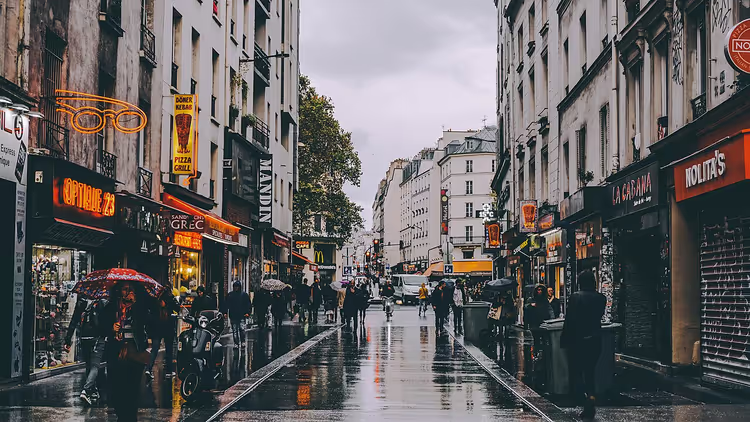
Les Invalides was built in the late 17th century as a hospital and home for war veterans. Some of the buildings are still used by social services, but most of the complex has been given over to the Army Museum and military exhibitions. Napoleon's tomb and the graves of French military leaders are also located here. Museum admission is paid; check current prices and hours on the official website.
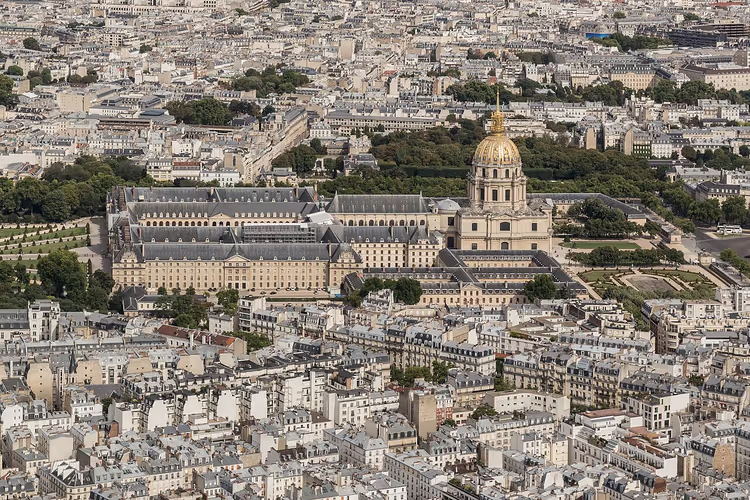 © Another one of my pictures: This photograph was taken by Medium69 (William Crochot) and released under the license state · CC BY-SAPhoto: Another one of my pictures: This photograph was taken by Medium69 (William Crochot) and released under the license state, CC BY-SA (https://creativecommons.org/licenses/by-sa/4.0), Wikimedia Commons
Luxembourg Gardens
From Les Invalides, cross to the Left Bank and head to the Luxembourg Gardens, about 3 km on foot (per the map). Nearby is the Latin Quarter with the Sorbonne and student cafes. The park was laid out in the 17th century, and today it has been nicely modernized: there are plenty of play and sports areas, and students spread out on the lawns with their books. Admission is free, and the gardens are open from sunrise to sunset.
 © Valentina Dyptan · CC BY-SAPhoto: Valentina Dyptan, CC BY-SA (https://creativecommons.org/licenses/by-sa/4.0), Wikimedia Commons
Pantheon
After passing the Sorbonne, you will find yourself at the Pantheon. It was built as a church dedicated to Saint Genevieve, but the building became a burial place for Voltaire, Rousseau, Hugo, and about fifty other famous French figures. In the center is Foucault's pendulum, which demonstrates the rotation of the Earth. A ticket costs €13 in the low season and €16 in the high season (as of 09/2026, Centre des monuments nationaux rates). Book Pantheon tickets in advance; climbing the dome costs extra.
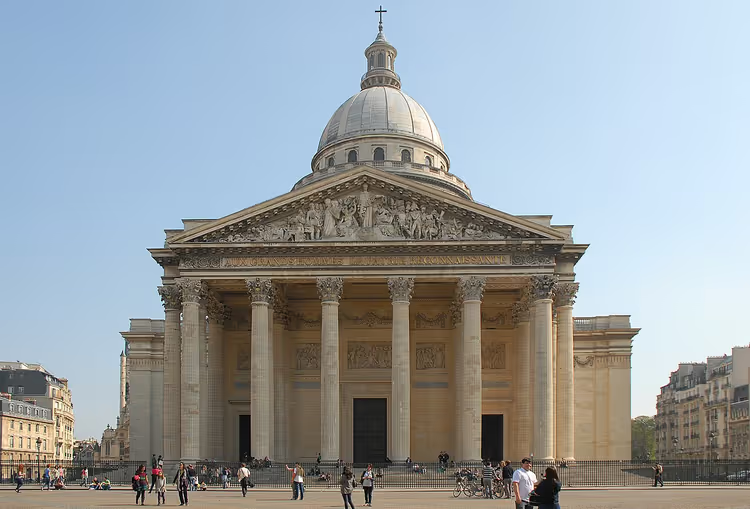 © Camille Gévaudan · CC BY-SAPhoto: Camille Gévaudan, CC BY-SA (https://creativecommons.org/licenses/by-sa/3.0), Wikimedia Commons
Paris Catacombs
Next, the route goes underground. When some Parisian cemeteries were closed at the end of the 18th century, the remains were moved into the tunnels of old quarries dozens of meters below ground. The remains of several million Parisians rest here (as of 09/2026, catacombs website). A full ticket costs €31, with the audio guide included (as of 09/2026, official Catacombs website). Visitors are admitted by time slot, so buy catacombs tickets in advance, otherwise there may be no available slots.
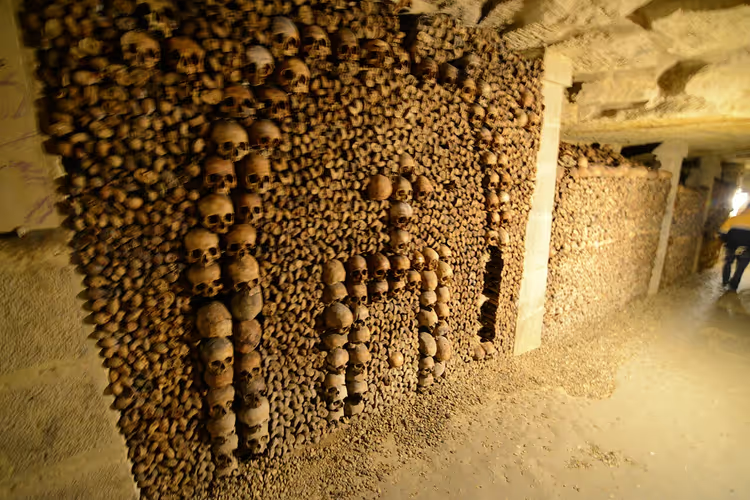 © Jorge Láscar from Melbourne, Australia · CC BYPhoto: Jorge Láscar from Melbourne, Australia, CC BY (https://creativecommons.org/licenses/by/2.0), Wikimedia Commons
Seine river cruise
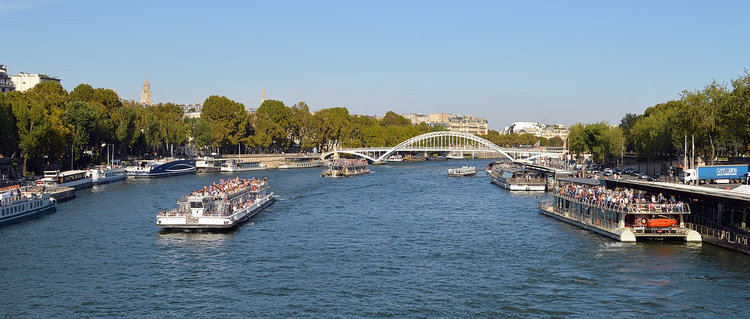
It makes sense to end your first day on the water. There are river docks near the Eiffel Tower, on the Quai de Montebello, and near the Île de la Cité, which is easy to reach from the catacombs by metro. Board a boat around dusk: that is when Paris lights up, and the Eiffel Tower sparkles briefly every hour. An hour-long cruise is inexpensive, check the exact price with the operator, and choose a Seine river cruise with an audio guide.
Day 2: from the Arc de Triomphe to Notre-Dame
The second day is busier than the first, and part of the route goes through museums. Start at the Arc de Triomphe and finish at Montmartre.
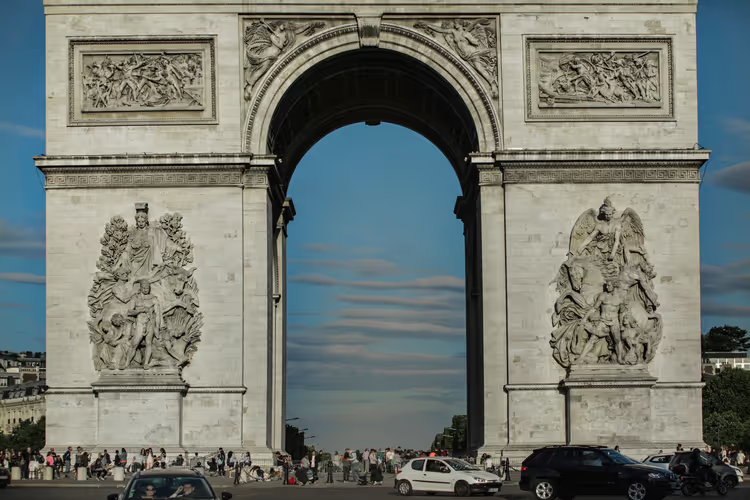
Arc de Triomphe
The arch was built on Napoleon's orders to honor his victories, and construction dragged on for decades. The walls are covered with the names of military commanders and the battles they won, while the facades feature sculptures and bas-reliefs from the Bonaparte era. There is a museum inside, and a climb leads up to the observation deck. A ticket costs €16 in the low season and €22 in summer (as of 09/2026, Centre des monuments nationaux rates). It is best to book Arc de Triomphe tickets with a morning time slot.
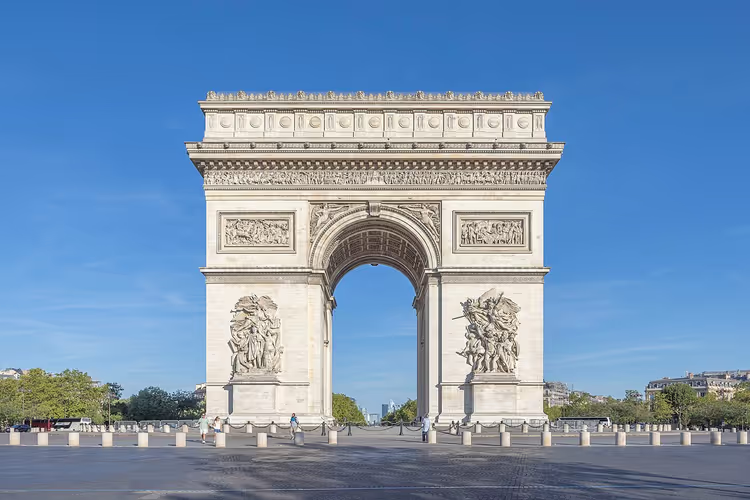 © ZeusUpsistos · CC BY-SAPhoto: ZeusUpsistos, CC BY-SA (https://creativecommons.org/licenses/by-sa/4.0), Wikimedia Commons
Champs-Élysées
The Avenue des Champs-Élysées runs downhill from the arch toward the Seine. Despite the name, it is not a park but a busy street with boutiques, offices, and restaurants. Greenery only begins in the Jardin des Champs-Élysées near Place de la Concorde. The country's main republican parades take place on this avenue. Walk along it or ride one metro stop if you are tired.
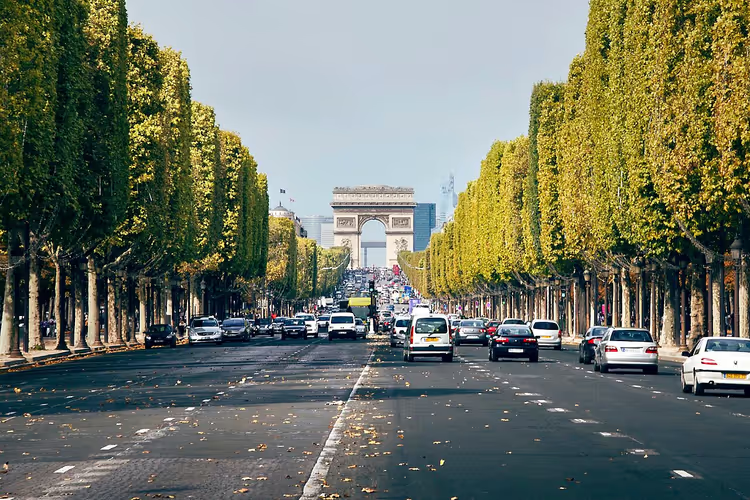 © SoWhat · CC BY-SAPhoto: SoWhat, CC BY-SA (https://creativecommons.org/licenses/by-sa/2.0), Wikimedia Commons
Place de la Concorde
The avenue ends at the octagonal Place de la Concorde. It was originally named after Louis XV, but during the revolution the monument was torn down and a guillotine was installed in the square. A tall obelisk brought from Egypt stands in the center, fountains operate on either side of it, and statues in the corners represent the largest cities of France. From here you get one of the best views of the Champs-Élysées and the Tuileries Garden.
 © Cristian Bortes from Cluj-Napoca, Romania · CC BYPhoto: Cristian Bortes from Cluj-Napoca, Romania, CC BY (https://creativecommons.org/licenses/by/2.0), Wikimedia Commons
Tuileries Garden
The Tuileries Garden begins right behind the square. Paths, lawns, and fountains are laid out with geometric precision in the classic French manner. Even in the city center, it is easy to find a quiet corner in the park to take a break from the crowds. Sculptures by French artists from different eras line the walkways. Admission is free, and the garden is open from morning until late evening.
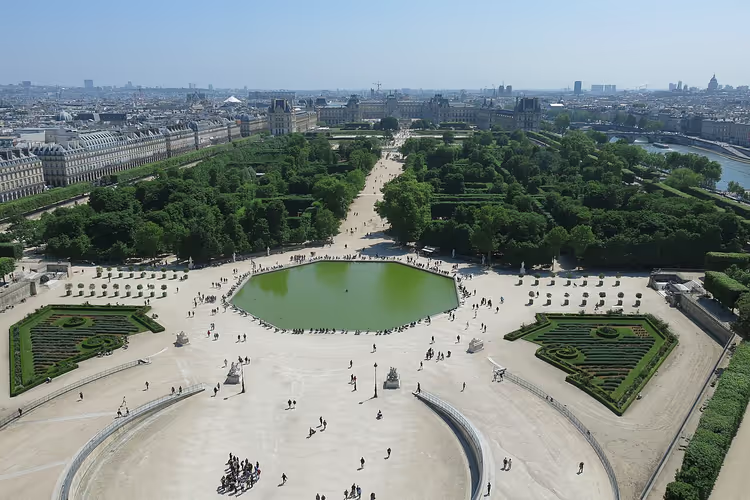
Louvre
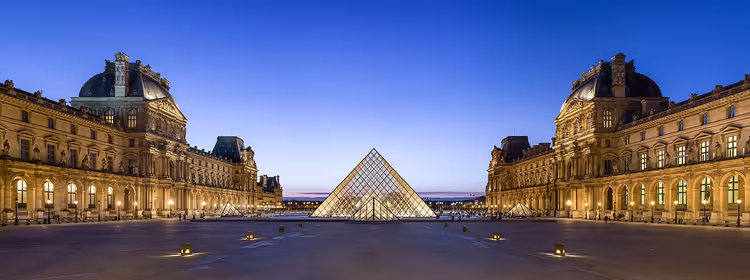
The Tuileries Garden transitions into the Carrousel Garden, and behind it stands the Louvre. A fortress appeared on this site in the 12th century, later the palace became a royal residence, and at the end of the 18th century it was turned into a museum. The glass pyramid in the courtyard became the main entrance, but there is also a second entrance where the line is usually shorter. A ticket costs €22 for EEA residents and €32 for everyone else, and the museum is closed on Tuesdays (as of 09/2026, official museum website). Get Louvre tickets for the morning: in one visit you will only see part of the collection, including the Mona Lisa and the Venus de Milo.
 © Benh LIEU SONG ( Flickr ) · CC BY-SAPhoto: Benh LIEU SONG ( Flickr ), CC BY-SA (https://creativecommons.org/licenses/by-sa/4.0), Wikimedia Commons
Pont Neuf
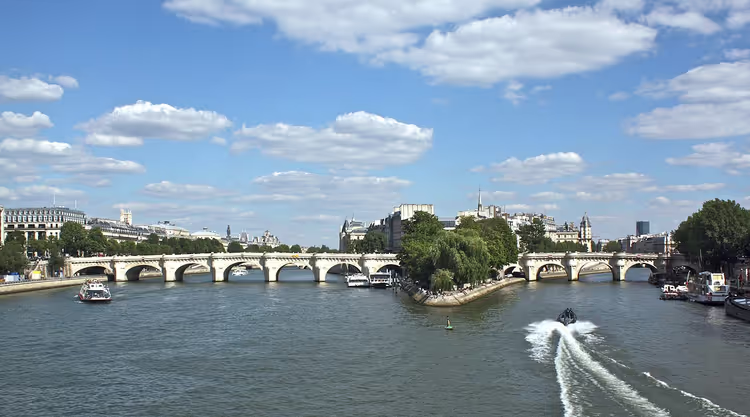
Several bridges lead to the Île de la Cité, but the oldest one is called Pont Neuf, which translates as "New Bridge". It was built between 1578 and 1607. At the tip of the Île de la Cité, you will be shown a statue of Henry IV. Originally, the bridge had shops selling goods, not just carts and pedestrians.
 © Rmrfstar · CC BY-SAPhoto: Rmrfstar, CC BY-SA (https://creativecommons.org/licenses/by-sa/3.0), Wikimedia Commons
Conciergerie and Sainte-Chapelle
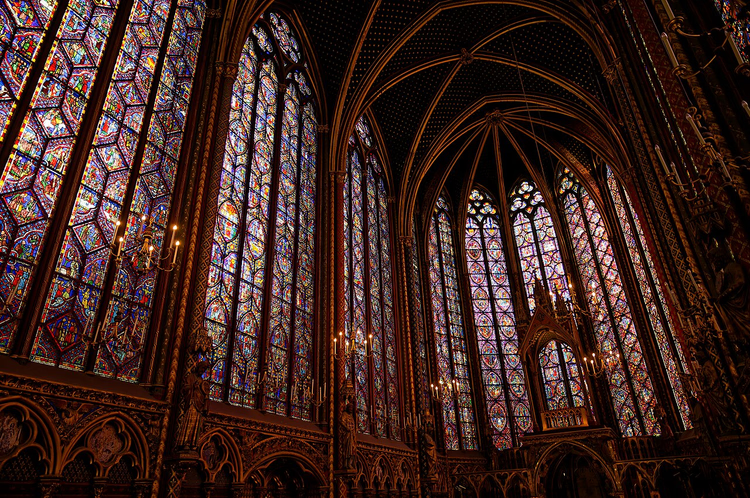
On the Île de la Cité stands the Conciergerie, an old royal palace that later became a prison. Conditions here depended not on the severity of the crime but on your wallet: the rich paid for rooms with a bed, while the poor slept on the floor. A combined ticket to the Conciergerie and the neighboring Sainte-Chapelle costs €23 for EEA residents and €30 for everyone else (as of 09/2026, official rates). Book Conciergerie tickets in advance.
 © Laurens R. Krol · CC BYPhoto: Laurens R. Krol, CC BY (https://creativecommons.org/licenses/by/4.0), Wikimedia Commons
Notre-Dame de Paris
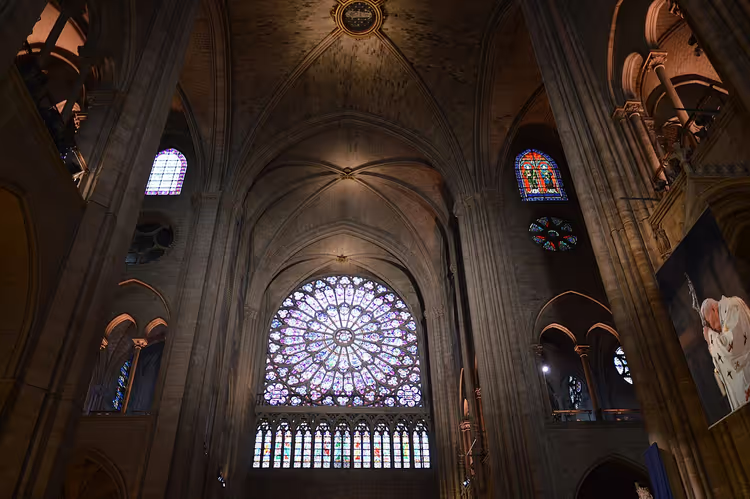
Notre-Dame Cathedral has reopened after restoration, and entry is free again. The Gothic church was built from the 12th to the 14th century; emperors were crowned here and important figures of the country were buried here. Outside, you will find arches, stained glass, gargoyles, and sculptures that make it worth walking around the cathedral. Entry is free, but it is best to reserve a visiting slot in advance on the official website.
 © Hassam Khawaja · CC BY-SAPhoto: Hassam Khawaja, CC BY-SA (https://creativecommons.org/licenses/by-sa/4.0), Wikimedia Commons
Day 2 evening: Père Lachaise and Montmartre
In the evening, head east to Père Lachaise Cemetery, and end the day on the Montmartre hill. From the cemetery to the hill, the metro is a convenient option.
Père Lachaise Cemetery
Père Lachaise is like an open-air museum of funerary sculpture. There are tens of thousands of graves here, and many belong to celebrities. It all started with La Fontaine and Molière, whose remains were moved here to boost the cemetery's popularity. Wealthy relatives decorated the graves with sculptures and stucco, and the place turned into a museum of funerary art. Visit the graves of Oscar Wilde, Honoré de Balzac, Jim Morrison, and Édith Piaf. Entry is free, and the cemetery closes in the early evening, so allow plenty of time.
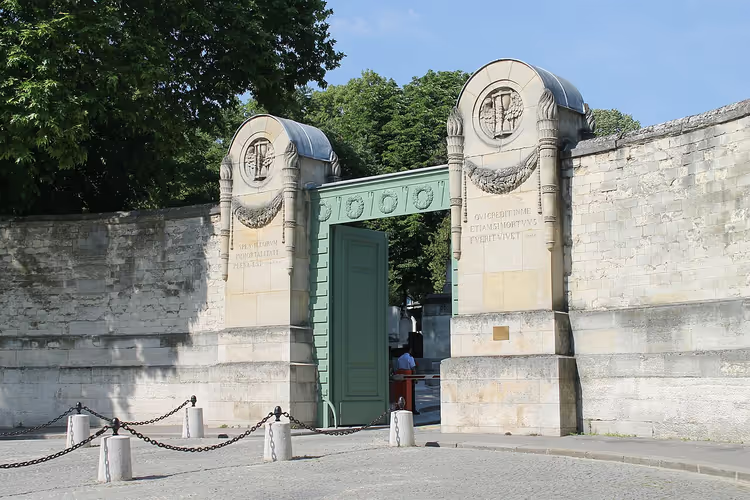 © Connie Ma from Chicago, United States of America · CC BY-SAPhoto: Connie Ma from Chicago, United States of America, CC BY-SA (https://creativecommons.org/licenses/by-sa/2.0), Wikimedia Commons
Montmartre
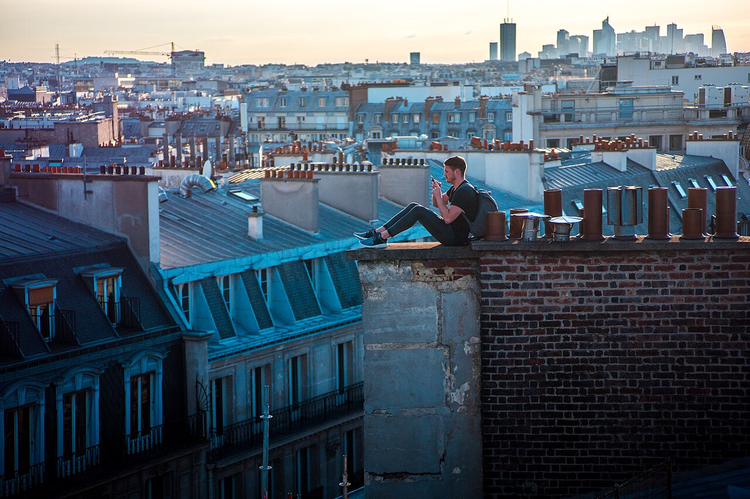
Montmartre sits on a high hill and is the coziest neighborhood in the city. In the 19th and early 20th centuries, artists and writers who were poor at the time lived here. They paid at local cafés with their work rather than money. To avoid climbing the long staircase on foot after a long day, take the funicular: it runs from morning until late at night, and some travel passes include the ride.
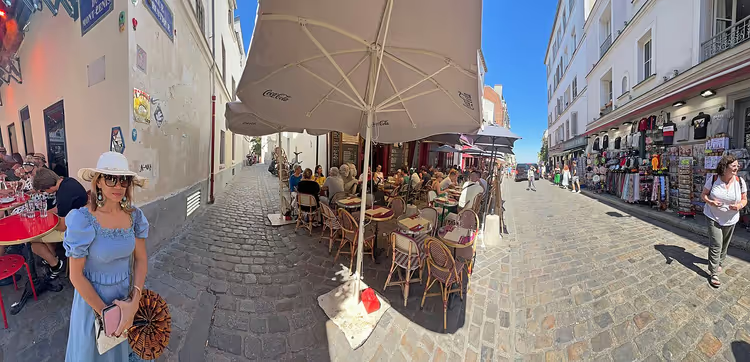 © John Martinez Pavliga from San Pablo, USA · CC BYPhoto: John Martinez Pavliga from San Pablo, USA, CC BY (https://creativecommons.org/licenses/by/2.0), Wikimedia Commons
Along the winding streets you will reach the "Wall of Love" with declarations in different languages and the monument to "The Man Who Walked Through Walls". Along the way, you will pass galleries and small museums.
Sacré-Cœur Basilica
At the top of the hill stands the white Basilica of Sacré-Cœur, built in the Romano-Byzantine style. It was constructed in the early 20th century, and inside you'll find stained glass windows and a mosaic. From the steps, a panorama of all of Paris opens up, and there's a small fee to climb the dome; tickets are sold at a separate entrance on the official website. During the day, the longest line forms at the entrance.
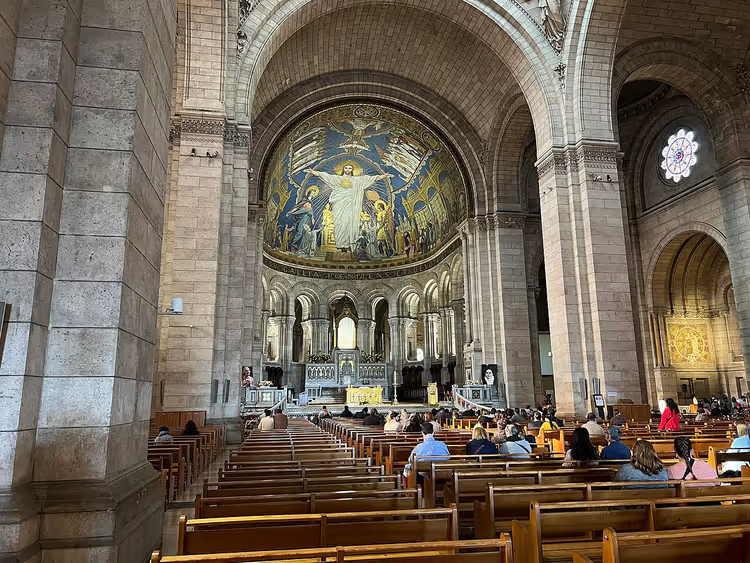 © Chabe01 · CC BY-SAPhoto: Chabe01, CC BY-SA (https://creativecommons.org/licenses/by-sa/4.0), Wikimedia Commons
Place du Tertre
Near the basilica, Place du Tertre buzzes with street artists selling their paintings. Modigliani, Picasso, and Van Gogh once worked here. A drawing done on the spot will cost more than a typical souvenir, and a portrait at an easel takes about half an hour.
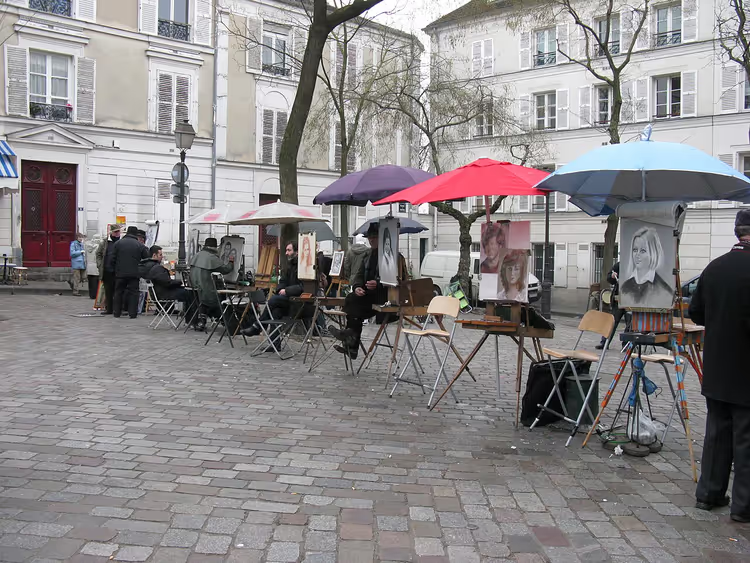 © Рустам Абдрахимов · CC BYPhoto: Рустам Абдрахимов, CC BY (https://creativecommons.org/licenses/by/3.0), Wikimedia Commons
Montmartre streets
The old streets of Montmartre still hold a creative spirit today. Here you'll find workshops and art galleries. Peek into the small courtyards: many have cafés where future celebrities once sat. Take your time, this is the best part of the walk up the hill.
Moulin Rouge
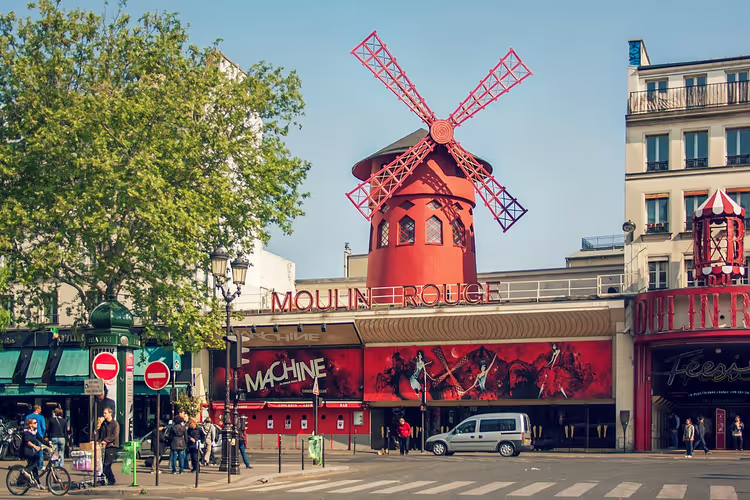
As you descend the hill, you'll come to the Moulin Rouge cabaret with its red windmill on the facade. The venue opened in the late 19th century, and the cancan was born here. There's a dress code for the show: come in elegant attire. Check the program and available dates on the official website, and it's convenient to book a Moulin Rouge show in advance.
 © Juanedc from Zaragoza, España · CC BYPhoto: Juanedc from Zaragoza, España, CC BY (https://creativecommons.org/licenses/by/2.0), Wikimedia Commons
Place Pigalle
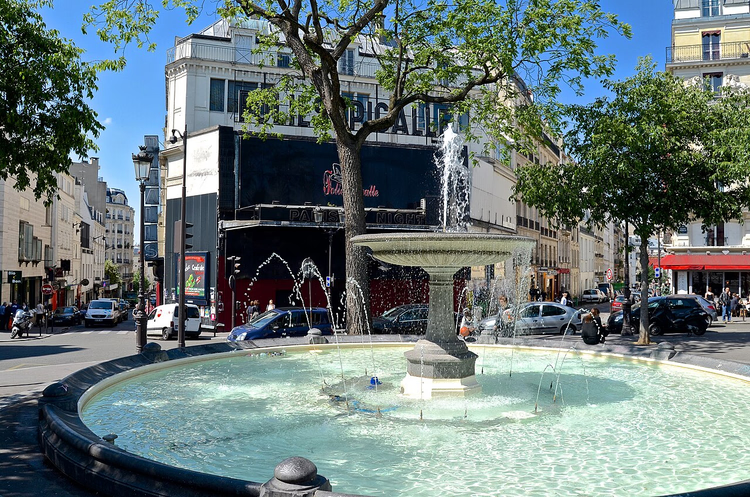
The route ends at Place Pigalle, in the red-light district. At night it's loud and crowded, with bars and sex shops operating along the side streets. The area isn't suited for a quiet evening stroll with children. From here, it's easy to catch the metro to any part of the city.
 © David McSpadden from Daly City, United States · CC BYPhoto: David McSpadden from Daly City, United States, CC BY (https://creativecommons.org/licenses/by/2.0), Wikimedia Commons
What you should know about Paris tickets
Get tickets for the main attractions online: ticket offices have lines, and morning time slots sell out first. The Catacombs are open Tuesday through Sunday, and the Arc de Triomphe's price varies by season.
Many museums offer discounts to EEA residents and free entry to visitors under 18 (as of 09/2026, Louvre website). Bring your passport or ID: it's checked at the entrance.
To avoid hunting for tickets across different sites, check out the selection below: three popular Paris attractions with prices and available time slots.
Tours and tickets in Paris
Guided tours, skip-the-line tickets and activities — most offers can be cancelled free of charge.
See offers on TiqetsThe widget loads once you give your consent.
⁉️🤔 Frequently asked questions
How much does it cost to go up the Eiffel Tower?
The price of a lift ticket to the top is listed in the Eiffel Tower section. It is cheaper to go up only to the second level, and part of the way up can be walked using the stairs. Book a time slot in advance: in high season there may be no availability at the ticket office.
Can you see the Louvre in one day?
No. The collection spans dozens of galleries, and a full visit takes two days. Pick a few major works in advance: the Mona Lisa, the Venus de Milo, the Winged Victory of Samothrace. A ticket costs €22 for EEA residents (as of 09/2026, museum website).
Do you need to book the catacombs in advance?
Yes. Visitors are admitted by time slot, and available slots sell out quickly. A full ticket costs €31 including the audio guide (as of 09/2026, catacombs website). They are open Tuesday through Sunday, with the last entry about an hour before closing.
How do you get to Montmartre?
From Père Lachaise Cemetery, take the metro to Anvers station, about twenty minutes. From there it is a two-hundred-meter walk uphill or a funicular ride that saves your energy.
How much does it cost to enter Notre-Dame and Sacré-Cœur?
Entry to Notre-Dame Cathedral is free, but it is better to book a time slot in advance on the official website (09/2026). Entry to the Sacré-Cœur Basilica is also free, and there is a small fee to climb the dome. The line at the basilica is longest during the day and shorter near opening time.
In short: what is worth booking
If this is your first time in Paris, start with an Eiffel Tower time slot and a city tour.
If you love museums, get a Louvre ticket for Wednesday morning: on that day the museum is open until 9:00 PM and is less crowded.
If you are traveling with children, save the Seine cruise for the evening: an hour on the water is less tiring than more walking across the city.
Hotels in the center are best booked in advance: check hotels in Paris on Trip.com a couple of months before your trip.

A small editorial team writing guides for independent travel. We travel ourselves, but we haven’t been everywhere, so we check prices, opening hours and how to get there against official sources.