
















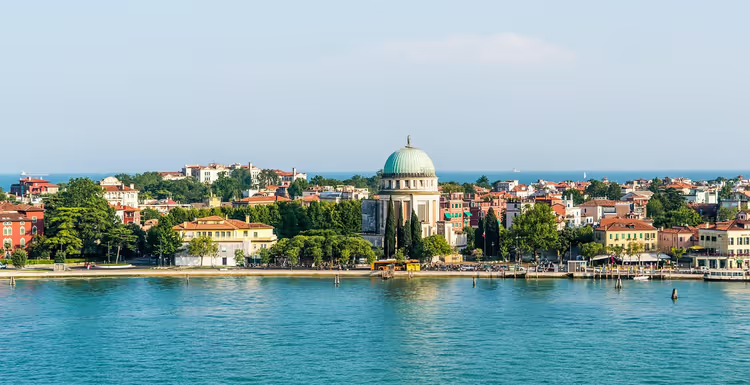
Vaporetto, gondola or water taxi: how to get around Venice
Venice sits on islands, and cars are useless here. Between the islands you move by canal or on foot. There are three main types of water transport: the vaporetto, the water taxi, and the gondola. The vaporetto works like a river tram: it runs on a schedule and stops at every landing.
Vaporetto service is operated by ACTV, the official water transport operator of Venice (as of 09/2026, ACTV). Routes accept contactless card payment, and from mid-September 2026 the autumn navigation schedule is in effect. Below we break down the types of transport, the main lines, and how fares work.
Ad: this article contains affiliate links, we earn a commission if you book through them, at no extra cost to you.
Types of water transport in Venice
💡 In short:
- The vaporetto remains the main form of city transport: a schedule, dozens of stops, one fare system for all lines.
- The water taxi is faster and more expensive, and the gondola is for a sightseeing ride, not for getting from A to B.
- Fares and schedule: 09/2026, verified on the official ACTV website
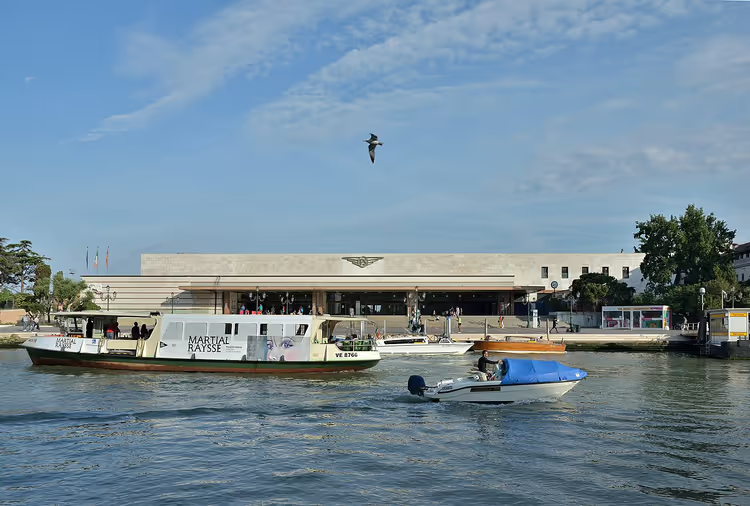
In the historic part of Venice, public transport runs only on water. You can walk across it, but it will take more than one day. To see the main sights, it is more practical to use the canals. Boats dock at floating landing stages. These are white floating platforms with a bright yellow stripe, with the stop name written on it in black. Each landing stage has two gangways: one for boarding, one for exiting.
Vaporetto translates as "steamboat." The vessels have long stopped running on steam, but the old name stuck. Different routes use small, medium, and large motor vessels. Where bridges are low, lower-profile vaporettos run so they can pass under the span.
 © This Photo was taken by Wolfgang Moroder . Feel free to use my photos, but please mention me as the author and send me a · CC BY-SAPhoto: This Photo was taken by Wolfgang Moroder . Feel free to use my photos, but please mention me as the author and send me a, CC BY-SA (https://creativecommons.org/licenses/by-sa/3.0), Wikimedia Commons
Water taxis are ordered at the landings or by phone. The boat goes directly to the address you need without stops. The price depends on distance and time of day, so a night trip costs more than a daytime one. For a group with luggage, a taxi is more convenient than transfers. The gondola is designed for a leisurely ride through the inner canals. It is not transport for getting around, but a short half-hour trip.
Transport | How it works | Price | What it's for |
|---|---|---|---|
Vaporetto | on schedule, with all stops | base fare | regular trips around the city |
Water taxi | no stops, directly to the address | noticeably more expensive | a group with luggage |
Gondola | sightseeing pace | per ride | a short trip through the canals |
- The catch: in high season, vaporettos on line 1 are often overcrowded.
Grand Canal lines: from the station to San Marco
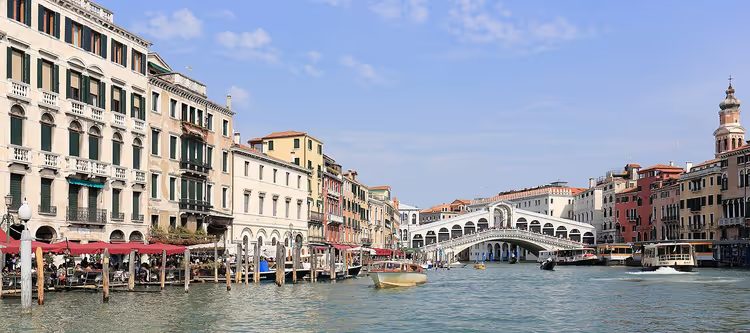
Venice's main water route runs along the Grand Canal. Two main lines run along it, called the first and second routes. Line 1 connects Piazzale Roma, where buses and cars arrive, with St. Mark's Square. The trip runs with frequent stops and takes about forty-five minutes. The route then continues to the final stop on the beach island of Lido.
Line 1 takes you to most hotels in the center. Along the entire canal you can take in the Venetian palazzos right from the deck. You can get off at any stop and then continue your journey. Line 2 runs faster and stops less often. It is convenient for those arriving by train: near the Santa Lucia station there is a stop called Ferrovia. From there to the terminus, the boat takes about twenty-five minutes and makes eight stops.
Line 2 runs from Tronchetto to the island of Giudecca. In season, some runs continue further, to the beaches of Lido. At rush hour, the Grand Canal turns into a real parade of boats: vaporettos, gondolas, and taxis all move in one flow. Book a skip-the-line ticket to St. Mark's Basilica if you want to get inside without waiting.
 © Martin Falbisoner · CC BY-SAPhoto: Martin Falbisoner, CC BY-SA (https://creativecommons.org/licenses/by-sa/4.0), Wikimedia Commons
Lines to Murano, Burano, and Lido
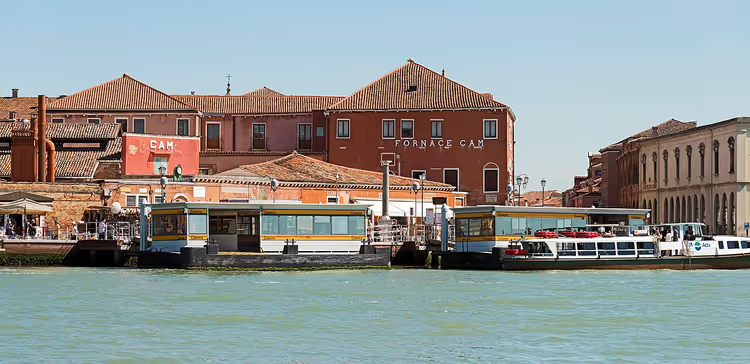
Besides the central routes, vaporettos connect Venice with the islands of the lagoon. Line 3 goes to Murano. It starts at the railway station, passes through Piazzale Roma, and makes five stops on the island. For a trip to Murano, this is the calmest route: there are fewer boats here and almost none of the congestion you get on the Grand Canal.
Murano itself is known for glass. Small factories operate on the island, and each has its own shop. You can watch vases, pitchers, and trays being blown from molten glass. Authentic pieces are sold right at the workshops, so it is best to buy on site.
 © Didier Descouens · CC BY-SAPhoto: Didier Descouens, CC BY-SA (https://creativecommons.org/licenses/by-sa/4.0), Wikimedia Commons
Two branches of line 4 form a loop around Murano and the island of San Michele, where the city cemetery is located. One runs clockwise, the other counterclockwise. There are nine stops on the loop in total. From the north, from Fondamente Nove, these branches help you reach the south, to Giudecca, bypassing the Grand Canal. At night, a separate line with the index N runs along the same route.
Line 12 connects Fondamente Nove with three islands at once: Murano, Burano, and Torcello. The trip takes about fifty minutes, and the stretch from Murano to Burano runs about thirty-five minutes. You can walk to the starting stop or take line 4.
Line 14 goes to the Lido beaches. You can board it at the San Zaccaria stop. After Lido, the waterbus continues to the Punta Sabbioni pier. Lines 11, 13, and 18 serve the other lagoon islands.
To combine several islands in one trip, there is a boat tour to Murano, Torcello, and Burano.
A gondola ride through the small canals
A gondola does not replace the vaporetto, it complements the outing. Boats wait for tourists at the piers near San Marco and by the Rialto Bridge. The standard route lasts about half an hour and winds through the narrow inner canals. What you pay for the ride depends on the route and time of day.
Check the rates at the pier before boarding. Evening rides are usually more expensive than daytime ones. This is not a transfer, but a calm glide past facades and balconies. If you want a hassle-free ride, book a gondola tour with a guide.
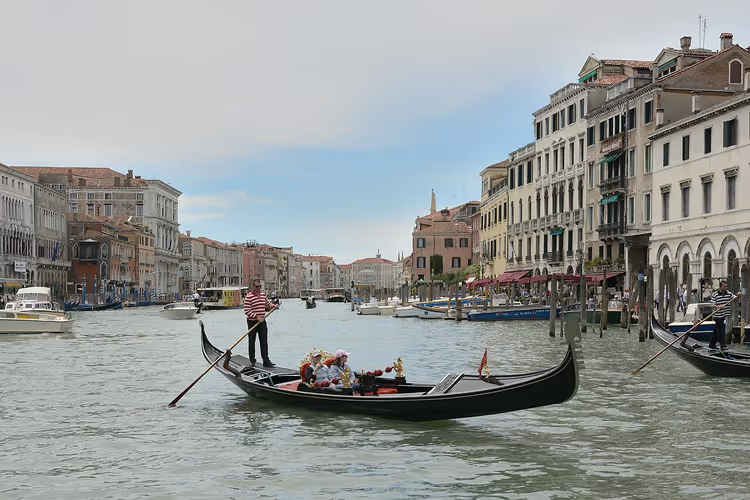 © This Photo was taken by Wolfgang Moroder . Feel free to use my photos, but please mention me as the author and send me a · CC BY-SAPhoto: This Photo was taken by Wolfgang Moroder . Feel free to use my photos, but please mention me as the author and send me a, CC BY-SA (https://creativecommons.org/licenses/by-sa/3.0), Wikimedia Commons
Cannaregio and Ca' d'Oro along the way
If you walk to Fondamente Nove, you will cross the Cannaregio district. This is where the former Jewish ghetto stands, now a museum. In a quiet corner sits the church of Santa Maria di Nazareth. Nearby is another church, Madonna dell'Orto, with the tomb of the painter Tintoretto.
In Cannaregio, Ca' d'Oro, the "Golden House," also faces the canal. Its slender columns are joined at the top by an openwork stucco pattern. The palace was built in the fifteenth century. The building was remodeled several times later. At the end of the nineteenth century, a new owner, Baron Giorgio Franchetti, restored the palace to its historic appearance. It houses a museum, which is currently closed for restoration (as of 10/2026).
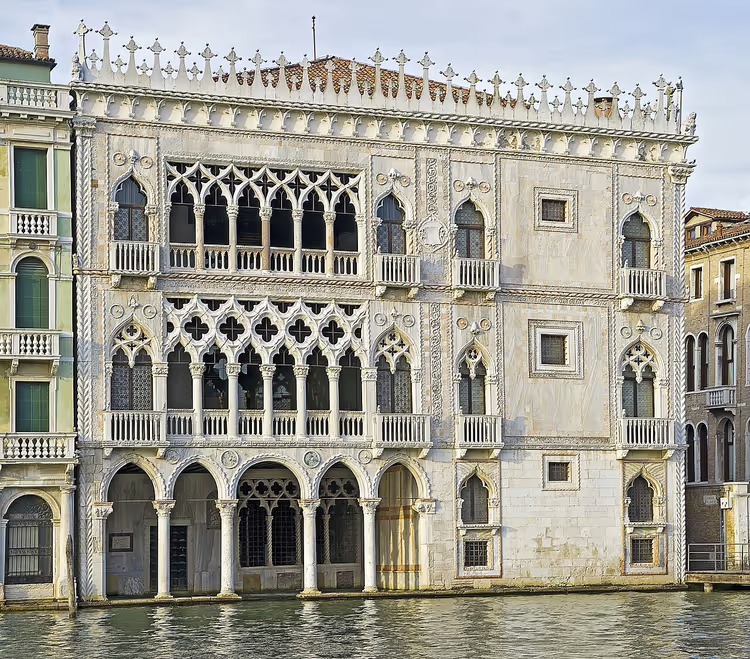 © Didier Descouens · CC BY-SAPhoto: Didier Descouens, CC BY-SA (https://creativecommons.org/licenses/by-sa/4.0), Wikimedia Commons
Fares and passes
A vaporetto ticket is valid for a limited time. Within that window, you can complete a route with transfers. A single ticket works for a short hop. If you plan to spend two or three days in Venice, a multi-day pass is a better deal. It removes the time limit and works on all lines.
Exact fares change every year, so check them on the official ACTV website before you travel (as of 09/2026, ACTV fares). Tickets are sold at pier vending machines, ticket offices, and online. The city's official platform for tickets and museum cards is called Venezia Unica (as of 09/2026, veneziaunica.it). On some routes you can pay with a contactless card or phone.
Important: on certain days a separate city access fee applies for day-trippers entering Venice without an overnight stay. In 2026 it applied from April 3 to July 26. Its rules and dates change, so check them on the city website before your trip (as of 09/2026, entry rules).
How to get to Venice
You can reach Venice by train, bus, or plane. Trains arrive at Santa Lucia station, from which vaporettos already run along the canals. Buses and cars stop at Piazzale Roma, and there are piers nearby as well. From the station and from Piazzale Roma to San Marco, lines 1 and 2 will take you there.
If you fly into Marco Polo Airport, you can get to the city by bus or by water. The water route across the lagoon stops at islands and takes longer than the bus. From Mestre and the mainland, the train is more convenient: you step out right at the vaporetto stops.
Tours and tickets in Venice
Guided tours, skip-the-line tickets and activities — most offers can be cancelled free of charge.
See offers on KiwitaxiThe widget loads once you give your consent.
⁉️🤔 Frequently asked questions
How much does a vaporetto ride in Venice cost?
A single ticket is valid for a limited time, while a multi-day pass is a better deal if you plan to ride a lot. You can buy tickets at pier vending machines, at ticket offices, or online on Venezia Unica.
How is a vaporetto different from a water taxi?
A vaporetto runs on a schedule, stops at all piers, and costs noticeably less. A water taxi is booked separately, and the boat goes directly to your address without stops.
How do I get from the station to San Marco?
From Santa Lucia station, take line 2 at the Ferrovia stop and ride to San Marco for about twenty-five minutes. Line 1 makes more stops and goes along the same Grand Canal. Both lines pass by palaces, so the ride itself already becomes a sightseeing tour.
Do I need a pass if I'm in Venice for two days?
If you plan several rides a day, a multi-day pass is a better deal than individual tickets. It works on all lines with no limit on the number of rides. For one short route, a single ticket is enough.
How do I get to Murano and Burano by boat?
Line 3 takes you to Murano from the station, making several stops along the way. Line 12 connects Fondamente Nove directly with Murano, Burano, and Torcello. From Murano to Burano, the boat takes about thirty-five minutes. The whole route takes about fifty minutes.
In short: what to book
Venice reveals itself from the water, so it's best to plan your route in advance.
- If you have one day, a vaporetto ticket and a ride along the Grand Canal will be enough.
- If you want to see the islands, take a boat tour to Murano, Torcello, and Burano.
- If you're going in the evening, leave time for a gondola ride.
Plan your trip in advance: Venice tours will help you see more without rushing.

A small editorial team writing guides for independent travel. We travel ourselves, but we haven’t been everywhere, so we check prices, opening hours and how to get there against official sources.