
















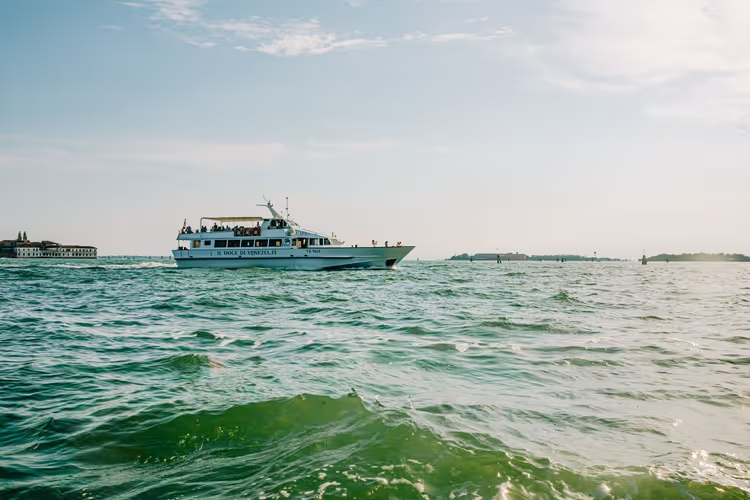
Lido in Venice: free beach, Alberoni dunes and the church of San Nicolò
Venice ends where the lagoon begins. Across the water lies the Lido: a narrow strip of sand with asphalt instead of canals and a long beach along the Adriatic. A single vaporetto ticket costs €9.50 and is valid for 75 minutes (as of 09/2026, ACTV fares). Many visitors come here for a day to escape the crowds and return to the city by evening.
Below we answer practical questions: what to see on the island, where to find free beach access, when to visit the church with the relics of St. Nicholas, and how to get there from Marco Polo Airport. We checked all prices, opening hours, and routes against the official websites of transport operators and the Lido tourist office in September 2026.
Ad: this text contains affiliate links; we earn a commission from them, and the price for you stays the same.
What to know about the Lido
💡 In short:
- A single ACTV ticket costs €9.50 and is valid for 75 minutes; a 24-hour pass costs €25 (as of 09/2026, official ACTV website).
- From Marco Polo Airport, the seasonal Alilaguna Rossa line runs to the island with stops at Lido Casino and Santa Maria Elisabetta.
- Look for free beach access in the spiaggia libera sections; paid beaches are run by hotels.
- Prices and opening hours: as of 09/2026, checked on the Rossa line page on the Alilaguna website
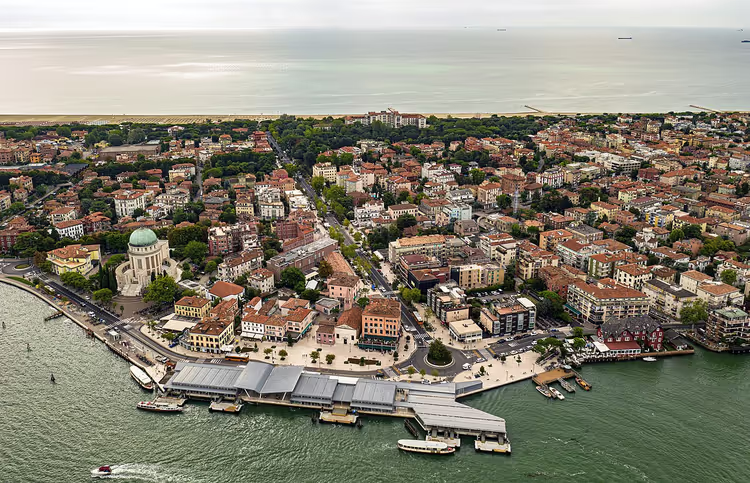
The island stretches from north to south and separates the lagoon from the Adriatic Sea. It is easy to get around on foot or by bike, so a day on the Lido is nothing like a day in Venice. From the pier to the sea you can walk in under half an hour. Alberoni at the southern end of the island is about 9 km from the pier.
 © Kasa Fue · CC BY-SAPhoto: Kasa Fue, CC BY-SA (https://creativecommons.org/licenses/by-sa/4.0), Wikimedia Commons
If you are here for one day, set aside half a day: that is enough for the beach, the main street, and the church of San Nicolò. The beach season on the Lido runs from late May to early September.
History of the island
The Lido takes its name from the Latin word for shore. The spit shields Venice from the Adriatic, which is why the island appears less often in city chronicles than Venice itself: it served as a military base rather than a center of trade.
Warships moored along the sandy shores, and military units were stationed in the barracks. In the Middle Ages the island was known by the name of St. Nicholas, the patron saint of seafarers.
Venice also concluded important deals here. After Emperor Frederick Barbarossa's defeat at the Battle of Legnano, the Peace of Venice was signed in the city, reconciling the emperor with Pope Alexander III.
A little later the island became a camp for participants in the Fourth Crusade. Tens of thousands of knights could not leave the lagoon until Venice received payment for the fleet it had leased.
The island's history is also preserved in its cemeteries. The Protestant one was demolished when a small airport was built, and some of the gravestones were moved to the Jewish cemetery, which is open to visitors today. Byron and Shelley once rode on horseback along the Lido's long beaches.
In the first half of the 20th century the island gained a scandalous reputation because of establishments of dubious character. The fashion for seaside holidays brought developers here, followed by wealthy vacationers.
In the second half of the 20th century, Venetians moved to the Lido for apartments with heating and elevators. Today some of the villas and hotels are in ruins, but a few buildings maintain their former standards, and the island itself hosts a major film festival.
Gran Viale Santa Maria Elisabetta: the island's main street
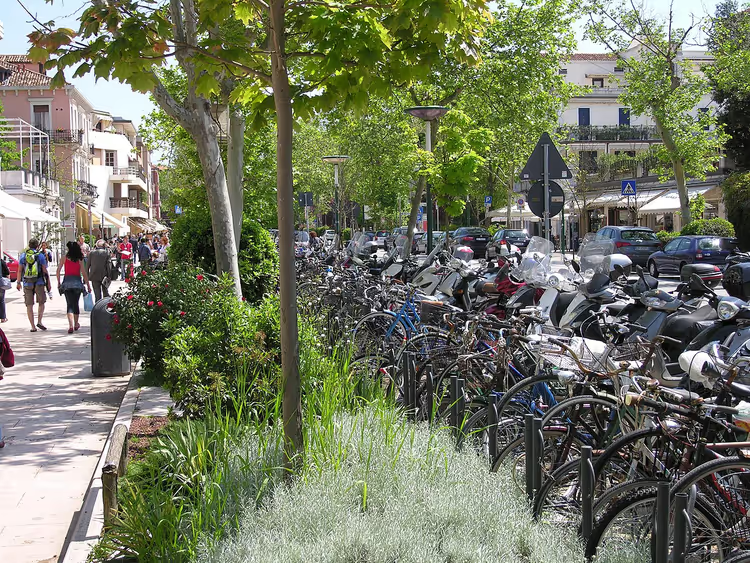
One wide street connects the Santa Maria Elisabetta pier with the beach. Along Gran Viale you will find shops, pharmacies, cafes, and Fabio's pizzeria at the sea end. Prices here are on average lower than in central Venice, so some visitors choose to eat on the Lido.
 © Lothar John · CC BY-SAPhoto: Lothar John, CC BY-SA (https://creativecommons.org/licenses/by-sa/3.0), Wikimedia Commons
Nearby they sell gelato, and in the evening bars and clubs open and stay open until the last guest leaves. If you want to see the island in a more active way, check out tours and bike rides on GetYourGuide: routes are built around the lagoon and the island's historic sites.
The street is short, and you can walk it at a leisurely pace. But it works well as a landmark: from here you can easily reach both the beach and the pier.
Lido beaches and free sections
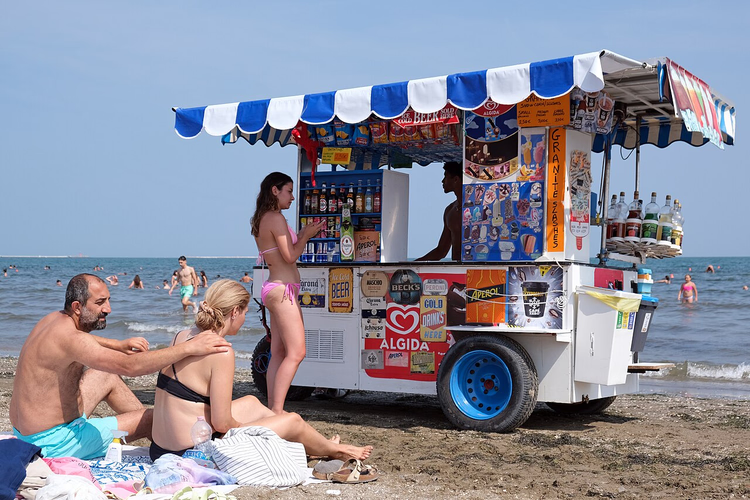
The beach strip runs along the eastern shore for almost the entire length of the island. Most sections belong to hotels and private owners: loungers and umbrellas are set up there, and entry is paid or included in the cost of your stay.
If you are not ready to pay for a lounger, look for signs that say spiaggia libera, meaning a free beach. Bring your own towel and water, and come in the morning: by midday the free sections get crowded. The sand here is golden, and the area is maintained and cleaned daily.
 © kallerna · CC BY-SAPhoto: kallerna, CC BY-SA (https://creativecommons.org/licenses/by-sa/4.0), Wikimedia Commons
Swimming is comfortable from late spring to early fall; at other times the beaches are almost empty. Alberoni is about 9 km from the pier, which is a long walk. It is easier to get there by bus or bike.
Alberoni dunes and the WWF reserve
At the southern tip of the island, a nature reserve begins with sand dunes and a pine forest. The golden sand and rare vegetation here are protected by the World Wide Fund for Nature, and entry to the area is free.
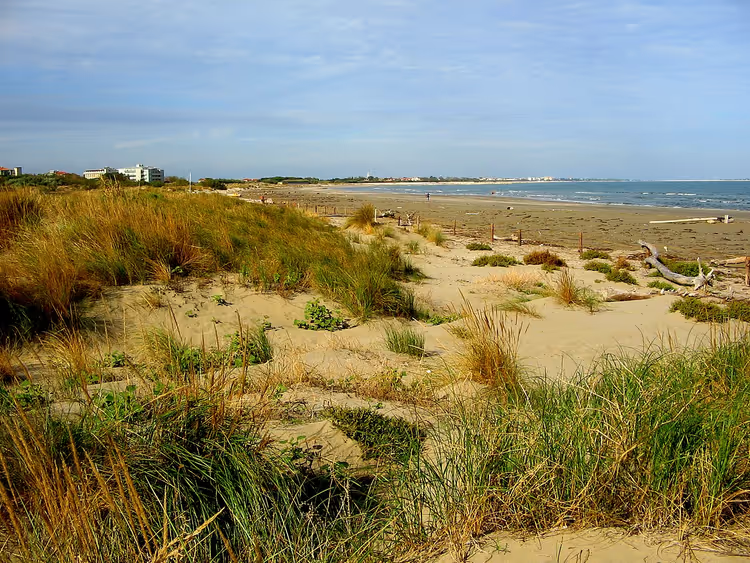 © Mariomega · CC BY-SAPhoto: Mariomega, CC BY-SA (https://creativecommons.org/licenses/by-sa/3.0), Wikimedia Commons
The Alberoni dunes suit those looking for a quiet day without beach bars and loud music. On weekdays there is almost no one here, but on weekends families with bikes and runners come out.
You can get there by bus from Santa Maria Elisabetta or by bike along the shore: the ride will take you under an hour. The way back is easy to combine with a stop in the center of the island, where you will find cafes and bike rentals.
Liberty architecture: the casino and grand hotels
Lido was built up in the early 20th century, and the island's main style has remained recognizable. Italian Art Nouveau is called Liberty here: flowing lines and wide facades with loggias.
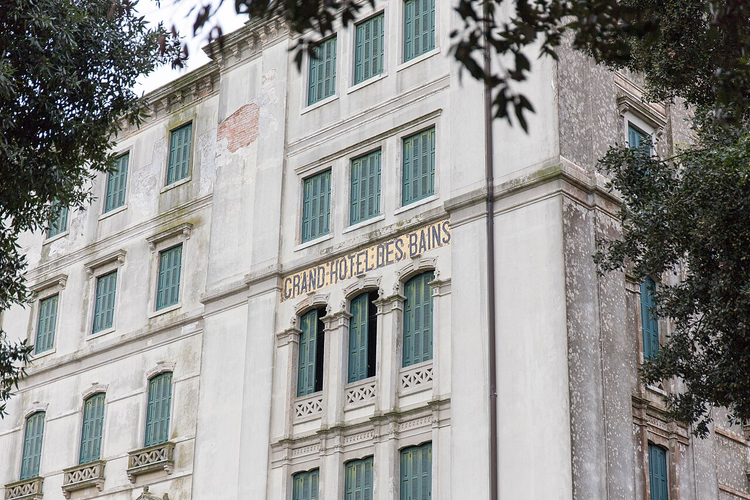 © GodeNehler · CC BY-SAPhoto: GodeNehler, CC BY-SA (https://creativecommons.org/licenses/by-sa/4.0), Wikimedia Commons
The most striking buildings stand along the sea. The casino on the shore has not accepted players for a long time, but its halls are used for exhibitions and festival screenings.
The Grand Hotel Excelsior and the Grand Hotel des Bains defined the look of resort Lido. Luchino Visconti's "Death in Venice" was filmed at the des Bains, so these facades are known even to those who have never been to Italy.
You can see them for free from the promenade, but you can only go inside as a guest or event participant.
Venice Film Festival
Every year in late August or early September, Lido becomes the main venue of the Mostra, the Venice International Film Festival. It has been running since before the war and is considered the oldest film festival in the world.
During these days, part of the promenades on the island are closed off, journalists and guests arrive, and hotel rooms are booked long before the opening. If you are planning a trip for early September, arrange your accommodation in advance.
The festival cinemas stand by the beach, so in September Lido looks like a city in a constant state of celebration. You can see the red carpet from the street, and the promenade by the Palazzo del Cinema remains open to passersby.
Church of San Nicolò and the relics of Saint Nicholas
At the northern tip of the island, at the harbor entrance, stands the church of San Nicolò. It was built in the early 11th century and is one of the oldest buildings on Lido.
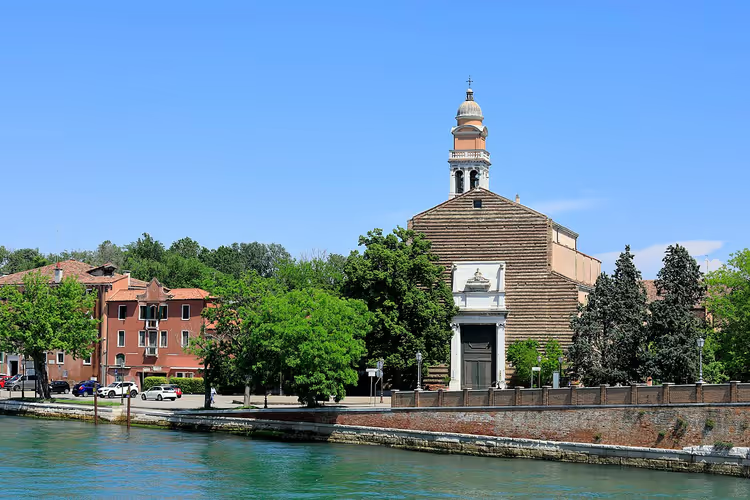 © Falk2 · CC BY-SAPhoto: Falk2, CC BY-SA (https://creativecommons.org/licenses/by-sa/4.0), Wikimedia Commons
The church houses part of the relics of Saint Nicholas, brought here around 1100 (as of 09/2026, visitlido.it). The main part of the relics is in Bari.
The Venetians took part in the Crusades, and in one of them they broke into the Saint's basilica in Myra. They found no relics in the tomb even after taking it apart stone by stone. Just before sailing away, they learned that services were sometimes held in one of the side chapels, and they opened the floor by the altar. According to tradition, a fragrance rose from under the floor, and then the remains of the Saint appeared.
The crusaders made a vow to bring the relics to Lido, so the Saint remained to protect the island, and with it Venice. Venetian ships stopped at the church before long voyages for a blessing and gave thanks for a safe return. Many travelers follow this tradition today.
The doors are open during services; check the exact schedule with the parish, as times change by season and church holidays. From the pier you can walk here in half an hour or take the bus.
Where Lido is and how to get there
Lido lies between the lagoon and the Adriatic Sea, separated from Venice by a narrow channel. The distance is covered by vaporetto, the water buses: line 1 takes you from Santa Lucia station and the Grand Canal to the Santa Maria Elisabetta pier.
If you are making connections, a day pass pays off after three rides.
From | Transport | Travel time | Price |
|---|---|---|---|
Santa Lucia station, Grand Canal | ACTV vaporetto, line 1 | about 60 minutes | €9.50 for 75 minutes (as of 09/2026, ticket fares) |
Marco Polo Airport | Alilaguna Rossa, seasonal line | about an hour | €18 (as of 09/2026, Alilaguna tickets) |
From Marco Polo Airport, the most convenient option is the Alilaguna Rossa water route: in summer it goes directly to the Lido Casino stop. In winter the schedule changes, so check departure times before your trip on the Alilaguna ticket page.
If you arrive with suitcases, a water transfer to your hotel saves time and effort: you book it in advance, and there is almost nowhere to rent a car on Lido.
Tours and tickets in Venice
Guided tours, skip-the-line tickets and activities — most offers can be cancelled free of charge.
See offers on KiwitaxiThe widget loads once you give your consent.
Lido island on the map
The map shows that the island stretches along the coast, with the Santa Maria Elisabetta pier in its middle section. From here you can easily walk to the beach, to Gran Viale, and to the bus to Alberoni.
⁉️🤔 Frequently asked questions
How much does the vaporetto to Lido cost?
A single ACTV ticket costs €9.50 and is valid for 75 minutes from activation. A 24-hour pass costs €25, a weekly pass €65 (as of 09/2026, official ACTV fares). If you are riding around the lagoon all day, a pass pays off after three rides.
Is there a free beach on Lido?
Yes, free sections are marked with a spiaggia libera sign. There you lie on your own towel; a lounger and umbrella are not included. Paid beaches belong to hotels: entry costs money or is included in your stay. In July and August, spots on the free sections are taken by midday.
How do I get to Lido from Marco Polo Airport?
In summer, the seasonal Alilaguna Rossa line runs with stops at Lido Casino and Santa Maria Elisabetta. A one-way ticket costs €18 (as of 09/2026, official Alilaguna website). In winter the route changes, so check the schedule in advance.
What to see on Lido in one day?
Start with Gran Viale Santa Maria Elisabetta, then walk to the beach and the free sections. In the afternoon, take a trip to the church of San Nicolò with the relics of Saint Nicholas and to the Alberoni dunes. Along the way, look at the Liberty facades that line the seafront.
When does the Venice Film Festival take place and is it worth going on those days?
The Mostra takes place on Lido every year in late August or early September. On those days the island is noisy, the waterfronts near the Palazzo del Cinema are closed off, and hotels are booked well in advance. If you want a quiet beach, pick a different week.
In short: what to book
If you are coming for the beach, book accommodation between Gran Viale and the sea: you can walk to the free sections and cafes. If your goal is Venice, stay near the Santa Maria Elisabetta pier: a vaporetto takes you to San Marco without transfers. For a quiet stay, hotels closer to Alberoni are a good fit.
One logistics tip: buy your water pass in advance and keep the ticket on your phone. That way you skip the ticket office line and save money if you make three or more rides.

A small editorial team writing guides for independent travel. We travel ourselves, but we haven’t been everywhere, so we check prices, opening hours and how to get there against official sources.