
















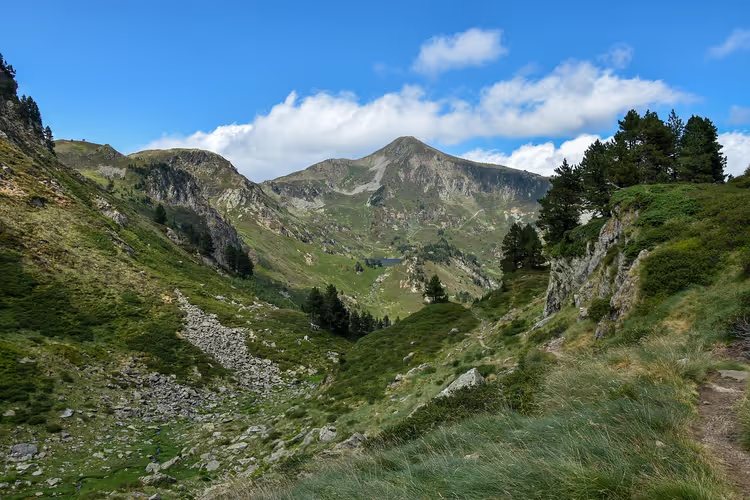
Spain road trip by car: six days from Barcelona to the Pyrenees
Barcelona alone is worth a week of vacation. But if you only see the city, you miss the Costa Brava, medieval Girona and Besalú, and the Pyrenean lakes.
Our driving route through Catalonia fits into six days and roughly 700 kilometers (on the map). You start from El Prat Airport: the first days go to the city, then you head north toward the French border and return through the Pyrenees.
The format works well for families and couples: the drives are short, and there are plenty of stops along the way. Book tickets for the main sights in advance. In summer, without a time slot, you will stand in line for over an hour.
Ad: this article contains affiliate links, we earn a commission if you book through them, at no extra cost to you.
How to get to Barcelona
💡 In short:
- The route is designed for six days behind the wheel: Barcelona, Costa Brava, Girona, and the Pyrenees.
- Pick up the car right at El Prat Airport; parking in the center is expensive.
- Sagrada Família and Park Güell require a ticket with a specific time slot.
- Prices and opening hours: as of 09/2026, verified on the official Sagrada Família website.
The easiest way to get to Barcelona is by plane. El Prat Airport (BCN) receives flights from all major European cities. Direct flights from Germany and Austria take about two hours. Tickets are cheaper if you search 6 to 8 weeks before the trip and fly on weekdays.
From the airport to the center, the Aerobús and the R2 Nord train to Passeig de Gràcia station will get you there. Traveling to Barcelona by train is also realistic: high-speed AVE and TGV trains connect the city with Madrid and the south of France. This option is convenient if you dislike airports.
Where to stay in Barcelona
Barcelona has more than two hundred hotels, and that is without apartments and hostels. In season, places get booked months in advance, especially on weekends. Design hotels and boutique properties are concentrated in the Eixample district and the Gothic Quarter.
Staying in the center is expensive. If your budget is limited, look at the Gràcia, Sant Antoni, or Poblenou neighborhoods: from there you can easily reach the main sights by metro. For a family, it is more convenient to book an apartment with a kitchen and a washing machine.
You can compare options on the Trip.com hotel search. Book with free cancellation: that way you can switch neighborhoods to fit your route.
Car rental in Barcelona
For a trip around Catalonia, you need a car. Public transport to Girona, Besalú, and the Pyrenean lakes is almost nonexistent. Rental desks are available at the airport and at Sants station. The counters in the terminal are open from early morning until late evening.
Get a car with full insurance and no deductible. Narrow mountain switchbacks and busy highways demand attention. Book for the entire period at once: adding days on the spot costs more.
It is convenient to book a car in advance through the car rental search. The deposit for a car in Spain is blocked on your card, so your credit limit needs to be sufficient.
Barcelona sights
 © Enric · CC BY-SAPhoto: Enric, CC BY-SA (https://creativecommons.org/licenses/by-sa/4.0), Wikimedia Commons
Even seasoned travelers cannot agree on where to start exploring the city. Some head to the bustling Rambla, some climb up to the Columbus Monument, some go straight to Sagrada Família. If you have only an hour, choose the Rambla: it is Barcelona's main pedestrian street.
The Rambla stretches from Plaça de Catalunya to the old port. At first glance, it is cheerful and carefree. But turn right, and you will find yourself at La Boqueria market. Turn left, walk a couple of blocks, and the Cathedral, the archbishop's seat, stands before you. The cathedral was built from the 13th to the 15th century, and its Gothic facade sets the tone for the entire quarter.
Sagrada Família, or the Basilica of the Holy Family, has been under construction since 1882. It is a rare case of an unfinished church drawing millions of tourists. The completion date has been pushed back many times; the end of the work is now scheduled for 2026. Entry is only possible with a timed ticket.
Buy tickets for the cathedral on the official website in advance: admission costs €26, with the tower climb €36 (as of 09/2026, official website). On weekday mornings there are noticeably fewer people.
The Picasso Museum is in the Gothic Quarter. The quarter itself is a labyrinth of narrow streets with Roman walls and old squares. It is easy to get lost here, and a pleasant way to do it. Come in the morning while the streets are empty, and leave yourself a couple of hours for a walk.
After that, choose based on your interests. Park Güell is best kept for the first half of the day: the monumental zone operates in timed sessions, adult ticket €18 (as of 09/2026, official website). You need a ticket for a specific time, and without a slot you will not be let in. In the morning the viewing terrace is less crowded, but by midday it is packed.
Casa Batlló and Casa Milà draw attention with their Gaudí facades; separate tickets are required to go inside. Admission to Casa Batlló starts at €29 (as of 09/2026, official website), children under 12 go free. Both houses stand on the same avenue, so see them on the same day.
Football fans will be satisfied with a tour of Camp Nou stadium. During the tour you will sit in the stands, peek into the commentary booth, and walk out to the edge of the pitch. At the end, the club's museum exhibition awaits you.
The Olympic Park and the old port are a logical way to close out the day: from there you get a view of the city and the sea. A single visit usually takes two to three hours, so you will not have time for everything at once. Plan two or three sights per day, and you will not get tired. Between stops, the metro or walking are convenient ways to get around.
How to save money in Barcelona
Tickets for the main attractions are cheaper to buy online and with a time slot. That way you do not pay for waiting and you enter during a convenient window.
- Sagrada Familia without the line: timed-entry ticket on GetYourGuide.
- Park Guell: timed-entry ticket.
- Casa Batllo: ticket with video guide on GetYourGuide.
- Public transport: Hola BCN card for 2-5 days.
- PortAventura Park: day ticket with transfer.
- Theme parks: PortAventura and Ferrari Land combo ticket.
- Tibidabo amusement park: entry ticket on GetYourGuide.
- Casa Mila: skip-the-line ticket with audio guide.
- City sightseeing: hop-on hop-off bus ticket.
Day 2: Lloret de Mar, Girona and Vila-Sacra
 © Patronat de Turisme Costa Brava Pirineu de Girona · CC BY-SAPhoto: Patronat de Turisme Costa Brava Pirineu de Girona, CC BY-SA (https://creativecommons.org/licenses/by-sa/3.0), Wikimedia Commons
From Barcelona you head north on the C-32. The first stop, Lloret de Mar, is 70 kilometers away (on the map). It is the main resort on the Costa Brava: a wide sandy beach, the Sant Joan castle on the shore, and a lively nightlife. During the day it is calm and peaceful here, but as the sun sets the streets turn into one big party. The first leg is short, so you will have time to swim and have lunch before evening.
Lloret de Mar has other spots too: the romantic chapel of Santa Cristina, the town's patron saint, and the Santa Clotilde gardens. The beach runs along the entire resort, so you will find a spot in the sun even at the height of the season. The road from Barcelona in this direction is busy in the mornings, so leave early.
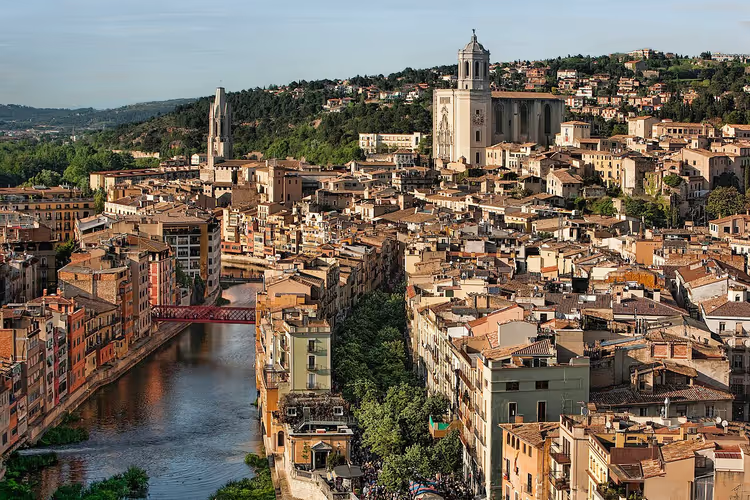
The next stop, Girona, is just 35 kilometers away (on the map). The city is often called immortal: its fortress withstood 25 sieges. Start with a walk through the Old Town. Colorful 17th-century houses with multicolored facades line the banks of the Onyar River. Placa de Catalunya looks like a wide bridge between the two banks, and from there you get the best view of the colorful houses.
The medieval Cathedral also stands here, its construction begun back in the 14th century. You may have seen the narrow streets of the Old Town in film: scenes for "Game of Thrones" were shot in Girona. Three hours is enough to see the city. Look for parking near the Old Town; driving in the center is tight and expensive.
Next is Vila-sacra, literally 20 kilometers from Girona (on the map). It is a small, cozy village off the tourist trail. Stop by for the quiet Spanish countryside and local cuisine that is not aimed at tourists. Spend the night in a small hotel and continue in the morning. It is a convenient base for day trips: the coast and the Pyrenees are roughly the same distance away.
Day 3: Empuriabrava, Besalú, and Castellfollit de la Roca
 © pere prlpz · CC BY-SAPhoto: pere prlpz, CC BY-SA (https://creativecommons.org/licenses/by-sa/3.0), Wikimedia Commons
You are unlikely to want to linger in Vila-sacra for long. A couple of hours of an evening stroll is enough to walk around the entire village. In the morning you grab a bite at the hotel and drive to the coast, to bohemian Empuriabrava.
This resort town is called the Spanish Venice. It is entirely cut through by canals, with a total length exceeding 35 kilometers (as of 09/2026, official Catalonia tourism website). Luxury villas stand right at the water's edge, and locals often get around by boat. You can also reach any part of town by car, although the narrow bridges require some care.
The resort's main attraction is its beaches. They are wide, sandy, and almost endless. There are essentially two: one developed, the other wild. Sun loungers and cafes are at the first, and you go to the second for peace and quiet. Even at the height of the season, there is enough space in the sun for everyone.
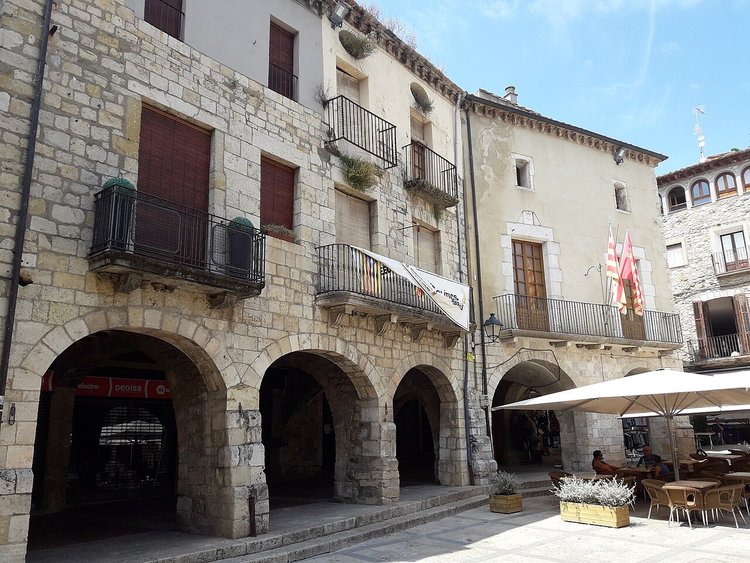
Do not look for architectural masterpieces here. Empuriabrava is a young town, with almost no old buildings. But medieval Besalú, first mentioned in the 10th century, has plenty. The entire town is one continuous attraction. Its area is only 5 square kilometers, so you can explore every nook and cranny in 2 to 3 hours.
The town's landmarks are the castle El Castel and the bridge over the river El Fluvià. Every house and every alley is a reminder of former grandeur. Fill up before you leave: gas stations are rare in this part of Catalonia, and the nearest major ones are in Girona and Figueres.
Next up is Castellfollit de la Roca, just 15 kilometers from Besalú (on the map). The village sits right on a cliff, and it was built in the Middle Ages. Hence the unusual architecture and many buildings worth your attention. The church of Sant Salvador and the museum inside it stand out in particular. The viewing platform offers panoramic views of the surrounding area.
The streets are narrow, so leave your car at the entrance to the village. There are few tourists here, and that is for the best: the quiet helps you soak up the atmosphere. You will need 2 to 3 hours to see the village. In the evening it is convenient to return to Vila-sacra to spend the night and head to the mountains in the morning.
Day 4: drive to Seira in the Pyrenees
From Vila-sacra to Seira is about 350 kilometers (on the map). Roads in Spain are good, so you will cover the distance in 4 to 4.5 hours. The drive is long, so leave in the morning and bring water and a snack: cafes along the highway are not frequent. Why stop specifically in Seira? It is a cozy, colorful village where you will get to know national traditions and feel the spirit of the Spanish provinces.
Accommodation in Seira is inexpensive. For the price of a room in a three-star Barcelona hotel, you can rent a two-story apartment with mountain views. Evenings here are quiet, and on a clear night you can see the stars above the village. Seira itself has few attractions, but the surrounding area deserves attention.
The first place to visit is the dam at Lake Estany de Cavallers. It is considered the most developed and convenient for viewing. The structure is striking in its scale, and the dam itself offers breathtaking views.
You will enjoy nature almost in solitude: Estany de Cavallers can only be reached by your own car. That is why there are few tourists here. Simple rest areas with wooden tables and benches are set up near the dam. But bring picnic supplies in advance: there are no shops or vendors nearby.
Not far from the lake lies Aigüestortes National Park. Several short trekking routes run through its territory. The easiest one, designed for unprepared tourists, takes 2 to 3 hours. Along the way you will encounter mountain rivers, steep slopes, and nearly abandoned bridges. Occasionally, lonely little houses are visible in the distance. The nature in the park is almost untouched, so take your trash with you.
While enjoying the views, do not forget about getting back. From Aigüestortes to Seira is only 80 kilometers (on the map), but the road is not easy: a narrow series of switchbacks. Cover it before sunset: driving here at night without lighting is difficult.
Day 5: Benasque and the lakes of the Pyrenees
 © Basotxerri · CC BY-SAPhoto: Basotxerri, CC BY-SA (https://creativecommons.org/licenses/by-sa/4.0), Wikimedia Commons
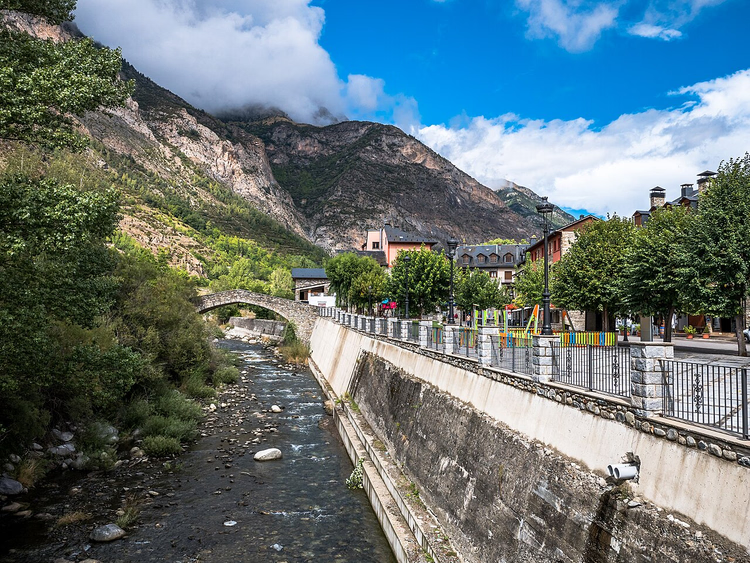
Just 22 kilometers from Seira (on the map) lies Benasque. This place is known to every winter sports enthusiast. In winter, at the height of the season, it is packed to the brim. In summer, the town of about 2,000 people is calm and quiet.
Several trekking routes of varying difficulty run through the surrounding area. There are easy trails for amateurs and routes for experienced hikers. The glaciers, lakes, and waterfalls around Benasque impress even well-traveled visitors.
Benasque is not just a ski resort. The town has an interesting history, so the streets feature quite a few architectural monuments. Among them are Palacio de los Condes de Ribagorza, as well as the houses Casa Juste, Casa Faure, and Casa Marcial del Río. The 13th-century Romanesque iglesia de Santa María Mayor deserves special attention.
The Seira-Benasque road is short, but deviate a few meters from the main route and you will find yourself in fairy-tale places. One of them is the dam at Lake Presa de Benasque. The dam itself is closed to visitors, but there is a viewing platform nearby. It offers a panoramic view of the dam, a tunnel through the rock, and the lake.
Another place you would be wrong to drive past is Lake Escarpinosa and the Posets-Maladeta park around it. Many call it the most beautiful in the Pyrenees. Nature and landscape lovers will not be left indifferent here.
You can end the day at one of the hotels in Benasque. In summer, accommodation prices in the town are attractive, and the resort is empty. The second option is to return to Seira: it is more convenient to continue the journey from there.
Day 6: Montserrat and Castelldefels
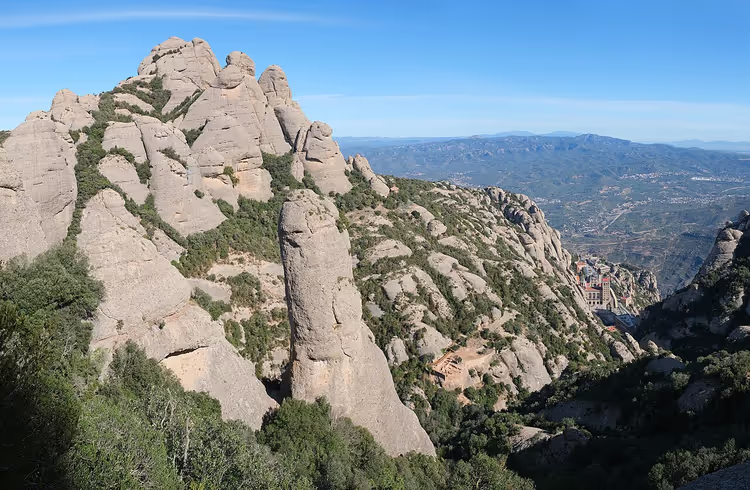 © kallerna · CC BY-SAPhoto: kallerna, CC BY-SA (https://creativecommons.org/licenses/by-sa/4.0), Wikimedia Commons
On the way to Barcelona there is a site you will not drive past. It is the spiritual center of Catalonia and a shrine for Catholics around the world, the monastery of Montserrat. It is known above all for the statue of the Black Madonna, to which pilgrims travel from many countries.
By car from Barcelona to the monastery takes just over an hour (on the map). Parking at the monastery is paid, and in season spaces fill up quickly, so arrive in the morning. There is usually a line to see the Black Madonna, but it moves briskly.
The monastery's history spans centuries, and it is still active today. There are few monks here, so it is quiet and peaceful within its walls. A small museum at the monastery tells you about its past. Architecturally, Montserrat is interesting because it was substantially rebuilt in the 19th century, and the architect Antoni Gaudí worked on the interior.
The monastery stands in a picturesque location. Several trekking routes run through the surrounding area, and there are signs everywhere, so you cannot get lost. The trails pass through the most beautiful spots and are designed for different fitness levels. Even those who are not on friendly terms with sports can handle the easy routes.
How much time should you allow for Montserrat? Some people find a few hours enough, while others are ready to stay until evening. If you decide to spend the night, there is a hotel near the monastery, but prices there are tourist-level. On the plus side, there are almost no tourists in the evening, and you will have the mountain views almost to yourself.
After finishing your visit to the monastery, you return to the coast. You can drive straight back to Barcelona, but it is worth stopping in Castelldefels as a final touch. This cozy town is known for its long beach, a great place to put the finishing touch on your trip. The beach stretches for kilometers, so you will find a spot away from the crowds any day.
There is also a huge number of restaurants here. The cuisine ranges from Catalan to Japanese, and seafood dishes are considered a local specialty. If you find yourself in Castelldefels in July or October, you will catch the pirate festival or the chestnut festival. The town is convenient for reaching El Prat airport, so Castelldefels is a good choice for your last night before the flight.
Driving route through Spain from Barcelona on the map
It is convenient to keep the whole route in front of you on a map. Barcelona, Costa Brava, Girona, Besalú, and the Pyrenean villages are marked below. Save the map to your phone in case there is no internet in the mountains.
Road trip through Spain
Places on the map
- Barcelona Start and finish of the route, departure from El Prat airport
- Lloret de Mar Costa Brava resort with a sandy beach and San Juan castle
- Girona Medieval town with colorful houses on the Onyar riverside
- Vilasacra Quiet village for an overnight stay between the coast and the Pyrenees
- Empuriabrava Venice-like resort with canals and wide sandy beaches
- Besalú Medieval town with El Castell castle and a bridge over the Fluvià
- Castellfollit de la Roca Village on a cliff with the church of Sant Salvador and a viewpoint
- Seira Base for trips to the lakes and Aigüestortes park in the Pyrenees
- Benasque Ski town with the Romanesque church of Santa Maria Major
- Montserrat Men's monastery with the statue of the Black Virgin, shrine of Catalonia
- Castelldefels Town with a long beach next to El Prat airport
This route is best done in your own car. Compare rental terms for your dates in advance and pick up the car at El Prat Airport.
Find hotels
Compare prices across booking sites and filter for rooms with free cancellation.
Compare prices on Discover CarsThe widget loads once you give your consent.
⁉️🤔 Frequently asked questions
How many days do you need for a route through Spain from Barcelona?
The city and Costa Brava take three days, and two more should be given to the Pyrenees. The last day will be taken up by Montserrat and Castelldefels. In total, that is six days behind the wheel. If you are in a hurry, skip Seira and Benasque: then four days will be enough. But it is the mountain part that makes the route different from an ordinary beach vacation.
Do you need a car or are trains enough?
You can easily get to Barcelona by train. But beyond that it is difficult without a car: there is almost no public transport to Besalú, Seira, and the Pyrenean lakes. Renting a car at the airport solves this problem.
When is the best time to travel around Catalonia and the Pyrenees?
Late May and September work well for the beaches: the sea is warm and there are fewer crowds. In July and August the coast is hot and busy. It is convenient to go to the Pyrenees in summer, when ski resorts are empty and accommodation prices drop. Drive the mountain roads before sunset.
How much does entry to Sagrada Familia and Park Güell cost?
Entry to Sagrada Familia costs 26 €, or 36 € with tower access (as of 09/2026, cathedral ticket page). At Park Güell, an adult ticket to the monumental zone costs 18 € (as of 09/2026, park ticket prices). Book both tickets in advance: in summer, entry is by time slot.
Where should you stay between Barcelona and the Pyrenees?
For the first days you stay in Barcelona, then in Vila-sacra near Costa Brava. For the mountain part, Seira is convenient: accommodation there is cheap, and the lakes and parks are close. Another option is Benasque, but in summer it empties out, and prices there are attractive.
In short: what is worth booking
If you are going to Catalonia for the first time, use Barcelona and Costa Brava as your base. If you love mountains, allow two days for the Pyrenees and the village of Seira as a base.
Book your car and accommodation before the season: in summer, options disappear quickly and prices rise. Compare options in advance so you do not overpay on the spot.
- For the road: compare car rental.
- For accommodation in Barcelona: see hotels on Trip.com.
The rule is simple: book in advance, and then you can freely change your plans depending on the weather.

A small editorial team writing guides for independent travel. We travel ourselves, but we haven’t been everywhere, so we check prices, opening hours and how to get there against official sources.